- EXPERT'S HELP
- +256789210067
- +256200955001
- info@kenlinktours.com


How many days needed for Murchison Falls Kibale and Bwindi Tour
September 11, 2026
From Kigali to Murchison Falls Tour in Uganda
September 15, 2026
7 Days Tour to Murchison Kibale Queen and Bwindi National Parks. Seven days is tight for four of Uganda’s biggest national parks, but it’s far from impossible — it’s actually one of the most commonly requested itineraries in Ugandan safari planning, precisely because it packs the country’s signature wildlife experience (savanna game drives, a Nile boat cruise, chimpanzee tracking, and mountain gorilla trekking) into a single, focused week. What it demands in return is honesty about the trade-off: this version of the trip runs on tighter connections, longer driving days, and single-night stays at most stops, rather than the more relaxed two-night pacing a 9- to 10-day version of the same four parks would allow.
A quick note before we go further: driving times, park fees, and gorilla permit pricing mentioned in this guide reflect typical figures at the time of writing. Road conditions and exact costs can shift, so always confirm current details with your operator before booking a trip of this length.
This guide walks through exactly how a 7-day Murchison Falls, Kibale, Queen Elizabeth, and Bwindi itinerary is typically structured, day by day, what to realistically expect from the pace, and how to decide whether seven days is the right length for your own trip.
Is Seven Days Really Enough for Four National Parks?
Seven days is enough to visit all four parks and complete each park’s core signature activity — a game drive and launch cruise at Murchison Falls, chimpanzee tracking at Kibale, a further game drive at Queen Elizabeth (often in the Ishasha sector, known for its tree-climbing lions), and mountain gorilla trekking at Bwindi — but it does so by allowing only a single overnight at most stops rather than the two nights a more relaxed itinerary would give each park. It’s worth being upfront about this: our own 7 Days Uganda Safari package, built around Kibale, Queen Elizabeth, and Bwindi, deliberately leaves Murchison Falls out of the standard 7-day product for exactly this reason, describing itself as “a tight but complete loop” and pointing travelers who want Murchison Falls included toward our longer 10 Days Uganda Primates and Wildlife itinerary instead.
That said, a genuine 7-day, four-park version covering Murchison Falls as well is a real, bookable itinerary and one several Uganda operators run regularly — it simply requires longer driving days and less flexibility than the 10-day version, which is exactly what this guide walks through below.
A Typical Day-by-Day Breakdown
A representative 7-day version of this route runs as follows: Day 1 travels from Kampala or Entebbe to Murchison Falls National Park, typically with a stop at Ziwa Rhino Sanctuary along the way for rhino tracking; Day 2 covers a morning game drive on Murchison’s northern plains followed by the afternoon launch cruise to the base of the falls; Day 3 is a long transfer day from Murchison Falls to Kibale Forest; Day 4 covers the Kibale chimpanzee trek in the morning followed by a transfer toward Queen Elizabeth National Park, often with an evening game drive on arrival; Day 5 covers a further game drive, frequently in the Ishasha sector, followed by the transfer to Bwindi; Day 6 is the Bwindi gorilla trek itself; and Day 7 is the return drive to Kampala or Entebbe for departure.
This structure is broadly consistent across the operators who run this specific four-park, 7-day combination, and it reflects the realistic minimum time needed to properly complete each park’s headline activity without skipping any of the four parks entirely.
Day 1: Kampala or Entebbe to Murchison Falls (With a Ziwa Stop)
The trip begins with an early departure from Kampala or Entebbe, heading north along the Gulu Highway. Most itineraries build in a stop at Ziwa Rhino Sanctuary roughly halfway along this route, where a guided one- to two-hour walk gets you within close range of southern white rhinos — the one major Ugandan wildlife encounter unavailable inside any of the national parks themselves, since Uganda’s wild rhino population was hunted to local extinction decades ago and hasn’t yet been reintroduced into the parks. From Ziwa, the drive continues on to Murchison Falls, with many itineraries also fitting in a visit to the top of the falls before checking into your lodge for the night.
Day 2: Murchison Falls Game Drive and Launch Cruise
The first full day inside Murchison Falls National Park typically opens with an early-morning game drive across the park’s northern plains, where lions, elephants, giraffes, buffalo, and large herds of Uganda kob are commonly sighted. The early afternoon is then reserved for the park’s signature experience: a roughly two-hour launch cruise up the Victoria Nile toward the base of the falls, passing hippos, Nile crocodiles, and elephants along the riverbanks before reaching the dramatic viewpoint where the entire Nile is compressed through an eight-meter gap and crashes downward with tremendous force.
Given the long transfer that follows the next day, this is the one full day in the itinerary where you can properly settle into a single park without an afternoon drive competing for time.
Day 3: The Long Transfer to Kibale Forest
This is the itinerary’s most demanding logistical day. The drive from Murchison Falls to Kibale Forest covers a substantial distance and typically takes the better part of a full day, given the road conditions between Uganda’s north and its western corridor. Most itineraries treat this day purely as a transfer, arriving at your Kibale lodge in the late afternoon or early evening with time to rest ahead of the following morning’s chimpanzee trek.
It’s worth being realistic about this day when deciding whether the 7-day version suits your travel style: if long driving days genuinely wear you down, this is the point in the itinerary where the trade-off for compressing four parks into a week is most keenly felt, and it’s a strong argument in favor of the more relaxed 9- to 10-day version if your schedule can accommodate the extra time.
Day 4: Chimpanzee Tracking in Kibale and Transfer to Queen Elizabeth
The morning is reserved for chimpanzee tracking, a guided forest walk typically lasting two to four hours that brings you within close range of one of Kibale’s habituated chimpanzee communities — among the most reliable chimp-tracking experiences anywhere in East Africa given the forest’s high habituation success rate. Some itineraries also fit in a shorter visit to nearby Bigodi Wetland Sanctuary, a lower-intensity, birding-focused walk that pairs well with the more physically demanding forest trek earlier in the day.
In the afternoon, the drive continues south toward Queen Elizabeth National Park, often timed to arrive in time for a late-afternoon or evening game drive on arrival, adding a second wildlife-viewing opportunity to what would otherwise be a pure transfer day.
Day 5: Queen Elizabeth Game Drive, Ishasha, and Transfer to Bwindi
Day 5 typically opens with a further game drive, commonly in Queen Elizabeth’s Ishasha sector, well known across Uganda for its tree-climbing lions — a genuinely unusual behavior among African lion populations and one of the park’s signature sightings. Some itineraries also include time on the Kazinga Channel, a narrow waterway connecting Lake Edward and Lake George that draws large concentrations of hippos, buffalo, and waterbirds, if the day’s schedule allows.
From Ishasha, the drive continues to Bwindi Impenetrable National Park, arriving in the afternoon or early evening with time to rest ahead of the following morning’s early gorilla trek registration.
Day 6: Gorilla Trekking in Bwindi
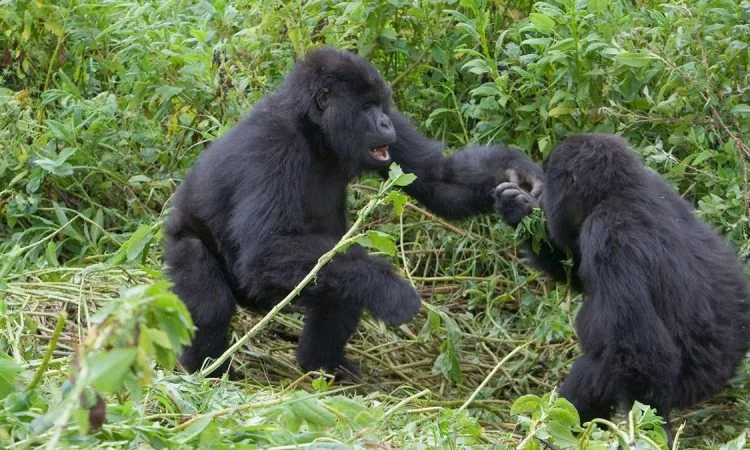
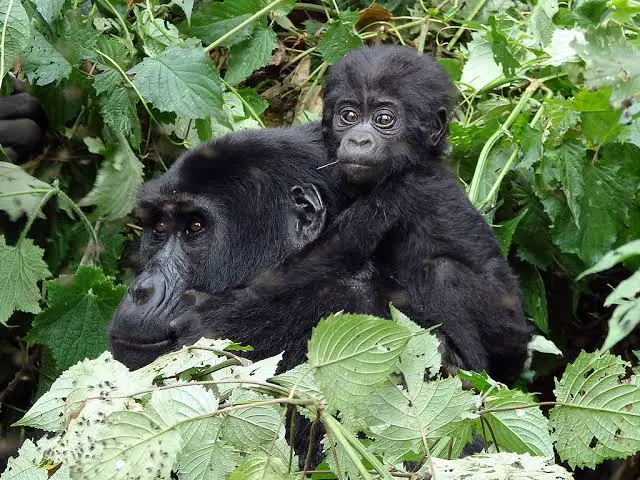
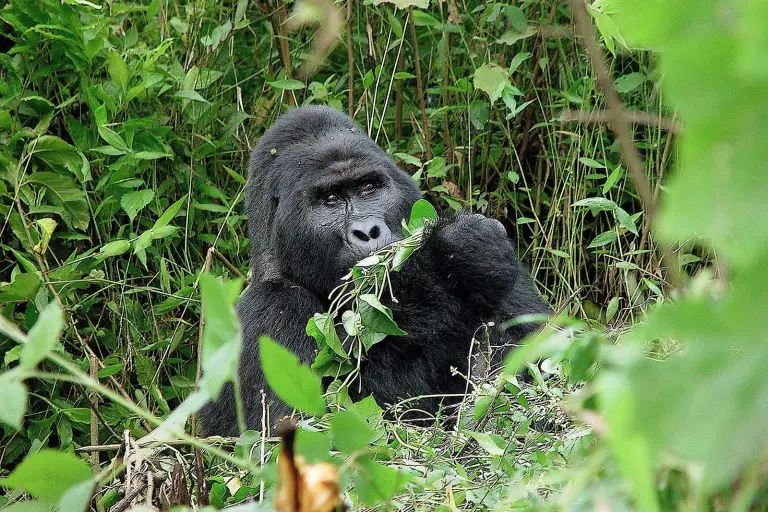
The centerpiece of the entire trip: an early registration at park headquarters around 7:45am, followed by a guided trek that can run anywhere from thirty minutes to several hours of forest hiking each way, depending on where your assigned gorilla family has moved overnight. Once located, visitors are permitted one hour with the gorilla family, observing feeding, resting, and social behavior at a safe, guided distance.
Because gorilla permits are tied to a fixed, non-transferable date, this is the one day in the itinerary with genuinely zero flexibility — a strong reason to build in a buffer elsewhere in your trip if your schedule allows, since a missed connection anywhere earlier in the week could put this day at risk.
Day 7: Return to Kampala or Entebbe
The final day covers the long return drive from Bwindi back to Kampala or Entebbe, typically a full day of driving given the distance involved from Uganda’s extreme southwest back to the capital. Some itineraries build in a stop at Lake Mburo National Park or a cultural site along the way to break up the drive, though many 7-day versions simply treat this as a direct return day to make the departure time work for international flights out of Entebbe.
What Wildlife You Can Expect Across All Four Parks
This itinerary covers a genuinely wide cross-section of Uganda’s wildlife in a single week. At Murchison Falls, expect lions, elephants, giraffes, buffalo, and Uganda kob on the game drives, along with hippos and Nile crocodiles during the launch cruise. Kibale is Uganda’s premier primate destination, with chimpanzees the headline sighting alongside several monkey species and exceptional forest birdlife visible during the Bigodi Wetland walk if your itinerary includes it. Queen Elizabeth and the Ishasha sector add tree-climbing lions, large hippo and buffalo concentrations along the Kazinga Channel, and some of Uganda’s richest overall biodiversity, with over 600 recorded bird species across the park. Bwindi closes the trip with the mountain gorilla trek itself, alongside forest elephants, several primate species, and exceptional montane birdlife for those who linger even briefly around the park’s edges.
Few single-week itineraries anywhere in Africa offer this much variety across savanna, forest, and wetland ecosystems, which is a large part of why this particular four-park combination remains so popular despite its demanding pace.
The Trade-Off: Why This Version Feels Different From the 10-Day Version
The core difference between this 7-day version and a more relaxed 9- to 10-day version covering the same four parks isn’t which parks you visit — it’s how much time you get at each one. The 7-day version gives you essentially one night per stop and at least two genuinely long transfer days woven through the middle of the trip, while a 10-day version, such as our own 10 Days Uganda Primates and Wildlife itinerary, spreads two full nights across each park and breaks the longest transfers into more manageable stages.
Neither version is objectively “better” — the 7-day version suits travelers with genuinely limited time who still want all four parks rather than dropping one, while the 10-day version suits travelers who’d rather trade a few extra days for a noticeably more relaxed pace, particularly around the Bwindi gorilla trek, where an extra buffer day removes a significant amount of built-in risk.
Who This 7-Day Itinerary Suits Best
This itinerary works best for travelers who are comfortable with long vehicle days, have a firm one-week window and can’t extend it, and specifically want all four parks rather than being willing to drop one in exchange for a more relaxed pace. It’s less well suited to travelers prone to motion sickness on long drives, families with young children who tire easily on multi-hour transfers, or anyone whose trip absolutely cannot afford a missed connection given how little slack the schedule has around the fixed-date gorilla permit.
If any of those concerns apply to you, it’s worth seriously weighing this itinerary against our 4 Days Wildlife and Primate Safari or 5-Day Uganda Gorilla and Chimpanzee Safari — shorter trips that cover fewer parks but do so at a noticeably less demanding pace, rather than stretching four parks across a week that leaves little margin for error.
Comparing This Route to Other Uganda Itineraries
If four parks in seven days feels like more than you want, or if you’re weighing this itinerary against other ways to structure a Uganda trip, it’s worth looking at a few alternatives side by side. Our 3 Days Chimpanzee Tour in Uganda isolates just the Kibale portion of this route for travelers who want chimp tracking without committing to the full multi-park loop, while our broader Gorilla Safaris and Wildlife Safaris category pages list the full range of shorter and longer packages built around these same four parks, so you can compare pacing options directly rather than committing to the 7-day version by default.
For travelers who ultimately decide seven days is too tight, our 14-Day Uganda Primates and Safari Adventure covers the same four parks at a considerably more relaxed pace, with additional stops built into transfer days rather than treating them as pure driving time.
Family Travel on This 7-Day Route
This particular itinerary is demanding enough for adult travelers that it’s worth thinking carefully before booking it with young children. The long transfer days — particularly the Murchison-to-Kibale leg on Day 3 — can be genuinely difficult for kids who tire of long car journeys, and the early-morning starts required for both the chimp trek and the gorilla trek add up over a compressed week. Families with the flexibility to add two or three extra days, spreading the same four parks across a 9- or 10-day version instead, generally find the trip noticeably more manageable with children in tow, since it removes the back-to-back long driving days that define the 7-day version.
If a shorter, gentler alternative is more realistic for your family’s pace, our guide to safaris for families in Uganda covers age-appropriate planning in more depth across a range of itinerary lengths.
What This Itinerary Typically Costs
Because this trip covers four parks and includes two major permit costs — a chimpanzee tracking permit for Kibale and a gorilla trekking permit for Bwindi (currently around $800 per person for foreign non-resident visitors) — alongside park entry fees, private transport, accommodation, and guiding across a full week, it sits toward the higher end of week-long Uganda itineraries by cost, even though it’s shorter than the 10-day version. Our own 3 Days Safari to Murchison Falls package, priced from around $700 per person for just the Murchison Falls leg, gives a useful sense of scale for how the Murchison Falls portion alone contributes to the total cost of the full 7-day itinerary.
It’s worth requesting an itemized quote from your operator that separates permit costs, accommodation, and transport, since permit fees in particular are fixed regardless of which operator you book through, while accommodation tier is usually where the biggest cost differences between quotes come from.
Best Time of Year for This Itinerary
Given how tightly scheduled this route already is, choosing dry-season travel dates — roughly June to September or December to February — is worth prioritizing more than it might be on a longer, more flexible itinerary, since dry-season road conditions reduce the risk of the long transfer days running even longer due to mud or flooding on some of the murram sections between parks. Regardless of season, book your Bwindi gorilla permit and Kibale chimp permit well in advance, since permit availability, not weather, remains the primary constraint on when you can travel.
Booking a 7-Day, Four-Park Itinerary
Because this itinerary is more logistically demanding than most standard week-long packages, it’s worth booking through an operator who can confirm both permits (gorilla and chimpanzee) are secured together as part of one continuous route, rather than treating each park as a separate booking. Kenlink Tours’ guide to booking a Uganda safari with a safari company covers the general process of confirming permits, deposits, and itinerary details that applies across most Uganda operators, and their own trip to Murchison Falls, Kibale, Queen Elizabeth, and Bwindi National Parks — built as a 10-day version of this same four-park combination — is a useful side-by-side comparison if you’re deciding between the compressed 7-day version and a more relaxed alternative.
Our own About Us page and Contact Us page are the best starting points if you’d like this exact 7-day itinerary built around your travel dates, with permits reserved as a single coordinated booking rather than piecemeal.
Comparing This to Kenlink Tours’ Compressed Multi-Park Options
Kenlink Tours’ own Big Five and Primate Safari in Uganda offers a useful comparison point, since it covers a similar multi-park concept — Ziwa and Murchison Falls, Kibale, and Queen Elizabeth plus Bwindi — across just six days, with the page itself noting that “this itinerary can be customized into a 5-day version by excluding Murchison Falls or Queen Elizabeth.” That kind of candor is worth paying attention to across the industry generally: legitimate operators are usually upfront that compressing four major parks into under a week means either shortening time at each stop or dropping one park entirely, rather than quietly cutting corners on activities without telling you.
Their dedicated destination pages for Murchison Falls National Park, Kibale Forest National Park, Queen Elizabeth National Park, and Bwindi Impenetrable Forest National Park are each worth reading individually if you want more depth on any single park beyond what a combined 7-day itinerary page typically covers.
Ziwa Rhino Sanctuary and Bigodi Wetland Sanctuary as Add-Ons
Two smaller stops are commonly folded into this itinerary without adding a dedicated extra day: Ziwa Rhino Sanctuary on Day 1, since it sits directly along the route north, and Bigodi Wetland Sanctuary near Kibale on Day 4, a shorter birding and cultural walk that pairs naturally with the chimpanzee trek earlier the same morning. Kenlink Tours’ own page on Bigodi Wetland Sanctuary covers what this add-on typically involves in more detail, while their breakdown of Ziwa Rhino Sanctuary entrance fees and rates gives a sense of current pricing for the rhino tracking portion of Day 1.
Both are worth confirming as included in your specific itinerary rather than assumed, since not every operator’s version of this 7-day route folds in both stops by default.
Extending This Trip With Jinja or a Rwanda Extension
Travelers with a little more flexibility sometimes bolt an extra stop onto either end of this itinerary rather than treating it as a strictly self-contained week. A day in Jinja near Entebbe or Kampala — covering the Source of the Nile and one adventure activity — is a natural addition before Day 1 or after Day 7 if your international flight schedule allows for it; our guide to what to see and do on a one-day Jinja tour covers how this typically works logistically. Travelers connecting through Rwanda, meanwhile, sometimes extend the Bwindi leg into a cross-border trip rather than looping straight back to Entebbe — our 15 Days Rwanda Uganda Safari illustrates how far this same four-park core route can be extended once a second country is added to the mix.
Neither addition is necessary to complete the core 7-day itinerary described in this guide, but both are worth knowing about if your travel dates or connecting flights create a natural opportunity to extend the trip without adding a huge amount of extra time.
What to Pack for This Itinerary
Given the mix of savanna game drives, forest treks, and long transfer days, pack neutral-colored clothing for game drives and forest walks alike, sturdy closed hiking shoes for both the chimp trek and the gorilla trek, a rain jacket regardless of season since Bwindi and Kibale are both genuine rainforest environments, and layers for early-morning starts when temperatures can be noticeably cooler than midday. Given how much time is spent in the vehicle on this particular itinerary, a neck pillow, snacks, and entertainment for the longer transfer days are worth packing alongside the usual safari essentials of sunscreen, insect repellent, and a basic first-aid kit.
Frequently Asked Questions About This 7-Day Itinerary
Is this itinerary too rushed to actually enjoy? It’s fast-paced by design, with long driving days built in, but each park’s core activity — game drives, the launch cruise, chimp tracking, and gorilla trekking — is completed properly rather than shortened, so the trade-off is more about limited rest and flexibility than a diminished experience at any single stop.
Can this itinerary be extended to 8 or 9 days if I have a little more time? Yes, and it’s often worth it — even one or two extra days, typically added to break up the longest transfer days or give Bwindi a second night, meaningfully reduces the schedule pressure without turning the trip into the full 10-day version.
What happens if I get sick or injured and can’t complete the gorilla trek? Speak to your guide immediately — while gorilla permits are non-transferable to another date once purchased, park rangers can sometimes assign shorter or more accessible trekking routes depending on your condition, though this isn’t guaranteed and depends on individual circumstances.
Is it possible to skip Ziwa Rhino Sanctuary to save time on Day 1? Yes, it’s an optional add-on rather than a mandatory stop, and skipping it frees up a modest amount of time on the first driving day if your priority is minimizing time on the road over seeing the rhinos.
Should I fly instead of drive between any of these parks to save time? Some travelers do fly between select parks to shorten a trip like this one, though it adds cost and means missing overland stops like Ziwa and the Ishasha sector that many travelers specifically want to include.
How much does a budget version of this itinerary typically cost compared to a luxury one? The gap can be substantial, since accommodation tier is the biggest swing factor once fixed permit and park fees are accounted for — Kenlink Tours’ own breakdown of how much a budget gorilla safari costs in Uganda is a useful general reference for understanding where budget and luxury quotes typically diverge on a multi-park trip like this one.
Is this itinerary available as a private trip, or only as a fixed-group departure? Most operators, including us, offer this route as a private, driver-guided itinerary rather than only as a scheduled group departure, which allows some flexibility in exact timing even though the overall day count and long transfer days remain largely fixed by geography.
Book a 7 Days Tour to Murchison Kibale Queen and Bwindi National Parks
A 7-day tour to Murchison Falls, Kibale, Queen Elizabeth, and Bwindi is a real, well-established way to see all four of Uganda’s headline parks in a single focused week, but it asks for real trade-offs in return — long transfer days, single-night stays, and essentially no schedule slack around the fixed-date gorilla permit. For travelers who genuinely have only a week and want all four parks rather than dropping one, it’s a legitimate and rewarding itinerary. For travelers who can stretch to nine or ten days, that extra time buys a noticeably more comfortable version of the exact same trip.
If you’d like this itinerary built around your own travel dates — or want to compare it directly against our more relaxed 10 Days Uganda Primates and Wildlife alternative — our Contact Us page is the best place to start, and our Destinations guide gives a fuller picture of how these four parks fit alongside the rest of Uganda’s national parks.