- EXPERT'S HELP
- +256789210067
- +256200955001
- info@kenlinktours.com

How long does chimpanzee tracking take in Uganda
📅 April 2026 | Category: Uganda Safaris | By Kenlink Tours Editorial Team
How Long Does Chimpanzee Tracking Take in Uganda?
One of the first questions travellers ask when planning a primate safari is: how long does chimpanzee tracking actually take in Uganda? It is a great question — and the answer has a few layers to it. A full chimpanzee tracking day typically runs between 2 and 5 hours from start to finish, but the time you spend in the presence of the chimps themselves is usually capped at one hour, just like gorilla trekking. That said, every trek is different. Chimpanzees are fast-moving, wide-ranging, and wonderfully unpredictable — which is exactly what makes tracking them so exciting.
In this guide, we walk you through every stage of the chimpanzee tracking experience in Uganda so you can plan your day with confidence. Whether you are considering chimpanzee and gorilla trekking as a combined safari or focusing on chimps alone, here is everything you need to know.
Where Can You Track Chimpanzees in Uganda?
Uganda offers several outstanding destinations for chimpanzee tracking, each offering a slightly different experience in terms of terrain, forest type, and encounter style. The most popular and highly recommended location is Kibale Forest National Park — widely regarded as the primate capital of East Africa, home to over 1,500 chimpanzees across the forest. Our detailed guide on chimp trekking in Kibale National Park and Kalinzu Forest Reserve covers both destinations in depth.
Other key chimpanzee tracking sites in Uganda include:
- Kyambura Gorge in Queen Elizabeth National Park — a dramatic, steep-sided gorge where a small habituated chimp community lives. Encounters here feel especially intimate given the striking landscape.
- Kalinzu Forest Reserve — a budget-friendly and less-crowded alternative near Queen Elizabeth, with around 300 chimpanzees and approximately a 70% sighting success rate.
- Budongo Forest in Murchison Falls National Park — an excellent option if you are combining chimps with the thunderous Murchison Falls and big game safaris.
Each location has its own rhythm, terrain, and character. The distances between Uganda's national parks are an important factor when deciding which chimp tracking sites to combine on your itinerary.
The Morning Briefing: How the Day Starts
Just like gorilla trekking, every chimpanzee tracking experience begins with a compulsory pre-trek briefing. At Kibale's Kanyanchu Visitor Centre, treks depart twice daily: the morning session at 8:00 AM and the afternoon session at 2:00 PM. You are required to arrive at least 30 minutes before your session for the briefing, which lasts approximately 20 to 30 minutes.
During the briefing, your ranger guide will cover the rules for being around chimpanzees: maintaining a minimum distance of 8 metres, not eating in the presence of the chimps, avoiding flash photography, and what to do if a chimp approaches or displays aggressive behaviour. Groups are kept to a maximum of six to eight people per habituated community to minimise disturbance to the animals.
This is also the moment when trackers who have been following the chimps since dawn radio in their location — giving the guide a starting point for the trek. Our Uganda safari bookings page includes all the practical details on permits, session times, and what to bring on the day.
The Trek: From 30 Minutes to 3 Hours of Searching
Once the briefing wraps up, you set off into the forest. The time it takes to find the chimpanzees varies considerably — and this is what keeps every trek genuinely unpredictable. On a good day, trackers will locate the chimps quickly and you may be watching them within 30 minutes. On other days, particularly when the chimps are ranging widely or feeding high in the canopy, the search can take 2 to 3 hours.
At Kibale, the forest floor is relatively accessible compared to the steep terrain of Bwindi, making it a more comfortable trek for most fitness levels. The paths are well maintained and canopied, keeping temperatures pleasant even in warmer months. However, during the wet season the trails can become muddy and slippery, so solid walking shoes or boots are always recommended.
While you are searching for chimpanzees, the forest itself offers remarkable rewards. Kibale is home to 13 primate species, and it is common to spot red-tailed monkeys, grey-cheeked mangabeys, L'Hoest's monkeys, and black-and-white colobus monkeys along the way. The birdlife is equally extraordinary — Uganda is one of Africa's premier birding and primate safari destinations, and Kibale alone hosts over 375 bird species.
The Encounter: One Hour With the Chimps
The moment you locate the chimpanzees, your one-hour viewing period begins. This is a strictly enforced rule introduced by the Uganda Wildlife Authority to protect the health and behaviour of habituated chimp communities. Despite lasting just 60 minutes, this hour is consistently described by our travellers as one of the most intense and moving wildlife experiences of their lives.
Unlike the mountain gorillas of Bwindi Impenetrable Forest, chimpanzees are highly active, social, and vocal. They do not sit still. During your hour, you may witness chimps drumming on tree roots, grooming each other, playing, squabbling, nursing infants, or crashing through the canopy at remarkable speed. The noise — hooting, screaming, branch-snapping — can be extraordinary. Chimpanzees share approximately 98.7% of their DNA with humans, and watching them interact in the wild makes that connection feel very real.
It is worth noting that chimp encounters can occasionally be brief if the group decides to move rapidly or if environmental conditions change. Sighting success rates at Kibale are among the highest in Africa — typically above 90% — making it the most reliable place in Uganda to be confident of finding chimps.
The Trek Back: Completing the Experience
After your hour with the chimpanzees, the ranger guide leads you back to the trailhead. The return journey is usually faster since the trackers know the terrain well and the route is already familiar. Most visitors are back at the visitor centre within 30 to 60 minutes of leaving the chimps.
In total, from the morning briefing to returning from the forest, most travellers spend between 3 and 5 hours on a chimpanzee tracking experience. Morning sessions typically end before midday, leaving your afternoon free to explore the surrounding area — including the excellent Bigodi Wetland Sanctuary, a community-run wetland walk packed with birds and primates just a short drive from Kanyanchu.
Chimp Tracking vs. Chimp Habituation Experience
For travellers who want more time with the chimpanzees, Uganda also offers a Chimpanzee Habituation Experience (CHEX) — a full-day activity available at Kibale that allows you to spend up to 4 hours with a chimp group that is still being habituated to human presence. This is a more immersive, research-style experience that starts at dawn and follows the chimpanzees through their morning routines. It is longer, more physically demanding, and considerably more intimate than standard tracking.
Our scheduled group tours in Uganda include both standard tracking and habituation options, and our team can help you decide which experience best suits your interests, fitness level, and available time.
How to Combine Chimp Tracking With Other Activities
Chimpanzee tracking at Kibale sits at the heart of some of Uganda's most popular safari itineraries. The park combines beautifully with a wide range of other experiences across western Uganda, and our team has designed several itineraries that make the most of the region:
- 10-Day Murchison Falls, Kibale, Queen Elizabeth & Bwindi Safari — the classic all-in-one Uganda adventure
- 8-Day Tour from Kigali: Bwindi, Queen Elizabeth, Kibale & Lake Bunyonyi — ideal for travellers flying in via Rwanda
- 25-Day Ultimate Uganda Wildlife, Gorilla & Chimps Adventure — for the traveller who wants to see everything
- Big Five & Primate Safari in Uganda — combining game drives, chimp tracking, and gorilla trekking
Kibale is also an excellent starting point for those heading south to Queen Elizabeth National Park for game drives and the famous Kazinga Channel boat cruise, and then onward to Bwindi Impenetrable Forest for gorilla trekking. If you want to understand the difference between the two great ape experiences, our guide on what it is like to trek gorillas in Uganda and Rwanda gives a useful comparison.
Practical Tips for Chimpanzee Tracking in Uganda
Permits and cost: Chimpanzee tracking permits at Kibale cost between USD 150 and USD 200 per person, depending on the season. The habituation experience costs more. Permits must be booked in advance and are managed by the Uganda Wildlife Authority. Our team handles all permit bookings — see the full pricing breakdown on our safari bookings page, or check whether any of our discounted tour packages include Kibale at a reduced rate.
What to wear and bring: Long-sleeved clothing, long trousers, sturdy closed-toe shoes or hiking boots, a light rain jacket, insect repellent, sunscreen, a hat, plenty of water, snacks, and your camera. Gloves are useful during the wet season when you may need to grip vegetation on steep sections.
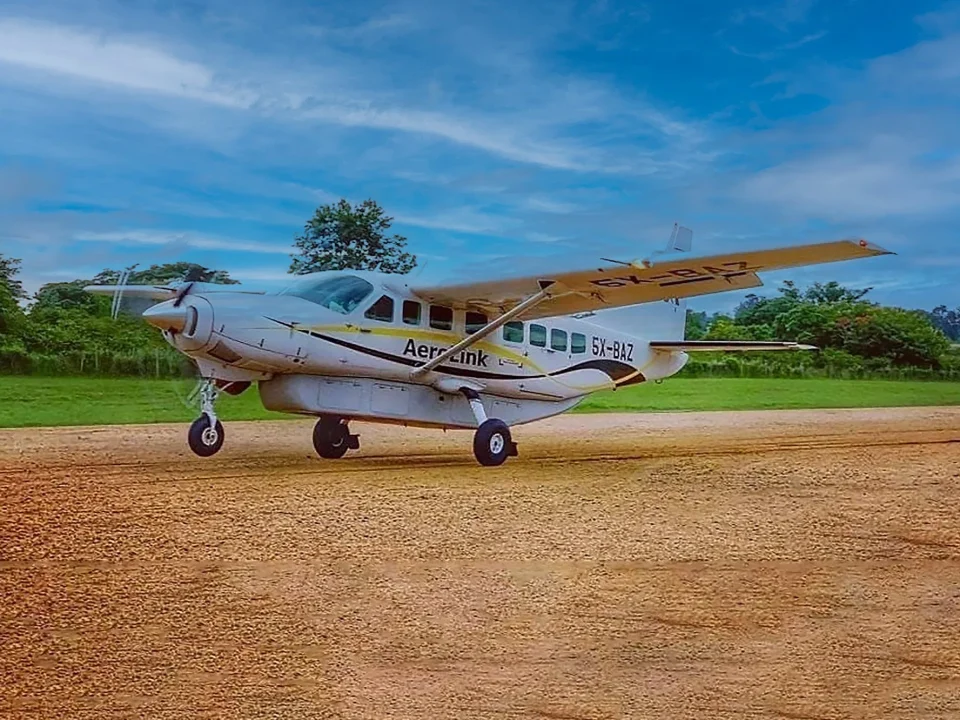
Getting to Kibale: Kibale Forest National Park is approximately 5 to 6 hours by road from Kampala, or reachable by charter flight to Kasese airstrip. Our flight booking service can arrange domestic air connections, and our experienced team of Uganda tour operators will handle all ground logistics seamlessly.
Best time to go: Chimpanzee tracking is available year-round, but the dry seasons — June to August and December to February — offer the most comfortable trekking conditions with firmer trails and easier visibility through the forest. The wet season brings lush scenery and fewer crowds, but trails can be slippery.
Accommodation near Kibale: There are excellent lodge options surrounding Kibale, ranging from luxury ecolodges to comfortable budget guesthouses. Our team can recommend the right option for your travel style — browse our top lodges in western Uganda for inspiration, or ask us to build a custom package around your preferences.
Further Reading
To learn more about chimpanzee conservation in Uganda and the science behind habituation, these resources are well worth exploring:
- Uganda Wildlife Authority — Permits, Parks & Conservation
- Kibale National Park — Official Park Information
- BBC News: The Kibale Chimpanzee Civil War — a fascinating deep-dive into chimp society
Ready to Track Chimpanzees in Uganda?
Whether you have a single morning to spare or are building a two-week primate safari, chimpanzee tracking at Kibale is one of the most rewarding wildlife experiences in East Africa. The sounds, the movement, the intelligence in their eyes — it is the kind of encounter that stays with you long after you leave the forest.
At Kenlink Tours, we have been guiding travellers through Uganda's forests for over 15 years. We handle every detail — from securing your permits to choosing the right lodge, planning your route, and connecting you with expert guides who bring the forest to life. On every trip we book, 30% of our profits go directly to local communities, so your adventure makes a difference beyond the trail.
Get in touch with our team at info@kenlinktours.com or visit our bookings page to start planning your chimpanzee tracking safari in Uganda today.