- EXPERT'S HELP
- +256789210067
- +256200955001
- info@kenlinktours.com


Big Five Safari Experiences in Uganda
May 7, 2026
Budget Uganda Safaris for Backpackers
May 7, 2026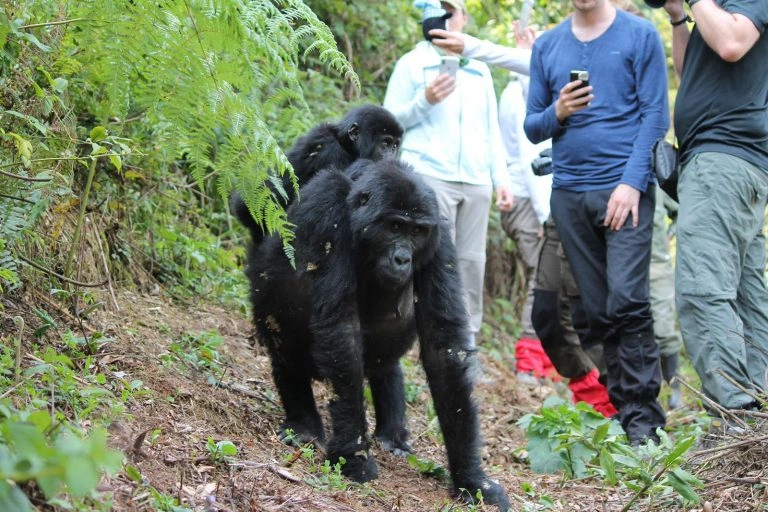
Why Uganda was Named the Pearl of Africa. In 1908, Sir Winston Churchill returned from a journey through East Africa and sat down to write about what he had witnessed. When he reached Uganda, his words carried a particular weight: he described it as “the Pearl of Africa” — a place of such extraordinary beauty, diversity, and natural abundance that no other name could do it justice. More than a century later, that phrase has never been replaced, and no traveler who has stood at the edge of Bwindi’s ancient rainforest, watched the Nile burst through a narrow gorge at Murchison Falls, or locked eyes with a mountain gorilla in the morning mist has ever questioned why Churchill chose those words. This is a country that genuinely earns its title. Here is why.
The Origin of the Name — Churchill’s Famous Verdict
Churchill was not given to careless praise. He was a precise and demanding observer, and his 1908 book My African Journey was a carefully crafted account of what he witnessed during an expedition through British East Africa. When he arrived in Uganda, the landscapes and biodiversity visibly overwhelmed him. He described the richness of the country’s wildlife, the vibrancy of its vegetation, and the warmth of its people with an admiration that set Uganda apart from every other territory he visited. The phrase “Pearl of Africa” was not hyperbole — it was a considered verdict from one of history’s most articulate witnesses.
According to Kenlink Tours’ historical overview of Uganda, the name drew on a tradition of comparing rare and precious things to pearls — objects of extraordinary beauty formed quietly and organically, hidden within something greater. Uganda, tucked into the heart of the African continent, surrounded by larger and more widely known neighbours, was precisely that: a hidden gem of incomparable richness. Some historical accounts also credit explorers like John Hanning Speke and Frederick Lugard with early recognition of the country’s exceptional character, but it was Churchill who gave the world the phrase that has endured.
Today, Uganda is home to over 56 ethnic groups, ten national parks, the largest tropical lake in the world, some of Africa’s tallest mountains, and more primate species than any other country on the planet. Every aspect of what Churchill admired has not only survived the intervening century — it has, thanks to dedicated conservation, largely flourished.
Mountain Gorillas — The Crown Jewel of Uganda’s Wildlife
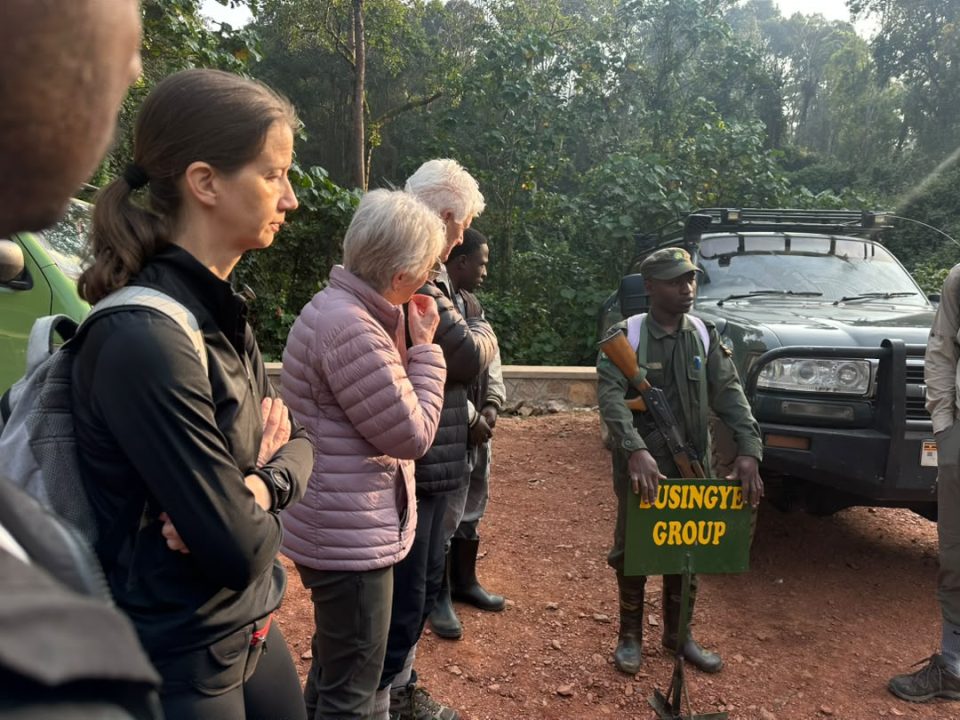
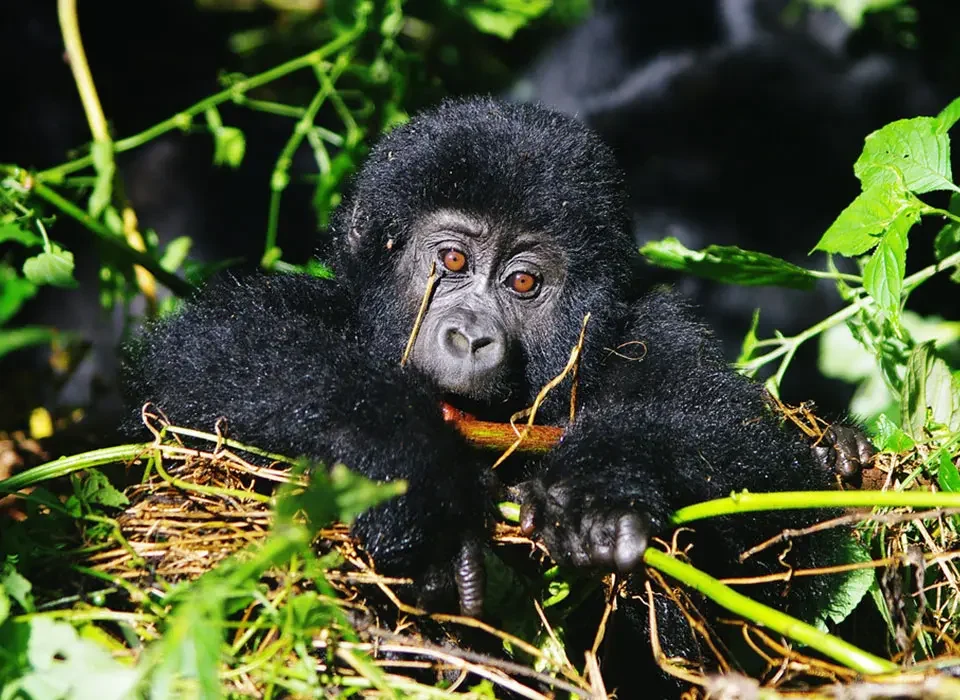
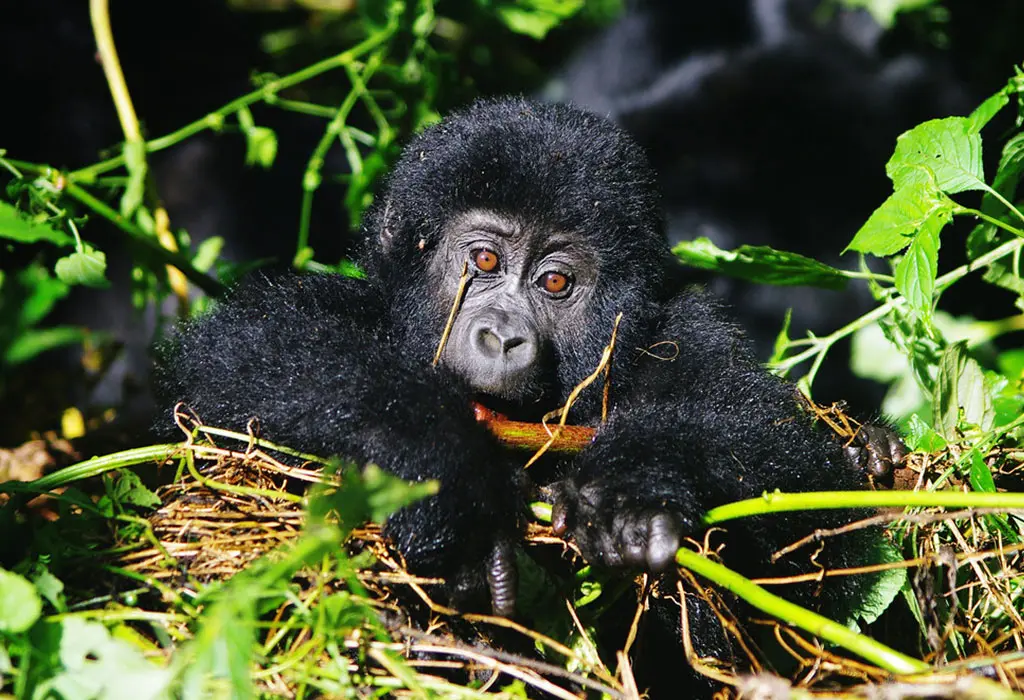
Nothing encapsulates Uganda’s pearl status more powerfully than its mountain gorillas. Uganda is home to more than half of the world’s entire population of these critically endangered great apes, the majority of which live within Bwindi Impenetrable National Park — a UNESCO World Heritage Site draped across the steep hills of southwestern Uganda. This ancient forest, over 25,000 years old and among the most ecologically diverse on the African continent, shelters over 20 habituated gorilla families across four trekking sectors.
Gorilla trekking in Uganda is widely regarded as one of the most profound wildlife encounters on Earth. The experience of hiking through dense equatorial rainforest, guided by expert trackers, and then suddenly finding yourself sitting quietly metres from a silverback gorilla as his family goes about their morning — feeding, grooming, playing — is one that fundamentally shifts a person’s sense of their place in the natural world. According to the IUCN Red List, mountain gorillas (Gorilla beringei beringei) are classified as Endangered, and Uganda’s conservation-driven tourism model has been a critical factor in the species’ gradual population recovery. The gorilla is, in every sense, the jewel within the Pearl.
A Landscape of Staggering Diversity
One of the most striking things about Uganda is how many completely different landscapes it manages to contain within one relatively small country. Within a single week-long journey, a traveller can move from the equatorial rainforest of Bwindi, to the open savannah and crater-lake plains of Queen Elizabeth National Park, to the Rift Valley wetlands of the Kazinga Channel, to the northern savannahs of Murchison Falls where the world’s longest river forces itself through a seven-metre gap in the rock before plunging 43 metres in a wall of white water.
To the west rise the Rwenzori Mountains — Africa’s “Mountains of the Moon” — their upper slopes perpetually shrouded in mist and, uniquely for an equatorial location, capped with glaciers and permanent snow. Trekking the Rwenzoris is one of Africa’s great alpine adventures, offering a journey through distinct vegetation zones — from montane forest through bamboo to heather moorland and finally to the glaciated peaks above 5,000 metres. The range was listed as a UNESCO World Heritage Site in recognition of its exceptional natural importance. To the south and east lies Lake Victoria, the largest tropical lake in the world, a vast inland sea that is the primary source of the White Nile and the beating heart of East Africa’s freshwater ecology.
No other country in Africa packages this range of ecosystems so compactly or so accessibly. Uganda is the continent in miniature — and that is precisely what makes it a pearl.
The Primate Capital of the World
Uganda’s claim to the title of “Pearl of Africa” is reinforced enormously by its primate diversity. With over 20 primate species recorded — including mountain gorillas, chimpanzees, red colobus monkeys, L’Hoest’s monkeys, black and white colobus, grey-cheeked mangabeys, and olive baboons — Uganda is widely regarded as the primate capital of the world. No other country of comparable size comes close.
Kibale National Park is the centrepiece of Uganda’s chimpanzee experience. Home to the largest known population of East African chimpanzees, Kibale offers both regular chimpanzee tracking and longer habituation experiences, where guests spend a full day with a semi-habituated chimp community. The range of wildlife encounters available across Uganda — from gorillas and chimps in the west to lions, elephants, and buffaloes in the savannah parks, and rhinos at Ziwa Sanctuary in the north — means that a single Uganda safari can deliver more species depth than almost any multi-country itinerary in Africa.
Africa’s Finest Birding Destination
If Churchill were visiting Uganda as a naturalist today, the country’s birds might well be what sealed his pearl verdict. Uganda is one of the top birding destinations on the entire continent, with over 1,060 recorded bird species — roughly half of all bird species found in Africa, in a country that occupies less than 1% of the continent’s land area. According to BirdLife International, Uganda holds the highest bird species density of any African country, a statistic that continues to draw serious ornithologists and casual birdwatchers alike from around the world.
The top birdwatching destinations in Uganda include Bwindi Impenetrable Forest — home to 23 Albertine Rift endemic species — Murchison Falls National Park, where the elusive Shoebill Stork haunts papyrus swamps along the Nile, and Queen Elizabeth National Park, which hosts over 600 species across its diverse habitats. Uganda’s Grey-Crowned Crane, the national bird, is a creature of particular elegance: tall, golden-crested, and often seen in pairs dancing in open grassland. It is a fitting symbol for a country whose natural beauty is at once dramatic and impossibly graceful.
Rich Culture and Warm People
The Pearl of Africa is not only defined by its landscapes and wildlife. Churchill also responded deeply to the people and cultures he encountered, and that richness has only deepened in the century since his visit. Uganda’s people and culture span more than 56 ethnic groups, each with its own language, traditional kingdom, music, art, and dance. The Buganda Kingdom — the largest in Uganda — maintains the Kasubi Tombs, a UNESCO World Heritage Site and the burial ground of the Buganda kings, as a living monument to the country’s royal heritage. The Batwa community of southwestern Uganda, known as the “forest people,” offer visitors rare insight into one of Africa’s most ancient ways of life.
Traditional dances like the Bakisimba of the Baganda, the Kitagururo of the Banyankole, and the Imbalu circumcision dance of the Bagisu reflect a cultural tapestry of extraordinary depth and vibrancy. For travelers, these encounters transform a wildlife safari into something richer — a genuine engagement with a living, breathing society whose warmth and hospitality consistently leave visitors profoundly moved.
Experiencing Uganda’s Pearl — Planning Your Visit
The good news about Uganda’s pearl status is that it is fully and practically accessible to every kind of traveller. Uganda’s diverse safari experiences range from budget-friendly primate adventures to luxurious multi-park journeys by private aircraft. The country is safe, welcoming, and increasingly well-equipped to host international visitors across a wide range of interests and budgets.
Kenlink Tours specialises in crafting journeys through Uganda that honour the country’s full depth — from gorilla trekking permits secured months in advance to handpicked lodges that place you in the heart of the wilderness, game drives led by guides with decades of bush knowledge, and cultural encounters arranged with genuine respect for local communities. Their 10-day Uganda Wildlife Safari is a superb introduction to everything the Pearl has to offer, covering Murchison Falls, Kibale, Queen Elizabeth, and Bwindi in a single flowing itinerary.
Whether you have three days or three weeks, Kenlink Tours will design an experience that reveals Uganda at its finest. You can explore all available tours and book your Uganda safari directly online, or speak with their team to create something entirely bespoke.
Churchill was right. Uganda is the Pearl of Africa — and unlike most pearls, this one is open to everyone who is willing to come and find it.