- EXPERT'S HELP
- +256789210067
- +256200955001
- info@kenlinktours.com

Top Wild Animals to See on Your Uganda Wildlife Safari. Uganda, often celebrated as the Pearl of Africa, is a wildlife enthusiast’s paradise. From dense rainforests to vast savannahs, this East African gem offers some of the most incredible safari experiences on the continent. Visitors to Uganda can witness Africa’s iconic Big Five – lions, leopards, elephants, giraffes, and rhinoceroses – as well as the world’s most famous primates, including mountain gorillas and chimpanzees. But Uganda’s wildlife extends far beyond these famous species. With over 350 mammal species, 1,000 bird species, and countless reptiles and amphibians, Uganda promises a truly immersive encounter with nature.
In this guide, Kenlink Tours team explores the top wild animals you are likely to encounter on a Uganda safari, their habitats, behaviors, and the best places to spot them.
Predators of Uganda: The Kings and Queens of the Savannah
Predators in Uganda are diverse, ranging from the majestic lion to elusive wild cats. These carnivores are not only fascinating to watch but play a critical role in maintaining the balance of the ecosystem.
Lions – The Kings of the African Wilderness

Lions, Africa’s apex predators, are known for their social structure, with females doing most of the hunting. Adult males can weigh up to 680 kg and reach a height of 165 cm at the shoulder. Lions primarily prey on herbivores like antelopes and buffaloes. In Uganda, lions are commonly spotted in Queen Elizabeth National Park, Murchison Falls National Park, and Kidepo Valley National Park. A unique attraction is the tree-climbing lions in Ishasha, part of Queen Elizabeth National Park, a sight few get to experience anywhere else.
Leopards – The Elusive Hunters

Leopards are secretive, solitary predators, often hard to spot, making every sighting a special experience. Unlike cheetahs, leopards are more robust and have rosette-shaped spots, helping them blend into forested or rocky landscapes. They are commonly seen along the Channel Drive in Queen Elizabeth National Park but are present in most of Uganda’s national parks.
Cheetahs – Speed in Motion

Cheetahs are built for speed rather than strength. With their slender, greyhound-like bodies, they are incredible sprinters, capable of reaching over 110 km/h in short bursts. In Uganda, cheetahs are found mainly in Kidepo Valley National Park and Pian Upe Game Reserve. Spotting one in the wild is a thrilling experience for any safari-goer.
Hyenas – The Savanna Communicators

Spotted hyenas are common across Uganda’s savannahs, except Kidepo National Park. Recognizable by their spotted coats and sloping backs, hyenas are intelligent social animals with complex communication systems. Their eerie whoops and laughter often fill the night, reflecting their adaptability and cunning nature.
African Civets – Nighttime Mysteries
African civets are nocturnal and rarely seen during the day. These cat-like creatures are bulky and long-haired, inhabiting most national parks in Uganda. Observing them at night can be an intriguing experience, offering a glimpse into Uganda’s nocturnal wildlife.
Mongooses – Agile Hunters
Mongooses, including Egyptian, Marsh, Slender, White-tailed, and Banded species, are active in Queen Elizabeth National Park. Small, agile, and alert, they hunt insects, rodents, and even venomous snakes, making them impressive small predators.
Genets – Nocturnal Cat-Like Mammals
Genets are slender, nocturnal mammals belonging to the Viverridae family. Species such as servaline, large-spotted, and small-spotted genets can often be spotted during night drives in Semliki Wildlife Reserve. Interestingly, they are sometimes attracted to human settlements, giving visitors a rare opportunity for sightings.
Otters – Aquatic Predators
Uganda is home to three species of otters: the spotted-necked otter, Congo clawless otter, and Cape clawless otter. These playful aquatic mammals are found in Lake Mburo National Park and other wetlands. Their dexterity and social behavior make them a joy to watch along Uganda’s waterways.
Jackals, Caracals, Servals, and Bat-Eared Foxes
Other predators in Uganda include jackals, caracals, serval cats, and the bat-eared fox, each with unique behaviors and habitats. Jackals inhabit savannahs and woodlands, while servals and caracals are elusive hunters in grasslands. The bat-eared fox, found mainly in Kidepo, is notable for its enormous ears and distinctive silver-grey coat.
Primates of Uganda: Close Encounters with Our Closest Relatives
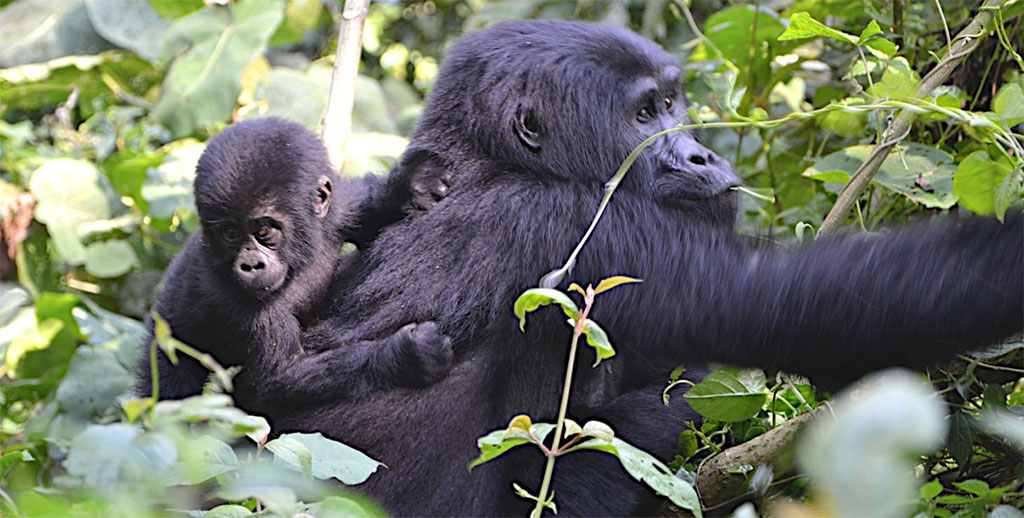
Primates are among Uganda’s most captivating wildlife. With forests that support a rich diversity of monkeys and apes, Uganda offers some of the best primate safaris in the world.
Mountain Gorillas – Gentle Giants of the Mist
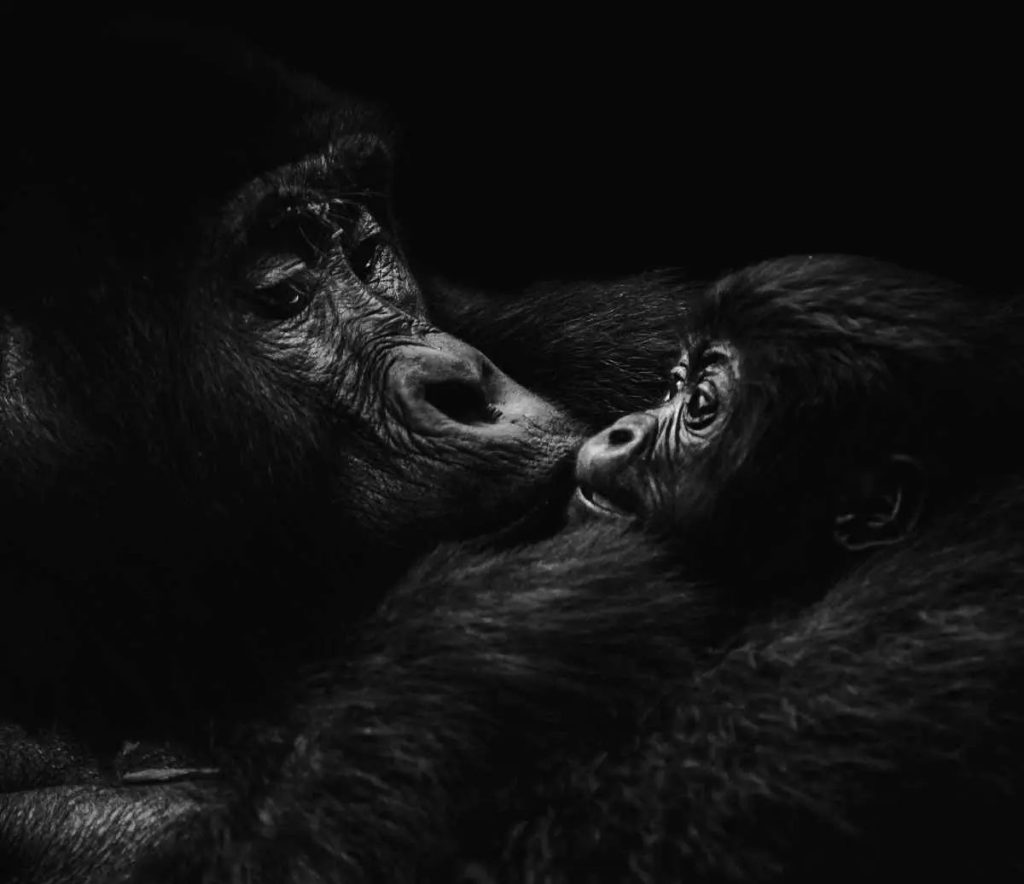
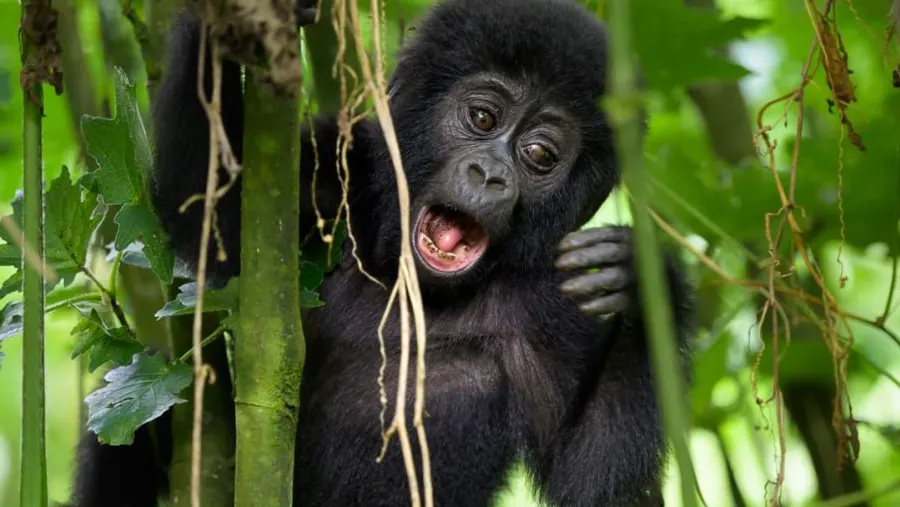
Mountain gorillas are endangered and majestic, residing in Bwindi Impenetrable National Park and Mgahinga Gorilla National Park. Observing a gorilla family led by a silverback is a humbling experience. These herbivorous primates feed on leaves, stems, and fruits, living in closely bonded social groups. Gorilla trekking in Uganda is both a privilege and an unforgettable adventure.
Chimpanzees – Forest Acrobats
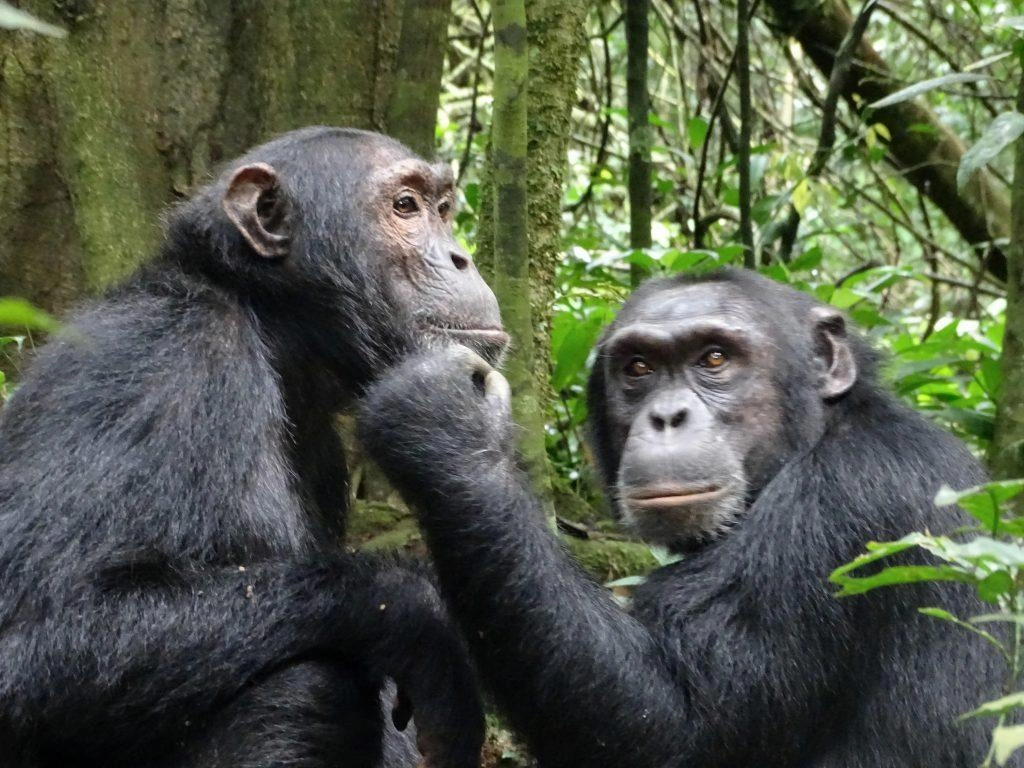
Chimpanzees, found in Kibale National Park, Budongo Forest, and Kyambura Gorge, are our closest living relatives. Highly intelligent and social, these primates exhibit behaviors such as tool use and complex vocal communication. Watching them swing through trees and interact in communities is fascinating.
Golden Monkeys – Vibrant and Playful

Golden monkeys, primarily in Mgahinga Gorilla National Park, are small primates with bright golden-orange fur. Acrobatic and social, they thrive in bamboo forests and are a favorite among wildlife photographers. See our 4 Days Gorilla and Golden Monkey Tracking Safari
Other Monkeys – Diversity and Fun
Uganda’s forests and savannahs host numerous monkey species:
Vervet Monkeys – Agile and energetic, common in many parks.
Red-tailed Monkeys – Found in Kibale and Bwindi forests.
Black-and-White Colobus – Elegant leaf-eaters seen in Bwindi and Kibale.
Baboons – Social and adaptable, roaming savannahs and forests.
Blue Monkeys, L’hoest’s Monkeys, De Brazza’s Monkeys, Patas Monkeys, and Red Colobus Monkeys – Each with unique behaviors and habitats, adding color to Uganda’s primate diversity.
Nocturnal Primates – Potto and Bushbaby
Uganda’s forests also shelter potto and bushbabies, small nocturnal primates. Pottos move slowly through the trees with remarkable stealth, while bushbabies are known for their large eyes and agile leaping skills. Both are elusive and fascinating for night safaris.
Herbivores of Uganda: Graceful Giants and Grazers
Herbivores dominate Uganda’s savannahs and forests. These animals are essential to the ecosystem, supporting predators and shaping landscapes.
African Elephants – Majestic Giants

Uganda is home to African bush elephants and forest elephants. These massive mammals, found in Murchison Falls, Queen Elizabeth, and Kidepo Valley, are herbivorous, feeding on grass, bark, and fruits. Observing elephants in the wild is a humbling and awe-inspiring experience.
Buffaloes – Part of the Big Five

Buffaloes are strong, unpredictable, and dangerous, making them a key species in Uganda’s Big Five. They inhabit savannahs and forests across national parks, often moving in large herds.
Giraffes – Towering Elegance

Uganda hosts the endangered Rothschild’s giraffe and Nubian giraffe. With heights up to 18 feet, these herbivores gracefully browse treetops, adding a spectacular sight to any safari in Murchison Falls, Lake Mburo, or Kidepo Valley.
Rhinoceroses – A Prehistoric Presence

While black rhinos are extinct in Uganda, the white rhino can be seen at the Ziwa Rhino Sanctuary. Their thick skin, massive horns, and imposing size make rhinos unforgettable.
Hippos – Aquatic Giants
Hippos are common in Queen Elizabeth, Murchison Falls, and Lake Mburo National Parks. Spending most of their time in water, they are herbivores with massive jaws, often seen in large pods along rivers and lakes.
Zebras and Antelopes – Patterns and Grace
Zebras with their striking black-and-white stripes roam Kidepo and Lake Mburo, while antelopes such as Uganda kob, impala, eland, greater kudu, hartebeest, oryx, defassa waterbuck, and reedbuck showcase Uganda’s rich herbivore diversity. Smaller antelopes like duikers and dik-diks inhabit forests and woodland areas.
Wild Pigs – Warthogs, Bushpigs, and Forest Hogs
Uganda’s wild pigs, including warthogs, common bushpigs, and giant forest hogs, add diversity to the herbivore group. Warthogs are common in savannahs, while bushpigs and forest hogs thrive in woodlands and forests.
Reptiles of Uganda: Cold-Blooded Predators

Uganda’s tropical climate supports a variety of reptiles, from giant crocodiles to colorful chameleons.
Nile Crocodile – The Apex Aquatic Predator
The Nile crocodile, found along rivers and lakes including the Nile, Murchison Falls, and Queen Elizabeth, is the largest reptile in Uganda. These stealthy predators feed on fish, birds, and mammals, maintaining ecological balance in aquatic ecosystems.
Snakes – From Rock Pythons to Black Mambas
Uganda’s snake population is diverse, including African Rock Pythons, Black Mambas, and Puff Adders. While venomous snakes like the black mamba are dangerous, most snakes are shy and avoid humans, contributing to the ecosystem by controlling rodent populations.
Lizards and Chameleons
Uganda’s forests and savannahs are home to monitor lizards, skinks, and chameleons. Chameleons, in particular, fascinate visitors with their color-changing abilities and slow, deliberate movements.
Why Uganda is a Must-Visit for Wildlife Lovers
Uganda offers a rare combination of mountains, savannahs, wetlands, and forests, allowing travelers to see a wide array of species in relatively small geographic areas. Its well-managed national parks, conservation efforts, and trained guides ensure visitors have safe, educational, and immersive wildlife experiences. Whether trekking gorillas, photographing lions, or spotting rare primates, Uganda delivers unforgettable encounters with the wild.
Plan Your Uganda Safari Today
Uganda’s wildlife safari options are flexible, from short 5-day gorilla adventures to classic 8-day primate tours. With expert guides, quality accommodations, and all-inclusive packages covering permits, meals, and transport, your African wildlife dream can become reality.

Request for a Quote
Start planning your adventure trip today with a professional expert available to help you 24/7. Encounter Africa on your own terms.
Request a Quote +256 789 210067
DISCOUNTED GORILLA SAFARIS IN UGANDA