- EXPERT'S HELP
- +256789210067
- +256200955001
- info@kenlinktours.com


Ultimate Gorilla Trekking Guide in Uganda
May 7, 2026
Why Uganda was Named the Pearl of Africa
May 7, 2026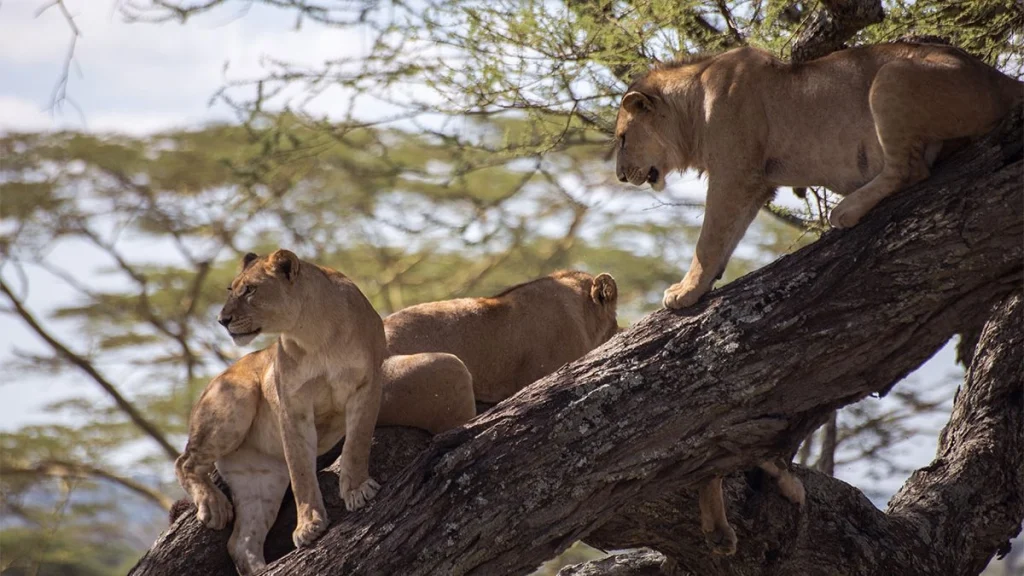
Big Five Safari Experiences in Uganda. When most travelers think of a Big Five safari, their minds leap to Kenya’s Masai Mara or South Africa’s Kruger National Park. But Uganda — Africa’s “Pearl of Africa” — holds one of the continent’s most compelling and least crowded Big Five stories. Lions, leopards, elephants, buffaloes, and rhinos are all present within Uganda’s borders, spread across a stunning variety of national parks and conservation areas that range from dramatic savannah plains to river valleys carved by the Nile. Add to this Uganda’s legendary primate encounters, and you have a safari destination unlike any other on Earth. This guide walks you through where to find each of the Big Five in Uganda, which parks to visit, what to do, and how to plan the perfect trip.
What Are the Big Five and Why Does Uganda Have Them?
The term “Big Five” was originally coined by big-game hunters referring to the five most dangerous animals to pursue on foot: lion, leopard, elephant, Cape buffalo, and rhinoceros. Today, the phrase is used almost universally to describe the crown jewel species of any African safari. Uganda’s extraordinary biodiversity means all five can be encountered within a single country — and with far fewer crowds than you would find at the more famous East African safari destinations.
Uganda’s wildlife profile is uniquely layered. Unlike the open savannahs of Kenya or Tanzania, Uganda blends classic Big Five terrain with Afromontane rainforest, Rift Valley wetlands, and the basin of the world’s longest river. This means your safari here is not just a game drive — it is an immersive journey through multiple ecosystems. According to the Uganda Wildlife Authority (UWA), the country’s national parks collectively protect thousands of mammal, bird, and reptile species, making Uganda one of Africa’s most biodiverse nations per square kilometre.
The Lion — Uganda’s Tree-Climbing Kings
Uganda’s lions are famous for one reason above all others: they climb trees. The Ishasha Sector of Queen Elizabeth National Park is one of only two places in the world — the other being Tanzania’s Lake Manyara — where lions have developed the extraordinary habit of lounging in fig trees several metres above the ground. Wildlife scientists believe this behaviour helps them escape ground-level insects and gain elevated vantage points across the open plains. Watching a pride of lions draped across the branches of a towering fig tree at golden hour is one of the most arresting sights in all of African wildlife.
Beyond Ishasha, lions are also well-established in Murchison Falls National Park and in Kidepo Valley National Park, Uganda’s remote northeastern wilderness. Kidepo is particularly special for big cat enthusiasts — it is one of the few parks in Uganda where you can also spot cheetahs, most commonly in the Narus Valley. The combination of lions, cheetahs, and leopards in one park makes Kidepo one of Africa’s finest but least-visited big cat destinations.
The Leopard — The Most Elusive of the Five
Of all the Big Five, the leopard is the one that demands the most patience. Largely nocturnal and instinctively secretive, leopards in Uganda are present in several parks but rarely make themselves easy to find. Your best chances come from early morning game drives in Murchison Falls National Park’s northern sector, where leopards have been documented in and around riverine forests, and in the open savannah corridors of Queen Elizabeth National Park’s Kasenyi Plains.
A comparative game drive between Murchison Falls and Queen Elizabeth National Parks reveals that both parks offer credible leopard-spotting opportunities, though sightings depend heavily on time of day, season, and the knowledge of your guide. This is precisely why choosing an operator with experienced, locally trained safari guides — like Kenlink Tours — makes an enormous difference to your chances of a memorable sighting. The leopard rewards those who invest in expertise and rise before dawn.
The Elephant — Uganda’s Most Consistently Spectacular Sighting
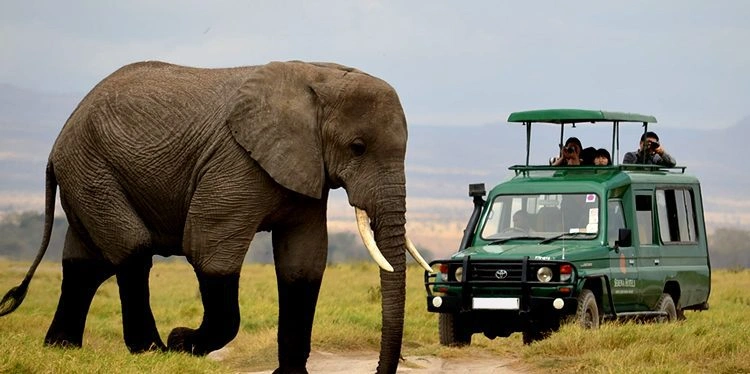
If there is one member of the Big Five that Uganda delivers with extraordinary reliability, it is the African elephant. Queen Elizabeth National Park is home to one of Uganda’s largest elephant populations, with herds regularly observed along the shores of the Kazinga Channel and on the Kasenyi Plains. Murchison Falls National Park also supports a thriving elephant population, and game drives in the park’s northern circuit routinely yield sightings of large mixed herds moving between the Nile and the surrounding savannah.
A boat cruise on the Kazinga Channel — a 32-kilometre natural waterway connecting Lake Edward and Lake George — offers some of the most dramatic elephant encounters available anywhere in Africa. Herds of elephants wade into the shallows to drink and bathe right alongside the boat, with hippos, crocodiles, and hundreds of bird species filling the rest of the frame. This two-hour cruise is one of the most photographically rewarding wildlife experiences in East Africa and sits at the very heart of what makes Queen Elizabeth National Park so beloved. The International Elephant Foundation notes that Uganda’s elephant population has recovered significantly over recent decades, a tribute to UWA’s ongoing anti-poaching efforts.
The Cape Buffalo — Power and Abundance Across Uganda’s Parks
The Cape buffalo is perhaps the most frequently encountered of Uganda’s Big Five. Massive, gregarious, and completely unafraid of approaching vehicles, these animals form large herds that drift across Queen Elizabeth’s plains, concentrate near the Kazinga Channel’s water margins, and graze through the grasslands of Murchison Falls and Kidepo. A single herd can number in the hundreds, and witnessing such a group in motion — a dark, thunderous mass flowing across the savannah — is one of those pure, primitive safari moments that remind you exactly how alive Africa truly is.
Cape buffaloes are excellent anchors for predator sightings too. Where large buffalo herds gather, lions inevitably follow. Early morning game drives during Uganda’s dry season, when water sources concentrate animals in predictable locations, offer the best conditions for watching this predator-prey relationship play out in real time. The 10-day Murchison Falls, Kibale, Queen Elizabeth and Bwindi safari from Kenlink Tours covers all three prime buffalo habitats in a single seamlessly planned itinerary.
The Rhino — Uganda’s Conservation Comeback Story
The rhinoceros is Uganda’s most unusual Big Five entry — and its most moving. White rhinos were once hunted to local extinction in Uganda, but a remarkable conservation programme has brought them back. Today, the only place in Uganda where you can track wild rhinos on foot is Ziwa Rhino Sanctuary, a 7,000-hectare private conservation area located approximately three hours north of Kampala, conveniently positioned on the main road to Murchison Falls.
Ziwa is not a game reserve with barriers and viewing platforms. It is a walking safari experience where you are guided on foot by rangers directly to the rhinos — sometimes within metres of them. The sanctuary’s resident white rhinos are relaxed around human presence but remain fully wild, and the experience of tracking these ancient animals on foot through open bush carries a particular kind of awe. According to the Rhino Fund Uganda, the population at Ziwa has grown steadily since the programme began, and the long-term plan is to eventually reintroduce rhinos back into Uganda’s national parks, completing the Big Five circle in the wild. Incorporating Ziwa into your Uganda safari is effortless — most itineraries heading north include a half-day rhino tracking stop before continuing to Murchison Falls.
The Best Parks for a Big Five Safari in Uganda
Uganda’s national parks are not equal in terms of Big Five coverage, and choosing the right combination is the key to a complete safari.
Queen Elizabeth National Park delivers lions (including tree-climbers in Ishasha), leopards, elephants, and buffalo with consistency, alongside boat safaris on the Kazinga Channel, chimpanzee tracking in Kyambura Gorge, and over 600 recorded bird species. It is Uganda’s most visited park for good reason — diversity, accessibility, and sheer spectacle packed into one destination. Queen Elizabeth is also part of a UNESCO-recognised Biosphere Reserve, underlining its global ecological significance.
Murchison Falls National Park, Uganda’s largest protected area, offers lions, leopards, elephants, and buffalo across sweeping savannah terrain, plus the thunderous spectacle of the Nile forcing itself through a narrow seven-metre gorge before plunging 43 metres. A boat cruise from Paraa to the base of the falls is one of the great wildlife-and-landscape combinations anywhere in Africa.
Kidepo Valley National Park in the remote northeast is Uganda’s most dramatic and least visited major park. Its wide ancient valleys support large numbers of lions, elephants, buffalo, and the rare Rothschild’s giraffe, alongside species — such as cheetah and ostrich — found nowhere else in Uganda.
Ziwa Rhino Sanctuary completes the Big Five picture for the rhino encounter, operating as the essential add-on to any northern Uganda itinerary. It is also home to over 350 bird species, including the rare Shoebill Stork, making it a rewarding stop in its own right.
A dedicated Big Five and Primate Safari in Uganda offered by Kenlink Tours weaves all of these destinations into a flowing, expertly guided itinerary that also includes chimpanzee tracking in Kibale Forest and gorilla trekking in Bwindi — creating what is arguably the most comprehensive wildlife safari experience available anywhere on the continent.
When to Go and How to Plan Your Safari
The dry seasons — June through September, and December through February — are universally the best times for Big Five game viewing in Uganda. Shorter grass, lower vegetation, and concentrated water sources bring animals into open terrain far more reliably, and road conditions in the parks are at their best. That said, Uganda’s parks are a year-round destination, and Kenlink Tours designs exceptional itineraries for every month.
Visitors with limited time can build a focused five-to-seven-day experience centred on Queen Elizabeth National Park with a Ziwa rhino stop on the way north. Those with more days can embark on the 10-day Uganda Wildlife Safari covering Murchison Falls, Kibale Forest, Queen Elizabeth, and Bwindi, or go deeper with the flagship 20-day Ultimate Uganda Safari encompassing every major park in the country for a total immersion in Uganda’s wild world.
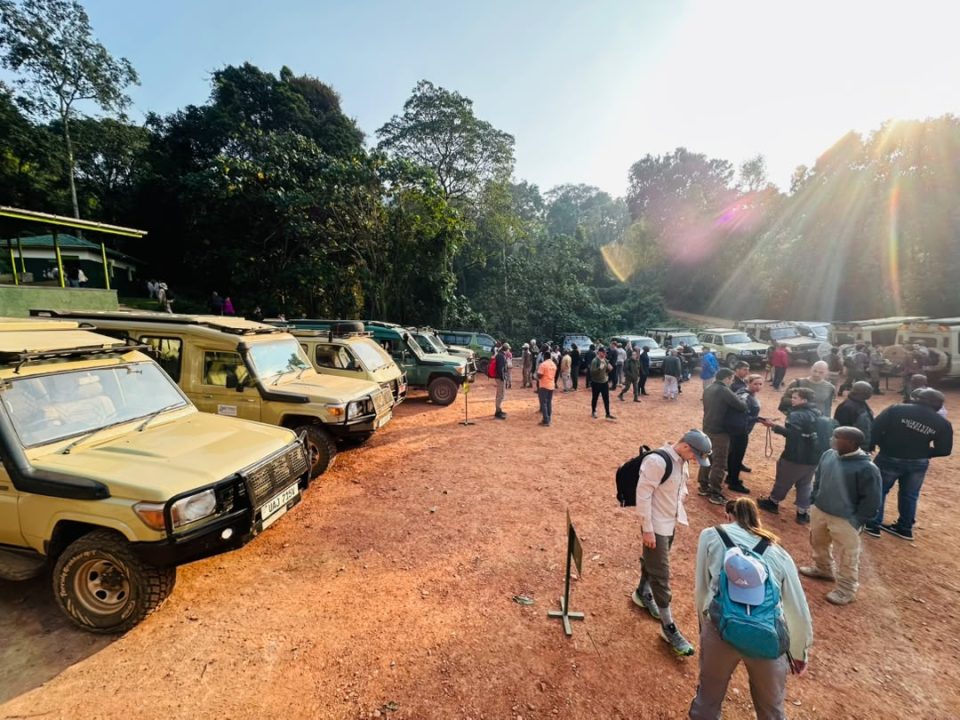
From permit logistics and park fees to handpicked lodges, reliable 4×4 safari vehicles, and professionally trained guides, Kenlink Tours handles every detail so that you can focus entirely on the experience. You can browse all available tours and book your Uganda safari online, or contact the Kenlink team directly to design a fully customised Big Five itinerary that fits your schedule, group size, and budget.
Uganda’s Big Five safari is not simply a checklist exercise. It is one of the most genuinely wild, varied, and deeply moving wildlife journeys available on the continent — in a country that still feels, in the best possible way, like Africa at its most unspoiled.