- EXPERT'S HELP
- +256789210067
- +256200955001
- info@kenlinktours.com


Gorilla Trek and Chimp Trek Package
August 14, 2026
Lake Mburo Safari Guide
August 14, 2026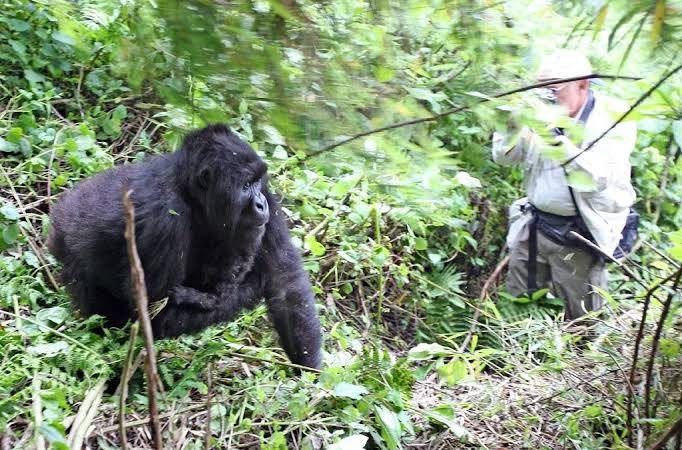
Gorilla and Chimpanzee Holiday Uganda. There’s a meaningful difference between a gorilla and chimpanzee trekking package and a gorilla and chimpanzee holiday, even though the two terms sound almost interchangeable. A package, in the way most operators build it, is optimized around two treks and the driving required to connect them — efficient, but tightly scheduled, with little room for anything else. A holiday is built differently: the two treks remain the centerpiece, but they’re spaced out with genuine rest days, scenic stops, and time to actually enjoy Uganda rather than just move through it. This guide is for travelers who have the extra time to do it that way. If your priority is the tightest, most efficient version of this combination instead, our more compressed gorilla trek and chimp trek package guide covers that itinerary in full — this post is the slower, more spacious alternative.
What Actually Makes This a Holiday Rather Than Just an Itinerary
The difference isn’t cosmetic. A compressed combo package typically runs five to six days, with almost every day involving either a trek or a multi-hour drive. A proper holiday version stretches to eight, nine, or ten days, and the extra time goes almost entirely toward rest — a full day at a lakeside lodge with nothing scheduled, a slow morning at a crater lake viewpoint, an afternoon at leisure rather than back in the vehicle. The treks themselves don’t change; a gorilla trek is a gorilla trek regardless of how much time surrounds it. What changes is everything else, and for many travelers, especially those combining this trip with a broader vacation rather than a single-purpose wildlife mission, that extra breathing room is what actually makes the trip memorable rather than exhausting.
There’s also a simple physiological argument for building in this kind of pacing. Gorilla and chimpanzee trekking are both genuinely tiring, and doing them back to back with no recovery time in between, on top of long travel days, tends to produce diminishing returns — travelers arrive at the second trek already worn down from the first, rather than fresh and able to fully take in the experience. Spacing the two treks apart with a rest day or scenic stop in between isn’t just a nicer way to travel; it tends to produce a better experience of the treks themselves.
Sample 9-Day Gorilla and Chimpanzee Holiday
Day one: arrive and settle into Entebbe or Kampala, with time to rest after an international flight rather than departing immediately. Day two: travel to Kibale National Park or Kalinzu Forest Reserve, arriving with time to relax before dinner. Day three: chimpanzee trek in the morning, followed by a genuinely free afternoon rather than an immediate onward drive. Day four: a scenic stop at Fort Portal’s crater lakes en route toward Queen Elizabeth National Park, with an overnight there rather than pushing straight through. Day five: a Queen Elizabeth game drive and Kazinga Channel boat cruise, taken at a relaxed pace. Day six: travel on to Bwindi, arriving with the afternoon free. Day seven: the gorilla trek itself. Day eight: rather than departing immediately, a full rest day — many travelers use this for a visit to Lake Bunyonyi, a short drive from most southern Bwindi sectors. Day nine: return travel to Kampala or Entebbe. This structure follows the same core route as our tighter gorilla and chimp trek package, but with three additional days woven in specifically for rest and scenery rather than logistics.
Lake Bunyonyi: Uganda’s Natural Rest Stop
If there’s one addition that turns a compressed gorilla-and-chimp itinerary into a genuine holiday, it’s a stop at Lake Bunyonyi. Often called one of Uganda’s most beautiful lakes, it sits a short drive from Kisoro and several of Bwindi’s southern sectors, ringed by terraced hills and dotted with small islands. Unlike the trekking days that precede it, a Bunyonyi stop involves nothing more strenuous than a canoe paddle across calm water or a quiet afternoon on a lodge terrace. Our overview of tourist activities in Kabale, Uganda — the town that serves as the gateway to the lake — covers what’s available if you want a half-day of gentle activity rather than pure rest, and it pairs naturally with a longer stay at a lakeside lodge such as Ihamba Lakeside Safari Lodge.
Bunyonyi is also notable for what it lacks: unlike most of Uganda’s other lakes, it’s free of both crocodiles and hippos, making it one of the only lakes in the country safe for swimming. For travelers who have just come off a physically demanding gorilla trek, the option to actually swim rather than simply admire the water from a boat is a genuinely welcome change of pace, and it’s one of the small details that separates a rest day here from a rest day spent simply sitting at a lodge.
Fort Portal’s Crater Lakes: A Scenic Stop Between Chimps and Gorillas
Fort Portal sits near Kibale National Park and is ringed by dozens of volcanic crater lakes, several of which are easily visited as a half-day stop on the drive south toward Queen Elizabeth and Bwindi. Our guide to the crater lakes in Fort Portal covers the most scenic and accessible of them, and our broader piece on exploring western Uganda gives a sense of how this region fits together as a single, gently paced touring route rather than a set of disconnected stops. On a tight itinerary, this area gets driven straight through; on a proper holiday, it’s worth an overnight of its own.
Cultural Stops Worth the Extra Time
A slower-paced holiday also has room for the cultural side of a Uganda trip, which a compressed package rarely accommodates. A guided visit to a Batwa community near Bwindi, offering insight into the forest-based culture of Uganda’s indigenous forest people before their displacement from the park, is one of the more meaningful additions available, and it fits naturally into a rest day rather than competing with trekking time. Our route overview covering Bwindi, Queen Elizabeth, Kibale, and Bunyonyi together shows how these cultural and scenic stops slot naturally into the same broad loop as the treks themselves, rather than requiring a separate trip.
Framing This as a Honeymoon
Because a holiday-paced itinerary already builds in rest days and scenic stops, it adapts naturally into a honeymoon trip without much further adjustment — the extra time that makes this a “holiday” rather than a “package” is exactly the kind of pacing most couples want anyway. Our dedicated guide to the best honeymoon holidays in Uganda covers lodge choices and romantic add-ons in more depth, and for couples wanting a genuinely indulgent version of this trip, our look at whether a luxury splurge lodge is worth it is a useful read before deciding how much of the budget to put toward accommodation versus activities.
Framing This as a Family Holiday
Families face one specific constraint that doesn’t apply to couples or solo travelers: the minimum trekking age of 15 for both gorilla and chimpanzee permits. A holiday-paced itinerary handles this more gracefully than a compressed one, since the rest days and scenic stops — Lake Bunyonyi, the crater lakes, a game drive in Queen Elizabeth — are all activities younger children can join even if they can’t trek. Our guide to luxury family safaris in Africa and our broader piece on safaris in Africa suitable for families with children both cover how to structure a trip like this so that non-trekking family members have plenty to do rather than sitting out entire days.
Framing This as a Solo Trip
Solo travelers sometimes assume a longer, holiday-paced itinerary is a poor fit for traveling alone, when in practice the opposite is often true — the extra rest days give more room to join other travelers at a lodge, take a guided cultural walk, or simply set your own pace without a group itinerary dictating every hour. Our guide to the best Uganda tours for solo travelers is worth reading if you’re planning this holiday alone, since several of the rest-day activities described here, including the Bunyonyi canoe outing, are genuinely well suited to a single traveler rather than requiring a full group.
Choosing Lodges for a Holiday Pace, Not Just Proximity
On a compressed package, lodge choice is mostly about minimizing transfer time to the next trailhead. On a holiday-paced trip, it’s worth choosing at least a few lodges for their own sake — a lakeside setting at Bunyonyi, a crater lake view near Fort Portal, or simply a property with a pool and a proper restaurant where a full rest day is genuinely enjoyable rather than just idle. Our roundup of budget-friendly lodges in Bwindi is still useful if you want to keep the trekking legs economical while spending a little more on the rest-day properties in between.
What It Costs Compared to a Compressed Package
A longer, holiday-paced itinerary naturally costs more in absolute terms than a tight five or six-day package, simply because it includes more nights of accommodation and more days of vehicle hire. But the permit costs themselves — the largest single line item on either version of this trip — don’t change based on pacing. Our detailed breakdown of gorilla trekking permit prices in Uganda applies equally to both versions, and the extra days on a holiday itinerary are often the cheapest days of the whole trip, since rest days at a lakeside lodge typically cost less per day than the logistics-heavy trekking days around them.
Photography and Downtime: Making the Most of the Slower Days
The extra days on a holiday-paced itinerary aren’t only for rest — they’re also some of the best opportunities on the whole trip for photography that has nothing to do with wildlife. A crater lake at sunrise, terraced hillsides around Bunyonyi in late afternoon light, or a quiet portrait taken during a cultural visit all benefit from not being squeezed between two demanding trekking days. Travelers who treat the entire trip as a checklist of activities sometimes overlook this, but the slower stops are often where the most distinctive, least generic photographs of the whole trip end up coming from, simply because there’s time to wait for the right light rather than shooting whatever’s in front of the vehicle in the ten minutes available.
Extending Into Rwanda
Because a holiday-paced itinerary already has more flexibility built in, it’s a natural jumping-off point for travelers who want to extend into Rwanda as well, whether for a second, different gorilla trekking experience in Volcanoes National Park or simply to see Kigali. Our guide to Uganda and Rwanda connecting safaris covers how this extension works logistically, and it fits far more comfortably onto a nine or ten-day holiday than it would onto an already-tight five-day package.
Understanding What Each Trek Actually Involves
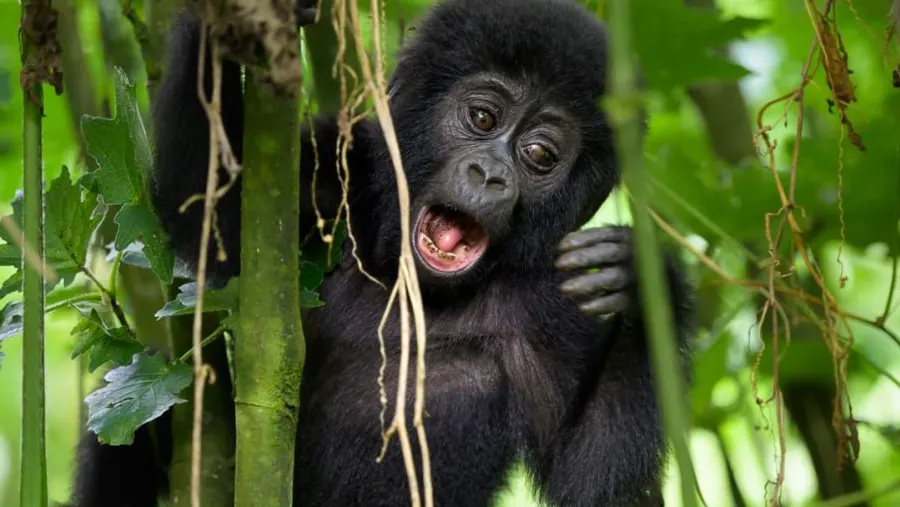
Whichever pace you choose, it’s worth understanding the fundamentals of both treks clearly before you go. Our guide to the difference between gorillas and chimpanzees covers how the two encounters differ in character, our page on chimp trekking in Kalinzu and Kibale covers the chimp side specifically, and our broader overview of Uganda primate tracking safaris situates both within Uganda’s wider primate-watching options. None of this changes based on how much rest time surrounds the treks, but it’s worth reading regardless of which version of the trip you ultimately choose.
Booking a Longer, More Flexible Itinerary
Because a holiday-paced trip has more moving parts than a straightforward package — additional lodges, cultural add-ons, and scenic detours — it benefits from being planned with an operator who can build the whole route as a single coordinated itinerary rather than a series of separate bookings. Our chimpanzee and gorilla trekking page shows how we handle the core trekking bookings, and from there the rest-day stops can be layered in around your specific pace and priorities rather than following a fixed template.
It’s also worth discussing your general pace preference up front rather than only specifying the activities you want, since two travelers with an identical list of stops can want very different rhythms — one preferring an early start and a full day of activity even on a “rest” day, another wanting genuinely unstructured time with no fixed plan at all. Sharing that preference early lets an operator build lodge choices and daily timing around how you actually like to travel, not just around the list of places you want to see.
Pacing Advice: How Many Nights at Each Stop
A common mistake when first attempting to build a holiday-paced itinerary is spreading the extra days too thinly across every stop rather than concentrating them where they matter most. As a rule of thumb, one night is usually enough at a purely scenic stop like the Fort Portal crater lakes, where the main activity is a single guided walk or viewpoint visit. Two nights is a better allocation for Lake Bunyonyi, since the appeal there is genuinely about slowing down rather than ticking off a single activity, and a single overnight rarely feels like enough of a break after a demanding trek. The trekking bases themselves — near Kibale and near your Bwindi sector — generally only need one night each beyond the trekking day itself, since the lodges there are functional rather than destinations in their own right.
Weather and Seasonal Considerations for a Longer Trip
A longer itinerary naturally spans more days, which slightly increases the odds of encountering at least some rain somewhere along the route, particularly given how spread out the stops are across different microclimates — Kibale’s forest, the Fort Portal crater lake region, Queen Elizabeth’s savannah, and Bwindi’s higher-altitude rainforest all have subtly different rainfall patterns even within the same broad season. This isn’t a reason to avoid a longer trip, but it is a reason to pack for variable weather throughout rather than assuming the entire itinerary will match the forecast for a single location. A light rain jacket that lives in your day bag for the whole trip, not just the trekking days, is a small but genuinely useful habit on an itinerary this spread out.
Frequently Asked Questions
How much longer is a holiday-paced trip than a compressed package? Typically eight to ten days versus five to six, with the extra time going almost entirely toward rest days and scenic stops rather than additional trekking.
Is a longer trip much more expensive? It costs more in total due to extra nights and vehicle days, but the rest days themselves are usually the cheapest part of the trip, since the permit costs — the largest expense — stay the same either way.
Is Lake Bunyonyi worth adding if I’m short on time? If you can spare even one extra day, yes — it’s one of the most relaxing stops available near Bwindi and requires no strenuous activity, making it an easy addition even to an otherwise compact trip.
Can children join the rest-day activities even if they can’t trek? Yes — Lake Bunyonyi, the Fort Portal crater lakes, and a Queen Elizabeth game drive are all suitable for younger children, unlike the treks themselves, which require a minimum age of 15.
Is this itinerary a good fit for a honeymoon? Very much so — the built-in pacing and scenic stops suit a honeymoon naturally, without requiring much adjustment from the standard holiday itinerary described here.
What Guests Say They Remember Most
Ask travelers who’ve done both a compressed package and a longer, holiday-paced version of this trip which one they’d recommend, and the answer is fairly consistent: the treks themselves are remembered as the highlight either way, but the details people bring up unprompted afterward tend to come from the slower stretches — the quiet canoe paddle on Lake Bunyonyi, a conversation with a Batwa community elder, the view over a crater lake at sunset. None of that diminishes the treks, which remain the reason most people book the trip in the first place, but it’s a useful data point for anyone deciding whether the extra days are worth the extra cost and time. For many travelers, the answer turns out to be yes, specifically because of what those extra days add rather than despite them.
Final Thoughts
A gorilla and chimpanzee holiday in Uganda is really the same core trip as a compressed package, stretched out and given room to breathe. The treks stay exactly as demanding and exactly as rewarding either way — what changes is everything around them, from a quiet morning on Lake Bunyonyi to a scenic overnight among Fort Portal’s crater lakes. If you have the extra days to spare, it’s worth taking them. If you’d like help building this slower version around your own dates and priorities, get in touch with our team at Kenlink Tours and we’ll put the full route together for you.
For travelers also arranging transport and safaris on the Rwanda side of the region, our colleagues at Pick and Transfer Safaris offer their own gorilla safari packages, including a one-day gorilla safari from Kigali and a two-day gorilla tour from Kigali, plus a detailed look at Bwindi Impenetrable Forest National Park itself. Travelers extending their holiday further can also browse their wildlife safari options, including a 3-day safari to Murchison Falls and a 3-day safari to Queen Elizabeth National Park. Learn more about their team on their about us page, browse their Kigali city guide, or reach out through their contact page.