- EXPERT'S HELP
- +256789210067
- +256200955001
- info@kenlinktours.com


Budget Lodges for Gorilla Trekking
August 14, 2026
How Far is Bwindi from Kigali?
August 15, 2026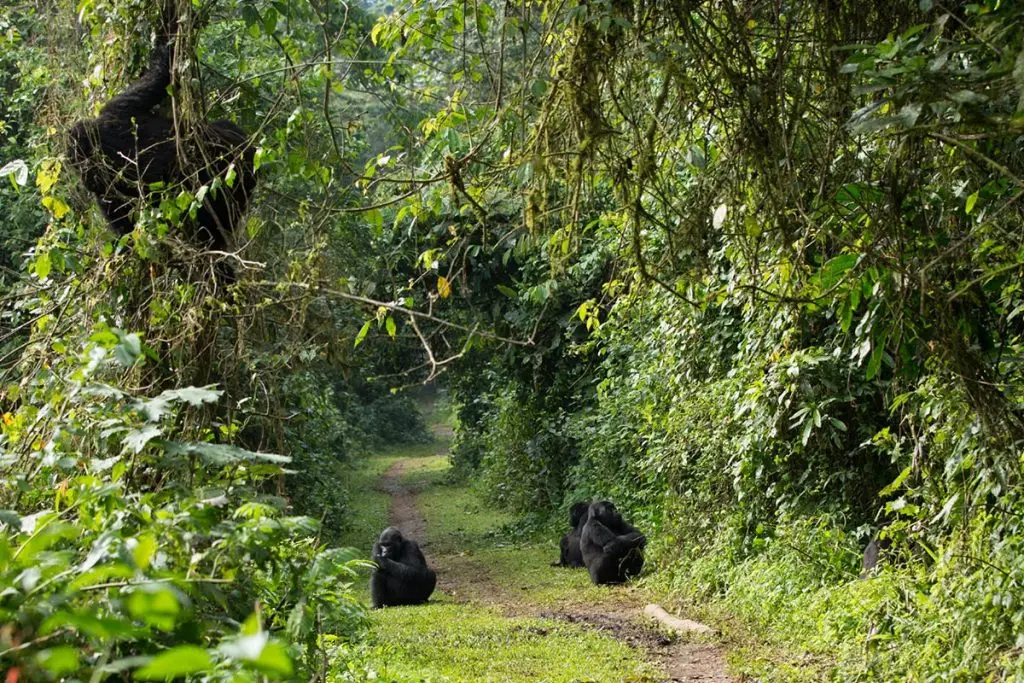
4 Days Gorilla Safari from Kigali. There is a particular moment on the slopes of the Virunga Mountains when the forest goes quiet, the guide raises a closed fist, and a 200-kilogram silverback steps out of the bamboo just a few meters away. That single moment is why thousands of travelers fly into Kigali every year, and it is exactly what a well-planned 4 Days Gorilla Safari from Kigali delivers: enough time to trek mountain gorillas in comfort, without needing to carve two weeks out of your calendar.
Rwanda has quietly become the most convenient gateway to Africa’s great apes. Kigali International Airport is modern, the roads to Volcanoes National Park are paved and scenic, and the capital itself is one of the cleanest and safest cities on the continent. If you have four days and a genuine desire to look a mountain gorilla in the eye, this guide walks you through everything: the day-by-day itinerary, permit costs, packing lists, lodging options, fitness requirements, and how to turn a short trip into an unforgettable, once-in-a-lifetime story.
This guide draws on years of ground experience running gorilla safaris from Kigali, including the 4-Day Rwanda-Uganda Golden Monkey and Gorilla Trekking itinerary that forms the backbone of what’s described below. Whether you book this exact trip or use it as a template for your own planning, you’ll leave this page knowing precisely what a 4-day gorilla safari from Kigali involves.
Why Choose a 4-Day Gorilla Safari from Kigali
Most travelers assume gorilla trekking requires a week or more of vacation time. In reality, four days is the sweet spot for anyone who wants a complete, unhurried experience without sacrificing precious annual leave. A 4-day gorilla safari from Kigali gives you a full travel day to settle in, a day for a warm-up trek (usually golden monkeys), the main event of gorilla trekking itself, and a relaxed final day to depart without feeling rushed.
Kigali’s location makes this timeline realistic. Volcanoes National Park is only about two and a half to three hours by road from the capital, which means you are not burning half your trip on transfers the way you might elsewhere in East Africa. Compare that to flying into Entebbe and driving eight-plus hours to Bwindi, and it becomes clear why Rwanda, and specifically a Kigali-based itinerary, has become the preferred short-format gorilla trekking route for busy professionals, honeymooners, and bucket-list travelers alike.
A shorter trip also tends to be more affordable overall, since you are paying for fewer lodge nights and less vehicle time, even though the gorilla permit itself remains a fixed cost. If you’re comparing options, browsing the full range of Rwanda safaris available shows just how flexible the timing can be, from two-day express treks to two-week combination safaris.
Quick Overview: 4-Day Gorilla Safari Itinerary at a Glance
Before diving into the details, here is the shape of a typical 4-day gorilla safari from Kigali. Day one covers arrival in Kigali and the drive north to the Musanze area, which sits at the foot of the Virunga Mountains. Day two is dedicated to golden monkey trekking, an easier, high-energy warm-up experience in the bamboo forest. Day three is the headline event: mountain gorilla trekking inside Volcanoes National Park. Day four wraps up with a final activity or straight transfer back to Kigali for departure.
This structure balances excitement with realistic logistics. It avoids the common mistake of trying to trek gorillas on the very first day after a long international flight, which leaves travelers exhausted and less able to enjoy the experience. It also builds in a secondary wildlife activity so the trip doesn’t feel like a single-purpose dash. For travelers who want even more variety, some operators extend this into a 5-Day Gorillas & Wildlife Rwanda Safari that adds a game drive in Akagera National Park.
Day 1: Arrival in Kigali and Transfer to Volcanoes National Park
Your safari begins the moment you land at Kigali International Airport. A guide will typically meet you at arrivals, help with any visa formalities, and take you on a short orientation drive through Kigali before heading north. Kigali itself deserves a mention here: it is consistently ranked among Africa’s cleanest and most walkable capitals, with wide boulevards, hillside neighborhoods, and a genuinely warm welcome from locals.
From Kigali, the drive to Musanze (formerly Ruhengeri), the small town that serves as the base for Volcanoes National Park, takes roughly two and a half to three hours along a well-maintained tarmac road. The route itself is part of the experience, winding through Rwanda’s famous “thousand hills,” past tea plantations, terraced farmland, and small roadside markets. Many itineraries include a stop at a coffee cooperative or the Ndaba waterfall along the way, giving you a taste of rural Rwandan life before the wildlife portion of the trip begins.
By late afternoon you’ll check into your lodge near the park, with the five volcanic peaks of the Virunga range visible from many properties on a clear day. This is a good time to rest, review the trekking rules with your guide, and get an early night, since gorilla trekking briefings typically start around 7:00 AM.
Day 2: Golden Monkey Trekking in the Bamboo Forest
Day two is often the most underrated part of a 4-day gorilla safari from Kigali. Golden monkeys are an endangered primate species found almost exclusively in the Virunga bamboo forests, and trekking them is significantly easier than gorilla trekking, making it an ideal way to acclimatize to the altitude and terrain before the main event.
After an early breakfast, you’ll head to the golden monkey trekking starting point inside the park boundary. Guides use radio communication with trackers already in the forest to locate a habituated troop, and the walk itself is usually one to two hours through lower-altitude bamboo groves. Golden monkeys are playful, fast-moving, and often found in large troops of thirty to eighty individuals, leaping through the bamboo canopy in a way that makes for spectacular photography.
In the afternoon, many travelers choose to explore the Musanze Caves, a network of volcanic lava tunnels a short drive from town, or visit the Iby’Iwacu Cultural Village to learn about traditional Rwandan life, music, and dance. Both are excellent lower-intensity activities that round out the day without overexertion ahead of tomorrow’s trek. If you’re building your own itinerary and want a version with a stronger cultural component, the 3 Days Rwanda Gorilla & Culture route is worth comparing for ideas on sequencing.
Day 3: Mountain Gorilla Trekking – The Ultimate Highlight
This is the day you booked the trip for. You’ll wake before dawn for a light breakfast and an early departure to the Kinigi park headquarters, where all gorilla trekking groups assemble for registration and a formal briefing from Rwanda Development Board rangers. Traditional dancers often perform at Kinigi in the morning, adding energy to what is already an electric atmosphere among trekkers from around the world.
After the briefing, you’ll be assigned to one of Volcanoes National Park’s habituated gorilla families and driven to your specific trailhead, since different families live in different zones of the park. Trekking difficulty varies considerably by family: some groups are a gentle 30 to 45-minute walk from the trailhead, while others can require three to five hours of steep, muddy hiking through dense vegetation at altitudes above 2,500 meters. Porters are available to hire at the trailhead and are highly recommended, both to carry your daypack and to support the local community economically.
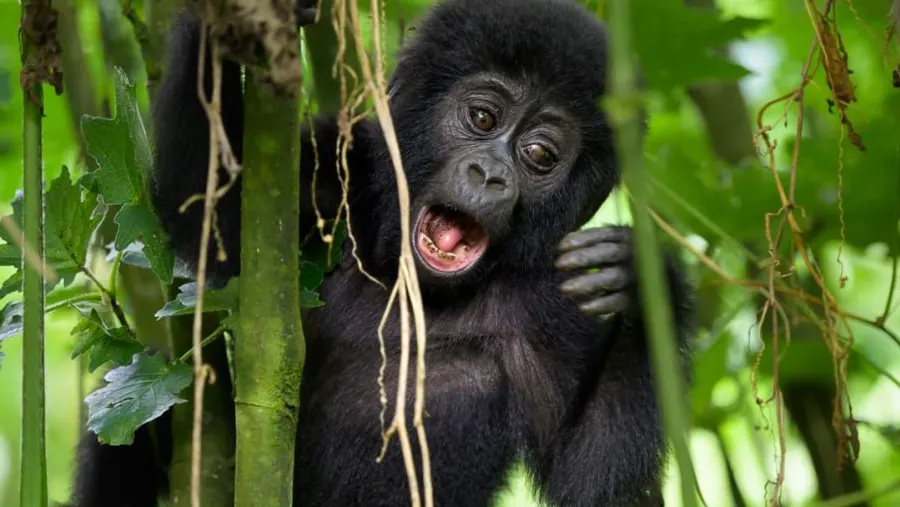
Once trackers locate the family, you’ll leave your bags with the guide’s assistant and approach quietly in single file. Rwanda allows exactly one hour with the gorillas once you find them, an internationally regulated limit designed to minimize stress on the animals and reduce disease transmission risk between humans and gorillas, which share roughly 98 percent of human DNA. That hour, watching silverbacks, mothers with infants clinging to their backs, and juveniles wrestling in the undergrowth, is the emotional core of the entire trip. Afterward, you’ll hike back to the trailhead, receive a certificate of completion, and return to your lodge for a well-earned rest and hot shower.
Day 4: Cultural Visit and Departure from Kigali
The final day of your 4-day gorilla safari from Kigali is typically more relaxed. Depending on your flight time, you might have a morning to spare for one more light activity, such as a visit to a local Batwa community, a walk around Lake Ruhondo, or simply a slow breakfast overlooking the volcanoes before the drive back.
The return journey to Kigali retraces the scenic route from day one, and most itineraries build in enough buffer time to reach the airport comfortably for an evening flight, or to spend a final few hours exploring Kigali itself. The Kigali Genocide Memorial, while sobering, is widely regarded as an essential stop for understanding modern Rwanda’s remarkable story of reconciliation and rebuilding, and it pairs meaningfully with the conservation success story you’ve just witnessed in the mountains. If your schedule allows an extra half day in the city, it’s worth checking about Kigali city for additional things to see before your flight.
What Makes Volcanoes National Park Special
Volcanoes National Park, or Parc National des Volcans, is Rwanda’s flagship protected area and one of only three places on Earth where mountain gorillas survive in the wild, alongside neighboring Bwindi and Mgahinga in Uganda and the Virunga side of the Democratic Republic of Congo. The park covers roughly 160 square kilometers of Afromontane forest and bamboo zones spread across five of the eight Virunga volcanoes: Karisimbi, Bisoke, Muhabura, Gahinga, and Sabyinyo.
This is also the site where primatologist Dian Fossey conducted her groundbreaking research from the late 1960s until her death in 1985, and her former research camp, the Karisoke Research Center, still operates within the park today. Visiting Volcanoes National Park is not just a wildlife encounter; it is a chance to witness one of conservation’s genuine comeback stories. Mountain gorilla numbers had dropped below 250 individuals in the 1980s, and thanks to sustained anti-poaching efforts, veterinary intervention, and tourism revenue that funds conservation directly, the population has since recovered to well over 1,000 gorillas across the Virunga Massif and Bwindi combined.
For travelers who want to go deeper into the region’s ecology, spending an extra day or two on a longer circuit such as the 6-Day Rwanda Adventures – Great Apes & Lake Kivu itinerary combines the Volcanoes experience with time relaxing on the shores of Lake Kivu.
Understanding Gorilla Trekking Permits and Costs
Budgeting properly for a 4-day gorilla safari from Kigali starts with understanding permit pricing, since this is by far the largest single cost of the trip. A Rwanda gorilla trekking permit currently costs 1,500 USD per person for a standard one-hour trek with a habituated family. This fee directly funds park operations, ranger salaries, anti-poaching patrols, and revenue-sharing programs with surrounding communities, so it is worth thinking of as a conservation contribution rather than a simple entrance ticket.
Rwanda also offers discounted permit options at certain times of year. Travelers combining a gorilla trek with visits to Nyungwe Forest National Park or Akagera National Park during the November to May low season can sometimes access reduced multi-park rates, and there are separate discounted rates aimed at conference and business travelers extending their stay. Golden monkey trekking permits are priced separately and cost significantly less than gorilla permits, making the golden monkey day on day two an excellent value addition to the trip.
Because permits are limited (only a fixed number of trekking slots are issued per gorilla family per day) and demand is high, especially during peak dry season months, booking well in advance through an experienced ground operator is essential. A reliable operator will secure your permit, match you appropriately with a gorilla family based on your fitness level, and handle the registration paperwork with the Rwanda Development Board on your behalf. You can review current Rwanda safari packages and pricing to see how permit costs are typically bundled into all-inclusive itineraries.
Best Time to Visit for Gorilla Trekking from Kigali
Rwanda’s gorilla trekking is technically possible year-round, since the parks remain open in all seasons, but timing your trip well can meaningfully improve the experience. The two dry seasons, June through September and December through February, offer the most stable trekking conditions, with firmer trails and lower rainfall, making the hike through the forest noticeably more comfortable.
That said, Rwanda is nicknamed “the land of a thousand hills” for good reason, and rain is a possibility in any month, even during the dry season. The wetter months of March to May and October to November see fewer tourists and occasionally discounted permit rates, along with lush, vividly green scenery that photographers often prefer. Trails are muddier and treks can take longer, but gorilla sightings themselves are not seasonal, since the animals live in the park year-round regardless of weather.
For most travelers planning a 4-day gorilla safari from Kigali, the June to September window aligns well with school holidays and offers the most predictable weather, while savvy off-season travelers can find better lodge rates and a quieter park experience in the shoulder months. Whichever window you choose, booking your permit and lodge at least two to three months ahead is strongly advised, particularly for July, August, and December departures.
Where to Stay: Lodges Near Volcanoes National Park
Accommodation near Volcanoes National Park spans the full range from comfortable mid-range lodges to some of the most exclusive luxury properties in East Africa. Musanze town itself has a growing selection of budget and mid-range hotels within a short drive of the park gate, ideal for travelers who want a comfortable, well-run base without luxury pricing.
Closer to the park boundary, a cluster of lodges offers direct views of the volcanoes and a more immersive setting, ranging from stylish mid-range properties to high-end options with private cottages, fireplaces, and Volcanoes views from every window. At the top end, a handful of ultra-luxury lodges built into the forest edge offer the kind of experience travelers save for a milestone trip: heated plunge pools, personal butlers, and gourmet dining, often at rates exceeding a thousand dollars a night.
Whatever category you choose, book your lodge alongside your permit rather than separately, since the best-located and best-value rooms fill up quickly during peak season. A well-connected local operator will typically have negotiated rates and reliable relationships with these properties, something worth asking about when you contact a Rwanda safari specialist to start planning.
What to Pack for Your Gorilla Trekking Adventure
Packing correctly makes a measurable difference in comfort during a 4-day gorilla safari from Kigali. Sturdy, broken-in hiking boots with good ankle support are non-negotiable, since trails can be steep, muddy, and uneven. Gardening gloves or trekking gloves are a surprisingly essential item too, since stinging nettles and thorny vegetation are common along gorilla trails and porters can’t hold your hand through every branch.
Layered clothing works best given the altitude swings between the warm lowlands and the cooler, often misty forest zones above 2,500 meters. A waterproof, breathable rain jacket is essential regardless of season, along with a change of clothes to leave at the lodge for after the trek, since you will almost certainly return muddy. Long trousers and long sleeves in neutral colors help protect against nettles and biting insects, and a wide-brimmed hat plus reef-safe sunscreen guard against the equatorial sun at altitude.
Beyond clothing, bring a daypack for water, snacks, and camera gear, a reusable water bottle, insect repellent containing DEET, and a basic first-aid kit with blister plasters and rehydration salts. Binoculars enhance the golden monkey trekking day in particular, and a camera with a versatile zoom lens (flash photography is prohibited around the gorillas) will let you capture the encounter without disturbing the animals. Cash in small denominations, both Rwandan francs and US dollars, is useful for tipping porters, guides, and drivers, since card payment infrastructure is limited outside Kigali.
Physical Fitness and Trekking Difficulty
One of the most common questions before a 4-day gorilla safari from Kigali is how physically demanding the trek actually is. The honest answer is that it varies considerably and depends largely on which gorilla family you are assigned. Some families stay relatively close to the park boundary and can be reached in under an hour on gentle terrain, while others range higher up the volcanic slopes, requiring several hours of steep, sometimes slippery hiking through dense forest at altitudes that can leave even fit travelers breathing hard.
Rangers make a genuine effort to match trekkers with families appropriate to their fitness level, especially if you communicate honestly about your physical condition during the morning briefing. Hiring a porter, typically for around 20 US dollars for the day, is one of the best decisions you can make regardless of fitness level, since it frees your hands for balance on tricky terrain and directly supports the local economy around the park.
There’s no strict age limit for gorilla trekking beyond a minimum age of 15, and travelers well into their seventies successfully complete treks every year with appropriate preparation and a positive attitude. That said, a reasonable baseline level of fitness, being able to walk briskly for an hour or more on uneven ground, makes the day significantly more enjoyable. If you have any underlying health conditions, a conversation with your doctor before booking, alongside proper travel insurance that covers high-altitude trekking, is strongly recommended.
Gorilla Trekking Rules and Etiquette
Rwanda enforces a strict set of rules during gorilla encounters, and understanding them beforehand helps you get the most out of your hour with the family while protecting these endangered animals. A minimum distance of seven meters must be maintained between visitors and gorillas at all times, though gorillas themselves are not bound by this rule and occasionally approach trekkers out of curiosity, at which point guides will calmly instruct you to back away slowly.
Groups are capped at eight visitors per gorilla family per day, a limit set by the Rwanda Development Board specifically to minimize stress on the animals and reduce the risk of disease transmission, since gorillas are susceptible to many human illnesses. Anyone showing symptoms of a cold, flu, or other communicable illness is asked to skip the trek that day, both for the gorillas’ protection and out of consideration for fellow trekkers. Eating, drinking, and smoking are prohibited once you’re within the vicinity of the gorillas, and flash photography is banned to avoid startling them.
Guides ask visitors to keep voices low, move slowly, and avoid direct prolonged eye contact with silverbacks, which can be interpreted as a challenge. If a gorilla charges, which is rare and usually a bluff, the correct response is to crouch down, avoid eye contact, and follow your guide’s lead rather than running. These rules exist because the mountain gorilla population, while recovering, remains classified as endangered, and responsible tourism is one of the pillars keeping the species alive.
Capturing the Perfect Gorilla Trekking Photos
Photography is part of why so many travelers save up for this trip, and a little preparation goes a long way toward coming home with images you’ll treasure rather than a memory card full of blurry forest shots. Because flash photography is banned around the gorillas, a camera body that performs well in low light, or at minimum a lens with a wide maximum aperture, makes a real difference under the dense forest canopy. A mid-range zoom in the 70-200mm range is generally more useful than an ultra-telephoto, since encounters often happen at surprisingly close quarters.
Protect your gear the same way you protect yourself: a rain cover or dry bag for your camera, spare batteries (cold, humid mornings drain them faster), and a microfiber cloth for lens condensation are all worth the extra weight in your daypack. It’s also worth simply putting the camera down for a few minutes during your hour with the gorillas. Trekkers who spend the entire encounter behind a viewfinder consistently report that the experience feels less vivid in memory than for those who balanced photography with simply watching. For a broader look at what gear and settings work well across East Africa’s primate destinations, the photography notes on the gorilla safaris hub are a useful supplementary read while you pack.
Combining Gorilla Trekking with Other Rwanda Experiences
While four days is enough for a complete and satisfying gorilla trekking experience, many travelers choose to extend their trip to combine it with Rwanda’s other standout destinations. Nyungwe Forest National Park, home to chimpanzees, a canopy walkway suspended 70 meters above the forest floor, and over 300 bird species, pairs beautifully with a Volcanoes-based itinerary and can be reached via a scenic drive south. A dedicated 3-Day Nyungwe Forest National Park Tour is a popular add-on for travelers with extra time, and the Nyungwe Forest National Park destination guide is a helpful reference if you’re deciding whether to extend your stay.
Akagera National Park, on Rwanda’s eastern border with Tanzania, offers a completely different landscape of savanna, lakes, and Big Five wildlife, a reminder that Rwanda is far more than just gorillas. A 3-Day Akagera Game Drive Safari is an easy addition either before or after your gorilla trekking days, and it’s also possible to explore Akagera as a standalone destination if you’re comparing itineraries. Travelers who want the fuller wildlife picture before deciding on an itinerary can also browse wildlife safari options across the region for context on how a gorilla trek fits alongside classic game viewing.
Travelers with a full week or more sometimes choose to cross into Uganda for a second gorilla trekking experience in Bwindi Impenetrable Forest, doubling their gorilla family encounters on a single trip. Options like the 5 Days Uganda Rwanda Double Gorilla Safari or the shorter 2 Days Uganda Gorilla Safari Starting from Kigali both depart from the same Kigali base, and it’s worth reading about Bwindi Impenetrable National Park if a cross-border extension appeals to you. Those who prefer to stay entirely within Rwanda but still want a taste of a shorter format can also compare the 2-Day Volcanoes Gorilla Trek from Kigali and the 5-Day Best of Rwanda Primate Safari as reference points for how the four-day format compares on pacing and price.
How to Get to Kigali and Travel Logistics
Kigali International Airport is served by direct or one-stop flights from most major hubs in Europe, the Middle East, and increasingly North America, with RwandAir operating an expanding network alongside international carriers like Qatar Airways, Turkish Airlines, KLM, and Brussels Airlines. Most nationalities can obtain a Rwanda visa on arrival or through the streamlined East Africa Tourist Visa system, and Rwanda has been a regional leader in simplifying entry procedures for tourists.
Once in Kigali, all onward travel for a gorilla trekking itinerary is by road, since there is no practical alternative to driving north to Musanze. Reputable operators use comfortable 4×4 safari vehicles with experienced English-speaking driver-guides who handle everything from border formalities (if your itinerary crosses into Uganda) to informal roadside stops for photos and coffee. If you’d prefer more independence, a self-drive option through Uganda exists for connecting itineraries, though a guided vehicle is strongly recommended for a Rwanda-based gorilla trek given mountain road conditions and park access logistics.
It’s worth noting that Kigali’s excellent infrastructure, including clean streets, functioning traffic systems, and a genuinely low crime rate, means most travelers feel comfortable and safe from the moment they land, which is a meaningful factor for solo travelers and families alike when choosing a gorilla trekking gateway city.
Rwanda Travel Essentials: Visa, Currency, and Safety Tips
A little logistical preparation before you land makes the rest of your 4-day gorilla safari from Kigali far smoother. Most nationalities can apply for a Rwanda visa online in advance or obtain one on arrival at Kigali International Airport, and Rwanda’s participation in the East Africa Tourist Visa scheme also allows travel between Rwanda, Uganda, and Kenya on a single visa if your trip extends across borders. It’s worth double-checking current requirements for your passport a few weeks before departure, since policies are periodically updated.
The Rwandan franc is the local currency, though US dollars are widely accepted at lodges, for permit-related payments, and for tipping guides, porters, and drivers. It’s wise to carry a mix of small-denomination dollar bills (2010 or newer, since older notes are sometimes refused) and some local currency for markets and small purchases in Musanze or Kigali. ATMs are reliable in Kigali but far less consistent once you’re in the Volcanoes National Park area, so withdraw what you need before heading north.
Safety is rarely a major concern on a Rwanda gorilla trekking trip. Kigali is widely regarded as one of the safest capital cities in Africa, with low petty crime rates and a strong, visible police presence, and the drive north to Musanze is along a well-patrolled, well-maintained highway. Standard travel precautions apply, keep valuables secured, use bottled or filtered water, and carry comprehensive travel insurance that explicitly covers trekking and medical evacuation, since Volcanoes National Park sits at altitude in a fairly remote mountain setting. For a broader orientation to the country before you go, it’s worth reading a general about us and destinations overview alongside your operator’s own pre-departure information pack.
Why Book Your 4-Day Gorilla Safari with Kenlink Tours
Planning a gorilla trek involves more moving parts than most travelers expect: securing scarce permits months in advance, matching your fitness level to the right gorilla family, coordinating lodge bookings during high season, and building an itinerary that doesn’t leave you exhausted before the main event. Working with an experienced, locally rooted operator removes nearly all of that friction.
Kenlink Tours has built its Rwanda itineraries around exactly this kind of thoughtful pacing, and the 4-Day Rwanda-Uganda Golden Monkey and Gorilla Trekking package reflects lessons learned from years of running trips through Volcanoes National Park and across the border into Bwindi. Every itinerary includes permit sourcing, vetted accommodation, ground transport in a comfortable 4×4, and an English-speaking guide who handles logistics so you can focus entirely on the experience.
For travelers who want to browse alternatives before committing, it’s worth comparing the full spread of Uganda safari options and group tour departures, or reaching out directly through the contact page to build a fully custom itinerary around your travel dates, budget, and fitness level. Read the terms and conditions for booking and cancellation policies before finalizing your dates, and don’t hesitate to ask about combining your gorilla trek with car hire if you’d like extra flexibility to explore Kigali independently before or after your trip.
Frequently Asked Questions About the 4-Day Gorilla Safari from Kigali
Is four days enough time to see mountain gorillas from Kigali? Yes. Because Volcanoes National Park is only two to three hours from Kigali by road, four days comfortably covers arrival, a golden monkey trek, gorilla trekking, and departure without feeling rushed.
How much does a 4-day gorilla safari from Kigali cost in total? Budget primarily around the 1,500 USD gorilla permit, plus lodging (ranging from roughly 150 to over 1,000 USD per night depending on category), ground transport, meals not included in your package, and tips. A fully guided package typically bundles most of these into one transparent price.
Do I need to be extremely fit to trek gorillas? No, but a reasonable baseline fitness level makes the experience more enjoyable. Rangers assign easier or harder gorilla families based on your fitness, and hiring a porter is highly recommended for anyone unsure of their trekking ability.
Can I combine gorilla trekking with Uganda’s Bwindi Forest on the same trip? Yes, several itineraries depart from Kigali and cross into Uganda, effectively doubling your gorilla encounters. This does require extra travel days and a separate Uganda gorilla permit, so it suits travelers with five or more days available.
What is the best month to go gorilla trekking in Rwanda? June through September and December through February are the driest and most popular months, though gorillas are visible year-round and the shoulder seasons offer quieter trails and occasionally lower rates.
Final Thoughts: Is a 4-Day Gorilla Safari from Kigali Worth It?
A 4-day gorilla safari from Kigali packs an extraordinary amount of experience into a genuinely manageable timeframe. You get a full day to ease into Rwanda, a warm-up trek among golden monkeys in the bamboo forest, the profound, once-in-a-lifetime hour spent with a mountain gorilla family in Volcanoes National Park, and a relaxed final day before flying home. Few wildlife experiences on Earth compress this much meaning, adrenaline, and natural wonder into so short a window.
For travelers who have always dreamed of standing within a few meters of a wild mountain gorilla, but who can’t spare two or three weeks away from work or family, this itinerary answers the question of whether it’s actually possible. It is, and Rwanda has built the infrastructure, from Kigali’s international airport to the paved road north and the well-run parks system, specifically to make it work.
If four days leaves you wanting more, it’s a simple upgrade rather than a whole new trip: travelers with a spare day or two often extend into the 5-Day Gorilla Trekking Safari from Kigali to Uganda for a second gorilla family encounter across the border, while those on a tighter schedule sometimes go the other direction with the compact 2 Days Rwanda to Uganda Gorilla Trekking Safari. Either way, the decision ultimately comes down to how much time you can give this trip, not whether the trip itself is worth doing. It is, every time. If you’re ready to start planning, explore the full 4-Day Rwanda-Uganda Golden Monkey and Gorilla Trekking itinerary or get in touch to build a version tailored to your exact travel dates, fitness level, and budget.