- EXPERT'S HELP
- +256789210067
- +256200955001
- info@kenlinktours.com


Companies offering Transfers from Kigali to Bwindi Uganda
September 27, 2026
Car Hire Companies Near Mgahinga National Park
September 27, 2026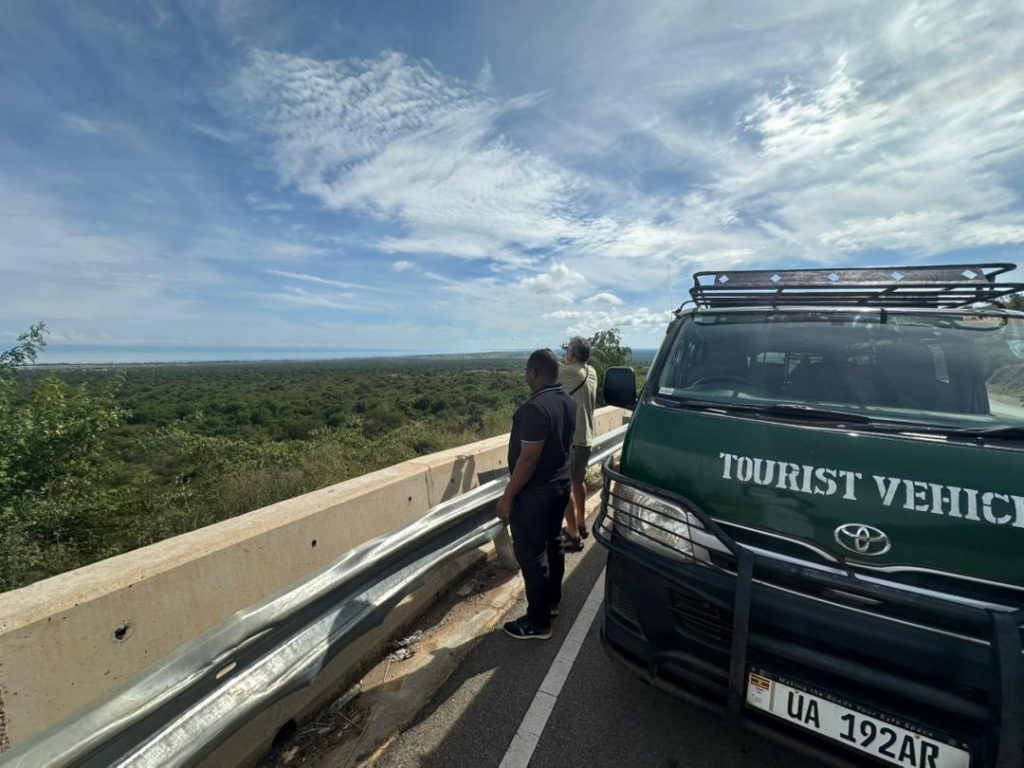
Car Rental Companies near Bwindi National Park. Bwindi Impenetrable National Park is one of Africa’s most remarkable destinations: a UNESCO World Heritage rainforest that shelters roughly half of the world’s mountain gorillas. It is also one of the more remote parks in East Africa, reached by winding mountain roads that climb through the terraced hills of southwestern Uganda. Whether you are trekking gorillas, travelling between sectors, or continuing to Queen Elizabeth National Park, reliable transport is essential. That is why many travellers look for car rental companies near Bwindi National Park.
This guide explains where to find car rental around Bwindi, the towns and airstrips that serve each sector, the best vehicles for the terrain, self-drive versus renting with a driver, typical prices, road conditions, safety and how to choose a trustworthy rental company. At Kenlink Tours, we provide car rental, driver-guides and transfers for travellers visiting Bwindi from Kigali, Kampala, Entebbe and the towns around the park, and this is the practical advice we give our own clients.
Why You Need a Car Around Bwindi
Bwindi covers more than 320 square kilometres of steep, forested hills, and its four trekking sectors are far apart. There is little public transport to the park gates, and taxis are scarce in the villages around the forest. A rented vehicle lets you:
- Reach your trekking sector on time for the 8:00 a.m. briefing
- Move between sectors if you have permits in more than one area
- Visit nearby attractions such as Lake Bunyonyi, Lake Mutanda and Mgahinga
- Continue your safari to Queen Elizabeth National Park and beyond
- Travel comfortably and safely on steep, unpaved roads
For an overview of the park, read our guide to Bwindi Impenetrable Forest National Park and Pick and Transfer Safaris’ Bwindi destination guide.
Understanding Bwindi’s Four Sectors
Before you rent a car, it helps to know which part of Bwindi you are visiting, because each sector is served by different towns and roads:
- Buhoma (north): the oldest trekking sector, with many lodges and community activities. Served by Butogota, Kanungu and Kihihi airstrip. See our guide to the Buhoma sector in Bwindi.
- Ruhija (east): high, cool and excellent for birdwatching. Usually reached from Kabale. See our guide to gorilla trekking in the Ruhija sector.
- Rushaga (south): home to the most habituated gorilla families and the habituation experience. Reached from Kisoro or Kabale. See our guide to gorilla trekking in the Rushaga sector.
- Nkuringo (south-west): dramatic ridge-top views of the Virunga volcanoes. Reached from Kisoro. See our guide to gorilla trekking in the Nkuringo sector.
Pick and Transfer Safaris also compares all four in their guide to Buhoma, Nkuringo, Rushaga and Ruhija gorilla trekking.
Where to Find Car Rental Near Bwindi
Bwindi itself has no car rental offices inside the park. Instead, rental vehicles are usually arranged from nearby towns, airstrips or the main gateway cities, and many companies deliver vehicles to your lodge or meet you on arrival.
Kisoro town. The main hub for Rushaga and Nkuringo, and for Mgahinga Gorilla National Park. Kisoro has fuel stations, banks and a range of hotels, and is about 1 to 1.5 hours from the southern sectors. See our guide to getting to Bwindi from Kisoro, and Pick and Transfer Safaris’ answer to whether you can sleep in Kisoro and trek in Bwindi.
Kabale town. The largest town in the region and the gateway to Lake Bunyonyi. It is a good base for Ruhija and, via Kisoro or the Ikumba route, for Rushaga. Kabale has banks, supermarkets, fuel and mechanics. See our guide to tourist activities in Kabale and Pick and Transfer Safaris’ one-day gorilla trek starting from Kabale.
Butogota, Kanungu and Kihihi. Small towns north of Bwindi that serve the Buhoma sector. Kihihi also has an airstrip with scheduled domestic flights. See our guide to Kihihi airstrip.
Kisoro and Kihihi airstrips. Travellers who fly in from Entebbe can arrange for a rental vehicle or driver to meet them on arrival. See our guides from Kisoro airport to Bwindi and on which airstrips and lodges are connected for fly-in safaris.
Kigali, Kampala and Entebbe. Most travellers rent their vehicle in one of these cities and drive, or are driven, to Bwindi. This gives the widest choice of vehicles and companies.
Renting in Kigali, Kampala or Entebbe vs Locally
Renting in a gateway city is the most common choice. You collect the vehicle when you land and keep it for your whole trip, with a wide choice of models and companies. Kigali is the closest gateway to Bwindi’s southern sectors, while Kampala and Entebbe are the traditional starting points for longer Uganda safaris.
Renting locally near Bwindi makes sense if you arrive by domestic flight or public bus and only need a vehicle for a few days around the park. Choice is more limited, so it is essential to book in advance, especially in peak season.
Read Pick and Transfer Safaris’ comparison of Kigali vs Entebbe for gorilla trekking, and our guides on distance and drive time from Entebbe to Bwindi and how to get from Kampala to Bwindi.
Best Vehicles for Bwindi’s Roads
The roads to all four Bwindi sectors include long stretches of steep, unpaved murram. A vehicle with four-wheel drive and good ground clearance is strongly recommended.
Toyota RAV4. A compact 4×4 that is affordable and easy to drive. It suits couples and solo travellers with light luggage, especially in the dry season, but its lower clearance can be a challenge on the roughest roads.
Toyota Land Cruiser Prado. A popular all-rounder with more power, comfort and clearance. Ideal for families and small groups travelling between sectors and to Queen Elizabeth National Park.
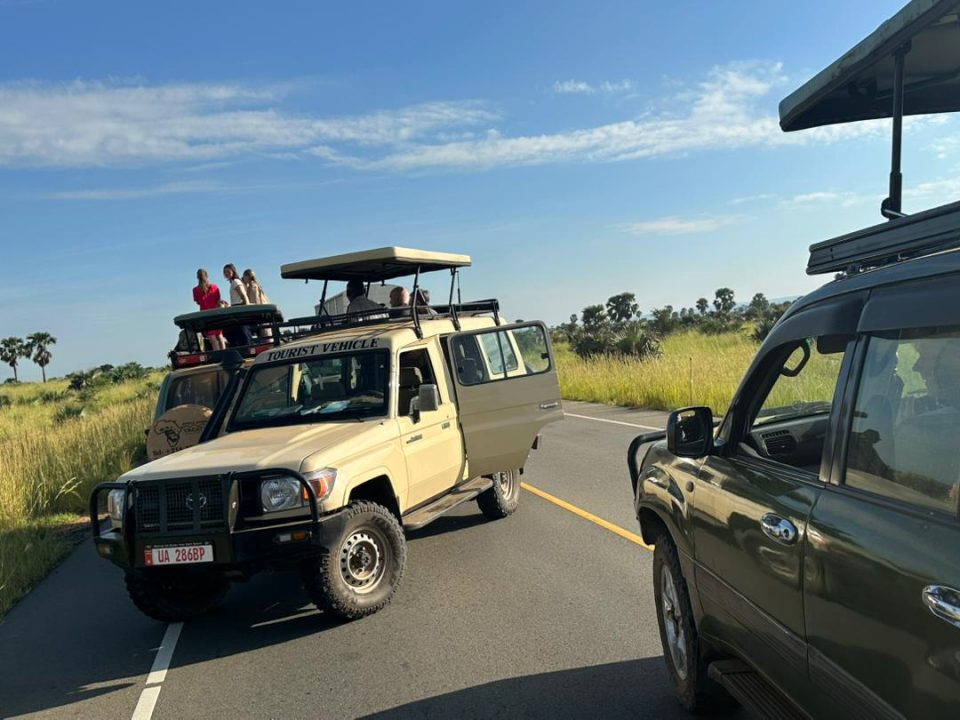
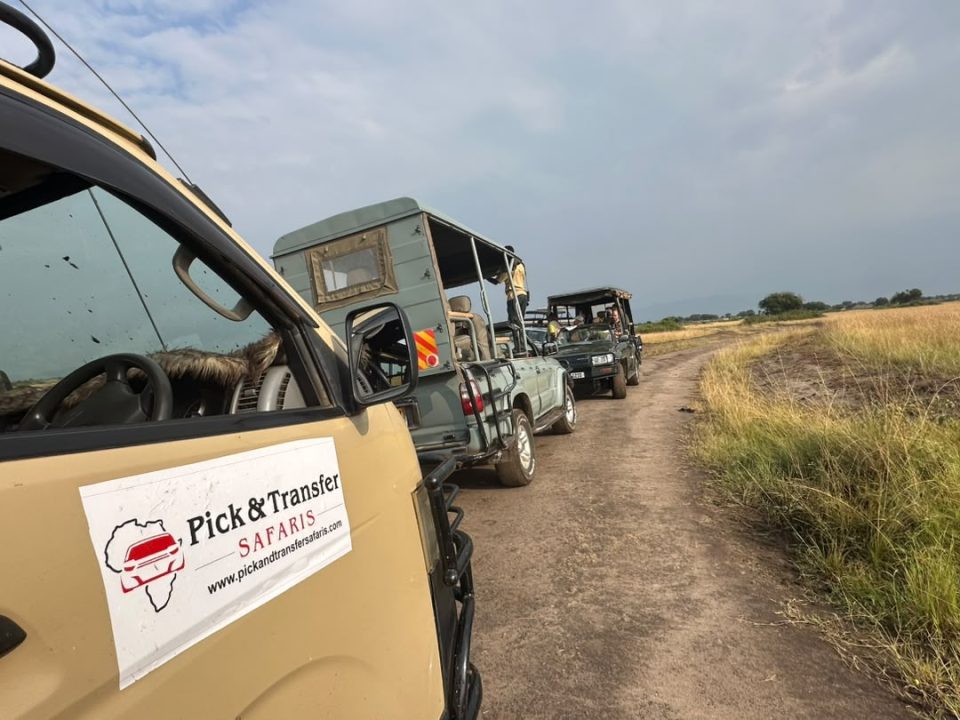
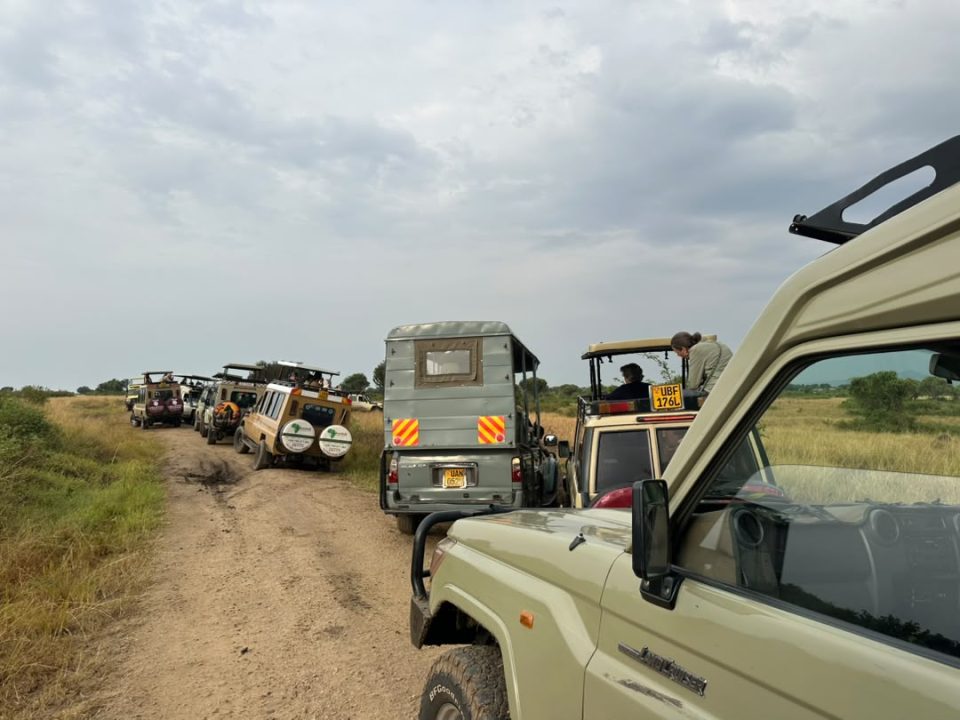
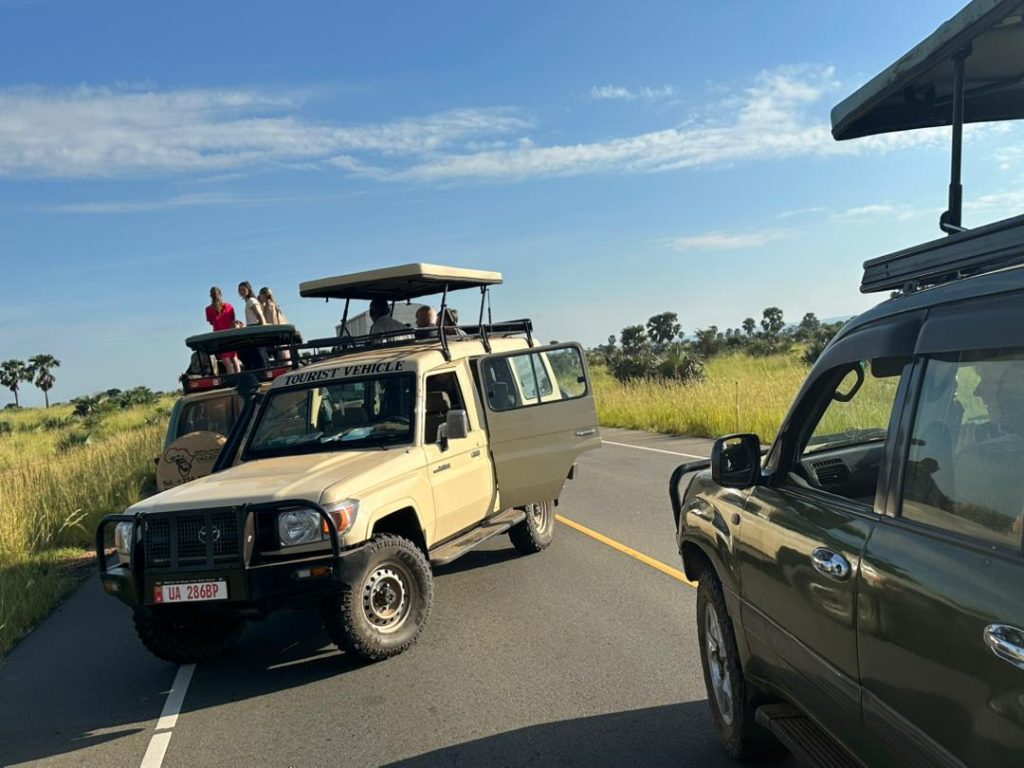
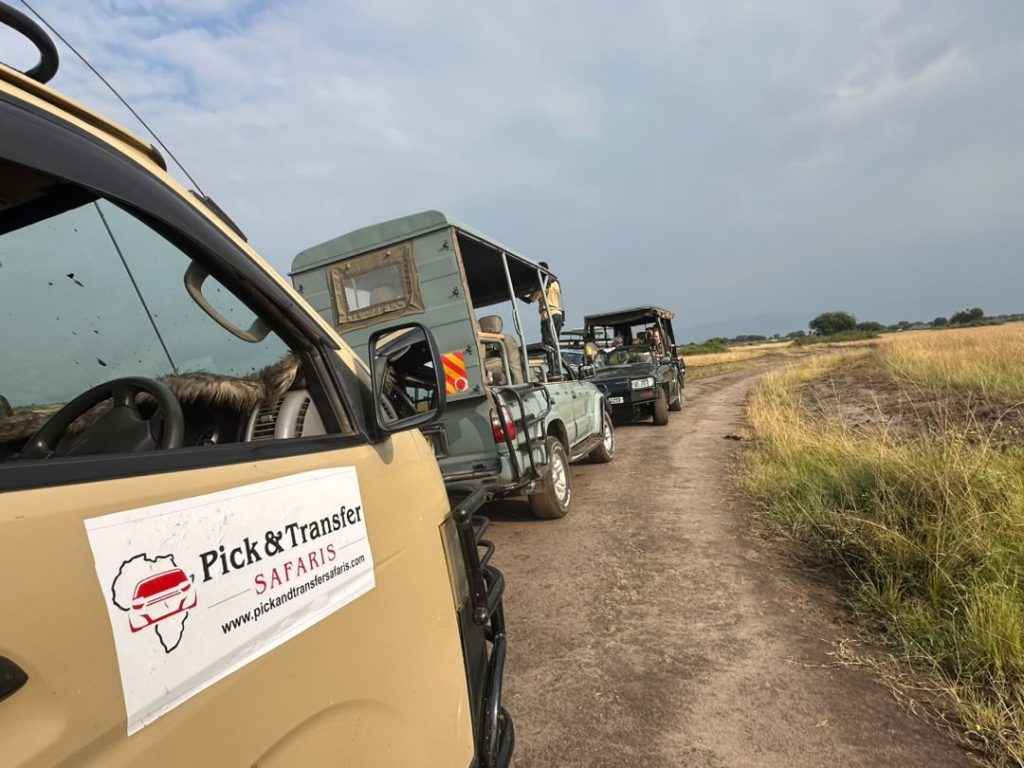
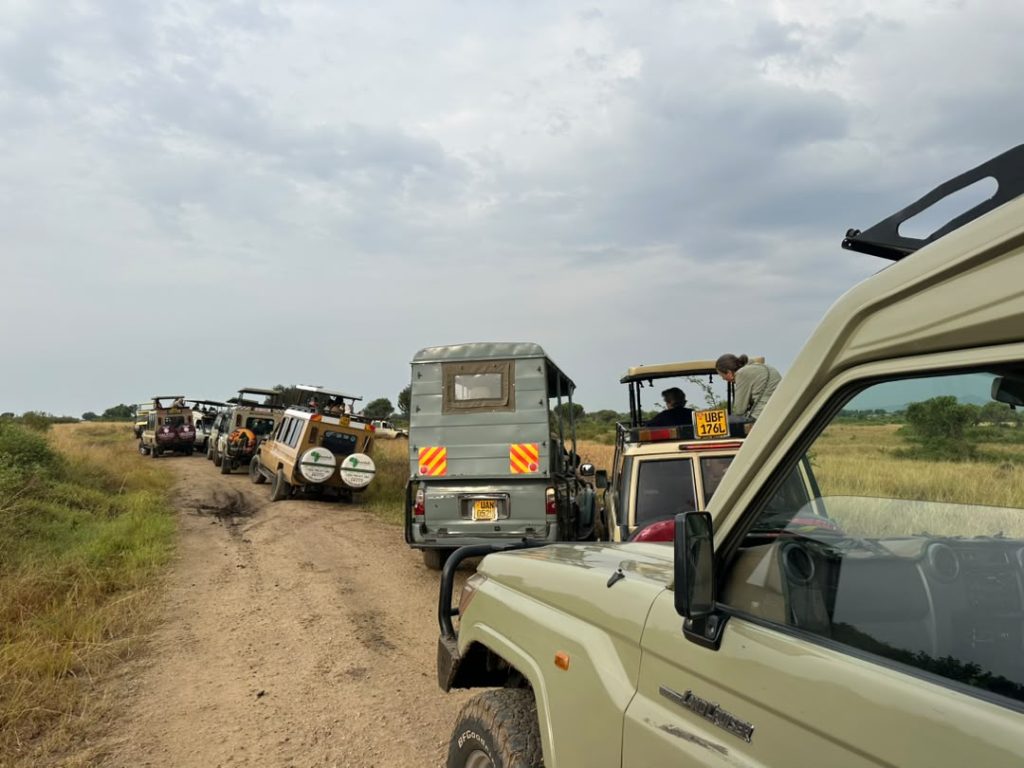
Extended Toyota Land Cruiser with pop-up roof. The classic safari vehicle, seating up to six or seven passengers with window seats for all. Its roof opens for game viewing, which makes it perfect if your trip continues to Queen Elizabeth’s Ishasha sector or Kazinga Channel.
Land Cruiser with rooftop tent. Offered by some companies for self-drive campers, with camping equipment included.
Minibuses and vans. Suitable for large groups on tarmac, but not recommended for the final roads to Bwindi in the rainy season.
See our range of tourist vehicles and our car hire services.
Self-Drive or Rent With a Driver?
Self-drive offers freedom and privacy and can reduce costs. It suits experienced drivers who are comfortable driving on the left, on steep gravel roads and in rain. You must plan your route carefully, carry offline maps and allow plenty of time to reach the park on trekking morning.
Renting with a driver-guide is the choice of most first-time visitors to Bwindi. Your driver knows the roads, the park staff, the lodges and the local culture, and takes responsibility for the vehicle. On trekking day, they make sure you reach the right headquarters on time and wait for you after the trek.
Read our comparison of self-drive vs guided safaris in Uganda, our guide to a self-drive gorilla safari in Uganda, and our advice on whether self-drive in Uganda is safe. Pick and Transfer Safaris answers whether you can do a self-drive safari in Uganda and describes a gorilla trek with a driver-guide.
How Much Does Car Rental Near Bwindi Cost?
Prices depend on the vehicle, the rental period, whether a driver is included, the season and fuel arrangements. Typical market ranges are:
- Toyota RAV4, self-drive: roughly USD 40 to 60 per day
- Land Cruiser Prado, self-drive: roughly USD 70 to 110 per day
- Extended Land Cruiser with pop-up roof: roughly USD 120 to 200 per day
- Driver-guide: an additional daily fee, sometimes plus accommodation and meals
- Fuel: usually extra unless an all-inclusive rate is agreed
For point-to-point transfers rather than daily rental, Pick and Transfer Safaris estimates that a private 4×4 from Kigali to Bwindi costs around USD 180 to 350 one way per vehicle. See their Kigali to Bwindi gorilla trek cost guide. All figures are indicative, so always request a written quote. For a tailored price, see how our Uganda safari bookings work.
Road Conditions Around Bwindi
The main highways to the region, such as Kampala to Mbarara and Kabale, and Kigali to the Katuna and Cyanika borders, are tarmac and generally in good condition. The final roads to each Bwindi sector are mostly unpaved:
- Kabale to Ruhija: a climbing murram road through forest, cool and misty, and slippery after rain.
- Kisoro to Rushaga and Nkuringo: steep, winding murram roads with superb views, but challenging in the wet season.
- Kihihi and Butogota to Buhoma: murram roads through tea plantations and villages.
- Buhoma to Ishasha (Queen Elizabeth): a scenic but rough route, best driven in daylight.
In the dry seasons (June to September and December to February) these roads are dusty but manageable. In the wet seasons (March to May and October to November) they can become muddy, with deep ruts on some stretches. Always drive in daylight and allow extra time.
Popular Routes With a Rental Car
Kigali to Bwindi: about 4 to 5 hours to Rushaga or Nkuringo via Cyanika, or 5 to 7 hours to Ruhija or Buhoma via Katuna. See Pick and Transfer Safaris’ guides to Kigali to Bwindi road trips, Kigali to Nkuringo and Kigali to Buhoma, and our guide to private transfers from Kigali to Buhoma or Ruhija.
Kampala or Entebbe to Bwindi: about 8 to 10 hours via Masaka, Mbarara and either Kabale or Rukungiri.
Bwindi to Queen Elizabeth National Park: about 2 to 3 hours from Buhoma to Ishasha, famous for its tree-climbing lions, then on to Mweya and the Kazinga Channel. See our guides on the best route between Bwindi and Queen Elizabeth and the Ishasha tree-climbing lions tour, and Pick and Transfer Safaris’ Queen Elizabeth safari after a gorilla trek.
Bwindi to Lake Bunyonyi: about 2 to 3 hours from Rushaga or Ruhija, for a relaxing lakeside stay.
Between Bwindi sectors: Rushaga and Nkuringo are close neighbors, while travelling from the south to Buhoma takes several hours on mountain roads.
Cross-Border Rentals From Rwanda
Because Kigali is so close to Bwindi’s southern sectors, many travellers rent a vehicle in Rwanda and drive into Uganda. If you do this, confirm that the rental company:
- Authorises the vehicle to cross into Uganda, in writing
- Provides the registration documents and any temporary import papers
- Includes regional insurance valid in both countries (such as a COMESA Yellow Card)
You will also need a valid visa (the East Africa Tourist Visa, USD 100, covers Rwanda, Uganda and Kenya), a passport valid for at least six months and a Yellow Fever certificate. We also offer car hire and airport transfer services in Uganda and Rwanda, and Pick and Transfer Safaris offers airport transfers in Kigali and Entebbe.
What You Need to Rent a Car
- Driving license: a valid license, ideally with an International Driving Permit
- Identification: passport or national ID
- Minimum age: often 23 to 25, with at least two years of driving experience
- Security deposit: refundable when the vehicle is returned in good condition
- Rental agreement: listing the vehicle’s condition, fuel level, mileage and any existing damage
Uganda drives on the left. Speed limits are enforced, and police checkpoints are common on major roads, so always carry your license and the vehicle documents.
How to Choose a Reliable Car Rental Company
Use this checklist to compare car rental companies serving Bwindi:
- Licensed and registered business with a physical address
- Well-maintained 4×4 vehicles, with recent photos and details on the vehicle’s age
- Clear insurance cover, including the excess and cross-border cover
- Transparent pricing, listing rates, mileage, fuel and driver costs
- 24-hour breakdown support and the ability to send a replacement vehicle
- Experienced drivers who know all four Bwindi sectors
- Recent, genuine reviews from other travellers
- Proper equipment: spare tyre, jack, first-aid kit and warning triangles
Be cautious of prices far below the market rate, companies that will not provide a written contract, or requests for full cash payment without a receipt.
What to Check When You Collect the Vehicle
- Tyre tread and pressure, including the spare
- That the four-wheel drive engages correctly
- Lights, indicators, wipers and horn
- Brakes and steering at low speed
- Existing scratches and dents, photographed and recorded on the agreement
- Fuel level and mileage
- Registration, insurance and cross-border documents
A careful inspection takes only a few minutes and protects both you and your deposit.
Car Rental for Gorilla Trekking Day
Gorilla permits cost USD 800 per person in Uganda for foreign non-residents, so arriving late at the park headquarters is a costly mistake. If you are renting a car for trekking day:
- Stay at a lodge close to your trekking sector.
- Confirm the exact headquarters and reporting time the day before.
- Leave early, especially after rain.
- Carry water, snacks, rain gear and a warm layer.
- Consider a driver-guide, who can also help you arrange porters and communicate with rangers.
If you have not yet booked your permit, read our guide on how to book a gorilla trekking permit in Uganda.
Insurance, Breakdowns and Safety
Ask exactly what the insurance covers. Many policies exclude tyres, windscreens and damage to the underside of the vehicle, the parts most often damaged on rough roads. Find out the excess you would pay after an accident and whether cover extends across the border.
If you break down, call the rental company straight away. A good company will guide you by phone, send a mechanic from Kabale, Kisoro or Kihihi, or arrange a replacement vehicle. If you rent with a driver, the driver handles breakdowns for you.
For safety, avoid driving at night, keep your speed low through villages, watch for pedestrians, children and livestock, and keep valuables out of sight when you park.
Fuel, Money and Supplies Around Bwindi
Fuel stations are plentiful on the main highways and in towns such as Kabale, Kisoro, Rukungiri and Kihihi, but they are rare or absent near the park gates. Always fill up before leaving town, and keep the tank at least half full when driving between sectors. Some remote villages sell fuel from jerrycans, but quality can vary, so it is best used only in an emergency.
ATMs and banks are available in Kabale, Kisoro and some larger trading centres, but not near the park headquarters. Carry enough Uganda shillings or small US dollar notes for fuel, tips, porters, snacks and craft purchases. Supermarkets in Kabale and Kisoro stock drinking water, snacks and basic supplies for the road.
Mobile phone coverage is good in towns and along main roads but can be patchy near the forest. Download offline maps before you travel and save the phone numbers of your rental company and lodge.
Driving Etiquette and Local Customs
Driving through the villages around Bwindi is a wonderful way to see rural life in southwestern Uganda, but it calls for patience and respect:
- Slow down in villages and trading centres, where children, pedestrians, bicycles and livestock share the road.
- Use your horn gently to warn others on blind corners, a common practice on mountain roads.
- Give way to heavy vehicles on narrow sections, and be ready to reverse to a wider spot.
- Ask before photographing people, and respect a polite refusal.
- Stop at police checkpoints when signalled, and have your licence and documents ready.
- Do not give money or sweets to children along the road. Supporting community projects is a better way to help.
Car Rental for Families, Groups and Researchers
Car rental companies around Bwindi serve a wide range of travellers:
- Families often choose a Land Cruiser Prado or an extended Land Cruiser for space and comfort. Ask for child seats in advance.
- Groups of friends can share one extended safari vehicle and driver, making the cost per person very reasonable.
- Photographers benefit from a pop-up roof and a flexible driver who will stop for light, landscapes and wildlife.
- Researchers, volunteers and NGO teams working around Bwindi often rent vehicles for weeks or months, and long-term rates are usually available.
- Travellers with limited mobility can request a vehicle with easier access and arrange sedan chair support at the park.
Where to Stay When Driving to Bwindi
Choosing the right lodge makes driving much easier, as it shortens your journey on trekking morning. Each Bwindi sector has lodges ranging from simple community-run camps to luxury forest lodges, and many have secure parking for rental vehicles. See our guide to the best luxury lodges near Bwindi.
Longer Road Trips From Bwindi
A rental car makes it easy to build a longer road trip around Bwindi. Popular combinations include:
- Bwindi and Queen Elizabeth National Park: gorillas, tree-climbing lions and the Kazinga Channel boat cruise. See Pick and Transfer Safaris’ Uganda safari including Queen Elizabeth and Bwindi and their Queen Elizabeth National Park guide.
- Bwindi, Lake Bunyonyi and Mgahinga: gorillas, golden monkeys and some of Uganda’s most beautiful lakes.
- Kigali, Bwindi and Queen Elizabeth: start in Rwanda, trek in Uganda and end your trip in Kampala or Entebbe.
- A full Uganda circuit: add Kibale Forest for chimpanzees and Murchison Falls for the Nile.
Sample 5-Day Road Trip With a Rental Car
Here is an example of how a rental car can turn a gorilla trek into a varied road trip through southwestern Uganda, starting and ending in Kigali:
- Day 1: collect your vehicle in Kigali and drive via the Cyanika border to Kisoro and on to a lodge near Rushaga.
- Day 2: gorilla trekking in the Rushaga sector, followed by a relaxing afternoon at the lodge.
- Day 3: drive to Lake Mutanda or Mgahinga for a canoe trip, a Batwa cultural experience or golden monkey tracking.
- Day 4: drive to Lake Bunyonyi via Kabale and spend the afternoon exploring the islands by canoe.
- Day 5: return to Kigali via the Katuna border, arriving in the afternoon.
The same trip can be extended north to Queen Elizabeth National Park through Buhoma and Ishasha, ending in Kampala or Entebbe. With a driver-guide, you can relax and enjoy the scenery while someone else handles the roads and border crossings.
When to Book Your Rental Car
Demand for 4×4 vehicles peaks during the dry seasons and around Christmas, New Year and Easter. Book your vehicle as soon as your gorilla permit is confirmed, particularly if you need a specific model, a pop-up roof, a driver-guide or cross-border paperwork. In the quieter wet months, shorter notice is often possible, and some companies offer better rates.
Returning Your Rental Car
Returning the vehicle smoothly is just as important as collecting it. Agree on the return time and location in advance, especially if you are dropping the car at Kigali or Entebbe airport before a flight. Allow extra time for the final inspection, when the company checks the vehicle’s condition, fuel level and mileage against the rental agreement.
Return the vehicle with the agreed fuel level to avoid refueling charges, and remove all personal items and rubbish. If any damage occurred during your trip, report it honestly and provide photos and any police report. Ask for written confirmation that the vehicle has been returned and that your deposit will be refunded, along with the expected timeline.
Responsible Driving Near a Protected Forest
Bwindi is a fragile ecosystem and a UNESCO World Heritage Site, and the communities around it depend on it for water, farming and tourism income. You can help protect it by keeping to marked roads, never driving off-road near the park boundary, keeping speeds low to reduce dust and noise, and taking all rubbish with you. Choosing lodges and rental companies that support local employment and community projects also helps ensure that tourism benefits the people who live alongside the gorillas.
Why Rent With Kenlink Tours?
- Well-maintained 4×4 vehicles, from RAV4s to extended safari Land Cruisers
- Self-drive and driver-guide options
- Experienced drivers who know all four Bwindi sectors, Queen Elizabeth and Mgahinga
- Pickups in Kigali, Entebbe, Kampala, Kisoro and Kihihi
- Cross-border rentals between Rwanda and Uganda
- Gorilla permits and lodges arranged on request
- Clear, transparent pricing
Frequently Asked Questions
Are there car rental companies inside Bwindi National Park?
No. Rental vehicles are arranged from nearby towns such as Kisoro, Kabale and Kihihi, or from Kigali, Kampala and Entebbe, and can be delivered to your lodge or airstrip.
Do I need a 4×4 for Bwindi?
Yes, a 4×4 is strongly recommended for all four sectors, especially in the rainy seasons.
How much does car rental near Bwindi cost?
Typical market ranges are roughly USD 40 to 60 per day for a RAV4 self-drive and USD 120 to 200 per day for an extended Land Cruiser, depending on the company and inclusions.
Can I drive a rental car from Kigali to Bwindi?
Yes, if the rental company authorises cross-border travel and provides the correct documents and insurance.
Is self-drive to Bwindi safe?
It is generally safe for experienced drivers who drive in daylight and take care on mountain roads. Many first-time visitors prefer a driver-guide.
Which town is best for renting a car near Bwindi?
Kisoro for Rushaga and Nkuringo, Kabale for Ruhija, and Kihihi or Butogota for Buhoma.
Book Your Car Rental Near Bwindi
The right vehicle and the right rental company can make your Bwindi journey safe, comfortable and unforgettable. Whether you want a self-drive RAV4, a Land Cruiser with an experienced driver-guide, or a cross-border rental from Kigali, planning ahead will help you make the most of your time with the mountain gorillas.
Ready to hit the road? Contact Kenlink Tours with your travel dates, route and group size, and we will recommend the ideal vehicle and send you a clear, all-inclusive quote.