- EXPERT'S HELP
- +256789210067
- +256200955001
- info@kenlinktours.com


Lake Mburo Safari Guide
August 14, 2026
Top Gorilla Lodges in Bwindi
August 14, 2026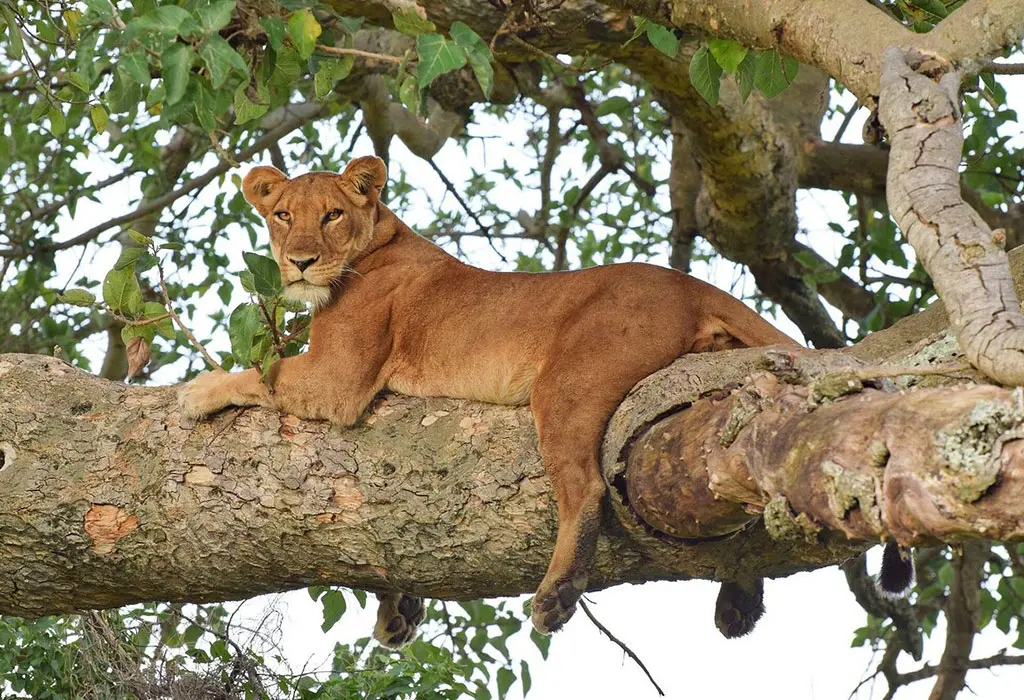
Ishasha Tree Climbing Lions Tour. Lions climbing trees sounds like the kind of thing that gets exaggerated in a brochure, but in Ishasha, the southern sector of Queen Elizabeth National Park, it’s a genuine and reasonably reliable behavior, not a rare fluke sighting. This guide is a focused, deep look at Ishasha itself and the tree-climbing lions that make it famous — why the behavior happens, when you’re most likely to see it, how remote the sector actually is, and what a visit looks like end to end. If you’re specifically interested in combining this with gorilla trekking from Kigali, our earlier guide to a Kigali gorilla trek with Ishasha climbing lions covers that combined route; this post is a standalone deep-dive on Ishasha itself, regardless of what else you’re pairing it with.
Why Do Lions Climb Trees? The Science Behind Ishasha’s Famous Behavior
Tree-climbing isn’t typical lion behavior across most of Africa — lions are heavy, powerful cats built for sprinting and ambush on the ground, not for scrambling into branches the way leopards do. Ishasha’s lions are one of only two well-documented populations in Africa known to climb regularly, and researchers offer a few overlapping explanations rather than a single confirmed cause. Escaping the heat and biting insects at ground level is one leading theory, since a breeze and slightly cooler air are often available higher in a tree’s canopy during the middle of the day. Better visibility over the surrounding plains to spot both prey and potential threats is another. A learned behavior passed down within a specific pride, rather than a universal instinct, is a third, which would explain why it’s so concentrated in this one population rather than appearing evenly across Uganda’s lion range. Most likely, it’s some combination of all three, reinforced over generations within Ishasha’s particular prides.
What makes this especially interesting to researchers is that the behavior appears to be socially transmitted rather than purely instinctive. Cubs raised within Ishasha’s tree-climbing prides tend to pick up the habit themselves as they mature, suggesting it’s learned through observation within the family group rather than encoded as a universal lion trait. This is part of why the behavior stays so geographically concentrated — a pride relocated elsewhere wouldn’t necessarily carry the habit with it in the same way, and lions in Uganda’s other sectors, including the main Kasenyi plains area of Queen Elizabeth itself, don’t display the same regular tree-climbing pattern despite sharing the same species and broadly similar habitat.
Where Exactly Is Ishasha? Geography and Remoteness
Ishasha sits in the far southern reaches of Queen Elizabeth National Park, close to the border with the Democratic Republic of Congo, and it’s noticeably more remote and less visited than the park’s main northern sector around the Kasenyi plains and Mweya Peninsula. That remoteness is part of the appeal — fewer vehicles, quieter roads, and a genuine sense of being somewhere off the main tourist circuit, even within an already well-established national park. Our facts page on Queen Elizabeth National Park gives useful background on how Ishasha fits within the wider park, and our overview of the most visited places in Uganda is a useful contrast, since Ishasha notably doesn’t rank among them despite its fame for one specific, genuinely rare wildlife behavior.
Best Time of Day to See Tree-Climbing Lions
Timing matters more here than at almost any other Uganda wildlife sighting. Lions are most likely to be up in the fig trees during the hottest part of the day, roughly late morning through mid-afternoon, when the heat-avoidance theory of the behavior is most plausible and most visibly borne out. An early morning game drive, by contrast, is more likely to find lions still on the ground, either resting after a night hunt or beginning to move toward a favored tree as temperatures rise. A well-planned Ishasha visit often means adjusting the standard early-morning game drive schedule specifically to catch the midday window, rather than following the usual dawn-and-dusk pattern used elsewhere in Uganda’s parks.
Best Time of Year to Visit Ishasha
Tree-climbing sightings happen year-round, since the behavior isn’t tied to a specific season the way some wildlife activities are, but the dry months — roughly June to September and December to February — tend to make the behavior more pronounced, since heat and biting insects at ground level are both more intense during these drier, warmer stretches. The wetter months bring lush scenery and fewer other vehicles on Ishasha’s already-quiet roads, but slightly less predictable tree-climbing behavior, since cooler, wetter conditions reduce one of the main theorized drivers of the habit.
Sample Game Drive: What a Visit to Ishasha Actually Looks Like
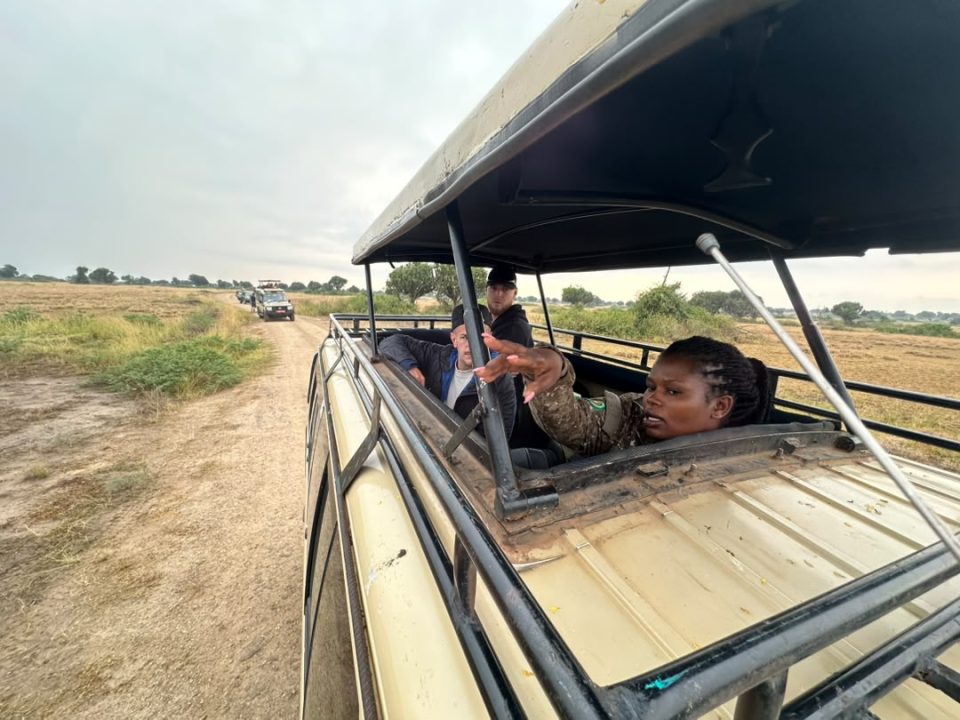
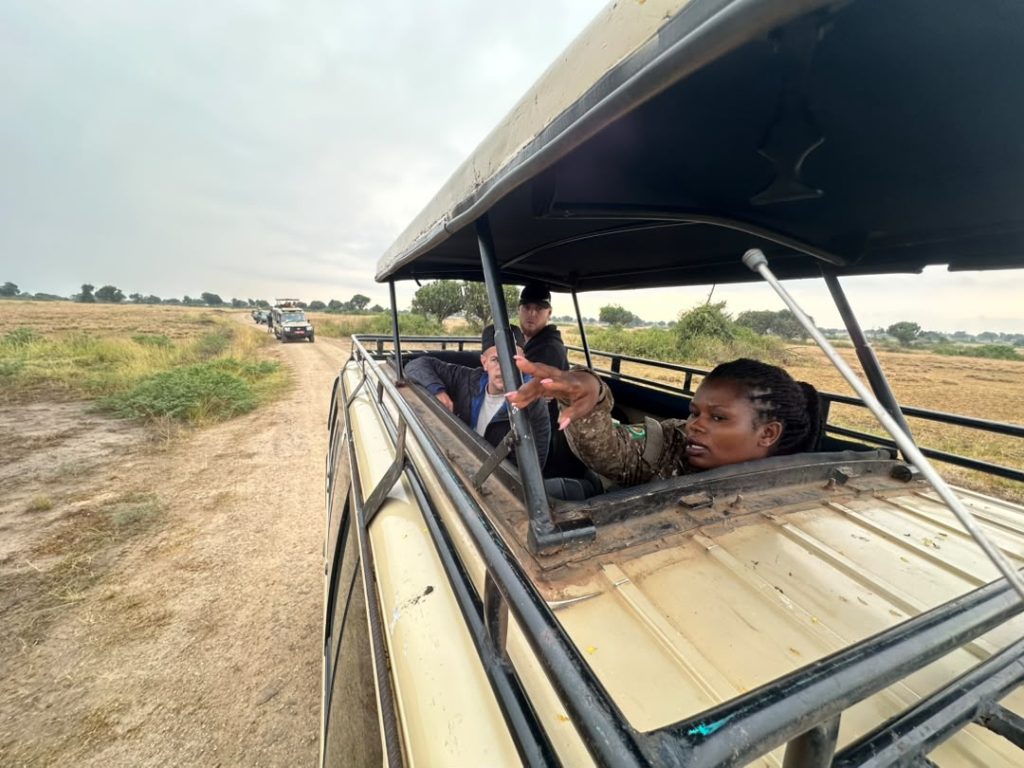
A typical Ishasha game drive begins with a scan of the sector’s known fig trees, since certain trees are used repeatedly by the resident prides and experienced guides generally know which ones to check first. From there, the drive moves through open plains dotted with Euphorbia candelabra trees, past grazing Uganda kob and topi, with regular stops to scan for movement in the canopy above. Because the sector is quieter than the rest of Queen Elizabeth, encounters here often feel less rushed — fewer vehicles competing for the same sighting, and more time to simply wait and watch once lions are spotted, whether on the ground or up in a tree.
The Sycamore Fig Trees: What to Actually Look For
The lions’ preferred trees in Ishasha are typically large sycamore figs, chosen for their broad, sturdy horizontal branches capable of comfortably supporting an adult lion’s weight, sometimes with multiple lions draped across the same tree at once. Spotting a lion in one of these trees from a distance takes a practiced eye — a tawny shape draped along a branch can look remarkably like part of the tree itself until it shifts or a tail swings into view. Experienced guides scan methodically rather than driving past quickly, and it’s worth trusting your guide’s pace here rather than pushing to cover more ground faster, since a slow, careful scan of the known trees is usually more productive than a rapid circuit of the whole sector.
Comparing Ishasha to Lake Manyara: The Only Other Reliable Spot
Ishasha is one of only two places in Africa where tree-climbing lion behavior is reliably documented, the other being Lake Manyara National Park in Tanzania. Travelers who’ve visited both often note subtle differences: Manyara’s forest and groundwater setting produces a different backdrop than Ishasha’s open savannah, and Ishasha’s lower visitor numbers generally mean less competition for a good sighting angle once lions are found. Neither location guarantees a sighting on any given visit, since this remains genuinely wild, unpredictable behavior rather than a scheduled show, but both offer meaningfully better odds than anywhere else on the continent.
Other Wildlife in the Ishasha Sector
Tree-climbing lions are the headline draw, but Ishasha’s plains also support healthy populations of Uganda kob, topi, buffalo, and elephant, along with excellent birdlife along the Ishasha River itself, which forms part of the border with the Democratic Republic of Congo. Our broader guide to the top wild animals to see on a Uganda wildlife safari and our answer to where to see Big Five animals in Uganda both apply to Ishasha as part of the wider Queen Elizabeth ecosystem, even though the tree-climbing lions remain the sector’s singular claim to fame. Our broader piece on Big Five and primate safaris in Uganda is worth reading too if you’re weighing how a stop at Ishasha fits into a wider wildlife-focused itinerary rather than a single-sector visit.
The Uganda kob in particular are worth watching closely during an Ishasha visit, since the sector’s plains host active kob breeding grounds, known as leks, where males gather in a small, contested territory to display for females. This behavior is unrelated to the tree-climbing lions but is one of the more interesting wildlife spectacles available in the same sector, and a patient guide will often point it out during the quieter stretches of a game drive between tree-scanning stops.
Where to Stay Near Ishasha
Accommodation in and around Ishasha is more limited and generally more rustic than the lodges clustered around Queen Elizabeth’s main northern sector, in keeping with the area’s quieter, more off-the-beaten-path character. Marafiki Safari Lodge is one of the properties serving this part of the park, and for travelers who’d rather base themselves in the more developed northern sector and drive down to Ishasha for a dedicated game drive, our roundup of top luxury lodges in Queen Elizabeth National Park covers the wider range of options, several of which are within reach of a long morning excursion to Ishasha and back.
Getting There: Distance and Route
Ishasha is typically reached either as a stop on the route between Queen Elizabeth’s main sector and Bwindi, given its position in the far south of the park, or as a dedicated day excursion from a lodge based further north. Because of its remoteness, it’s rarely visited as a completely standalone destination reached directly from Kampala or Entebbe; most itineraries fold it into a broader route through Queen Elizabeth. Our comparison of game drives in Murchison Falls versus Queen Elizabeth is a useful broader reference if you’re still deciding how Ishasha fits into your overall Uganda route, and our general primer on what to expect on a game drive in Africa is worth reading if this is your first time on safari.
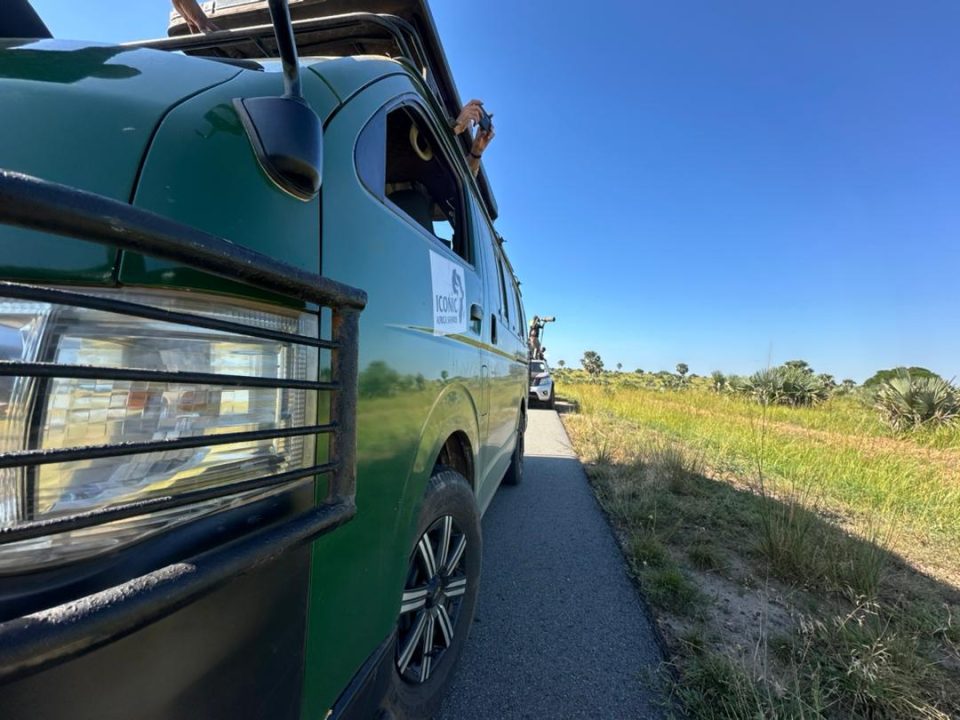
Road conditions on the approach to Ishasha are generally rougher than the well-graded tracks around Queen Elizabeth’s main sector, since the area sees considerably less traffic and maintenance investment. A private 4×4 with an experienced driver-guide familiar with the route is the standard way to reach the sector, and it’s worth allowing more time than a map’s straight-line distance might suggest, particularly during the wetter months when the murram roads can slow progress noticeably. Our overview of choosing a safari company in Uganda is a useful reference if you’re weighing which operator has genuine experience navigating this quieter part of the park, since Ishasha rewards local knowledge more than the busier, better-signposted northern sector does.
Is Ishasha Safe to Visit?
Given its proximity to the Democratic Republic of Congo border, some travelers reasonably ask whether visiting Ishasha carries any additional risk. In practice, the sector operates as a normal, well-managed part of Queen Elizabeth National Park, with the same ranger presence and established tourism infrastructure as the rest of the park, and it has a long, well-established track record as a safe, regularly visited wildlife destination. Our note on whether Uganda’s game drive safaris are safe covers general safety practices that apply here as much as anywhere else in the park system, and travelers should check current travel advisories for the border region as a matter of routine good practice, the same as they would for any international border area, rather than as a specific Ishasha concern.
Combining Ishasha With the Rest of Queen Elizabeth
Very few itineraries treat Ishasha as a complete visit on its own; it’s almost always paired with the rest of Queen Elizabeth National Park, particularly the Kazinga Channel boat cruise and a game drive on the Kasenyi plains in the park’s main northern sector. This pairing makes practical sense given the driving distance between the two areas and gives a fuller picture of the park’s habitat range — savannah, wetland, and crater lake country in the north, and the quieter, more open plains of Ishasha in the south. Our broader guide to game drive safaris in Uganda and our overview of Uganda safari experiences both help place Ishasha within a wider, multi-day route through the park.
Photography Tips for Tree-Climbing Lions
Photographing a lion draped in a tree canopy is a genuinely different challenge from photographing one on open ground, since the animal is often partially obscured by branches and leaves, and the lighting angle changes significantly depending on the time of day and the tree’s orientation. A telephoto lens with reasonable reach is essential, since vehicles can’t always position close enough for a wide-angle shot. Shooting from slightly below the tree, if your guide can position the vehicle appropriately, tends to produce a cleaner silhouette against the sky than a flatter angle. Patience matters more here than almost any other wildlife photography scenario in Uganda — waiting for a lion to shift position, yawn, or lift its head can turn an obscured, awkward shot into a genuinely striking one, and rushing the sighting to move on to the next stop is usually the biggest mistake photographers make in Ishasha.
What to Pack for an Ishasha Game Drive
Standard game drive gear applies here: neutral-toned clothing, sun protection given Ishasha’s open, largely unshaded terrain, and binoculars, which matter more than usual in Ishasha specifically since spotting a lion in a tree canopy from a distance genuinely benefits from magnification that the naked eye can’t match. A good zoom lens, as noted above, is worth prioritizing over other camera gear if photography is a priority, and a wide-brimmed hat is a practical addition given how much of an Ishasha game drive happens in direct midday sun, precisely because that’s when the lions are most likely to be up in the trees.
Because Ishasha visits often run through the hottest part of the day rather than the cooler dawn hours used elsewhere, it’s also worth packing more water than you might for a typical morning game drive, along with a light, breathable layer rather than the warmer clothing suited to an early start in Bwindi or Kibale. Sunglasses are a small but genuinely useful addition too, since long stretches of scanning bright, open sky for a shape in the canopy are considerably more comfortable with glare cut down.
How Ishasha Fits Into Uganda’s Wider Park System
Uganda has ten national parks, and Ishasha is unusual among them for being famous not for its own name but as a specific sector within a larger, better-known park. Our overview of Uganda’s national parks is a useful reference if you’re trying to understand how Ishasha’s remote, southern position within Queen Elizabeth compares to the park’s better-known northern sector, and to Uganda’s other savannah parks more broadly. For travelers weighing Ishasha specifically against other short-trip wildlife options closer to Kampala, our guide to a short Uganda wildlife safari and our deep-dive on Lake Mburo National Park are both useful points of comparison, though neither offers anything resembling Ishasha’s tree-climbing lions, which remain genuinely unique to this one sector.
Frequently Asked Questions
Are tree-climbing lion sightings guaranteed at Ishasha? No — it remains genuinely wild behavior, not a scheduled attraction, though Ishasha’s odds are meaningfully better than almost anywhere else in Africa given the concentration of known fig trees the resident prides favor.
What time of day is best for a sighting? Late morning through mid-afternoon, when the heat-avoidance theory behind the climbing behavior is most active, rather than the classic dawn game drive slot used elsewhere.
Is Ishasha safe given its location near the DRC border? Yes — it’s a well-established, regularly visited part of Queen Elizabeth National Park with normal ranger presence and tourism infrastructure, though checking current border-region travel advisories is sensible routine practice.
Can I visit Ishasha as a standalone trip? It’s technically possible, but most itineraries pair it with the rest of Queen Elizabeth National Park given the driving distance involved and the wider range of activities available in the park’s main sector.
Where else in Africa can I see tree-climbing lions? Lake Manyara National Park in Tanzania is the only other location with a reliably documented tree-climbing lion population.
A Quiet, Uncrowded Alternative to Busier Game-Viewing Circuits
One quality of Ishasha that’s easy to undersell in a list of practical facts is simply how uncrowded it feels compared to more heavily trafficked wildlife circuits elsewhere in Africa. It’s not unusual to have a tree-climbing lion sighting entirely to yourself, or with only one other vehicle nearby, a genuinely different experience from the multi-vehicle scrums that can develop around a good sighting in busier parks. For travelers who’ve found that crowding detracts from wildlife encounters elsewhere, Ishasha’s remoteness — the same quality that makes it more effort to reach — is arguably its single biggest advantage.
Final Thoughts
Ishasha is one of Uganda’s genuinely singular wildlife experiences — a behavior found in only one other place on the entire continent, set within a quiet, less-visited corner of an already excellent national park. Timing your visit around the midday heat, being patient once a lion is spotted, and pairing the sector with the rest of Queen Elizabeth’s habitats makes for one of the most distinctive game drives available anywhere in East Africa. If you’d like help building an Ishasha visit into your Uganda itinerary, get in touch with our team at Kenlink Tours and we’ll route it around your travel dates.
For travelers also arranging transport and safaris on the Rwanda side of the region, our colleagues at Pick and Transfer Safaris offer a full range of wildlife safari options, including a 3-day safari to Queen Elizabeth National Park and a 3-day safari to Murchison Falls, alongside their own gorilla safari packages for travelers combining this trip with trekking, such as a one-day gorilla safari from Kigali. See their detailed look at Bwindi Impenetrable Forest National Park, learn about their team on their about us page, browse their Kigali city guide, or reach out through their contact page.