- EXPERT'S HELP
- +256789210067
- +256200955001
- info@kenlinktours.com


1 Day Safari to Murchison Falls National Park
October 4, 2026
Short Safaris for People working in Uganda
October 4, 2026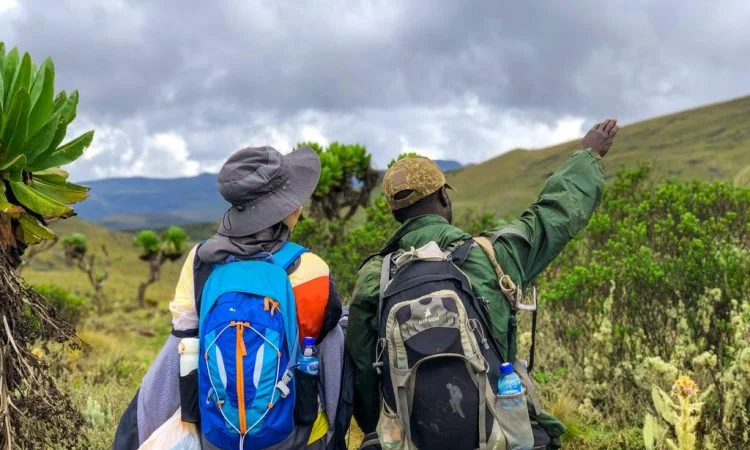
Best Hiking Adventure Safaris in Uganda. Uganda is famous for its mountain gorillas, but for hikers it offers something just as special: some of the most varied and rewarding trails in Africa. Within one compact country you can climb glacier-capped peaks in the legendary Mountains of the Moon, stand on the rim of an ancient volcano, hike behind thundering waterfalls, scramble up the volcanic cones of the Virunga range and walk through rainforest alive with primates and birds. Best of all, many of these hikes can be combined with gorilla trekking, chimpanzee tracking and classic game drives on the same trip.
At Kenlink Tours, we design hiking adventure safaris for first-time walkers, keen trekkers and experienced mountaineers alike. In this guide, we share the best hiking adventure safaris in Uganda, from multi-day mountain expeditions to easy half-day walks, and give practical advice on fitness, seasons, packing and how to combine hiking with Uganda’s famous wildlife experiences.
Why Uganda Is a Great Destination for Hiking Safaris
Uganda’s landscapes are shaped by the Great Rift Valley, ancient volcanoes and the equatorial climate, creating a remarkable range of terrain for hikers. Here is why it stands out:
- Extraordinary variety. Snow-capped peaks, volcanic craters, rainforests, waterfalls, crater lakes and savannah hills all lie within reach.
- Hikes for every level. Choose from gentle village walks and waterfall trails to demanding multi-day summit expeditions.
- Wildlife along the way. Many trails pass through national parks where you may see primates, rare birds and even elephants.
- Uncrowded trails. Compared with Africa’s most famous mountains, Uganda’s peaks see far fewer hikers, offering real wilderness.
- Easy combination with gorillas. Mgahinga’s volcanoes and Bwindi’s forest trails sit right next to gorilla trekking areas.
For an overview of the options, see our guides to hiking tours and safaris in Uganda and mountain hiking and climbing in Uganda.
1. Rwenzori Mountains: Trekking the Mountains of the Moon
The Rwenzori Mountains on Uganda’s western border with the Democratic Republic of Congo are the ultimate hiking adventure in Uganda. Often called the Mountains of the Moon, they are a UNESCO World Heritage Site and home to Margherita Peak on Mount Stanley, which at 5,109 metres is the third-highest point in Africa. Unlike the volcanic peaks of Kilimanjaro and Mount Kenya, the Rwenzori are a block of uplifted rock, creating a dramatic range of jagged peaks, glaciers, lakes and valleys.
What makes the Rwenzori truly unforgettable is the vegetation. As you climb, you pass through montane forest, bamboo zones and heather forests draped in moss, then into an otherworldly alpine zone of giant lobelias, groundsels and everlasting flowers, some growing several metres tall. The trails are muddy and challenging, but the scenery is like nothing else on Earth.
The classic Central Circuit takes around seven to nine days for a summit attempt on Margherita Peak, which involves glacier travel with crampons and ropes. Shorter treks of two to five days reach scenic lakes and viewpoints without technical climbing, while one-day hikes in the foothills are perfect for a taste of the mountains. Read our guides to Mount Rwenzori hiking in Uganda, the Mount Rwenzori trekking safari and our one-day Rwenzori mountain trekking option.
2. Mount Elgon: Hiking an Ancient Volcano
In eastern Uganda on the border with Kenya, Mount Elgon is an extinct shield volcano with one of the largest volcanic calderas in the world. Its highest peak on the Ugandan side, Wagagai, rises to 4,321 metres. Elgon’s gentler slopes make it a less technical alternative to the Rwenzori, suitable for fit hikers without mountaineering experience.
Several trails lead to the summit and caldera, including the Sasa, Sipi, Piswa and Sumbi routes, with most expeditions taking four to six days. Along the way, you pass through bamboo forests, open heath and moorland, cave systems, hot springs and spectacular viewpoints over the plains of Uganda and Kenya. Wildlife includes blue monkeys, black-and-white colobus and many highland birds. Learn more in our guide to Mount Elgon hiking, and compare the two great ranges in is Mount Elgon or the Rwenzori worth hiking? Cyclists can also try a mountain biking safari on Mount Elgon.
3. Sipi Falls: Waterfall Hikes on the Slopes of Elgon
On the lower slopes of Mount Elgon, Sipi Falls is one of Uganda’s most beautiful hiking destinations and a perfect choice for travellers who want adventure without a full mountain expedition. A series of three waterfalls tumbles down the escarpment, the highest dropping around 100 metres. Guided hikes lead you to the base of each fall, through coffee farms and villages, with breathtaking views over the plains below.
Sipi is also famous for abseiling beside the main waterfall, rock climbing and coffee tours where local farmers show you how Uganda’s famous Arabica coffee is grown, roasted and brewed. A visit of one to three days is ideal. Read about Sipi Falls in Uganda, things to do in Sipi Falls and the thrill of abseiling at Sipi Falls.
4. Mount Muhabura: Summit Crater Lake in Mgahinga
In Mgahinga Gorilla National Park, in the far southwest of Uganda, the three Virunga volcanoes of Muhabura, Gahinga and Sabyinyo offer some of the most rewarding day hikes in East Africa. Mount Muhabura is the highest at 4,127 metres. Its name means “the guide,” as its distinctive cone was once used for navigation. The hike is a steep but non-technical climb that usually takes a full day, rewarding hikers with a small crater lake at the summit and spectacular views over Uganda, Rwanda and the DR Congo.
The climb is demanding and requires good fitness, an early start and warm clothing for the summit. Read our guide to hiking Mount Muhabura, and see Pick and Transfer Safaris’ advice on the best time to hike Mount Muhabura.
5. Mount Sabyinyo and Mount Gahinga: Volcano Day Hikes
Mount Sabyinyo, at about 3,669 metres, is the oldest of the Virunga volcanoes in Mgahinga and offers an exciting hike that includes steep ladders and narrow ridges. At its summit, three countries meet, allowing you to stand in Uganda, Rwanda and the DR Congo at the same time. Mount Gahinga, at about 3,474 metres, is a gentler climb through bamboo forest to a swampy crater at the top, making it a good choice for hikers who want a volcano experience without the extreme effort of Muhabura.
Learn more about Mount Sabyinyo hiking and climbing the volcanoes of Mgahinga. Pick and Transfer also lists things to do with a gorilla trek in Mgahinga, and their review of Ikoro Hotel in Kisoro covers a comfortable base for volcano hikes.
6. Gorilla Trekking: Uganda’s Most Famous Hike
Gorilla trekking is, at its heart, a hike, and one of the most rewarding in the world. In Bwindi Impenetrable National Park and Mgahinga Gorilla National Park, you follow rangers and trackers through steep, dense rainforest for anywhere from one to six hours to reach a habituated gorilla family, then spend one magical hour in their company. The terrain can be tough, with steep slopes, mud and thick vegetation, so it is a genuine adventure as well as a wildlife encounter.
Gorilla trekking pairs naturally with other hikes in the region. Read about combining gorilla trekking with mountain climbing in Uganda, and see Pick and Transfer’s 4-Day Uganda Gorilla Trekking and Hiking safari.
7. Bwindi Forest Trails: Waterfalls and the Buhoma–Nkuringo Walk
Beyond gorilla trekking, Bwindi offers superb forest hikes. The Munyaga River and waterfall trails near Buhoma lead through dense rainforest to beautiful cascades, with chances to see monkeys, butterflies and colourful birds. The Rushura Hill trail offers views across the forest towards the Rwenzori and Lake Edward on clear days.
One of the most memorable walks is the trail between Buhoma and Nkuringo, which crosses the forest along the Ivi River and through hillside villages. It takes most of a day and is a wonderful way to experience Bwindi’s scenery and communities, often done as a one-way hike with your vehicle meeting you at the other end. Pick and Transfer shares more ideas on what to do after a gorilla tour in Bwindi.
8. Kisoro, Lake Mutanda and Lake Bunyonyi Hikes
The highlands around Kisoro and Kabale are a hiker’s paradise, with terraced hills, crater lakes and views of the Virunga volcanoes at every turn. Popular walks include hikes around Lake Mutanda, often combined with canoeing, and village trails above Lake Bunyonyi, which is dotted with 29 islands. These hikes are moderate and ideal for rest days between more demanding activities.
Explore our guide to hiking experiences in Kisoro, and read Pick and Transfer’s guides to tourism attractions in Kisoro, a boat ride at Lake Mutanda and visiting Lake Bunyonyi from Kigali.
9. Fort Portal Crater Lakes and Kibale Forest Walks
The area around Fort Portal, near Kibale Forest National Park, is dotted with dozens of crater lakes set among rolling hills, tea plantations and forest patches. Hiking between the lakes, especially around the Ndali-Kasenda crater field and the Top of the World viewpoint, rewards you with stunning views and the Rwenzori Mountains on the horizon. Nearby, the Amabere caves feature a waterfall and stalactites linked to local legends. In Kibale, guided nature walks and chimpanzee tracking add primate encounters to your hiking adventure. Read about the crater lakes in Fort Portal.
10. Kidepo Valley and Mount Morungole
In Uganda’s remote northeast, Kidepo Valley National Park offers wild, uncrowded savannah surrounded by rugged mountains. Guided nature walks from Apoka lead through the park with armed rangers, while the hike up Mount Morungole outside the park offers a cultural adventure, visiting the Ik people who live on its slopes. Kidepo is often combined with Sipi Falls and Mount Elgon on longer hiking safaris. Learn more about a nature walk in Kidepo Valley National Park.
Bonus: Hiking to the Top of Murchison Falls
In Murchison Falls National Park, a short but steep hike from the riverbank to the Top of the Falls is one of Uganda’s most dramatic walks. You climb alongside the roaring water to viewpoints where the entire Nile forces its way through a narrow gorge. It is often combined with a boat cruise that drops hikers at the base of the trail. Read our list of the top things to do in Murchison Falls National Park and Pick and Transfer’s guide to visiting the top of Murchison Falls.
Choosing the Right Hike for Your Fitness Level
Uganda offers hikes for every ability. As a general guide:
- Easy: Village walks around Lake Bunyonyi and Lake Mutanda, crater lake walks near Fort Portal, nature walks in Kibale and Lake Mburo, and Sipi Falls’ lower trails.
- Moderate: Gorilla trekking, Bwindi waterfall trails, the Buhoma–Nkuringo walk, Mount Gahinga and the full Sipi Falls circuit.
- Challenging: Mount Sabyinyo, Mount Muhabura and multi-day treks on Mount Elgon.
- Very challenging: The Rwenzori Central Circuit and the summit of Margherita Peak, which requires excellent fitness and some mountaineering skills.
Whatever your level, preparing with regular walks, stair climbing and hill hikes in the months before your trip will make your adventure more enjoyable. For high-altitude treks, allow time to acclimatise and listen to your guides.
Best Time for Hiking Adventure Safaris in Uganda
Hiking is possible all year round, but the driest months, from December to February and June to August, generally offer the best trail conditions and clearest views. The wet seasons, from March to May and September to November, bring heavier rain, muddier trails and more cloud on the mountains, though lower slopes remain beautiful and green. For the Rwenzori and Mount Elgon, the dry seasons are strongly recommended. Volcano hikes in Mgahinga and forest walks in Bwindi can be done at any time with good rain gear.
What to Pack for a Hiking Safari in Uganda
- Waterproof, broken-in hiking boots with ankle support
- Gaiters for muddy trails, especially in the Rwenzori
- Breathable base layers, warm fleece and a down jacket for high altitude
- A waterproof jacket and trousers
- Gloves and a warm hat for summit days
- Walking poles to ease steep ascents and descents
- A daypack with rain cover, water bottles or a hydration bladder
- Sunscreen, sunglasses, insect repellent and a basic first aid kit
- Headlamp with spare batteries for early starts
- Snacks and energy bars
For gorilla trekking specifically, see our gorilla trekking safari checklist for travelers.
Combining Hiking with Wildlife Safaris
One of the joys of a Uganda hiking safari is how easily it combines with wildlife experiences. A typical southwestern itinerary might include gorilla trekking in Bwindi, a volcano hike in Mgahinga and canoeing on Lake Mutanda, while a western circuit could combine a Rwenzori trek with chimpanzee tracking in Kibale and game drives in Queen Elizabeth National Park. In the east, Mount Elgon and Sipi Falls pair well with Kidepo Valley and the adventure capital of Jinja.
Read our guide to combining Rwenzori and Bwindi for hiking and gorillas, and explore our best adventure safaris in Uganda. Travellers with more time can look at Pick and Transfer’s 14-Day Uganda Primates and Safari Adventure. If you are starting in Rwanda, you can also hike the Virunga volcanoes on the Rwandan side in Volcanoes National Park.
Sample Hiking Adventure Itineraries
Gorillas and volcano (4 days, southwest). Travel to Mgahinga, hike Mount Gahinga or Muhabura, trek gorillas in Mgahinga or Bwindi and relax with a canoe trip on Lake Mutanda.
Waterfalls and coffee (3 days, east). Drive to Sipi Falls, hike to all three waterfalls, try abseiling, join a coffee tour and enjoy the views from the escarpment.
Mount Elgon summit (5 to 6 days). Trek the Sasa or Sipi trail to Wagagai Peak, explore the caldera and hot springs and descend via a different route.
Mountains of the Moon (7 to 9 days). Trek the Rwenzori Central Circuit, with an optional summit attempt on Margherita Peak, then relax with chimpanzee tracking in Kibale.
Ultimate hiking safari (12 to 14 days). Combine the Rwenzori, Kibale chimps, Queen Elizabeth game drives, Bwindi gorillas and a Mgahinga volcano hike for the adventure of a lifetime.
Costs and Permits for Hiking in Uganda
Hiking costs depend on the destination, duration and level of support. Park entrance fees, hiking permits and ranger or guide fees are set by the Uganda Wildlife Authority and apply to hikes in national parks such as Mgahinga, Mount Elgon and Rwenzori Mountains. Multi-day Rwenzori and Elgon treks also include porters, cooks, camping or hut accommodation and food, usually arranged through licensed trekking operators. Shorter hikes such as Sipi Falls trails and village walks are much more affordable.
Because fees change from time to time, we always provide an up-to-date, tailored quote. Travellers who prefer to drive themselves between trailheads can use our car hire service.
Safety Tips for Hiking in Uganda
- Always hike with a licensed guide or ranger, especially in national parks.
- Start early to avoid afternoon rain and allow plenty of time to descend.
- Drink plenty of water and eat regularly to maintain energy.
- On high-altitude treks, ascend gradually and report any symptoms of altitude sickness to your guide.
- Carry warm and waterproof clothing, as mountain weather can change quickly.
- Make sure your travel insurance covers trekking and, for the Rwenzori, high-altitude activities and evacuation.
Hiking Responsibly in Uganda
Uganda’s mountains, forests and waterfalls are fragile ecosystems, and the communities around them depend on tourism being done well. Hiking responsibly helps protect these places for future generations. Stay on marked trails to avoid damaging vegetation, carry all your rubbish back down the mountain and avoid using soap or detergents in streams and lakes. On volcano and forest hikes, keep noise to a minimum so you do not disturb wildlife, and never feed animals.
Your choices can also support local people. Hiring local porters and guides provides valuable income, and most trekking operators employ people from villages bordering the parks. Buying coffee directly from farmers at Sipi Falls, crafts from community cooperatives near Mgahinga or meals at community-run lodges near Bwindi keeps tourism money in the local economy. Tipping porters and guides fairly at the end of a trek is customary and greatly appreciated.
Finally, respect local customs when hiking through villages. Greet people politely, ask before taking photographs and dress modestly. A friendly greeting in the local language often leads to warm conversations and unforgettable encounters along the trail.
Frequently Asked Questions About Hiking Safaris in Uganda
What is the best hike in Uganda? The Rwenzori Mountains offer Uganda’s most spectacular multi-day trek, while Mount Muhabura and Sipi Falls are among the best shorter hikes.
Can beginners hike in Uganda? Yes. Sipi Falls trails, Lake Bunyonyi and Lake Mutanda walks, crater lake hikes and Mount Gahinga are great choices for beginners with reasonable fitness.
Do I need climbing experience for the Rwenzori? Trekking routes need good fitness but no technical skills. Reaching Margherita Peak involves glacier travel, so prior experience with crampons and ropes is helpful, though guides provide equipment and instruction.
Can I combine hiking with gorilla trekking? Absolutely. Mgahinga’s volcanoes and Bwindi’s forest trails sit right next to gorilla trekking areas, making them ideal combinations.
When is the best time to hike in Uganda? The dry seasons from December to February and June to August offer the best conditions.
Is hiking in Uganda safe? Yes, when done with licensed guides and rangers who know the trails and conditions.
Book Your Hiking Adventure Safari with Kenlink Tours
From the glaciers of the Rwenzori to the summit crater of Muhabura, the waterfalls of Sipi and the misty trails of Bwindi, the best hiking adventure safaris in Uganda combine physical challenge, spectacular scenery and unforgettable wildlife encounters. Whether you have a weekend or two weeks, there is a trail waiting for you.
Learn more about Kenlink Tours, then email info@kenlinktours.com with your travel dates, fitness level and the hikes that interest you. For more inspiration, see Pick and Transfer’s list of top tourist attractions in Uganda, and let us plan a hiking adventure safari built around you.