- EXPERT'S HELP
- +256789210067
- +256200955001
- info@kenlinktours.com


Bwindi and Lake Bunyonyi Tour
October 13, 2026
Gorilla Trek in Bwindi and Murchison Falls in One Tour
October 13, 2026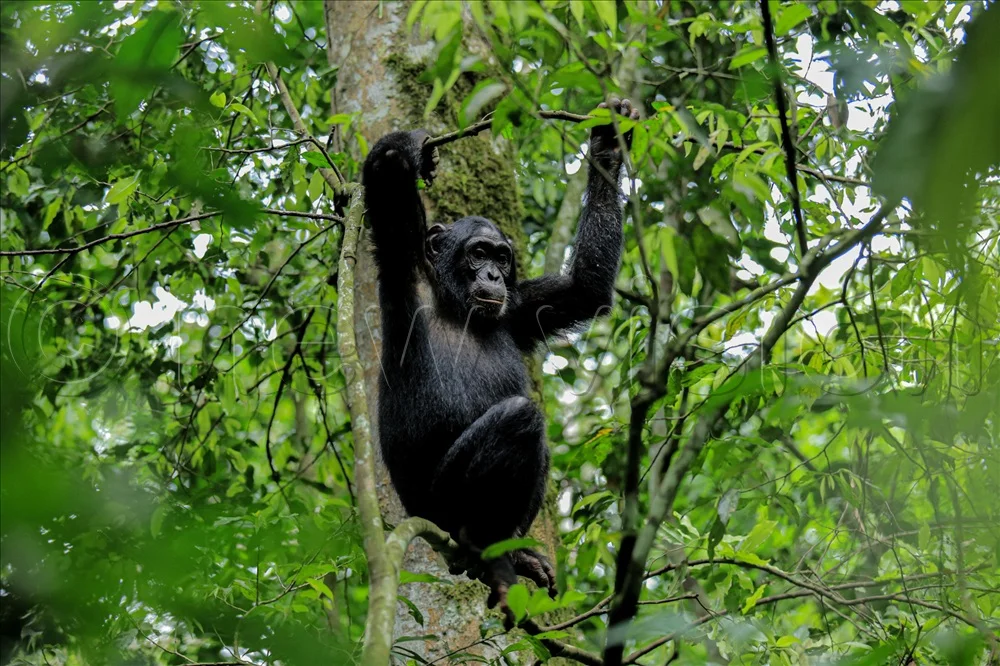
Bwindi Tour with Chimpanzees in Uganda. Uganda is one of the very few places on Earth where you can track both mountain gorillas and chimpanzees in the wild on a single short trip. A Bwindi tour with chimpanzees in Uganda brings together the country’s two greatest primate experiences: following noisy, energetic chimpanzee communities through the tall rainforest of Kibale, and sitting quietly beside a gorilla family in the misty hills of Bwindi Impenetrable National Park. Add a game drive through Queen Elizabeth National Park on the way, and you have one of the most complete primate safaris in Africa.
At Kenlink Tours, primate safaris are our speciality, and we have guided travellers to Kibale and Bwindi since 2010. In this complete guide, we explain why gorillas and chimpanzees make such a powerful combination, share a detailed five-day itinerary, describe what each trek is really like, and cover permits, activities, lodges, the best time to travel, costs, packing and practical tips. Whether you are a first-time visitor or a passionate wildlife lover, this guide will help you plan the perfect great ape adventure.
Why Combine Gorilla Trekking in Bwindi with Chimpanzee Tracking?
Gorillas and chimpanzees are our closest living relatives, yet meeting them in the wild are two very different experiences. Gorillas are calm, gentle and largely ground-dwelling. A gorilla encounter is often quiet and deeply moving, as you watch a family feeding, resting and grooming just a few metres away. Chimpanzees, by contrast, are lively, loud and fast-moving. They climb high into the canopy, call to each other with ear-splitting pant-hoots and race through the forest, giving you an exciting, action-packed experience.
Seeing both species on one trip gives you a richer understanding of great ape behaviour, intelligence and social life. It is also an efficient use of your time. Kibale and Bwindi are linked by a scenic road that passes through Queen Elizabeth National Park, so you can enjoy lions, elephants and other savannah wildlife on the transfer day rather than spending it only on the road.
Finally, Uganda offers excellent value for primate lovers. The country’s gorilla permits are generally more affordable than those in neighbouring Rwanda, and Kibale Forest has one of the highest chimpanzee tracking success rates in Africa. Browse more options on our Uganda safari packages page.
Quick Overview of the 5 Days Bwindi and Chimpanzee Tour
- Day 1: Kampala or Entebbe to Kibale Forest National Park via Fort Portal
- Day 2: Chimpanzee tracking in Kibale and an afternoon walk in Bigodi Wetland Sanctuary
- Day 3: Transfer to Bwindi through Queen Elizabeth National Park, with a game drive in the Ishasha sector
- Day 4: Mountain gorilla trekking in Bwindi Impenetrable National Park
- Day 5: Return to Kampala or Entebbe, or transfer to Kigali
If you prefer a shorter or longer version, our 5 Days Gorilla and Chimpanzee Tracking Tour, 5 Days Chimps and Gorilla Safari and 4 Days Uganda Primate Tour offer different paces and routes.
Getting to Know Kibale Forest National Park
Kibale Forest National Park lies in western Uganda near the town of Fort Portal, covering about 795 square kilometres of moist tropical forest, grassland and swamp. It is widely known as the “Primate Capital of the World” because it hosts 13 primate species, one of the highest concentrations of primates anywhere in Africa.
The park’s most famous residents are its chimpanzees, with an estimated population of around 1,500 individuals. Several communities have been habituated for tourism, mainly around the Kanyanchu visitor centre, where chimpanzee tracking success rates are typically above 90 percent. Kibale is also home to the rare L’Hoest’s monkey, red colobus, black-and-white colobus, grey-cheeked mangabey, red-tailed monkey, blue monkey, olive baboon and nocturnal primates such as bush babies and pottos.
Beyond primates, Kibale supports forest elephants, buffaloes, bushpigs and more than 370 bird species, including the green-breasted pitta, a highly sought-after species for birders. Learn more about the park in this guide to Kibale Forest National Park.
Getting to Know Bwindi Impenetrable National Park
Bwindi Impenetrable National Park covers about 321 square kilometres of steep, forested hills in southwestern Uganda, along the edge of the Albertine Rift. It is a UNESCO World Heritage Site and one of the most ancient and biodiverse forests in Africa.
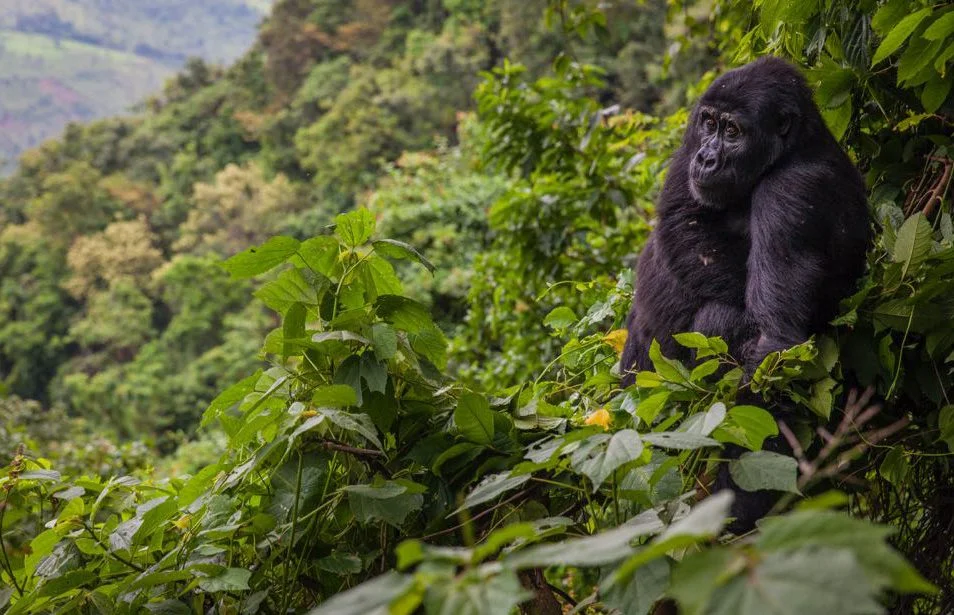
Bwindi is home to around 459 mountain gorillas, almost half of the world’s population. More than 20 gorilla families have been habituated for tourism, spread across four sectors: Buhoma in the north, Ruhija in the east, and Rushaga and Nkuringo in the south. When travelling from Kibale via Queen Elizabeth, the northern Buhoma sector is often the most convenient, as it is closest to the Ishasha sector.
Bwindi also shelters a small chimpanzee population, L’Hoest’s monkeys, black-and-white colobus, forest elephants and about 350 bird species, including more than 20 Albertine Rift endemics. Read more in this guide to Bwindi Impenetrable Forest National Park.
Gorillas vs Chimpanzees: How the Two Experiences Differ
Understanding the difference between the two treks helps you prepare and enjoy both to the fullest.
Terrain: Kibale’s forest is relatively flat, with well-maintained trails, making chimpanzee tracking physically easier for most travellers. Bwindi’s terrain is steep, hilly and often muddy, so gorilla trekking is generally more demanding.
Behaviour: Chimpanzees are energetic and spend much of their time in the trees, so you may need to look up and move quickly to keep up with them. Gorillas are calmer and usually stay on or near the ground, making them easier to observe and photograph at close range.
Group size and time: Each gorilla family can be visited by up to eight people per day, while chimpanzee tracking groups are usually limited to about six to eight people. In both cases, you spend one hour with the apes once you find them.
Minimum age: The minimum age for gorilla trekking is 15 years, while chimpanzee tracking in Kibale is generally open to visitors aged 12 and above.
Atmosphere: Many travellers describe chimpanzee tracking as thrilling and gorilla trekking as emotional. Experiencing both gives you a complete picture of Africa’s great apes.
How Your Visit Supports Great Ape Conservation
Both mountain gorillas and chimpanzees face serious threats, including habitat loss, poaching, snares set for other animals and diseases transmitted from humans. Responsible tourism has become one of the most effective tools for protecting them. Permit fees fund ranger patrols, veterinary care, research and the daily monitoring of habituated groups, which helps detect illness or injury early.
A share of park revenue also goes directly to communities living around Kibale and Bwindi, supporting schools, health centres, roads and clean water projects. Many local people earn a living as porters, guides, lodge staff and craft makers. When communities benefit from the presence of great apes, they become their strongest protectors.
The results speak for themselves. Mountain gorilla numbers have more than doubled since the 1980s, and Uganda’s chimpanzee populations remain among the most stable in East Africa. By following trekking rules, hiring porters and supporting community projects, you become part of this conservation success story.
Detailed 5 Days Bwindi Tour with Chimpanzees Itinerary
Below is our recommended itinerary starting from Kampala or Entebbe. Timings are approximate, and every element can be customised to suit your interests and budget.
Day 1: Kampala or Entebbe to Kibale Forest National Park
Your adventure begins with an early morning pick-up from your hotel in Kampala or from Entebbe International Airport. After meeting your driver-guide, you travel west along the Kampala–Mubende–Fort Portal highway, passing tea and banana plantations, rolling hills and busy trading centres. The drive takes around five to six hours, with comfortable stops along the way.
You arrive in Fort Portal, one of Uganda’s most attractive towns, in the early afternoon. Set at the foot of the Rwenzori Mountains and surrounded by tea estates and crater lakes, the area is ideal for a short afternoon excursion. You may visit the Ndali-Kasenda crater lakes for spectacular viewpoints or take a gentle walk to the Amabeere caves and waterfall. You then continue to your lodge near Kibale Forest for dinner and an overnight stay.
Meals: Lunch and Dinner
Overnight: Lodge near Kibale Forest National Park
Day 2: Chimpanzee Tracking in Kibale and Bigodi Wetland Walk
After an early breakfast, you drive to the Kanyanchu visitor centre for a briefing with Uganda Wildlife Authority rangers. You will learn about chimpanzee behaviour, the rules for tracking and what to expect on the trail. Morning tracking sessions usually start at around 8:00am, with an afternoon session also available.
Led by an experienced ranger guide, you walk into the forest, listening for the loud calls that reveal the chimpanzees’ location. When you find them, you spend one exciting hour watching them feed in fruiting trees, groom each other, play, squabble and move through the forest. Along the way, you are also likely to see other primates such as red colobus, red-tailed monkeys and grey-cheeked mangabeys.
For a deeper experience, you can choose the full-day Chimpanzee Habituation Experience instead of standard tracking. This allows you to spend most of the day with a chimpanzee community that is still being accustomed to people, alongside researchers and habituators.
After lunch, you head to the nearby Bigodi Wetland Sanctuary for a guided community walk. This beautiful swamp, managed by a local community organisation, is home to more than 130 bird species, including the great blue turaco, as well as several primate species. The walk also offers insights into local village life, with income directly supporting community projects.
Meals: Breakfast, Lunch and Dinner
Overnight: Lodge near Kibale Forest National Park
Day 3: Transfer to Bwindi via Queen Elizabeth National Park
After breakfast, you leave Kibale and drive south towards Queen Elizabeth National Park, enjoying views of crater lakes, tea plantations and the Rwenzori Mountains. You enter the park and cross the Equator, with the option of a short game drive on the northern plains if time allows.
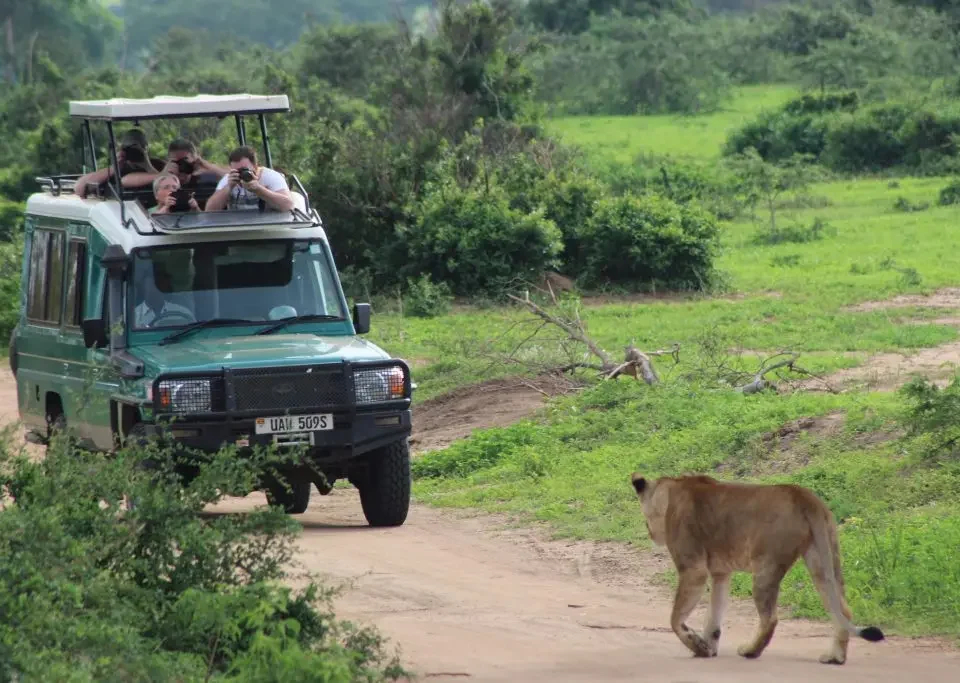
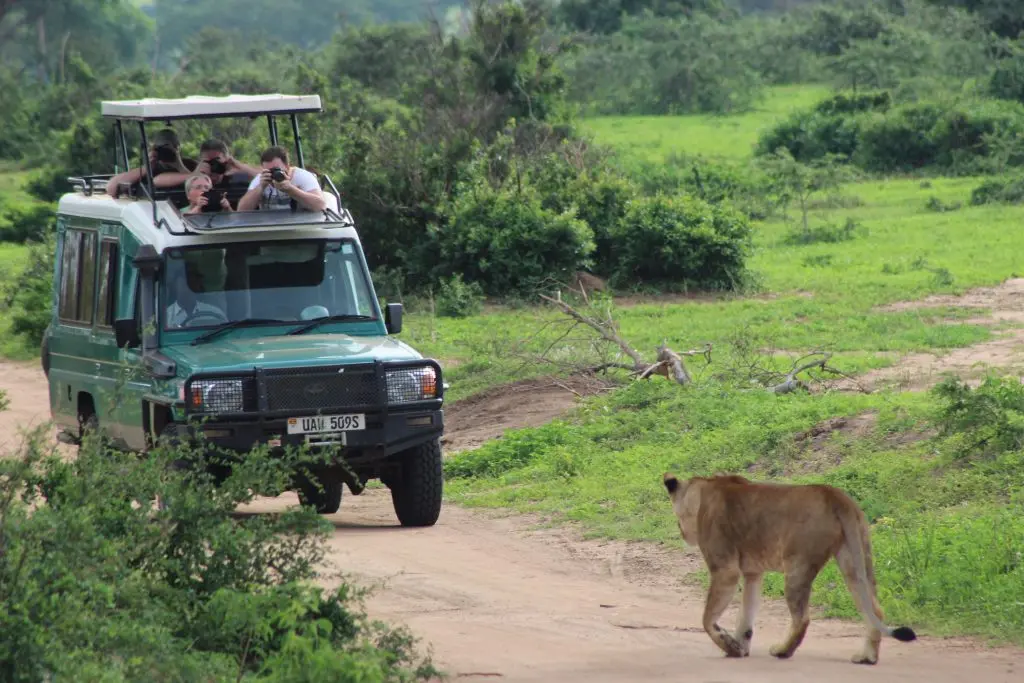
You continue south to the Ishasha sector, famous for its tree-climbing lions, which often rest in the branches of large fig trees. A game drive through Ishasha also offers chances to see buffaloes, elephants, topis and Uganda kobs. After a picnic lunch, you continue to Bwindi, arriving at your lodge in the late afternoon. Your guide will brief you on the next day’s gorilla trek before dinner.
If you would like more time for wildlife, you can add an extra night in Queen Elizabeth for a Kazinga Channel boat cruise and a morning game drive on the Kasenyi plains. Our 3 Days Queen Elizabeth National Park safari gives a sense of what the park offers.
Meals: Breakfast, Lunch and Dinner
Overnight: Lodge near your gorilla trekking sector in Bwindi
Day 4: Mountain Gorilla Trekking in Bwindi
After an early breakfast, you report to the park headquarters for a 7:30am briefing with the rangers. You are assigned to a gorilla family, and then set off into the forest accompanied by rangers and trackers. The trek can take anywhere from one to six hours, depending on the gorillas’ location and the terrain.
When you find the gorillas, you spend one unforgettable hour in their presence. Watch the silverback watching over his group, mothers caring for infants, and youngsters tumbling, climbing and playing. After the energy of yesterday’s chimpanzees, the calm, gentle atmosphere of the gorilla family is a striking and moving contrast.
After returning to your lodge, you can relax or join an optional Batwa cultural experience or community walk in the afternoon, learning about local traditions and supporting community initiatives.
Meals: Breakfast, Lunch and Dinner
Overnight: Lodge in Bwindi
Day 5: Return to Kampala, Entebbe or Kigali
After breakfast, you begin your journey back. Travellers returning to Kampala or Entebbe drive via Mbarara, with a lunch stop and possibly a short visit to the Equator, arriving in the evening. Alternatively, you can fly from Kihihi airstrip near Buhoma to Entebbe, saving several hours on the road. If you are flying out of Rwanda, we can arrange a transfer to Kigali instead.
Meals: Breakfast and Lunch
Want to compare similar routes? Look at the 5-Day Uganda gorilla and chimpanzee safari or the 5 Days Uganda gorilla and chimps safari starting from Rwanda.
What to Expect on Chimpanzee Tracking in Kibale
Chimpanzee tracking is generally easier than gorilla trekking, but it still involves walking for one to three hours on forest trails. The ground can be muddy after rain, and you may need to move quickly when the chimpanzees travel. Comfortable walking shoes, long trousers and a light rain jacket are essential.
Rangers ask visitors to stay about eight metres from the chimpanzees, speak quietly, avoid eating near them and never use flash photography. Chimpanzees are susceptible to human diseases, so anyone who is unwell should not participate. Because chimpanzees often feed high in the canopy, binoculars and a camera with a good zoom lens are very helpful.
If you would like to focus more on chimpanzees, our 3-Day Chimpanzee Tracking Safari and 3 Days Chimp Tracking Safari to Kibale are excellent options. You can also compare the 3 Days chimpanzee tour in Uganda.
What to Expect on Gorilla Trekking in Bwindi
Gorilla trekking in Bwindi is more physically demanding, with steep slopes, dense vegetation and altitudes between about 1,160 and 2,600 metres. A reasonable level of fitness is recommended, but people of many ages and abilities complete the trek successfully with the help of walking sticks and porters.
Hiring a porter at the trailhead is strongly encouraged. Porters carry your daypack, help on difficult sections and earn important income for their families. With the gorillas, you should keep a distance of about seven to ten metres, stay calm, speak softly and follow the rangers’ instructions at all times.
For travellers who want more time with gorillas, the Gorilla Habituation Experience in the Rushaga sector allows up to four hours with a family that is still being habituated.
Gorilla and Chimpanzee Permits: What You Need to Know
Both activities require permits issued by the Uganda Wildlife Authority. A gorilla permit allows one person to trek once and spend one hour with a habituated gorilla family. A chimpanzee permit allows one tracking session in Kibale, with the option to upgrade to the full-day Chimpanzee Habituation Experience. Prices differ for foreign non-residents, foreign residents and East African citizens and are reviewed periodically, so always confirm current rates when booking.
Gorilla permits are limited to eight per family per day and often sell out months in advance, especially during the peak months of June to September and December. Chimpanzee permits are also in high demand during busy seasons. We recommend booking both permits at least three to six months before your trip.
When you book with Kenlink Tours, we secure both permits, coordinate your trekking dates and plan an efficient route. Please review our terms and conditions for details on permit payments and cancellations.
Other Activities to Enjoy on This Tour
Bigodi Wetland Sanctuary walk: A community-run nature walk with excellent birding and primate viewing, just outside Kibale.
Crater lakes of Fort Portal: Explore stunning crater lakes, viewpoints and waterfalls in one of Uganda’s most scenic regions.
Night forest walks: In Kibale, guided night walks reveal nocturnal creatures such as bush babies, pottos, tree hyraxes and unusual insects.
Tree-climbing lions in Ishasha: A game drive through Queen Elizabeth’s southern sector offers a rare chance to see lions lounging in trees. Learn more about Queen Elizabeth National Park.
Batwa cultural experience: Learn about the traditions and forest knowledge of the Batwa people near Bwindi.
Birdwatching: Kibale and Bwindi together offer some of the best forest birding in Africa, with Albertine Rift endemics and species such as the green-breasted pitta and African green broadbill. Birders should look at our 7-Day Birdwatching Safari in Uganda.
Where to Stay on Your Bwindi and Chimpanzee Tour
Kibale – luxury: Kyaninga Lodge, perched above a crater lake with views of the Rwenzoris, and Ndali Lodge, on the rim of Lake Nyinambuga, offer exceptional comfort. Primate Lodge Kibale, inside the park near Kanyanchu, is ideal for early tracking. Mid-range: Chimpundu Lodge, Turaco Treetops, Isunga Lodge and Crater Safari Lodge provide excellent value. Budget: Kibale Forest Camp and community guesthouses near Bigodi.
Bwindi – luxury: Bwindi Lodge and Buhoma Lodge in the north, and Clouds Mountain Gorilla Lodge in Nkuringo. Mid-range: Mahogany Springs, Engagi Lodge, Silverback Lodge and Ichumbi Gorilla Lodge. Budget: Community guesthouses and campsites near each trekking sector.
Our consultants know these lodges personally and will recommend the best options for your budget and permit locations. Learn more about our team on our About Us page.
Best Time for a Bwindi and Chimpanzee Tour
Gorilla trekking and chimpanzee tracking are possible all year. The dry seasons, from June to September and December to February, are the most popular, as forest trails are drier and easier to walk, and wildlife in Queen Elizabeth is easier to spot.
The wet seasons, from March to May and October to November, bring lush green scenery, fewer visitors and sometimes lower lodge rates. Chimpanzees often gather in fruiting trees during the rains, which can make them easier to find, and gorillas may stay at lower altitudes. Because both Kibale and Bwindi are rainforests, showers can happen at any time of year, so a rain jacket is always essential.
How Much Does a Bwindi Tour with Chimpanzees Cost?
The total cost depends on the gorilla permit, the chimpanzee permit, the number of travellers, the type of accommodation and any optional activities. Permits are usually the largest costs, followed by lodging. Larger groups pay less per person, as vehicle and guide costs are shared.
A standard Kenlink Tours package includes a private 4×4 safari vehicle with a pop-up roof, fuel, a professional English-speaking driver-guide, gorilla and chimpanzee permits, park entrance fees, accommodation and meals as described, and bottled water. Porters, the Bigodi walk, the Batwa experience, drinks and tips are usually optional extras.
To reduce costs, consider joining one of our group tours, or hire one of our 4×4 vehicles through our car hire in Uganda service. For a personalised quote, contact our safari experts and we will reply within 24 hours.
What to Pack for Gorilla and Chimpanzee Trekking
- Waterproof hiking boots with strong grip
- Long trousers and long-sleeved shirts in neutral colours
- Garden gloves for gripping vegetation
- Gaiters or long socks to keep out ants and mud
- A lightweight waterproof rain jacket
- A warm fleece for cool mornings and evenings
- A hat, sunglasses and sunscreen for the Queen Elizabeth game drive
- Insect repellent and any prescribed anti-malaria medication
- Binoculars, essential for spotting chimpanzees high in the canopy
- A camera with a zoom lens and spare batteries (no flash near primates)
- A small waterproof daypack, water bottle and snacks
- Passport, visa, yellow fever certificate, travel insurance and copies of your permits
Practical Travel Tips
Visas: Most international visitors need a Uganda visa, which can be applied for online. If you also plan to visit Rwanda or Kenya, the East Africa Tourist Visa may be a convenient option. Always check the latest official requirements before you travel.
Health: A yellow fever vaccination certificate is required for entry into Uganda. Take malaria precautions and do not trek if you feel unwell, to protect the primates.
Fitness: Regular walking or hiking in the weeks before your trip will make both treks more enjoyable. Let us know about any mobility concerns so we can plan accordingly.
Driving times: Allow about five to six hours from Kampala to Kibale, six to seven hours from Kibale to Bwindi via Queen Elizabeth, and eight to ten hours from Bwindi back to Kampala. Domestic flights can shorten the return journey.
Tipping: Tips for guides, rangers, porters and lodge staff are appreciated but not compulsory. We will share simple guidelines before your trip.
How to Extend Your Bwindi and Chimpanzee Tour
Add more wildlife: Extend your stay in Queen Elizabeth for the Kazinga Channel boat cruise, or go north to Murchison Falls. Our 8-Day Uganda Gorilla, Chimpanzee and Wildlife Safari and 10 Days Best of Primate and Culture tour cover Uganda’s highlights in depth. You can also compare the 10 Days Uganda primates and wildlife and 14-Day Uganda primates and safari adventure.
Add golden monkeys: Visit Mgahinga Gorilla National Park for golden monkey tracking and volcano hikes near Bwindi’s southern sectors.
Continue to Rwanda: Cross the border for a second gorilla trek in Volcanoes National Park or chimpanzee tracking in Nyungwe Forest. See our 5 Days Uganda Rwanda Double Gorilla Safari, 7 Days Rwanda Uganda Safari, 3-Day Nyungwe Forest National Park Tour and our full range of Rwanda safaris. You can also read about Nyungwe Forest National Park, compare the 2 Days Nyungwe chimps tracking trip or browse these Uganda and Rwanda gorilla safaris.
Why Book Your Gorilla and Chimpanzee Safari with Kenlink Tours?
Primate safari specialists: Since 2010, Kenlink Tours has organised gorilla and chimpanzee safaris across Uganda and Rwanda. Our team knows the parks, trails and lodges first-hand.
Permits handled for you: We secure your gorilla and chimpanzee permits early and coordinate your dates so the itinerary flows smoothly.
Expert driver-guides: Our guides are knowledgeable about primates, birds and culture, and passionate about sharing Uganda’s natural heritage.
Comfortable vehicles: Our well-maintained 4×4 safari vehicles feature pop-up roofs for great game viewing on the Queen Elizabeth transfer.
Responsible tourism: We are fully licensed and support local communities and vulnerable children through our foundation, ensuring that your trip benefits people living near the parks.
Want to learn more before you go? Read our guide About Uganda, or explore the safari ideas of our partners at Pick and Transfer Safaris.
Frequently Asked Questions About the Bwindi Tour with Chimpanzees
Can I see gorillas and chimpanzees on the same trip in Uganda?
Yes. Uganda is one of the best countries in Africa for combining both. A typical five-day itinerary includes chimpanzee tracking in Kibale and gorilla trekking in Bwindi, with a game drive in Queen Elizabeth in between.
Which is harder, gorilla trekking or chimpanzee tracking?
Gorilla trekking in Bwindi is usually harder because of the steep, hilly terrain. Chimpanzee tracking in Kibale takes place on flatter trails, but you may need to move quickly to keep up with the chimpanzees.
Should I track chimpanzees or gorillas first?
We usually recommend chimpanzees first. The easier walking in Kibale helps you warm up for the more demanding gorilla trek, and the calm gorilla encounter makes a perfect finale to your trip.
What are the chances of seeing chimpanzees in Kibale?
Kibale has one of the highest chimpanzee tracking success rates in Africa, typically above 90 percent, because the habituated communities are monitored daily.
What are the minimum ages for gorilla and chimpanzee trekking?
The minimum age is 15 years for gorilla trekking and generally 12 years for chimpanzee tracking in Kibale.
Can this tour start or end in Kigali?
Yes. We can design the tour to start in Kampala and end in Kigali, or the reverse, which is convenient for travellers flying into or out of Rwanda.
Book Your Bwindi Tour with Chimpanzees Today
A Bwindi tour with chimpanzees in Uganda is the ultimate great ape adventure. In just five days, you can follow lively chimpanzees through the Primate Capital of the World, look for tree-climbing lions in Queen Elizabeth and spend a life-changing hour with mountain gorillas in an ancient rainforest. It is a journey filled with excitement, emotion and wonder, and one that very few places on Earth can offer.
Ready to meet Uganda’s great apes? Let the team at Kenlink Tours plan every detail, from permits and lodges to expert guiding. Send us your enquiry today, and we will reply within 24 hours with a tailor-made itinerary and quote.