- EXPERT'S HELP
- +256789210067
- +256200955001
- info@kenlinktours.com


Which Activities can i do on 3 Days tour in Uganda
October 4, 2026
Ugandan Tour to all National Parks
October 5, 2026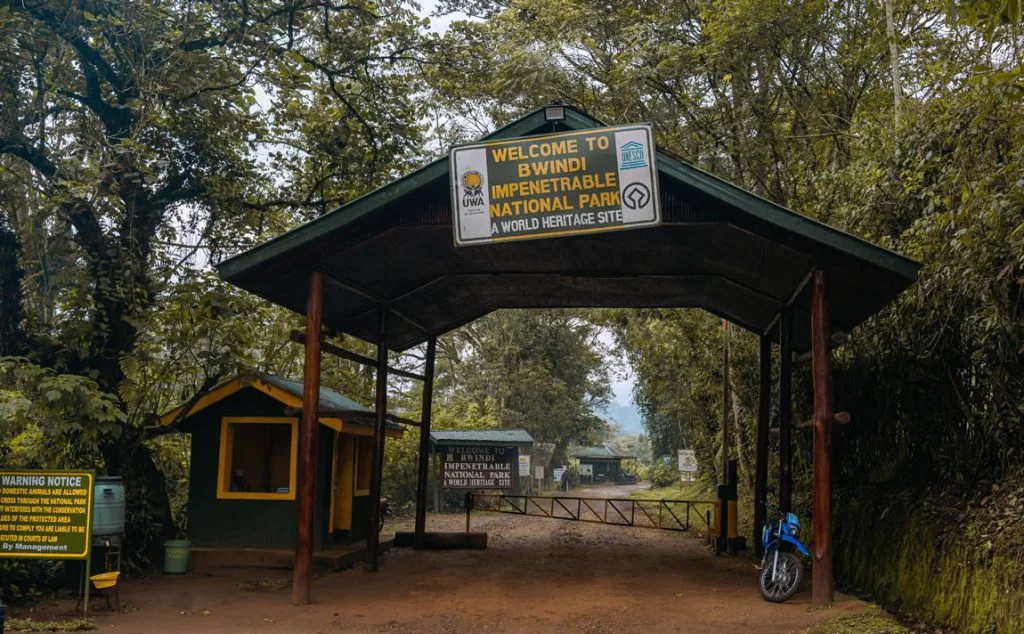
Double Gorilla Trekking Tour in Uganda. A double gorilla trekking tour in Uganda gives you not one but two unforgettable encounters with wild mountain gorillas. Instead of a single hour with one gorilla family, you trek on two different days, often in two different sectors or parks, and meet two families with their own personalities, landscapes and stories. Uganda is the best country in the world for this kind of trip: it is home to nearly half of the world’s mountain gorillas, offers more permits than anywhere else, and charges US$800 per permit, far less than neighboring Rwanda. This guide explains how a double gorilla trek works, the best combinations of sectors and parks, sample itineraries, costs, lodges and practical tips for planning the perfect trip.
At Kenlink Tours, double gorilla treks are among our most rewarding safaris to plan. The advice below comes from years of guiding travelers through Bwindi and Mgahinga.
What Is a Double Gorilla Trekking Tour?
A double gorilla trekking tour is a safari that includes two separate gorilla treks, each with its own permit, usually on two consecutive days. On each trek, you spend up to one hour with a habituated gorilla family. Because you visit two different families, each encounter feels new.
Double treks can be arranged in several ways: two sectors of Bwindi Impenetrable National Park, Bwindi combined with Mgahinga Gorilla National Park, a standard trek combined with the four-hour Gorilla Habituation Experience, or a trek in Uganda combined with one in Rwanda’s Volcanoes National Park. Each combination offers a different experience, which we describe below.
For a full overview of gorilla trekking in Uganda, including permits and the trekking experience, see our guide to gorilla trekking in Uganda.
Why Do Two Gorilla Treks Instead of One?
Many travelers come out of the forest after their first trek wishing they had more time. A double gorilla trekking tour answers that wish, and there are several good reasons to choose it.
One hour goes by fast. The first trek is often overwhelming, with emotions running high and cameras clicking. On the second trek, you can relax, observe more closely and simply enjoy being with the gorillas.
Every family is different. Group sizes, silverback personalities, infants and behavior vary from family to family. Seeing two families gives you a richer understanding of gorilla life.
Different landscapes. Treks in different sectors or parks take you through very different terrain, from Bwindi’s dense, steep rainforest to Mgahinga’s bamboo-covered volcano slopes.
Better photography. With two encounters, you have twice the chance of good light, close views and memorable moments.
More value from the journey. Reaching southwestern Uganda takes time. Once you are there, a second trek adds enormous value for relatively little extra travel.
Kenlink Tours describes what the encounter feels like in its article on what it’s like to trek gorillas in Uganda and Rwanda.
Where to Do a Double Gorilla Trek in Uganda
Uganda has two gorilla parks. Bwindi Impenetrable National Park is divided into four trekking sectors: Buhoma in the north, Ruhija in the east, and Rushaga and Nkuringo in the south. Mgahinga Gorilla National Park, part of the Virunga volcanoes, lies close to Kisoro town near the borders with Rwanda and the Democratic Republic of Congo.
The best double gorilla trekking combinations pair locations that are close together, so you don’t waste time driving between treks.
| Combination | Distance between treks | Best for |
|---|---|---|
| Rushaga + Nkuringo (Bwindi) | About 45 minutes | Southern Bwindi; travelers starting from Kigali |
| Buhoma + Ruhija (Bwindi) | About 2 hours | Northern Bwindi; links to Queen Elizabeth NP |
| Rushaga or Nkuringo + Mgahinga | About 1.5–2 hours via Kisoro | Two parks and two habitats |
| Standard trek + Habituation (Rushaga) | Same sector | A longer, deeper encounter |
| Bwindi or Mgahinga + Volcanoes (Rwanda) | About 3–5 hours | Two countries in one trip |
Kenlink Tours compares each Bwindi sector in its guide to which part of Bwindi is easy for gorilla trekking.
Combination 1: Rushaga and Nkuringo
The southern sectors of Bwindi are the most popular choice for a double gorilla trekking tour in Uganda. Rushaga has the most habituated gorilla families in the park, giving excellent permit availability, while Nkuringo, about 45 minutes away, offers dramatic ridge-top views and quieter trails.
You can stay in one lodge for both nights, trek in Rushaga on the first day and in Nkuringo on the second, or vice versa. Treks in Nkuringo are known to be steep, so it is often better to do the easier trek first and save the more demanding one for when you are warmed up, or the other way round if you prefer to tackle the hardest part while fresh.
This combination is ideal for travelers starting in Kigali, as both sectors are about four to five hours from the Rwandan capital. Travelers who want to stay in town can base themselves in Kisoro, for example at Ikoro Hotel in Kisoro, about an hour from both sectors.
Combination 2: Buhoma and Ruhija
In northern and eastern Bwindi, Buhoma and Ruhija make an excellent pairing. Buhoma is the original gorilla trekking sector, with generally gentler trails and the widest choice of lodges. Ruhija, about two hours away, sits at around 2,350 meters, offering cool air, peaceful trails and outstanding birdwatching.
A typical plan is to trek in Ruhija on the first day, then drive to Buhoma for the second trek, or the reverse. This combination works especially well if you are continuing north to Queen Elizabeth National Park after your treks, as Buhoma is the natural gateway to the Ishasha sector and its tree-climbing lions. Read more about this area in our guide to the Buhoma sector in Bwindi.
Combination 3: Bwindi and Mgahinga
For a true two-park experience, combine a trek in Bwindi’s southern sectors with a trek in Mgahinga Gorilla National Park. The contrast is remarkable: Bwindi is an ancient, tangled rainforest of steep valleys, while Mgahinga is part of the Virunga volcanoes, with bamboo forest and open views of Mount Muhabura, Mount Gahinga and Mount Sabyinyo.
Mgahinga has one habituated gorilla family, the Nyakagezi group, so permits are limited and should be booked early. The drive between Rushaga or Nkuringo and Mgahinga takes about one and a half to two hours via Kisoro. In Mgahinga, you can also add golden monkey tracking or a volcano hike if you have an extra day.
Combination 4: Gorilla Trekking and the Habituation Experience
For the deepest possible gorilla experience, combine a standard trek with the Gorilla Habituation Experience in Rushaga. Habituation allows up to four visitors to spend as long as four hours with researchers and trackers following a family that is still getting used to humans. The permit costs US$1,500.
The two experiences complement each other perfectly. The standard trek offers a relaxed hour with a fully habituated family, while habituation is slower, wilder and more educational, showing how gorillas are gradually introduced to human presence. Because habituation is only available in the Rushaga area within Uganda, this combination is best based in southern Bwindi.
Combination 5: Uganda and Rwanda Double Gorilla Trek
Some travelers want to trek gorillas in two countries. Uganda’s southern gorilla areas are only a few hours from Rwanda’s Volcanoes National Park, so a cross-border double trek is easy to arrange from Kigali. You might trek in Volcanoes first, cross the Cyanika border, and trek again in Mgahinga or Bwindi’s Rushaga sector the following day.
This combination offers two very different habitats and the chance to compare both countries’ trekking experiences. Keep in mind that Rwanda’s permit costs US$1,500, compared with US$800 in Uganda. In Volcanoes, you can also visit the research legacy of Dian Fossey; our article on the Dian Fossey Gorilla Fund explains its work, and our review of Mountain Gorilla View Lodge covers a popular base near the park.
Pick and Transfer Safaris specializes in this kind of cross-border routing and explains how to start in Kigali and finish in Entebbe in its guide on whether you can begin your tour from Kigali Airport and end in Entebbe Airport.
Should You Start in Kigali or Entebbe?
Where you begin your double gorilla trekking tour makes a big difference to how much time you spend on the road. Bwindi and Mgahinga are in the far southwest of Uganda, much closer to Kigali than to Entebbe.
From Kigali, the southern sectors (Rushaga and Nkuringo) and Mgahinga are about three to five hours away, and Ruhija is around four to five hours. From Entebbe, the drive to any Bwindi sector usually takes eight to ten hours, although domestic flights to Kisoro or Kihihi airstrips can cut that to a short flight plus a drive.
Kenlink Tours compares the two gateways in detail in its guide to landing in Kigali or Entebbe for a gorilla safari, and its article on how far Bwindi Impenetrable National Park is from Kigali gives drive times for each sector. For reliable cross-border transport, specialists such as Pick and Transfer Safaris run daily transfers between Kigali and Uganda’s gorilla parks.
Sample Itinerary: 4 Days Double Gorilla Trekking from Kigali
This is the most efficient way to do a double gorilla trekking tour in Uganda.
Day 1 – Kigali to southern Bwindi. Pick-up from your hotel or Kigali International Airport. Drive via Musanze to the Cyanika border, cross into Uganda and continue through Kisoro to your lodge in Rushaga or Nkuringo. Relax and prepare for the next day.
Day 2 – First gorilla trek in Rushaga. After breakfast, attend the ranger briefing at around 7:30 to 8:00 am, then trek to your first gorilla family for a magical hour. Spend the afternoon resting or on a short community walk.
Day 3 – Second gorilla trek in Nkuringo (or Mgahinga). Drive to the Nkuringo briefing point, about 45 minutes away, for your second trek, or head to Mgahinga for a volcano-side encounter. Return to your lodge for the night.
Day 4 – Return to Kigali. After breakfast, drive back to Kigali via Kisoro and the Cyanika border, arriving in the afternoon.
Pick and Transfer Safaris’ 3 Days Uganda Gorilla Safari from Rwanda can be extended by one day to include a second trek in exactly this way.
Sample Itinerary: 5 Days Double Gorilla Trekking from Entebbe
For travelers starting in Uganda, a five-day trip allows comfortable travel days on either side of the two treks.
Day 1 – Entebbe to Bwindi. A long, scenic drive southwest via the equator, Mbarara and Kabale, arriving at your lodge in the evening. Alternatively, take a morning domestic flight to Kihihi or Kisoro.
Day 2 – First gorilla trek. Trek in Buhoma or Ruhija in the north, or in Rushaga in the south.
Day 3 – Second gorilla trek. Trek in a second sector: Ruhija if you started in Buhoma, or Nkuringo if you started in Rushaga.
Day 4 – Lake Bunyonyi. Drive to Lake Bunyonyi for a relaxing afternoon, with an optional canoe trip among its islands.
Day 5 – Return to Entebbe. Drive back to Entebbe or Kampala, or fly from Kisoro or Kihihi.
If you prefer to drive yourself, our guide to a Uganda gorilla safari on self-drive explains routes and permit planning.
How Much Does a Double Gorilla Trekking Tour in Uganda Cost?
The biggest cost of any double gorilla trek is the two permits. Here is how the main costs break down.
| Cost item | What to expect |
|---|---|
| Two Uganda gorilla permits | US$1,600 per person (US$800 each) |
| Trek + habituation option | US$800 + US$1,500 = US$2,300 per person |
| Uganda + Rwanda option | US$800 + US$1,500 = US$2,300 per person |
| Transport | Private 4×4 with driver-guide, priced per vehicle per day |
| Accommodation | Two to four nights, from budget to luxury, usually full board |
| Visas | East Africa Tourist Visa US$100 if crossing between Rwanda and Uganda |
| Extras | Porters, tips, drinks and souvenirs |
Sharing the vehicle with other travelers lowers your cost per person. Choosing budget or mid-range lodges instead of luxury ones can also make a big difference. Uganda’s permit price makes it the most affordable country for a double gorilla trek: two Ugandan permits cost little more than a single permit in Rwanda.
Booking Two Gorilla Permits
Permits for Uganda are issued by the Uganda Wildlife Authority (UWA) for a specific sector and date. For a double trek, you need two separate permits, each for the right sector and day. Each habituated family can be visited by up to eight people per day, and the minimum trekking age is 15.
Because you need two permits that fit together, it is important to book early. In peak months, from June to September and around Christmas, we recommend booking three to six months ahead. Booking both permits, your transport and your lodges together with one operator ensures that all the dates and sectors line up correctly.
Best Time for a Double Gorilla Trek
Gorilla trekking in Uganda runs all year. The dry seasons, from June to September and from December to February, are the most comfortable, with firmer trails and easier roads between sectors. They are also the busiest, so book early.
The rainy seasons, roughly March to May and October to November, bring muddier trails and slower roads but also fewer visitors, lush scenery and better permit availability. On a double trek, two days of trekking in heavy rain can be tiring, so pack good rain gear. Our guide to the best time to see gorillas in Uganda and Rwanda covers the seasons month by month.
Where to Stay on a Double Gorilla Trek
Choosing the right lodge saves time and energy on a double trek. Ideally, stay in a lodge that can reach both of your trekking points easily, or move lodges between treks if they are in different areas.
- Rushaga and Nkuringo: Lodges in either sector can work for both treks. Rushaga has budget and mid-range options close to the trailhead, while Nkuringo’s ridge-top lodges offer spectacular views.
- Buhoma and Ruhija: Many travelers stay one night in each sector. Buhoma has the widest choice of lodges in Bwindi, while Ruhija offers peaceful, high-altitude lodges such as Bakiga Lodge.
- Bwindi and Mgahinga: Kisoro town or lodges near Lake Mutanda make a convenient base between the two parks.
Our guide to accommodations in Bwindi Impenetrable National Park reviews lodges in every sector, and travelers watching their budget can compare options in our list of the most budget lodges in Bwindi National Park.
How Fit Do You Need to Be for Two Treks?
Gorilla trekking in Uganda takes place on steep, muddy, densely forested slopes, at altitudes from about 1,200 to over 2,500 meters. Each trek can last from one to six hours or more. On a double trek, you do this on two consecutive days, so a reasonable level of fitness makes a real difference.
You don’t need to be an athlete, but you should be comfortable walking for several hours on hilly ground. Regular walks and stair climbing in the weeks before your trip help prepare your legs. On trekking days, hire a porter, use a walking stick, drink plenty of water and take your time. If you are worried about two hard treks in a row, choose a combination with a gentler sector, such as Buhoma, or leave a rest day between treks.
What to Pack for a Double Gorilla Trek
Pack with two trekking days in mind, especially if rain is likely:
- Two pairs of trekking socks and two sets of trekking clothes, so you always have a dry set
- Waterproof hiking boots with good grip
- Long trousers, long-sleeved shirts and gaiters or long socks
- A good rain jacket and a warm layer for cool mornings
- Gardening gloves for gripping vegetation
- A daypack, at least two liters of water per trek, and snacks
- Insect repellent, sunscreen and a hat
- A camera with spare batteries and memory cards (no flash)
- Passport, visas and copies of both gorilla permits
Gorilla Trekking Rules
The same strict rules apply to every trek. A maximum of eight people can visit a habituated family each day, and visits last one hour (four hours on the habituation experience). Keep at least seven meters away, speak quietly, avoid sudden movements and never use flash photography. Don’t eat, drink or smoke near the gorillas, and if you are ill, tell the rangers, as gorillas can catch human diseases. Our guide to gorilla trekking rules and regulations in Uganda explains every rule in detail.
Extending Your Double Gorilla Trekking Tour
A double gorilla trek fits beautifully into a longer Uganda safari. Popular additions include chimpanzee tracking in Kibale Forest, game drives and a boat cruise in Queen Elizabeth National Park, and relaxing days at Lake Bunyonyi. Our overview of Uganda primate tracking safaris shows how gorillas and chimpanzees combine, and our guide to the best route to Bwindi from Queen Elizabeth National Park explains the roads between the parks.
If you have plenty of time, our 20 Days Ultimate Uganda Safari covers the whole country, and our guide to choosing the best Uganda safari helps you decide what to include.
For travelers starting in Rwanda, Pick and Transfer Safaris offers a range of short gorilla safaris starting from Kigali, from a 2 Days Uganda Gorilla Tour Starting from Kigali to a 5 Days Uganda Gorilla and Chimps Safari starting from Rwanda and a full 10 Days Uganda Rwanda Safari. Back in Rwanda, chimpanzees and the canopy walk in Nyungwe Forest National Park make a great finale. For ideas on short activities around the park after your treks, see Pick and Transfer Safaris’ guide on what to do after a gorilla tour in Bwindi.
Expert Tips for a Successful Double Gorilla Trek
- Book both permits together. Make sure the sectors and dates fit your route.
- Choose nearby sectors. Rushaga and Nkuringo, or Buhoma and Ruhija, keep driving to a minimum.
- Mix your experiences. Pair a standard trek with habituation, or Bwindi with Mgahinga, for variety.
- Consider a rest day. If you are less fit, leave a day between treks.
- Hire a porter on both days. It makes the treks easier and supports local families.
- Keep a dry set of clothes. Wet boots and clothes are uncomfortable on the second day.
- Use the second trek to watch. Take your photos on day one, then enjoy simply observing on day two.
Frequently Asked Questions About Double Gorilla Trekking in Uganda
Can I trek gorillas twice in Uganda? Yes. You need two separate permits, one for each trek, usually in different sectors or parks.
Can I trek the same gorilla family twice? It is possible but uncommon. Most travelers prefer to visit two different families for variety.
What is the best combination for a double trek? Rushaga and Nkuringo for travelers from Kigali, Buhoma and Ruhija for those heading to Queen Elizabeth, or Bwindi and Mgahinga for two parks.
How much does a double gorilla trek cost? Two Uganda permits cost US$1,600 per person. Transport, lodges and extras depend on your itinerary and group size.
How many days do I need? Four days from Kigali or five days from Entebbe is ideal.
Can I combine gorilla trekking and habituation? Yes, in Rushaga. Habituation costs US$1,500 and offers up to four hours with a family.
What is the minimum age for gorilla trekking? 15 years.
Book Your Double Gorilla Trekking Tour with Kenlink Tours
A double gorilla trekking tour in Uganda doubles the magic of one of the world’s greatest wildlife experiences. With two treks, you have time to relax, observe and truly connect with mountain gorillas, and to discover two different families and landscapes. Thanks to Uganda’s lower permit price and its many gorilla families, it is the best place in the world to do it.
Kenlink Tours arranges double gorilla treks across Bwindi and Mgahinga, including permits, transport and lodges, with experienced guides who know every sector. Visit Kenlink Tours or contact us at info@kenlinktours.com with your dates and group size, and we will plan your perfect double gorilla adventure.