- EXPERT'S HELP
- +256789210067
- +256200955001
- info@kenlinktours.com


Choosing the Best Sector for Gorilla Trek in Bwindi
September 28, 2026
Rwanda City Tour and Gorilla Tour Combined
September 28, 2026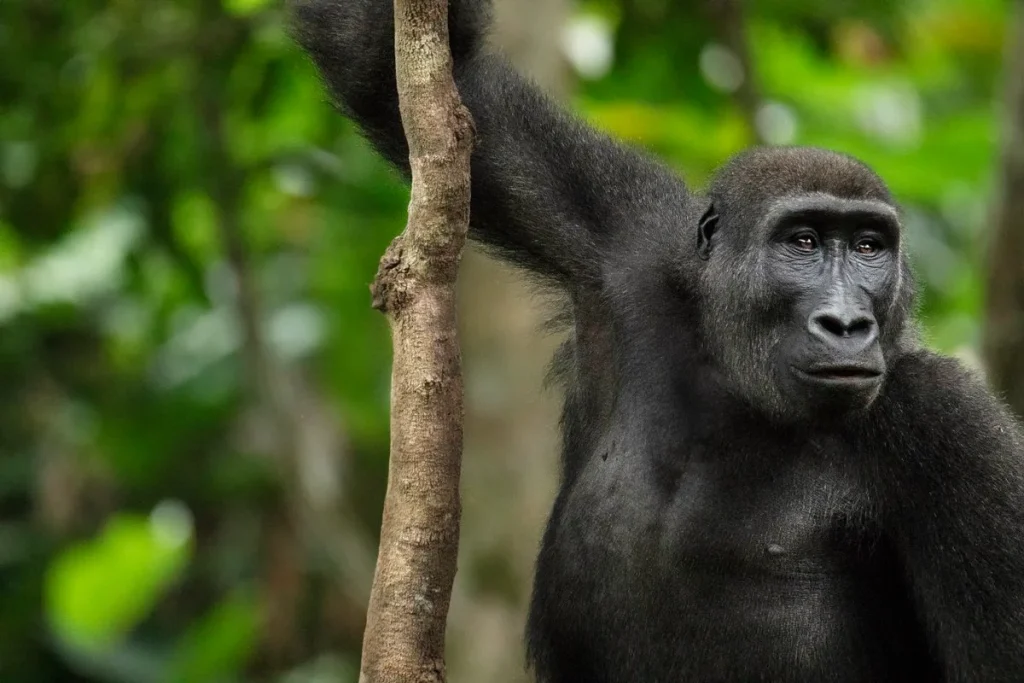
Eastern Lowland Gorilla Trekking Safari in Kahuzi Biega NP. Deep in the misty highlands of eastern Democratic Republic of Congo, a silverback weighing more than two grown men sits quietly in a patch of bamboo, stripping shoots with his massive hands. Around him, youngsters tumble through the undergrowth while mothers groom their infants. You are standing a few meters away, and apart from your small group and an armed ranger, there is hardly another tourist for miles. This is an eastern lowland gorilla trekking safari in Kahuzi-Biega National Park. It is one of Africa’s rarest wildlife encounters, and one of its least crowded.
Most travellers have heard of mountain gorilla trekking in Uganda and Rwanda. Far fewer know that Congo protects the world’s largest gorilla subspecies, the eastern lowland gorilla, also called Grauer’s gorilla. Kahuzi-Biega is the best place on Earth to see these animals in the wild. At Kenlink Tours, we believe this is among the most rewarding primate adventures in Africa. This guide covers permits, costs, getting there, safety, the best time to go, and sample itineraries.
Why Kahuzi-Biega Should Be on Your Gorilla Bucket List
Kahuzi-Biega National Park offers something no other park in Africa can: reliable, guided encounters with habituated eastern lowland gorillas. These gorillas live only in eastern DR Congo. There are no habituated groups open to tourists in Uganda, Rwanda, or anywhere else.
Beyond rarity, the experience itself stands apart. Permits cost far less than in Rwanda or Uganda. Groups are small, and the forest feels wild and unhurried. There are no queues of vehicles at the trailhead. Each visit directly funds ranger patrols, community projects, and anti-poaching work in a park that has lived through decades of conflict.
For travellers who have already trekked mountain gorillas, Kahuzi-Biega completes the story. Seeing the two subspecies of the eastern gorilla in their own habitats shows you how one species adapted to very different landscapes. For first-time trekkers, it is a raw and deeply personal introduction to great apes.
Meet the Eastern Lowland Gorilla (Grauer’s Gorilla)
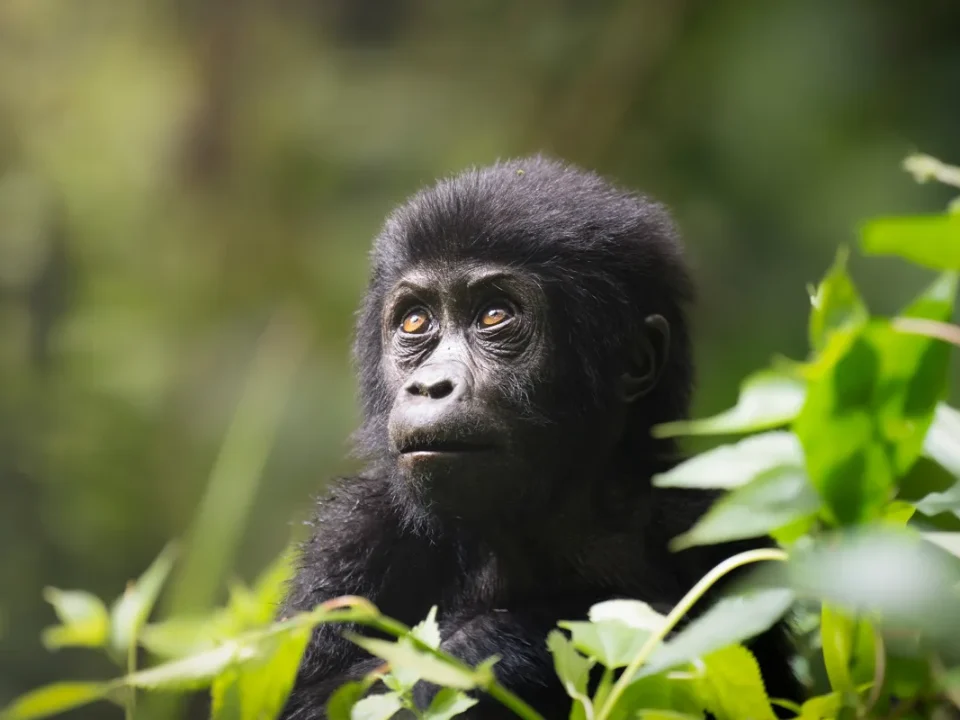
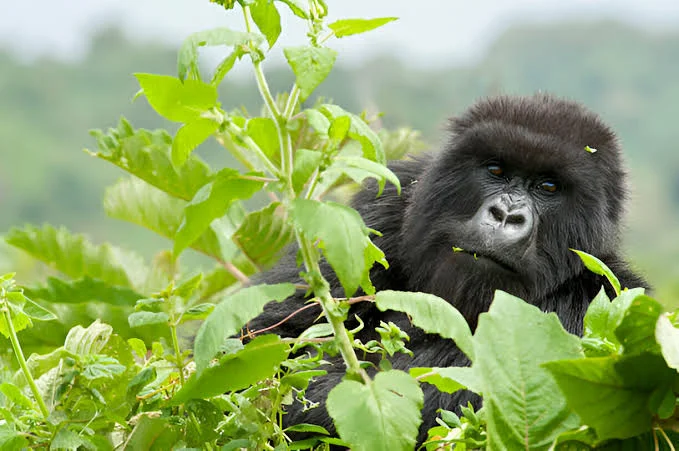
The eastern lowland gorilla (Gorilla beringei graueri) is the largest of all gorilla subspecies. Adult silverbacks can weigh over 200 kg, with broad chests, massive heads, and a short, dense black coat. Despite the name “lowland,” the Kahuzi-Biega gorillas also live in montane forests between roughly 2,100 and 2,400 metres in the park’s highland sector.
Grauer’s gorillas are listed as Critically Endangered by the IUCN. Their numbers fell sharply during years of civil war, habitat loss, bushmeat hunting, and illegal mining for coltan and gold. Today the remaining population is estimated in the low thousands, scattered across eastern Congo’s forests. Only a small number of families have been habituated to human presence, and Kahuzi-Biega holds the most famous of them.
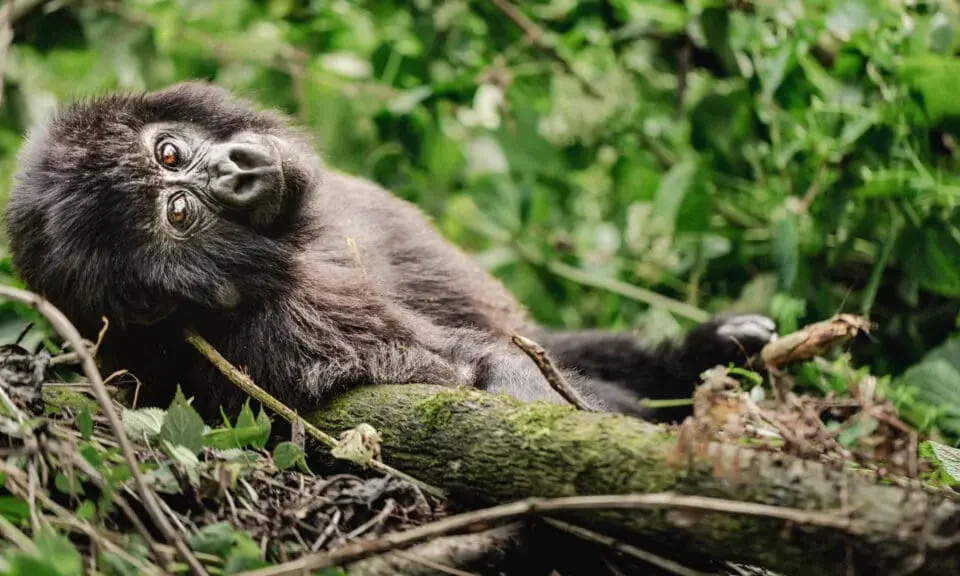
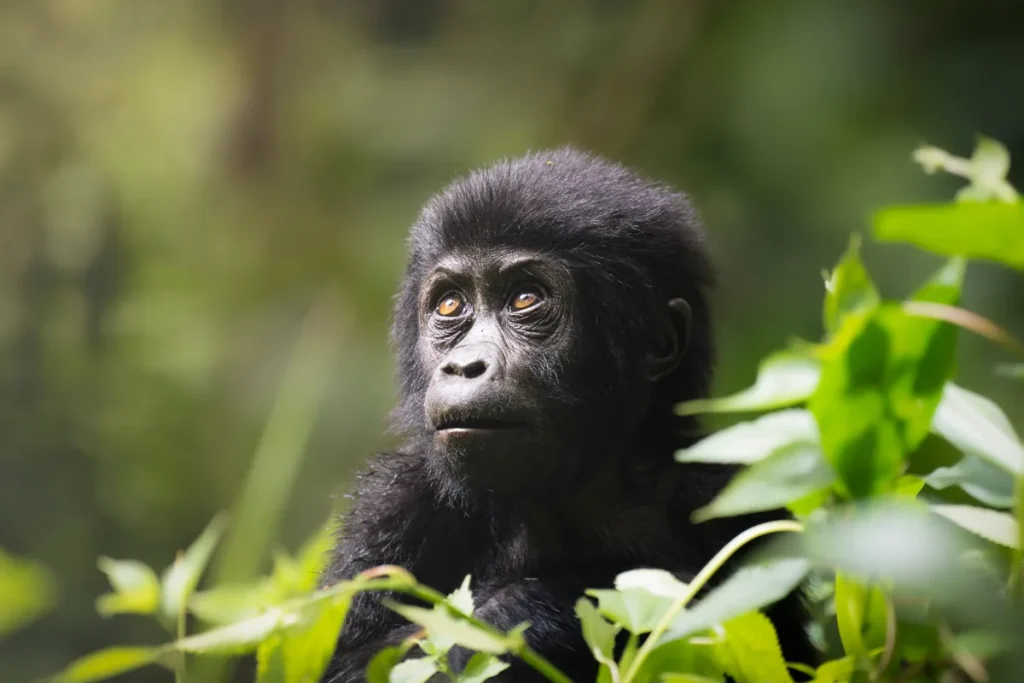
These gorillas eat mostly plants: bamboo shoots, leaves, stems, bark, and seasonal fruit, with occasional insects. They live in family groups led by a dominant silverback who decides where the group feeds, travels, and nests each night. Watching a silverback gently tolerate a curious infant, then turn and silence a rival with a single look, stays with most visitors for a lifetime.
Eastern Lowland Gorillas vs Mountain Gorillas: What’s the Difference?
Many travellers ask how eastern lowland gorillas compare with the mountain gorillas they may have seen in Rwanda’s Volcanoes National Park or Uganda’s Bwindi. Both are subspecies of the eastern gorilla, but they differ in several ways.
- Size: Grauer’s gorillas are larger and heavier. They are the biggest primates on the planet.
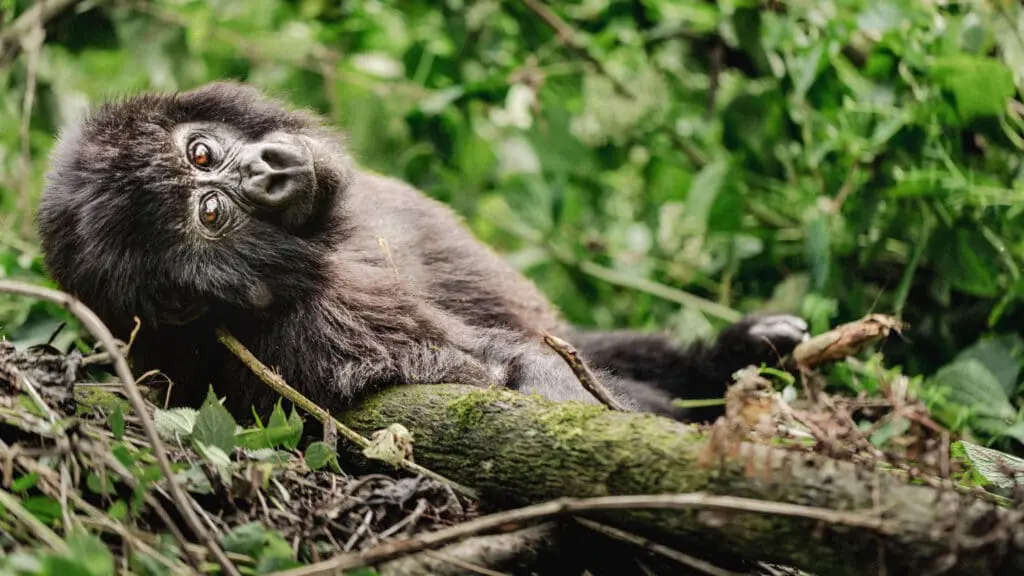
- Coat: Mountain gorillas have longer, shaggier hair suited to colder, higher habitats. Lowland gorillas have shorter, sleeker coats.
- Face and body: Eastern lowland gorillas have a longer face and a broader, more barrel-shaped chest.
- Habitat: Mountain gorillas live only in the Virunga Massif and Bwindi. Grauer’s gorillas range across a wider mosaic of lowland and montane forests in eastern Congo.
- Tourist numbers: Mountain gorilla trekking draws thousands of visitors a year. Kahuzi-Biega sees a small fraction of that, so encounters feel more exclusive.
If you are planning to see mountain gorillas as well, read our guide to gorilla trekking in Virunga National Park. For Uganda’s mountain gorilla parks, see our guide to gorilla trekking in Uganda.
Where Is Kahuzi-Biega National Park?
Kahuzi-Biega National Park lies in South Kivu Province in eastern DR Congo, just west of the southern tip of Lake Kivu. The nearest town is Bukavu, a hilly lakeside city across the border from Rusizi (Cyangugu) in Rwanda. The park’s highland headquarters at Tshivanga is roughly 30–35 km from Bukavu, about 45 minutes to an hour by road.
The park covers about 6,000 square kilometres, making it one of Congo’s largest protected areas. It is split into a small, accessible highland sector and a vast, remote lowland sector reaching deep into the Congo Basin. Gorilla trekking for tourists takes place in the highland sector, where the habituated families live.
The park is named after two extinct volcanoes that dominate its skyline: Mount Kahuzi (3,308 m) and Mount Biega (2,790 m). Its habitats range from bamboo forest and montane rainforest to swamps, peat bogs, and subalpine heath near the summits. This variety makes it one of the most biologically diverse corners of the Albertine Rift.
A Brief History of Kahuzi-Biega National Park
Conservation in the area began under Belgian colonial rule, and Kahuzi-Biega was officially gazetted as a national park in 1970. The main aim was to protect the eastern lowland gorillas. The Belgian photographer and conservationist Adrien Deschryver played a key role, and gorilla habituation for tourism began in the early 1970s.
In 1980, UNESCO listed Kahuzi-Biega as a World Heritage Site for its exceptional rainforest and its gorilla population. The years that followed were hard. Regional wars from the mid-1990s, refugee movements, armed groups, and illegal mining devastated wildlife. The park was placed on the List of World Heritage in Danger in 1997, and gorilla numbers in parts of the park fell dramatically.
Rangers from the Congolese Institute for Nature Conservation (ICCN) stayed on through these years, often at great personal risk, with support from partners such as the Wildlife Conservation Society. Local organisations like the Pole Pole Foundation helped nearby communities benefit from conservation. Thanks to these efforts, gorilla trekking restarted and the highland families have been protected. Every permit you buy supports this work.
Habituated Gorilla Families You Can Trek
Kahuzi-Biega has a handful of habituated gorilla families open to visitors. The exact number changes over time as groups split, merge, or lose their silverbacks. Your ranger team assigns your group on the morning of the trek.
The most famous family has long been the Chimanuka group, named after its dominant silverback. Chimanuka became one of the best-known gorillas in Africa, and his family has at times numbered more than 30 individuals, making it one of the largest habituated gorilla groups anywhere. Other groups have included families led by silverbacks such as Mugaruka, Bonne Année, and Mpungwe.
Each family has its own character. Some feed in dense bamboo on the steeper slopes, while others move through more open montane forest. Your guides will brief you on the group’s history, the individuals, and recent behaviour before you set out. That background makes the hour with them much richer.
What a Gorilla Trekking Day Looks Like
A typical eastern lowland gorilla trekking day in Kahuzi-Biega runs like this:
Early start (around 6:00–7:00 a.m.): After an early breakfast in Bukavu, you drive about an hour to Tshivanga, the park headquarters in the highland sector.
Briefing (around 8:00 a.m.): Rangers explain the rules, tell you about the gorilla family you will visit, and check permits and passports. Trackers have usually already left at dawn to find where the gorillas nested the night before.
The trek: You follow your ranger guide and trackers into the forest. Depending on where the family is, the hike can take anywhere from 30 minutes to four hours or more each way. Trails can be muddy, steep, and overgrown, and machetes are often used to clear a path through bamboo and vines.
The encounter: When the gorillas are found, you leave bags, sticks, and food with the porters. You then spend up to one hour with the family, observing and photographing at a respectful distance while wearing a face mask.
Return: You hike back to headquarters, receive a trekking certificate, and return to Bukavu in the afternoon. Many travellers visit the Lwiro Primate Rehabilitation Centre or Tshibati waterfalls afterwards.
Groups are kept small, usually no more than eight visitors per family per day, to protect the gorillas from stress and disease.
Kahuzi-Biega Gorilla Permit Cost and How to Book
The permit is the single biggest cost of your safari. At the time of writing, eastern lowland gorilla permits at Kahuzi-Biega are widely quoted at around USD 400 per person for foreign non-residents, with lower rates for East African residents and Congolese citizens. Rates can change, so always confirm the current price before booking.
That makes Kahuzi-Biega one of the most affordable gorilla trekking options in Africa. By comparison, a Uganda mountain gorilla permit costs USD 800 and a Rwanda permit costs USD 1,500. You can compare these costs in our Uganda gorilla trekking guide and on our Rwanda safaris page.
How to book: Permits are issued by the park authority (ICCN). Most visitors book through a licensed tour operator, who secures the permit, arranges the Congo visa invitation, and handles cross-border transport. Booking 2–3 months ahead is wise, especially for July–September and December–February, when group sizes fill quickly.
Minimum age: Visitors must generally be 15 years or older.
How Much Does a Kahuzi-Biega Gorilla Safari Cost?
Your total cost depends on trip length, accommodation level, group size, and your starting point. Beyond the permit, budget for:
- Congo visa (tourist visa, often arranged with an invitation letter through your operator)
- Ground transport in a 4×4 vehicle with a driver-guide, usually from Kigali
- Accommodation in Bukavu, which ranges from simple guesthouses to comfortable lakeside hotels
- Meals and drinking water
- Porter fees and tips for rangers, trackers, and guides
- Travel insurance that covers DR Congo and adventure activities
As a rough guide, a short 3-day Congo gorilla safari from Kigali often costs noticeably less than an equivalent Rwanda gorilla trip, largely because of the lower permit fee. Travelling in a group lowers costs further. Our scheduled group tours show how shared transport and guides reduce the price per person.
How to Get to Kahuzi-Biega National Park
Getting to Kahuzi-Biega is part of the adventure. Most travellers enter through Rwanda, which has the best flight connections and road links to Bukavu.
By road from Kigali (most popular): The drive from Kigali to the Rusizi–Bukavu border takes about 5–7 hours. It is one of the most scenic drives in East Africa, winding through tea plantations and crossing Nyungwe Forest National Park, where you may see L’Hoest’s monkeys or colobus beside the road. After border formalities, Bukavu is just minutes away.
By air to Kamembe: Domestic flights from Kigali to Kamembe Airport near Rusizi take under an hour. This saves a long drive and suits travellers who are short on time. From Kamembe, it is a short transfer to the border and on to Bukavu.
From Uganda: Travellers already in southwestern Uganda can drive into Rwanda, then continue south to Rusizi. If you are planning a longer route through Uganda first, it helps to know you can begin your tour in Kigali and end in Entebbe, or do the reverse.
From Burundi: Bukavu can also be reached from Bujumbura in Burundi. See our guides to gorilla trekking from Burundi and tours to Burundi starting from Kigali if you want to add Lake Tanganyika to your trip.
By boat across Lake Kivu: In the past, many travellers combined Virunga and Kahuzi-Biega by taking the boat from Goma to Bukavu. This route depends heavily on the security situation around Goma. Check its current status with your operator before planning around it.
Reliable ground transport makes a real difference on these routes. Pick and Transfer Safaris specialises in cross-border transfers and 4×4 safari vehicles between Rwanda and Uganda. That helps when your Congo trip is one leg of a longer East African journey.
Congo Visa and Travel Documents
To visit Kahuzi-Biega you need:
- A passport valid for at least six months, with blank pages
- A DR Congo tourist visa, usually arranged through your tour operator with an invitation letter
- A Yellow Fever vaccination certificate, which is mandatory and checked at the border
- A Rwanda visa if you are travelling through Rwanda. Many nationalities can get one on arrival or through the East Africa Tourist Visa for Rwanda, Uganda, and Kenya. Note that this visa does not cover DR Congo.
- Your gorilla permit confirmation
- Travel insurance documents
Visa rules change often, so confirm the latest requirements with your operator and your embassy before you fly.
Best Time to Go Gorilla Trekking in Kahuzi-Biega
Eastern lowland gorilla trekking in Kahuzi-Biega runs all year round, but conditions vary with the seasons.
Dry seasons (June to September, and December to February): These are the most popular months. Trails are firmer, hiking is easier, and photographs are clearer. Road travel from Kigali is also more comfortable. This is the best time for most travellers.
Wet seasons (March to May, and October to November): Rain makes trails muddy and slippery, and treks can feel tougher. On the plus side, the forest is lush and green, fewer visitors come, and gorillas sometimes stay closer to lower slopes where food is plentiful. Photographers who don’t mind rain gear often enjoy the soft light and fresh vegetation.
Because Kahuzi-Biega sits at altitude, mornings can be cool year-round. Pack layers whatever month you travel.
Fitness, Trekking Difficulty, and Hiring a Porter
Trekking eastern lowland gorillas is generally considered moderate. It can be easier than some mountain gorilla treks in Bwindi, but the terrain is still challenging. You may climb steep, muddy slopes, push through dense bamboo, and walk several hours at altitude above 2,000 metres.
You don’t need to be an athlete, but reasonable fitness helps a lot. In the weeks before your trip, try:
- Regular brisk walks or hikes, ideally on hills
- Stair climbing to build leg strength
- Carrying a light daypack on walks to get used to the weight
We strongly recommend hiring a porter. For a small fee, a porter carries your daypack, helps you on slippery sections, and earns income that supports families living around the park. This gives local communities a direct stake in protecting the gorillas. Read more in our guide to hiring a porter during gorilla trekking.
What to Pack for Your Kahuzi-Biega Gorilla Trek
Packing well makes your trek safer and more comfortable. Essentials include:
- Waterproof hiking boots with good grip, already broken in
- Long trousers and long-sleeved shirts in neutral colours (green, khaki, brown) to guard against nettles, thorns, and insects
- Gardening gloves for grabbing vines and branches
- A lightweight rain jacket, even in the dry season
- Gaiters or long socks to tuck trousers into and keep out ants
- Face masks, which are required near the gorillas
- Insect repellent and sunscreen
- A hat and sunglasses
- Reusable water bottle and energy snacks
- Camera with spare batteries and memory cards. Flash is not allowed.
- A small daypack with a waterproof cover
- Passport, visa, permit, and Yellow Fever card
For a full checklist, see our guide on what to pack for gorilla trekking in Uganda, Rwanda and Congo.
Gorilla Trekking Rules and Etiquette
Rules at Kahuzi-Biega protect the gorillas from disease and stress and keep visitors safe. Your rangers will explain them in the briefing, but the key points are:
- Keep your distance. Stay at least 7–10 metres from the gorillas where possible, even if a curious youngster comes closer.
- Wear a face mask during the encounter. Gorillas can catch human respiratory infections.
- Do not trek if you are ill. If you have a cold, flu, or any contagious illness, tell your guide. You may be asked not to trek.
- No flash photography, and keep your voice low.
- Do not eat, drink, or smoke near the gorillas.
- Stay with your group and follow the ranger’s instructions at all times.
- If a gorilla charges, stay calm, crouch down, avoid eye contact, and do not run. Your ranger will guide you.
- Leave no trace. Carry out all litter.
Following these rules keeps the families healthy and protects the future of gorilla tourism in Congo.
Where to Stay: Bukavu Hotels and Lodges
Most gorilla trekkers stay in Bukavu, a hilly city spread across peninsulas on the southern shore of Lake Kivu. From its terraces, you can watch fishing boats cross the lake at sunset.
Bukavu has a range of accommodation, from simple guesthouses to comfortable mid-range hotels with lake views. Well-known options that tour operators often use include Hotel Panorama and Orchids Safari Club, both popular for their lakeside settings. Several smaller guesthouses suit budget travellers.
Choose accommodation through your operator, who will know which properties are currently operating, which offer secure parking, and which are best placed for an early start to the park. There are no big luxury safari lodges like those near Volcanoes or Bwindi. Part of Kahuzi-Biega’s charm is that it still feels like a genuine frontier.
If you are extending your trip into Uganda afterwards, towns like Kisoro make good bases for the next leg. See this guide to Ikoro Hotel in Kisoro, which is close to Mgahinga and southern Bwindi.
Other Things to Do in and Around Kahuzi-Biega
Kahuzi-Biega is best known for gorillas, but it has much more to offer if you give it an extra day or two.
Hike Mount Kahuzi or Mount Biega: Guided hikes lead up the park’s two extinct volcanoes. The Mount Kahuzi climb takes several hours return and rewards you with sweeping views over Lake Kivu and the forest below. Mount Biega is a longer, more demanding hike. Both pass through changing vegetation zones, from bamboo to giant heathers and subalpine plants.
Tshibati Waterfalls: A scenic trail leads to a series of three waterfalls in the park. It makes a lovely half-day walk through swamp, forest, and bamboo, with excellent birding along the way.
Birdwatching: Kahuzi-Biega is part of the Albertine Rift Endemic Bird Area and holds many hard-to-find species. Birders come for Albertine Rift endemics such as Rockefeller’s sunbird, Grauer’s swamp warbler, and the Ruwenzori turaco.
Other wildlife: The park also shelters eastern chimpanzees, several monkey species, forest elephants, bushbuck, and many small mammals. You may not see them all, but the forest feels alive.
Lwiro Primate Rehabilitation Centre: North of Bukavu, Lwiro cares for orphaned chimpanzees and monkeys rescued from the bushmeat and pet trades. A visit shows the human side of primate conservation and pairs well with a gorilla trek.
Lake Kivu and Idjwi Island: Take a boat trip on Lake Kivu or visit Idjwi, one of Africa’s largest inland islands, for village life, coffee, and pineapple farms. Across the border in Rwanda, the lake’s shoreline is a favourite rest stop. We cover it in our guide to the best Rwanda safari experiences for nature lovers.
Bukavu town and cultural visits: Explore colourful markets, colonial-era architecture, local cooperatives, and nearby tea estates.
Is Kahuzi-Biega Safe to Visit in 2026?
Safety is the first question most travellers ask about eastern Congo, and it deserves an honest answer.
Eastern DR Congo has experienced serious and changing security challenges for many years, and the situation in both North and South Kivu has shifted significantly in recent times. At various points, parts of the region, including areas around Goma and Bukavu, have been affected by armed conflict. Several operators report that Kahuzi-Biega has continued to receive visitors while Virunga National Park’s mountain gorilla trekking has been suspended. However, conditions can change quickly.
Before booking, we strongly recommend that you:
- Check your government’s latest travel advisory for DR Congo, and read it carefully.
- Book only with an experienced, licensed operator who has current, on-the-ground knowledge and working relationships with park authorities.
- Confirm the current status of the park, border crossings, and the Bukavu road shortly before you travel, and again a few days before departure.
- Buy comprehensive travel insurance that explicitly covers DR Congo. Many standard policies do not.
- Keep your plans flexible, with a backup plan such as mountain gorilla trekking in Rwanda or Uganda if Congo becomes inaccessible.
Inside the park, all treks are led by trained ICCN rangers, many of them armed, and tourist activities follow strict protocols. At Kenlink Tours, we monitor conditions constantly and will only confirm a Kahuzi-Biega trip when we are satisfied it can run responsibly. If it can’t, we’ll help you switch to an equally memorable primate safari elsewhere.
Sample Itinerary: 3-Day Eastern Lowland Gorilla Safari from Kigali
This short itinerary suits travellers with limited time who already have a Rwanda or Uganda trip planned.
Day 1 – Kigali to Bukavu: Early pick-up in Kigali. Drive southwest through Rwanda’s rolling hills and tea estates, crossing Nyungwe Forest National Park with a stop for lunch and primate spotting. Cross the Rusizi–Bukavu border in the afternoon and check in to your hotel on Lake Kivu. Overnight: Bukavu.
Day 2 – Eastern lowland gorilla trekking: Early breakfast and transfer to Tshivanga. After the briefing, trek into the highland forest to find your assigned gorilla family, and spend up to an hour with them. Return to Bukavu with an optional visit to Lwiro or a stroll through town. Overnight: Bukavu.
Day 3 – Return to Kigali: After breakfast, cross back into Rwanda and drive to Kigali, or connect to a flight from Kamembe. Continue your safari or head home.
Sample Itinerary: 5-Day Congo Lowland Gorillas and Nyungwe Chimpanzees
This itinerary adds chimpanzees and more time on the road through Rwanda’s southwest.
Day 1 – Kigali to Nyungwe: Drive to Nyungwe Forest National Park, stopping at cultural sites along the way. Evening at leisure. Overnight: Nyungwe.
Day 2 – Chimpanzee tracking and transfer to Bukavu: Early morning chimpanzee trek in Nyungwe, then continue to Rusizi and cross into Bukavu. Overnight: Bukavu.
Day 3 – Gorilla trekking in Kahuzi-Biega: Full gorilla trekking day in the highland sector. Overnight: Bukavu.
Day 4 – Mount Kahuzi hike or Tshibati waterfalls: Choose a volcano hike or a gentler waterfall trail, or visit Lwiro sanctuary and Idjwi Island. Overnight: Bukavu.
Day 5 – Return to Kigali: Cross back into Rwanda and drive or fly to Kigali for your onward journey.
For more ways to combine Nyungwe, Lake Kivu, and Volcanoes, see our Rwanda safari holidays.
Combining Kahuzi-Biega with Rwanda and Uganda
Kahuzi-Biega fits naturally into a wider Great Lakes primate safari. Popular combinations include:
Lowland gorillas plus mountain gorillas: Trek Grauer’s gorillas in Kahuzi-Biega, then mountain gorillas in Rwanda’s Volcanoes National Park or Uganda’s Bwindi or Mgahinga. This “double gorilla” safari shows you both eastern gorilla subspecies in one trip. Rwanda’s short routes suit a quick add-on, such as a 3-day Rwanda gorilla tracking and cultural tour. If Uganda’s lower permit price appeals, short gorilla safaris starting from Kigali get you to Bwindi or Mgahinga quickly. Time-poor travellers can even do a 1-day Uganda gorilla safari starting from Kigali or a 2-day Uganda gorilla tour starting from Kigali.
The full primate circuit: Add chimpanzees in Nyungwe or Uganda’s Kibale Forest, and golden monkeys in the Virungas. A 5-day Rwanda gorilla and chimpanzee safari pairs well with a Kahuzi-Biega extension, since Nyungwe lies right on the road to Bukavu.
Primates plus big game: Combine gorillas with a classic savannah safari in Rwanda’s Akagera, Uganda’s Queen Elizabeth or Murchison Falls, or Kenya and Tanzania. Longer trips like a 10-day Rwanda wildlife and gorilla tour give you room to add Congo. Our 10-day gorilla trekking and Great Migration safari shows how primates and the Serengeti fit together. For Uganda-focused ideas, browse our Uganda safaris.
Rest and recovery: After trekking, many travellers want a quieter day. Ideas from Uganda, like these tips on what to do after a gorilla tour in Bwindi, also work well for Congo trips: cultural visits, nature walks, or a lazy afternoon by Lake Kivu.
Travelling further afield? Our Rwanda and Botswana safari tours show how gorilla trekking can be paired with southern Africa’s great wildlife regions. If this is your first trip to the region, start with our guide to the best safari destinations in East Africa for first-time visitors.
Why Book Your Kahuzi-Biega Gorilla Safari with Kenlink Tours
Planning a gorilla safari in eastern Congo is different from booking a trip to Rwanda or Uganda. Permits, visas, border crossings, security checks, and logistics all need careful coordination. Here is how Kenlink Tours helps:
- Regional expertise: We run gorilla safaris across Uganda, Rwanda, and Congo, so we can build seamless cross-border itineraries.
- Permit and visa handling: We secure your Kahuzi-Biega permit and help arrange your Congo visa invitation.
- Safety first: We watch conditions in South Kivu closely and only run trips when we are confident they can operate responsibly. If plans need to change, we offer strong alternatives.
- Comfortable 4×4 transport with experienced, English-speaking driver-guides who know the Kigali–Bukavu route well.
- Tailor-made trips: Short 3-day treks or two-week primate circuits, budget or comfort, private or group, all built around your time and interests.
- Responsible tourism: We encourage porter hire, community visits, and conservation-minded travel so your trip benefits people and gorillas alike.
Frequently Asked Questions
Where can I see eastern lowland gorillas in the wild?
Kahuzi-Biega National Park in eastern DR Congo is the best and most accessible place to see habituated eastern lowland (Grauer’s) gorillas. They live only in eastern Congo.
How much is a gorilla permit in Kahuzi-Biega?
Permits are widely quoted at around USD 400 for foreign non-residents at the time of writing, with lower rates for residents and Congolese citizens. Always confirm the current price with your operator.
How long does gorilla trekking in Kahuzi-Biega take?
Treks range from about 30 minutes to four hours or more each way, depending on where the gorillas are. Once found, you spend up to one hour with them.
What is the minimum age for gorilla trekking?
Visitors usually need to be at least 15 years old.
Do I need a visa for DR Congo?
Yes. Most visitors need a DR Congo tourist visa, usually arranged through a tour operator with an invitation letter. The East Africa Tourist Visa does not cover Congo.
Is Kahuzi-Biega safe?
Security in eastern Congo can change quickly. Check official travel advisories, book with an experienced local operator, and confirm conditions shortly before you travel.
Can I combine Kahuzi-Biega with mountain gorilla trekking?
Yes. Many travellers combine it with mountain gorilla trekking in Rwanda’s Volcanoes National Park or Uganda’s Bwindi and Mgahinga, starting and ending in Kigali.
What is the best time to trek gorillas in Kahuzi-Biega?
Trekking runs year-round. The dry seasons, June to September and December to February, offer the easiest hiking conditions.
Plan Your Eastern Lowland Gorilla Trekking Safari Today
An eastern lowland gorilla trekking safari in Kahuzi-Biega National Park is more than a wildlife encounter. It is a chance to stand beside the largest primates on Earth, in a forest that has survived against the odds, and to support the rangers and communities working to protect it. Few travellers make this journey, and nearly all of them come home changed by it.
Whether you want a quick 3-day trek from Kigali or a full Great Lakes primate adventure through Congo, Rwanda, and Uganda, our team is ready to help. Contact Kenlink Tours today to check permit availability and current travel conditions, and start planning your lowland gorilla adventure.