- EXPERT'S HELP
- +256789210067
- +256200955001
- info@kenlinktours.com


How much is a private tour in Uganda
November 2, 2026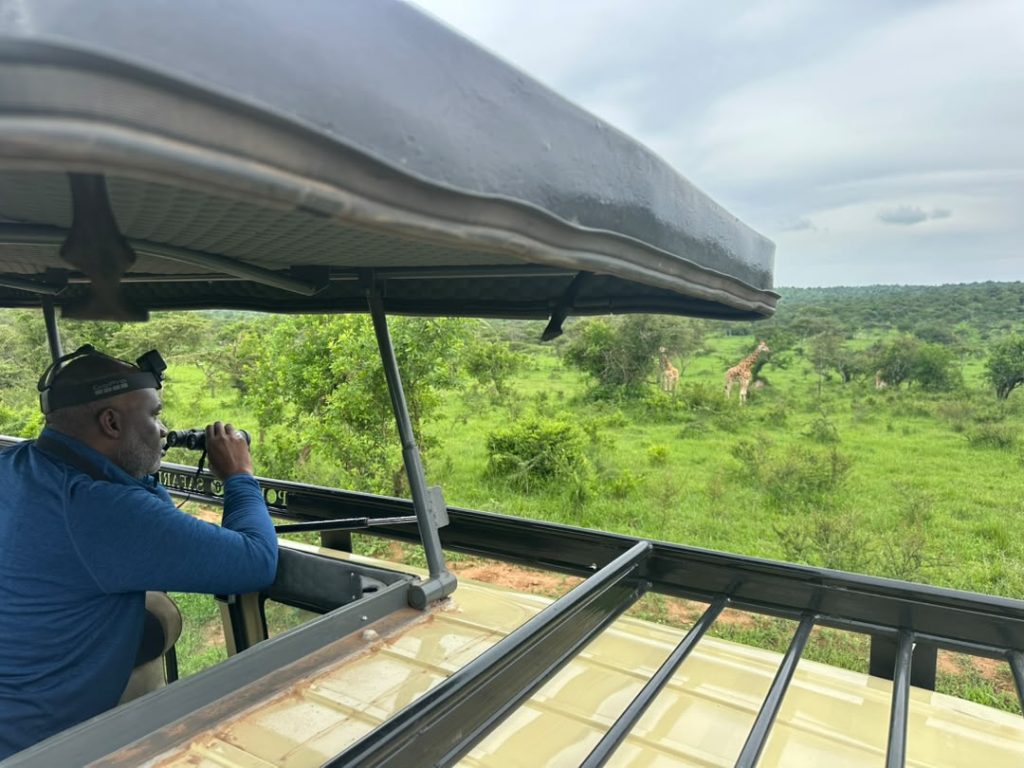
Game drive Safaris in Lake Mburo National Park. Game drive safaris in Lake Mburo National Park are the easiest way to see Uganda’s savanna wildlife, because the park lies only about 240 km from Kampala, or roughly 4 to 5 hours by road. You can expect to see zebras, impalas, giraffes, buffaloes and elands on rolling grassland, often within minutes of entering the park.
Lake Mburo is Uganda’s smallest savanna national park, at about 370 square kilometers. That small size is a large part of its charm. The park is quiet and easy to explore, it has a beautiful mix of lakes and acacia woodland, and it fits neatly into a short break or a longer journey to the gorilla parks.
This guide explains what you can see on a Lake Mburo game drive, when to go, what it costs, and how to plan your trip. At Kenlink Tours, we design safaris all over Uganda, and we can build a Lake Mburo stop into almost any route.
Why Choose Lake Mburo for a Game Drive?
Lake Mburo offers a very different experience from Uganda’s larger parks. It does not have the crowds or long distances of the better-known reserves, and it rewards travelers who enjoy a slower pace. Here is why it deserves a place on your list:
- Easy to reach: It is the closest of the main savanna safaris to Kampala and Entebbe, and it sits conveniently along the road to southwestern Uganda.
- Reliable grazers: Zebras, impalas and other antelopes are common, so even a short drive usually delivers plenty to photograph.
- Open scenery: Grassy hills, wooded valleys and lake views make for attractive landscapes throughout the park.
- Variety of activities: You can combine a game drive with a boat cruise, a nature walk, cycling or horseback riding.
- A good first safari: Its compact size and gentle pace suit families and first-time safari travelers.
What Makes Lake Mburo Different?
The park protects part of a wider wetland system. Thirteen lakes lie in the surrounding area, and five of them are inside the park. These waters attract hippos, crocodiles and a wide variety of birds, and they give game drives a lovely backdrop.
Lake Mburo is also known for its impalas, which are a signature sight here and are much harder to find in Uganda’s other parks. Its acacia savanna, rocky outcrops and wetland edges form a mosaic of habitats, which means your view can change completely within a short distance.
There is one important thing to know before you go. Lake Mburo is not a classic Big Five park. Elephants are not part of the experience here, and lions are rarely seen. If lions and elephants are your priority, consider adding Queen Elizabeth National Park or Murchison Falls National Park to your route. Choose Lake Mburo for its quiet beauty, abundant grazers and relaxed feel.
What Wildlife Will You See on a Game Drive?
Lake Mburo’s strength is the number of grazing animals you can see at close range. No sighting is ever guaranteed, but your guide will know where animals have been feeding and when they tend to move.
| Animal | Where to look | How likely on a day drive |
|---|---|---|
| Zebra | Open grassland and along the main tracks | Very likely |
| Impala | Acacia woodland and grassy clearings | Very likely |
| Warthog | Grassland and around salt licks | Very likely |
| Buffalo | Grassland and near water | Likely |
| Topi | Open plains | Likely |
| Eland | Open grassland and bush, often in shy groups | Fairly likely |
| Giraffe | Acacia woodland, in the areas they have settled | Fairly likely |
| Hippo and crocodile | Lake shores and channels | Best from the boat |
| Leopard | Rocky areas and thickets | Uncommon, better at night |
| Hyena | Woodland, usually after dark | Uncommon, better at night |
These likelihoods are general guidance rather than promises. Your chances improve with early starts, a good guide and a little patience.
The Star Attractions: Zebras, Impalas and Elands
Zebras are the emblem of a Lake Mburo drive. Their patterns stand out beautifully against the green hills, and foals can make for wonderful photographs. Watch how they stand in pairs facing opposite ways, keeping an eye out for danger while they rest.
Impalas are graceful, alert and very photogenic. You will often see a large group of females with a single dominant male, or a noisy bachelor herd nearby. Elands, among Africa’s largest antelopes, tend to be more cautious, so a sighting of a large herd feels like a real reward.
Giraffes add to the park’s appeal. Ask your guide where they have been seen recently, as they can range over a wide area. Early morning, when they are moving through the acacias in soft light, is a particularly good time to look for them.
Birds to Watch Out For
Bird lovers should allow extra time here. More than 300 bird species have been recorded in the park, and you may see several on even a short drive.
Look out for the African fish eagle over the lakes, the saddle-billed stork in the wetlands, and the Abyssinian ground hornbill walking across the grass. Our 7-day birdwatching safari in Uganda offers more ideas if birds are your main reason for traveling, and we can include Lake Mburo on a tailor-made birding trip.
Main Game Drive Tracks in Lake Mburo
The park has a network of tracks, and your guide will choose a route based on recent sightings and road conditions. These are some of the routes you may hear about:
- Zebra Track: A popular route through open savanna, and often a good place to see its namesake.
- Kazuma Track: A route that takes you towards Kazuma Hill and its panoramic views.
- Kigarama Track: A more elevated route with views across the surrounding countryside.
- Ruroko Track: A quieter route through a varied mix of habitats.
- Lakeside tracks: Routes close to the water, where you can look for hippos, waterbirds and animals coming to drink.
After heavy rain, some tracks may become muddy or impassable. A local guide or a park ranger can tell you which are currently in good condition.
Types of Game Drive in Lake Mburo
The time of day you choose changes what you will see. If you have a night here, consider trying more than one.
- Morning game drive: Your best general option. It is cool, the light is soft, and animals are most active. Start as soon as the park opens.
- Afternoon game drive: A pleasant choice, with golden light towards sunset, and an easy option if you arrive from Kampala around midday.
- Night game drive: A special feature of the park, led by a park guide with a spotlight. You may see nocturnal animals such as bush babies, porcupines and hippos out grazing, and you may be lucky enough to see a leopard or a hyena.
Also consider a self-drive game drive if you have your own suitable vehicle. Our car hire service can help with a vehicle. Even then, a ranger guide can be a worthwhile addition, since they know where the animals have recently been seen.
What Is a Lake Mburo Game Drive Like?
A typical morning drive lasts about two to three hours, although you can stay out longer. You will usually start at your lodge or at the park’s Rwonyo area, then head out on the tracks, stopping whenever something interesting appears.
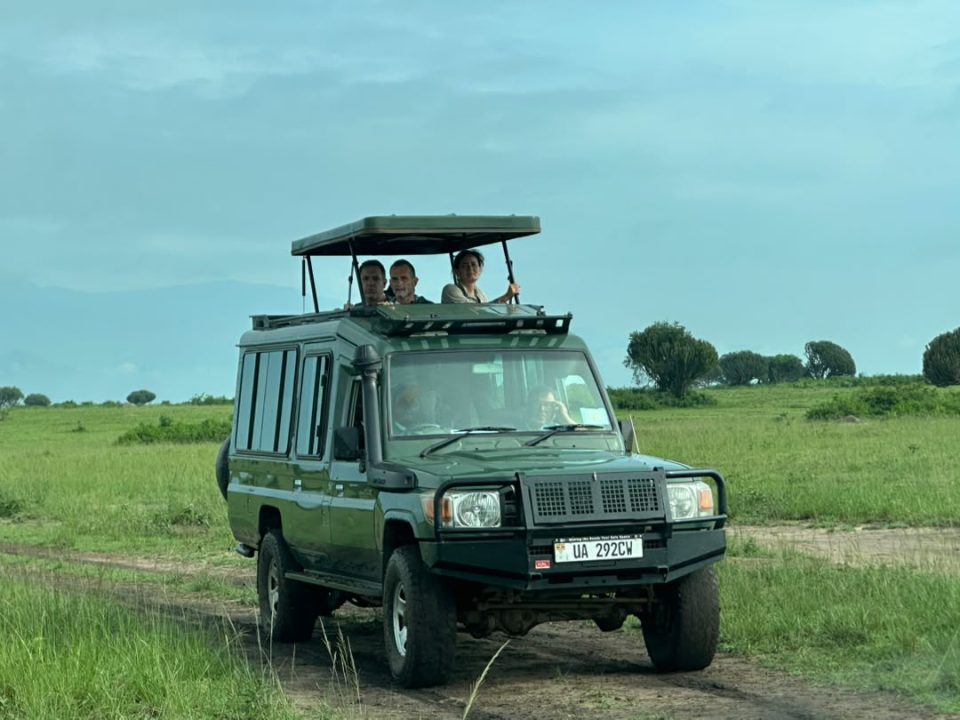
Your guide will open the pop-up roof if your vehicle has one, so you can stand and take in the view. Between sightings, they will explain how the animals live, how the lakes shape the park, and how people and wildlife share this landscape. Bring binoculars, a camera and a bottle of water, then settle in and enjoy the quiet.
Best Time for a Game Drive in Lake Mburo
The best time for a Lake Mburo game drive is during the drier months of December to February and June to August. The grass is shorter, the tracks are firmer, and animals gather closer to the remaining water, which makes them easier to find.
The wetter months of March to May and September to November can still be rewarding. The landscape turns a brilliant green, the air is clear, and you may have the park almost to yourself. Some tracks can become difficult after heavy rain, so allow extra time and rely on your guide’s advice.
Time of day matters as much as the season. Early morning and late afternoon offer the best light and the most animal activity. Midday tends to be hot and quiet, so it is a good time for lunch or a boat cruise.
How to Get to Lake Mburo National Park
Lake Mburo lies in Kiruhura District in western Uganda, about 240 km from Kampala. The park is close to the main Kampala to Mbarara road, so the drive is mostly straightforward.
- By private vehicle: This is the most convenient option. The drive takes about 4 to 5 hours from Kampala, depending on traffic, and a photo stop at the equator at Kayabwe breaks up the journey nicely.
- From Entebbe: Allow a little more time, as you may need to get around or through Kampala traffic.
- By public transport: You can take a bus or shuttle to Mbarara and arrange onward transport from there, though it is much less convenient and you will still need a vehicle for game drives.
- As a stop on a longer route: The park sits conveniently on the way to Bwindi and Queen Elizabeth, which makes it a natural break on the long drive west.
The main entry points are Nshara Gate and Sanga Gate, and the park is generally open from 7am to 7pm. Your guide will choose the best one for your route and lodge.
Other Activities to Combine with Your Game Drive
One of the pleasures of Lake Mburo is how easily a game drive fits alongside other activities. A two-day stay gives you time for two or three of these.
- Boat cruise on Lake Mburo: Look for hippos, crocodiles and waterbirds from the water. This is a relaxed contrast to a game drive and a great choice for birders.
- Guided nature walk: Lake Mburo is one of the few places in Uganda where you can walk among grazers with an armed ranger. Rwonyo’s salt lick walk is a popular option.
- Horseback safari: Riding among zebras is a memorable experience, as animals often allow horses to come closer than vehicles. Rides can run from about one to four hours and should be booked in advance.
- Cycling: Guided cycling offers a quiet, active way to see the park and its edges.
- Sport fishing: Ask your guide about permitted fishing areas and the permit you will need.
- Cultural visits: The land around the park is home to Ankole cattle and their long-horned herds. A visit with a local cattle-keeping family can be a highlight, so ask us about including one.
Lake Mburo or Another Park?
Lake Mburo is a wonderful park, but it may not be the only one you want to see. This quick comparison can help you decide how it fits your trip.
| Park | Best for | Lions and elephants | Time from Kampala |
|---|---|---|---|
| Lake Mburo | Zebras, impalas, walking and short breaks | Not a highlight | About 4–5 hours |
| Queen Elizabeth | Classic game drives and Kazinga Channel cruises | Yes | Most of a day |
| Murchison Falls | The Nile, the falls and northern savanna | Yes | Most of a day |
Many travelers use Lake Mburo as an easy first stop, then continue to the larger parks. You can browse more Uganda wildlife safaris to compare routes, or see this 3-day safari to Queen Elizabeth for another option.
Adding Lake Mburo to a Gorilla or Primate Safari
The drive from Entebbe to the gorilla parks can take 9 to 11 hours. Stopping at Lake Mburo divides this into two easier days and adds a safari experience along the way.
Here is how it can fit into some of our itineraries. Ask us to add a Lake Mburo stop to any of these when you enquire:
- Our 3 days gorilla trekking in Uganda, by adding a day on the way out or back
- Our 5-day wildlife and gorilla safari, for extra variety
- Our 7-day gorilla and wildlife safari, as a relaxed extra night
- Our 8-day gorilla, chimpanzee and wildlife safari, to break up the long return drive
- Our 10-day Uganda adventure safari or 18-day Uganda adventure, where there is plenty of time to explore
For route ideas, compare a 3-day gorilla safari to Bwindi, this 4-day wildlife and primate safari, or a 10-day primates and wildlife trip. You can also read more about Bwindi Impenetrable National Park and Kibale Forest National Park.
How Much Does a Lake Mburo Game Drive Cost?
A game drive in Lake Mburo is far less expensive than a gorilla trek, as there is no costly permit to buy. The main costs are park entry, your vehicle, and any ranger guide or activity fees.
These published fees are for foreign non-residents, in US dollars. Please treat them as a guide, as fees can change and we always confirm the current rates before you pay.
| Item | Published fee |
|---|---|
| Park entry, adult | $40 |
| Park entry, child aged 5–15 | $20 |
| Guided day game drive, park guide | $20 per private car |
| Guided night game drive | $30 per person |
| Boat cruise | $30 per person |
| Walking safari | $15 per person |
| Cycling | $30 per person |
A vehicle entry fee also applies, and the amount depends on the type of vehicle. Entry and vehicle fees are valid for 24 hours from when you enter, so plan your timing carefully on a short visit. Horseback riding is usually arranged separately with a private provider, so ask us for the current price.
On a full package, your total also includes your guide, vehicle, fuel, accommodation and meals. Published market estimates put budget travel at about $150 to $250 per person per day and mid-range at $250 to $500. As Lake Mburo needs no permit, it is one of the most affordable ways to enjoy a private safari in Uganda.
Where to Stay Near Lake Mburo
The area offers a good choice of accommodation, from simple camps to luxury lodges. Some are inside the park, and some sit just beyond its edge.
| Comfort level | Places to consider |
|---|---|
| Luxury | Mihingo Lodge, Mburo Safari Lodge |
| Mid-range | Rwakobo Rock Lodge, Arcadia Cottages, Mantana Tented Camp |
| Budget | Eagle’s Nest, Rwonyo Rest Camp |
When choosing a lodge, think about how early you want to be on the tracks. Staying inside or close to the park gives you more time at dawn and dusk, the best times for a game drive. We can suggest a lodge to fit your budget and interests, then confirm availability for your dates.
Sample Lake Mburo Itineraries
Lake Mburo works well as a short trip of its own. These sample outlines show how much you can realistically fit in. Your own plan may differ depending on your starting point and lodge.
A sample 1-day trip from Kampala
- Leave Kampala very early and stop at the equator at Kayabwe.
- Enter the park, go on a game drive, and enjoy lunch.
- Take a boat cruise, then begin the long drive back in the afternoon.
This is possible but tiring, as it involves about 8 to 10 hours on the road. We recommend at least one night if you can spare it.
A sample 2-day safari
- Day 1: Drive from Kampala with a stop at the equator, have lunch at your lodge, then enjoy an afternoon boat cruise and a short game drive.
- Day 2: Go on a morning game drive or a guided cycling trip, have lunch, and return to Kampala or Entebbe.
A sample 3-day safari
- Day 1: Drive to the park and enjoy an afternoon game drive, followed by a night game drive if you wish.
- Day 2: Take a morning game drive, enjoy a boat cruise after lunch, and relax at sunset.
- Day 3: Enjoy a nature walk or a horseback safari, then return to Kampala or Entebbe.
How to Book a Lake Mburo Game Drive with Kenlink Tours
Booking is simple, and because you do not need a gorilla permit, a Lake Mburo trip can often be arranged at shorter notice.
- Tell us your plan. Share your dates, group size, budget and interests through our safari enquiry page.
- Receive your itinerary. A travel expert normally replies within 24 hours with a suggested route and quotation.
- Adjust the details. Change your lodge, add a boat cruise or walk, or combine the park with a longer Uganda safari.
- Confirm and pay. Read our terms and conditions, then pay your deposit.
- Prepare for travel. Arrange your visa, yellow fever certificate and travel insurance.
- Enjoy the safari. Your guide collects you and takes care of the details from there.
Traveling alone or on a smaller budget? Take a look at our group tours and scheduled departure safaris, or ask us whether a shared option can include Lake Mburo.
Photography Tips for Lake Mburo
Lake Mburo is a generous park for photographers, because its animals are often close to the tracks and its scenery changes constantly. You do not need professional equipment to come home with images you will love.
The best light comes in the first and last hours of the day, when the sun is low and the grass glows. A zoom lens of around 200mm or more helps with shy antelopes and birds, while a wider lens captures the landscape and big skies. If you are using a phone, wait for animals to come closer rather than relying on digital zoom.
Ask your guide to turn off the engine when you stop, as this reduces vibration and lets you hear the sounds around you. Try to photograph behavior as well as portraits, such as zebras grooming one another, impala males sparring, or a fish eagle taking off from a lakeside tree. On a night drive, remember that the spotlight is there to help you see, and always follow your guide’s instructions about using a flash.
Staying Safe on a Lake Mburo Safari
Lake Mburo is a relaxed park, but it is still home to wild animals that deserve your respect. Buffaloes and hippos in particular can be dangerous if they feel threatened or if you get between them and water, so keep your distance and listen to your guide.
Stay in your vehicle during game drives unless your guide tells you otherwise. Walking safaris should only take place with an armed ranger, who will brief you before you set off. Also protect yourself from the smaller risks by using insect repellent and following your doctor’s advice on malaria tablets. Drink plenty of water and wear a hat, as the sun can be strong, even on a cloudy day.
Supporting Conservation and Local Communities
The land around Lake Mburo is shared by people, cattle and wildlife, and this makes tourism especially important here. Your park fees help to fund rangers and the care of the park. Spending money at local lodges, buying crafts directly from their makers and joining community visits can all help local families benefit from wildlife.
You can make a difference through simple choices. Stay on the marked tracks, take your rubbish with you, avoid single-use plastic where possible, and ask before photographing people. Choosing an operator who works responsibly matters too. At Kenlink Tours, part of our work supports local communities through our foundation and tourism training.
What to Pack for a Lake Mburo Game Drive
A game drive is a relaxed activity, so you do not need much, but a few items will make it far more comfortable.
- Binoculars, ideally one pair for each person
- A camera with a zoom lens and spare batteries
- Neutral-colored clothing, as bright colors can disturb animals
- A hat, sunglasses and sunscreen
- A light jacket for early mornings and night drives
- Insect repellent, particularly around dusk
- Closed shoes for nature walks
- Reusable water bottle and some snacks
A small dust cover or a dry bag for your camera is also useful on dry-season tracks. For a horseback ride, wear long trousers and sturdy, closed shoes.
Tips for a Better Game Drive
A few simple habits can turn a good drive into a great one. Your guide will help, but these tips are worth knowing before you set out.
- Start early. Be ready to leave as soon as the park allows, as the first hours are often the best.
- Stay patient. Spend time with a group of zebras or impalas, and you will often see interesting behavior.
- Keep your voice low. Quiet vehicles disturb the animals far less and give you better sightings.
- Stay in the vehicle. Only get out at permitted places or when your guide says it is safe.
- Do not feed the animals. Feeding changes their behavior and can put them at risk.
- Look for the small things. Birds, tracks and termite mounds all make a drive more rewarding.
- Tell your guide what you love. If you would like more time with birds or giraffes, they can adjust the route.
- Respect the speed limits. Driving slowly protects wildlife and gives you more time to spot it.
Is Lake Mburo Good for Families?
Lake Mburo is one of the best parks in Uganda for families with children. The drive from Kampala is shorter than for most parks, the game drives are gentle, and there is usually something to see within a short time.
Children under five enter free according to published fees, and those aged 5 to 15 pay a reduced rate. Boat cruises tend to be a favorite with younger guests, and zebras and warthogs are easy for them to spot. Check age and safety rules before booking any walking, cycling or horseback activity, as these may differ by provider.
Five Mistakes to Avoid
Most problems on a Lake Mburo trip are easily prevented with a little planning. Keep these common mistakes in mind.
- Expecting the Big Five. Enjoy the park for what it is, and add a larger park if lions and elephants matter most to you.
- Trying to do too much in a day. A day trip from Kampala is long, so stay a night if you possibly can.
- Arriving at midday. Animals are less active in the heat, so try to plan your drive for morning or late afternoon.
- Skipping the boat cruise. Some of the park’s best bird and hippo sightings happen on the water.
- Leaving horseback riding until the last minute. Rides are limited, so book in advance if this is a must for you.
Frequently Asked Questions About Lake Mburo Game Drives
Can you see lions in Lake Mburo National Park?
Lions are rarely seen here, so you should not plan your visit around them. Choose Queen Elizabeth or Murchison Falls if seeing lions is a priority, or combine one of them with Lake Mburo.
Are there elephants in Lake Mburo?
Elephants are not part of the Lake Mburo experience. The park is best known for zebras, impalas, elands, buffaloes and giraffes, along with hippos and crocodiles at the lake.
How long is a game drive in Lake Mburo?
A typical drive lasts about two to three hours, although you can stay out longer. Early morning is usually the most rewarding time for a game drive.
Can I do a night game drive in Lake Mburo?
Yes. Night game drives are available with a mandatory park guide, and the published fee is $30 per person. They offer a chance to see nocturnal animals such as bush babies and porcupines, and sometimes a leopard or hyena.
Can I visit Lake Mburo in one day?
Yes, but it is a long day from Kampala, with about 8 to 10 hours on the road. We recommend staying at least one night, so that you can enjoy the park at its best times.
Do I need a guide for a game drive?
You can self-drive in a suitable vehicle, but a guide improves your chances of finding wildlife and makes the experience far richer. Our guided safaris include an English-speaking guide and a 4×4 vehicle.
How many days do I need in Lake Mburo?
One or two nights is ideal for most travelers. That gives you time for morning and afternoon game drives, a boat cruise, and perhaps a walk or a horseback safari.
Plan Your Lake Mburo Game Drive Safari
Lake Mburo may be Uganda’s smallest savanna park, but it offers a big experience: wide skies, quiet tracks and zebras grazing against the green hills. It is a perfect short escape from Kampala, and a welcome stop on the road to the gorillas.
Tell us your dates and interests, and a Kenlink Tours expert will normally reply within 24 hours with a plan built around you. Start planning your Lake Mburo safari, call us on +256 789 210 067, or email info@kenlinktours.com.