- EXPERT'S HELP
- +256789210067
- +256200955001
- info@kenlinktours.com


Five days gorilla and game safari tour in Uganda
October 14, 2026
6 Days Uganda Quest with Gorillas and Chimpanzees
October 14, 2026
Game safari and Chimpanzee Combo. Not every great Uganda safari has to include gorillas. For many travelers, a game safari and chimpanzee combo is the perfect adventure: the energy and noise of a chimpanzee community swinging through the rainforest, followed by the open-sky drama of elephants, lions and hippos on the savannah. It’s more affordable than a gorilla safari, less physically demanding and suitable for younger travelers, yet it still delivers some of the most memorable wildlife encounters in Africa.
Uganda is the ideal country for this combination. Kibale Forest National Park, known as the “Primate Capital of the World,” lies just a few hours from Queen Elizabeth National Park, while Budongo Forest borders Murchison Falls National Park in the north. That means you can pair chimps and Big Game on a short three- or four-day trip, or build a longer journey through both regions.
In this guide, the safari experts at Kenlink Tours explain where to track chimpanzees, which wildlife parks to combine them with, sample itineraries, permit costs, the best time to travel and practical tips to help you plan the perfect chimp and game safari.
What Is a Game Safari and Chimpanzee Combo?
A game safari and chimpanzee combo is a Uganda tour that pairs chimpanzee tracking in a tropical rainforest with game drives and boat cruises in a savannah national park. Instead of focusing on a single habitat, you experience two completely different ecosystems in one trip.
In the forest, you follow a ranger guide along shaded trails, listening for the pant-hoots and drumming that reveal a chimp community. On the savannah, you scan open plains from a pop-up-roof 4×4 for lions, elephants, buffalo and antelope, then cruise along a river or channel crowded with hippos and crocodiles. The contrast keeps every day fresh and exciting.
Why Choose a Chimpanzee and Game Safari Instead of Gorillas?
Gorilla trekking is wonderful, but it isn’t the right fit for everyone. A chimp and game safari offers several clear advantages:
- Lower cost. A chimpanzee permit costs a fraction of a gorilla permit, which can cut hundreds of dollars from your budget.
- Easier terrain. Kibale’s trails are mostly gentle, compared with Bwindi’s steep, muddy slopes.
- Younger travelers welcome. The minimum age for chimp tracking in Kibale is generally 12 years, compared with 15 for gorillas, making it great for families.
- Shorter drives. Kibale and Queen Elizabeth are much closer to Kampala and Entebbe than Bwindi.
- More action. Chimps are lively, vocal and fast-moving, so encounters feel thrilling and dynamic.
- Flexible timing. It fits neatly into a three- or four-day break, or alongside a business trip.
Many travelers also choose a chimp and game safari as their first Uganda trip, then return later for gorillas. Others add gorillas on the same journey with packages like our 5 Days Gorilla and Chimpanzee Tour in Uganda. You can learn more about the country itself on our Uganda destination page.
Your Chimp and Game Safari Options at a Glance
Uganda offers two main regions for this combination. Here’s how they compare:
| Region | Chimp Site | Wildlife Park | Highlights | Ideal Length |
|---|---|---|---|---|
| Southwest | Kibale Forest | Queen Elizabeth | Best chimp sightings, Kazinga Channel cruise, tree-climbing lions | 3 to 4 days |
| North | Budongo Forest | Murchison Falls | Murchison Falls, Rothschild’s giraffe, Nile cruise, shoebill | 3 to 4 days |
| Both regions | Kibale and Budongo | Murchison and Queen Elizabeth | Two chimp treks, rhinos at Ziwa, the full Uganda experience | 6 to 8 days |
The southwestern route is the most popular because Kibale delivers the most reliable chimp sightings and Queen Elizabeth sits just a short drive away.
Chimpanzee Tracking in Kibale Forest National Park
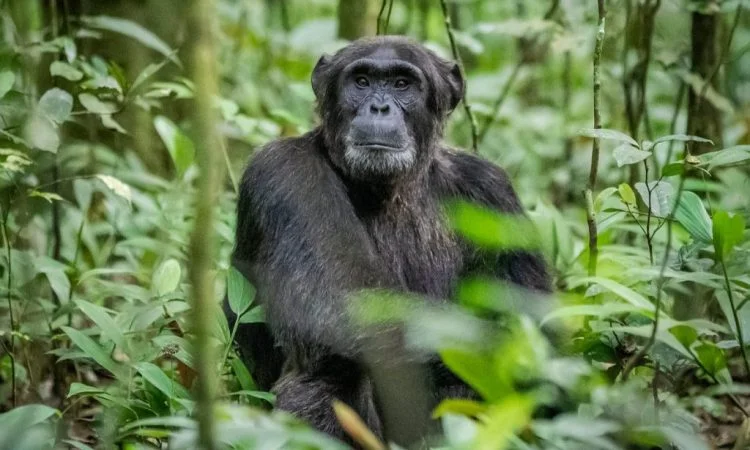
Kibale Forest National Park is the best place in East Africa to see wild chimpanzees. Its 795 square kilometers of moist evergreen forest shelter around 1,500 chimps, the largest population in Uganda, along with 12 other primate species, including red colobus, black-and-white colobus, L’Hoest’s monkeys, grey-cheeked mangabeys and red-tailed monkeys.
Tracking starts at the Kanyanchu visitor center with a briefing from Uganda Wildlife Authority rangers. Small groups then follow a guide into the forest, listening for calls and looking for fresh signs such as half-eaten fruit and knuckle prints. Once the chimps are found, you spend one hour watching them feed, groom, play, squabble and communicate with an astonishing range of hoots and screams. Sighting success is typically above 90 percent, among the highest in Africa.
Tracking runs in a morning and an afternoon session. Morning sessions often catch chimps at their most active, while afternoon sessions tend to be quieter with fewer visitors. Learn more about the forest on Pick and Transfer Safaris’ Kibale Forest National Park guide, or explore our short 3-Day Chimpanzee Tracking Safari.
The Chimpanzee Habituation Experience
For a deeper encounter, Kibale offers the Chimpanzee Habituation Experience. Instead of one hour, you spend much of the day with a chimp community that is still being accustomed to people, accompanying researchers from early morning as the chimps leave their nests until late afternoon. It’s ideal for photographers, researchers and anyone who wants to understand chimp behavior in real depth. Places are limited, so book well ahead.
Chimpanzee Tracking in Budongo Forest
Budongo Forest, on the southern edge of the Murchison Falls Conservation Area, is East Africa’s largest mahogany forest and home to several hundred chimpanzees. Tracking takes place in the Kaniyo Pabidi section, where giant mahogany and ironwood trees create a cathedral-like atmosphere.
Budongo is the natural chimp stop on a northern route, pairing perfectly with game drives and Nile cruises in Murchison Falls. Sightings are good, though slightly less predictable than in Kibale, and permits are usually cheaper. The forest is also excellent for birding, with species such as the Puvel’s illadopsis and the yellow-footed flycatcher.
Chimpanzees in Kyambura Gorge
Kyambura Gorge, nicknamed the “Valley of Apes,” is a sunken forest about 100 meters deep cutting through the savannah of Queen Elizabeth National Park. A small chimp community lives on the gorge floor alongside monkeys and forest birds. Sightings are less certain than in Kibale, but the setting is spectacular, and it’s an easy add-on on a game safari day. Many travelers treat Kyambura as a bonus trek rather than their main chimp experience.
Bigodi Wetland Sanctuary: The Perfect Add-On
Just outside Kibale, the community-run Bigodi Wetland Sanctuary offers a gentle walk on boardwalks through papyrus swamp. It’s one of the best places in Uganda to see the great blue turaco, along with more than 200 bird species and several monkey species. Fees support local schools and projects, making it a rewarding afternoon after a morning chimp trek. Our 3 Days Chimp Tracking Safari to Kibale includes both experiences.
Game Safari in Queen Elizabeth National Park
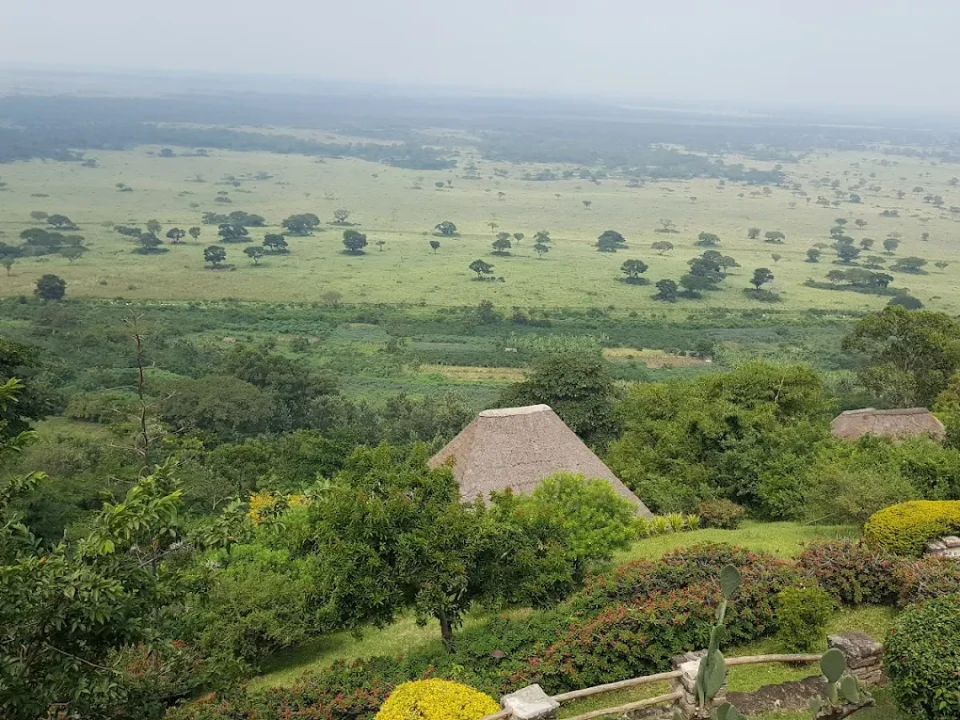
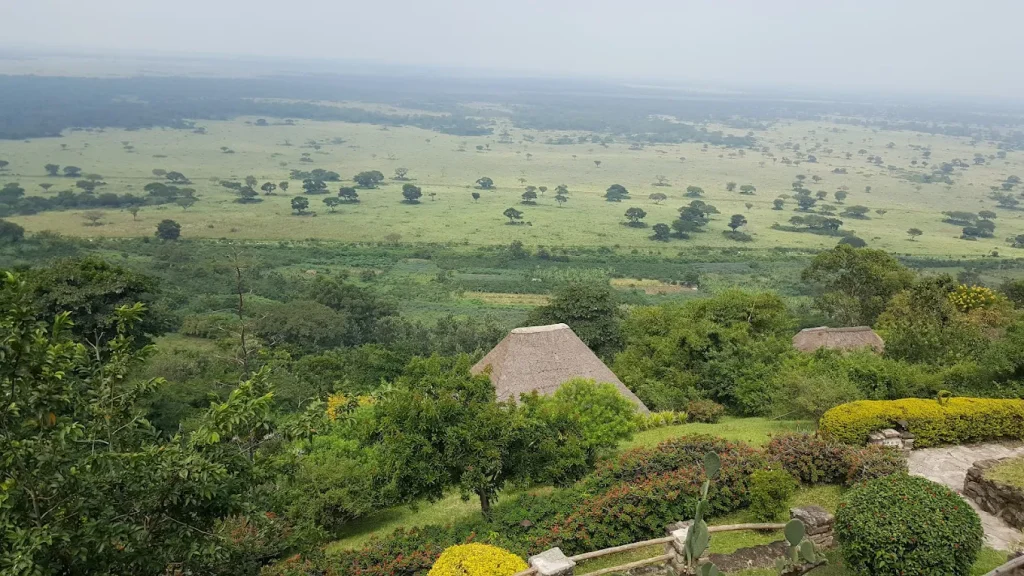
Queen Elizabeth National Park is the classic partner for Kibale, about two and a half to three hours’ drive south. Covering nearly 2,000 square kilometers of savannah, woodland, crater lakes and wetlands, it supports nearly 100 mammal species and more than 600 bird species.
Morning game drives on the Kasenyi plains offer excellent chances of seeing lions hunting Uganda kob, along with elephants, buffalo, waterbuck, warthogs and spotted hyenas. In the remote Ishasha sector, lions famously climb and rest in the branches of fig trees, one of Africa’s rarest wildlife sights. The afternoon Kazinga Channel boat cruise is a highlight for everyone, passing pods of hippos, large crocodiles, elephants at the water’s edge and flocks of pelicans, kingfishers and fish eagles.
Read more on the Queen Elizabeth National Park destination guide, or see our own 3 Days Queen Elizabeth National Park safari. Pick and Transfer Safaris also runs a 3 Days Safari to Queen Elizabeth National Park.
Game Safari in Murchison Falls National Park
Murchison Falls National Park is Uganda’s largest and oldest park, covering about 3,840 square kilometers. At its heart, the Victoria Nile squeezes through a gorge just seven meters wide before plunging 43 meters at the dramatic Murchison Falls.
North of the river, the Buligi game tracks offer some of Uganda’s best savannah viewing, with large herds of Rothschild’s giraffe, elephants, buffalo, Jackson’s hartebeest and Uganda kob, plus lions and leopards. A launch cruise to the base of the falls reveals hippos, crocodiles and abundant birdlife, while a morning cruise to the Nile Delta gives a real chance of spotting the rare shoebill stork. A hike to the Top of the Falls lets you feel the roar of the water beneath your feet.
Murchison pairs naturally with chimp tracking in Budongo. Learn more about Murchison Falls National Park, or see Pick and Transfer Safaris’ 3 Days Safari to Murchison Falls.
Rhino Tracking at Ziwa Rhino Sanctuary
On the drive from Kampala to Murchison Falls, Ziwa Rhino Sanctuary is the only place in Uganda to see rhinos. Here you track southern white rhinos on foot with experienced rangers, getting surprisingly close to these giants. Adding Ziwa to a northern chimp and game safari makes it possible to see all of the Big Five on one trip.
Lake Mburo National Park
Lake Mburo National Park, about four hours from Kampala, is the closest savannah park to the capital. It’s the best place in Uganda to see zebras, impalas and eland, and it offers rare activities such as walking safaris, horseback safaris and boat trips on the lake. It makes a pleasant stopover on longer routes heading to or from the southwest.
Sample 3-Day Kibale Chimps and Queen Elizabeth Safari
This short itinerary is perfect for a long weekend or a break during a business trip.
- Day 1: Kampala to Kibale. Drive west via Fort Portal’s tea estates and crater lakes. Afternoon Bigodi Wetland walk. Overnight near Kibale.
- Day 2: Chimps and Queen Elizabeth. Morning chimpanzee tracking in Kibale, then drive to Queen Elizabeth National Park for an afternoon Kazinga Channel boat cruise.
- Day 3: Game drive and return. Early morning game drive on the Kasenyi plains, then return to Kampala or Entebbe, crossing the equator on the way.
Pick and Transfer Safaris’ 3 Days Chimpanzee Tour in Uganda follows a similar idea for travelers on a tight schedule.
Sample 4-Day Chimpanzee and Game Safari
Adding a fourth day gives you a more relaxed pace and the chance to visit the tree-climbing lions of Ishasha or the chimps of Kyambura Gorge.
- Day 1: Kampala or Entebbe to Kibale. Scenic drive west, arriving in time for an afternoon walk in Bigodi Wetland.
- Day 2: Chimpanzee tracking. Morning chimp trek, then a leisurely drive to Queen Elizabeth National Park via the Kasese crater lakes.
- Day 3: Queen Elizabeth. Morning game drive on the Kasenyi plains, optional Kyambura Gorge chimp walk and afternoon Kazinga Channel cruise.
- Day 4: Return. Optional early game drive, then return to Kampala or Entebbe.
Our 4 Days Uganda Primate Tour and Pick and Transfer Safaris’ 4 Days Wildlife and Primate Safari are good examples of this length.
Sample 6-Day North to South Chimps and Big Game Safari
With six days, you can enjoy both chimp forests and both of Uganda’s top savannah parks.
- Day 1: Kampala to Murchison Falls via Ziwa. Rhino tracking on foot at Ziwa Rhino Sanctuary, then continue to Murchison Falls.
- Day 2: Murchison Falls. Morning game drive on the Buligi tracks, afternoon launch cruise to the base of the falls and a hike to the top.
- Day 3: Budongo chimps and transfer. Morning chimp tracking in Budongo Forest, then drive south along the Albertine Rift to Fort Portal.
- Day 4: Kibale chimps. A second chimp trek in Kibale, followed by Bigodi Wetland in the afternoon.
- Day 5: Queen Elizabeth. Game drive en route and an afternoon Kazinga Channel cruise.
- Day 6: Return. Morning game drive, then return to Kampala or Entebbe.
For a longer journey, our 10 Days Uganda Adventure Safari Itinerary and 10 Days Best of Uganda Primates, Wildlife and Culture add more parks and cultural encounters, while Pick and Transfer Safaris’ 10 Days Uganda Primates and Wildlife and 7 Days Uganda Safari one-week tour offer further inspiration. If you later decide to add gorillas, the 8-Day Uganda Gorilla, Chimpanzee and Wildlife Safari covers all three.
A Rwanda Chimp and Game Safari Alternative
If you’re based in Kigali, Rwanda offers its own version of this combination. Chimpanzees live in Nyungwe Forest National Park, one of Africa’s oldest rainforests, famous for its canopy walk and 13 primate species. Big Game is found in Akagera National Park, Rwanda’s only savannah park and home to the Big Five.
The two parks lie on opposite sides of the country, so plan at least five days. See our 3-Day Nyungwe Forest National Park Tour and 3-Day Akagera Game Drive Safari, or Pick and Transfer Safaris’ 2 Days Nyungwe Chimps Tracking Trip and Akagera National Park guide.
Chimpanzee Permits and Safari Costs
Chimpanzee permits are issued by the Uganda Wildlife Authority and should be booked in advance, especially for Kibale in peak season. At the time of writing, a Kibale chimpanzee tracking permit costs around US$250 per person for foreign non-residents. Budongo and Kyambura permits are usually cheaper, and the Chimpanzee Habituation Experience costs more because of its extended time. Permit prices can change, so we always confirm current rates when you book.
Beyond permits, the main costs of a chimp and game safari are park entry fees, the Kazinga Channel or Nile cruise, accommodation, meals and a private 4×4 vehicle with a driver-guide. Because there’s no gorilla permit, this combination is one of the most affordable ways to experience Uganda’s primates and Big Game together.
To stretch your budget further:
- Travel with friends or family to share vehicle and guide costs.
- Choose budget or mid-range lodges. The wildlife is the same, whatever your room costs.
- Join a set-date trip. Our scheduled departure safaris and group tours offer shared-cost prices.
- Drive yourself. Experienced drivers can explore with our 4×4 car hire service.
Best Time for a Game Safari and Chimpanzee Combo
Chimp tracking and game drives are possible year-round, thanks to Uganda’s equatorial climate.
June to September and December to February are the drier months and the most popular time to travel. Forest trails are firmer, chimps are often easier to follow, and wildlife gathers near water in the savannah parks, making game viewing excellent.
March to May and October to November are wetter, with afternoon showers and muddy trails. In return, you’ll enjoy green landscapes, fewer visitors, lower lodge rates and superb birdwatching. Fruiting trees in Kibale during the wet months can also draw chimps into larger, noisier groups. Keen birders can extend their trip with our 7-Day Birdwatching Safari in Uganda.
What to Pack for Chimp Tracking and Game Drives
Your packing list needs to cover both forest and savannah:
- Comfortable waterproof walking shoes or boots with good grip
- Long trousers and long-sleeved shirts in neutral colors to protect against insects and plants
- A light rain jacket for forest showers
- Gaiters or long socks to keep safari ants out of your trousers
- Binoculars for spotting chimps in the canopy and wildlife on the plains
- A camera with a zoom lens and spare batteries (no flash with chimps)
- Sunscreen, insect repellent, a sun hat and sunglasses for game drives
- A light fleece for cool mornings in Kibale
- A small daypack with water and snacks
Chimpanzee Tracking Rules and Etiquette
Following the rules protects both you and the chimps:
- Keep a distance of at least eight meters from the chimpanzees.
- Wear a face mask when requested, as chimps can catch human respiratory illnesses.
- Don’t track if you feel unwell.
- Never eat, drink or smoke near the chimps.
- Keep your voice low and avoid sudden movements.
- Don’t use flash photography.
- Follow your ranger’s instructions at all times, especially if chimps move close or display.
These rules help keep habituation safe and sustainable, and the fees you pay support conservation and nearby communities.
Why Book Your Chimp and Game Safari With Kenlink Tours
Since 2010, Kenlink Tours has been designing private safaris across Uganda, Rwanda and East Africa. Our team is on the road every day of the year, personally checking lodges, routes and park conditions, so the advice we give is first-hand and honest.
We are licensed by the Uganda Tourism Board and book chimpanzee permits directly through the Uganda Wildlife Authority. Our driver-guides know Kibale’s trails, the best times for the Kazinga Channel cruise and where the Ishasha lions tend to rest. Every trip is private and flexible, so we can shape it around your dates, budget and interests. You can read more about us on our About Us page, and part of our profits supports the Kigezi Foundation, which cares for orphaned children in southwestern Uganda.
Frequently Asked Questions
How many days do I need for a chimpanzee and game safari?
Three days is enough for Kibale chimps and a short visit to Queen Elizabeth National Park. Four days allows a more relaxed pace, and six days lets you combine both the northern and southern circuits.
What is the minimum age for chimpanzee tracking?
In Kibale, the minimum age is generally 12 years. Younger children can join game drives, boat cruises and nature walks such as Bigodi Wetland.
Are chimpanzee sightings guaranteed?
No wildlife sighting is guaranteed, but Kibale’s success rate is above 90 percent, making it one of the most reliable chimp tracking destinations in Africa.
Is chimp tracking difficult?
Kibale’s trails are mostly flat or gently rolling, so chimp tracking is easier than gorilla trekking. You may need to walk quickly when chimps are on the move, and treks usually last two to four hours.
Can I see the Big Five on a chimp and game safari?
Queen Elizabeth and Murchison Falls have lions, leopards, elephants and buffalo. Adding Ziwa Rhino Sanctuary on a northern route makes all five possible.
Can I add gorillas later?
Yes. Bwindi is about three to four hours from Queen Elizabeth, so gorillas can easily be added by extending your trip by two days.
Plan Your Game Safari and Chimpanzee Combo
A game safari and chimpanzee combo shows you two sides of wild Uganda in one compact trip: the lively forest world of our closest relatives, and the open savannah where lions climb trees, elephants roam and hippos crowd the riverbanks. It’s affordable, family-friendly and easy to fit into just a few days, yet it leaves a lasting impression on everyone who takes it.
Whether you choose Kibale and Queen Elizabeth, Budongo and Murchison Falls, or both, our team will design a smooth, rewarding itinerary around your plans.
Ready to track chimps and explore Uganda’s wildlife? Contact Kenlink Tours today for your free, tailor-made chimpanzee and game safari itinerary, and one of our safari experts will reply within 24 hours.