- EXPERT'S HELP
- +256789210067
- +256200955001
- info@kenlinktours.com


Fly to Kigali for Bwindi Gorilla Trekking
August 15, 2026
Uganda Gorilla Vacation Safaris from Kigali
August 15, 2026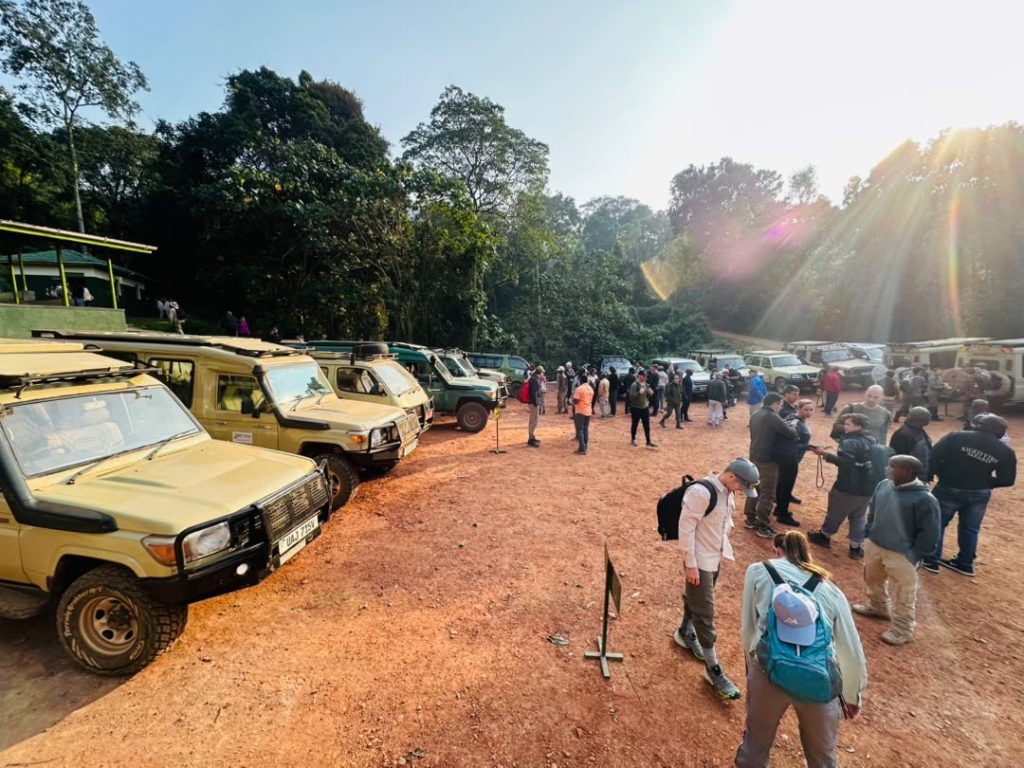
Gorilla Safari Trips Starting from Kigali. Kigali has become East Africa’s most convenient launch point for gorilla trekking, and the sheer range of gorilla safari trips starting from Kigali can feel overwhelming once you start researching. Should you trek in Rwanda or cross into Uganda? Is one day enough, or should you commit to a full week? Do you need to choose between gorillas and golden monkeys, or can you fit in both?
This guide brings every option together in one place: trip lengths from a single intense day to ten-day combination safaris, Rwanda-only itineraries versus cross-border Uganda trips, and how to match the right format to your budget, fitness level, and available vacation time. Whether you land on a focused 3-Day Bwindi Gorilla Safari Starting from Kigali or a longer combination itinerary, this is the roadmap for choosing with confidence.
Why Kigali Is the Best Base for a Gorilla Safari
Kigali’s appeal as a gorilla safari base comes down to geography and infrastructure working together. Rwanda’s own Volcanoes National Park sits just 2.5 to 3 hours north of the capital on excellent paved roads, while Uganda’s Bwindi Impenetrable Forest, technically across an international border, is still reachable in 4 to 5 hours via the Cyanika crossing, faster than the 8 to 10-hour drive from Uganda’s own capital region.
This means Kigali functions as a genuine dual-country gateway, giving travelers access to both of the world’s two primary mountain gorilla trekking destinations from a single, well-connected international airport. Add in Kigali’s reputation as one of Africa’s cleanest, safest capitals, plus a growing roster of direct international flight connections, and it’s easy to see why so many gorilla safari trips, regardless of final destination, now start here rather than in Entebbe or Kampala.
Overview: The Range of Gorilla Safari Trips Available from Kigali
Gorilla safari trips starting from Kigali span an enormous range, from a single intense day for travelers with almost no spare time, up to ten-day or longer combination safaris that weave in multiple parks, both countries’ gorilla populations, and additional wildlife like golden monkeys, chimpanzees, and Big Five game viewing. Nearly every trip length in between is available and well-established.
Shorter trips, one to three days, generally focus tightly on the trekking experience itself with minimal additional activity. Mid-length trips, three to six days, typically add a second wildlife experience, golden monkeys, a cultural visit, or a stretch of relaxation by Lake Kivu. Longer trips, seven days and beyond, often combine both Rwanda and Uganda gorilla populations along with broader wildlife destinations like Akagera, Queen Elizabeth, or Nyungwe. Understanding this spectrum is the first step to figuring out which format actually fits your trip.
It’s worth noting that trip length and destination choice are interconnected rather than independent decisions. A one or two-day format almost always means a Uganda-crossing itinerary via Cyanika, since Bwindi’s sectors are close enough to make a compressed timeline feasible, while Rwanda’s own Volcanoes National Park, though closer to Kigali in absolute terms, tends to appear more often in three-day-and-longer formats that allow for a more relaxed single-country pace. Recognizing this pattern early helps narrow down your options considerably before you even start comparing specific itineraries in detail.
1-Day Gorilla Safari Options from Kigali
For travelers with only a single free day, a one-day gorilla trek from Kigali is technically possible, though it’s an intense, early-start, long-day undertaking rather than a relaxed experience. This format typically means departing Kigali before dawn, crossing into Uganda via Cyanika, trekking gorillas in one of Bwindi’s southern sectors, and returning to Kigali the same evening, a genuinely ambitious single day covering roughly 8 to 10 hours of combined driving plus the trek itself.
This option, exemplified by the one-day Uganda gorilla safari starting from Kigali, suits only the most time-constrained travelers, business travelers extending a work trip by a single day, for instance, and it leaves zero margin for delays, weather issues, or fatigue. Most operators will honestly advise against this format unless it’s genuinely your only option, recommending at minimum a two-day trip whenever possible.
2-Day Gorilla Safari Trips from Kigali
A two-day format offers meaningfully more breathing room than the single-day option while still suiting travelers with limited time. The typical structure involves departing Kigali on day one, crossing into Uganda, and overnighting near Bwindi, followed by the gorilla trek itself on day two before returning to Kigali. This removes the same-day round trip pressure of the one-day option while keeping the overall trip length compact.
Options like the 2 Days Uganda Gorilla Safari Starting from Kigali and the even more streamlined 2 Days Rwanda to Uganda Gorilla Trekking Safari both fall into this category, offering complete gorilla trekking experiences without demanding a full week away. For travelers who’d rather stay entirely within Rwanda, the 2 Days Volcanoes Gorilla Trek from Kigali offers a comparable short-format experience without an international border crossing at all.
3-Day Gorilla Safari Trips from Kigali
Three days is widely considered the sweet spot for travelers who want a complete, unhurried gorilla trekking experience without committing a full week of vacation time. This format typically includes a full travel day to reach either Volcanoes National Park or Bwindi, a full trekking day, and a final day for a lighter activity or the return journey, a pace that avoids the rushed feeling of shorter options while remaining genuinely manageable for busy travelers.
Rwanda-focused options like the 3 Days Rwanda Gorilla Safari keep the entire trip within Rwanda’s borders, while the 3-Day Bwindi Gorilla Safari Starting from Kigali crosses into Uganda for the trek itself, taking advantage of Uganda’s lower permit cost. Travelers wanting a cultural dimension alongside the trekking can also look at the 3 Days Rwanda Gorilla & Culture format, while those specifically drawn to Uganda’s side of the border can compare the 3 Days Uganda Gorilla Safari from Rwanda package.
4-Day Gorilla Safari Trips from Kigali
A four-day format adds a genuinely valuable extra dimension to the standard three-day structure, typically a second wildlife activity like golden monkey trekking, without significantly extending the overall trip length. This is often considered the best balance of depth and efficiency, enough time to properly experience two distinct primate encounters while still fitting comfortably into a single week of vacation with travel days on either end.
The 4-Day Rwanda-Uganda Golden Monkey and Gorilla Trekking package is the clearest example of this format, combining a golden monkey trek in Rwanda’s bamboo forest with a mountain gorilla trek across the border in Uganda, giving travelers two countries and two primate species on a single, well-paced itinerary. This format consistently ranks among the most popular choices for travelers who want more than a single-purpose trek but can’t commit to a full week away.
5-Day and Longer Gorilla Safari Trips from Kigali
Once you move into five days and beyond, gorilla safari trips from Kigali start incorporating genuinely diverse experiences: multiple parks, both countries’ gorilla populations, relaxation time, and additional wildlife viewing. Five-day options like the 5 Days Uganda Rwanda Double Gorilla Safari allow travelers to trek gorillas in both Rwanda and Uganda on a single trip, effectively doubling the core wildlife experience, while the 5-Day Gorilla Trekking Safari from Kigali to Uganda offers a more relaxed single-country pace with extra buffer days built in.
For travelers who want genuine downtime built into the itinerary, the 6-Day Rwanda Adventures – Great Apes & Lake Kivu package pairs gorilla trekking with several unhurried days on Lake Kivu’s shores. At the longer end, itineraries like the 9 Days Uganda Rwanda Gorilla and Big Five Safari and the 10-Days Tour in Rwanda & Uganda combine gorilla trekking with broader wildlife destinations like Akagera or Uganda’s savanna parks, suited to travelers with a full week or two available who want a comprehensive East African wildlife experience rather than a single-focus trip.
Rwanda-Only vs Uganda-Crossing Gorilla Safaris
One of the most fundamental decisions facing anyone booking a gorilla safari from Kigali is whether to stay entirely within Rwanda or cross into Uganda for the trek itself. Rwanda-only trips are simpler logistically, no international border crossing, no separate visa considerations beyond your initial entry, and generally shorter total driving time given Volcanoes National Park’s proximity to Kigali. The trade-off is Rwanda’s higher gorilla permit price relative to Uganda’s.
Uganda-crossing trips add a border crossing and typically 1 to 2 extra hours of driving compared to a Rwanda-only itinerary, but they unlock a meaningfully lower permit cost and access to Bwindi’s larger number of habituated gorilla families spread across four distinct trekking sectors. Neither approach is objectively better; the right choice depends on how much you value simplicity versus value, and whether Bwindi’s wilder, denser rainforest setting appeals to you more than Volcanoes National Park’s bamboo and montane forest on volcanic slopes. The detailed guide to how far Bwindi is from Kigali is worth reading closely if you’re still weighing this decision.
Choosing Between Volcanoes National Park and Bwindi Impenetrable Forest
Beyond the logistics of border crossings and permit costs, Volcanoes National Park and Bwindi Impenetrable Forest offer genuinely different trekking experiences worth considering on their own merits. Volcanoes National Park sits on the slopes of the Virunga volcanoes, with terrain that includes open bamboo forest and montane vegetation, and it’s also the historic site of Dian Fossey’s pioneering gorilla research, adding a layer of conservation history to the visit.
Bwindi, true to its name, offers a denser, more tangled rainforest experience, often considered more physically demanding underfoot but also more biodiverse, home to over 400 plant species and a wide range of other wildlife beyond gorillas. Both parks offer outstanding, roughly comparable gorilla encounters once you’re with the family itself; the differences lie more in the surrounding terrain, permit pricing, and overall trip logistics. Reading about Volcanoes National Park and Bwindi Impenetrable National Park side by side is a worthwhile step before finalizing which park anchors your itinerary.
Double Gorilla Safaris: Trekking Both Countries on One Trip
For travelers who genuinely can’t choose between Rwanda and Uganda, or who simply want to maximize a significant investment in flights and vacation time, a double gorilla safari trekking both countries on a single trip has become an increasingly popular option. These itineraries take advantage of Kigali’s position as a shared gateway, using the Cyanika border crossing to move between Rwanda’s Volcanoes National Park and Uganda’s Bwindi within a single, well-planned journey.
The 5 Days Uganda Rwanda Double Gorilla Safari is the clearest example of this format, giving travelers two distinct gorilla trekking days, two different forest ecosystems, and the experience of an international border crossing as part of the overall trip. It’s a format that rewards travelers with a genuine passion for wildlife and enough vacation time to properly enjoy two full trekking days rather than rushing between them, and it consistently rates among the most memorable trip formats available from Kigali.
Combining Gorilla Trekking with Golden Monkeys, Chimps, or Big Five
Gorilla trekking doesn’t have to be the only wildlife activity on your trip, and many of the strongest itineraries starting from Kigali weave in additional primate or big game experiences. Golden monkey trekking in Rwanda’s bamboo forest offers a lively, high-energy contrast to the more measured pace of gorilla trekking and requires significantly less physical exertion, making it an excellent complementary activity, as featured prominently in the 4-Day Rwanda-Uganda Golden Monkey and Gorilla Trekking package.
Chimpanzee tracking in Nyungwe Forest National Park adds an entirely different primate encounter, with chimps’ more agile, vocal behavior offering a memorable contrast to the calmer gorilla families. The 3-Day Nyungwe Forest National Park Tour pairs well as an extension to a core gorilla trekking trip. For travelers who want classic savanna wildlife alongside primates, Akagera National Park’s Big Five game drives, accessible via the 3-Day Akagera Game Drive Safari, round out a genuinely comprehensive Rwanda wildlife itinerary starting and ending in Kigali.
Gorilla Permit Costs: Rwanda vs Uganda
Permit pricing is one of the most consequential factors shaping which gorilla safari format makes sense for your budget. Rwanda’s gorilla trekking permit currently costs 1,500 US dollars per person for a standard trek, a price that reflects the country’s deliberate high-value, lower-volume conservation tourism strategy, with the revenue directly funding park operations, anti-poaching efforts, and community revenue-sharing programs.
Uganda’s gorilla permit is priced meaningfully lower, which is precisely why so many gorilla safari trips from Kigali choose to cross the Cyanika or Katuna border to trek in Bwindi rather than staying in Rwanda, even though it adds driving time and an international border crossing to the itinerary. For budget-conscious travelers or those trekking as a couple or family where permit costs multiply quickly, this price difference alone often tips the decision toward a Uganda-crossing itinerary, while travelers prioritizing simplicity and shorter drive times may still find Rwanda’s higher price worth paying for the convenience.
How Much Does a Gorilla Safari from Kigali Cost Overall
Beyond the permit itself, a complete gorilla safari from Kigali involves several other cost components worth budgeting for realistically. Ground transport, typically priced per vehicle rather than per person, means groups sharing a vehicle see meaningfully lower per-person costs than solo travelers. Accommodation ranges enormously, from comfortable mid-range lodges to ultra-luxury properties charging well over a thousand dollars per night, giving travelers genuine flexibility to match their budget.
Additional costs include porter fees (a modest daily rate, well worth paying regardless of fitness level), tips for guides and drivers, meals not included in your package, and any visa or vaccination-related expenses. Most experienced travelers find that booking permits, transport, and accommodation as one coordinated package produces both better overall value and far less logistical risk than assembling each piece independently, since a single scheduling mismatch, an unavailable lodge date or a mismatched permit sector, can unravel an otherwise well-planned trip.
Best Time of Year to Book a Gorilla Safari from Kigali
Gorilla trekking is possible year-round from Kigali, but timing does affect both trail conditions and overall trip comfort. The two dry seasons, June through September and December through February, offer the firmest trekking trails and the most predictable weather for the overland drive to either Volcanoes National Park or Bwindi, making them the most popular and often most heavily booked months.
The wetter shoulder seasons, March to May and October to November, bring their own advantages: noticeably fewer tourists, occasionally discounted permit rates on the Rwanda side, and dramatically lush, vividly green scenery. Regardless of season, gorilla permits for any format should be booked several months in advance, particularly for July, August, and December departures, since availability is limited by design to protect the gorilla population from overtourism.
Group Tours vs Private Gorilla Safaris from Kigali
Travelers booking a gorilla safari from Kigali generally choose between joining a scheduled group departure or arranging a fully private itinerary, and each has real advantages depending on your priorities. Group tours, often built around fixed departure dates, tend to offer better per-person value since vehicle and guide costs are shared across more travelers, and they suit solo travelers or those who enjoy meeting fellow adventurers along the way. Exploring available group tour departures is worth doing if this format appeals to you.
Private safaris offer maximum flexibility, custom-tailored pacing, and the ability to adjust activities, lodge categories, and daily timing entirely around your own preferences, an appealing option for families, couples, or travelers with specific mobility or scheduling needs. Private itineraries generally cost more per person than group departures but remove any compromise around scheduling or activity choice, and they’re the standard format for the sector-specific, permit-matched itineraries described throughout this guide.
Family-Friendly and Honeymoon Gorilla Safari Options
Gorilla trekking itself carries a minimum age requirement, typically 15 years, which shapes how families with younger children structure their trip, often splitting the group so that older family members trek while younger children enjoy age-appropriate activities like cultural village visits or nature walks at the lodge. Families with teenagers or adult children, however, find gorilla trekking to be a genuinely bonding, memorable shared activity well suited to a milestone family trip.
For couples, gorilla trekking has become an increasingly popular honeymoon choice, combining genuine adventure with the kind of luxury lodge scene, private dinners, and romantic add-ons that make for a memorable start to married life. Itineraries built around genuine relaxation alongside trekking, like the 6-Day Rwanda Adventures – Great Apes & Lake Kivu package, work particularly well for couples wanting both adventure and unhurried time together.
Health, Fitness, and Age Considerations Across Trip Formats
Regardless of which trip length or destination you choose, a few health and fitness realities apply across the board. Gorilla trekking difficulty varies considerably by which family you’re assigned, ranging from a gentle 45-minute walk to a demanding multi-hour hike on steep, sometimes muddy terrain at altitude, and rangers do their best to match trekking groups to appropriately challenging families based on communicated fitness levels during the morning briefing.
There’s a minimum age requirement for gorilla trekking, typically 15 years, across both Rwanda and Uganda, which shapes trip planning for families with younger children. Travelers with any underlying health conditions should consult a doctor before booking, and comprehensive travel insurance covering trekking activities and medical evacuation is essential regardless of trip length, given the remote, high-altitude setting of both Volcanoes National Park and Bwindi. Reading through the practical details on a specific itinerary like the 3 Days Uganda Gorilla Safari from Rwanda page gives a useful sense of how fitness expectations are typically communicated ahead of booking.
Weather and Seasonal Trade-offs by Trip Length
Shorter trip formats, one to three days, are more exposed to weather-related disruption simply because there’s less buffer time to absorb a delayed border crossing or a rescheduled trek. Travelers booking a compact two or three-day itinerary during the wetter shoulder seasons, March to May and October to November, should build in extra flexibility where possible, since a single weather-related delay has a proportionally bigger impact on a short trip than a longer one.
Longer formats, five days and beyond, naturally absorb weather variability more gracefully, since a single rainy trekking day doesn’t derail the entire trip when several other activities and travel days surround it. This is one of several practical reasons travelers with flexible schedules often lean toward slightly longer itineraries, not just for the additional wildlife experiences, but for the added resilience against the occasional disruption that comes with any multi-day overland safari through mountainous, tropical terrain.
Packing Essentials That Apply to Every Gorilla Safari Format
Regardless of trip length, a consistent packing list applies to virtually every gorilla safari starting from Kigali. Sturdy, broken-in waterproof hiking boots with ankle support are non-negotiable, along with gardening or trekking gloves for handling stinging nettles and thorny undergrowth along the trail. Layered clothing accounts for the temperature swings between warm lowlands and cooler, often misty forest zones above 2,000 meters.
A waterproof rain jacket, a change of clothes to leave at the lodge for after the trek, insect repellent, and a daypack for water and snacks round out the trekking-specific essentials. For longer, multi-destination itineraries, it’s worth packing slightly more versatile clothing suited to varied activities, boat excursions on Lake Kivu, savanna game drives in Akagera, or forest walks in Nyungwe, in addition to the core trekking gear. Whatever your trip length, keeping travel documents, yellow fever certificates, and any permit confirmations easily accessible rather than buried in checked luggage remains a universal rule worth following on any format covered in this guide, a detail well worth confirming with your operator through a wildlife safaris overview if you’re combining gorillas with other activities.
What to Expect on Every Gorilla Safari from Kigali
Regardless of which specific trip length or destination you choose, a handful of elements remain consistent across virtually every gorilla safari starting from Kigali. Early morning starts are standard, both for the drive north or across the border and for trekking day itself, since park briefings typically begin around 7:00 AM. A reasonable level of fitness makes the experience more enjoyable, though rangers do their best to match trekking groups with appropriately challenging gorilla families based on communicated fitness levels.
Every trek, regardless of park or country, follows the same core structure: a briefing at park headquarters, a hike of variable length and difficulty to reach your assigned gorilla family, and a strictly regulated one-hour encounter once the family is located. Porters are available and highly recommended at every trailhead, both for practical support and as a meaningful contribution to the local economy surrounding the parks. Reading through the broader gorilla safaris landscape gives a useful sense of just how consistent this core experience remains across the many trip formats available.
What Past Travelers Say About Choosing the Right Trip Length
Feedback from travelers who’ve completed gorilla safaris of varying lengths from Kigali offers a consistent, useful pattern. Those who chose one or two-day formats generally describe the trip as thrilling but rushed, often wishing in hindsight for an extra buffer day to reduce the pressure of tight border-crossing and trekking timelines. Travelers who chose three to four-day formats most frequently describe their trip length as “just right,” striking a comfortable balance between depth and efficiency.
Travelers who committed to five days or longer, particularly those who trekked both Rwanda and Uganda gorilla populations, consistently rate their trips as the most memorable overall, though they also acknowledge the higher cost and time commitment involved. Reviews centered on combination itineraries, including those built around the 5 Days Best of Rwanda Primate Safari format, frequently cite the ability to compare two distinct forest ecosystems and gorilla populations as the standout reason they’d recommend a longer trip to future travelers over a compressed one-day or two-day dash.
How to Choose the Right Trip Length for You
With so many gorilla safari formats available from Kigali, choosing the right one comes down to a few honest questions. How much vacation time do you genuinely have, including recovery time from international flights? What’s your budget, particularly given the significant difference between Rwanda’s and Uganda’s permit pricing? Do you want a single, focused wildlife encounter, or are you drawn to combining gorillas with golden monkeys, chimps, or Big Five game viewing?
Travelers with limited time and a clear focus on gorillas alone tend to do best with a two or three-day format. Those who want meaningful additional wildlife experiences without committing a full week should look closely at the four-day golden monkey and gorilla combination. Travelers with a full week or more, or those who simply can’t decide between Rwanda and Uganda, are best served by a five-day double gorilla safari or a longer combination itinerary that weaves in multiple parks and destinations.
Booking Tips for a Gorilla Safari Starting from Kigali
A handful of practical habits improve the booking process regardless of which trip length you choose. Book gorilla permits first, before finalizing flights, since permit availability for your preferred dates and sector should drive your overall trip timing rather than the reverse. Book at least three to six months in advance for peak season travel, and even further ahead if you have a specific gorilla family, sector, or luxury lodge in mind.
Communicate honestly about fitness levels, budget priorities, and any special occasions, honeymoons, anniversaries, milestone birthdays, since experienced operators can tailor an itinerary meaningfully once they understand what actually matters to you. Finally, resist the temptation to overpack your itinerary with back-to-back activities; even the most efficient trip formats benefit from a bit of built-in buffer time, both for rest and for the inevitable small delays that come with cross-border, multi-day travel. A direct conversation through a contact page is the most reliable way to get personalized guidance on which format fits your specific trip.
Why Book Your Gorilla Safari with Kenlink Tours
With so many trip lengths, destinations, and combination options available, working with an operator experienced across the full range of gorilla safari formats from Kigali makes the planning process significantly easier. Kenlink Tours offers itineraries spanning every format covered in this guide, from the streamlined 2 Days Uganda Gorilla Safari Starting from Kigali to the comprehensive 10-Days Tour in Rwanda & Uganda, all coordinated with proper permit sourcing, vetted lodging, and experienced ground transport.
Before finalizing your trip length and destination, it’s worth browsing the full range of Rwanda safaris and Uganda safari packages, reading more about the team behind these itineraries, and reviewing the terms and conditions before booking. Travelers who want added flexibility around Kigali before or after their trek should also ask about car hire options, and independent-minded travelers can explore the practicalities of a self-drive gorilla safari in Uganda if that format appeals more than a fully guided trip.
Frequently Asked Questions About Gorilla Safari Trips from Kigali
What’s the minimum number of days needed for a gorilla safari from Kigali? Technically a single day is possible for Uganda’s Bwindi via Cyanika, but two to three days is the realistic minimum for a comfortable, unrushed experience.
Is it cheaper to trek gorillas in Rwanda or Uganda from Kigali? Uganda’s permit is priced meaningfully lower than Rwanda’s, making Uganda-crossing itineraries the more budget-friendly choice, even after accounting for the extra driving time and border crossing involved.
Can I do gorilla trekking in both Rwanda and Uganda on the same trip? Yes, double gorilla safaris trekking both countries are a well-established format, typically requiring a minimum of five days to comfortably include two separate trekking days without feeling rushed.
How far in advance should I book a gorilla safari from Kigali? Three to six months ahead is a reasonable minimum for most trip lengths, though peak season dates (June through September and December through February) and specific luxury lodges often require booking even further in advance.
Are gorilla safaris from Kigali suitable for families with children? Gorilla trekking itself has a minimum age requirement, typically 15 years, so families with younger children often structure their trip around alternative activities for younger members while older family members trek.
Do all gorilla safari formats from Kigali require crossing into Uganda? No. Rwanda-only itineraries, such as the 3 Days Rwanda Gorilla Safari, keep the entire trip within Rwanda’s borders and avoid any international border crossing, at the cost of a higher permit price compared to Uganda.
What happens if I can’t decide between a short trip and a longer one? Start with your available vacation time and budget as hard constraints, then work backward. Most operators can suggest a specific format once they understand these two factors, and a direct conversation is often faster than trying to compare every option independently.
Final Thoughts: Which Gorilla Safari from Kigali Is Right for You
The range of gorilla safari trips starting from Kigali means there’s genuinely a well-suited option for nearly every traveler, whether you have a single spare day or two full weeks, a tight budget or an appetite for maximum luxury, a narrow focus on gorillas alone or a desire to combine multiple wildlife experiences across two countries. What unites every format is the same profound core experience: an hour spent quietly observing a wild mountain gorilla family at close range, an encounter that consistently ranks among the most powerful wildlife experiences available anywhere on Earth.
Choosing the right format comes down to being honest about your available time, budget, and priorities, then working with an operator who can match those honestly stated preferences to the right park, sector, and trip length. There’s no single “correct” answer among the formats covered here, only the version that fits the traveler you actually are rather than the traveler you imagine you should be. A fitness enthusiast with two weeks free and a genuine passion for wildlife will get more from a ten-day combination safari than from a rushed one-day dash, while a busy professional squeezing in a single extra day of a work trip will still walk away from even the shortest format with a story worth telling for the rest of their life.
Whichever length and destination you land on, the fundamentals remain the same across every format in this guide: book your gorilla permit early, be honest about your fitness level and budget, and work with an operator experienced enough to have already solved the logistical puzzle you’re just now discovering. Comparing a few operators’ track records and experience is a reasonable final step before booking, regardless of which specific itinerary you ultimately choose. If you’re ready to start narrowing down your options, explore the 3-Day Bwindi Gorilla Safari Starting from Kigali as a well-balanced starting point, or get in touch to build a version tailored entirely around your own travel dates, budget, and wildlife priorities.