- EXPERT'S HELP
- +256789210067
- +256200955001
- info@kenlinktours.com


Uganda Safari with Gorilla Tracking Tours
November 16, 2026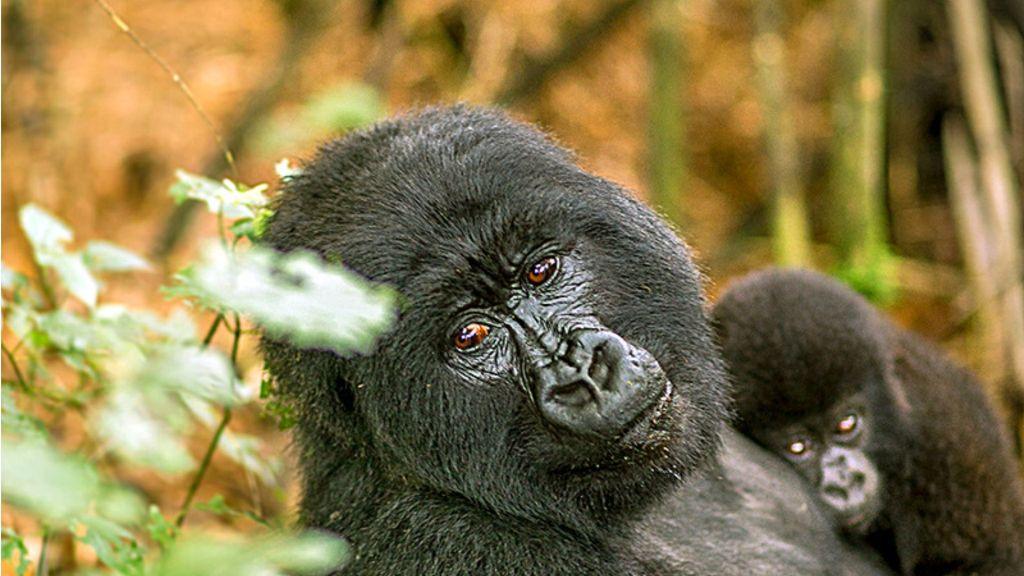
How to book gorilla and chimpanzee permits in Uganda. Seeing mountain gorillas and chimpanzees in the wild is the dream of almost every traveller who comes to Uganda. Both experiences need a permit, both are limited in number, and both are in high demand. Knowing how to book gorilla and chimpanzee permits in Uganda is the key to turning that dream into a confirmed trip, at the right price, on the right date and in the right place.
At Kenlink Tours and Travel, we book primate permits for our guests every week. In this guide we share everything we have learned: who issues the permits, the current and upcoming prices (including the new low-season discounts and the 2027 tariff changes), where you can trek, how to book step by step, the rules you must follow, and our best tips for getting the permits you want.
Why You Need a Permit for Gorillas and Chimpanzees
Mountain gorillas and chimpanzees are endangered great apes, and both share around 98% of their DNA with humans. That close relationship makes them vulnerable to human diseases such as colds and flu. To protect them, the Uganda Wildlife Authority (UWA) strictly limits the number of visitors who can see each habituated group every day. The permit is the tool that controls those numbers.
Permits also fund conservation. The money you pay supports ranger patrols, anti-poaching work, veterinary care, research and the communities living next to the parks. When local people benefit from tourism, they have a strong reason to protect the forests and the primates. Booking a permit is therefore not just paperwork. It is a direct contribution to the survival of these remarkable animals.
Who Issues Gorilla and Chimpanzee Permits in Uganda?
All gorilla permits, and chimpanzee permits in national parks, are issued by the Uganda Wildlife Authority, the government body that manages Uganda’s national parks and wildlife reserves. UWA manages chimpanzee tracking in Kibale Forest National Park and in Kyambura Gorge in Queen Elizabeth National Park. Some other chimpanzee sites, such as Budongo Forest and Kalinzu Forest, are forest reserves managed outside the national park system, and they have their own prices and booking arrangements.
In practice, the easiest and safest way to book is through a licensed Ugandan tour operator. International permits for gorilla trekking are reserved in licensed operators’ names, and the operator checks live availability, pays UWA, matches the permit to your transport and lodges, and handles everything at the park on the day. This avoids the risk of fake permits, wrong dates or a lodge in the wrong part of the forest.
Gorilla Permit Prices in Uganda
Gorilla trekking permits are priced the same in both gorilla parks, Bwindi and Mgahinga. Current UWA rates are:
| Visitor category | Standard gorilla permit | Low season (April, May, November) |
|---|---|---|
| Foreign non-residents | USD 800 | USD 600 |
| Foreign residents | USD 700 | USD 500 |
| Rest of Africa | USD 500 | USD 500 |
| East African citizens | UGX 300,000 | UGX 300,000 |
The good news for 2027 is that UWA’s new tariff, which takes effect on 1 January 2027, keeps the standard gorilla trekking permit at USD 800 for foreign non-residents. Uganda therefore remains one of the most affordable places in Africa to see mountain gorillas.
Gorilla Habituation Experience: this special permit allows up to four hours with a gorilla family that is still being habituated, in Bwindi’s Rushaga sector. It has cost USD 1,500 for foreign non-residents, and under the new tariff it rises to USD 1,800 from 1 January 2027.
Chimpanzee Permit Prices in Uganda
Chimpanzee permits are cheaper than gorilla permits and vary by location. Here are the key rates for foreign non-residents:
| Chimpanzee experience | Until 31 December 2026 | From 1 January 2027 |
|---|---|---|
| Kibale chimpanzee tracking | USD 250 | USD 300 |
| Kibale Chimpanzee Habituation Experience (full day) | USD 300 | USD 400 |
| Kyambura Gorge chimpanzee tracking (Queen Elizabeth NP) | USD 100 | USD 200 |
| Kibale low-season permit (April, May, November) | USD 200 (discounted low-season rate) | |
Foreign residents and East African citizens pay lower rates. Prices at forest reserves such as Budongo and Kalinzu are set separately and have not changed under the new UWA tariff. Permit prices can change, and operators are still confirming some details of the new tariff. We always confirm the exact current rate in writing in your quote before you pay.
Tip: if you are planning a 2027 trip, ask whether your permit is charged at the rate for the date you book or the date you trek. Clarifying this upfront avoids surprises.
The Low-Season Discount: Save on Both Permits
UWA has introduced discounted low-season permits for trekking in April, May and November. During these months, foreign non-residents pay USD 600 instead of USD 800 for gorillas, and USD 200 for chimpanzee tracking in Kibale. For a couple on a gorilla and chimp safari, that adds up to a saving of several hundred dollars, before any lodge discounts.
Low-season travel also means better permit availability, quieter lodges and lush green forests. The trade-off is more rain and muddier trails, so pack good boots and a rain jacket. Note that low-season permits may have stricter conditions than standard permits, such as full payment at booking and limited or no rescheduling. We explain the exact terms before you commit.
Where Can You Trek Gorillas in Uganda?
Bwindi Impenetrable National Park is home to most of Uganda’s habituated gorilla families. Permits are issued for one of four sectors:
- Buhoma: the northern sector, with easy access and a wide choice of lodges.
- Ruhija: the eastern sector, at higher altitude, quieter, and great for birding.
- Rushaga: the southern sector, with the most gorilla families and the only place for the habituation experience.
- Nkuringo: the south-western sector, with stunning views of the volcanoes but often steep treks.
Mgahinga Gorilla National Park, on the slopes of the Virunga volcanoes, has one habituated family, the Nyakagezi group. Permits are few, so book early. Mgahinga also offers golden monkey tracking and the Batwa Trail.
Your permit is valid only for the sector and date printed on it, so choosing the right sector is a key part of booking. We match the sector to your route, your lodge and your fitness level.
Where Can You Track Chimpanzees in Uganda?
- Kibale Forest National Park: the best place in Uganda for chimpanzees, with habituated communities, very high sighting rates, and 13 primate species in total. It is the only place offering the full-day Chimpanzee Habituation Experience. See our 3 days chimp tracking safari to Kibale National Park.
- Kyambura Gorge: a dramatic, sunken forest gorge in Queen Elizabeth National Park. Sightings are less certain than in Kibale, but the setting is spectacular and it fits easily into a savannah safari.
- Budongo Forest: part of the Murchison Falls Conservation Area, a beautiful mahogany forest that is good for combining chimps with a visit to Murchison Falls National Park.
- Kalinzu Forest: a forest reserve near Queen Elizabeth, a budget-friendly option with good sighting rates.
For most travellers, we recommend Kibale for chimps and Bwindi for gorillas. The two parks are linked by a scenic drive through Queen Elizabeth National Park, which makes a perfect primate and wildlife safari.
How to Book Gorilla and Chimpanzee Permits in Uganda: Step by Step
Here is exactly how the booking process works when you book with Kenlink Tours.
Step 1: Decide Your Travel Dates and Route
Start by choosing when you want to travel and how many days you have. Chimpanzee tracking and gorilla trekking usually happen on different days and in different parks, so plan for at least one day between them for travel. A typical order is chimps in Kibale first, then a game drive in Queen Elizabeth, then gorillas in Bwindi. If you are flying into Kigali, you might do gorillas first and finish with chimps. Keep one or two alternative dates in mind in case your first choice is sold out.
Step 2: Choose Your Experience Type
Decide whether you want standard tracking (about one hour with the gorillas or chimps) or a habituation experience (up to four hours with gorillas, or a full day with chimps). Habituation permits are far more limited and more expensive, so if they interest you, mention it early.
Step 3: Send Us Your Request
Contact us through our contact page with:
- Your preferred dates and any alternatives
- The number of travellers and their ages (the minimum age for gorillas is 15, and for chimps 12 to 15 depending on the site)
- Each traveller’s nationality and residency status, as this determines the permit price
- Your preferred Bwindi sector, if any
- Your budget and accommodation preference
Step 4: We Check Live Availability
We check real-time permit availability with UWA for your dates and preferred locations. If your first choice is sold out, we suggest the best alternatives, such as a different sector, a different date or the low-season months.
Step 5: Receive Your Quote and Itinerary
We send a clear, itemised quote showing the permit costs, transport, accommodation, meals and activities, along with a day-by-day itinerary. You can book permits only, but most travellers choose a full package so that the vehicle, driver-guide and lodges all match the permit dates and sectors.
Step 6: Confirm and Pay
Permits are only secured once they are paid for, so prompt payment is important, especially for peak-season dates. We tell you exactly what is due and when, and we accept secure payment methods. Our terms and conditions explain deposits, balances and cancellations.
Step 7: Send Passport Details
Every permit is issued in the name of a specific traveller, so we need passport details for each person. The name must match your passport exactly. Resident-rate travellers also need to send a copy of their valid work or residence permit.
Step 8: Receive Your Confirmation
Once UWA issues the permits, we send you a confirmation. On tracking day, your guide carries the permits and handles check-in at the park office. You just bring your passport, your gear and your excitement.
How Far in Advance Should You Book?
- Gorillas in peak season (June to September and December to February): 6 to 12 months ahead.
- Gorillas in shoulder months (March and October): 3 to 6 months ahead.
- Gorillas in low season (April, May and November): often a few weeks ahead, but earlier gives more choice.
- Gorilla and chimpanzee habituation experiences: as early as possible, because numbers are very small.
- Mgahinga gorilla permits: early, since there is only one family.
- Standard chimp permits in Kibale: 2 to 4 months ahead in peak season.
Always book your permits before your international flights, then plan your flights around the confirmed dates.
What Do Gorilla and Chimpanzee Permits Include?
Your primate permit typically includes:
- Park entry on the day of the activity
- A pre-trek briefing by UWA rangers
- A guided trek with experienced rangers and trackers
- Up to one hour with the gorillas or chimpanzees (longer on habituation experiences)
- A conservation and community contribution
- A certificate after gorilla trekking
Permits do not include transport, accommodation, meals, porters or tips. That’s why a complete safari package is usually the most convenient option.
Gorilla Trekking vs Chimpanzee Tracking: What’s the Difference?
Both are unforgettable, but the experiences are very different:
- Gorillas are calm and gentle. They spend much of their time feeding and resting on the forest floor, so you can watch them closely and quietly for a full hour. Treks can be long and steep.
- Chimpanzees are lively, noisy and fast. They move through the trees and along the ground, calling, drumming on roots and chasing each other. Following them is exciting and energetic, and they are often high in the canopy.
Seeing both on one trip gives you the full picture of Africa’s great apes. That is why gorilla and chimpanzee safaris are among our most requested trips.
What Happens on Chimpanzee Tracking Day
Chimpanzee tracking in Kibale runs in two shifts, a morning session starting at around 8:00 am and an afternoon session starting at around 2:00 pm. Your permit is issued for one of them. The morning shift is the most popular, because chimps are often most active early in the day, calling loudly and feeding in the fruiting trees. After check-in at the Kanyanchu visitor centre, rangers give a short briefing and divide visitors into small groups.
The walk itself is usually easier than gorilla trekking, on fairly flat forest trails, although you may have to move quickly when the chimps travel. Listen for their pant-hoots echoing through the forest, a sound you will never forget. Along the way, rangers point out other primates such as red colobus, black-and-white colobus and grey-cheeked mangabeys, as well as forest birds and butterflies. Once you find the chimps, you spend up to one hour watching them.
What Happens on Gorilla Trekking Day
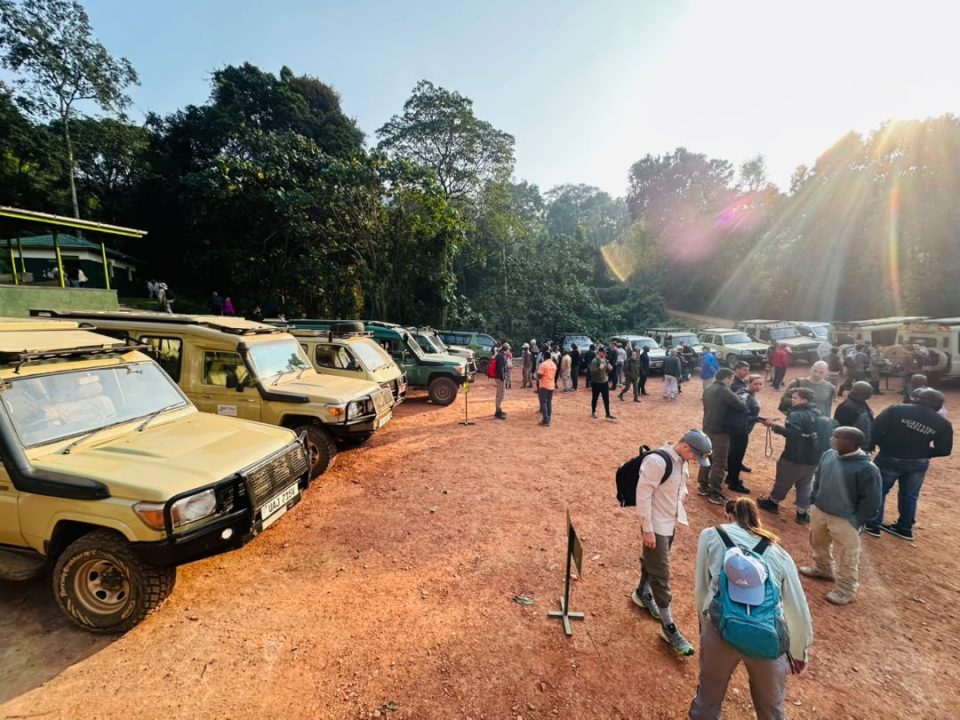
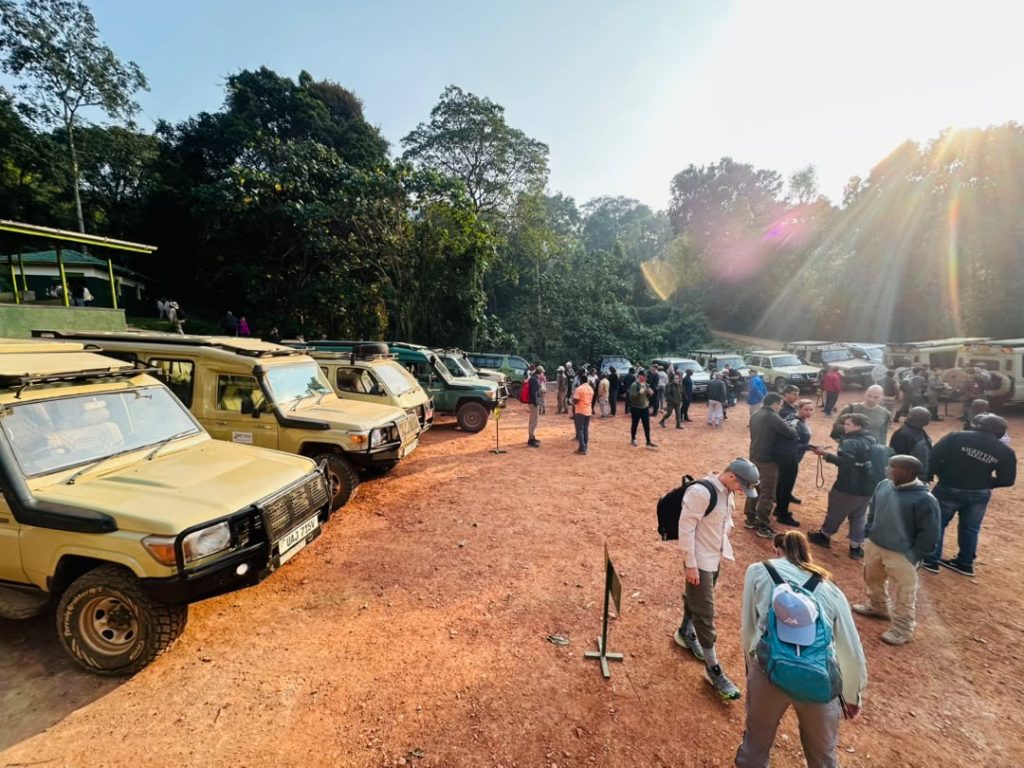
On gorilla trekking day, breakfast is early, and you check in at your sector’s park office by about 7:30 am. After a briefing, rangers assign each group of up to eight visitors to a gorilla family, often taking fitness into account. Trackers have already gone ahead to find where the gorillas nested the night before, and they guide your ranger by radio.
The trek can take from under an hour to six hours or more over steep, muddy ground. Hiring a porter for a small fee is highly recommended. Porters carry your bag, help you on difficult slopes and earn valuable income for local families. When you reach the gorillas, you leave your bags behind, put on your mask and spend one unforgettable hour with the family. Afterwards you return to the park office to receive your gorilla trekking certificate.
Other Primate Permits Worth Adding
While you are booking gorilla and chimpanzee permits, consider adding other primate experiences to your safari:
- Golden monkey tracking in Mgahinga: playful, endangered monkeys with bright golden-orange fur, found only in the Virunga volcanoes. Tracking is relatively easy and makes a perfect add-on to gorilla trekking in the south. Our 4-day golden monkey and gorilla trekking safari combines both.
- Bigodi Wetland Sanctuary: a community-run walk next to Kibale with several monkey species and over 200 bird species. It needs no advance permit and is booked locally.
- Primate walks in Bwindi and Kibale: nature walks to look for monkeys, birds and plants, which are ideal for the afternoon after your trek.
Tips for Paying for Your Permits
- Pay promptly. Permits are not held for long without payment, especially for popular dates.
- Use traceable payment methods. Bank transfer or card payment through an official company account protects you.
- Get a written confirmation. Make sure your confirmation shows the permit date, location, sector and the names of the travellers.
- Check the currency and rate. Permits are priced in US dollars for international visitors, so confirm which tariff applies to your trekking date.
- Keep copies. Save your invoice, receipt and confirmation in your email and on your phone.
Rules for Gorilla and Chimpanzee Tracking
- Minimum age: 15 for gorillas, and generally 12 to 15 for chimpanzees depending on the site and activity.
- Do not trek if you are unwell. Primates can catch human illnesses.
- Keep at least 7 to 8 metres from the animals.
- Wear a face mask when your ranger asks you to.
- Speak quietly, and don’t eat, drink or smoke near the primates.
- No flash photography.
- Never touch, feed or approach the animals.
- Stay with your group and follow your ranger’s instructions at all times.
- Your time with the animals is limited (one hour for standard tracking).
Rescheduling, Cancellations and Refunds
Primate permits are issued for a specific person, date and location. UWA’s rescheduling and refund rules are stricter than most travel bookings, and discounted low-season permits may not be reschedulable at all. Generally:
- Permits cannot be transferred to another person.
- Rescheduling standard permits may be possible, subject to availability and UWA conditions, but it is not guaranteed.
- Refunds depend on how far in advance you cancel, and late cancellations may not be refunded.
- If a ranger decides you are too ill to trek on the day, UWA has generally offered a partial refund, but you should not rely on it.
We explain the current conditions clearly before you pay, and we strongly recommend travel insurance that covers trip cancellation, illness and evacuation.
Best Gorilla and Chimpanzee Safari Packages
Booking your permits as part of a complete safari is the simplest way to make sure everything fits together. Here are some of our most popular primate itineraries:
- 5 days gorilla and chimpanzee tour in Uganda: Kibale chimps, Queen Elizabeth wildlife and Bwindi gorillas.
- 5 days chimps and gorilla safari: a focused primate adventure.
- 4 days Uganda primate tour: a short trip for travellers with limited time.
- 8-day Uganda gorilla, chimpanzee and wildlife safari: primates plus classic savannah game viewing.
- 10 days best of primate, wildlife and cultural tour: a complete, relaxed journey.
- 15-day Rwanda–Uganda primate and Big Five safari: the ultimate two-country primate adventure.
Only want gorillas? Try our 3 days best of Uganda gorilla safari. Starting in Rwanda? Our 5-day gorilla trekking safari from Kigali to Uganda and 3 days Bwindi gorilla safari from Kigali are ideal. Only interested in chimps? See our 3-day chimpanzee tracking safari. You can browse all our Uganda safaris too.
For more inspiration on how primate permits fit into a safari, see this 3-day chimpanzee tour in Uganda, a 5-day Uganda gorilla and chimpanzee safari, a 5-day gorilla and chimps safari starting from Rwanda, a quick 2-day Uganda gorilla tour from Kigali, or the longer 10-day Uganda primates and wildlife safari.
A Sample 5-Day Gorilla and Chimpanzee Itinerary
- Day 1 – Entebbe to Kibale: drive west via Fort Portal and the crater lakes to Kibale. Afternoon walk in the Bigodi Wetland Sanctuary.
- Day 2 – Chimpanzee tracking and Queen Elizabeth: morning chimp tracking in Kibale, then drive to Queen Elizabeth National Park for an evening game drive.
- Day 3 – Kazinga Channel and Ishasha to Bwindi: boat cruise or game drive, look for tree-climbing lions in Ishasha, then continue to Bwindi.
- Day 4 – Gorilla trekking: the highlight of the trip. In the afternoon, take an optional community or Batwa cultural experience.
- Day 5 – Return: drive back to Entebbe, take a domestic flight, or transfer to Kigali.
This itinerary needs one chimp permit and one gorilla permit per person. We book both and make sure your lodges and transport match each date and location.
Getting to the Parks
From Entebbe, Kibale is about 5 to 6 hours by road, and Bwindi about 8 to 10 hours. Domestic flights to airstrips near Bwindi and Kibale can shorten the journey. From Kigali, Rwanda, the southern Bwindi sectors and Mgahinga are only about 4 to 5 hours away by road, which makes Kigali a popular starting point for short gorilla trips. All our safaris use comfortable 4×4 safari vehicles with experienced driver-guides. See our safari vehicles.
What to Pack for Primate Trekking
- Waterproof hiking boots with good grip
- Long trousers and long-sleeved shirts in neutral colours
- A lightweight rain jacket
- Gardening gloves for gripping vegetation
- A daypack with water, snacks and insect repellent
- A camera with spare batteries (no flash)
- Face masks
- Your passport, needed for check-in
- A yellow fever vaccination certificate, required to enter Uganda
Common Permit Booking Mistakes to Avoid
- Booking flights first. Secure permits first, then book flights.
- Using unlicensed sellers. Always book through a licensed, reputable operator.
- Picking the wrong sector. Your lodge must be near the sector on your permit.
- Spelling names wrongly. Permit names must match passports exactly.
- Forgetting the age limits. Check minimum ages before booking for children.
- Leaving it too late. Peak-season gorilla and habituation permits sell out early.
- Ignoring the 2027 price changes. Confirm which rate applies to your trekking date.
- Skipping insurance. Permits are expensive, and refund rules are strict.
Booking for Groups and Families
If you are travelling as a group and want to trek with the same gorilla family, remember that each family takes a maximum of eight visitors per day. Larger groups may need to be split across families or sectors. Book as early as possible so we can keep your group together. Families with children under 15 can still enjoy game drives, boat cruises, nature walks and cultural visits while the adults trek. See our group tours for ideas.
Permits for Residents and East African Citizens
If you live in Uganda or elsewhere in East Africa, you can benefit from much lower permit rates. Foreign residents with a valid work or residence permit pay the resident rate, and citizens of East African Community countries pay in Uganda shillings at a fraction of the international price. To qualify, you must show proof when booking: a copy of your national ID or passport for citizens, or your work or residence permit for residents. You must also carry the original document on tracking day, because rangers check it at the park office. If the document doesn’t match, you may be asked to pay the difference. Local and regional travellers are an important part of Uganda’s tourism, and a weekend gorilla or chimp trip is easier to organise than many people think. We are happy to plan affordable trips for residents, families, schools and corporate groups.
Why Book Your Primate Permits with Kenlink Tours?
- Licensed local operator: a registered Ugandan company based in Kampala.
- Permit specialists: we check live availability and secure permits quickly.
- Expert planning: we match sectors, lodges and routes so everything fits.
- Up-to-date pricing: we track UWA tariff changes and confirm current rates in writing.
- Experienced driver-guides and reliable 4×4 vehicles.
- Transparent quotes: no hidden costs.
- Responsible tourism: we support conservation and local communities.
Read more about Kenlink Tours and discover why Uganda is called the Pearl of Africa on our About Uganda page.
Frequently Asked Questions
How do I book gorilla and chimpanzee permits in Uganda?
The easiest way is through a licensed Ugandan tour operator. Send your dates, number of travellers and nationality. The operator checks availability with the Uganda Wildlife Authority, you pay to secure the permits, and the operator confirms them in your name.
How much is a gorilla permit in Uganda?
USD 800 for foreign non-residents, USD 700 for foreign residents, USD 500 for other African citizens and UGX 300,000 for East African citizens. In April, May and November, foreign non-residents pay USD 600.
How much is a chimpanzee permit in Uganda?
In Kibale, foreign non-residents pay USD 250 until the end of 2026 and USD 300 from 1 January 2027, or USD 200 in the low-season months. Kyambura Gorge costs USD 100, rising to USD 200 in 2027.
Can I see gorillas and chimpanzees on the same trip?
Yes. A 4 to 5-day safari can include chimp tracking in Kibale and gorilla trekking in Bwindi, often with a game drive in Queen Elizabeth National Park on the way.
How far ahead should I book?
For peak-season gorilla permits, book 6 to 12 months ahead. For chimps and low-season gorillas, a few weeks to a few months is often enough.
Can I reschedule or cancel my permit?
Standard permits may be rescheduled subject to UWA conditions and availability, but it is never guaranteed. Low-season discounted permits may not be reschedulable. Travel insurance is strongly recommended.
What is the minimum age?
15 years for gorilla trekking. For chimpanzee tracking, the minimum age is generally 12 to 15 depending on the site.
Start Planning Your Gorilla and Chimpanzee Adventure
Now you know how to book gorilla and chimpanzee permits in Uganda: choose your dates and route, decide on your experience type, check availability through a licensed operator, pay promptly and confirm your details. With the new low-season discounts and the 2027 tariff changes, booking with an operator who stays up to date has never been more important.
Let Kenlink Tours take care of everything, from permits and lodges to vehicles and guides, so you can focus on the magic of meeting Africa’s great apes. Contact us today to check permit availability for your dates.