- EXPERT'S HELP
- +256789210067
- +256200955001
- info@kenlinktours.com


How is Transport from Kigali to Bwindi National Park?
October 10, 2026
Transfers from Entebbe to Bwindi for Gorilla Trek
October 11, 2026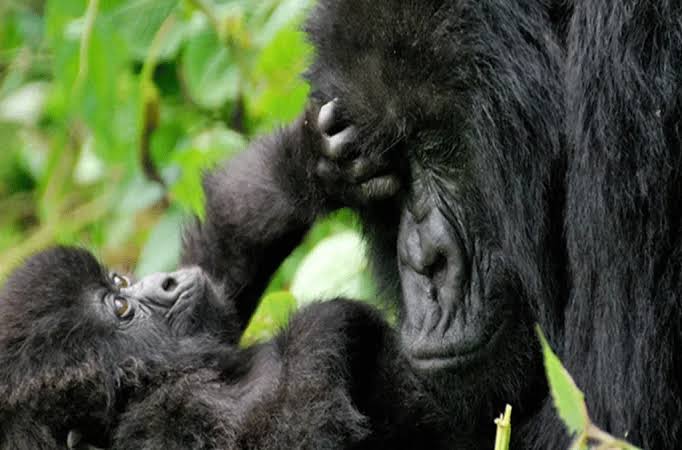
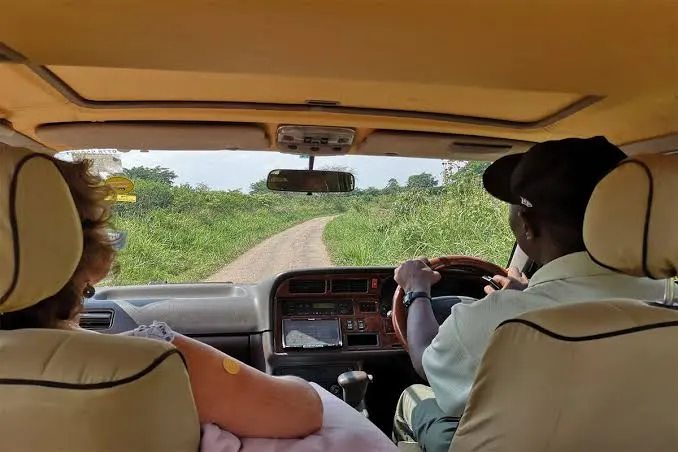
How long is a transfer from Kigali to Bwindi. You have your flight to Kigali booked and a gorilla permit for Bwindi in your inbox. Now comes the practical question every traveler asks us: how long is the transfer from Kigali to Bwindi? The answer shapes your whole trip, from when you leave the airport to which lodge you choose and whether you can trek the morning after you land.
At Kenlink Tours, we have been running safaris across Uganda and Rwanda since 2010, and the Kigali to Bwindi road is one we drive constantly. This guide gives you realistic 2026 travel times for every Bwindi sector, a leg-by-leg breakdown of the journey, the factors that make it shorter or longer, and the planning tips that turn a long drive into a smooth start to your gorilla adventure.
How Long Is a Transfer from Kigali to Bwindi? The Quick Answer
A transfer from Kigali to Bwindi takes about 4.5 to 5.5 hours to the southern sectors of Rushaga and Nkuringo, 5 to 6.5 hours to Ruhija in the east, and 7 to 9 hours to Buhoma in the north. These times include the border crossing into Uganda and a short comfort stop. Mgahinga Gorilla National Park, Uganda’s other gorilla park, is even closer at about 3.5 to 4.5 hours.
The single biggest factor is which Bwindi sector your gorilla permit is for. Bwindi is a large park, and its sectors are far apart by road. Knowing your sector is the first step to knowing your transfer time.
Kigali to Bwindi Travel Times by Sector (2026)
| Destination | Approx. distance | Typical transfer time | Border crossing |
|---|---|---|---|
| Rushaga (Bwindi south) | About 170 – 190 km | 4.5 – 5.5 hours | Cyanika |
| Nkuringo (Bwindi south) | About 170 – 190 km | 5 – 6 hours | Cyanika |
| Ruhija (Bwindi east) | About 160 – 190 km | 5 – 6.5 hours | Katuna (Gatuna) |
| Buhoma (Bwindi north) | About 250 – 290 km | 7 – 9 hours | Katuna (Gatuna) |
| Mgahinga Gorilla National Park | About 140 – 150 km | 3.5 – 4.5 hours | Cyanika |
Times are typical for a private 4×4 in dry weather, including border formalities and one short stop. Allow extra time in the rainy season.
Why Kigali Is Faster Than Entebbe for Bwindi
For years, most gorilla safaris began at Entebbe International Airport. The drive from Entebbe to Bwindi takes eight to eleven hours, often a full day each way. From Kigali, the southern sectors are roughly half that time. For many travelers, flying into Kigali saves a full day of driving at each end of the trip.
That is why we designed a range of Uganda gorilla safaris that start and end in Rwanda, such as the 2 Days Uganda Gorilla Safari Starting from Kigali and the 3 Days Bwindi Gorilla Safari Starting from Kigali. You land in Kigali, cross into Uganda, trek with gorillas at the lower Uganda permit price, and fly home from Kigali. Pick and Transfer Safaris, a partner operator based in Kisoro, explains the same idea on its Uganda gorilla safaris from Kigali page.
Kigali itself is an easy, safe and welcoming arrival city, with good hotels for a night before or after the trek. Pick and Transfer Safaris’ Kigali City guide has ideas for spending a spare day there.
The Kigali to Bwindi Drive, Leg by Leg (Southern Route)
Most of our guests trek in Bwindi’s southern sectors, so here is a typical journey from Kigali to Rushaga via the Cyanika border.
Kigali to Musanze – about 2 to 2.5 hours. The drive starts on a smooth highway winding north through Rwanda’s famous “thousand hills”: terraced farms, banana groves and tea plantations. The road is excellent but full of curves, so drivers keep a steady pace. Musanze is the gateway to Rwanda’s Volcanoes National Park and a good spot for a coffee or toilet stop.
Musanze to the Cyanika border – about 30 to 40 minutes. The road continues past the foothills of the Virunga volcanoes, with Mount Muhabura and Mount Gahinga rising on the horizon.
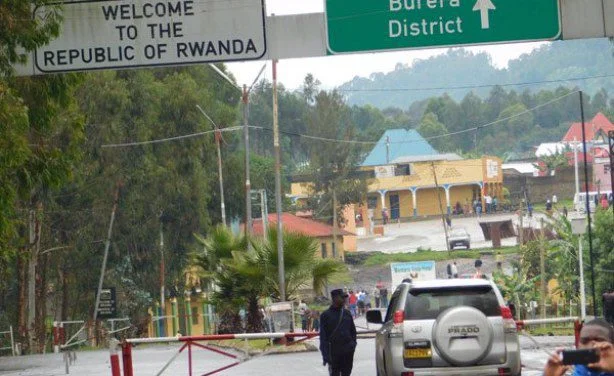
Border formalities – about 30 to 60 minutes. You complete Rwandan exit and Ugandan entry procedures, including passport checks and a Yellow Fever certificate check. Your driver-guide helps with the vehicle paperwork. On quiet days this is quick; when queues build up it takes longer.
Cyanika to Kisoro – about 15 to 20 minutes. A short tarmac stretch into Kisoro town, the main base for Bwindi’s southern sectors and Mgahinga. Note that Uganda drives on the left, while Rwanda drives on the right, so your driver switches sides here.
Kisoro to Rushaga – about 1 to 1.5 hours. The final stretch climbs into the hills on gravel and murram roads, with views over Lake Mutanda and the volcanoes. This is the slowest part of the journey, and it is where rain makes the biggest difference.
Add it up and you have about four and a half to five and a half hours, which is why we recommend leaving Kigali by late morning to reach your lodge in daylight.
Transfer Time to Each Bwindi Sector Explained
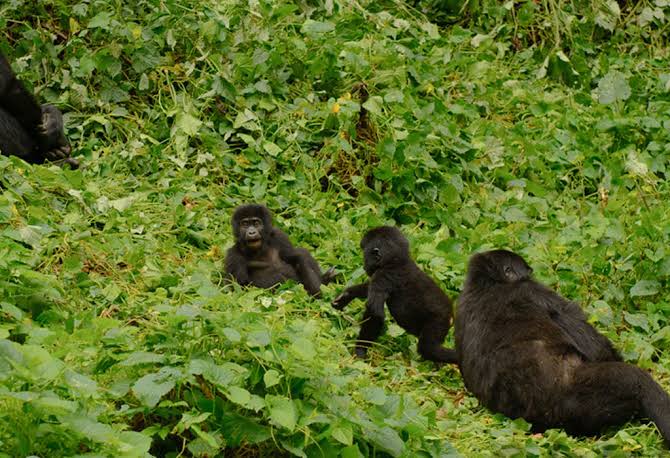
Rushaga (4.5 – 5.5 hours): The most popular sector for travelers from Kigali, with the largest number of habituated gorilla families in Bwindi. It is the best choice if you want the shortest drive and good permit availability.
Nkuringo (5 – 6 hours): Close to Rushaga, also reached via Cyanika and Kisoro, but the last stretch along the Nkuringo ridge is slower. The views of the Virunga volcanoes are among the best in Uganda.
Ruhija (5 – 6.5 hours): Usually reached via the Katuna (Gatuna) border and Kabale town, then up a high, winding road into the eastern part of the forest. Ruhija sits at around 2,300 metres and is popular with birdwatchers.
Buhoma (7 – 9 hours): Bwindi’s oldest and best-known sector, in the north of the park. From Kigali, the route goes through Katuna, Kabale and Kanungu, with long gravel sections. It is possible in one day, but it is a long one. Many travelers break the journey with a night in Kabale or at Lake Bunyonyi.
Mgahinga (3.5 – 4.5 hours): Not part of Bwindi, but Uganda’s other gorilla park and the closest to Kigali. Mgahinga has one habituated gorilla family and also offers golden monkey tracking. Pick and Transfer Safaris has a helpful Mgahinga Gorilla National Park guide and a Bwindi Impenetrable National Park guide if you are still choosing.
Cyanika vs Katuna: Which Border Will You Use?
Cyanika border is the right choice for Rushaga, Nkuringo, Kisoro and Mgahinga. It is smaller and usually quieter, and it connects directly with the Kigali–Musanze highway. For most Kigali-to-Bwindi transfers it is the fastest option.
Katuna (Gatuna) border is the main commercial crossing between Rwanda and Uganda, near Kabale. It is the better choice for Ruhija and Buhoma. It handles a lot of cargo traffic, so queues are more likely, but traveler formalities are usually efficient.
Border operating hours can change, so your driver-guide plans your departure to cross comfortably in daylight. If you are visiting both countries, the East Africa Tourist Visa allows multiple entries between Uganda, Rwanda and Kenya on one visa, which makes the crossing simpler. Read more on our Rwanda safaris and about Uganda pages.
What Makes the Kigali to Bwindi Transfer Longer or Shorter?
Your Bwindi sector. The biggest factor by far. Rushaga is roughly half the drive of Buhoma.
Weather and season. Rain turns the gravel roads near the trailheads muddy and slippery, slowing the last hour of the drive. In the wet seasons of March to May and October to November, allow an extra 30 to 90 minutes.
Border queues. Most crossings take under an hour, but busy days, public holidays and heavy cargo traffic at Katuna can add time.
Kigali traffic. Leaving the city at rush hour, roughly 7 to 9 am and 5 to 7 pm, adds time. A late-morning departure usually avoids the worst of it.
Umuganda. On the last Saturday of each month, Rwanda holds Umuganda, a national morning of community work, and traffic is restricted for several hours in the morning. If your transfer falls on that day, plan to leave after it ends or travel on Friday instead.
Stops along the way. A coffee in Musanze, a lunch break, photos of the volcanoes or a stop at a craft market all add time, and they are often worth it. Tell your driver what you would like in advance.
Vehicle type. A 4×4 handles the gravel sections much faster and more safely than a saloon car, especially after rain.
Lodge location. Some lodges sit right at the trailhead; others are 30 to 60 minutes away on rough roads. Check exactly where your lodge is, not just the sector.
Best Time of Year for the Kigali to Bwindi Transfer
Dry seasons (December to February and June to September): Firmer roads, more predictable travel times, and the best gorilla trekking conditions. These are also the busiest months for permits and lodges.
Wet seasons (March to May and October to November): Slower roads near the park, but greener landscapes, fewer visitors and often better permit availability. The main highway sections are unaffected; it is the last stretch to the lodge that slows down.
Transfers and gorilla treks run every day of the year, so any month works with sensible timing.
Best Time of Day to Leave Kigali
For the southern sectors, we usually recommend leaving Kigali between 9 am and midday. That avoids morning rush hour, gets you through the border in good time, and brings you to your lodge in daylight, typically by mid to late afternoon. If you are landing at Kigali International Airport, a flight that arrives in the morning works perfectly. If your flight lands in the afternoon or evening, spend the night in Kigali and travel the next morning.
For Buhoma, start early, around 6 to 7 am, or split the journey with an overnight stop. We avoid driving the final gravel sections after dark whenever possible for safety reasons.
Can You Drive from Kigali and Trek on the Same Day?
It is possible but demanding. Gorilla briefings start around 7:30 to 8:00 am, so a same-day trek means leaving Kigali in the very early hours, around 2 or 3 am, and driving through the night to the southern sectors. One-day trips like this do exist, including Pick and Transfer Safaris’ 1 Day Uganda Gorilla Safari Starting from Kigali, but most travelers prefer to arrive the day before, sleep near the park and trek fresh.
Our recommendation is simple: transfer on day one, trek on day two, and return to Kigali on day two or day three. Our 2 Days Rwanda to Uganda Gorilla Trekking Safari follows exactly this pattern.
Which Vehicle Is Best for the Kigali to Bwindi Transfer?
Toyota Land Cruiser (safari version): Our most popular choice. High ground clearance, a strong 4×4 system, plenty of luggage space and a pop-up roof for game viewing if you continue to other parks.
Toyota RAV4 or similar 4×4: Comfortable and economical for one to three travelers on a straightforward transfer.
Extended Land Cruiser or minibus: For larger groups.
Saloon cars are not recommended. The final gravel stretches to Rushaga, Nkuringo, Ruhija and Buhoma need a proper 4×4, especially after rain. Explore our fleet on our car hire page, where you can choose a self-drive 4×4 or a vehicle with an experienced driver-guide.
How to Plan Your Gorilla Trek Around the Transfer
Book your permit first. Your gorilla permit is issued for a specific date and sector. Once you know the sector, you know the transfer time, and the rest of the trip falls into place. Under the Uganda Wildlife Authority tariff for July 2024 to June 2026, a gorilla trekking permit costs US$800 per person for foreign non-residents, far less than the US$1,500 charged in Rwanda.
Choose a sector that matches your flights. If you are flying in and out of Kigali, Rushaga, Nkuringo or Mgahinga keep the drive short. If your permit is for Buhoma, consider an overnight stop or a longer itinerary.
Stay close to your trailhead. Book a lodge in the same sector as your permit so trek-day mornings are relaxed.
Leave a buffer before your flight home. Treks can last from one to eight hours. If you are driving back to Kigali the same day, an evening or next-day flight is safest.
Kigali to Bwindi Gorilla Packages
The easiest way to handle the transfer is to book a package that includes it, along with your permit, lodge, meals and a professional driver-guide. Popular options from Kenlink Tours include:
- 2 Days Uganda Gorilla Safari Starting from Kigali: transfer, trek and return in two days.
- 3 Days Bwindi Gorilla Safari Starting from Kigali: a more relaxed pace with a full day either side of the trek.
- 5-Day Gorilla Trekking Safari from Kigali to Uganda: gorillas plus more time to explore southwestern Uganda.
- 4-Day Rwanda–Uganda Golden Monkey and Gorilla Trekking: golden monkeys and gorillas across both countries.
- 5 Days Uganda Rwanda Double Gorilla Safari: trek in both Uganda and Rwanda.
- 10 Days Uganda Rwanda Combining Safari: a full journey through both countries.
If you also want to trek in Rwanda, see our 3-Day Gorilla Trekking in Volcanoes National Park and 3 Days Rwanda Gorilla Safari. Travelers starting in Entebbe instead can choose the 3-Day Uganda Gorillas Safari.
For comparison, Pick and Transfer Safaris offers the 2 Days Uganda Gorilla Tour Starting from Kigali, the 3 Days Uganda Gorilla Safari from Rwanda and the 5 Days Uganda Gorilla and Chimps Safari Starting from Rwanda.
Extending Your Trip After Bwindi
Once you have made the journey from Kigali, it is worth seeing more of the region:
- Queen Elizabeth National Park, a few hours north of Bwindi, for game drives, tree-climbing lions and the Kazinga Channel. See our 3 Days Queen Elizabeth National Park trip and Pick and Transfer Safaris’ Queen Elizabeth National Park guide.
- Volcanoes National Park in Rwanda, on the way back to Kigali, for golden monkeys and hiking. Pick and Transfer Safaris has a good Volcanoes National Park guide.
- Lake Kivu, for a relaxing finish. Our 6-Day Rwanda Adventures – Great Apes and Lake Kivu includes it.
- Akagera National Park, Rwanda’s Big Five savannah park, on our 3-Day Akagera Game Drive Safari.
Documents You Need for the Transfer
- A passport valid for at least six months, with blank pages
- A Uganda visa, or the East Africa Tourist Visa if you are visiting Uganda, Rwanda and Kenya
- Rwanda entry approval if your nationality needs it
- A Yellow Fever vaccination certificate
- Your gorilla permit confirmation and lodge details
- Some US dollars in newer notes for small expenses
Rwanda bans single-use plastic bags, and they may be confiscated at the border, so pack souvenirs in cloth or paper bags.
Tips for a Comfortable Kigali to Bwindi Transfer
- Leave Kigali by late morning to reach your lodge in daylight.
- Keep your passport and Yellow Fever card handy, not in your main luggage.
- Carry water and snacks for the drive.
- Take motion-sickness tablets if you are sensitive. The road has many curves.
- Charge your camera. The views of the Virunga volcanoes are spectacular.
- Check your lodge’s exact location, not just the sector name.
- Allow extra time in the rainy season.
- Use a 4×4 with an experienced driver-guide who knows the border and the roads.
How to Book Your Kigali to Bwindi Transfer with Kenlink Tours
- Send us your details through our contact page: arrival date, permit sector, group size and flight times.
- Receive a clear quote with vehicle type, travel times and inclusions.
- Confirm your booking and get your driver’s name and phone number.
- Meet your driver at Kigali airport or your hotel and enjoy the journey.
Learn more about us, browse all our Uganda safaris, or join one of our group tours to share transport costs. Our full terms and conditions are available on our website.
Frequently Asked Questions About the Kigali to Bwindi Transfer
How many hours is it from Kigali to Bwindi?
About 4.5 to 5.5 hours to Rushaga, 5 to 6 hours to Nkuringo, 5 to 6.5 hours to Ruhija, and 7 to 9 hours to Buhoma, including the border crossing.
How many kilometres is Kigali from Bwindi?
Roughly 170 to 190 km to the southern and eastern sectors, and about 250 to 290 km to Buhoma in the north, depending on the route and exact lodge location.
Is Kigali closer to Bwindi than Entebbe?
Yes. Kigali to the southern sectors takes about half the time of the eight to eleven-hour drive from Entebbe, which is why many travelers fly into Kigali for Uganda gorilla trekking.
Which Bwindi sector is closest to Kigali?
Rushaga is the closest Bwindi sector to Kigali, followed closely by Nkuringo. Mgahinga Gorilla National Park, near Kisoro, is closer still.
Can I go from Kigali to Bwindi and back in one day?
It is possible with a very early start, but it is a long and tiring day with two border crossings and a trek. Most travelers prefer at least one night near the park.
Which border do I cross from Kigali to Bwindi?
Cyanika for Rushaga, Nkuringo and Mgahinga, and Katuna (Gatuna) for Ruhija and Buhoma.
Is the road from Kigali to Bwindi safe?
Yes. It is a well-used tourism route. Traveling in daylight with an experienced driver in a well-maintained 4×4 keeps the journey safe and comfortable.
Is there a flight from Kigali to Bwindi?
There are no scheduled flights from Kigali to Bwindi. Domestic flights to the airstrips near Bwindi leave from Entebbe. From Kigali, the road transfer is the quickest and most practical option.
How long is a transfer from Kigali to Bwindi
So, how long is a transfer from Kigali to Bwindi? For most travelers heading to the southern sectors, about four and a half to five and a half hours, a scenic half-day drive through Rwanda’s green hills and the shadow of the Virunga volcanoes. Ruhija and Buhoma take longer, but with good planning, every sector is within reach. Choosing the right sector, leaving at the right time, and traveling with an experienced driver-guide make the journey part of the adventure rather than a chore.