- EXPERT'S HELP
- +256789210067
- +256200955001
- info@kenlinktours.com


Weekend Short Gorilla Trips in Uganda from Kigali
May 10, 2026
Explore Bwindi Volcanoes & Queen Elizabeth National Park Safaris
May 11, 2026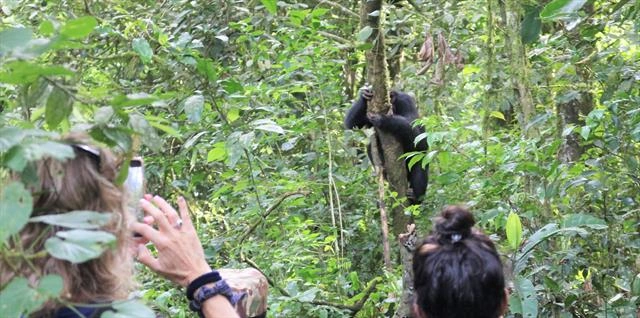
Deep in the heart of western Uganda, where ancient trees form cathedral-like canopies and the air hums with birdsong, lies one of Africa’s most extraordinary wildlife destinations — Kibale Forest National Park. For travellers who dream of sitting face-to-face with our closest living relatives, chimpanzee tracking in Kibale is not just an activity; it is a life-changing encounter that stays with you long after the forest has faded from view. At Kenlink Tours, we have guided countless adventurers into these emerald depths, and every single time, the forest delivers something unforgettable.
Why Kibale Forest Is the Chimpanzee Capital of the World
Kibale Forest National Park sits at an elevation of roughly 1,100 to 1,590 metres above sea level, sprawling across 795 square kilometres of moist evergreen rainforest in the Kabarole and Kamwenge districts of western Uganda. What makes it truly exceptional is its primate density — the park is home to an estimated 1,500 chimpanzees, making it the single best place on Earth to track these remarkable animals in the wild. Beyond chimpanzees, Kibale shelters 12 other primate species, including red colobus monkeys, L’Hoest’s monkeys, olive baboons, and the elusive grey-cheeked mangabey. The Uganda Wildlife Authority (UWA) manages the park with a careful conservation approach, ensuring that habituated chimpanzee communities can be visited while their natural behaviours remain undisturbed.
For wildlife enthusiasts visiting Uganda, combining Kibale with a broader Uganda gorilla and primate safari creates an itinerary that simply cannot be matched anywhere else on the continent.
What Happens on a Chimpanzee Tracking Experience
The morning of a chimpanzee trek begins with an early briefing at the Kanyanchu Visitor Centre, typically at 7:30 AM. Uganda Wildlife Authority rangers and expert guides divide visitors into small groups — a maximum of six people per group — and lay out the ground rules: stay quiet, maintain a seven-metre distance from the chimpanzees, do not eat or drink in their presence, and never make sudden movements. These rules are not restrictions; they are what make the experience so raw and intimate.
Once you step into the forest, the tracking begins in earnest. Your guide reads the forest like a map — following fresh knuckle prints in the mud, scanning the canopy for swaying branches, listening for the distant crescendo of chimpanzee calls known as pant-hooting. The forest floor is a mosaic of roots, fallen leaves, and shafts of golden morning light. You might walk for thirty minutes, or you might trek for two hours. The unpredictability is part of the magic.
When contact is made, time seems to slow down. A massive male might drop from the canopy barely metres away, regard you with calm amber eyes, and move on as if you are simply part of the landscape. Juveniles wrestle and tumble nearby. A mother nurses her infant in the fork of a strangler fig. These are not zoo animals performing for an audience — they are wild, complex, deeply social beings living entirely on their own terms, and you are a temporary, silent guest in their world.
Each tracking permit allows one full hour with the chimpanzees. Many travellers describe it as the fastest hour of their lives.
Habituation Experience: Go Deeper Into the Forest
For those who want something beyond the standard tracking permit, Kibale offers a rarer and more immersive option — the Chimpanzee Habituation Experience (CHEX). Instead of spending one hour with a habituated community, participants join UWA researchers from dawn to dusk, following a chimpanzee group that is still being slowly accustomed to human presence. This full-day experience is limited to just four people per day and provides an unfiltered window into chimpanzee society — feeding, territorial calls, grooming hierarchies, and the full theatre of daily forest life.
The habituation experience is considerably more physically demanding, covering longer distances over rougher terrain. It is best suited to travellers who are moderately fit and have a genuine interest in primate research and conservation. Our Uganda in-depth safari packages can be tailored to include the CHEX as a centrepiece experience.
The Best Time to Visit Kibale Forest
Kibale Forest can be visited year-round, but the experience changes with Uganda’s seasons. The dry seasons — from June to August and from December to February — are considered the best months for chimpanzee tracking. The forest paths are firmer, the vegetation is slightly less dense, and chimpanzees tend to descend closer to the forest floor in search of water and fallen fruit, making sightings more frequent and more prolonged.
The wet seasons (March to May, September to November) bring their own rewards. The forest is at its most lush and vivid, waterfalls run full, and the birding is exceptional — Kibale and the adjacent Bigodi Wetland Sanctuary together host over 375 bird species. For birders, the wet season can actually be the more rewarding time to visit. Tracking remains possible throughout the year, though forest floors can be slippery after heavy rain, so a good pair of hiking boots and long waterproof trousers are always recommended.
For detailed advice on timing your trip around Uganda’s seasons, visit our Uganda travel guide or get in touch with our team directly.
Combining Kibale With Other Uganda Highlights
Most travellers who visit Kibale pair it with Queen Elizabeth National Park, which lies just to the south. The famous Ishasha sector of Queen Elizabeth is home to Uganda’s celebrated tree-climbing lions — an extraordinary sight that contrasts wonderfully with the forest intimacy of Kibale. The drive between the two parks passes through the Kyambura Gorge, where another habituated chimpanzee community can sometimes be tracked in the steep forest ravine — though sightings here are less reliable than in Kibale.
Further east, Bwindi Impenetrable National Park is the world’s premier destination for mountain gorilla trekking, and many travellers combine it with Kibale on a single Uganda circuit. The contrast between tracking chimpanzees in Kibale’s humid lowland rainforest and tracking gorillas through Bwindi’s misty montane terrain captures Uganda’s extraordinary ecological range within a single journey. Our Uganda gorilla trekking tours include Bwindi permits, transport, and expert guiding throughout.
Uganda’s compact geography — often called the “Pearl of Africa” — means you can visit Kibale, Queen Elizabeth, and Bwindi in as little as seven days while experiencing a breadth of wildlife that would take weeks to match elsewhere in Africa.
Practical Information for Your Kibale Trek
Permits: Standard chimpanzee tracking permits cost USD 250 per person and must be booked in advance through the Uganda Wildlife Authority or through a licensed operator such as Kenlink Tours. Habituation permits cost USD 300 per person per day. Permits sell out quickly, especially during the peak dry season months, so early booking is strongly advised.
What to pack: Lightweight, neutral-coloured clothing that covers arms and legs; sturdy waterproof hiking boots; a light rain jacket; insect repellent; sunscreen; a hat; and a small day pack with water and snacks for after the trek. Cameras are welcome — flash photography is not permitted near the chimpanzees.
Physical requirements: The standard tracking experience is accessible to most reasonably fit travellers. Paths can be steep and slippery in places, but guides adjust the pace to suit the group. The habituation experience requires a higher level of fitness and stamina.
Accommodation: Fort Portal, the nearest town to Kibale, has a growing range of excellent lodges and boutique hotels. Options range from comfortable mid-range camps within or adjacent to the park to high-end safari lodges. Our team can recommend and book the right property for your budget and travel style on our Uganda accommodation page.
Conservation and Responsible Tourism
Every tracking permit purchased contributes directly to the protection of Kibale Forest. A portion of permit revenue funds anti-poaching patrols, habitat restoration, and community programmes in the villages surrounding the park — programmes that give local people a tangible stake in the forest’s survival. The Jane Goodall Institute and other international conservation organisations also collaborate with UWA on long-term chimpanzee research across Uganda.
When you choose to track chimpanzees through a responsible operator like Kenlink Tours, you are not simply buying a once-in-a-lifetime experience. You are investing in the future of the forest, the communities that depend on it, and the chimpanzees themselves.
Ready to Meet the Chimpanzees?
Kibale Forest is waiting. Whether you are a first-time visitor to Africa or a seasoned safari-goer looking for something beyond the plains, chimpanzee tracking in Uganda offers a depth of encounter that is genuinely rare in modern travel. The forest will surprise you. The chimpanzees will humble you. And Uganda, in its boundless generosity, will absolutely enchant you.
Get in touch with our team at Kenlink Tours today to start planning your Kibale Forest experience. We handle everything — permits, transport, accommodation, and expert guiding — so that all you have to do is step into the forest and let it work its magic.
Kenlink Tours is a licensed Ugandan tour operator specialising in primate safaris, gorilla trekking, and wildlife adventures across East Africa. Explore all our Uganda safari packages here.