- EXPERT'S HELP
- +256789210067
- +256200955001
- info@kenlinktours.com


Cultural Experiences to Add to Your Uganda Safari
May 7, 2026
Best Short Uganda Safaris for Busy Travelers
May 7, 2026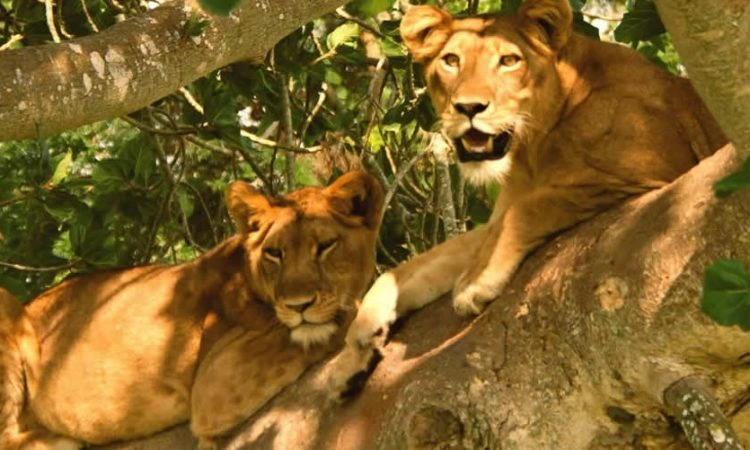
Safari Activities Around Queen Elizabeth National Park. Queen Elizabeth National Park is Uganda’s most visited national park, and it is not hard to understand why. Spread across 1,978 square kilometres of southwestern Uganda, it encompasses savannah, tropical forest, wetlands, volcanic craters, and two major lakes — Lake Edward and Lake George — connected by the famous Kazinga Channel. The park supports over 95 mammal species and more than 600 bird species, including some of the most photogenic and sought-after wildlife in East Africa. Its diverse ecosystems pack an extraordinary range of activities into a relatively compact area, meaning that two or three days here can yield game drives, boat safaris, primate tracking, world-class birding, cultural encounters, and geological wonders without a single experience feeling rushed. This guide takes you through every major safari activity available in and around Queen Elizabeth National Park, what to expect from each, and how to plan the most rewarding possible visit.
Game Drives — Kasenyi Plains and the Mweya Peninsula
The morning game drive in Queen Elizabeth National Park is where the classic African safari experience plays out at its finest. The Kasenyi Plains, located in the northern sector of the park around the Mweya Peninsula, are the primary game drive circuit and offer consistently excellent wildlife viewing across a landscape of open savannah punctuated by acacia woodland and seasonal wetlands. Uganda kobs — elegant medium-sized antelopes that occur here in spectacular numbers — move across the plains in rippling herds. Topi, waterbuck, warthogs, and giant forest hogs add to the scene. Elephants move in large, unhurried family groups between water and grazing. And where elephants and kobs gather in such numbers, lions inevitably follow.
Queen Elizabeth National Park’s wildlife includes a well-established lion population that is regularly encountered on morning game drives, particularly in the Kasenyi sector where the open terrain gives excellent sightlines. The park is also home to leopards, which are most frequently spotted along the Channel Drive that parallels the Kazinga Channel — a quiet game drive road where the combination of water, shade, and prey animals creates ideal leopard territory. Buffalo are omnipresent and can be encountered in herds of hundreds. Early morning departures — typically 6:30 AM to 7:00 AM — deliver the best conditions: cool temperatures, animals at their most active, and the light for photography at its most beautiful. Evening drives from around 4:00 PM to 6:30 PM offer the second prime window and often produce the most dramatic lighting of the day.
The Kazinga Channel Boat Cruise — Uganda’s Premier Waterway Safari
If a game drive is the quintessential land-based safari experience, the Kazinga Channel boat cruise is its waterborne counterpart — and for many visitors, it proves to be the more spectacular of the two. This 32-kilometre natural freshwater channel connecting Lake Edward and Lake George is one of Africa’s most productive wildlife viewing corridors. Its banks support extraordinary concentrations of animals that simply cannot be accessed or observed this closely from a vehicle.
The hippo population alone is staggering — approximately 2,000 individuals inhabit the channel, making it one of the densest hippo concentrations in Africa. Boat cruises drift within metres of pods lazing in the shallows, surfacing, submerging, and occasionally yawning to display the alarming scale of their dentition. Nile crocodiles — some of the largest on the continent — bask motionless on every exposed bank. Elephant herds wade into the margins to drink and bathe, their trunks sweeping great arcs of water. Buffalo congregate in dark, shuffling masses along the channel’s edge. And over all of this, in the trees and reeds and open water, are the birds: African Fish Eagles crying from fever trees, Pied Kingfishers hovering and plunging, Great White Pelicans riding thermals above the channel, African Skimmers gliding with their lower mandibles trolling the surface, and the occasional Goliath Heron standing in motionless silhouette.
Two-hour boat cruises are operated by both the Uganda Wildlife Authority (UWA) and Mweya Safari Lodge, departing from the Mweya jetty at set morning and afternoon times. The cost is approximately USD 30 per person — representing outstanding value for one of the most rich and accessible wildlife experiences in Uganda. Booking through Kenlink Tours guarantees your spot on the morning departure, which is typically the most productive in terms of animal activity and light.
The Ishasha Sector — Tree-Climbing Lions of the South
No activity guide to Queen Elizabeth National Park would be complete without dedicated coverage of the Ishasha Sector, located in the park’s remote southern reaches, approximately two to three hours by road from the Mweya area. Ishasha is globally famous for one reason: its tree-climbing lions. These are among the most photographed and most talked-about wildlife subjects in Uganda — lions that have developed the extraordinary habit of ascending ancient fig trees and lounging in the branches several metres above the ground, sometimes with three or four members of a pride draped across adjacent boughs like living ornaments.
This behaviour, documented in only two places in the world — Ishasha and Tanzania’s Lake Manyara — is believed to be an adaptation to both ground-level insects and the elevated temperature of the savannah floor during the heat of the day. Whatever its origins, the sight of a pride of lions in a tree at golden hour, surveying an open plain of topi and buffalo below, is one of those images that defines what an African safari can be at its absolute best. Ishasha game drives are conducted primarily in the morning and evening, with park rangers tracking the known lion prides and directing vehicles to their current locations. A dedicated Ishasha visit requires at least a half-day, and because the sector is far from Mweya, many itineraries include an overnight at Ishasha Wilderness Camp — one of Uganda’s most atmospherically positioned lodges, set along the Ntungwe River in the heart of lion country.
Kyambura Gorge — Chimpanzee Tracking in the Valley of Apes
Cut into the floor of the Great Rift Valley escarpment like a deep green wound, Kyambura Gorge is one of Queen Elizabeth National Park’s most dramatic and least celebrated features. This lush, forested canyon — carved by the Kyambura River and ringed by open savannah on all sides — creates a remarkable island of riverine forest in the middle of a grassland landscape, and it is home to a small but habituated community of chimpanzees. Often called the “Valley of Apes,” Kyambura offers a chimpanzee tracking experience that is fundamentally different from anything available in Kibale or Budongo — not because of greater chimp numbers (the population here is smaller), but because of the physical drama of the setting itself.
Descending into the gorge with a guide — the walls rising on either side, the forest closing overhead, the sounds of the open park disappearing behind — creates an atmosphere of genuine discovery. Chimpanzee tracking in Kyambura costs approximately USD 100 per person, making it more affordable than Kibale’s USD 250 permit. The experience typically lasts two to three hours and is combined naturally with a morning game drive in the Kasenyi Plains, making for an extremely full and satisfying safari day. The gorge is also excellent for birding, with many forest species visible that are absent from the open savannah sections of the park.
Birdwatching — Over 600 Species Across Every Habitat
Queen Elizabeth National Park holds the record for Uganda’s single richest birding destination by species count. With over 600 recorded species spread across savannah, wetland, crater lake margins, forest edge, and the Kazinga Channel, the park offers birding experiences as diverse as the habitats themselves. The birdwatching opportunities available here are extraordinary whether you are a dedicated lister or simply a traveller who enjoys the spectacle of a remarkable bird.
Key species to watch for include the African Skimmer — one of the Kazinga Channel’s most elegant residents — the Martial Eagle soaring over the Kasenyi Plains, the Black-bellied Bustard stalking through tall grass, the Papyrus Gonolek calling from papyrus swamps, the secretive Shoebill Stork occasionally sighted in the wetter margins, and the Malachite Kingfisher perched like a jewel on waterside reeds. The Maramagambo Forest in the park’s southern sector is another exceptional birding zone, with forest species including the African Broadbill and the blue-headed sunbird. A dedicated birding morning — combining the Channel Drive with a Mweya Peninsula walk — can produce over 100 species in a single session during peak months.
The Katwe Salt Crater — A Living Geological and Cultural Wonder
One of Queen Elizabeth National Park’s most unusual and overlooked attractions is the Katwe Salt Crater, located a short distance from the Mweya Peninsula. Katwe is a volcanic explosion crater that has, over millennia, filled with salt-saturated brine, creating a brilliant white salt flat that has been harvested by local communities for centuries. Today, the Katwe salt works remain fully operational — a working example of a traditional industry that has survived into the modern era entirely unchanged.
Visiting Katwe is both a geological marvel and a cultural encounter. Guides explain the volcanic history of the region (Queen Elizabeth sits within one of the most volcanically active zones of the Albertine Rift), while local workers demonstrate the traditional process of salt extraction using wooden scoops and earthen storage containers. The brilliant white salt against the dark crater walls and the blue sky above creates extraordinary photographic compositions. A Katwe visit is typically combined with a Kasenyi game drive and takes no more than an hour, but it adds a dimension of human and geological story to the safari that game drives alone cannot provide.
Guided Nature Walks and Community Visits
Beyond the vehicle-based and boat activities, Queen Elizabeth National Park offers guided walking experiences that access areas and perspectives unavailable from a 4×4. Guided nature walks on the Mweya Peninsula allow close engagement with the peninsula’s resident warthogs, hippos, monitor lizards, and an extraordinary density of birds — the kind of encounter where you are at eye level with the landscape rather than elevated in a vehicle. Experienced guides narrate the ecological relationships between species, the geology of the Rift Valley escarpment visible from the peninsula’s edge, and the conservation history of this UNESCO-recognised Biosphere Reserve.
Community visits to fishing villages along the Kazinga Channel offer insight into the human story of life alongside the park’s wildlife. These communities share their shoreline with hippos, crocodiles, and elephants — a coexistence that generates both livelihood and daily challenge — and their perspective on the park’s wildlife is entirely different from that of the visiting safari traveller. Kenlink Tours arranges community visits as part of the broader Big Five and Primate Safari itinerary, ensuring that the cultural dimension of Queen Elizabeth is not overlooked.
Best Time to Visit and Where to Stay
The best time to visit Queen Elizabeth National Park for game drives and boat safaris is during the dry seasons — January to February and June to August — when animals gather predictably around water sources and the roads remain passable by safari vehicle. The wet season months (March to May and September to November) bring spectacular green landscapes, excellent birding with migratory species present, and notably fewer visitors — often producing more intimate and less crowded experiences, particularly on the Kazinga Channel.
Accommodation in and around Queen Elizabeth ranges from some of Uganda’s finest luxury properties to well-positioned mid-range and budget options. Top luxury lodges include Mweya Safari Lodge on the peninsula with sweeping channel and lake views, Kyambura Gorge Lodge on the gorge’s edge, Ishasha Wilderness Camp for the tree-climbing lion experience, and Katara Lodge perched dramatically on the Rift Valley escarpment. Mid-range options including Enganzi Game Lodge deliver excellent comfort and wildlife access at more accessible price points.
Planning Your Queen Elizabeth National Park Safari
Queen Elizabeth National Park is almost always part of a longer Uganda safari itinerary — it pairs naturally with Bwindi Impenetrable National Park for gorilla trekking to the southwest, with Kibale Forest for chimpanzee tracking to the north, and with the drive south to Bwindi through the Ishasha Sector for tree-climbing lion game drives en route. A standalone visit of two to three days allows enough time for a morning and evening game drive, a Kazinga Channel boat cruise, a Kyambura Gorge chimpanzee trek, and a Katwe crater visit.
The 10-Day Uganda Wildlife Safari from Kenlink Tours incorporates Queen Elizabeth alongside Murchison Falls, Kibale Forest, and Bwindi in a flowing, expertly paced itinerary that represents one of the most comprehensive Uganda safari experiences available. All permits, accommodation, game drives, boat safaris, and professional guiding are included.
Browse all available tours and book your Queen Elizabeth safari directly with Kenlink Tours, or contact the team to design a bespoke itinerary around this extraordinary park.