- EXPERT'S HELP
- +256789210067
- +256200955001
- info@kenlinktours.com


Gorilla Trek in Uganda in Three Days
August 14, 2026
Mini Gorilla Tour in Uganda
August 14, 2026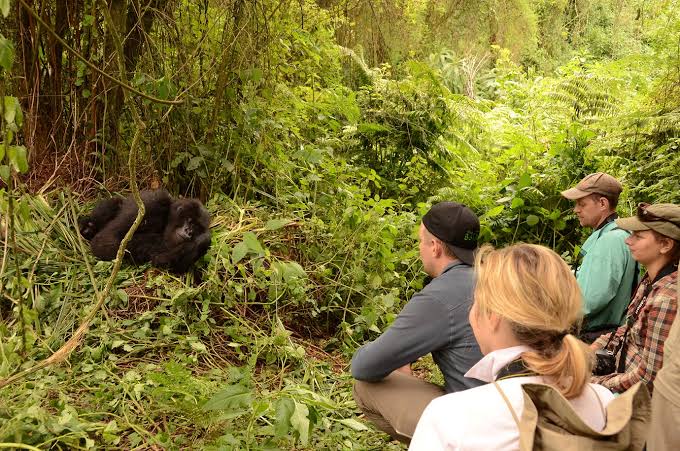
Quick Gorilla Safari in Uganda. “Quick” means something different to almost everyone who searches for it. For some travelers it means the shortest possible number of days away from work. For others it means the fastest way to actually get a confirmed booking without weeks of back-and-forth. And for a third group, it means minimizing wasted hours inside an otherwise-normal trip — less time on rutted roads, less time waiting on paperwork, more time actually looking at gorillas. This guide treats “quick” as all three at once: a practical playbook of every lever you can pull to compress a gorilla safari in Uganda, regardless of which airport you’re flying into or how many days you ultimately have. If you already know your trip length, our more specific guides to a short gorilla tour from Kigali, a short gorilla tour from Entebbe, or the standard 3-day gorilla trek itinerary go deeper on each specific format. This one is broader — a checklist of decisions that speed up a trip no matter which of those formats you eventually choose.
What “Quick” Actually Means for a Gorilla Safari
Before pulling any levers, it helps to separate the two very different kinds of time a gorilla safari consumes. The first is trip duration — how many total days you’re away. The second is friction — the hours lost to slow roads, indecisive booking processes, unnecessary detours, or paperwork you could have handled in advance. Most travelers searching for a “quick” safari are really trying to solve for both at once, and the two don’t always move together. A 2-day trip with a badly planned drive can feel slower and more exhausting than a well-organized 3-day trip with every hour accounted for. This guide is built around cutting friction first, since that’s where the biggest and most reliable time savings actually come from.
It also helps to think of these levers as stackable rather than a single silver bullet. Choosing the right sector alone might save an hour or two; flying instead of driving might save six or seven. Pre-clearing paperwork might save thirty minutes at a border post that would otherwise cost you an anxious hour. None of these individually turns a week-long trip into a weekend one, but combined, they routinely turn what would be a rushed, exhausting compromise into a genuinely comfortable short trip.
Lever 1: Choose the Sector Closest to Your Gateway
Bwindi Impenetrable National Park has four trekking sectors — Buhoma, Ruhija, Rushaga, and Nkuringo — plus the separate Mgahinga Gorilla National Park. They are not equally close to either Kigali or Entebbe, and picking the wrong one for your entry point can quietly add hours to your trip in both directions. Travelers arriving via Kigali are generally best served by Rushaga, Nkuringo, or Mgahinga, all in the south, since the drive from Kigali runs 4 to 6 hours depending on the border crossing used — see our detailed breakdown of how many hours you need from Kigali to Bwindi. Travelers arriving via Entebbe have a longer overland option regardless of sector, which is exactly why the flight-based alternative below matters so much more on that side. Our comparison of which part of Bwindi is easiest for gorilla trekking also factors terrain difficulty into the sector decision, since a “close” sector that turns out to be a brutal hike can cost you just as much time and energy as a longer drive to an easier one.
Lever 2: Fly Instead of Drive When the Route Supports It
The single biggest time-saver available on a Ugandan gorilla safari is the domestic flight network connecting Entebbe to airstrips near Bwindi. Aerolink Uganda flies from Entebbe to Kihihi Airstrip in about an hour, and to Kisoro Airstrip in a little over an hour, against an 8 to 10 hour overland drive. That single decision — fly instead of drive — can turn an otherwise-impossible 2-day trip into a comfortable one, and it’s the mechanism behind our dedicated Entebbe short-tour guide linked above. It costs more than driving, but if your constraint is genuinely days rather than dollars, it’s the highest-leverage single choice you can make.
There’s no equivalent scheduled flight option from Kigali directly into Bwindi, which is why Kigali-based “quick” trips lean instead on choosing the closest possible sector rather than a flight. Our note on landing in Kigali or Entebbe for a gorilla safari is worth reading if you haven’t yet committed to a gateway, since the flight option is genuinely a deciding factor for travelers optimizing for speed.
Lever 3: Private Vehicle vs. Scheduled Group Departure
A private vehicle and driver-guide, booked exclusively for your party, is consistently faster than a scheduled group departure. Group tours are built around a fixed itinerary shared with other travelers, often with pickup stops at multiple hotels before the trip even starts, and a pace set by the slowest member of the group. A private vehicle leaves when you’re ready, skips other travelers’ hotel stops, and can adjust its pace to your fitness level and preferences in real time, including stopping only briefly for the equator crossing or a viewpoint rather than a scheduled 45-minute break. If speed genuinely matters more than group cost-sharing, a private vehicle is worth the premium. Our comparison of scheduled group tours in Uganda against fully private, tailor-made safaris lays out the trade-offs in more depth.
Lever 4: Book Direct and Skip the Back-and-Forth
A surprising amount of “lost time” in gorilla safari planning happens before the trip even starts — days or weeks spent going back and forth between multiple tour operator quotes, each with a slightly different permit availability, itinerary structure, or price. Booking directly with an operator who can confirm permit availability, sector, and itinerary in a single conversation, rather than routing through a third-party marketplace or comparing five separate agency quotes, is one of the simplest ways to compress the planning phase itself. Our page on available gorilla tours for booking in Uganda shows current confirmed availability directly, and our Uganda safari bookings page walks through what we need from you to confirm a trip quickly — generally just your travel dates, group size, and sector preference.
Lever 5: Pre-Clear Your Visa and Border Paperwork
If your quick trip involves crossing between Uganda and Rwanda — for instance flying into Kigali but trekking on the Ugandan side, or combining both countries’ parks — border processing time is one of the most underestimated delays in the entire trip. Uganda’s East Africa Tourist Visa, when applicable, and Rwanda’s visa-on-arrival process are both straightforward, but only if you’ve filled out the paperwork and gathered required documents in advance rather than at the border itself. Our full visa and border crossing guide for Uganda and Rwanda covers exactly what to prepare beforehand, and doing this homework before you fly can save a genuinely frustrating hour or more standing in a queue with an incomplete form.
Lever 6: Say No to Add-Ons That Aren’t Gorillas
It’s tempting to bolt a game drive, a cultural village visit, or a second national park onto a gorilla trip, and for travelers with the days to spare, those add-ons are genuinely worthwhile. But every add-on is, definitionally, the opposite of quick. If speed is truly the priority, the fastest itinerary is the one built around exactly one activity — the trek itself — with nothing else layered in. That doesn’t mean the trip has to feel bare; a lodge with a view, a relaxed dinner, and an early night are perfectly good uses of the non-trekking hours without adding driving distance. Our 10 easy steps to plan a Uganda safari is a useful general planning reference, but for a genuinely quick trip, step one is deciding what you’re willing to leave out.
A Sample Ultra-Quick Itinerary
Combining these levers, here’s what a maximally compressed but still comfortable trip looks like for a traveler flying into Entebbe: an early domestic flight to Kihihi or Kisoro airstrip, a private vehicle transfer of roughly 90 minutes to the lodge, a full trekking day the following morning, and a return flight the same afternoon or the next morning. That’s a genuine two-day, one-night trip, made possible entirely by stacking the flight (Lever 2) with a private vehicle for the short transfer (Lever 3) and a direct-booked, pre-confirmed permit (Lever 4). For a Kigali-based version, the equivalent stack is a private vehicle straight to Rushaga or Mgahinga (Lever 1), skipping any scheduled group stops (Lever 3), with visa paperwork already filed in advance (Lever 5).
What You Give Up by Going Quick
It’s worth being honest that speed has real trade-offs. A compressed itinerary leaves almost no buffer for a delayed flight, a breakdown, or simply wanting an extra hour of sleep before an early trek. It also usually costs more per day than a slower trip, since private transport and flights carry a premium over shared, scheduled options. And it leaves no room for the parts of a Uganda trip that aren’t the gorillas themselves — no time for Lake Victoria, no time for a second park, no cultural stop along the way. None of that makes a quick trip a bad choice; it simply means the decision to go fast should be a deliberate trade-off, not a default. Our guide to doing a cheap gorilla safari in Uganda is a useful contrast piece if your actual priority turns out to be budget rather than speed, since the two goals often pull in opposite directions.
There’s also a psychological cost worth naming honestly. Travelers who compress every possible hour out of a trip sometimes arrive at the actual trekking day already tired from a demanding travel schedule, which can take some of the edge off what should be the most memorable part of the entire trip. If you’re choosing to go quick, it’s worth protecting at least one buffer block — even just an extra hour of sleep the night before the trek — rather than optimizing every single variable down to the minimum.
Booking a Quick Trip on Short Notice
Speed of trip and speed of booking aren’t the same problem, but they’re often tackled together. If you’re planning this with only a few weeks’ notice, permit availability — not itinerary length — is usually the real constraint, particularly in July through September and around the December holidays. Our guide to last-minute safaris in Uganda covers where availability tends to open up first and how to move fast once it does. Booking off-peak, in April, May, or November, generally removes this bottleneck almost entirely, since permits are far less contested and can often be confirmed within days rather than weeks.
Self-Drive: Rarely the Quick Option, Despite the Instinct
Some independent-minded travelers assume that self-driving must be the fastest option, since it removes any dependency on a driver’s schedule. In practice, the opposite is usually true for a genuinely quick trip: unfamiliar roads, uncertain fuel stops, and the mental load of navigation while tired all tend to slow a self-driven trip down relative to a private guided vehicle that already knows the route, the shortcuts, and the reliable fuel stations. Our honest breakdown of doing a Uganda gorilla safari on self-drive is worth reading if you’re drawn to the independence of it, but for pure speed, a private guided vehicle is almost always the better call.
Timing Your Trek Booking to Avoid the Slowest Season
Speed isn’t only about the days you spend traveling — it’s also about how quickly your permit and itinerary can be confirmed in the first place. Peak season, roughly July through September and mid-December through early January, is when permit demand is highest and confirmation can take the longest, simply because more requests are competing for the same limited daily slots. Shoulder and off-peak months move noticeably faster on the booking side, often with permits confirmable within a day or two of inquiry rather than a multi-week wait. If your travel dates are flexible at all, shifting even slightly outside peak season can shorten the planning phase of your trip as much as any of the on-the-ground levers described above.
Rules That Don’t Change, No Matter How Fast You Move
Whatever pace you’re planning around, the fundamentals of gorilla trekking stay fixed. Trekkers must be 15 or older, groups are capped at eight people per gorilla family, and anyone showing symptoms of a cold, flu, or other communicable illness will be turned away at the briefing point regardless of how tightly scheduled the rest of their trip is. Our full guide to gorilla trekking rules and regulations in Uganda is worth reading before you build a schedule around assumptions that turn out not to hold. The one-hour limit with the gorillas themselves is also fixed by Uganda Wildlife Authority policy — no amount of planning speeds that part up or slows it down, and if anything, it’s the one hour of the trip worth protecting from any sense of rush at all.
Comparing Uganda’s Speed Trade-Offs to Rwanda’s
Travelers optimizing purely for speed sometimes look at Rwanda’s Volcanoes National Park as an alternative, since its proximity to Kigali is often marketed as more convenient. It’s true that some Rwanda-side sectors involve a shorter drive from Kigali than Uganda’s do, but permit pricing, park size, and overall trip cost differ meaningfully between the two countries. Our full comparison of Rwanda versus Uganda for a gorilla safari is worth reading before assuming shorter driving distance alone makes Rwanda the faster or better overall choice — for many travelers it isn’t, once permit cost and availability are factored in.
Where to Stay for Minimal Transfer Time
Lodge choice is an underrated speed lever. A lodge positioned right at or near the park headquarters for your sector shaves a real chunk of time off both the morning of your trek and your departure the following day, compared to a lodge chosen purely for its views or amenities several kilometers further out. If minimizing transfer time is the priority, ask specifically about drive time to the briefing point when booking rather than assuming all lodges in a given sector are equally close. Our roundup of budget-friendly lodges in Bwindi notes proximity where relevant and is a reasonable starting point even if you’re not traveling on a tight budget, since many of the closest options aren’t necessarily the most expensive.
Packing for a Quick Trip Without Overthinking It
A compressed itinerary is not the moment to also overthink your packing list. The essentials stay exactly the same as any gorilla trek: layered clothing for cool mornings, a waterproof rain jacket since Bwindi is genuine rainforest regardless of season, broken-in waterproof hiking boots, and gardening gloves for pushing through vegetation on the trail. If you’re flying on a small aircraft as part of your quick itinerary, keep in mind the typical baggage weight limit of around 15 kilograms including hand luggage, and pack accordingly rather than discovering the limit at check-in. The simplest approach for a fast trip is to pack exactly what the trek requires and leave anything non-essential at your starting hotel or with your tour operator, rather than hauling a full suitcase through a tight, multi-leg itinerary.
Frequently Asked Questions
What’s the single fastest way to see gorillas in Uganda? Flying from Entebbe to Kihihi or Kisoro airstrip, paired with a private vehicle transfer and a pre-confirmed permit, is the fastest combination currently available, cutting travel time to about an hour each way.
Can I really do a gorilla trek in under 48 hours? Yes, using the flight-based route from Entebbe, though it leaves essentially no buffer for delays — a 3-day version is more comfortable if you can spare the extra day.
Is a private vehicle really worth the extra cost for speed? If time is your binding constraint rather than budget, yes — a private vehicle removes multiple stops, fixed group pacing, and schedule dependency on other travelers.
Does going quick mean a worse gorilla trekking experience? No — the one hour with the gorillas themselves is fixed by park policy regardless of how the rest of your trip is structured, so the core experience is identical whether you spend two days or ten around it.
What’s the biggest mistake travelers make when trying to move fast? Underestimating drive time and leaving zero buffer for delays — a genuinely quick trip still needs a small margin built in, or a single delay collapses the whole schedule.
Final Thoughts
A quick gorilla safari in Uganda isn’t a single fixed itinerary — it’s a set of deliberate choices, each one trimming hours or friction from a trip that would otherwise take longer. Fly where flying is possible, choose the sector closest to your gateway, book a private vehicle and a direct-confirmed permit, and cut every add-on that isn’t the trek itself. Do all four and a trip that might have taken a week comfortably fits into two or three days without feeling rushed at the one part that actually matters. If you’d like help building the fastest realistic version of this trip around your specific dates and gateway, reach out to our team at Kenlink Tours and we’ll map it out for you.
For travelers also arranging transport and safaris on the Rwanda side, our colleagues at Pick and Transfer Safaris offer their own gorilla safari packages, including a one-day gorilla safari from Kigali and a two-day gorilla tour from Kigali for travelers comparing quick options, plus a detailed look at Bwindi Impenetrable Forest National Park itself. Travelers with a little more time can also browse their broader wildlife safari options, including a 3-day safari to Murchison Falls and a 3-day safari to Queen Elizabeth National Park. Learn more about their team on their about us page, browse their Kigali city guide, or reach out through their contact page.