- EXPERT'S HELP
- +256789210067
- +256200955001
- info@kenlinktours.com


Which Airport is Near Bwindi National Park-Kigali or Entebbe
September 16, 2026
How is Mount Sabyinyo Hiking in Uganda
September 17, 2026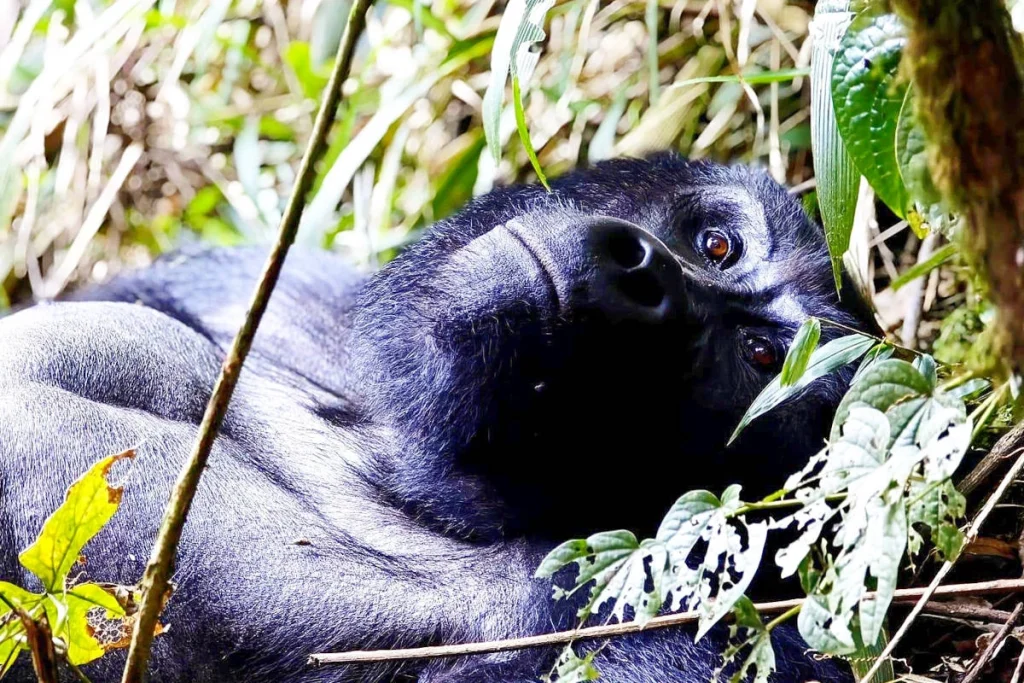
Big five in Rwanda and Gorilla Trek in Uganda. Few regions on Earth pack as much wildlife drama into so small a footprint as Rwanda and Uganda. In a single two-week loop, you can watch lions stalk the savannah plains of Akagera, track black and white rhino through acacia woodland, and then climb into the misty highlands of Bwindi to sit within arm’s reach of a two-hundred-kilogram silverback gorilla. This is the magic of combining a Rwanda safari built around the Big Five with a Uganda gorilla trekking expedition — two countries, one unforgettable itinerary, and some of the most concentrated wildlife encounters found anywhere in Africa.
This guide walks through everything you need to plan the trip properly: where to find each of the Big Five in Rwanda, how gorilla permits and trekking actually work in Uganda, what it costs in 2026, when to travel, and how to link the two countries into one seamless safari. Whether you’re a first-time safari traveler or a seasoned Africa hand ticking off a bucket-list combination, the details below will help you build a trip that delivers on every level.
Why Rwanda and Uganda Are East Africa’s Ultimate Safari Combination
Rwanda and Uganda share a border, a climate, and a conservation story, but they offer very different wildlife experiences. Rwanda’s Akagera National Park is East Africa’s newest Big Five destination, having rebuilt its lion and rhino populations from zero within the last decade. Uganda, meanwhile, is home to roughly half of the world’s remaining mountain gorillas, spread across the forests of Bwindi and Mgahinga. Because Kigali and the Uganda gorilla parks are separated by only a few hours of road, travelers can genuinely do both without wasting days in transit — a rare luxury in African safari planning. It’s this proximity that makes a combined Uganda-Rwanda gorilla safari so popular with international visitors who want maximum wildlife diversity in a limited number of days.
Understanding the Big Five: What They Are and Why Rwanda Stands Out
The term “Big Five” — lion, leopard, elephant, buffalo, and rhinoceros — dates back to colonial-era hunting, when these five species were considered the most dangerous to track on foot. Today the phrase is used purely for wildlife viewing, and it has become the benchmark by which safari destinations are measured. Kenya and Tanzania have long dominated this conversation, but Rwanda has quietly built one of the continent’s great conservation comeback stories inside a single park: Akagera. Fifteen years ago, Akagera had no lions and no rhinos at all. Poaching and post-genocide land pressure had wiped out its large predators and pushed its rhino population to local extinction. A partnership between the Rwanda Development Board and African Parks reversed that collapse, and Akagera is now one of the only places in Africa where you can see the full Big Five inside a single, compact, easily driveable park.
Akagera National Park: Rwanda’s Big Five Comeback Story
Akagera National Park covers roughly 1,122 square kilometres in northeastern Rwanda, bordering Tanzania along the Akagera River and a chain of lakes that give the park its wetland character. Unlike the dense rainforest most people associate with Rwanda, Akagera is open savannah, acacia woodland, and papyrus swamp — landscape that looks far more like the Maasai Mara than the volcano country most tourists picture when they think of Rwanda. A full traverse of the park from south to north takes five to six hours, and most visitors spend two to three days inside to have a realistic chance of finding all five species. If you want a deeper dive into exactly where each animal tends to be seen, our dedicated guide on where to see the Big Five in Rwanda breaks the park down by zone and season. Pick and Transfer Safaris also maintains a useful Akagera National Park travel guide covering access routes and entry logistics from both Kigali and the Ugandan border.
Spotting Lions in Akagera National Park
Lions vanished from Akagera in the early 1990s, a casualty of conflict and unmanaged cattle grazing. In 2015, seven lions were flown in from South Africa to re-establish a founder population, with additional males introduced in 2017 to strengthen the gene pool. That handful of cats has since grown into a population estimated between roughly 58 and 70 lions, spread across several prides that roam the park’s central and southern plains. Sightings are genuinely common on a two-to-three-day visit, particularly around dawn and dusk game drives near the lake shoreline. For a closer look at pride locations and tracking success rates, see our article on where to see lions in Rwanda.
Rhinos in Akagera: Black and White Rhino Conservation Success
Rhino recovery in Akagera has been just as dramatic. Eastern black rhino, a critically endangered subspecies, were reintroduced in May 2017 with eighteen animals, followed by further translocations in 2019 and 2021 that brought the black rhino population to around twenty individuals. White rhino were added later and have expanded even faster: following a major 2025 translocation of seventy animals from South Africa, Akagera’s white rhino numbers now exceed 110, making it one of the largest concentrations of the species outside southern Africa. Rhino tracking here is done with park rangers using radio-collar data, and sightings — while never guaranteed with any wild animal — are increasingly reliable for visitors who dedicate a full day to the eastern plains.
Elephants, Buffalo and Leopards: Completing the Big Five in Akagera
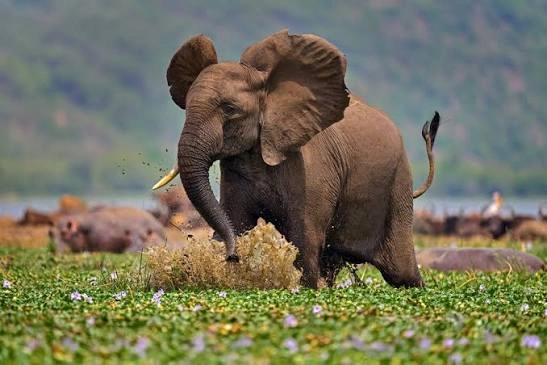
Elephants were never wiped out of Akagera the way lions and rhino were, and the park’s population now sits somewhere between 100 and 176 animals depending on the survey year, with herds frequently seen browsing along the lake edges and swamp margins. Cape buffalo are far more numerous, with aerial counts putting the population above 2,500, and dagga-boy bachelor groups are a near-certain sighting on any game drive. Leopards are the trickiest of the five: present in reasonable numbers but famously elusive and mostly nocturnal, so sightings tend to reward patient, well-guided visitors rather than being a given. Travelers hoping to compare Akagera against Uganda’s own leopard and predator territory often read our comparison piece on Akagera National Park versus Queen Elizabeth National Park before deciding which savannah park to prioritize. Pick and Transfer Safaris’ overview of Queen Elizabeth National Park is a helpful cross-border reference if your itinerary stretches into western Uganda as well.
Best Time to Visit Akagera for Big Five Game Drives
Akagera can be visited year-round, but game viewing peaks during the long dry season from June to September, when vegetation thins out and animals concentrate around remaining water sources. A secondary, slightly wetter window from mid-December through February also produces strong sightings and lighter crowds. The rainy months of March–May and October–November bring lush green scenery and excellent birding, but thicker bush can make spotting predators and rhino somewhat harder. If your primary goal is ticking off the full Big Five in the shortest possible time, aim for the June-to-September dry season and budget at least two full days inside the park.
How to Combine Akagera’s Big Five with Volcanoes National Park Gorilla Trekking
Most visitors don’t treat Akagera as a standalone trip — they pair it with gorilla trekking in Volcanoes National Park in Rwanda’s northwest, since both parks are within a few hours’ drive of Kigali. Our 5-day Volcanoes, gorillas and Akagera wildlife safari is built specifically around this loop, and a shorter 3-day Akagera game drive safari works well as an add-on for travelers who are gorilla trekking in Uganda and want a Big Five detour on the Rwandan side before or after. Pick and Transfer Safaris runs a similar circuit with their 2-day Volcanoes gorilla trek from Kigali and a dedicated 3-day Akagera safari from Kigali, both useful benchmarks if you’re comparing pacing options for your own trip.
Gorilla Trekking in Uganda: An Overview of Bwindi Impenetrable Forest
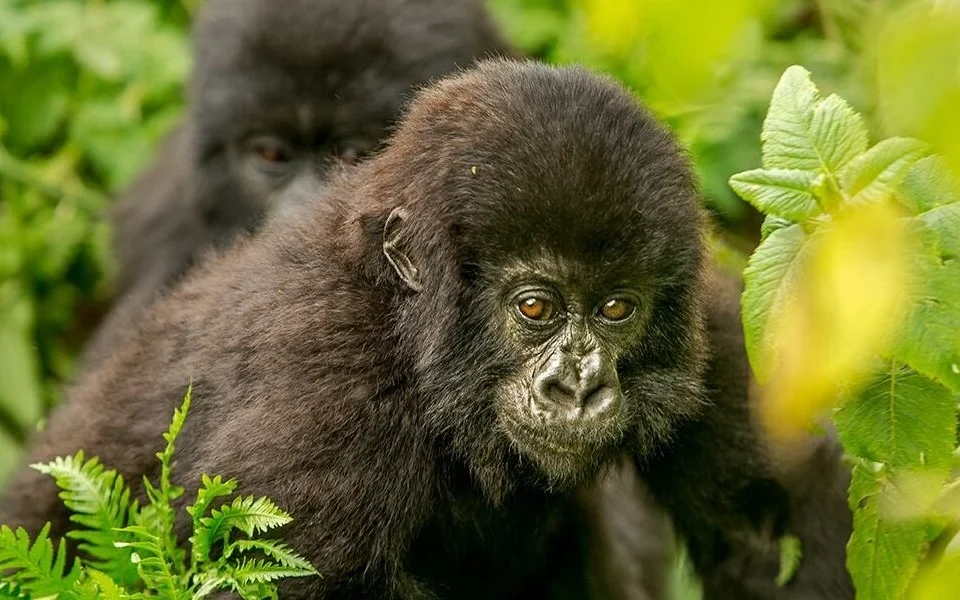
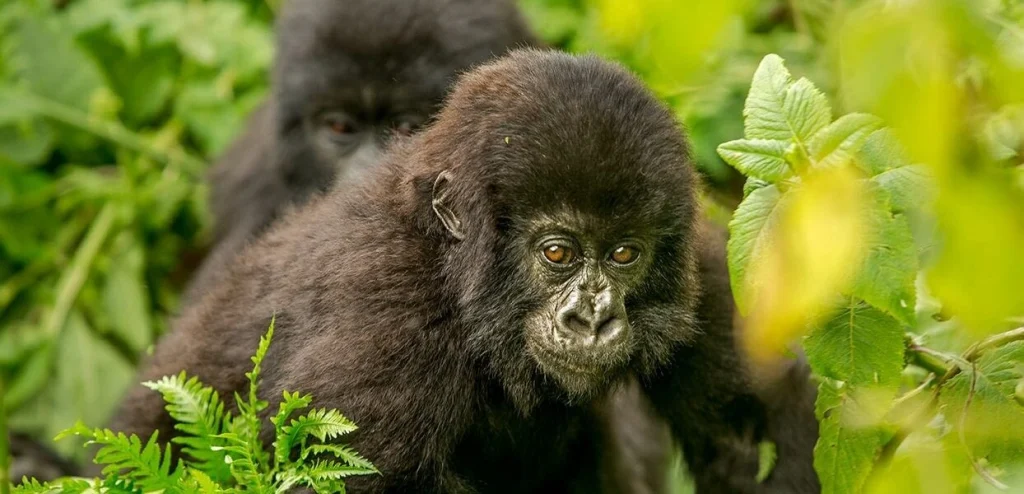
Cross the border northwest into Uganda and the landscape transforms entirely — from open savannah to a dense, ancient rainforest draped over steep volcanic hills. Bwindi Impenetrable Forest, a UNESCO World Heritage Site, is home to roughly half of the world’s remaining mountain gorillas and offers the single richest concentration of habituated gorilla families anywhere on the planet. Our full gorilla trekking in Uganda guide covers everything from permit booking to physical fitness requirements, but the essentials are straightforward: you join a small group of up to eight trekkers, walk with an armed ranger guide and trackers, and spend one full hour observing a habituated gorilla family once they’re located. Pick and Transfer Safaris’ Bwindi Impenetrable Forest destination guide is another solid resource if you want a Uganda-side perspective on the same park.
The Four Trekking Sectors of Bwindi: Buhoma, Ruhija, Rushaga and Nkuringo
Bwindi is divided into four distinct trekking sectors, each with its own habituated gorilla families and its own character. Buhoma, in the north, is the most established sector, with relatively gentler trails and the greatest concentration of long-running lodges. Ruhija, in the east, sits at higher altitude with cooler temperatures and access to families that often involve steeper, more strenuous hikes. Rushaga, in the south, has the largest number of habituated families of any sector and is also where Uganda’s gorilla habituation experience is offered, allowing visitors to spend up to four hours with a family that isn’t yet fully accustomed to tourists. Nkuringo, also in the south, is generally considered the most physically demanding sector but rewards trekkers with dramatic Virunga volcano views. If you’re unsure which sector suits your fitness level, our article on which part of Bwindi is easiest for gorilla trekking breaks down the terrain sector by sector.
Mgahinga Gorilla National Park: Uganda’s Alternative Trekking Destination
Fewer travelers know that Uganda has a second gorilla trekking option beyond Bwindi: Mgahinga Gorilla National Park, tucked into the Virunga volcanoes at Uganda’s southwestern tip, bordering both Rwanda and the Democratic Republic of Congo. Mgahinga typically hosts a single habituated family, so availability can be more limited, but its volcanic scenery and golden monkey tracking make it a worthwhile alternative when Bwindi permits are sold out or when your route already runs close to the Rwandan border. If your itinerary has you moving between the two trekking areas, our practical guide on driving from Bwindi to Mgahinga Gorilla National Park covers road conditions and drive times, and Pick and Transfer Safaris’ Mgahinga Gorilla National Park guide adds further detail on the park’s golden monkey trekking option.
Gorilla Trekking Permit Costs in Uganda and Rwanda for 2026
Permit pricing is the single biggest budgeting factor for any gorilla trekking trip, and Uganda and Rwanda price theirs very differently. In Uganda, a standard gorilla trekking permit costs $800 per person for foreign non-residents during the regular season, dropping to $600 during the low-season discount months of April, May, and November. Foreign residents pay a reduced rate of around $700, and East African citizens pay a heavily subsidized local rate. Rwanda, by contrast, prices its Volcanoes National Park gorilla permits at a flat $1,500 per person year-round, nearly double Uganda’s standard rate, though it offers faster access from Kigali International Airport and generally shorter drive times to the trailhead. Many travelers use this price gap strategically, trekking in Uganda for the lower cost and pairing it with Rwanda’s Big Five safari in Akagera to get both experiences without paying premium gorilla pricing twice. Our breakdown of how much a gorilla trekking safari costs in Uganda goes further into total trip budgeting beyond the permit fee itself, and Pick and Transfer Safaris’ gorilla safari packages page is a useful point of comparison for current Uganda-side pricing on guided treks.
What to Expect on a Gorilla Trekking Day
A trekking day begins early, typically with a 7 a.m. briefing at one of Bwindi’s park offices, where rangers assign trekking groups to specific gorilla families based on fitness level and trail difficulty. From there, treks can last anywhere from thirty minutes to six or seven hours depending on where the assigned family is feeding that morning — gorillas move daily, and no two treks follow the same path. Once trackers locate the family, visitors are given a strict but unforgettable sixty minutes at a minimum seven-metre distance to observe, photograph, and simply absorb the experience of sharing space with a wild gorilla troop. Porters are available for hire at the trailhead and are genuinely worth the modest fee, both for the practical help on steep, muddy terrain and because it puts income directly into the local community.
Rules and Regulations Every Gorilla Trekker Should Know
Uganda Wildlife Authority enforces a firm set of conservation rules designed to protect both gorillas and trekkers. Groups are capped at eight visitors per gorilla family per day, trekkers must be at least fifteen years old, and anyone showing symptoms of a cold, flu, or other contagious illness will be turned away, since gorillas share roughly 98 percent of human DNA and are highly susceptible to human respiratory diseases. Flash photography is banned, eating and smoking near the gorillas is prohibited, and visitors are asked to keep their voices low and movements slow throughout the encounter. Our detailed rundown of gorilla trekking rules and regulations in Uganda covers the full list, which is worth reading in advance so nothing catches you off guard on trek day.
Best Time to Go Gorilla Trekking in Uganda
Gorilla trekking runs year-round in Uganda, since permits are issued daily regardless of season, but trail conditions vary enormously. The two dry seasons — December to February and June to August — offer firmer, less slippery trails and are the most popular (and most heavily booked) months. The wetter months, particularly March-May and September-November, bring a real risk of muddy, strenuous hikes, but also fewer crowds, lush scenery, and the discounted permit pricing available in April, May, and November. If your schedule is flexible, booking a low-season permit and accepting a bit of mud underfoot is one of the smartest ways to cut costs on this trip without sacrificing the actual gorilla encounter.
Sample Itinerary: Combining Rwanda’s Big Five with Uganda Gorilla Trekking
A well-paced combined trip typically runs seven to ten days. A common structure looks like this: arrive in Kigali and spend two days in Akagera National Park chasing lions, rhino, elephant, and buffalo; drive three to four hours northwest to Volcanoes National Park for a day of gorilla trekking in Rwanda, or continue across the border into Uganda for Bwindi instead; spend two to three days trekking in Bwindi’s Rushaga or Buhoma sectors, potentially adding a second trek for a different gorilla family; and finish with a day or two of relaxation on Lake Kivu or Lake Bunyonyi before flying home. Travelers who want this exact combination pre-packaged can look at our 9-day Uganda-Rwanda gorilla and Big Five safari, or the more comprehensive 15-day Rwanda-Uganda primate and Big Five safari adventure for those with more time. Pick and Transfer Safaris offers a comparable 10-day Uganda-Rwanda safari and a shorter 3-day Uganda gorilla safari from Rwanda for travelers working with a tighter Uganda-side schedule.
Getting There: Kigali or Entebbe as Your Gateway
Deciding which airport to fly into shapes the entire logistics of the trip. Kigali International Airport sits closer to both Akagera and Volcanoes National Park, making it the more efficient entry point if Rwanda’s Big Five and gorillas are your priority, with Bwindi reachable by a four-to-five-hour road transfer across the border. Entebbe International Airport in Uganda, by contrast, is the better choice if Bwindi and Uganda’s savannah parks like Queen Elizabeth or Murchison Falls form the bulk of your trip, though it involves a longer domestic transfer or a short flight to reach the southwestern trekking sectors. Our guide to landing in Kigali or Entebbe for a gorilla safari walks through the trade-offs in detail, factoring in flight availability, road conditions, and total trip time.
Where to Stay: Lodges Near Akagera and Bwindi
Accommodation on this route ranges from simple tented camps to genuinely luxurious lodges with volcano or lakeside views. Around Akagera, options run from budget-friendly campsites inside the park to mid-range and upscale lodges overlooking Lake Ihema, where hippo and crocodile sightings are possible without leaving the property. In Bwindi, each of the four trekking sectors has its own cluster of lodges, generally priced by proximity to the park boundary and view quality, with Buhoma offering the widest range of options for both budget and luxury travelers. Booking accommodation close to your assigned trekking sector matters more than most first-time visitors realize, since it can mean the difference between a relaxed pre-dawn breakfast and a stressful early-morning drive to the briefing point.
What to Pack for a Big Five and Gorilla Trekking Safari
Packing for this trip means preparing for two quite different environments. For Akagera’s game drives, neutral-colored lightweight clothing, sun protection, and binoculars are the priorities. For gorilla trekking, the packing list shifts considerably: waterproof hiking boots with solid ankle support, gardening-style gloves for grabbing vegetation on steep slopes, a rain jacket regardless of season, long trousers tucked into socks to guard against biting ants, and a daypack with water and energy snacks. A trekking pole, rentable at most park offices, is worth the small fee for anyone unsure of their footing on Bwindi’s steep, often muddy trails.
Chimpanzees and Other Primates Worth Adding to Your Itinerary
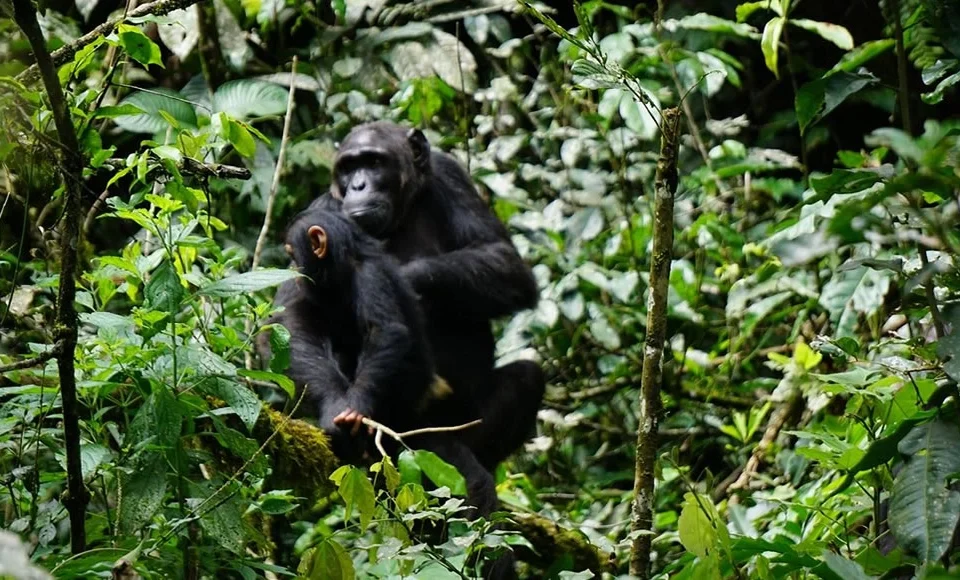
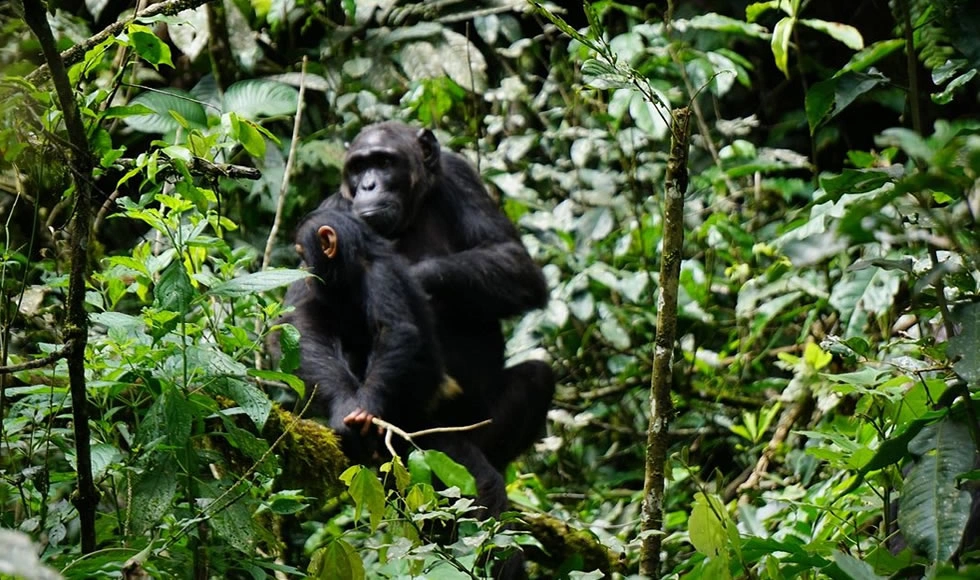
If gorillas and the Big Five aren’t quite enough primate and predator variety, both countries offer excellent chimpanzee tracking as an add-on. Rwanda’s Nyungwe Forest National Park is one of Africa’s oldest rainforests and home to habituated chimpanzee communities along with golden monkeys and hundreds of bird species. On the Uganda side, several operators combine gorilla and chimpanzee tracking into a single trip; our overview of chimpanzee and gorilla trekking compares the experiences and helps decide whether it’s worth extending your itinerary by an extra day or two. Pick and Transfer Safaris covers similar ground with their broader wildlife safaris collection, useful if you’re weighing additional primate or savannah add-ons on the Uganda side of the border.
Big Five and Primate Safaris Within Uganda Itself
It’s worth noting that Uganda isn’t only about gorillas — the country has its own Big Five potential, concentrated mainly in Queen Elizabeth and Murchison Falls National Parks, where lion, elephant, buffalo, and leopard are all present (rhino sightings are limited to the dedicated Ziwa Rhino Sanctuary, since rhinos remain extinct in the wild in Uganda). Travelers who want to combine gorilla trekking with a fuller Big Five experience without crossing back into Rwanda can explore our guide to a Big Five and primate safari in Uganda, which lays out how to fit both savannah game drives and forest trekking into one Uganda-only trip.
Frequently Asked Questions About Rwanda’s Big Five and Uganda Gorilla Trekking
Can you see the Big Five and gorillas on the same trip? Yes — this is precisely the appeal of combining Akagera National Park in Rwanda with Bwindi or Mgahinga in Uganda, and it’s a route thousands of travelers complete every year thanks to the short driving distance between the two countries.
Is Akagera really a genuine Big Five destination? Yes, following successful lion and rhino reintroduction programs completed within the last decade, Akagera now holds viable, growing populations of all five species alongside consistently strong elephant and buffalo sightings.
Which is cheaper for gorilla permits, Uganda or Rwanda? Uganda is significantly cheaper, at $800 in high season (or $600 in the April, May, and November discount window) compared to Rwanda’s flat $1,500 rate, making Uganda the more budget-friendly trekking base for most travelers.
How fit do you need to be for gorilla trekking? A reasonable level of fitness helps, since treks can last several hours over steep, muddy terrain, but treks are matched to fitness level during the morning briefing, and porters are available to assist anyone who needs extra support.
Why Book Your Rwanda-Uganda Safari with Kenlink Tours
Planning a trip that spans two countries, two very different ecosystems, and two separate permit systems is where an experienced local operator earns its value. Our team has run Uganda safaris and Rwanda itineraries for years, and we handle the entire logistics chain — permit booking, border transfers, lodge selection, and vehicle logistics — so travelers can focus on the wildlife rather than the paperwork. You can read more about our approach on our About Us page, or reach out directly through our contact page to start building a custom Big Five and gorilla trekking itinerary around your travel dates and budget.
Plan Your Big Five and Gorilla Trekking Adventure Today
Rwanda and Uganda together offer something almost no other pairing of countries can match: a genuine, growing Big Five safari and one of the most profound wildlife encounters on the planet, both reachable within the same short, well-organized trip. Whether you have seven days or three weeks, the combination of Akagera’s savannah comeback story and Bwindi’s misty gorilla forests rewards travelers who plan carefully around permit seasons, park logistics, and realistic trip pacing. Get in touch with our team to lock in your gorilla permits early — they sell out months in advance during peak season — and start turning this itinerary from a bucket-list idea into a booked trip.