- EXPERT'S HELP
- +256789210067
- +256200955001
- info@kenlinktours.com


Gorilla Families of Buhoma Sector Bwindi
October 6, 2026
Choosing Rushaga and Nkuringo from Kigali for Gorilla Trek
October 6, 2026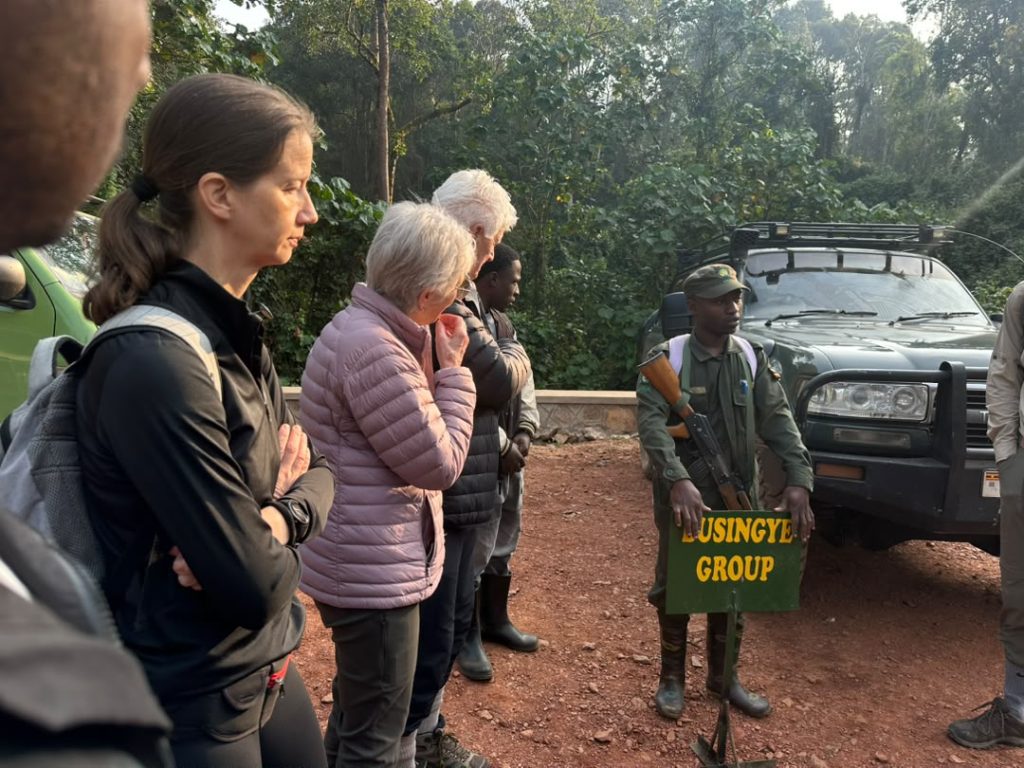
Why Choose Rushaga Sector if you are from Kigali Rwanda. Every year, thousands of travellers land at Kigali International Airport dreaming of mountain gorillas. Many assume their only option is Rwanda’s Volcanoes National Park. But just across the border lies one of the best-kept secrets of East African travel: the Rushaga sector of Uganda’s Bwindi Impenetrable National Park. It is close to Kigali, home to more gorilla families than any other sector in Uganda, and far cheaper to visit than Rwanda’s own gorilla park.
In this guide, the team at Kenlink Tours explains why you should choose Rushaga sector if you are coming from Kigali, Rwanda. We cover travel times, border crossings, gorilla families, permit costs, the gorilla habituation experience, lodges, itineraries and practical tips, so you can decide whether a cross-border gorilla safari to Rushaga is right for you.
Where Is Rushaga Sector?
Rushaga lies in the southern part of Bwindi Impenetrable National Park, in Kisoro District, southwestern Uganda. It is one of Bwindi’s four gorilla trekking sectors, alongside Buhoma in the north, Ruhija in the east and Nkuringo, its southern neighbour.
Bwindi is a UNESCO World Heritage Site and one of Africa’s most ancient and biodiverse forests. It protects roughly half of the world’s remaining mountain gorillas. Rushaga’s position in the south of the park places it close to the Rwandan border and just a short drive from the town of Kisoro, Lake Mutanda and Mgahinga Gorilla National Park.
To see how Rushaga fits into Uganda’s wider network of protected areas, read our overview of national parks in Uganda.
Reason 1: Rushaga Is Closer to Kigali Than to Kampala
This is the single biggest reason travellers from Kigali choose Rushaga. The drive from Kigali to Rushaga takes roughly four to five hours, including the border crossing. By comparison, driving from Kampala or Entebbe to Rushaga takes around nine to ten hours.
That difference transforms your trip. Instead of spending two full days on the road from Entebbe, you can land in Kigali in the morning, cross into Uganda and be relaxing at your lodge on the edge of Bwindi by the afternoon. It makes short gorilla safaris practical for business travellers, conference delegates, families with limited holiday time and anyone combining Uganda and Rwanda in one trip.
For a detailed breakdown of distances and drive times to each Bwindi sector, see our guide on how far Bwindi Impenetrable National Park is from Kigali. If you are still deciding which airport to fly into, our article on landing in Kigali or Entebbe for a gorilla safari compares both options.
The Route: Kigali to Rushaga Step by Step
There are two main border crossings for travellers heading from Kigali to Rushaga.
Via Cyanika border (most common): From Kigali, the road heads northwest through the green hills of Rwanda to Musanze, the gateway town for Volcanoes National Park, with spectacular views of the Virunga volcanoes. From Musanze, you continue to the Cyanika border post, cross into Uganda and drive through Kisoro town towards Rushaga. The final stretch climbs through terraced hills and passes close to Lake Mutanda, with some of the finest scenery in Uganda.
Via Katuna/Gatuna border: This route heads north from Kigali to the Gatuna border (called Katuna on the Ugandan side), then continues to Kabale before turning towards Rushaga. It is a good alternative depending on road conditions and your itinerary, especially if you plan to visit Lake Bunyonyi.
Your driver-guide will choose the best route based on current conditions. Kenlink Tours explains more about cross-border logistics in our guide to transfers from Kigali to Uganda.
Crossing the Rwanda–Uganda Border
Crossing from Rwanda into Uganda at Cyanika or Katuna is a routine process for most travellers. You will exit Rwanda at one office and enter Uganda at the other, presenting your passport and visa. Your driver-guide helps with paperwork and knows exactly where to go, so the crossing usually takes 30 minutes to an hour.
Visas: Most visitors need a Ugandan visa, which can be applied for online in advance. Many travellers combining both countries choose the East Africa Tourist Visa, which covers Uganda, Rwanda and Kenya on a single multiple-entry visa. It is ideal for cross-border gorilla safaris that start and end in Kigali.
Health: A yellow fever vaccination certificate is required to enter Uganda, so carry it with your passport.
Vehicles: Rwanda drives on the right and Uganda drives on the left, but your tour operator handles the vehicle and paperwork. Many operators use the same vehicle and guide throughout, so you do not need to switch at the border.
Reason 2: Rushaga Has the Most Gorilla Families in Uganda
Rushaga is home to more habituated gorilla families than any other sector in Bwindi. Depending on the season and UWA’s management, the sector offers around eight or more families available for standard trekking, plus families used for the gorilla habituation experience.
Commonly listed Rushaga families include Nshongi, Mishaya, Kahungye, Busingye, Bweza, Rwigi, Mucunguzi and Bikingi, among others. Each has its own silverbacks, history and character. Nshongi, for example, was famous for being one of the largest habituated gorilla families in Uganda when it opened to tourism, and later splits from it created other Rushaga groups.
More families means more permits. That is a huge advantage for travellers from Kigali who often book trips at shorter notice. Even when other sectors are sold out, Rushaga frequently still has availability, especially outside the peak months. For an overview of the gorilla experience across both countries, see our Uganda and Rwanda gorilla safaris guide.
Reason 3: Significant Savings Compared with Rwanda
Cost is a major factor for many visitors. A gorilla trekking permit in Rwanda’s Volcanoes National Park costs US$1,500 per person. In Uganda, including Rushaga, a standard gorilla trekking permit costs US$800 per person for foreign non-residents.
For a couple, that is a saving of US$1,400 on permits alone, and even more for families and groups. That money can pay for an extra night in a lovely lodge, a golden monkey trek, a second gorilla trek or several days of additional safari. Because Rushaga is only four to five hours from Kigali, you get these savings without adding much travel time.
Other costs also tend to be lower on the Ugandan side. Mid-range lodges near Rushaga are often more affordable than comparable properties around Volcanoes National Park, and extras such as cultural visits, nature walks and canoe trips on Lake Mutanda are reasonably priced. For budget-conscious travellers, our scheduled group tours share transport costs and make a Rushaga gorilla trip even more affordable.
Of course, the gorillas themselves are the same species, living in a similar mountain forest environment. Many travellers who trek in both countries say the Bwindi experience feels wilder and more adventurous, with the dense, ancient forest adding to the sense of discovery.
Reason 4: The Gorilla Habituation Experience
Rushaga is the home of Uganda’s gorilla habituation experience, one of the most exclusive wildlife activities in Africa. Instead of the standard one hour, you spend up to four hours with a gorilla family that is still being habituated, alongside researchers, rangers and trackers.
You watch the gorillas’ natural behaviour, see how trackers record data, and learn how a wild family gradually becomes used to humans. Only a small number of visitors join each day, making the experience more intimate. Habituation permits cost US$1,500 per person, the same price as a standard one-hour permit in Rwanda, but give you four times as long with the gorillas.
For travellers coming from Kigali who want the deepest possible gorilla encounter, this is an extraordinary option. Learn more in our dedicated guide to the gorilla habituation experience in Rushaga sector.
Reason 5: Spectacular Scenery on the Way
The journey from Kigali to Rushaga is not just a transfer; it is a highlight in its own right. You pass through Rwanda’s famous “land of a thousand hills,” with neat villages, banana plantations and tea estates. Around Musanze, the chain of Virunga volcanoes rises dramatically on the horizon. On the Ugandan side, the road winds past Kisoro and the terraced hillsides of the Kigezi Highlands, often called the “Switzerland of Africa.”
Near Rushaga, many travellers stop to admire Lake Mutanda, whose islands and still water reflect the volcanoes on clear mornings. Some lodges sit on its shores, offering canoe rides and peaceful walks before or after your gorilla trek.
Reason 6: Easy to Combine with Mgahinga and Golden Monkeys
Rushaga’s location in the southwest makes it the perfect base for exploring the wider Virunga region. Mgahinga Gorilla National Park lies just beyond Kisoro, within easy reach. There you can track the endangered golden monkeys, hike the Virunga volcanoes or meet the Nyakagezi gorilla family for a second gorilla encounter.
Many Kigali-based itineraries combine a Rushaga gorilla trek with golden monkey tracking in Mgahinga, then return to Rwanda via the nearby Cyanika border. Kisoro town, between Rushaga and Mgahinga, has good accommodation, including the option described in this guide to Ikoro Hotel in Kisoro. Our article on golden monkey tracking compares the experience on both sides of the border.
Reason 7: A Great Range of Lodges
Rushaga has developed rapidly as a gorilla destination and now offers accommodation for every budget. Lodges sit on ridges overlooking the forest, in the valleys close to the trailheads and on the shores of nearby Lake Mutanda. Many offer views across the forest canopy to the Virunga volcanoes.
Staying close to the Rushaga sector headquarters is important, because gorilla briefings begin early, around 7:30 AM. Choose a lodge near the trailhead to avoid long pre-dawn drives on winding roads. Kenlink Tours has reviewed several local options, including Ichumbi Gorilla Lodge and Mountain Gorilla View Lodge. For a full list across Bwindi, read our guide to accommodations in Bwindi Impenetrable National Park, and for cost-conscious travellers our list of the most budget lodges in Bwindi National Park.
Reason 8: Short Trips Are Possible, Even One Day
Because Rushaga is so close to Kigali, very short gorilla safaris are realistic. Options include:
- 1-day gorilla trek: A very early pick-up in Kigali, typically between 3:00 and 4:00 AM, gets you to the Rushaga briefing on time. You trek, spend an hour with the gorillas and drive back to Kigali the same evening. It is a long day but perfect for travellers with extremely limited time. See the 1 Day Uganda Gorilla Safari starting from Kigali.
- 2-day gorilla safari: Drive from Kigali to Rushaga on day one, trek the gorillas on day two and return to Kigali that afternoon. A more relaxed option is the 2 Days Uganda Gorilla Tour starting from Kigali.
- 3-day gorilla and culture safari: Add a Batwa cultural experience, Lake Mutanda or golden monkeys. A good example is the 3 Days Uganda Gorilla Safari from Rwanda.
What a Gorilla Trekking Day in Rushaga Looks Like
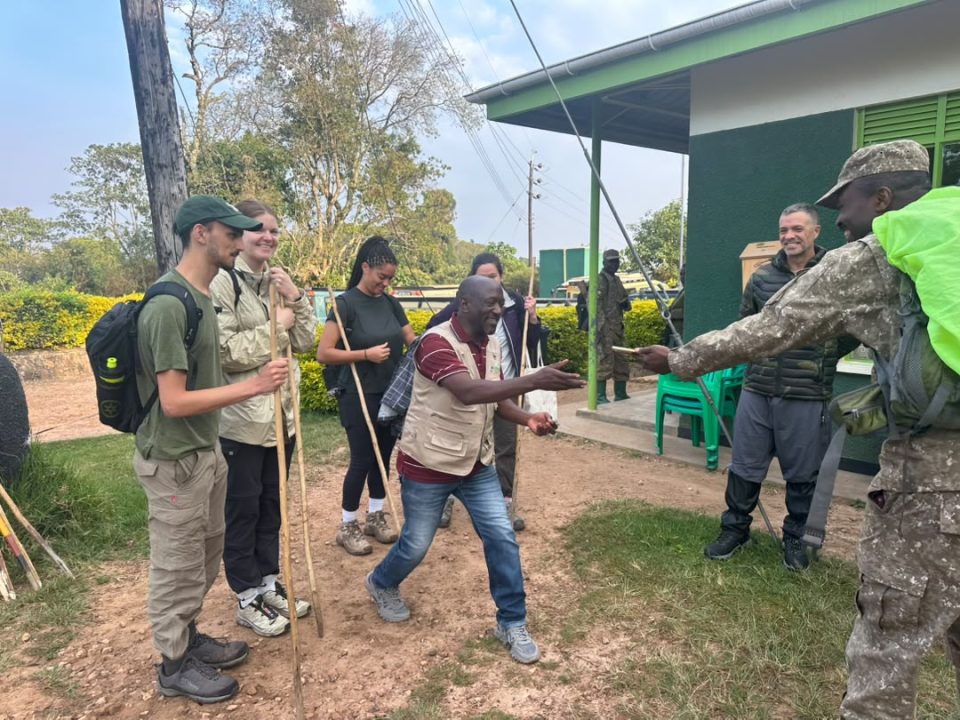
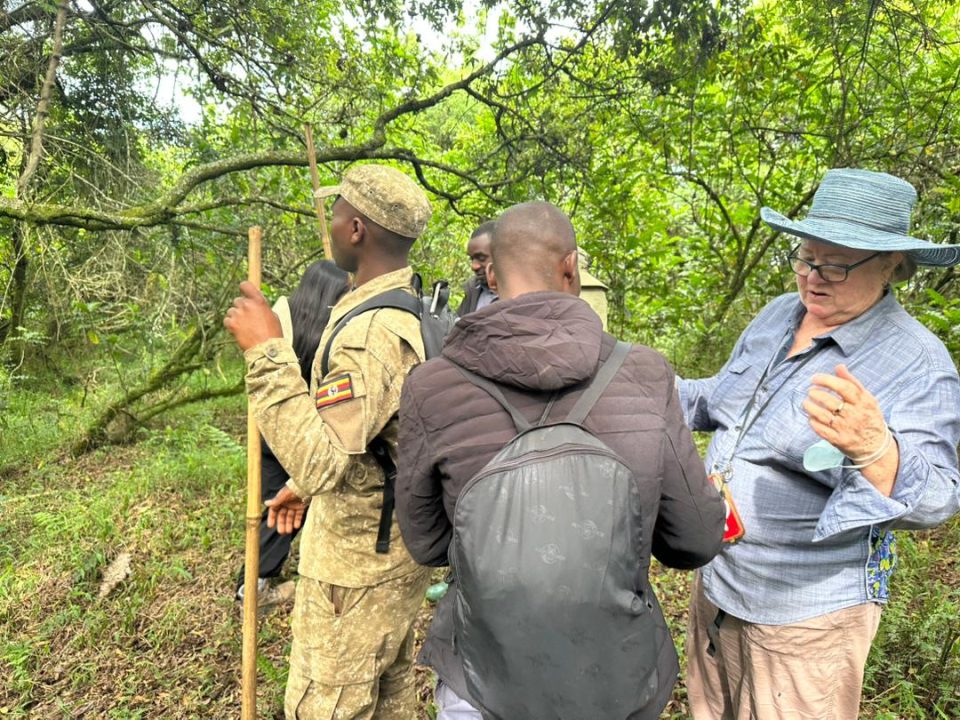
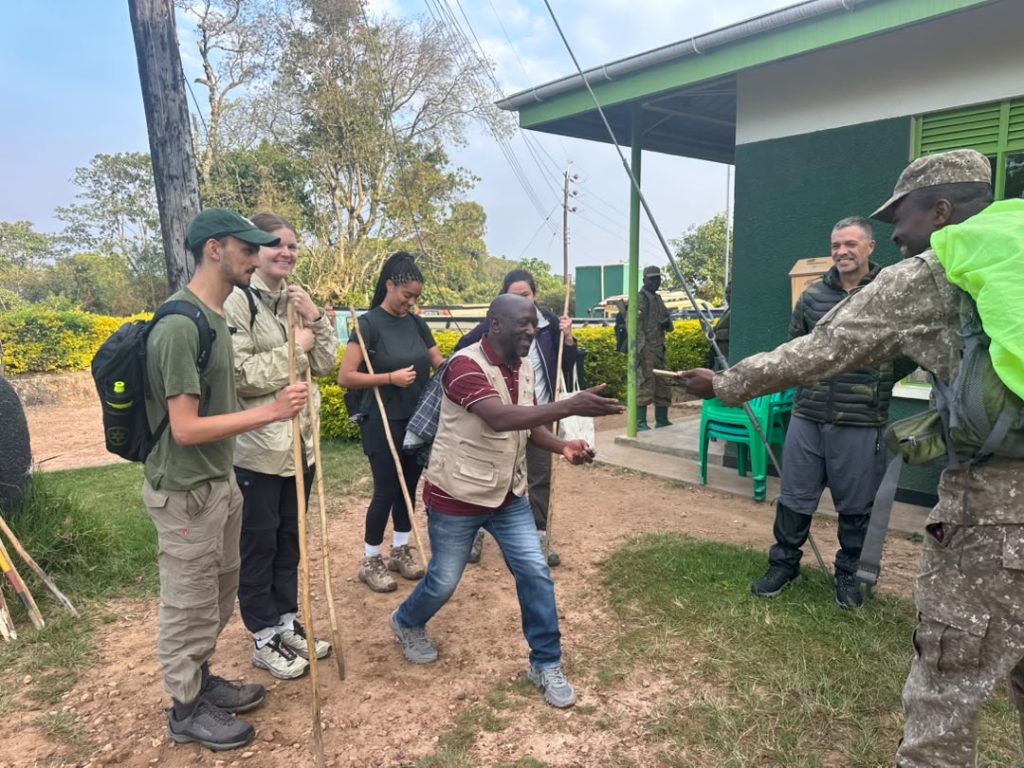
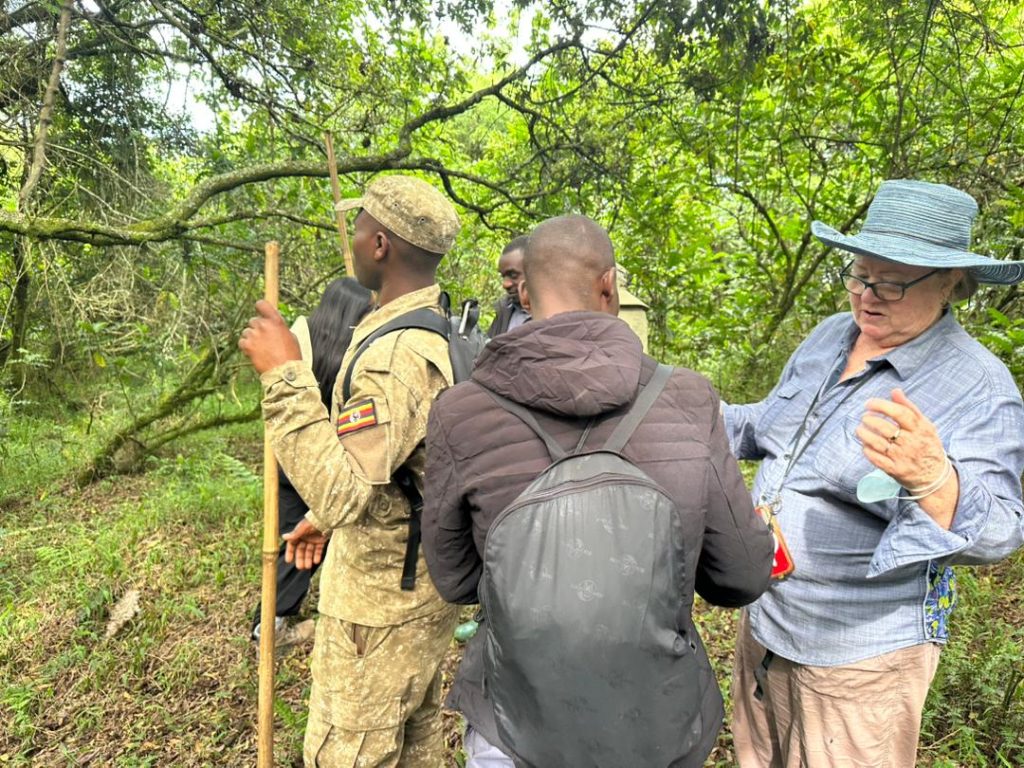
Your day begins with an early breakfast at your lodge and a short drive to the Rushaga sector headquarters. At around 7:30 AM, rangers welcome visitors with a briefing, often accompanied by a performance from local dancers. They check your permit and passport, explain the trekking rules and assign groups of up to eight people to each gorilla family, taking fitness into account where possible.
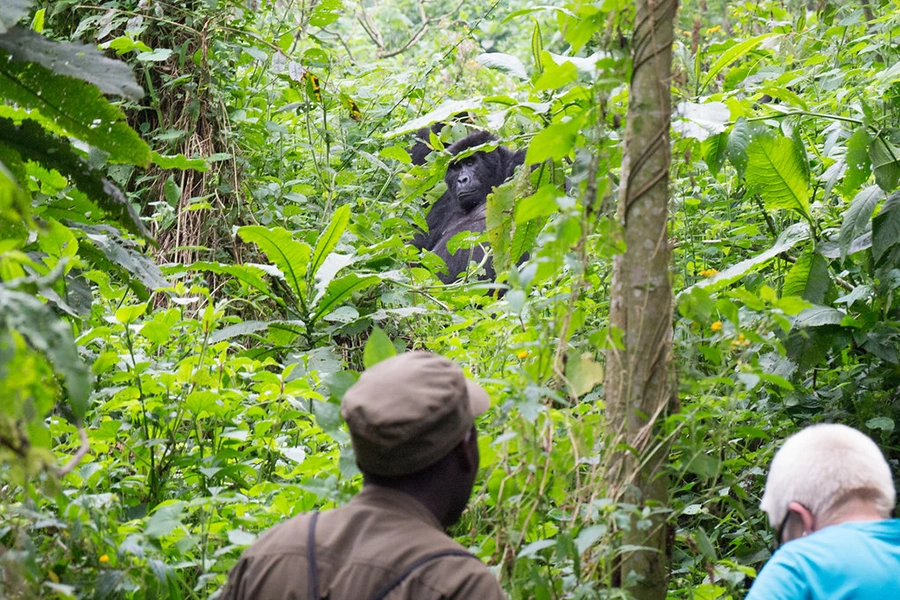
At about 8:00 AM, you set off with an armed ranger guide and porters. Advance trackers are already following the family’s trail from the previous night’s nests and radio updates to your guide. The trek may pass through farmland, tea gardens and bamboo before entering the forest proper. When the gorillas are found, you leave your bags with the porters and spend one unforgettable hour watching them feed, groom, play and rest. Then you return to the headquarters to receive your gorilla trekking certificate.
To understand how the experience feels, read our article on what it’s like to trek gorillas in Uganda and Rwanda.
How Difficult Is Gorilla Trekking in Rushaga?
Rushaga’s terrain is varied. Because the sector has many families spread across different areas, some treks are short and relatively gentle, while others involve steep climbs through thick vegetation. Overall, Rushaga is considered moderate to strenuous, generally easier than neighbouring Nkuringo but more challenging on average than Buhoma.
The good news is that Rushaga’s large number of families gives rangers more flexibility to match trekkers with families closer to the trailhead. If you have limited fitness or mobility, tell the rangers at the briefing. Hiring a porter, using a walking stick and pacing yourself all help. For a comparison of difficulty across Bwindi, read our guide on which part of Bwindi is easy for gorilla trekking.
Meet Some of Rushaga’s Gorilla Families
Rushaga’s gorilla families have rich histories of splits, takeovers and new beginnings. Here is a brief introduction to some of the best-known groups. Family sizes change over time, so your ranger will give you the latest details at your briefing.
Nshongi: Named after a nearby river, Nshongi made headlines when it opened to tourism as one of the largest habituated gorilla families ever recorded in Uganda. Over time it split, and several of Rushaga’s other families trace their roots back to it.
Mishaya: Formed when a silverback broke away from Nshongi with a group of females, Mishaya became known for its leader’s habit of gathering females from other groups.
Kahungye: A family that ranges across the hills of Rushaga, Kahungye has itself split over the years, giving rise to newer groups.
Busingye: Born from a split in Kahungye, Busingye’s name relates to the idea of peace, a slightly ironic choice given its leader’s reputation for confrontations with rival silverbacks.
Bweza: Another family formed from a split, Bweza is a popular group for trekkers in the southern part of the sector.
Bikingi and other habituation groups: Some Rushaga families are used for the gorilla habituation experience before being fully opened for standard trekking, giving habituation visitors a front-row seat to the process.
Knowing a little about these families before you arrive makes the briefing and your hour in the forest far more meaningful.
Porters, Rangers and Tipping in Rushaga
At the Rushaga headquarters, local porters wait to help trekkers. For a modest fee, usually around US$15–20, a porter carries your daypack, gives you a steady hand on steep or slippery sections and shares stories about the forest and local life. Many porters come from families living around the park, and some are former poachers who now earn a living from tourism. Hiring a porter is one of the simplest ways to support conservation and the local community.
Tipping is customary and appreciated. Plan to tip your ranger guide, trackers, porter and driver-guide at the end of your trek or safari. US dollars and Ugandan shillings are both accepted. If you are travelling from Kigali, change a small amount of money into shillings before crossing the border or ask your guide where to change it in Kisoro.
Gorilla Trekking Rules You Will Hear in Rushaga
The rules are the same throughout Bwindi and are explained at every briefing:
- Keep at least seven metres from the gorillas, even if they approach.
- Stay in a tight group behind your ranger and speak quietly.
- Never use flash photography.
- Do not eat, drink or smoke near the gorillas.
- Do not trek if you are unwell, as gorillas can catch human illnesses.
- Turn away and cover your mouth if you need to cough or sneeze.
- If a gorilla charges, stay calm, crouch down and look away.
- Your time with the gorillas is limited to one hour (four hours for habituation).
Masks may also be requested near the gorillas. Following these rules protects the gorillas and helps keep Rushaga’s families healthy for future visitors.
Rushaga vs Rwanda’s Volcanoes National Park
Travellers in Kigali often weigh Rushaga against Volcanoes National Park, which is closer, around two to three hours from Kigali. Here is how they compare:
| Factor | Rushaga (Uganda) | Volcanoes NP (Rwanda) |
|---|---|---|
| Drive from Kigali | 4–5 hours (with border) | 2–3 hours |
| Standard permit | US$800 | US$1,500 |
| Habituation experience | Yes, up to 4 hours (US$1,500) | No |
| Habitat | Dense, ancient montane rainforest | Bamboo and volcanic slopes |
| Atmosphere | Wilder, fewer crowds | Polished, luxury-focused |
| Nearby extras | Lake Mutanda, Mgahinga, Batwa culture | Golden monkeys, Dian Fossey hike |
If budget, adventure and permit availability matter to you, Rushaga is often the better choice. If you have very limited time and a generous budget, Volcanoes may suit you. Many travellers do both, trekking in Rwanda one day and Uganda the next, to compare the experiences.
Rushaga vs Nkuringo for Travellers from Kigali
Nkuringo is Rushaga’s southern neighbour and is also easily reached from Kigali. Both sectors are around the same distance from the border. The key differences are:
- Number of families: Rushaga has many more families than Nkuringo, which means better permit availability.
- Terrain: Nkuringo is known as Bwindi’s toughest sector, with a steep descent into the valley and a hard climb back out. Rushaga offers more variety and usually easier options.
- Habituation: Only Rushaga offers the gorilla habituation experience.
- Views: Nkuringo’s ridge offers some of the most dramatic views of the Virunga volcanoes, while Rushaga’s lodges also offer beautiful forest and lake scenery. Many travellers stay in one sector and visit the other on a scenic drive or the cross-forest trail.
For most travellers coming from Kigali, Rushaga strikes the best balance of accessibility, choice and comfort.
Gorilla Permits for Rushaga: Booking from Kigali
Gorilla permits for Rushaga are issued by the Uganda Wildlife Authority. A standard permit currently costs US$800 per person for foreign non-residents, with lower rates for foreign residents and East African citizens. Habituation permits cost US$1,500. Each permit is valid for a specific sector and date, so make sure your permit is booked for Rushaga.
Key permit facts:
- Minimum age for gorilla trekking is 15 years.
- Permits are non-transferable and linked to your passport.
- Full payment is required when booking.
- Book four to six months ahead for peak months; Rushaga often has better short-notice availability than other sectors.
You do not need to be in Uganda to book. Kenlink Tours secures permits for guests travelling from Kigali and arranges every step of the journey. Contact our team to check Rushaga availability for your dates.
Transfers from Kigali: Choosing the Right Operator
A smooth cross-border transfer makes all the difference. Look for an operator with experienced driver-guides who know both countries, reliable 4×4 vehicles, good knowledge of border procedures and the ability to coordinate permits, lodges and transport together.
Kenlink Tours offers Kigali-to-Rushaga transfers as part of our gorilla packages, and we have written a guide to companies that do transfers from Rwanda to Bwindi, Uganda to help you compare options. Our partners at Pick and Transfer Safaris also specialise in Kigali-to-Uganda transfers.
Best Time to Trek Gorillas in Rushaga
Gorilla trekking in Rushaga runs all year. The dry seasons, June to September and December to February, offer firmer trails, easier road travel and clearer views, but permits sell faster. The wet seasons, March to May and October to November, bring rain and mud but also lush scenery, fewer visitors and occasional lodge discounts. Keep an eye on our discounted tours for seasonal offers.
Rain can make the roads between Kigali, the border and Rushaga slower, so allow extra travel time during wet months, especially if you are planning a one-day trek.
What to Pack for a Rushaga Gorilla Trek from Kigali
- Passport, Ugandan or East Africa Tourist Visa and yellow fever certificate
- Printed or digital gorilla permit confirmation
- Waterproof hiking boots with good grip
- Long trousers and long-sleeved shirts in neutral colours (no camouflage)
- A warm layer for cold mornings and a light rain jacket
- Gardening gloves and gaiters or long socks
- A daypack with water, snacks and a packed lunch
- Insect repellent, sunscreen and a hat
- Camera with spare batteries (no flash)
- US dollars or Ugandan shillings for porters and tips
Note that Rwanda has a strict ban on plastic bags, so pack in reusable bags before you leave Kigali. See our full guide on what to pack for gorilla trekking in Uganda, Rwanda and Congo.
Things to Do in Rushaga Beyond Gorilla Trekking
Batwa cultural experience: Meet members of the Batwa community, the forest’s original inhabitants, and learn about their traditional life, songs and knowledge of medicinal plants.
Lake Mutanda: Enjoy canoe rides, island visits and lakeside walks with views of the volcanoes.
Nature walks: Guided forest walks reveal birds, butterflies, monkeys and waterfalls.
Community visits: Visit local farms, schools and craft groups to see how tourism supports families around the park.
For more ideas, read this guide on what to do after a gorilla tour in Bwindi.
Sample Itineraries: Rushaga from Kigali
2 days: Day 1, morning pick-up in Kigali, drive via Cyanika to Rushaga, afternoon at Lake Mutanda. Day 2, gorilla trekking, then return to Kigali.
3 days: Add a Batwa cultural experience or golden monkey tracking in Mgahinga before returning to Kigali.
4 days: Gorilla habituation in Rushaga, standard trekking or golden monkeys the next day, a relaxing day at Lake Mutanda or Lake Bunyonyi, then back to Kigali.
5 days: Combine Rushaga gorillas with chimpanzee tracking. Options include the 5 Days Uganda Gorilla and Chimps Safari starting from Rwanda, or a loop through Rwanda’s Nyungwe Forest National Park.
Rwanda and Uganda combined: Pair Rushaga with Rwanda highlights such as the 3 Days Rwanda Gorilla Tracking and Cultural Tour, or continue north through Uganda and fly home from Entebbe, as explained in this guide to starting in Kigali and ending in Entebbe. Our article on combining Rwanda and Uganda gorilla trekking and culture offers more route ideas.
Is It Safe to Travel from Kigali to Rushaga?
Yes. The Kigali–Rushaga route is one of the most travelled cross-border tourism routes in East Africa. Roads in Rwanda are excellent, Ugandan roads to Kisoro are paved, and the final stretch to Rushaga is a well-used murram road. Border posts are busy and well organised. Armed rangers accompany every gorilla trek, and lodges have their own security.
Travelling with a professional tour operator and experienced driver-guide adds further peace of mind. Avoid driving at night where possible, and always follow your guide’s advice.
FAQ: How Far Is Rushaga from Kigali?
Rushaga is roughly four to five hours by road from Kigali, including the border crossing at Cyanika or Katuna.
FAQ: Can I Do a Day Trip to Rushaga from Kigali?
Yes. With a pick-up between 3:00 and 4:00 AM, you can trek gorillas in Rushaga and return to Kigali the same evening, though an overnight stay is more comfortable.
FAQ: Is Rushaga Cheaper Than Rwanda for Gorilla Trekking?
Yes. A Ugandan gorilla permit costs US$800, compared with US$1,500 in Rwanda, a saving of US$700 per person.
FAQ: Which Border Is Best for Rushaga?
Cyanika is the most common, via Musanze and Kisoro. Katuna/Gatuna is a good alternative via Kabale.
FAQ: Do I Need a Visa for Uganda If I Am Already in Rwanda?
Yes, most visitors need a Ugandan visa or an East Africa Tourist Visa covering Uganda, Rwanda and Kenya.
Book Your Rushaga Gorilla Trek from Kigali with Kenlink Tours
So, why choose Rushaga sector if you are coming from Kigali, Rwanda? Because it is close, affordable and exceptional. Rushaga is just four to five hours from Kigali, has the most gorilla families in Uganda, offers the unique gorilla habituation experience, and saves you US$700 per person on permits compared with Rwanda. Add beautiful lodges, Lake Mutanda, golden monkeys in nearby Mgahinga and an unforgettable journey through the hills of two countries, and it is easy to see why so many Kigali travellers make Rushaga their gorilla destination.
At Kenlink Tours, we handle everything: gorilla permits, cross-border transfers, border support, lodges and itineraries tailored to your time and budget. Learn more about our team, browse our Uganda safaris, and get in touch today to start planning your Rushaga gorilla adventure from Kigali.