- EXPERT'S HELP
- +256789210067
- +256200955001
- info@kenlinktours.com


Gorilla Trek and Big Cats Safaris in Uganda
November 21, 2026
Uganda Safe Safaris for 2027
November 22, 2026
Wildlife Safaris in Uganda with Chimpanzees. Few places on Earth let you look into the eyes of a wild chimpanzee in the morning and watch lions lounging in a fig tree by the afternoon. Uganda does. Known as the Pearl of Africa, this compact East African country packs dense tropical rainforest, open savannah, crater lakes, the mighty River Nile and the snow-capped Rwenzori Mountains into a single trip. For travellers who want more than a standard game drive, wildlife safaris in Uganda with chimpanzees offer one of the richest wildlife experiences on the continent.
At Kenlink Tours, we have spent years guiding visitors through Uganda’s forests and parks, and chimpanzee tracking remains one of the experiences our guests talk about long after they get home. This guide covers everything you need to plan your own chimpanzee safari: where to see chimps, what a tracking day looks like, permit costs, the best time to travel, what to pack, how to combine chimps with gorillas and the Big Five, and which itineraries suit different budgets and timeframes.
Why Uganda Is the Best Place for a Chimpanzee Safari
Uganda is home to roughly 5,000 wild chimpanzees, one of the largest populations in East Africa, and several of its communities have been habituated to human presence over many years. Habituation is a slow, careful process in which researchers and rangers spend months, sometimes years, following a chimp community until the animals accept quiet human observers. The result is that visitors can watch chimpanzees feeding, grooming, playing and calling to one another at close range, without disturbing their natural behaviour.
What makes Uganda stand out is not only the number of chimps but the variety of places to see them. You can track chimpanzees in an ancient rainforest, in a sunken river gorge in the middle of a savannah park, or in a mahogany forest near the Nile. Each location is a short drive from classic game-viewing parks, which makes it easy to build a trip that blends primates and big game. If you are new to the country, our About Uganda page gives a helpful overview of the people, climate and culture before you start planning.
Uganda also offers excellent value. Permit prices for both chimpanzees and mountain gorillas are lower than in neighbouring Rwanda, roads to the main parks have improved considerably, and there is accommodation for every budget, from simple bandas to luxury forest lodges. You can browse our full range of Uganda safaris to see how chimp tracking fits into trips of different lengths.
Meet Our Closest Relatives: Understanding Chimpanzees
Chimpanzees share about 98 percent of their DNA with humans, and spending an hour with them makes that statistic feel very real. They live in communities of anywhere from 20 to more than 100 individuals, led by a dominant alpha male, though the community constantly splits into smaller groups that forage separately during the day. This “fission-fusion” society means that on any given trek you might meet a small family group or a large, noisy gathering.
Chimps are intelligent tool users. You may see them strip leaves from a twig to fish for termites, use stones to crack nuts, or chew leaves into a sponge to soak up water. They communicate with an extraordinary range of hoots, screams, pant-grunts and drumming on the buttress roots of large trees. Often you will hear a community long before you see it, as the famous “pant-hoot” chorus rises through the forest canopy.
Chimpanzees are classified as endangered. Habitat loss, hunting and disease are the main threats, which is why responsible tourism matters so much. Every permit you buy helps fund ranger patrols, research and community projects around the parks. At Kenlink, we share 30 percent of our profits with local communities and support orphaned children in Kisoro district, so your trip contributes directly to people living alongside wildlife. You can read more about our values on our About Us page.
Kibale Forest National Park: The Primate Capital of the World
If you only track chimpanzees in one place, make it Kibale. Covering about 795 square kilometres of moist evergreen and semi-deciduous forest in western Uganda, Kibale Forest National Park holds an estimated 1,500 chimpanzees, the highest density of chimps in East Africa. It is also home to 13 primate species in total, including the rare L’Hoest’s monkey, red colobus, black-and-white colobus, grey-cheeked mangabey and red-tailed monkey, which is why it is often called the primate capital of the world.
Kibale’s habituated chimp communities, centred around the Kanyanchu visitor centre, offer some of the most reliable sightings anywhere in Africa, with success rates commonly quoted at well over 90 percent. The park sits close to the town of Fort Portal, surrounded by tea plantations and the beautiful crater lakes of the Ndali-Kasenda region, so it is a lovely place to spend two or three nights. For a detailed overview of the park’s habitats, wildlife and lodges, see this useful Kibale Forest National Park guide from Pick and Transfer Safaris.
Our most popular short trip here is the 3-Day Chimpanzee Tracking Safari, which takes you from Kampala or Entebbe to Kibale, includes a full chimp trek and a guided walk in the nearby Bigodi Wetland Sanctuary, and returns you to the city on day three. If you would prefer more time in the forest, our 3 Days Chimp Tracking Safari to Kibale National Park can be extended with a crater lakes hike or a visit to Fort Portal’s tea estates.
Kyambura Gorge: The Valley of Apes in Queen Elizabeth National Park
Hidden within the plains of Queen Elizabeth National Park, Kyambura Gorge is one of Uganda’s most dramatic landscapes. The gorge is a 100-metre-deep, 11-kilometre-long cleft in the savannah, filled with lush riverine forest fed by the Kyambura River. From the rim you look out across open grassland, then descend into a green, steamy world where a small community of habituated chimpanzees lives in near isolation.
Because the chimp population here is small and the terrain is steep, sightings are less guaranteed than in Kibale, but the setting is unforgettable. The trek often includes sightings of black-and-white colobus monkeys, olive baboons, forest birds and occasionally hippos in the river below. Kyambura is a superb add-on for travellers already spending time in Queen Elizabeth, and permits are noticeably cheaper than in Kibale.
Queen Elizabeth itself is one of Uganda’s best-loved parks, famous for the Kazinga Channel boat cruise, the tree-climbing lions of Ishasha and more than 600 bird species. You can explore all of it on our 3 Days Queen Elizabeth National Park wildlife encounter. For background on the park’s sectors and wildlife, take a look at this Queen Elizabeth National Park destination guide.
Budongo Forest and Murchison Falls National Park
In the north-west of Uganda, the Budongo Forest Reserve forms part of the greater Murchison Falls Conservation Area. Budongo is the largest mahogany forest in East Africa and supports around 600 chimpanzees, some of which have been studied by researchers since the early 1990s. The Kaniyo Pabidi section is the main tourist tracking site, offering a quieter, less crowded experience than Kibale, with beautiful old-growth trees and good birding, including the rare Puvel’s illadopsis and yellow-footed flycatcher.
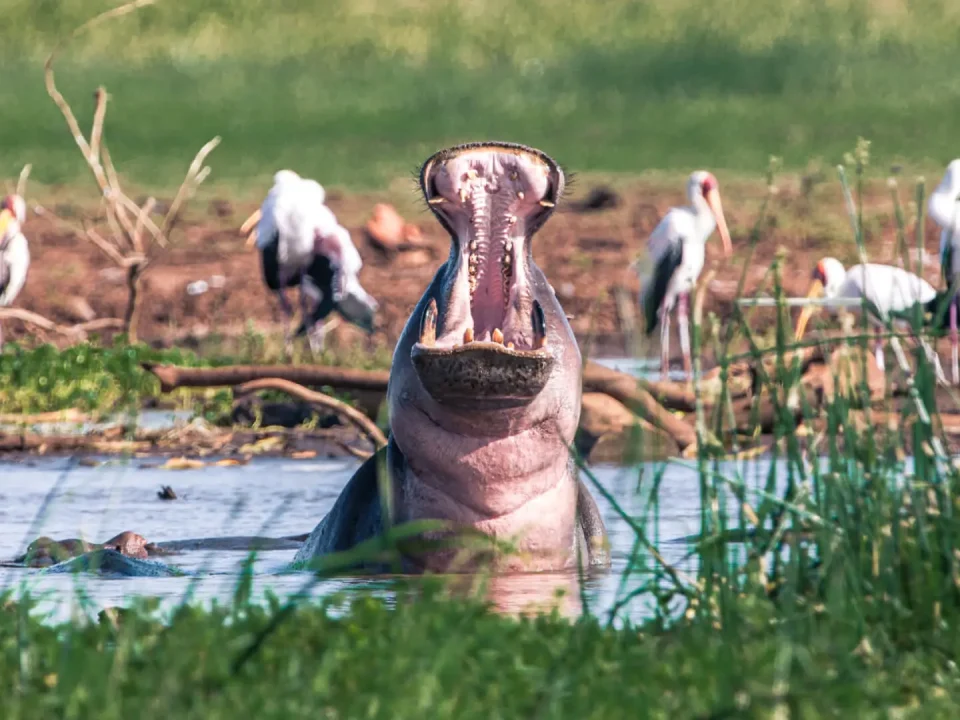
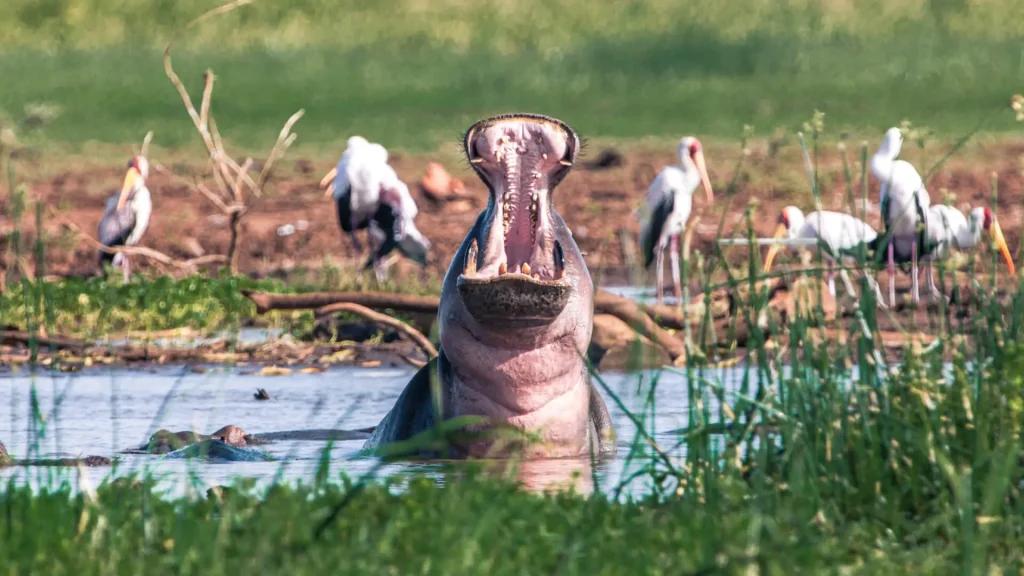
Pairing Budongo with Murchison Falls National Park creates one of the most rewarding wildlife combinations in the country. Murchison is Uganda’s largest national park, where the River Nile forces its way through a gap just seven metres wide before plunging into the Devil’s Cauldron. Game drives on the northern bank reveal elephants, Rothschild’s giraffes, buffaloes, Uganda kobs, lions and leopards, while the boat cruise to the bottom of the falls brings you close to hippos, crocodiles and, with luck, the prehistoric-looking shoebill stork. Read more in this Murchison Falls National Park overview, or see how a short trip there works with this 3 Days Safari to Murchison Falls itinerary.
Kalinzu Forest and Other Chimpanzee Tracking Sites
Kalinzu Forest Reserve, managed by the National Forestry Authority, lies just outside Queen Elizabeth National Park near the town of Bushenyi. It is one of the most affordable places to track chimpanzees in Uganda and has a well-habituated community with good sighting rates. Kalinzu is a smart choice for budget travellers or anyone who wants a second chimp encounter without paying Kibale prices.
Other options include the Toro-Semliki Wildlife Reserve, where chimps move between gallery forest and open savannah, and Bugoma Forest, a newer and more remote destination. Each offers a different flavour of chimp tracking, and an experienced guide can help you decide which suits your route and budget best.
What to Expect on a Chimpanzee Tracking Day
A typical chimp tracking day in Kibale starts early. After breakfast at your lodge, you drive to the Kanyanchu visitor centre for a briefing at around 8:00 am, with a second session usually offered at 2:00 pm. Rangers explain the rules, introduce the chimpanzee community you will visit, and divide visitors into small groups so that no single group of chimps is overwhelmed.
Then the trek begins. You follow a ranger along forest trails, listening for calls and looking for fresh signs such as half-eaten fruit, dung and nests. Trackers often go ahead at dawn to locate the community, so the ranger is usually in radio contact with them. Treks can take anywhere from 30 minutes to three hours depending on where the chimps are feeding. The forest floor is mostly flat in Kibale, but it can be muddy, and you may need to duck under vines or step over roots.
When you find the chimps, you get one hour with them. Some may be high in a fig tree, dropping fruit as they feed; others may be resting on the ground, grooming, or chasing one another through the undergrowth. The noise when a community erupts into pant-hoots is something you feel in your chest. Rangers will keep you at a respectful distance of around eight metres and ask you to wear a face mask to protect the chimps from human illnesses. After your hour, you walk back to the visitor centre, usually buzzing with excitement.
The Chimpanzee Habituation Experience (CHEX)
For travellers who want to go deeper, Kibale offers the Chimpanzee Habituation Experience. Instead of a single hour, you join researchers and habituators for most of the day, entering the forest at dawn as chimps descend from their night nests and staying with them until they build new nests in the evening. You see the full rhythm of a chimp day: feeding, travelling, resting, social squabbles and grooming sessions.
The habituation experience is ideal for photographers, wildlife enthusiasts and anyone fascinated by animal behaviour. It involves more walking and requires a reasonable level of fitness, and permits are limited, so it should be booked well in advance. Ask us when you enquire and we will check availability for your dates.
Chimpanzee Permit Costs in Uganda (2026–2027)
Permits are issued by the Uganda Wildlife Authority (UWA) for national parks and by the National Forestry Authority for forest reserves such as Kalinzu and Budongo. Here is a guide to current prices for foreign non-residents:
- Kibale chimpanzee tracking: USD 250 per person under the tariff running to the end of 2026, with a reported increase to USD 300 from 1 January 2027.
- Kibale Chimpanzee Habituation Experience: USD 300 per person under the current tariff, with a reported increase for 2027.
- Kyambura Gorge, Budongo and Kalinzu: noticeably cheaper than Kibale, making them good value alternatives or second treks.
- Foreign residents and East African citizens pay lower rates.
Prices are subject to change, so always confirm the latest rates before you travel. When you book any of our safaris, we buy permits on your behalf and include them in your package price. Because daily permit numbers are limited, we recommend booking at least two to three months ahead, and up to six months ahead for the peak months of June to September and December to February.
Best Time to Go on a Wildlife Safari in Uganda with Chimpanzees
Chimpanzee tracking runs all year round, but the experience changes with the seasons. Uganda’s two main dry seasons, from June to September and from December to February, are the most popular times to visit. Forest trails are firmer, game viewing in the savannah parks is excellent as animals gather near water, and photography conditions are good.
The wet seasons, from March to May and from October to November, bring heavier rain, especially in the afternoons. Trails can be slippery, but the forests are at their most lush, fruit is often abundant (which keeps chimps in one area), and there are fewer visitors. Some lodges also offer low-season discounts. Birdwatchers in particular love the wetter months, when migratory species arrive. If birds are a big part of your trip, consider our 7-Day Birdwatching Safari in Uganda, which can be combined with a chimp trek.
Combining Chimpanzee Tracking with Gorilla Trekking
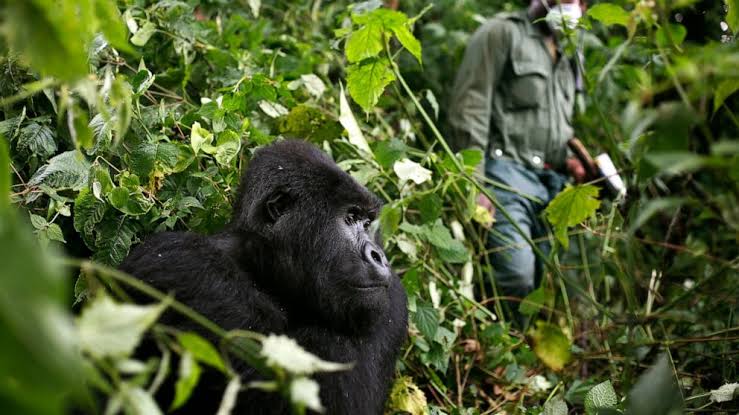
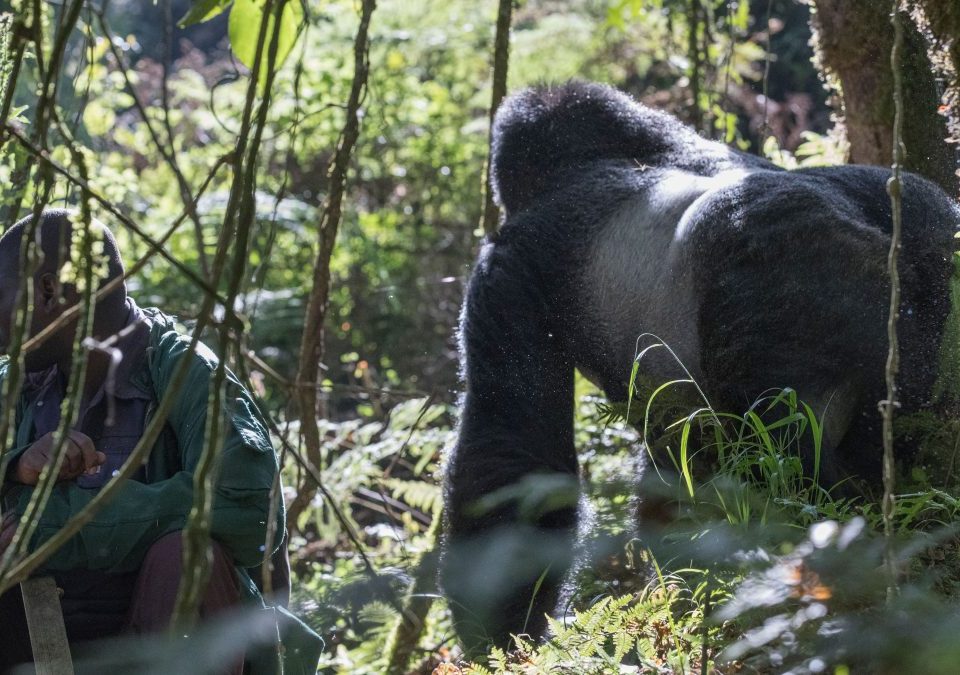
For most visitors, the dream Uganda safari includes both great apes: chimpanzees and mountain gorillas. Uganda holds about half of the world’s remaining mountain gorillas, mainly in Bwindi Impenetrable National Park and Mgahinga Gorilla National Park in the far south-west. A gorilla trek is quieter and more intimate than a chimp trek: gorillas are calmer, spend more time on the ground, and an hour watching a silverback with his family is profoundly moving.
The classic route runs from Kibale south through Queen Elizabeth to Bwindi, combining chimps, savannah wildlife and gorillas in a single loop. Our 5 Days Gorilla and Chimpanzee Tour in Uganda covers both primates in under a week, while the 5 Days Chimps and Gorilla Safari offers a slightly different pace with time for a boat cruise. If you prefer to start in Kigali, Rwanda, which is closer to Bwindi than Entebbe, this 5 Days Uganda Gorilla and Chimpanzee Safari from Pick and Transfer Safaris shows how a cross-border route can work.
To learn more about the gorilla parks, read this Bwindi Impenetrable Forest National Park guide and this overview of Mgahinga Gorilla National Park, where you can also track rare golden monkeys.
Big Game and Chimps: Building the Perfect Wildlife Safari
Uganda is not only about primates. Its savannah parks host elephants, buffaloes, lions, leopards, hippos, giraffes and a wide variety of antelope, and Ziwa Rhino Sanctuary, on the road to Murchison Falls, lets you track southern white rhinos on foot. Combining these with chimpanzee tracking produces a safari with incredible variety.
A balanced itinerary might start with rhino tracking at Ziwa, continue to Murchison Falls for game drives and the Nile cruise, track chimps in Budongo or Kibale, then head to Queen Elizabeth for lions and the Kazinga Channel before finishing with gorillas in Bwindi. Our 8-Day Uganda Gorilla, Chimpanzee and Wildlife Safari is designed exactly along these lines, and the 7 Days Gorilla and Wildlife Safari is perfect if you have one week. For more inspiration, Pick and Transfer Safaris has a good selection of wildlife safaris in Uganda and Rwanda worth browsing.
Recommended Uganda Chimpanzee Safari Itineraries
Every traveller has a different amount of time and a different budget, so here are some of our favourite chimpanzee-focused itineraries, from short breaks to grand tours.
Short trips (3 to 4 days). Ideal if you are combining Uganda with a business trip or another country. The 3-Day Chimpanzee Tracking Safari focuses on Kibale, while the 4 Days Uganda Primate Tour adds extra primate experiences. Compare these with the 3 Days Chimpanzee Tour in Uganda and the 4 Days Wildlife and Primate Safari to see different ways of using a long weekend.
Mid-length trips (5 to 8 days). The sweet spot for most first-time visitors. Try the 5 Days Gorilla and Wildlife Safari, or step up to the 8-day gorilla, chimp and wildlife trip mentioned above for the full range of Uganda’s highlights.
Longer trips (10 to 15 days). With ten days or more you can cover chimps, gorillas, savannah parks, crater lakes and cultural encounters at a relaxed pace. Our 10 Days Uganda Primate, Wildlife and Cultural Tour is one of our most loved trips, and the 10 Days Uganda Adventure Safari adds activities such as white-water rafting on the Nile. For comparison, look at the 10 Days Uganda Primates and Wildlife itinerary and the two-week 14-Day Uganda Primates and Safari Adventure.
Grand tours (15 days and longer). For the ultimate East African journey, our 15-Day Rwanda and Uganda Primate and Big Five Safari crosses borders, while the 20-Day Wildlife and Nature Experience in Uganda and the 25-Day Wildlife, Gorilla and Chimps Uganda Adventure leave almost no corner of the country unexplored.
Adding Rwanda’s Chimpanzees to Your Trip
Many travellers combine Uganda with Rwanda, and Rwanda has its own chimpanzee hotspot: Nyungwe Forest National Park, a vast montane rainforest in the south-west of the country. Nyungwe is also famous for its canopy walkway suspended high above the forest and for large troops of Rwenzori colobus monkeys. Our 3-Day Nyungwe Forest National Park Tour is a great way to add a second chimp experience to a cross-border trip. For more about the park, see this Nyungwe Forest National Park guide.
Other Activities Around Chimpanzee Parks
Chimpanzee tracking usually takes half a day, so there is plenty of time to enjoy other experiences nearby:
- Bigodi Wetland Sanctuary walk: a community-run swamp walk next to Kibale, home to around 200 bird species, including the great blue turaco, plus several monkey species.
- Crater lakes hiking: the Ndali-Kasenda crater field near Fort Portal offers scenic walks, swimming and stunning viewpoints.
- Kazinga Channel boat cruise: in Queen Elizabeth, a two-hour cruise brings you close to hippos, elephants, buffaloes and countless water birds.
- Nile boat cruise to Murchison Falls: an unforgettable trip to the foot of the world’s most powerful waterfall.
- Cultural visits: tea plantation tours, traditional dance performances and village walks give insight into everyday life in western Uganda.
- Night walks in Kibale: spot bushbabies, pottos and nocturnal insects with a ranger after dark.
What to Pack for a Chimpanzee Safari
Packing well makes a big difference to your comfort in the forest. Here is our recommended checklist:
- Sturdy, waterproof hiking boots with good grip
- Long trousers and long-sleeved shirts in neutral colours (green, khaki, brown) to protect against nettles and insects
- A lightweight rain jacket, as forest showers can arrive at any time of year
- Garden or gardening gloves to grip vines and branches
- Insect repellent containing DEET, and long socks you can tuck your trousers into to keep safari ants out
- A small daypack with at least one litre of water and some snacks
- A camera with a fast lens; flash photography is not allowed
- Face masks, which are required near the chimpanzees
- Sunscreen, a hat and sunglasses for the savannah parks
- Binoculars for birds and monkeys high in the canopy
Chimpanzee Tracking Rules and Etiquette
To protect the chimps and keep visitors safe, the Uganda Wildlife Authority enforces a set of rules on every trek:
- The minimum age for chimpanzee tracking is 12 years.
- Do not track if you are feeling unwell; chimps can catch human illnesses such as colds and flu.
- Keep a distance of at least eight metres from the chimpanzees.
- Wear a face mask when you are near the chimps.
- Never eat, drink or smoke near the animals.
- Keep your voice low and avoid sudden movements.
- Do not use flash photography.
- Never leave litter in the forest.
- Follow your ranger’s instructions at all times.
How Much Does a Uganda Chimpanzee Safari Cost?
The total cost of your safari depends on the length of the trip, the level of accommodation and how many people are travelling together. As a rough guide, budget trips use simple but comfortable lodges and shared or private vehicles; mid-range trips use well-appointed lodges with excellent food and service; and luxury trips use exclusive forest and savannah lodges with private guiding.
Your package typically includes permits, park entry fees, a private 4×4 safari vehicle with fuel, an English-speaking driver-guide, accommodation, meals and drinking water. International flights, visas, tips and personal items are usually extra. Travelling in a small group or joining one of our group tours or scheduled departure safaris is a great way to lower the price per person while still enjoying an expert guide.
If you prefer to explore independently, our car hire service offers well-maintained 4×4 vehicles, with or without a driver, so you can follow your own route between the chimp forests and savannah parks.
Getting There and Getting Around
Most international visitors fly into Entebbe International Airport, about 40 kilometres from Kampala. From there, Kibale is around five to six hours by road, Murchison Falls about five hours and Bwindi eight to nine hours. Domestic flights to airstrips near Kibale, Queen Elizabeth, Murchison and Bwindi can shorten the journey if you are short on time.
Travellers coming from Rwanda can enter Uganda through the Katuna or Cyanika border crossings, which put Bwindi and Mgahinga only a few hours from Kigali. Most nationalities can obtain an e-visa online before travel, and the East Africa Tourist Visa covers Uganda, Rwanda and Kenya on a single permit. A valid yellow fever vaccination certificate is required for entry into Uganda.
Why Book Your Chimpanzee Safari with Kenlink Tours
Planning a wildlife safari in Uganda with chimpanzees involves securing permits, arranging reliable transport over long distances and choosing lodges that suit your style. That is where a trusted local operator makes all the difference. When you travel with us, you get:
- Expert local guides who know the forests, the parks and the wildlife intimately.
- Fully tailored itineraries built around your interests, dates and budget.
- Comfortable 4×4 safari vehicles with Wi-Fi, so you can stay connected on the road.
- 24/7 support from our reservations and technical teams before and during your trip.
- Competitive, transparent pricing with no hidden extras.
- Real community impact, with 30 percent of our profits supporting local communities and orphaned children in Kisoro.
Whether you want a quick three-day chimp escape or a month-long adventure across East Africa, we will design a safari that is right for you.
Frequently Asked Questions About Chimpanzee Safaris in Uganda
Where is the best place to see chimpanzees in Uganda? Kibale Forest National Park offers the highest density of chimpanzees and the best chance of sightings. Kyambura Gorge, Budongo Forest and Kalinzu Forest are excellent alternatives.
How long do you spend with the chimpanzees? On a standard tracking permit, you spend one hour with the chimps once they are found. On the Chimpanzee Habituation Experience, you spend most of the day with them.
Is chimpanzee tracking difficult? It requires moderate fitness. Treks in Kibale are generally on flat ground but can last up to three hours and may be muddy. Kyambura Gorge involves steeper slopes.
Can I see chimpanzees and gorillas on the same trip? Yes. Most of our itineraries combine chimpanzee tracking in Kibale with gorilla trekking in Bwindi or Mgahinga, often with game drives in Queen Elizabeth along the way.
When should I book my chimpanzee permit? Book at least two to three months in advance, and up to six months ahead for peak travel periods.
Is Uganda safe for tourists? Uganda is a welcoming country, and its national parks are well protected by the Uganda Wildlife Authority. Travelling with an experienced local operator adds an extra layer of safety and peace of mind.
Start Planning Your Uganda Chimpanzee Safari Today
A wildlife safari in Uganda with chimpanzees is more than a holiday. It is a chance to share a forest with our closest living relatives, to watch elephants cross the savannah, to hear the Nile thunder through a rocky gorge and to meet the warm, welcoming people who make Uganda the Pearl of Africa. Every trek you take helps protect these remarkable animals and supports the communities who live alongside them.
Ready to start? Browse our full collection of Uganda safaris, or contact our team today for a free, no-obligation itinerary tailored to your dates and budget. The chimpanzees of Kibale are waiting.