- EXPERT'S HELP
- +256789210067
- +256200955001
- info@kenlinktours.com


Two days Uganda Safari
September 10, 2026
Best places to spot Lions in Uganda
September 10, 2026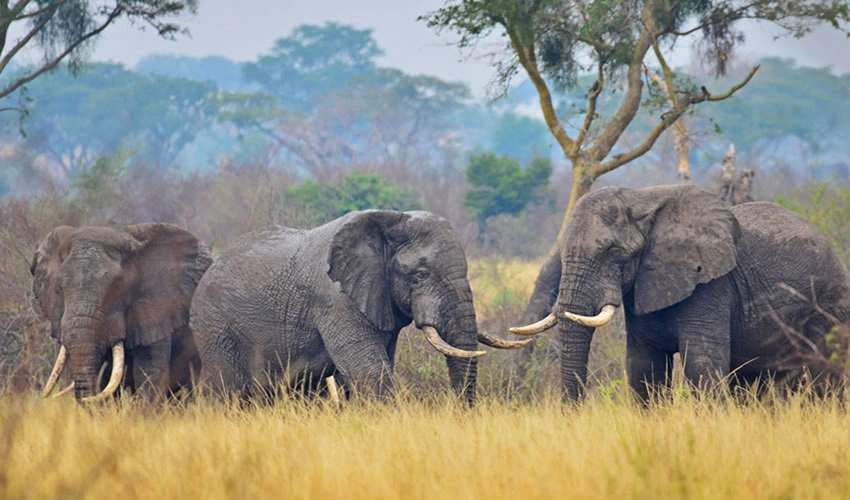
Best Big Five Destinations in Uganda. Ask ten safari-goers where to find the Big Five in Uganda and you’ll get ten slightly different answers, mostly because the country doesn’t hand you lion, leopard, elephant, buffalo, and rhino in one tidy package the way parts of Kenya or South Africa can. What Uganda does have is a small handful of destinations that, taken together, cover all five convincingly — and knowing which ones, and in what order to rank them, makes the difference between a well-planned trip and a lot of wasted driving. At Kenlink Tours, we’ve built this ranked guide from years of running exactly these routes.
Uganda’s reputation as a “primates first” destination is well earned, but it sells the country’s savannah side short, and that gap in the conversation is exactly what this guide sets out to fix. Below are Uganda’s five best Big Five destinations, ranked by how reliably each one delivers, followed by how to combine them, what they cost, and when to go. If you want the fuller species-by-species breakdown first, our companion piece on where to see Big Five animals in Uganda pairs well with this ranked version, and a similar destination-first perspective from Pick and Transfer Safaris, where can I see the Big Five in Uganda, is worth reading for a second opinion before you book.
What Makes a Great Big Five Destination in Uganda?
Before ranking anything, it’s worth being clear about the criteria. A genuinely good Big Five destination needs more than just the presence of all five species on a checklist somewhere within its borders — it needs realistic sighting odds within the time most travelers actually have, decent infrastructure to get you there and around, and ideally more than one species worth chasing so a single disappointing sighting doesn’t sink the whole day. Rarity matters too: a park where a species is technically present but essentially never seen shouldn’t score the same as one where sightings are a near-certainty.
Using those criteria, Uganda’s five best Big Five destinations aren’t the ones with the longest species list on paper, but the ones that consistently deliver a satisfying day of wildlife viewing. A park with only two of the five species but excellent, near-guaranteed sightings of both can genuinely outperform a park boasting all five on paper but delivering weak, unreliable encounters with most of them — and that distinction shapes every ranking below. Here’s how we rank them.
1. Queen Elizabeth National Park – Uganda’s Best All-Round Big Five Destination
Queen Elizabeth National Park takes the top spot because it’s the only Ugandan park that reliably delivers lions, elephants, and buffalo within a single well-organized itinerary, with a genuine, if not guaranteed, shot at leopards too. The Ishasha sector’s famous tree-climbing lions — one of only two such populations in Africa — and the Kasenyi Plains’ more classic pride sightings give the park two distinct, high-quality lion-viewing areas, while the Kazinga Channel boat cruise is arguably the single best elephant and buffalo viewing experience in the country, often producing both species in the same frame as hippos and crocodiles.
Our comparison of game drives in Murchison Falls and Queen Elizabeth goes deeper into exactly how this park’s terrain and wildlife density compare to its closest rival, and Pick and Transfer Safaris’ 3-Day Queen Elizabeth Safari and Queen Elizabeth National Park destination page are both useful further reading on the park’s layout and sectors.
2. Murchison Falls National Park – The Big Four Plus a Rhino Day Trip
Murchison Falls takes second place, and it’s a close one. It covers the same four species as Queen Elizabeth — lion, leopard, elephant, and buffalo — across its northern savannah, with the added drama of Uganda’s most powerful waterfall and a genuinely spectacular Nile boat cruise thrown in. What pushes it just below Queen Elizabeth for Big Five purposes specifically is slightly less predictable lion viewing, though what pulls it back into serious contention is its position: Murchison sits almost directly on the route north from Kampala that also passes Ziwa Rhino Sanctuary, making it the one park where a rhino stop fits naturally into the same trip.
Our own guide to the best national park in Uganda for a game drive actually ranks Murchison Falls first overall for general game-drive quality, which tells you how close these two parks really are — the difference here comes down to Big Five specifics rather than overall safari quality. For the fuller itinerary, Pick and Transfer Safaris’ two days tour to Murchison Falls National Park and 3-Day Murchison Falls Safari both cover exactly what a visit here involves.
3. Kidepo Valley National Park – Uganda’s Wildest Big Five Frontier
Kidepo Valley, tucked into Uganda’s remote northeastern corner, is technically the only park in the country with a presence of all five species, including a small, newly reintroduced rhino population as of March 2026. It ranks third rather than first for one straightforward reason: remoteness. Reaching Kidepo typically requires a full day of overland driving or a short charter flight, and its lower visitor numbers, while a genuine charm for travelers seeking solitude, also mean somewhat less predictable tracking of lion, leopard, and rhino compared to the busier, better-resourced parks above it.
For travelers with a week or more to spend, though, Kidepo deserves serious consideration — its buffalo herds alone, sometimes swelling to several thousand animals, rival anything in East Africa. Our 25-Day Wildlife, Gorilla, Chimps and Uganda Adventure is one of the few itineraries with enough time built in to do Kidepo justice alongside the rest of the country.
4. Ziwa Rhino Sanctuary – The Only Place to See Rhinos in Uganda
Ziwa Rhino Sanctuary earns its place on this list despite not being a national park at all, because it’s the one destination that solves Uganda’s single biggest Big Five gap: rhino. Established in 2005 after both black and white rhino were hunted to local extinction by the early 1980s, this private, fenced sanctuary near Nakasongola has grown its southern white rhino population to around sixty individuals as of early 2026, and it remains the only place in the country offering guided, on-foot rhino tracking — walking to within a safe seven meters of grazing rhinos with an armed ranger.
Entry runs around $50 per adult, with rhino tracking itself an additional $45 per person for international visitors, according to our own Ziwa Rhino Sanctuary entrance fees and rates guide. Because it sits directly on the road to Murchison Falls, it’s an easy, natural add-on rather than a detour — see point two above for why that pairing works so well. Pick and Transfer Safaris’ Murchison Falls National Park destination page touches on this same combined routing from their side of the itinerary.
5. Lake Mburo National Park – Great for Buffalo, Not the Full Big Five
Lake Mburo rounds out this list mainly to set honest expectations. Uganda’s smallest and most accessible savannah park delivers reliable buffalo sightings and occasional, elusive leopard encounters, but it has no elephants and, historically, no resident lion population — which is exactly what makes its unique walking and horseback safaris possible in the first place. It’s not a serious Big Five contender, but it’s worth including here because so many travelers assume every Ugandan savannah park offers the same species mix, and Lake Mburo is the clearest exception.
Where it does genuinely shine is as an easy, efficient short safari in its own right — see Pick and Transfer Safaris’ two days tour to Lake Mburo National Park for what to expect if a horseback ride among zebra sounds more appealing than a Big Five checklist chase.
How These Five Destinations Compare Side by Side
Putting the rankings together: Queen Elizabeth and Murchison Falls both deliver four of the five species reliably, with Queen Elizabeth’s lion viewing having a slight edge and Murchison Falls compensating with easier rhino access via Ziwa. Kidepo technically covers all five but with lower sighting certainty and a much longer journey. Ziwa is the specialist stop that solves rhino specifically, and Lake Mburo is the honest exception — excellent for buffalo and a totally different, more intimate style of safari, but not a Big Five park in the full sense.
Our overview of Uganda’s national parks and companion piece on the 10 beautiful Uganda national parks both give useful additional context on how these five destinations sit alongside Uganda’s other protected areas, most of which are built around primates or forest ecosystems rather than Big Five game viewing.
Best Big Five Destination for First-Time Visitors
For anyone visiting Uganda for the first time with the Big Five as a genuine priority, Queen Elizabeth National Park is the safest, most satisfying choice. It offers the best-established infrastructure of any park on this list, the most reliable lion sightings, and enough activity variety — game drives, the Kazinga Channel cruise, and a genuine leopard chance — to fill two or three days without repetition.
Our guide to choosing the best Uganda safari walks through this same decision from a broader angle if Big Five viewing is only one of several priorities on your trip, and our guide to what to expect on a game drive is worth reading beforehand if this is your first time on an African safari at all.
Best Big Five Destination for Serious Wildlife Photographers
Photographers chasing genuinely distinctive images should lean toward Murchison Falls and Kidepo Valley over the more classic Queen Elizabeth setting. Murchison’s northern savannah offers dramatic backlit shots against the Nile, and its boat cruise puts you at water level with elephants and hippos in a way no vehicle-based park can match. Kidepo’s remote, dry-country landscape, its notably uncrowded sightings, and rare species like cheetah give photographers compositions that simply don’t exist at Uganda’s more visited parks.
Whichever park you choose, our guide to the top wild animals to see on a Uganda wildlife safari is a useful shot list to plan around beyond just the Big Five, since Uganda’s birdlife and smaller mammals often make for equally compelling photography. Golden hour timing matters more than gear at every one of these destinations — the first ninety minutes after sunrise consistently produce the softest light and the most active wildlife, so photographers on a tight schedule should prioritize an early start over almost any other single decision.
Best Big Five Destination for a Short Weekend Trip
If your schedule only allows two or three days, Murchison Falls is the more efficient choice than Queen Elizabeth, thanks to its shorter drive from Kampala — roughly four to five hours compared to Queen Elizabeth’s five to six. Combined with a stop at Ziwa Rhino Sanctuary en route, a short Murchison Falls trip can realistically cover four of the five Big Five species plus rhino in a single efficient weekend.
Pick and Transfer Safaris’ two days tour to Murchison Falls National Park lays out exactly this kind of compressed itinerary in full detail, and it’s a format we regularly recommend to clients with limited time.
Combining Multiple Big Five Destinations in One Itinerary
With five to ten days available, combining two or more of these destinations is both possible and, in our experience, the single best way to maximize Big Five sightings on a Uganda trip. The most popular combination pairs Murchison Falls (with a Ziwa Rhino Sanctuary stop) with Queen Elizabeth further south, giving you strong odds at all four non-rhino species twice over, plus a guaranteed rhino encounter at Ziwa.
Our 10-day trip covering Murchison Falls, Kibale, Queen Elizabeth and Bwindi follows almost exactly this route, adding chimpanzee and gorilla trekking for travelers who want to go beyond the Big Five entirely, and our broader Uganda safari experiences page shows the full range of ways we can structure a combined itinerary around your available time. Pick and Transfer Safaris’ gorilla safari packages and Bwindi Impenetrable Forest destination page are useful further reading if primates are the extension you’re considering.
Other Wildlife Beyond the Big Five
Chasing five specific species shouldn’t come at the expense of everything else Uganda’s parks put in front of you along the way. Giraffes, topi, Uganda kob, waterbuck, and warthog fill the gaps between major sightings at almost every destination on this list, hippos and Nile crocodiles are a near-guarantee on any boat cruise, and Kidepo adds cheetah and caracal to the mix — predators found nowhere else in Uganda.
Uganda’s real specialty, though, sits outside the Big Five entirely: mountain gorillas and chimpanzees, plus over 1,000 recorded bird species nationwide including the prehistoric-looking shoebill stork. If a Big Five trip is only one part of a longer Uganda itinerary, it’s worth browsing Pick and Transfer Safaris’ full Uganda wildlife safaris listings for how these destinations combine with primate trekking elsewhere in the country.
Sample 7-Day Itinerary Covering Uganda’s Best Big Five Destinations
For travelers with a full week to dedicate specifically to Big Five viewing, here’s roughly how we’d structure it: Day 1 travels from Kampala to Murchison Falls via Ziwa Rhino Sanctuary for guided rhino tracking on foot. Days 2 and 3 cover the Nile boat cruise, a northern savannah game drive for lion, elephant, and buffalo, and the hike to the top of the falls. Day 4 is a travel day south to Queen Elizabeth National Park, with Days 5 and 6 split between the Kasenyi Plains, the Ishasha sector’s tree-climbing lions, and a Kazinga Channel boat cruise. Day 7 returns to Kampala, or continues on toward Bwindi for gorilla trekking if your trip extends further.
This shape of trip is close to what our game drive safaris in Uganda package covers, and for a similar route from another established operator’s perspective, Pick and Transfer Safaris’ extended safari itineraries offer a comparable seven-day structure worth reviewing before you book.
Travelers with only five days can still cover the core of this route by trimming a day from each park’s stay, though we’d generally recommend protecting at least two full days at Queen Elizabeth given how much its Ishasha and Kasenyi sectors alone benefit from unhurried time. Adding Kidepo Valley to this same itinerary is possible but pushes the total closer to twelve or fourteen days once the additional travel time is accounted for, which is why we typically treat it as a separate, dedicated northern Uganda trip rather than a bolt-on to the Murchison-Queen Elizabeth combination.
Big Five Destinations Ranked for Families with Children
Families traveling with younger children should weigh ease of access as heavily as species count. Murchison Falls ranks highest here thanks to its combination of a genuinely exciting boat cruise (a hit with almost every age group) and a shorter overall drive than Queen Elizabeth or Kidepo, while Ziwa Rhino Sanctuary’s guided walk is calm, short, and genuinely memorable for kids old enough to walk the full route safely.
Queen Elizabeth works well for slightly older children able to sit through longer game drives, and Kidepo Valley, given its remoteness and longer travel time, is generally better suited to families with teenagers or older, more experienced young travelers rather than very young children. Our guide to the best Uganda family safaris covers this in more depth if traveling with children is a central part of your planning rather than a secondary consideration.
Best Time of Year to Visit Uganda’s Big Five Destinations
Uganda’s two dry seasons — December to February and June to September — offer the best overall conditions across every destination on this list. Thinner grass cover makes lion, leopard, and buffalo easier to spot, firmer roads mean more ground covered per game drive, and animals concentrate more predictably around remaining water sources, particularly noticeable in Kidepo’s Narus Valley and along Murchison Falls’ Nile corridor.
The wetter months bring lush scenery and fewer vehicles at popular sightings like Ishasha’s fig trees, but denser vegetation does reduce visibility, especially for leopards. If your itinerary allows flexibility, aligning a Big Five-focused trip with the dry season will meaningfully improve your odds, particularly on a shorter trip with less time to make up for a quiet day.
How Uganda’s Big Five Destinations Compare to Kenya and Tanzania
An honest answer here serves travelers better than an oversold one: Kenya’s Maasai Mara and Tanzania’s Serengeti and Ngorongoro Crater offer higher sighting density and, crucially, an actual wild rhino population viewable on a normal game drive, rather than a fenced sanctuary or a newly establishing reintroduction site. For pure Big Five certainty in the shortest possible time, those destinations currently have the edge.
What Uganda’s five destinations offer instead is a genuinely different kind of experience: tree-climbing lions found almost nowhere else on the continent, elephant and buffalo viewed from a boat rather than a vehicle roof, on-foot rhino tracking rather than a drive-by sighting, and dramatically lower visitor numbers at every stop. Uganda also tends to be noticeably more affordable across park fees and lodges than Kenya’s or Tanzania’s most famous circuits, which matters if your Big Five trip is one leg of a longer East African journey rather than the entire holiday.
There’s also a practical case worth making for travelers who’ve already done a classic Kenya or Tanzania game-drive circuit and are looking for something that doesn’t feel repetitive: Uganda’s Big Five destinations sit alongside gorilla and chimpanzee trekking that neither of its neighbors can offer, meaning a Uganda-based Big Five trip rarely feels like “just” a Big Five trip, but rather one strand of a considerably richer wildlife itinerary.
Lodging Options at Each Big Five Destination
Queen Elizabeth and Murchison Falls both offer the widest accommodation range on this list, spanning luxury lodges with private river or channel views from roughly $250 to $550 per night, comfortable mid-range tented camps from $100 to $220, and budget guesthouses from around $40 to $90. Both parks have enough established properties that booking even close to your travel dates is usually workable outside peak season.
Kidepo Valley has a far smaller selection given its remoteness, generally limited to a handful of lodges and a public campsite, so booking well in advance matters more there than anywhere else on this list. Ziwa Rhino Sanctuary and the surrounding Nakasongola area offer simple, comfortable guesthouses suited to an overnight stop rather than an extended stay, since most visitors treat it as a one-night addition to a Murchison Falls itinerary rather than a standalone destination. For help matching a lodge to your budget at any of these five destinations, our contact page is the fastest way to get current recommendations, and Pick and Transfer Safaris’ homepage lists their own current lodge and package options if you’re comparing across operators.
What to Pack for a Big Five Safari in Uganda
Neutral-colored clothing — khaki, olive, and brown — works well across every destination on this list, along with a warm layer for early-morning game drives and a light rain jacket regardless of season, since Murchison Falls’ boat cruise spray and Kidepo’s occasional afternoon showers can both catch travelers off guard. Comfortable closed shoes matter for the Ziwa Rhino Sanctuary walk and any guided nature walks along the way, and sun protection — a wide-brimmed hat, sunglasses, and high-SPF sunscreen — is essential given how much time a Big Five trip spends outdoors in open vehicles, on foot, and on the water.
Binoculars are close to essential for confirming distant lion, leopard, and elephant sightings across open savannah, and a telephoto lens in the 200-400mm range will serve photographers far better than a standard kit lens for predator work specifically. A dry bag or simple plastic sleeve for cameras and phones is a sensible addition for both the Kazinga Channel and Nile boat cruises.
Health, Safety and Fitness Tips for Big Five Viewing
None of the five destinations on this list demand elite fitness, but the Ziwa Rhino Sanctuary walk and any optional nature walks at the other parks are more enjoyable with a reasonable baseline of cardiovascular conditioning. Uganda is a malaria zone, so antimalarial medication should be discussed with your doctor well ahead of travel, and insect repellent is worth packing for evenings at every lodge on this list.
On game drives, always stay inside the vehicle unless your guide explicitly says otherwise, and on foot at Ziwa or during any guided walk, follow ranger instructions on distance from wildlife at all times — buffalo and hippo cause more visitor injuries across Africa than any predator, precisely because their calm demeanor invites people to underestimate them at close range. A reputable, experienced operator with well-maintained vehicles remains the single biggest factor in a safe, smooth trip across any of these five destinations.
Why Choose Kenlink Tours for Your Big Five Safari
Ranking and combining these five destinations well takes more than a checklist — it takes knowing current lion pride locations at Ishasha, which Murchison Falls boat cruise slot avoids the midday crowds, and how to time a Ziwa Rhino Sanctuary stop so it doesn’t eat into your first afternoon at the park. That kind of local, current knowledge is exactly what we bring to every Big Five itinerary we build, backed by well-maintained vehicles, licensed guides, and transparent pricing with no hidden add-ons.
Learn more about our approach on our About Us page, and feel free to compare us against other established Uganda operators, including Pick and Transfer Safaris’ About Us page — we’re confident our local expertise across all five of these destinations will stand out.
What Each Destination Costs
Costs scale with distance from Kampala and which activities you add. Queen Elizabeth and Murchison Falls sit in a broadly similar price range once transport, park fees, and the signature boat cruises are factored in, while Kidepo Valley costs more overall due to the longer drive or charter flight required to reach it. Ziwa Rhino Sanctuary is comparatively affordable as a standalone add-on, with entry around $50 per adult and rhino tracking an additional $45 per person, making it easy to justify alongside a Murchison Falls itinerary rather than as a separate trip.
Most of our packages include private transport with an English-speaking driver-guide, accommodation, meals as specified, all relevant park entry fees, and the featured boat cruises, while international flights, visas, insurance, and tips remain excluded across every package. Reach out through our contact page for an accurate quote based on which destinations and how many days you have in mind, and see our group tour packages if you’re traveling with a larger party, since per-person costs drop meaningfully with shared vehicle and guide fees.
Common Mistakes to Avoid When Planning a Big Five Trip
The most common mistake we see is booking too tight a schedule for Kidepo Valley, treating it as a quick add-on rather than the dedicated multi-day trip its remoteness genuinely requires — travelers who rush it often leave disappointed by lion and leopard sightings that would have come with just one more day. A close second is skipping Ziwa Rhino Sanctuary entirely because it “isn’t a national park,” when in practice it’s the only realistic way to complete a Big Five trip in Uganda at all.
A third mistake is underestimating driving time between destinations and overloading a short trip with too many stops, leaving barely half a day at each park — better to see two destinations properly than three destinations poorly. Finally, booking accommodation and boat cruise slots too close to your travel dates, particularly during the December to February and June to September peak seasons, remains one of the easiest and most avoidable planning errors across every destination on this list.
Conservation Efforts Across Uganda’s Big Five Destinations
Every destination on this list carries its own conservation story. Elephant and buffalo numbers at Queen Elizabeth and Murchison Falls have rebounded substantially since the poaching crises of the 1970s and 1980s, funded in large part by park entry and activity fees channeled back into Uganda Wildlife Authority anti-poaching efforts. Lions remain more precarious, with Uganda’s total population estimated at under 500 individuals and ongoing human-wildlife conflict at Queen Elizabeth’s boundaries a genuine, actively managed challenge.
Rhino conservation represents the most dramatic turnaround: from zero wild rhinos in Uganda for over two decades to a steadily growing Ziwa Sanctuary population and, as of 2026, the first tentative reintroductions back into Ajai Wildlife Reserve and Kidepo Valley National Park. Every visitor who books a rhino tracking excursion at Ziwa is, in a small but real way, funding that continued expansion, and choosing operators who reinvest in local communities helps ensure the progress at every destination on this list holds for the next generation of travelers.
Kidepo Valley’s isolation, while a drawback for accessibility, has also been part of its conservation story — lower visitor and vehicle traffic has helped its buffalo and antelope populations recover with relatively little human pressure compared to busier parks closer to Kampala. None of this progress is automatic or guaranteed to hold, however; continued ranger funding, community revenue-sharing, and steady tourism numbers all remain necessary at every one of these five destinations for the gains of the past two decades to continue into the next.
A Note on Sighting Guarantees
No honest operator can promise a guaranteed sighting of any wild animal, and any itinerary or blog post that implies otherwise is overselling the experience. What we can promise, based on years of running these exact routes, is that the rankings in this guide reflect genuine, current probability rather than marketing — Queen Elizabeth and Murchison Falls really do deliver lion, elephant, and buffalo sightings on the vast majority of well-timed visits, while leopard and, at Kidepo, cheetah sightings remain a genuine bonus rather than a certainty anywhere in the country.
Setting expectations this way tends to produce happier travelers than an itinerary that promises everything and delivers four out of five, since arriving informed about the real odds turns a missed leopard sighting into “not this time” rather than a disappointment.
Frequently Asked Questions About Uganda’s Best Big Five Destinations
What is the single best Big Five destination in Uganda?
Queen Elizabeth National Park ranks first overall thanks to its reliable lion sightings via Ishasha and Kasenyi, strong elephant and buffalo viewing on the Kazinga Channel, and a genuine chance at leopards, all within well-established infrastructure.
Where can I see rhinos in Uganda?
Ziwa Rhino Sanctuary near Nakasongola is the only reliable place, offering guided on-foot rhino tracking. Small, newly reintroduced wild populations also exist at Ajai Wildlife Reserve and Kidepo Valley National Park as of 2026, though these are not yet a dependable sighting option for most visitors.
Can I see all five Big Five animals in one Uganda park?
Kidepo Valley National Park is technically the only park with all five present, including its new rhino population, though sighting odds for lion, leopard, and rhino there are lower than combining Murchison Falls or Queen Elizabeth with a dedicated Ziwa Rhino Sanctuary visit.
How many days do I need to cover Uganda’s best Big Five destinations?
A single-park trip to Queen Elizabeth or Murchison Falls can be done well in three to four days. Covering both parks plus Ziwa Rhino Sanctuary comfortably takes seven to ten days without excessive driving, and adding Kidepo Valley to the mix generally requires two weeks or more.
Is Lake Mburo worth visiting if I want the Big Five?
Not primarily for Big Five purposes, since it lacks elephants and a reliable lion population. It’s still an excellent short safari destination in its own right, particularly for its unique horseback and walking safaris, but shouldn’t be the centerpiece of a dedicated Big Five itinerary.
Book Your Big Five Safari with Kenlink Tours
Uganda’s best Big Five destinations each bring something different to the table — Queen Elizabeth’s reliability, Murchison Falls’ drama and convenient rhino access, Kidepo’s untouched wilderness, and Ziwa’s guaranteed on-foot rhino encounter. Knowing how to rank and combine them is what turns a good safari into a genuinely complete one.
Ready to plan your trip, or still deciding which destinations and how many days make sense for you? Learn more about our team on our About Us page, browse our complete Uganda safaris listings, or get in touch directly through our contact page and let Kenlink Tours build the right Big Five itinerary around your time and budget. Whichever combination of destinations you choose, the research above should leave you with a realistic, well-informed plan rather than a guess — and that, more than any single sighting, is what actually makes a Big Five trip to Uganda worth taking.