- EXPERT'S HELP
- +256789210067
- +256200955001
- info@kenlinktours.com


Best Big Five Destinations in Uganda
September 10, 2026
Two days tour to Murchison Falls National Park
September 10, 2026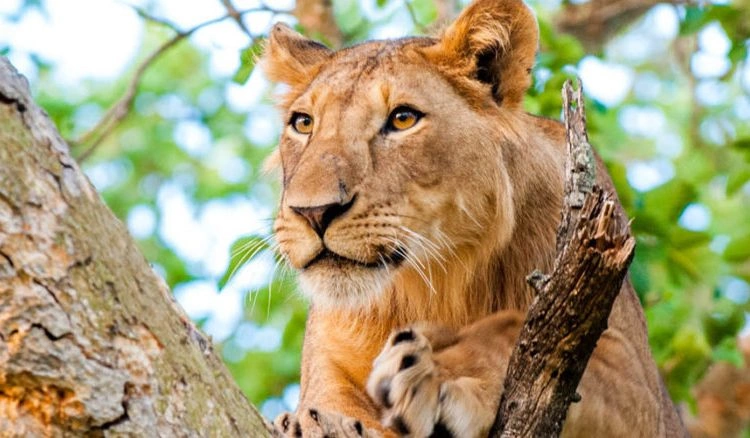
Best places to spot Lions in Uganda. Lions are the animal every first-time safari guest asks about before anything else, and Uganda has a genuinely good answer — just not the one every glossy brochure gives you. Yes, Uganda is home to one of only two tree-climbing lion populations on the entire continent. But it’s also honest to say Uganda’s lion numbers have fallen sharply in recent years, and knowing exactly where to go, and where not to bother, makes a real difference to whether your trip delivers a sighting. At Kenlink Tours, we’d rather tell you the full picture than oversell a single park, so here’s our honest, current guide to the best places to spot lions in Uganda.
We’ll cover the two sectors of Queen Elizabeth National Park that do most of the heavy lifting, where Murchison Falls and Kidepo Valley genuinely fit into the picture, a unique hands-on lion tracking experience most visitors don’t know exists, and what’s actually driving Uganda’s lion decline — because understanding that context will shape which park you choose far more usefully than a simple list ever could. By the end, you’ll know not just where to point your itinerary, but why, and what to reasonably expect once you get there.
Uganda’s Lion Population: What the Numbers Actually Say
Before naming destinations, it’s worth being straight about the numbers, since they’ve changed significantly and not for the better. Uganda’s national lion count dropped from an estimated 373 individuals in 2020 to 291 in the most recent 2022/2023 census — a decline of roughly 22% in just three years. Lions are now classified as Critically Endangered on Uganda’s own National Red List, even though the global IUCN classification remains the less severe “Vulnerable.”
The decline isn’t spread evenly. Queen Elizabeth National Park still holds Uganda’s largest lion population by a clear margin, even after a reported 45% decline over five years, which tells you both how serious the national trend is and why Queen Elizabeth remains, by a wide margin, your best bet. Kidepo Valley has been hit hardest of all, with counts as low as 12 individuals recorded between August and December 2022 — a 91% drop over thirteen years. We’ll come back to what this means practically for each park below.
These figures come from Uganda’s most comprehensive carnivore survey to date, conducted using standardized lure-count methods across the country’s savannah parks, and the same study found spotted hyena populations holding steady or even growing in several areas — a reminder that this isn’t a story of savannah wildlife collapsing broadly, but specifically of lions facing disproportionate pressure relative to other large carnivores. That distinction matters when choosing a park: a destination can still offer excellent overall game viewing even where its lion numbers specifically have fallen.
1. Ishasha Sector, Queen Elizabeth National Park – Home of the Tree-Climbing Lions
Ishasha, in the far south of Queen Elizabeth National Park, is Uganda’s single most famous lion destination, and for good reason: it’s home to one of only two known populations of tree-climbing lions in Africa, a behavior seen almost nowhere else on the continent. Lions here regularly climb into the branches of fig and sycamore trees during the heat of the day, a habit researchers still debate the exact cause of — theories range from escaping biting flies at ground level to a better vantage point for spotting prey and rival prides.
Sightings at Ishasha are genuinely reliable relative to the rest of the country, though “reliable” in Uganda’s current context means good, not guaranteed. The sector sits in the park’s far south, close to the Democratic Republic of Congo border, and its distance from Mweya — the park’s main hub — means most visitors treat it as a dedicated overnight leg of their trip rather than a quick add-on to a Kasenyi-based stay. Our comparison of game drives in Murchison Falls and Queen Elizabeth covers Ishasha’s specific terrain and tracks in more detail, and Pick and Transfer Safaris’ Queen Elizabeth National Park destination page is a useful additional reference on how Ishasha fits into the wider park.
2. Kasenyi Plains, Queen Elizabeth National Park – Classic Pride Sightings
Kasenyi, in the park’s northern section, offers a different and more classic style of lion encounter: prides resting in open grassland during the day, often near a recent kill, rather than draped over branches. It’s generally considered the more reliable of Queen Elizabeth’s two lion areas for straightforward sightings, since the open terrain makes spotting easier even when the lions aren’t doing anything particularly dramatic.
Kasenyi’s proximity to Mweya, the park’s main hub, also means it’s the easier of the two sectors to reach on a shorter visit, without the longer drive south to Ishasha. Pick and Transfer Safaris’ 3-Day Queen Elizabeth Safari typically covers both Kasenyi and Ishasha across a single well-paced itinerary, which remains the single best way we know to maximize lion odds anywhere in the country.
3. Murchison Falls National Park – Lions on the Northern Savannah
Murchison Falls holds Uganda’s second-largest lion population, roaming the open savannah north of the Nile. Sightings here are less predictable than at Queen Elizabeth, and the park doesn’t have anything resembling Ishasha’s tree-climbing behavior, but it’s still a genuine option, particularly for travelers already planning to visit for the boat cruise and waterfall hike and hoping to add lions to the same trip rather than making a separate journey south.
Our guide to the best national park in Uganda for a game drive actually ranks Murchison Falls first overall for general game-drive quality, and it remains an entirely reasonable choice if a shorter drive from Kampala matters more to you than maximizing lion-specific odds. Pick and Transfer Safaris’ two days tour to Murchison Falls National Park and game drive guide for Murchison Falls both cover exactly which tracks give you the best shot at the park’s northern pride.
4. Kidepo Valley National Park – A Long Shot, Not a Sure Thing
We’d be doing readers a disservice if we ranked Kidepo Valley alongside Queen Elizabeth and Murchison Falls without a serious caveat. Kidepo is spectacular, remote, and technically home to lions — but with counts as low as 12 individuals recorded in recent surveys, a lion sighting here should be treated as a genuine bonus on top of an otherwise excellent wilderness experience, not the reason you booked the trip.
If you’re drawn to Kidepo for its remoteness, its cheetahs, and its enormous buffalo herds — all genuinely worth the journey — go for those reasons, and treat any lion sighting as a pleasant surprise. Our 20-Days Ultimate Uganda Safari is one of the few itineraries with enough time built in to justify the trip north, precisely because it doesn’t rest the whole visit on a single species that current numbers simply don’t support.
The Lion Tracking Experience: Get Closer with Researchers
Few visitors know this exists, and it’s arguably the single best lion-focused activity in the country: the Uganda Carnivore Program, working in collaboration with the Uganda Wildlife Authority, runs a genuine lion tracking experience in Queen Elizabeth National Park. Using radio telemetry to locate collared lions, researchers take small groups off the designated roads and directly into the savanna, switching off the vehicle engine once close so as not to disturb the animals.
It’s priced separately from a standard game drive — typically around $200 for foreign visitors, with lower rates for foreign residents and Ugandan citizens — but it delivers something no ordinary game drive can: a genuine research context, extended observation time, and access to areas standard tourist vehicles never reach. If lions are truly your priority for this trip, this is the one activity worth building your whole Queen Elizabeth visit around. Get in touch through our contact page to add this to your itinerary.
Why Are Tree-Climbing Lions So Rare?
Tree-climbing behavior in lions is documented reliably in only two places on Earth: Ishasha in Uganda, and Lake Manyara National Park in Tanzania. Several theories attempt to explain it — escaping ground-level heat and biting insects, a better vantage point over the plains for spotting prey and rival prides, or simply a learned behavior passed down within specific family lines rather than a universal lion trait — but no single explanation has been definitively proven.
What is well established is that this behavior appears to be socially learned rather than instinctive, meaning cubs raised by tree-climbing mothers tend to climb themselves, while lions elsewhere in Africa largely never develop the habit at all. That makes Ishasha’s population genuinely irreplaceable — if this specific pride’s lineage were lost, the behavior wouldn’t simply reappear elsewhere in Uganda.
This is also precisely why the decline figures discussed earlier in this guide carry extra weight at Ishasha specifically. A generic lion population can, in principle, be replenished over time through natural breeding and careful management. A learned cultural behavior passed down through specific family lines is far more fragile — lose enough of the pride, and you risk losing not just lions, but the one Ugandan behavior found almost nowhere else on the continent.
What’s Behind Uganda’s Lion Decline?
The causes are well documented and, unfortunately, familiar across much of Africa’s remaining lion range. Illegal wildlife use — poaching for bushmeat and, to a lesser extent, body parts — remains the single biggest threat nationally. Poisoning tied to human-wildlife conflict is a particularly serious problem around Queen Elizabeth’s settled boundaries, where herders have in past years laced livestock carcasses with pesticides in retaliation for cattle predation, killing entire prides, including radio-collared research animals, in single incidents.
Habitat pressure from surrounding communities and reduced prey availability compound both problems. None of this is unique to Uganda, but the speed of the recent decline — over 20% nationally in just three years — has genuinely alarmed conservationists and is why this guide leads with honest numbers rather than a simple list of parks.
How Uganda Is Fighting Back to Save Its Lions
The response has been serious and increasingly well-funded. The Uganda Carnivore Program’s collaring and tracking work, discussed above, provides the research backbone for targeted anti-poisoning interventions, while the Uganda Wildlife Authority has stepped up ranger patrols and community engagement specifically around Queen Elizabeth’s conflict hotspots. Conservation partners including Volcanoes Safaris Partnership Trust have launched dedicated lion and carnivore monitoring projects within the Queen Elizabeth Conservation Area in recent years, adding further resources to the effort.
Compensation and livestock protection schemes aimed at reducing the incentive for retaliatory poisoning are also expanding, alongside community revenue-sharing tied directly to tourism numbers. Every visitor who books a standard park entry, let alone a dedicated lion tracking session, contributes directly to this funding — which is genuinely one of the more effective, tangible things a traveler can do simply by choosing to visit responsibly.
A Note on Responsible Lion Tourism
Given how precarious Uganda’s lion numbers currently are, a handful of small choices genuinely matter more here than at a destination with a larger, more stable population. Choose operators and lodges who can point to concrete community or conservation partnerships rather than vague marketing language, since revenue-sharing with the communities bordering Queen Elizabeth is directly tied to reducing the retaliatory poisoning that has driven much of the recent decline.
On game drives, resist any pressure — from other vehicles or even an overly eager guide — to approach lions more closely than park rules allow, since disturbance stress compounds the pressure an already fragile population is under. And if the Uganda Carnivore Program’s lion tracking experience is within your budget, booking it does more than get you a better sighting: it directly funds the collaring and monitoring work that underpins nearly every conservation intervention described in this guide.
Best Time of Day to See Lions on a Game Drive
Lions are most active, and therefore most visible on the move, in the first two hours after sunrise and again in the late afternoon as temperatures drop, with the middle of the day typically spent resting in shade — or, at Ishasha specifically, up in the trees. Morning game drives consistently outperform afternoon ones for genuine lion activity, though Ishasha’s tree-climbing behavior is actually more likely to be observed during the hottest hours of midday, when the lions retreat to the branches specifically to escape the heat.
Our guide to what to expect on a game drive covers this pacing in more detail if this is your first time planning around wildlife activity patterns rather than simply picking a convenient departure time.
Best Time of Year to Spot Lions in Uganda
Uganda’s two dry seasons — December to February and June to September — offer the best overall lion-viewing conditions. Thinner grass cover makes both resting prides and tree-climbing lions considerably easier to spot, and firmer roads mean more ground covered across Kasenyi’s wide plains within a single game drive. Wildlife also concentrates more predictably around remaining water sources during these months, drawing prey animals, and by extension lions, into more concentrated, trackable areas.
The wetter months bring lush scenery and fewer vehicles at popular sightings, but denser vegetation genuinely does reduce visibility, particularly for spotting a resting pride from a distance. If lions are your priority and your travel dates are flexible, the dry season meaningfully improves your odds.
How to Improve Your Odds of Seeing a Lion
Book more than one game drive rather than a single attempt wherever your schedule allows — lions reward persistence more than luck on any single outing, especially given current population pressures. Hire an experienced local guide with current knowledge of pride locations rather than attempting extensive self-drive game viewing; guides in daily contact with rangers and other drivers often know within hours where a pride was last seen.
Prioritize Queen Elizabeth over Murchison Falls or Kidepo if lions are genuinely your top priority rather than one interest among several, and seriously consider the Uganda Carnivore Program’s lion tracking experience described above if budget allows — it remains the single most effective way to guarantee a close, extended lion encounter in the country given current numbers.
Which Park Should You Choose If Lions Are Your Priority?
If lions are the single most important item on your Uganda wish list, Queen Elizabeth National Park is the clear, honest answer — specifically a combination of Kasenyi for reliable pride sightings and Ishasha for the irreplaceable tree-climbing behavior. Murchison Falls is a reasonable secondary choice if a shorter drive from Kampala or the boat cruise and waterfall matter as much to you as the lions themselves. Kidepo Valley should be chosen for its remoteness, cheetahs, and buffalo herds, not for lions specifically, given its currently critically low population.
Our guide to choosing the best Uganda safari walks through this same decision from a broader angle if lions are only one of several priorities shaping your itinerary.
It’s worth adding one further nuance: the “right” answer can shift depending on how much time you have. A traveler with only two or three days is genuinely better served concentrating entirely on Queen Elizabeth’s Kasenyi and Ishasha sectors rather than splitting time across two parks, since a rushed half-day at each risks a weaker experience everywhere. A traveler with five days or more, on the other hand, can comfortably add Murchison Falls without diluting their Queen Elizabeth time, turning “either/or” into a genuinely additive “both.”
Combining Lion Viewing with Other Uganda Wildlife Experiences
Queen Elizabeth rewards a multi-day stay well beyond just its lions — the Kazinga Channel boat cruise delivers some of the best elephant, buffalo, and hippo viewing in the country, and the park’s crater lakes offer a scenic, different pace between game drives. For travelers building a wider trip, our tour from Kigali covering Bwindi, Queen Elizabeth, Kibale and Bunyonyi weaves lion viewing together with gorilla trekking and chimpanzee tracking into a single well-paced route.
Pick and Transfer Safaris’ guide to where to see the Big Five in Uganda and their wildlife safaris listings are both useful further reading if you’re planning a trip around more than just lions specifically. Our own overview of Uganda’s national parks and guide to the most visited places in Uganda both help place Queen Elizabeth’s lion-viewing appeal in the context of everything else the country offers.
Where to Stay Near Uganda’s Best Lion-Viewing Areas
Queen Elizabeth offers accommodation across every budget close to both Kasenyi and Ishasha, though the two sectors sit far enough apart that most travelers choose one base for a Kasenyi-focused stay near Mweya and a separate lodge near Ishasha itself for that leg of the trip, rather than commuting between the two daily. Comfortable mid-range options near Mweya, such as Marafiki Safari Lodge, put you within easy reach of both the Kazinga Channel and the Kasenyi Plains without a long transfer each morning.
Ishasha’s more remote southern location has a smaller but still comfortable set of lodges and tented camps built specifically around access to the tree-climbing lion sector, and booking here well in advance matters more than at Mweya given the limited number of properties. Murchison Falls, similarly, offers accommodation options clustered around the Paraa area that put you within a reasonable drive of the park’s main lion-viewing tracks. Reach out through our contact page for current lodge recommendations matched to whichever sector or park you prioritize.
Cost of a Lion-Focused Uganda Safari
Pricing depends heavily on how many days you spend at Queen Elizabeth, whether you add Murchison Falls to the same trip, and whether you book the Uganda Carnivore Program’s dedicated lion tracking session on top of standard game drives. A focused three-to-four-day Queen Elizabeth trip covering both Kasenyi and Ishasha sits in a similar range to our standard packages, while adding Murchison Falls or the lion tracking experience naturally increases the total given the extra park fees, driving days, or specialist activity cost involved.
Most of our packages include private transport with an English-speaking driver-guide, accommodation, meals as specified, and all relevant park entry fees, while the Uganda Carnivore Program’s lion tracking fee is priced and booked separately given its specialized, limited-capacity nature. Our group tour packages are worth considering if you’re traveling with friends or colleagues, since per-person costs drop meaningfully with shared vehicle and guide fees, and Pick and Transfer Safaris’ Murchison Falls National Park destination page and 3-Day Murchison Falls Safari are useful for comparing costs if you’re weighing that park against a Queen Elizabeth-only trip.
Sample Itinerary for a Lion-Focused Uganda Safari
For travelers building a trip specifically around maximizing lion sightings, here’s roughly how we’d structure four to five days: Day 1 travels from Kampala or Entebbe to Queen Elizabeth National Park, arriving with time for an afternoon game drive on the Kasenyi Plains. Day 2 covers the Kazinga Channel boat cruise in the morning and a second Kasenyi game drive in the late afternoon. Day 3 moves south to the Ishasha sector for a dedicated tree-climbing lion search, with an overnight stay nearby. Day 4 offers a final Ishasha game drive before the return journey, or, budget allowing, a dedicated Uganda Carnivore Program lion tracking session in place of a standard game drive on either day.
This shape of trip pairs naturally with our game drive safaris in Uganda package, and Pick and Transfer Safaris’ extended safari itineraries offer a similar structure worth comparing before you book.
Travelers with only two or three days available can compress this into a Kasenyi-and-Ishasha-only itinerary, skipping the additional Murchison Falls leg entirely, while those with a week or more can extend it north to Murchison Falls afterward, adding a second, different style of lion habitat without sacrificing time at either park. Whichever length you choose, building in at least two full game drives per sector, rather than a single rushed pass, remains the single most impactful scheduling decision you can make.
What to Pack and Expect on a Lion-Focused Game Drive
Neutral-colored clothing, a warm layer for early-morning drives, and a wide-brimmed hat and sunscreen for the long hours spent in an open vehicle are the basics across every park in this guide. Binoculars are especially valuable for lion viewing specifically, since a distant, resting pride is often visible to the naked eye only as a vague shape in the grass until you bring the detail into focus. A telephoto lens in the 200-400mm range will serve photographers far better than a wide-angle or standard kit lens for capturing genuinely striking lion images.
Set realistic expectations before you go: even at Queen Elizabeth, a lion sighting is a strong probability rather than a guarantee, and patience across two or more game drives will consistently outperform a single rushed attempt. Our guide to the top wild animals to see on a Uganda wildlife safari is worth reading so you arrive appreciating the full range of wildlife on offer, rather than treating anything other than a lion as a disappointment.
Photography Tips for Lion Sightings
A resting pride in tall grass often photographs poorly without the right approach — get your guide to position the vehicle low and at an angle that clears the grass line rather than shooting straight down from a raised roof hatch, and use a wide maximum aperture (f/2.8 to f/4) to keep the lions sharp against a softly blurred background. At Ishasha specifically, tree-climbing lions are frequently backlit against bright midday sky, so a touch of positive exposure compensation will stop the cats themselves from coming out as underexposed silhouettes.
A telephoto zoom in the 200-400mm range remains the single most useful lens across every park in this guide, and a beanbag or window mount will steady your shots far more effectively than handholding a long lens from a moving or idling vehicle. During a Uganda Carnivore Program lion tracking session, ask in advance whether the vehicle will be positioned for photography or purely for observation, since research priorities occasionally take precedence over ideal camera angles.
Game Drive Etiquette and Safety Around Lions
Always stay inside the vehicle when lions are nearby, keep noise to a minimum, and never ask your guide to approach closer than park regulations allow, even if another vehicle appears to be doing so — a habituated pride can still react unpredictably to a vehicle pressing too close. Standing up through a roof hatch for photographs is generally permitted at a safe distance but should stop immediately if your guide advises it, since lions can and do react to sudden movement or silhouettes above a vehicle’s roofline.
Malaria prophylaxis and general travel health precautions apply across every park in this guide as they would anywhere in Uganda, and a reputable, experienced operator with well-maintained vehicles remains the biggest single factor in both a safe and a successful lion-viewing trip.
Uganda’s Lions vs Kenya and Tanzania: An Honest Comparison
Given the population figures above, it’s fair to ask whether Kenya’s Maasai Mara or Tanzania’s Serengeti simply offer better lion odds — and for pure sighting probability, they currently do, with considerably larger, more stable lion populations across both ecosystems. If maximizing your chance of any lion sighting in the shortest possible time is your only goal, those destinations have the numerical edge.
What Uganda offers that neither can match is Ishasha’s tree-climbing behavior, a dramatically lower density of tourist vehicles at every sighting, and the ability to combine lion viewing with gorilla and chimpanzee trekking in the same trip. For travelers who’ve already done a classic Kenya or Tanzania circuit and want something genuinely different around the same animal, or who are drawn specifically to Uganda’s broader primate-and-wildlife combination, Uganda remains a worthwhile, if more honestly caveated, choice.
There’s also a cost dimension worth weighing: Uganda’s park fees and lodge rates generally undercut the Maasai Mara and northern Serengeti circuit, particularly during peak season, which means a Uganda-based lion trip often costs meaningfully less for a comparable standard of accommodation and guiding, even accounting for somewhat lower sighting certainty. For travelers balancing budget against guaranteed results, that trade-off is worth factoring in alongside the wildlife numbers themselves.
Frequently Asked Questions About Spotting Lions in Uganda
What is the best place to see lions in Uganda?
Queen Elizabeth National Park, specifically the Ishasha sector’s tree-climbing lions and the Kasenyi Plains’ more classic pride sightings, offers Uganda’s most reliable lion viewing by a clear margin over Murchison Falls or Kidepo Valley.
How many lions are left in Uganda?
The most recent national census recorded around 291 lions, down from 373 in 2020 — a decline of roughly 22% in three years. Lions are classified as Critically Endangered on Uganda’s National Red List.
Can I still see lions at Kidepo Valley National Park?
Technically yes, but recent counts as low as 12 individuals mean a sighting there should be treated as a bonus rather than the main reason to visit. Kidepo’s cheetahs, remoteness, and buffalo herds are more reliable draws.
What is the Lion Tracking Experience and is it worth it?
It’s a guided, off-road tracking activity run by the Uganda Carnivore Program in Queen Elizabeth National Park, using radio telemetry to locate collared lions. At around $200 for foreign visitors, it’s a genuine premium experience worth the cost for travelers whose main priority is an extended, close lion encounter.
Why do the lions in Ishasha climb trees?
No single explanation is definitively proven, but leading theories include escaping ground-level heat and biting insects and gaining a better vantage point over the plains. The behavior appears to be socially learned within this specific lion lineage rather than an instinctive trait shared by lions generally.
Why Choose Kenlink Tours for Your Lion Safari
Finding lions in a country where numbers have dropped over 20% in three years takes more than luck — it takes guides in daily contact with rangers and other operators about where prides were last seen, honest advice about which park actually suits your priorities, and the local relationships needed to book a limited-capacity experience like the Uganda Carnivore Program’s lion tracking session. That combination of current knowledge and straightforward, honest guidance is exactly what we aim to provide on every lion-focused itinerary we build.
Learn more about our approach on our About Us page, and feel free to compare us against other established Uganda operators, including Pick and Transfer Safaris’ About Us page — we’re confident our current, on-the-ground knowledge of Uganda’s lion-viewing areas will stand out.
Is it safe to go on a lion-focused safari in Uganda?
Yes. Lion viewing in Uganda is conducted entirely from vehicles on standard game drives, or under close ranger and researcher supervision during the Uganda Carnivore Program’s tracking sessions. Following your guide’s instructions and staying inside the vehicle when lions are present keeps the experience safe for both visitors and the animals themselves.
Book Your Lion Safari with Kenlink Tours
Uganda’s lions are rarer than they used to be, but the two best sightings in the country — Ishasha’s irreplaceable tree-climbers and Kasenyi’s classic prides — remain genuinely world-class experiences well worth the trip. Choosing the right park, timing your game drives around lion activity patterns, and, budget allowing, adding a dedicated lion tracking session, are what separate a lucky sighting from a well-planned one.
Ready to plan your lion-focused Uganda safari, or still deciding which park and activities fit your priorities? Learn more about our team on our About Us page, browse our complete Uganda safaris listings, or get in touch directly through our contact page and let Kenlink Tours build the right lion-viewing itinerary around your time and budget. However current lion numbers evolve over the coming years, Ishasha’s tree-climbers and Kasenyi’s classic prides remain two of the most distinctive wildlife encounters anywhere on the continent, and a well-planned trip today still stands an excellent chance of delivering exactly that.