- EXPERT'S HELP
- +256789210067
- +256200955001
- info@kenlinktours.com


One day Gorilla Trek in Rwanda from Kigali City
September 25, 2026
How to Book Gorilla Trekking Permit in Uganda
September 27, 2026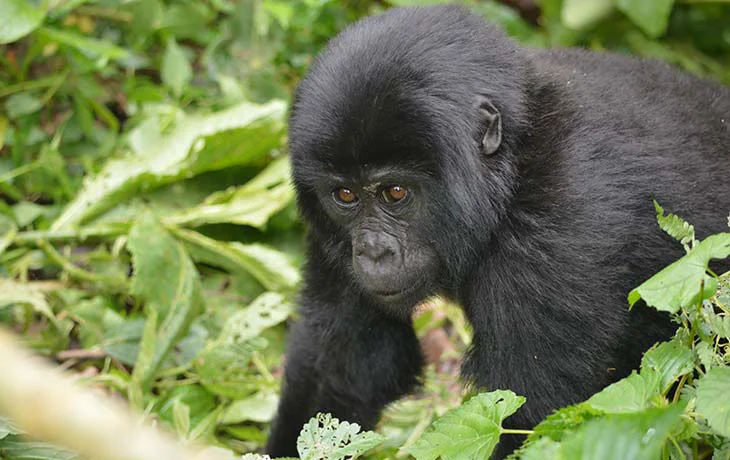
Booking a Gorilla Safari in Uganda from Rwanda. Few wildlife experiences on Earth compare to standing a few metres from a wild mountain gorilla family. A silverback chews bamboo while youngsters tumble through the undergrowth around him. For thousands of travellers every year, the smartest way to reach that moment is to fly into Kigali, Rwanda, and cross overland into Uganda to trek gorillas in Bwindi Impenetrable National Park or Mgahinga Gorilla National Park.
Booking a gorilla safari in Uganda from Rwanda combines Rwanda’s excellent international airport and smooth roads with Uganda’s more affordable gorilla permits and wider trekking choice. The Ugandan permit costs roughly half the Rwandan one. The drive from Kigali to Uganda’s southern gorilla sectors is also much shorter than the drive from Entebbe.
This guide covers everything you need to plan and book the trip with confidence: permits, border crossings, visas, itineraries, costs, accommodation, packing and the best time to go. At Kenlink Tours, we organise cross-border gorilla safaris from Kigali every week. Everything below comes from that on-the-ground experience.
Why Book a Uganda Gorilla Safari from Rwanda?
Many first-time visitors assume that a Uganda gorilla trek must start from Entebbe International Airport. In reality, Kigali International Airport sits much closer to Uganda’s gorilla parks than Entebbe does. The drive from Kigali to Bwindi’s southern sectors takes about four to five hours. The same journey from Entebbe can take nine to ten hours on the road.
That difference changes the whole trip. Starting in Kigali lets you fit a full gorilla trekking experience into as little as two or three days without spending most of your holiday in a vehicle. It also opens the door to one-day and two-day express treks, which are hard to do from Entebbe without a domestic flight.
The second big advantage is cost. A Uganda gorilla permit costs USD 800 per person for foreign non-residents. A Rwanda permit costs USD 1,500. Both let you spend one hour with a habituated mountain gorilla family, and the gorillas themselves belong to the same species and the same wider ecosystem. For couples and families, the savings on permits alone can cover several nights of good lodge accommodation.
Our detailed guide to Uganda Rwanda gorilla safaris compares the two destinations side by side. The short answer: booking from Rwanda gives you Rwanda’s convenience at Uganda’s price.
Kigali vs Entebbe: Which Gateway Is Better for Gorilla Trekking?
Both airports are excellent entry points to East Africa, but they suit different kinds of trips. Kigali is the better gateway if your main goal is gorilla trekking in southern Bwindi (Rushaga and Nkuringo) or Mgahinga, if you are short on time, or if you want to combine gorillas with a Rwanda city experience.
Entebbe makes more sense if your itinerary focuses on northern and western Uganda, such as Murchison Falls, Kibale Forest for chimpanzees and Queen Elizabeth National Park. You can also mix the two. Many of our guests fly into Kigali, trek gorillas, continue north through Uganda’s savannah parks, and fly home from Entebbe. That route removes backtracking completely.
If you like the idea of an open-jaw route, Pick and Transfer Safaris explains in detail whether you can begin your tour from Kigali Airport and end in Entebbe Airport. Our own article on starting a trip from Rwanda to Uganda shows how we build these combined road journeys.
Understanding Uganda Gorilla Permits
A gorilla permit is the single most important part of your booking, and it should be secured before anything else. Permits are issued only by the Uganda Wildlife Authority (UWA). Each one allows one person to trek one habituated gorilla family on one specific date, in one specific sector.
Current Uganda gorilla permit prices:
- Foreign non-residents: USD 800 per person
- Foreign residents (with valid residency documents): USD 700 per person
- East African citizens: a reduced local rate in Uganda shillings
- Gorilla habituation experience (about four hours with a semi-habituated family, offered in Bwindi’s Rushaga sector): USD 1,500 per person
A maximum of eight visitors may trek each gorilla family per day, and daily permit numbers are strictly limited. That scarcity is why permits sell out months ahead for the peak months of June to September and December to February.
We recommend booking at least four to six months in advance for peak season. For low season, two to three months is usually enough. When you book through a licensed operator such as Kenlink Tours, we reserve the permit in your name with UWA, which saves you from dealing with the booking system across borders. You can read more about how we handle this on our Uganda safari bookings page.
For a wider look at trekking options and dates, see our list of available gorilla tours for booking in Uganda. Pick and Transfer Safaris also publishes a useful overview of gorilla permits in Uganda.
Where You Will Trek: Bwindi’s Sectors and Mgahinga
When booking a gorilla safari in Uganda from Rwanda, your choice of trekking location matters a great deal. It affects your drive time, lodge choice and the character of your trek.
Bwindi Impenetrable National Park is a UNESCO World Heritage Site. It protects close to half of the world’s remaining mountain gorillas, and it is divided into four trekking sectors:
- Rushaga (south): Has the largest number of habituated gorilla families and is the only sector offering the habituation experience. It is the most popular choice for travellers coming from Kigali because it is closest to the Rwandan border.
- Nkuringo (south-west): Offers dramatic views over the Virunga volcanoes. Treks here are often steep and physically demanding, which suits fit, adventurous trekkers.
- Ruhija (east): Sits at higher altitude and is cooler, with outstanding birding. It is reachable from Kigali in about five to six hours.
- Buhoma (north): The oldest trekking sector, with the most developed tourism facilities. It is farthest from Kigali but ideal if you are continuing to Queen Elizabeth National Park.
Mgahinga Gorilla National Park is Uganda’s section of the Virunga Conservation Area, which it shares with Rwanda’s Volcanoes National Park and Congo’s Virunga National Park. It hosts the Nyakagezi gorilla family and is the only place in Uganda where you can also track golden monkeys. Mgahinga is roughly three hours from Kigali, which makes it perfect for very short trips. If you want to learn more about this park, see Pick and Transfer Safaris’ guide to Mgahinga Gorilla National Park.
Crossing the Border: Katuna (Gatuna) and Cyanika
Two main border posts link Rwanda and Uganda for gorilla safaris. Your choice depends on which sector you are heading to.
Katuna/Gatuna border (Kabale district): The busiest crossing and roughly a two-hour drive from Kigali. It works well for Ruhija, Buhoma and Lake Bunyonyi, and it also connects to Rushaga via Kabale.
Cyanika border (Kisoro district): Reached via Musanze, close to Rwanda’s Volcanoes National Park. It is the fastest route to Mgahinga, Rushaga and Nkuringo. The drive passes through beautiful volcanic scenery.
Border formalities for tourists are usually straightforward and take 30 to 60 minutes when your documents are in order. On a guided safari, your driver-guide helps you through both immigration desks. Some operators hand over to a Ugandan vehicle at the border, while others use one vehicle cleared for cross-border travel. At Kenlink Tours we use one vehicle and one guide for the whole route wherever possible, so you never have to move your luggage at the border.
If you are staying in Kisoro, a town just minutes from the Cyanika border, Pick and Transfer Safaris’ review of Ikoro Hotel in Kisoro is a helpful look at one of the area’s convenient bases.
Visas and Travel Documents
The easiest visa option for a gorilla safari that starts in Rwanda is the East Africa Tourist Visa. It costs USD 100 and allows multiple entries between Uganda, Rwanda and Kenya for 90 days. Apply online through the official immigration portal of the first country you will enter, which for this trip is Rwanda.
Documents you will need:
- A passport valid for at least six months beyond your travel dates, with blank pages
- An East Africa Tourist Visa, or separate Rwanda and Uganda visas
- A Yellow Fever vaccination certificate (checked at entry points)
- A printed or digital copy of your gorilla permit confirmation
- Travel insurance that covers medical evacuation
Visa rules and fees can change, so always check the official government immigration websites a few weeks before travel. Our team sends every guest an updated pre-departure checklist.
How to Book a Gorilla Safari in Uganda from Rwanda: Step by Step
Booking is simpler than most people expect. Here is the process we follow with every guest at Kenlink Tours.
Step 1: Choose your dates and trip length. Decide how many days you have and whether you want gorillas only or a longer combined safari. Tell us whether you prefer a specific sector.
Step 2: Send an enquiry. Share your travel dates, group size, budget level (budget, mid-range or luxury) and any special interests, such as golden monkeys, birding or cultural visits.
Step 3: Receive a tailored itinerary and quote. We check live permit availability for your dates and build a day-by-day plan. Every quote shows the permit cost separately, so you know exactly what you are paying for.
Step 4: Confirm with a deposit. Permits must be paid in full to be secured. Once your deposit arrives, we reserve your permit with UWA and book your lodges.
Step 5: Prepare for travel. You will receive your permit confirmation, a packing list, visa guidance and your guide’s contact details.
Step 6: Arrive in Kigali. Your driver-guide meets you at Kigali International Airport or your hotel, and your adventure begins.
Choosing the right operator is the most important decision in this process. Our guide to Uganda safari companies explains what to look for, including licensing, transparent pricing, reliable vehicles and genuine reviews.
Choosing the Right Package Length
1-Day Gorilla Trek from Kigali: This is possible, but it makes for a very long day. You leave Kigali around 3:00 a.m., trek in Mgahinga or southern Bwindi, and drive back the same evening. It suits business travellers or people with only one free day, but it is tiring.
2-Day Gorilla Safari from Kigali: Drive to the park on Day 1 and trek on Day 2, then return to Kigali. It is efficient and affordable, but book a late departure flight if you are flying out the same night.
3-Day Gorilla Safari from Kigali: Our most recommended option. You get a relaxed drive in, a full trek day without rushing, and a comfortable return. You can also add a community walk or an evening at Lake Bunyonyi.
4 to 5-Day Safaris: These let you add golden monkey tracking in Mgahinga, a second gorilla trek, or a night on Lake Bunyonyi or Lake Mutanda.
7 Days and Beyond: Combine gorillas with chimpanzees, tree-climbing lions and classic game drives. Our 10 Days Uganda Wildlife Safari and the epic 25-Day Wildlife, Gorilla, Chimps & Uganda Adventure show how far a Uganda journey can go. Pick and Transfer Safaris also runs a popular 3 Days Uganda Gorilla Safari from Rwanda that shows how a short cross-border trip is typically structured.
Browse all our current itineraries on the Uganda safaris page to compare durations and routes.
Sample 3-Day Uganda Gorilla Safari Itinerary from Kigali
Day 1: Kigali to Bwindi (Rushaga sector). Your guide picks you up from the airport or your Kigali hotel after breakfast. If time allows, stop briefly at the Kigali Genocide Memorial or a craft market before heading north through Rwanda’s terraced hills. Cross into Uganda at Katuna or Cyanika and continue through the beautiful Kigezi highlands to your lodge near Rushaga. Enjoy dinner and an early night.
Day 2: Gorilla trekking day. After an early breakfast, you receive a packed lunch and drive to the Rushaga briefing point for 7:30 a.m. Ranger guides explain the trekking rules and assign you to a gorilla family. The trek can last anywhere from one to six hours, depending on where the gorillas moved overnight. Once you find them, you get one unforgettable hour watching them feed, groom and play. You then return to the park headquarters to collect your gorilla trekking certificate. Spend the afternoon on a Batwa cultural experience or simply relax at your lodge.
Day 3: Return to Kigali. After a leisurely breakfast, drive back to Kigali, taking in lakeside views along the way. Transfer to the airport for your evening flight or to your hotel.
This itinerary can be upgraded to luxury lodges, extended with golden monkeys, or reversed to start in Uganda and end in Rwanda.
Best Time to Book a Uganda Gorilla Safari from Rwanda
Gorilla trekking in Uganda runs all year round, because the gorillas stay in the park in every season.
Dry seasons (June–September and December–February): Trails are firmer, treks are generally easier, and photography conditions are better. These are also the busiest months, so permits and top lodges sell out early.
Wet seasons (March–May and October–November): The forest is lush and green, fewer tourists visit, and some lodges offer discounted rates. Expect muddier trails and afternoon showers, though rain often falls in short bursts rather than all day.
For most travellers, the best balance is the shoulder weeks at the start or end of the dry seasons. Whatever month you choose, book permits early and pack good rain gear, because Bwindi is a rainforest and rain can fall at any time.
How Much Does a Uganda Gorilla Safari from Rwanda Cost?
The total cost depends mainly on trip length, the lodges you choose and group size. Here is a realistic guide per person, sharing a room:
- Gorilla permit: USD 800 (fixed by UWA)
- Budget 2–3 day safari: roughly USD 1,300–1,900 including the permit
- Mid-range 3-day safari: roughly USD 1,900–2,800 including the permit
- Luxury 3-day safari: roughly USD 3,000–5,500+ including the permit
A typical package includes the gorilla permit, private 4×4 transport with a professional driver-guide, accommodation, meals on safari, drinking water and airport transfers. Usually excluded: visas, international flights, travel insurance, tips, porter fees (around USD 15–20 per porter, and hiring one is highly recommended) and drinks.
Solo travellers pay more because vehicle costs are split among fewer people. Joining a group or travelling with friends brings the per-person price down significantly. For practical budgeting advice, read our guide on how to choose the best safari package in Uganda and Rwanda.
Where to Stay: Lodges Near Uganda’s Gorilla Parks
In Bwindi, your lodge must be in the same sector as your gorilla permit. Briefings start at 7:30 a.m., and moving between sectors early in the morning is not practical on the local roads.
Budget options: community-run guesthouses and simple lodges near Rushaga, Buhoma and Kisoro town. They are clean and comfortable, and they are ideal for travellers who want to spend more on experiences.
Mid-range options: well-run lodges with private cottages, hot showers, good food and forest views. These are found in every sector and offer excellent value.
Luxury options: exclusive forest-edge lodges with spacious suites, spa treatments, gourmet dining and personal butler service. Our Uganda luxury safaris and gorilla tours feature these properties.
Lake Bunyonyi and Lake Mutanda are also wonderful places to stay before or after your trek. They offer canoe rides, island views and cool highland air, and both are within easy reach of the southern sectors. Pick and Transfer Safaris has a helpful guide to visiting Lake Bunyonyi as part of a cross-border trip.
What to Expect on Trekking Day
Your gorilla trek begins with a briefing by Uganda Wildlife Authority rangers. They explain the rules, introduce the gorilla families and divide visitors into groups of up to eight. Advance trackers set off at dawn to locate the gorillas and radio their position to your guide.
The trek itself can be demanding. Bwindi is called “Impenetrable” for good reason: expect steep slopes, dense vegetation, muddy patches and altitudes between roughly 1,160 and 2,600 metres. Treks can last anywhere from 30 minutes to a full day. Hiring a local porter makes a real difference. They carry your bag, help you up steep sections, and earn a meaningful income from tourism.
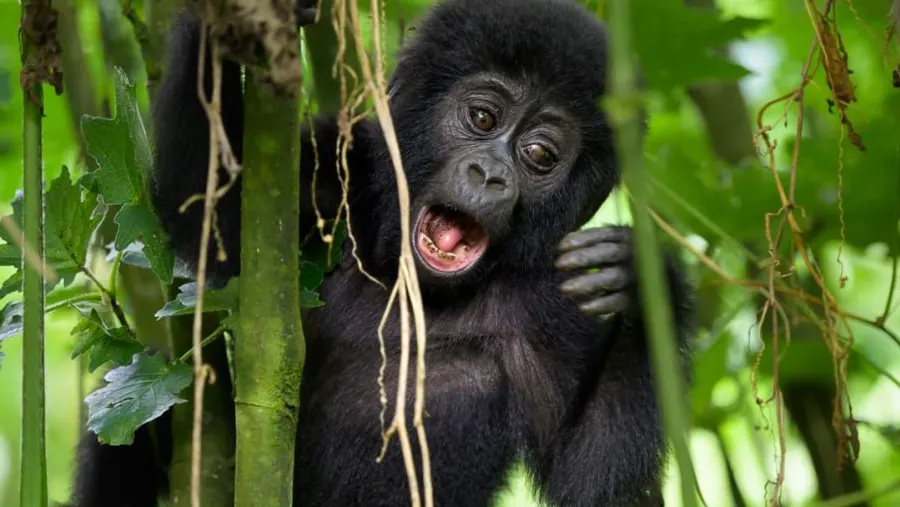
Once you reach the gorillas, time seems to stop. You will watch a silverback keeping watch over his family, mothers cradling infants, and juveniles showing off. After exactly one hour, you walk back to the trailhead and collect your certificate.
For elderly travellers or those with limited mobility, sedan-chair carrier services can be arranged in advance in Bwindi. The minimum trekking age in Uganda is 15 years.
Fitness Tips Before Your Trek
You do not need to be an athlete to trek gorillas, but good preparation makes the day far more enjoyable.
- Walk regularly on hills or stairs for four to six weeks before your trip.
- Break in your hiking boots well before you travel.
- Build core and leg strength with squats, lunges and step-ups.
- Tell your guide honestly about your fitness. Rangers can often assign a family that tends to be closer to the trailhead.
- Stay hydrated and carry energy snacks on the trek.
Packing List for a Uganda Gorilla Safari
- Waterproof, broken-in hiking boots with good grip
- Lightweight rain jacket and rain trousers
- Long-sleeved shirts and long trousers (to protect against nettles and insects)
- Gardening gloves for gripping vines and branches
- Gaiters or long socks to tuck trousers into
- A small daypack with a rain cover
- At least two litres of drinking water
- Insect repellent and sunscreen
- A camera with spare batteries (flash photography is not allowed)
- A warm fleece for cool highland evenings
- Passport, visa and printed permit confirmation
- Some cash in US dollars (notes from 2013 onwards) for tips and souvenirs
Gorilla Trekking Rules and Etiquette
Mountain gorillas are endangered and share about 98% of our DNA, which makes them vulnerable to human illnesses. These rules protect them.
- Keep a distance of at least seven metres from the gorillas.
- Do not trek if you have a cold, flu or any contagious illness.
- Keep your voice low and avoid sudden movements.
- Never eat, drink or smoke near the gorillas.
- No flash photography.
- If a gorilla charges, stay calm, crouch down slowly and follow your ranger’s instructions.
- Stay with your group, and never leave rubbish in the forest.
- Wear a face mask when asked by the rangers.
Following these rules helps ensure that gorilla tourism stays sustainable for future generations.
Extending Your Trip: What to Add After the Gorillas
Gorilla trekking is often the highlight of a trip, but it doesn’t have to be the whole trip. From the southern sectors you can easily add:
- Golden monkey tracking in Mgahinga’s bamboo forests
- A Batwa cultural trail to learn about the forest’s original inhabitants
- Lake Bunyonyi relaxation, with canoeing and island hopping
- Queen Elizabeth National Park, for tree-climbing lions in Ishasha and a boat cruise on the Kazinga Channel
- Kibale Forest, for chimpanzee tracking
- Rwanda’s Volcanoes National Park, for a second gorilla trek or a hike to Dian Fossey’s grave
Pick and Transfer Safaris has written a practical guide on what to do after a gorilla tour in Bwindi. If you want a combined trip, see our Uganda Rwanda connecting safaris and our feature on combining Rwanda and Uganda gorilla trekking and culture. If you would like a few days in Rwanda first, our 4 Days Best of Rwanda Luxury Safari pairs perfectly with a Uganda gorilla extension.
Rwanda or Uganda, or Both?
Travellers often ask whether they should trek in Rwanda or Uganda. Each has distinct strengths. Rwanda offers shorter drives from Kigali, polished lodges and generally gentler trails. Uganda offers lower permit prices, more gorilla families, the habituation experience, and far more wildlife beyond gorillas.
The honest answer is often “both.” Kigali sits only a few hours from both Volcanoes National Park and southern Bwindi, so a week is enough to trek in each country and compare the experience. Our in-depth article Rwanda vs Uganda: which country offers the better safari? covers the comparison in more detail.
Getting Around: Transfers and Car Hire
Most travellers book a fully guided safari with a private 4×4 and a professional driver-guide. This is the safest and most comfortable option for cross-border travel, because your guide handles border procedures, directions and park logistics.
Some independent travellers prefer to hire a vehicle. If you are considering this, make sure the rental company provides cross-border documents for Uganda, a well-maintained 4×4 and 24-hour support. Pick and Transfer Safaris provides a useful guide to car hire in Rwanda and a Kigali to Bwindi transfer service for travellers who only need road transport. For a fully personalized experience, our Uganda private tours give you your own vehicle, guide and flexible schedule.
Responsible Gorilla Tourism
Your gorilla permit does more than get you into the forest. A share of every permit fee goes to conservation work and to communities living around the parks, which gives local people a direct stake in protecting the gorillas. Mountain gorilla numbers have grown steadily over recent decades thanks to this model.
You can add to that impact by hiring a porter, buying crafts directly from community cooperatives, staying at lodges that employ local people, and respecting every trekking rule. At Kenlink Tours we work with local guides, porters and community projects around Bwindi and Mgahinga, so your safari supports the people who protect these forests.
Why Book Your Gorilla Safari with Kenlink Tours?
- We handle your permit end to end. We check availability and reserve permits in your name with UWA.
- Seamless cross-border logistics. One vehicle and one experienced guide from Kigali to Bwindi and back, wherever possible.
- Transparent pricing. Every quote itemises permits, lodges, transport and meals, with no hidden fees.
- Tailor-made itineraries. Budget, mid-range or luxury, from one day to three weeks.
- Local expertise. Our team lives and works in the region, and we trek these forests regularly.
- 24/7 support from the day you enquire to the day you fly home.
Read more about our approach on our Uganda safari with Kenlink Tours page, and follow our latest updates on the Kenlink Tours travel news blog. If you are comparing operators, the team at Pick and Transfer Safaris also shares plenty of helpful planning content for Uganda and Rwanda travel.
Frequently Asked Questions
How far is Bwindi from Kigali?
Southern Bwindi (Rushaga and Nkuringo) is about four to five hours by road from Kigali. Ruhija takes about five to six hours, and Buhoma about six to seven. Mgahinga is roughly three hours away.
Can I do a Uganda gorilla trek in one day from Kigali?
Yes, but it is a very long day that starts around 3:00 a.m. and returns late at night. We recommend at least two days, and ideally three, for a comfortable experience.
How much is a Uganda gorilla permit?
USD 800 per person for foreign non-residents and USD 700 for foreign residents. The gorilla habituation experience costs USD 1,500.
Do I need a separate visa for Uganda if I enter through Rwanda?
Not if you hold the East Africa Tourist Visa (USD 100), which covers Rwanda, Uganda and Kenya with multiple entries for 90 days. Otherwise, you need separate visas for each country.
Is it safe to cross from Rwanda to Uganda?
Yes. The Katuna and Cyanika borders are well-organised tourist crossings, and guided safari vehicles pass through them every day. Your guide assists you with all formalities.
How fit do I need to be?
Moderate fitness is enough for most treks. Treks can be steep and muddy, so preparation and a porter help greatly. Sedan-chair services are available for travellers with limited mobility.
What is the minimum age for gorilla trekking in Uganda?
The minimum age is 15 years.
How early should I book?
Four to six months ahead for peak season (June–September and December–February), and two to three months for low season. Last-minute permits are sometimes available, especially in Rushaga.
Start Planning Your Uganda Gorilla Safari from Rwanda Today
Booking a gorilla safari in Uganda from Rwanda is one of the smartest travel decisions you can make in East Africa. You get a short, scenic drive from Kigali, affordable permits, a wide choice of gorilla families, and an unforgettable hour with one of the world’s rarest animals. You also have the option to extend into a safari across two of Africa’s most beautiful countries.
Whether you want a quick two-day trek, a relaxed three-day escape or a two-week primate and wildlife adventure, the key is to secure your permit early and travel with an experienced local operator.
Ready to meet the mountain gorillas? Contact Kenlink Tours today with your travel dates. Our team will check live permit availability and send you a tailor-made itinerary within hours.