- EXPERT'S HELP
- +256789210067
- +256200955001
- info@kenlinktours.com


Murchison Falls and Rhino Tracking Tour
September 17, 2026
Kibale And Bwindi National Park Tour
September 17, 2026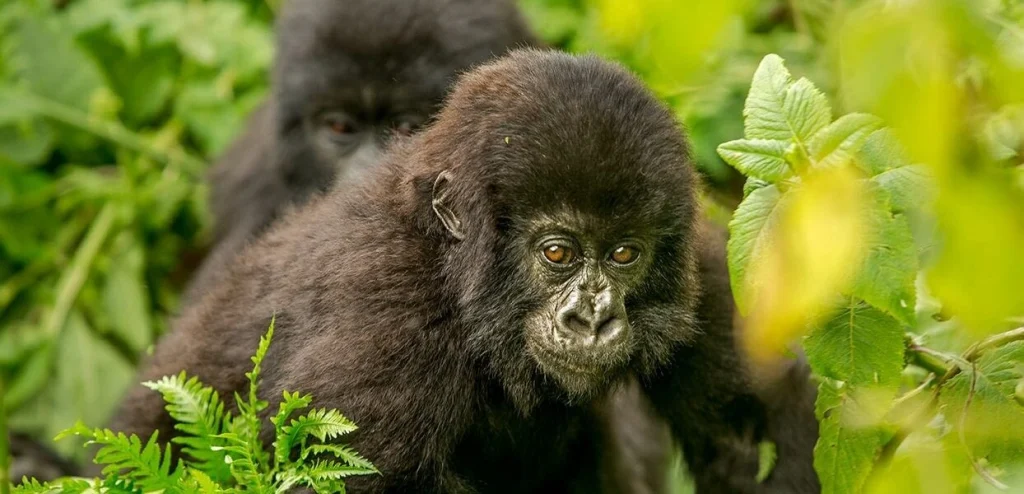
Gorilla Trek and Murchison Falls Tour. Uganda’s two biggest headline attractions sit at opposite ends of the country, which is exactly why combining them into one trip takes a bit more planning than a single-park visit. In the far southwest, the misty ridgelines of Bwindi Impenetrable Forest hold roughly half the world’s remaining mountain gorillas. Up in the northwest, the Victoria Nile crashes through a seven-metre gorge at Murchison Falls, surrounded by Uganda’s largest expanse of savannah wildlife. A tour that links both delivers an almost unfair amount of variety for one country: forest primates, river cruises, big cats, and one of the most photographed waterfalls on the continent, all in a single, well-built Uganda safari.
This guide walks through exactly how to make that combination work — the routing choices, realistic day counts, what it costs, and how to sequence gorilla trekking and Murchison Falls so the trip flows rather than turning into a string of long transfer days.
Why Combine Gorilla Trekking with Murchison Falls?
Bwindi and Murchison Falls showcase almost entirely different sides of Uganda. Gorilla trekking is slow, physical, and intimate — a single hour spent in dense rainforest with a habituated family, reached after a demanding hike through steep, muddy terrain. Murchison Falls, by contrast, is expansive and fast-paced: game drives across open savannah, a Nile boat cruise past hippos and crocodiles, and a thundering waterfall you can view from both the base and the clifftop. Very few countries let you experience both extremes on a single trip without a long-haul flight in between, and it’s this contrast that makes the gorilla trekking in Uganda plus Murchison Falls combination one of the most consistently requested itineraries we build.
How Far Apart Are Bwindi and Murchison Falls?
This is the question that shapes everything else about planning this trip. Bwindi and Murchison Falls sit at nearly opposite corners of Uganda, and driving directly between them is a long day: the overland route typically runs through Queen Elizabeth National Park and on to Fort Portal or Kibale before continuing north, adding up to somewhere in the range of nine to twelve hours of driving depending on road conditions and stops. Most itineraries don’t attempt this in one push — instead, the drive is broken into legs, often with a stop at Queen Elizabeth or Kibale along the way, turning what would be an exhausting single transfer into two or three scenic driving days that add wildlife viewing rather than just mileage.
Flying vs Driving Between the Two Parks
For travelers short on time, domestic flights are the more practical option. Uganda’s scheduled domestic carriers connect Entebbe and Kajjansi airstrips with airstrips serving both regions — Kihihi or Kisoro near Bwindi, and Pakuba, Bugungu, or Chobe near Murchison Falls — cutting a potential two-day overland transfer down to a couple of short flights in a single day. The trade-off is straightforward: flying saves time and avoids long, bumpy roads, but driving lets you add Queen Elizabeth’s tree-climbing lions and Kazinga Channel boat cruise, or Kibale’s chimpanzee tracking, as scenic stopovers along the way rather than skipping them entirely. Travelers with a week or less generally lean toward flying; those with ten days or more often prefer the overland route precisely because of what it adds en route.
Routing Through Queen Elizabeth and Kibale
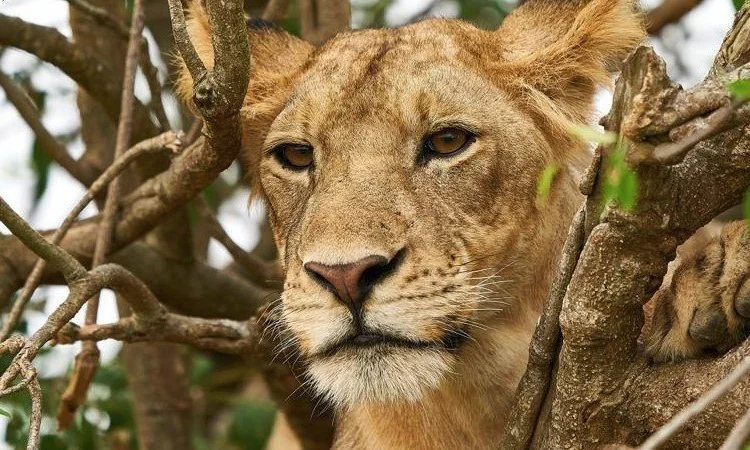
If you choose to drive, the classic route runs Bwindi to Queen Elizabeth National Park (roughly five to six hours via the Ishasha sector, home to Uganda’s famous tree-climbing lions), then on to Kibale Forest National Park (a further three to four hours) for chimpanzee tracking, before the final push north to Murchison Falls. Our 10-day trip covering Murchison Falls, Kibale, Queen Elizabeth and Bwindi is built exactly around this route, sequencing the parks so that each driving day ends at a new wildlife activity rather than just another lodge. Pick and Transfer Safaris’ Queen Elizabeth National Park guide and Kibale Forest National Park guide are useful further reading on what each stopover adds to the trip.
Gorilla Trekking in Bwindi: What to Expect
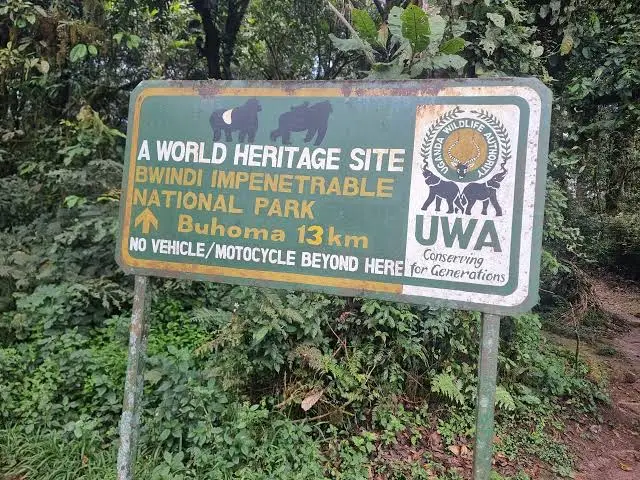
Bwindi Impenetrable Forest, a UNESCO World Heritage Site, holds around half of the world’s remaining mountain gorillas across four trekking sectors — Buhoma, Ruhija, Rushaga, and Nkuringo — each with its own habituated families and trail difficulty. Treks begin with an early-morning briefing, followed by a hike that can last anywhere from thirty minutes to several hours depending on where the assigned family is feeding, and reward trekkers with a strict but unforgettable hour observing gorillas at close range. Our guide on which part of Bwindi is easiest for gorilla trekking is worth reading before you book, since sector choice affects both trail difficulty and which lodges make sense for your itinerary.
Murchison Falls: What to Expect
Murchison Falls National Park, Uganda’s largest protected area, centres on the point where the Victoria Nile is squeezed through a gorge just seven metres wide before plunging 43 metres into the gorge below. A typical visit covers a game drive across the Buligi Peninsula for elephant, buffalo, lion, and giraffe; a boat cruise toward the base of the falls past hippos and Nile crocodiles; and a walk or short drive to the clifftop viewpoint at the top of the falls. Our detailed look at the size of Murchison Falls National Park gives a sense of just how much ground this single park covers, which is part of why most visitors dedicate two to three days here rather than treating it as a quick stopover.
Gorilla Permit Costs and Booking Timelines
Gorilla permits are the single biggest line item in this itinerary’s budget, priced at $800 per person in Uganda’s standard season, or $600 during the discounted low-season months of April, May, and November. Permits are strictly capped at eight visitors per gorilla family per day and routinely sell out months in advance during the July-to-September and December-to-February peak periods, so booking early is essential, particularly if your dates are fixed around flights or other commitments. Our breakdown of how much a gorilla trekking safari costs in Uganda goes further into total trip budgeting once permits, park fees, and accommodation are all factored in, and our summary of gorilla trekking rules and regulations is worth reading well before your trek date.
Sample Itinerary: 7-Day Gorilla Trek and Murchison Falls Fly-In Tour
For travelers with a week to spend, a fly-in itinerary works well: day one flies from Entebbe into Bwindi for an afternoon arrival and briefing; day two is the gorilla trek itself; day three is a scheduled flight from Bwindi to Murchison Falls, arriving in time for an afternoon game drive; day four covers the Nile boat cruise and the top-of-the-falls viewpoint; day five adds Budongo Forest chimpanzee tracking or a second game drive; and days six and seven cover the flight back to Entebbe and departure, or a short Ziwa Rhino Sanctuary stop en route if time allows. This structure keeps travel time to a minimum while still delivering both headline experiences in full. Our 7-day wildlife, gorillas and chimpanzee tracking safari follows a similar fly-based structure.
Sample Itinerary: 10-Day Overland Gorilla Trek and Murchison Falls Safari
Travelers with ten days can comfortably drive the full route and add Queen Elizabeth and Kibale along the way: two days around Bwindi for gorilla trekking, a scenic drive and game drive through Queen Elizabeth’s Ishasha sector, a stop in Kibale for chimpanzee tracking, and two to three days at Murchison Falls covering game drives, the boat cruise, and the falls viewpoints, before returning to Kampala or Entebbe. Our 10-day Uganda wildlife safari and the dedicated Murchison Falls, Kibale, Queen Elizabeth and Bwindi trip both follow this pacing. Pick and Transfer Safaris’ 10-day Uganda primates and wildlife safari covers comparable ground from a different operator’s perspective, useful for benchmarking pacing and pricing.
Sample Itinerary: 14+ Day Comprehensive Uganda Safari
With two weeks or more, it becomes possible to slow the pace considerably, add a second gorilla trek or the gorilla habituation experience in Rushaga, spend extra nights at each park rather than treating them as overnight stops, and fold in additional activities like golden monkey tracking or a Ziwa rhino tracking stop between Kampala and Murchison. Our 18-day tailored safari adventure and longer 20-day ultimate Uganda safari are both built for travelers who want this fuller, unhurried version of the trip, and our 25-day wildlife, gorilla and chimps adventure extends it further still for those with the most time to spare. Pick and Transfer Safaris’ 14-day Uganda wildlife and primates safari and 18-day Uganda birding and wildlife safari offer comparable long-format options if you’re weighing operators.
Total Trip Budget: What to Expect
Beyond the $800 (or $600 low-season) gorilla permit, budget for Murchison Falls park entry and activity fees, a Uganda Wildlife Authority-registered vehicle and driver-guide for the full trip, accommodation that ranges widely from budget tented camps to high-end lodges, and either domestic flights or fuel and vehicle costs for the overland route depending on which option you choose. International travelers commonly find that a well-paced ten-day version of this itinerary, mid-range accommodation included, runs into several thousand dollars per person, with the gorilla permit and lodge choice being the two biggest variables that shift the total up or down. Building the budget around a fixed number of trekking days and a clear accommodation tier before comparing quotes from different operators tends to produce the most accurate like-for-like comparison.
Chimpanzee Tracking as a Bonus Stop
If your route runs through Kibale Forest or Murchison’s own Budongo Forest Reserve, chimpanzee tracking is worth building in as a bonus primate encounter alongside the gorillas. Kibale is widely considered Uganda’s premier chimp-tracking destination, with high habituation success rates and a good chance of hearing the forest erupt with chimp calls even before you spot the group. Budongo, closer to Murchison Falls itself, offers a quieter, less-visited alternative that fits naturally into a Murchison-based day without requiring an extra overnight stop. Our overview of chimpanzee and gorilla trekking compares both primate experiences side by side and helps decide whether adding one, both, or neither makes sense for your specific route and time budget.
Adding Ziwa Rhino Tracking to the Route
Because Ziwa Rhino Sanctuary sits directly on the standard road route between Kampala and Murchison Falls, it’s an easy and worthwhile addition to any overland version of this itinerary. Uganda’s wild rhino population was wiped out decades ago, making Ziwa the only place in the country to track rhino on foot, and the roughly two-hour tracking activity fits naturally into a driving day without requiring a separate detour. Our full guide to Ziwa Rhino Sanctuary entrance fees and rates covers current pricing for this add-on.
Choosing Your Entry Point: Kigali, Entebbe, or Both
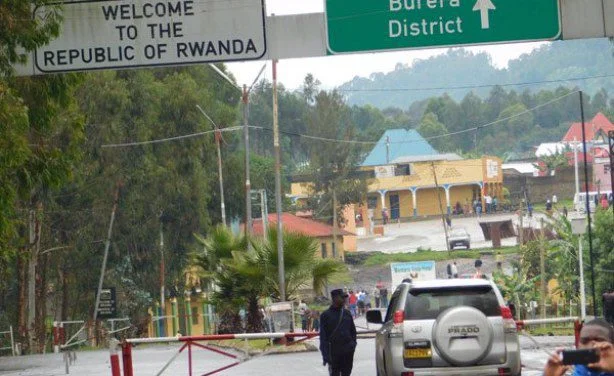
Travelers coming from overseas typically fly into Entebbe International Airport, which sits closer to Murchison Falls and works well if that park is your final stop before departure. Some travelers instead fly into Kigali, Rwanda, and cross overland into Bwindi, particularly if a Rwanda extension — gorilla trekking in Volcanoes National Park or a Big Five safari in Akagera — is also part of the trip, then finish in Uganda at Murchison Falls before flying home from Entebbe. Our guide on landing in Kigali or Entebbe for a gorilla safari walks through this decision in more detail, and factors in which entry point suits a Uganda-only itinerary versus one that spans both countries.
Best Time of Year for This Combined Itinerary
Uganda’s two dry seasons, December to February and June to August, offer the best overall conditions for both halves of this trip: firmer gorilla trekking trails in Bwindi and clearer, more productive game drives at Murchison Falls. The wetter months, particularly April, May, September, and November, bring muddier trekking conditions and occasionally trickier road travel between parks, but also lower gorilla permit prices during the April, May, and November discount window and noticeably fewer crowds throughout. Murchison Falls’ boat cruises run reliably year-round regardless of season, since the Nile carries substantial water even in the drier months.
Where to Stay Along the Route
Accommodation on this itinerary splits naturally into distinct clusters around each stop. Near Bwindi, lodges are grouped by trekking sector — Buhoma, Ruhija, Rushaga, or Nkuringo — and choosing one close to your assigned sector saves a stressful early-morning drive before the 7 a.m. briefing; Pick and Transfer Safaris’ Bwindi Impenetrable Forest guide covers the sector layout in more detail. Around Murchison Falls, most properties sit along the Nile’s southern bank near Paraa, ranging from tented camps to riverside lodges with direct falls views, and Pick and Transfer Safaris’ Murchison Falls National Park guide is a useful reference for that side of the trip. If your route passes through Queen Elizabeth or Kibale as well, booking one night at each rather than rushing through as a pure pass-through stop makes a noticeable difference to how relaxed the overall trip feels.
What to Pack for Both Rainforest and Savannah
This itinerary demands two different packing lists layered into one bag. For gorilla trekking, prioritize waterproof hiking boots, gardening-style gloves, a rain jacket, and long trousers tucked into socks against biting ants on Bwindi’s steep, vegetated trails. For Murchison Falls, shift toward lightweight, neutral-colored clothing, a hat and sunscreen for open game drives, and binoculars for spotting distant wildlife on both the savannah and the Nile Delta boat cruise. A dry bag or rain sleeve for cameras is worth carrying throughout, given how quickly weather can turn in both regions.
Visa Requirements for This Trip
Most nationalities need a visa to enter Uganda, best arranged in advance through the country’s e-visa system rather than relying on arrival processing. If Rwanda is also part of your route, the East Africa Tourist Visa is worth investigating, since it covers Uganda, Rwanda, and Kenya under a single 90-day, multiple-entry document. Our step-by-step guide to the Uganda tourist visa application process covers exactly what’s required and how far in advance to apply.
Self-Drive, Guided Vehicle, or Domestic Flights?
For the overland version of this trip, most travelers choose a guided 4×4 with driver rather than self-driving, both for the local knowledge guides bring to game drives and because road conditions on some stretches between southwestern and northwestern Uganda can be demanding for unfamiliar drivers. Our car hire service covers both guided and self-drive options if you want to compare the trade-offs, while travelers prioritizing time over budget should weight the domestic flight option more heavily, particularly on itineraries of seven days or less where road transfers would otherwise eat into activity time.
Extending or Customizing This Itinerary
Because both Bwindi and Murchison Falls work well as either the start or end of a longer trip, this combination is easy to extend in either direction. Travelers wanting more forest time sometimes add a second gorilla trek or a golden monkey tracking day in Mgahinga before heading north; others prefer to add extra nights at Murchison Falls for a second boat cruise or a Budongo Forest chimpanzee trek. Pick and Transfer Safaris’ gorilla safari packages and broader wildlife safaris collection are useful for comparing how other operators structure similar extensions, and their full safari listings page is worth a browse if you’re still deciding how much time to allocate to each park.
Booking Tips and Working with a Local Operator
Because this itinerary touches multiple parks, permit systems, and often a domestic flight or two, most travelers find it far less stressful to book through a single local operator who coordinates the whole chain rather than piecing together permits, transport, and lodges independently. This matters even more for gorilla permits specifically, since availability at popular sectors can disappear months ahead during peak season, and a fragmented booking process risks locking in flights or lodges before permits are confirmed. If you’d rather start with a shorter taste of the combination before committing to a longer trip, Pick and Transfer Safaris’ 3-day Uganda gorilla safari and 7-day Uganda safari one-week tour are useful for benchmarking what a shorter version of this kind of trip looks like before scaling up to the full combined itinerary.
Frequently Asked Questions About Combining Gorilla Trekking and Murchison Falls
Can gorilla trekking and Murchison Falls realistically be combined in one trip? Yes — this is one of Uganda’s most popular multi-park itineraries, done either by connecting flight in around a week or by overland drive through Queen Elizabeth and Kibale over ten days or more.
How many days should I budget for this combination? A minimum of seven days works for a fly-based itinerary focused purely on gorillas and Murchison Falls; ten to fourteen days allows a comfortable overland route with Queen Elizabeth and Kibale included as well.
Is it better to fly or drive between the two parks? Flying suits shorter trips and travelers prioritizing time; driving suits longer trips where the stopover parks along the route add meaningful wildlife viewing rather than just extra travel hours.
What’s the total cost difference between a short fly-in trip and a longer overland safari? Flights add direct cost but save days that would otherwise go toward accommodation, park fees, and vehicle hire on a longer overland route, so the two approaches often land in a similar overall budget once everything is accounted for.
Plan Your Gorilla Trek and Murchison Falls Tour with Kenlink Tours
Few Uganda itineraries pack in as much range as this one — misty rainforest gorillas at one end, a thundering Nile waterfall and open savannah game drives at the other. Getting the routing, timing, and permit bookings right is where local expertise makes the real difference, especially with gorilla permits selling out months ahead during peak season. Learn more about how we build trips like this on our About Us page, or reach out through our contact page to start planning a gorilla trekking and Murchison Falls itinerary around your travel dates and budget.