- EXPERT'S HELP
- +256789210067
- +256200955001
- info@kenlinktours.com


Can You Combine Uganda and Rwanda Safari
April 13, 2026
10-Day Uganda Safari Itinerary
April 13, 2026
Gorilla Trekking Permit — How to Get One. Of all the questions that land in our inbox at Kenlink Tours, the one that arrives most consistently — from first-time safari planners and seasoned Africa travellers alike — is this: how exactly do I get a gorilla trekking permit? It sounds like it should be simple. You find a park, you pay a fee, you go trekking. But the reality is a little more layered than that, and understanding how the permit system works before you start planning will save you a great deal of frustration, protect you from missing out entirely, and ultimately make the difference between a trip that goes smoothly and one that unravels before it begins.
Gorilla trekking permits are among the most sought-after wildlife experience tickets in the world. Supply is deliberately limited — only a small number of visitors are allowed to visit each habituated gorilla family per day — and demand from travellers across the globe is fierce and growing every year. The good news is that getting a permit is entirely achievable when you know the system, plan ahead, and work with people who know exactly how it works. That is precisely what this guide is here to help you do. And when you are ready to move from research to booking, our gorilla trekking tours page is the place to start.
Why Gorilla Trekking Permits Are Limited
Before diving into the how, it helps to understand the why — because the permit system is not arbitrary bureaucracy. It exists for a very specific and deeply important reason: the protection of the mountain gorillas themselves.
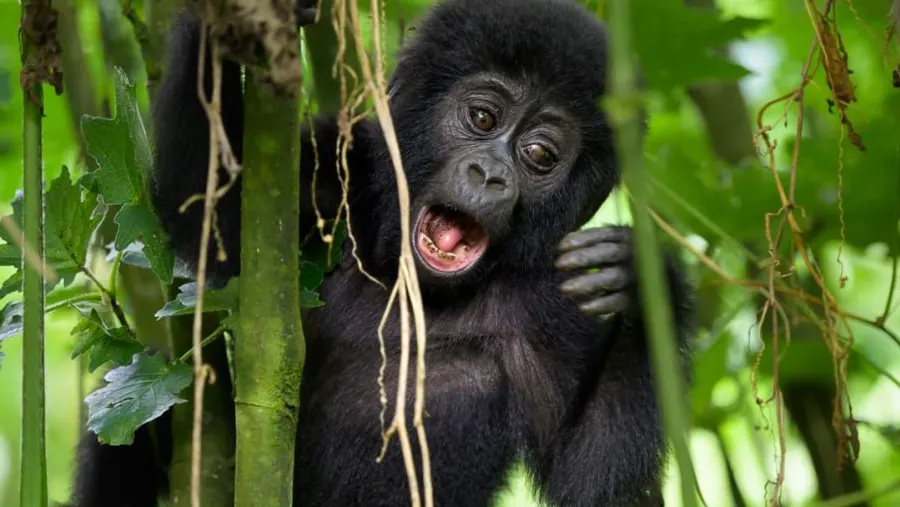
Mountain gorillas are one of the most endangered great apes on Earth. According to the World Wildlife Fund, there are just over 1,000 mountain gorillas remaining in the wild, all of them confined to a narrow band of high-altitude forest across Uganda, Rwanda, and the Democratic Republic of Congo. They are vulnerable to human diseases — including the common cold — which means that uncontrolled tourism access could be genuinely catastrophic for gorilla health and survival.
To manage this risk, the authorities in both Uganda and Rwanda impose strict daily limits on gorilla visits. In Uganda, only eight visitors per habituated gorilla group per day are permitted. In Rwanda, the same rule applies. Visitors must stay at least seven metres from the gorillas at all times, wear face masks in their presence, and limit their visit to exactly one hour. These are not suggestions — they are enforced rules, and they are the reason that gorilla populations have actually grown over the past two decades rather than declined despite the presence of tourism.
Uganda Gorilla Trekking Permits — What You Need to Know
Uganda is home to the largest number of habituated gorilla families available for trekking anywhere in the world. Bwindi Impenetrable National Park has over 22 habituated gorilla groups spread across four trekking sectors — Buhoma, Ruhija, Rushaga, and Nkuringo — while Mgahinga Gorilla National Park in the southwest offers trekking with the Nyakagezi gorilla family. This means Uganda has considerably more daily permit slots available than Rwanda, which is one of the reasons Uganda remains the more accessible and more affordable gorilla trekking destination.
The cost of a Uganda gorilla trekking permit is $800 per person for foreign non-residents. East African citizens pay a significantly reduced rate. The permit covers your ranger guide, forest entry, and the one-hour gorilla visit. It does not cover accommodation, transport, or porter fees, which are arranged separately.
Uganda gorilla permits are issued and managed by the Uganda Wildlife Authority, the government body responsible for all of Uganda’s national parks and wildlife. Permits can be booked directly through the UWA website or — far more commonly and conveniently — through a licensed Ugandan tour operator such as Kenlink Tours. Working through an operator means your permit is secured alongside your accommodation, transport, and full itinerary in one seamless process, with no risk of booking a permit for a date when your lodge is unavailable or vice versa. Visit our Uganda gorilla safari page to start the process with our team today.
Rwanda Gorilla Trekking Permits — What You Need to Know
Rwanda’s gorilla trekking takes place exclusively in Volcanoes National Park in the country’s northwest, where 12 habituated gorilla families currently receive visitors. Rwanda has positioned itself as a premium gorilla trekking destination, and its permit price reflects that positioning unmistakably.
A Rwanda gorilla trekking permit costs $1,500 per person — making it one of the most expensive single wildlife experiences anywhere on the planet. The premium price is justified by Rwanda on the grounds of exclusivity, conservation funding, and the exceptionally high quality of the overall visitor experience, all of which are fair arguments. The revenue generated by permit sales is a significant driver of Rwanda’s conservation budget, and it has helped fund the recovery of gorilla populations across the Virunga range.
Rwanda gorilla permits are managed by the Rwanda Development Board, which handles all bookings through its official online portal. As with Uganda, working through a licensed operator is the most reliable and efficient way to secure your permit, particularly if you are booking a combined Rwanda and Uganda itinerary. Our Rwanda safari packages include full permit handling so you never have to navigate the booking system alone.
How Far in Advance Should You Book?
This is perhaps the single most important piece of practical advice in this entire guide: book early. Earlier than you think you need to. Earlier than feels comfortable. The earlier, the better.
Peak gorilla trekking season in Uganda runs from June to August and December to February, coinciding with the drier months when forest trails are more manageable and weather conditions are generally more favourable. During these periods, permits across all gorilla groups in Bwindi and Mgahinga can sell out six months to a full year in advance. Rwanda’s permits, with fewer available slots per day across its 12 groups, sell out equally fast during peak season and can be even harder to secure at short notice.
As a general rule of thumb, if you are planning to trek gorillas during peak season, aim to book your permits at least six months ahead. For travel during the shoulder or low seasons — March to May and September to November — three to four months ahead is usually sufficient, though earlier is always safer. If you have a fixed travel date in mind and gorilla trekking is the centrepiece of your trip, the very first thing you should do after deciding on your travel dates is secure your permits. Everything else — flights, accommodation, other activities — can follow. The permit is the non-negotiable anchor around which the rest of your itinerary is built.
Contact our team at Kenlink Tours as early as possible and we will check availability across all gorilla groups in both countries and advise you on the best options for your specific dates.
Choosing the Right Sector in Bwindi
Because Bwindi Impenetrable National Park is so large and has gorilla families spread across four distinct trekking sectors, choosing the right sector for your permit is an important decision that affects your overall experience significantly.
Buhoma is the original and most established trekking sector, located in the north of the park. It is the most accessible from the park’s main gate and has the widest range of lodge options nearby, from budget bandas to mid-range and luxury properties. For first-time visitors who want a reliable, well-supported trekking experience, Buhoma is an excellent choice.
Ruhija sits at higher altitude in the eastern part of the park and is known for some of Bwindi’s most dramatic forest scenery. The trekking here can be more challenging due to the steeper terrain, but the reward is a sense of genuine wilderness that even Bwindi’s other sectors cannot quite match. Ruhija is also outstanding for birding, with several Albertine Rift endemics found here.
Rushaga in the south has the largest number of habituated gorilla families of any sector, making it the sector with the highest permit availability and therefore the easiest to book into at shorter notice. Rushaga is also the only sector where the Gorilla Habituation Experience — a full-day encounter with a partially habituated family — is available.
Nkuringo sits on the southern edge of the park, perched on a dramatic ridge with sweeping views across the valley toward Rwanda and the Virunga volcanoes. It is one of the most scenically spectacular bases in all of Bwindi, and the gorilla families here are well habituated and reliably encountered. Ask our team about sector-specific lodges when you explore our Bwindi gorilla trekking packages.
The Gorilla Habituation Experience — A Special Permit Worth Knowing
Beyond the standard gorilla trekking permit, Uganda offers a unique and extraordinary upgrade: the Gorilla Habituation Experience, available exclusively in Bwindi’s Rushaga sector. This permit costs $1,500 per person — the same as a Rwanda gorilla permit — but it delivers something that a standard trek simply cannot: a full day, up to four hours, spent with a gorilla family that is still in the process of being habituated to human presence.
Because the gorillas are not yet fully habituated, their behaviour is rawer and less predictable. You witness interactions and responses that standard trekking groups never see. You follow the family through the forest as UWA researchers continue their work, gaining an insight into gorilla behaviour and conservation science that is genuinely educational as well as profoundly moving. Only four visitors per day are permitted on the Habituation Experience, making it one of the most exclusive wildlife encounters available anywhere on Earth. If this appeals to you, ask about availability when you request your custom safari quote.
Step-by-Step — How to Get Your Gorilla Permit Through Kenlink Tours
The process of securing a gorilla permit through us is straightforward, transparent, and designed to give you complete peace of mind from the first enquiry to the moment you set foot in the forest.
You begin by reaching out to our team through our contact page or by requesting a custom safari quote. Tell us your preferred travel dates, the number of people in your group, whether you are planning to trek in Uganda only or in both Uganda and Rwanda, and any preferences you have around sector, budget, or lodge style. We will check permit availability across all relevant gorilla groups and come back to you with a full itinerary proposal that matches your permits to the right accommodation and activities on each day.
Once you are happy with the proposal, a deposit secures your permits and your accommodation simultaneously. We then handle all communication with the Uganda Wildlife Authority and Rwanda Development Board on your behalf, confirming your permits and providing you with official documentation before your departure. On the day of your trek, your permits are presented to the ranger guide at the briefing point, and from there the forest takes over entirely.
A Final Word — Do Not Leave It Too Late
If there is one message to take from this guide above all others, it is this: the permit is the heartbeat of your gorilla trekking safari, and no other part of the planning process matters more than securing it early. Flights can be changed. Lodges can occasionally be swapped. But a gorilla permit on the date you need, for the sector you want, in the country of your choice — that is something that disappears fast and cannot be conjured from thin air once it is gone.
Start here. Start now. Our team at Kenlink Tours is ready to help you find your permit, build your itinerary, and send you into the forest fully prepared for the most extraordinary wildlife encounter of your life. Get in touch today and let us make it happen.