- EXPERT'S HELP
- +256789210067
- +256200955001
- info@kenlinktours.com


Rwanda vs Uganda — Which Country Offers the Better Safari?
April 13, 2026
Gorilla Trekking Permit — How to Get One
April 13, 2026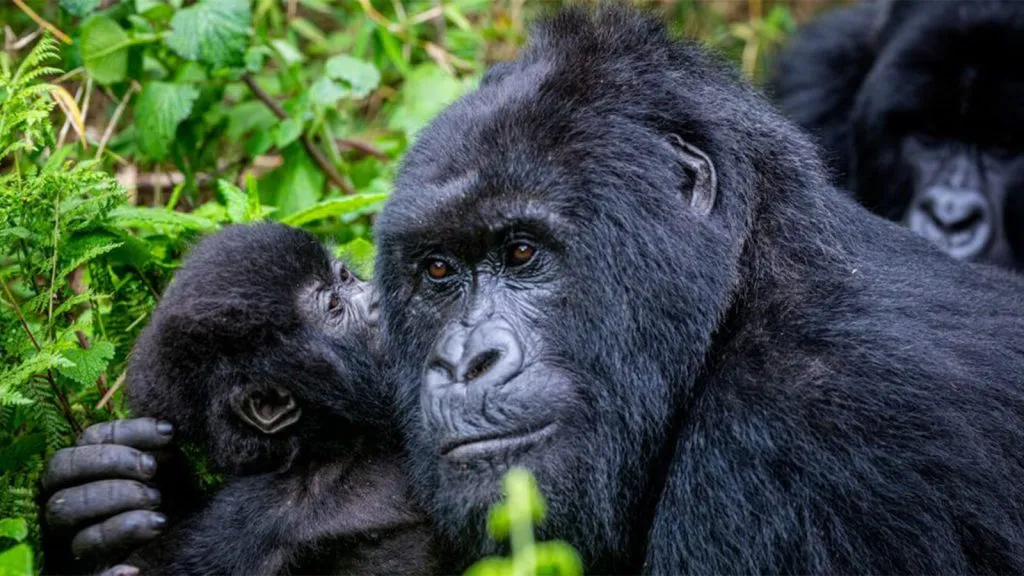
Can You Combine Uganda and Rwanda Safari. The short answer is yes — and not only can you combine Uganda and Rwanda on one safari, but doing so makes for one of the most richly rewarding travel experiences available anywhere in Africa today. These two small, landlocked nations sit side by side in the heart of the continent, share the same ancient mountain gorilla range, and complement each other so naturally that planning a combined itinerary feels less like stitching two separate trips together and more like following a single, logical story from beginning to end.
Think about it this way. Uganda gives you depth — an extraordinary sweep of wildlife, landscapes, and ecosystems that takes you from the thundering Nile in the north to the mist-draped rainforests of the southwest. Rwanda gives you polish — impeccable roads, world-class lodges, and a compact, beautifully organised safari experience set against the drama of the Virunga volcanoes. Together, they give you something that neither country can quite deliver alone: a safari that is simultaneously wild and refined, adventurous and comfortable, affordable and aspirational. At Kenlink Tours, crafting combined Uganda and Rwanda safaris is one of our great specialities, and we have been doing it long enough to know exactly how to make every day count. Browse our combined Uganda and Rwanda safari packages to see what a seamlessly joined itinerary looks like in practice.
Why a Combined Safari Makes So Much Sense
Geography is the first reason. Uganda and Rwanda share a border in the southwest, and that border sits in the middle of some of the most extraordinary wildlife country in Africa. Bwindi Impenetrable National Park in Uganda and Volcanoes National Park in Rwanda are separated by barely an hour’s drive once you cross the border at Cyanika or Katuna. Both parks are home to habituated mountain gorilla families. Both offer golden monkey tracking. And both sit within the same ancient Albertine Rift ecosystem — one of Africa’s most biodiverse and geologically dramatic regions.
This proximity means that a combined safari does not require long, exhausting transfers between the two countries. You can trek gorillas in Bwindi on day three of your trip, cross into Rwanda on day five, and be sitting on the terrace of a lodge overlooking Volcanoes National Park with a cold drink in hand by early afternoon. The transition between the two countries is smooth, logistically simple, and — if you time it right — genuinely beautiful, with terraced hillsides, volcanic peaks, and dense forest lining the road on both sides of the border.
The second reason a combined safari makes sense is complementarity. Uganda and Rwanda do not duplicate each other — they enhance each other. Uganda offers a wider variety of wildlife, a greater number of gorilla families, big game national parks, chimpanzee trekking, and boat safaris on the Nile and the Kazinga Channel. Rwanda offers a more refined, intimate, and luxurious experience in Volcanoes National Park, along with the chimpanzees of Nyungwe Forest and the emerging Big Five safari at Akagera National Park. Put them together and you have a trip that covers extraordinary ground without ever feeling repetitive or rushed.
What a Typical Combined Safari Looks Like
There is no single template for a Uganda and Rwanda combined safari — the beauty of working with an experienced operator is that the itinerary can be shaped around your specific interests, budget, and available time. That said, there are a few classic structures that work exceptionally well and that our team at Kenlink Tours has refined over many years of guiding travellers through both countries.
A ten-day combined safari might begin in Entebbe, Uganda’s lakeside gateway city, where a morning boat trip to Mabamba Bay to search for the legendary Shoebill Stork makes a perfect first wildlife encounter. From Entebbe, you head west through Uganda’s rolling landscape — passing the equator, skirting the shores of Lake George, and eventually arriving in the Fort Portal region for two days of chimpanzee trekking and crater lake exploration in and around Kibale Forest National Park. From Kibale, a game drive through Queen Elizabeth National Park — with its tree-climbing lions in Ishasha, its boat safari on the Kazinga Channel, and its vast herds of buffalo and elephant — leads you naturally southward toward the Bwindi sector.
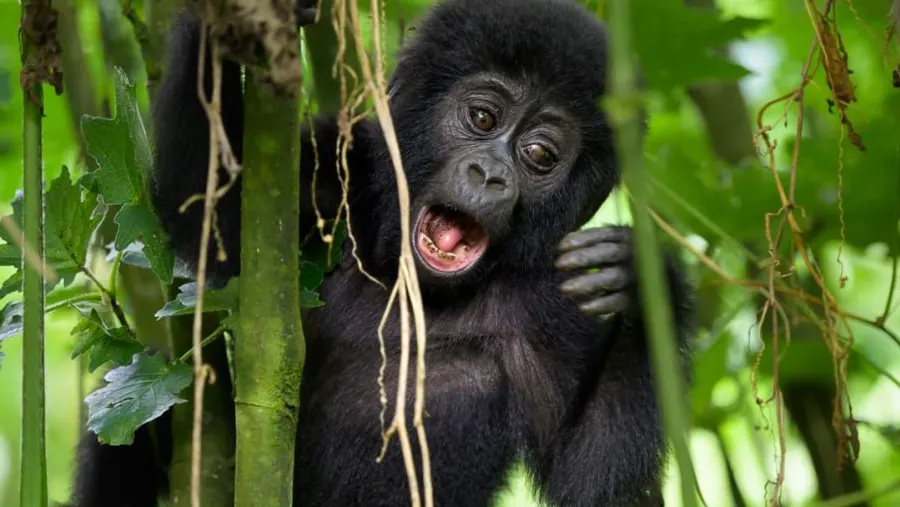
Two days in Bwindi are the emotional centrepiece of any combined itinerary. The first is your gorilla trek — that profound, one-hour encounter in the company of a habituated family that most travellers describe as the single most moving wildlife experience of their lives. The second can be used for a nature walk, a visit to a local Batwa community to learn about the forest people whose ancestral home Bwindi has always been, or simply a morning of quiet reflection in one of the most beautiful and ancient forests on Earth. Visit our Bwindi gorilla trekking page for permit information and sector guidance.
From Bwindi, crossing into Rwanda takes you through the Cyanika border post and up into the Virunga highlands, where Volcanoes National Park rises in a dramatic chain of forested peaks above the surrounding farmland. One to two days here typically includes a second gorilla trek in Rwanda — a different family, a different forest, a different and equally extraordinary experience — along with golden monkey tracking in the bamboo zone just below the volcanic peaks. The contrast between gorilla trekking in Uganda’s dense, ancient, cathedral-like Bwindi and gorilla trekking in Rwanda’s more open, volcanically dramatic Volcanoes Park is itself one of the great pleasures of doing both, and many travellers are surprised by how different the two experiences feel despite involving the same species.
The safari concludes in Kigali, Rwanda’s immaculate and increasingly cosmopolitan capital, where the Kigali Genocide Memorial offers a sobering, important, and deeply moving way to understand the country’s remarkable journey from tragedy to transformation before you fly home. A final evening in one of Kigali’s excellent restaurants — the city’s food scene has developed impressively in recent years — makes for a fitting, reflective end to a trip of extraordinary depth.
Crossing the Border — Practical Information
The border crossing between Uganda and Rwanda is one of the most straightforward in East Africa, and for most travellers it is a smooth and hassle-free experience. There are two main crossing points used on gorilla safari itineraries: Katuna-Gatuna in the south, and Cyanika, which is closer to both Bwindi and Volcanoes National Park and is the one most commonly used on combined gorilla safaris.
Citizens of most Western countries, including the United Kingdom, United States, Canada, Australia, and all European Union nations, can enter both Uganda and Rwanda visa-free or obtain visas on arrival. The East Africa Tourist Visa is an especially useful option — a single $100 visa that covers Uganda, Rwanda, and Kenya and allows multiple entries between the three countries. According to the Uganda Immigration Services, the East Africa Tourist Visa is available to eligible nationalities on arrival at Entebbe International Airport and is valid for 90 days. Our team will advise you on the exact visa requirements for your nationality when you contact us to plan your safari.
It is worth noting that gorilla permits for both countries need to be secured well in advance and cannot be transferred between parks. Uganda gorilla permits cost $800 per person, while Rwanda gorilla permits cost $1,500 per person. If you are planning to trek gorillas in both countries on the same trip — which we strongly recommend for the sheer joy of comparing the two experiences — factor both permit costs into your budget from the start. Our combined Uganda and Rwanda packages include all permit fees, so there are no hidden costs to worry about.
How Long Do You Need?
The minimum realistic duration for a combined Uganda and Rwanda safari that includes gorilla trekking in both countries, at least one additional Uganda wildlife experience, and a comfortable pace of travel is ten days. This gives you enough time to absorb what you are seeing without feeling rushed, allows for the inevitable travel days between parks, and leaves room for the unexpected — a particularly long gorilla trek, a spontaneous boat cruise, a morning spent watching elephants from your lodge terrace.
Twelve to fourteen days is the sweet spot for most travellers, allowing you to add Murchison Falls or a more extended stay in Queen Elizabeth National Park to the itinerary, which gives the Uganda portion of the trip a proper big-game safari dimension alongside the primate experiences. If your budget and schedule allow for two weeks, a fourteen-day combined itinerary that takes in Murchison Falls, Kibale, Queen Elizabeth, Bwindi, and Volcanoes National Park is, in our honest estimation, one of the finest safari journeys available anywhere in Africa. See our suggested 10-day and 14-day itinerary options for detailed day-by-day breakdowns.
Tips for Getting the Most from Your Combined Safari
A few practical notes that will make your combined Uganda and Rwanda safari smoother, more comfortable, and more memorable. Pack light — a soft-sided bag rather than a hard suitcase is strongly recommended, as it fits more easily into safari vehicles and small charter aircraft. Bring waterproof hiking boots, a good rain jacket, and long-sleeved clothing for gorilla trekking, where forest vegetation can be dense and scratchy regardless of season. Budget for a porter on your gorilla treks — they carry your bag, steady you on steep terrain, and the fee goes directly to local community members who depend on safari tourism for their livelihoods.
Book everything early. Gorilla permits in both countries sell out months in advance during peak season, and the best lodges near Bwindi and Volcanoes National Park fill up equally fast. The Rwanda Development Board manages Rwanda gorilla permit allocation, while Uganda permits are handled by the Uganda Wildlife Authority. Working through a reputable operator like Kenlink Tours means we handle all of this on your behalf, securing permits and accommodation simultaneously so that nothing falls through the cracks. Request your custom quote today and we will take care of every detail from start to finish.
The Bottom Line
Can you combine Uganda and Rwanda on one safari? Absolutely — and in our experience, travellers who do consistently rate it among the greatest trips of their lives. The gorillas of Bwindi and the gorillas of Volcanoes. The lions of Ishasha and the rhinos of Akagera. The thundering Nile at Murchison Falls and the still beauty of Lake Kivu at sunset. Uganda’s wild, generous, endlessly surprising landscapes alongside Rwanda’s elegant, intimate, impeccably managed parks. It is a combination that works on every level — logistically, emotionally, and in terms of pure, unfiltered wildlife magic.
At Kenlink Tours, we live for building trips like this. Get in touch with our safari team and let us show you exactly what a combined Uganda and Rwanda adventure can look like when it is planned with genuine care, local knowledge, and a deep love for these two remarkable countries.