- EXPERT'S HELP
- +256789210067
- +256200955001
- info@kenlinktours.com


5-Day Short Uganda Gorilla Trekking Safari (by road)
September 3, 2026
1 Day Gorilla Trek in Uganda to Bwindi Forest; Short Tours
September 3, 2026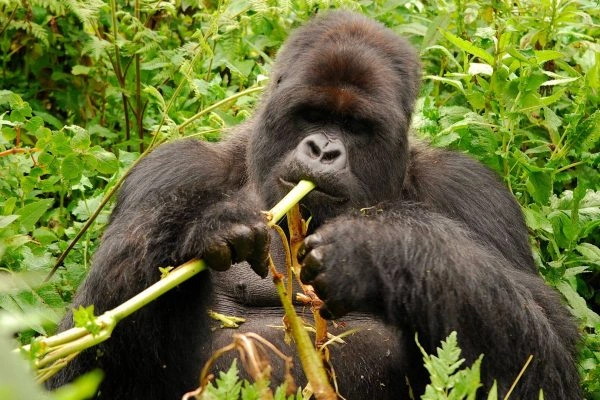
Short Gorilla Safaris in Uganda from Kigali Airport. Your flight touches down in Kigali, not Entebbe, and mountain gorillas are still very much on the itinerary. This surprises a lot of first-time travellers: Rwanda’s Kigali International Airport, with its dense network of direct flights from Europe, the Middle East and North America, has quietly become one of the most common gateways for a Uganda gorilla trekking trip, even though the gorillas themselves are trekked entirely on Ugandan soil in Bwindi Impenetrable National Park or Mgahinga Gorilla National Park. If you have landed in Kigali, or are booking flights there, this guide covers exactly how a short gorilla safari in Uganda from Kigali Airport works — the border crossing, the drive, the itinerary lengths available, and how to book it properly through Kenlink Tours.
Kigali sits far closer to Uganda’s gorilla trekking parks than Entebbe does, which is exactly why so many short tours are deliberately built around a Kigali start rather than routing travellers through Kampala first. Whether you have one day to spare or five, everything below explains how that works in practice.
It helps to be clear about one thing from the outset: flying into Kigali does not mean trekking gorillas in Rwanda. This guide is specifically about using Rwanda’s better-connected international airport as your gateway into Uganda’s gorilla parks, crossing the land border by road, and trekking on the Ugandan side under Uganda’s permit system — a route that is often cheaper and just as convenient as flying into Entebbe, once you understand how the logistics fit together.
Why So Many Travellers Start Their Uganda Gorilla Safari from Kigali
The single biggest reason is geography. Kigali is roughly four to five hours by road from the Bwindi and Mgahinga border region, compared with eight to nine hours from Entebbe or Kampala. For anyone building a short gorilla trip — two, three or five days — that difference in transfer time is often the deciding factor in where to fly into. Rwanda’s airline connectivity also plays a role: RwandAir and a growing list of international carriers serve Kigali directly from more hubs than fly into Entebbe, which makes routing through Kigali genuinely convenient for many travellers even before the shorter drive is factored in. Our own comparison, Landing in Kigali or Entebbe for a Gorilla Safari, walks through this decision in more depth if you are still choosing your entry point.
About Kigali International Airport
Kigali International Airport (airport code KGL) sits around ten kilometres from Kigali’s city centre and is Rwanda’s main international gateway. Immigration and baggage claim are generally efficient by regional standards, and most travellers clear the airport within thirty to forty-five minutes of landing, even during busier periods. If your Uganda gorilla safari begins the same day you land, your driver-guide will typically meet you directly at the arrivals hall holding a name board, ready to begin the road transfer toward the border almost immediately — a detail worth confirming with your operator in advance so you are not searching for your ride in an unfamiliar airport. Kigali airport has reliable currency exchange counters and ATMs airside, which is worth using before you leave the terminal, since cash points become far less frequent once you cross into rural southwestern Uganda. SIM cards for Rwandan mobile networks are also available at the airport if you want local connectivity for the drive to the border, though most travellers find their existing roaming plan sufficient for a trip this short.
Kigali to Bwindi: Distance, Route and Travel Time
The drive from Kigali to Bwindi Impenetrable National Park covers roughly 400 kilometres and takes approximately four to five hours, depending on which border crossing and which Bwindi trekking sector you are headed to. The route runs through Musanze (the Rwandan town at the foot of the Virunga volcanoes), across the border into Uganda, and on through the Kigezi highlands to Bwindi. It is a scenic, mostly well-maintained tarmac drive on the Rwandan side, transitioning to a mix of tarmac and murram roads once inside Uganda. Our detailed breakdown, Travel Time and Cost from Kigali vs. Kampala to Bwindi or Mgahinga, compares this route against the alternative Entebbe-based option in full detail, including how the choice affects your total trip cost. The route itself is one of the more scenic border crossings in East Africa: rolling volcanic hills give way to Uganda’s terraced Kigezi highlands, with Lake Bunyonyi visible from several points along the way for travellers routing through Kabale rather than directly via Cyanika.
Border Crossing: What to Expect at Cyanika and Katuna
Two land border posts serve this route: Cyanika, which connects directly toward Mgahinga and the western side of Bwindi, and Katuna (Gatuna), which serves the more direct route north toward Kabale and Bwindi’s other trekking sectors. Both are well-established, regularly used crossings with dedicated immigration counters for Uganda and Rwanda. Expect to disembark from your vehicle, complete exit stamps on the Rwandan side, walk a short distance to the Ugandan side, and complete entry formalities there — the whole process usually takes thirty minutes to an hour depending on how busy the crossing is that day. Our full explainer, Visa and Border Crossing Guide for Uganda and Rwanda, covers exactly what documents to have ready at each counter. Keep your passport, visa confirmation and yellow fever certificate easily accessible in a daypack rather than buried in checked luggage, since you will need to present them twice in quick succession — once on exit, once on entry — and fumbling through a packed bag at the counter is the single most common cause of delay travellers report at this crossing.
Visa Requirements for Uganda When Arriving via Kigali
Most nationalities need a valid Uganda visa to cross the border, which can be arranged in advance through Uganda’s official e-visa system, or in some cases through the East Africa Tourist Visa, which covers Uganda, Rwanda and Kenya on a single visa and is particularly convenient for exactly this kind of cross-border itinerary. Apply well ahead of travel rather than assuming a visa on arrival will be available at a land border, since land-crossing visa processes can be slower and less predictable than airport arrivals. Our Visa and Border Crossing Guide lays out the current options in more detail, and it is worth reconfirming requirements for your specific nationality directly with Uganda’s immigration authorities before you fly. The East Africa Tourist Visa is generally the more convenient choice for a Kigali-starting itinerary, since it removes the need to apply for two separate visas for what is, from your perspective, really one continuous trip across a single land border.
Choosing Your Transfer: Shared Shuttle, Private Vehicle or Self-Drive
Most Kigali-starting gorilla safaris use a private 4×4 vehicle with a driver-guide, which is what we recommend for any trip of two days or more, since it allows flexibility around border formalities, photo stops and rest breaks. Shared shuttle transfers exist and can lower cost on very short, fixed-schedule itineraries, though they trade away flexibility. Some travellers, particularly those extending their trip well beyond the gorilla trek itself, choose to self-drive; our Car Hire page outlines 4×4 rental options for exactly this route, and it is worth reading our article on companies that do transfers from Rwanda to Bwindi, Uganda if you want a wider view of how this transfer market works before deciding. Whichever option you pick, confirm upfront whether the same vehicle and driver stay with you for the entire trip, including the return leg to Kigali — a surprising number of budget transfer arrangements hand travellers off to a different, unfamiliar driver on the way back, which adds friction to an otherwise smooth border-crossing itinerary.
1-Day Gorilla Safari from Kigali Airport
A one-day gorilla safari from Kigali is genuinely possible thanks to the short four-to-five-hour drive, though it demands an early start straight from the airport or your Kigali hotel, a same-day border crossing, the trek itself, and a return drive, all inside a single long day. It suits travellers based in Kigali for work who have exactly one free day and no flexibility to add a second, but it leaves almost no margin for delay at the border or on the trail. Our regional partners at Pick and Transfer Safaris’ One Day Uganda Gorilla Safari Starting from Kigali run essentially this same itinerary, and comparing their structure against ours is a useful sanity check before committing to such a tight schedule. Because there is zero buffer built in, we generally only recommend this option to travellers who are already based in Kigali on an extended work assignment and have no realistic way to free up a second day, rather than to fly-in tourists for whom a delayed connection would mean missing the trek entirely.
2-Day Gorilla Safari from Kigali Airport
Two days removes the single biggest risk of the one-day option: you cross the border and overnight near Bwindi or Mgahinga the evening before your trek, then trek the next morning without an early-morning border rush behind you. This is the shortest itinerary we would comfortably recommend for most travellers landing in Kigali. Our 2-Day Uganda Gorilla Safari Starting from Kigali follows this structure, and Pick and Transfer Safaris’ 2 Days Uganda Gorilla Tour Starting from Kigali is worth comparing for pricing and inclusions on the same route. This length also gives your operator far more scheduling flexibility on your behalf: if your original permit date happens to sell out, there is enough slack in a two-day itinerary to shift by a day in either direction without unravelling your onward flight plans.
3-Day Gorilla Safari from Kigali Airport
Three days from Kigali gives you genuine breathing room: a relaxed border crossing and drive on day one, the trek on day two, and either a leisurely return or a short cultural stop on day three before flying out. Our 3-Day Bwindi Gorilla Safari Starting from Kigali is one of our most consistently booked short itineraries for exactly this reason, and it is comparable to Pick and Transfer Safaris’ 3-Day Uganda Gorilla Safari from Rwanda if you want a second quote to weigh against ours. The extra half-day of margin is particularly useful if you are travelling with a partner or small group with mixed fitness levels, since it removes the pressure of needing to hit a tight same-day return connection immediately after a physically demanding forest hike.
5-Day Gorilla Safari from Kigali Airport
Five days from Kigali opens up options a shorter trip simply cannot fit: pairing your gorilla trek with golden monkey tracking in the Virunga foothills, adding a second primate species such as chimpanzees, or routing onward into Uganda proper rather than doubling back to Kigali at the end. Our 5-Day Gorilla Trekking Safari from Kigali to Uganda and 5-Day Uganda-Rwanda Double Gorilla Safari both start from Kigali, while our 4-Day Rwanda-Uganda Golden Monkey and Gorilla Trekking itinerary shows how a shorter four-day version of the same idea works. Pick and Transfer Safaris’ 5-Day Uganda Gorilla and Chimps Safari Starting from Rwanda follows a similar structure if you would like to compare a third option. Five days is also long enough to justify the “open-jaw” routing many travellers prefer on this itinerary — flying into Kigali, trekking in Uganda, and continuing onward to fly out of Entebbe instead of doubling back, which we cover in more detail further down this guide.
Bwindi or Mgahinga: Which Park Is Closer from Kigali
Mgahinga Gorilla National Park sits directly on the Rwanda border, making it the closer option geographically, particularly via the Cyanika crossing. Bwindi Impenetrable National Park, covered in full in our Bwindi Impenetrable National Park guide and in Pick and Transfer Safaris’ Bwindi destination page, sits slightly further but offers far more habituated gorilla families and trekking sectors, which usually makes it the more flexible choice for permit availability even from a Kigali start. Our own Mgahinga Gorilla National Park page and Pick and Transfer Safaris’ Mgahinga overview both cover what makes this smaller park worth considering, particularly if you also want golden monkey tracking on the same trip.
Booking a Uganda Gorilla Permit While Based in Rwanda
A common point of confusion: even if your entire trip starts and ends in Kigali, your gorilla permit must still be booked through Uganda’s national wildlife authority if you intend to trek on the Ugandan side, not through Rwanda’s permit system. As of 2026, a standard Uganda permit costs USD 800 per person for foreign non-residents. Kenlink Tours handles this booking on your behalf regardless of where your flights land, so reach out through our Contact Us page with your Kigali arrival date as early as possible, particularly for peak-season travel, since Uganda permits sell out independently of Rwanda’s own booking calendar. It is worth double-checking this detail with any operator you are considering: a small number of Rwanda-based agencies market “Uganda gorilla safaris from Kigali” while actually booking you onto a Rwanda-side Volcanoes National Park trek instead, which is a different park, a different permit system, and typically a significantly higher permit price. If seeing Uganda’s gorillas specifically is the goal, confirm in writing that your permit is issued for Bwindi or Mgahinga before you pay any deposit.
What a Kigali-to-Bwindi Trekking Day Looks Like
Once you have crossed into Uganda and reached your lodge, the trekking day itself runs identically to any other Uganda gorilla trek: an early briefing at park headquarters around 7:30am, assignment to a habituated gorilla family, a hike of anywhere from thirty minutes to several hours to reach them, and a strictly timed one hour in their presence. Our guide to Gorilla Trekking Rules and Regulations in Uganda covers what is and is not permitted during that hour, regardless of which side of the border your trip technically started on. Porters are available to hire at every Bwindi and Mgahinga trailhead and are worth engaging even on a short, Kigali-starting itinerary — beyond the practical help on steep terrain, their fees flow directly into the communities that live along the very border route your vehicle has just driven through.
Where to Stay: Kigali, Kisoro and the Border Area
If your flight lands late or your onward drive begins the next morning, Kigali has a well-developed range of city hotels near the airport suited to a single overnight stop. Once across the border, Kisoro is the main Ugandan town serving both the Mgahinga and southern Bwindi trekking sectors, with a mix of budget and mid-range lodges, including properties such as Ikoro Hotel in Kisoro that regularly host travellers transiting this exact route. Kenlink Tours can arrange accommodation at every stage of a Kigali-starting itinerary — get in touch through Contact Us to compare options for your dates and budget. If your itinerary includes two nights in the border area rather than one, splitting them between a Kigali-side property and a Kisoro-side lodge can also break up the drive nicely, rather than covering the entire distance in a single long push on either the outbound or return leg.
Best Time of Year to Fly into Kigali for Gorilla Trekking
Because the gorillas are resident year-round, there is no wrong season to fly into Kigali for a trek, but the June–September and December–February dry seasons offer firmer trekking trails and are the busiest booking periods for both flights and permits. Our detailed guide, What Is the Best Time to See Gorillas in Uganda and Rwanda?, breaks conditions down month by month, which is particularly useful if you are also trying to time your Kigali flights around lower international airfares outside peak season.
What to Pack and Prepare Before Landing in Kigali
Pack your trekking gear — waterproof hiking boots, a rain jacket, gardening gloves, neutral-coloured long sleeves and trousers, a hat, sunscreen and insect repellent — in your carry-on rather than checked luggage, since a short Kigali-based itinerary leaves little time to recover from delayed baggage. Bring a yellow fever vaccination certificate, since Uganda requires proof of vaccination at the border, and confirm your Uganda visa or East Africa Tourist Visa is approved before you fly, not after you land. Our What Vaccinations Do I Need to Go to Uganda? guide covers the full health-preparation checklist. Antimalarial medication is also worth starting before you fly, since the Bwindi and border region carries malaria risk year-round, and travel insurance that specifically covers trekking activities and medical evacuation is strongly recommended given how remote the forest terrain is relative to the nearest hospital.
How Much Does a Kigali-Starting Gorilla Safari Cost
Costs scale primarily with trip length and accommodation tier rather than with the airport you fly into, though a Kigali start typically saves one to two days of vehicle hire compared with an Entebbe-based itinerary of the same trekking quality, which does translate into real savings. As a rough guide, a one or two-day tour from Kigali runs from roughly USD 900–1,400 per person including the fixed USD 800 permit, a three-day tour from roughly USD 1,100–1,700, and a five-day tour from roughly USD 1,600–2,700 depending on accommodation level. For an exact, date-specific quote built around your Kigali arrival, reach out through Contact Us. Group size affects this figure more than almost anything else: two or three travellers sharing a private 4×4 and driver-guide will pay noticeably less per person than a solo traveller booking the same vehicle alone, so it is always worth asking whether your operator can pair you with another small group on the same departure dates if you are travelling by yourself.
Ending Your Trip in Entebbe Instead of Kigali
You do not have to fly out of the same airport you flew into. Many travellers on a four or five-day itinerary choose to fly into Kigali, trek in Bwindi, then continue onward through Uganda and fly out of Entebbe instead — a route our team at Pick and Transfer Safaris’ regional partners address directly in Can I Begin My Tour from Kigali Airport and End in Entebbe Airport?. This “open-jaw” routing avoids backtracking entirely and is worth asking about when booking, since it can shave a full driving day off a longer itinerary. Our own Uganda Rwanda Connecting Safaris and Transfers from Kigali to Uganda guides cover how we structure exactly this kind of one-way routing. One practical note: booking an open-jaw international flight (into Kigali, out of Entebbe) is usually only marginally more expensive than a round trip through a single airport, and the time saved by not backtracking to Kigali almost always outweighs that small difference for anyone continuing on to explore more of Uganda after their trek.
Choosing the Right Operator for a Kigali-Based Safari
A Kigali-starting itinerary crosses an international border, which means your operator needs genuine cross-border experience, not just a Uganda-only or Rwanda-only operation bolted together for the trip. Confirm your operator handles both the Uganda permit booking and the border logistics directly, rather than handing you off between two separate companies at the crossing. Our guide to Choosing the Best Uganda Safari covers the broader checklist, and it is worth comparing quotes from a couple of established operators — alongside Kenlink Tours, regional companies such as Pick and Transfer Safaris and their Gorilla Safaris collection are a useful benchmark, as is their Kigali City destination overview if you want general orientation before you land. Ask specifically who handles the border-crossing paperwork on the day: an operator whose driver-guide personally walks you through both immigration counters is a meaningfully smoother experience than one who simply drops you at the border and expects you to manage the crossing alone before a different vehicle picks you up on the Ugandan side.
Frequently Asked Questions
Can I really do a Uganda gorilla trek starting and ending in Kigali? Yes. This is one of the most common ways travellers experience Uganda’s gorillas, thanks to the short four-to-five-hour drive from Kigali to the Bwindi and Mgahinga border region.
Do I need a separate Rwanda visa if I’m only transiting Kigali airport? Requirements vary by nationality and length of stay; many travellers qualify for a Rwanda visa on arrival or hold an East Africa Tourist Visa covering both countries, but always confirm your specific nationality’s requirements before flying.
Is the Uganda gorilla permit cheaper if I book it from Rwanda? No. The permit price is set by Uganda’s wildlife authority regardless of where you book from or which airport you fly into.
How early should I book flights into Kigali for a gorilla safari? As early as possible, and ideally alongside your permit booking, since flight prices and permit availability both tighten considerably in the June–September and December–February peak seasons.
Can I combine gorilla trekking with a Rwanda-side experience on the same Kigali trip? Yes — many five-day itineraries add Volcanoes National Park gorilla or golden monkey tracking on the Rwanda side before or after the Uganda leg.
What currency should I carry for the Uganda side of the trip? US dollars in cash and Ugandan shillings are both useful; Rwandan francs are not widely accepted once you cross into Uganda, so change any leftover cash before or at the border rather than carrying it further.
Is the drive from Kigali safe for a short trip? Yes. The Kigali-to-Bwindi corridor is a well-established, heavily used tourism route with an experienced network of driver-guides who cover it regularly, and it carries a strong safety record for travellers.
Short Gorilla Safaris in Uganda from Kigali Airport
Flying into Kigali rather than Entebbe is not a compromise for a Uganda gorilla safari — for many short itineraries, it is genuinely the smarter route, thanks to the shorter drive, strong flight connectivity, and the option to end your trip in a different city entirely. Whether you have one focused day or a more relaxed five, get in touch through our Contact Us page with your Kigali arrival date and we will build a costed itinerary around it, or browse our full range of Uganda safari packages to see how the Kigali-starting options compare with an Entebbe-based trip.
However you slice it, the trek itself is exactly the same profound, unhurried hour with a wild gorilla family, no matter which airport your flight happened to land at. Choosing Kigali is simply the more efficient way for a great many travellers to reach that hour, and once the border crossing and permit logistics are handled properly by an experienced operator, it stops feeling like an obstacle and starts feeling like part of the adventure.