- EXPERT'S HELP
- +256789210067
- +256200955001
- info@kenlinktours.com


Short Uganda Primate Safaris
September 1, 2026
Short Gorilla Safaris in Uganda from Kigali Airport
September 3, 2026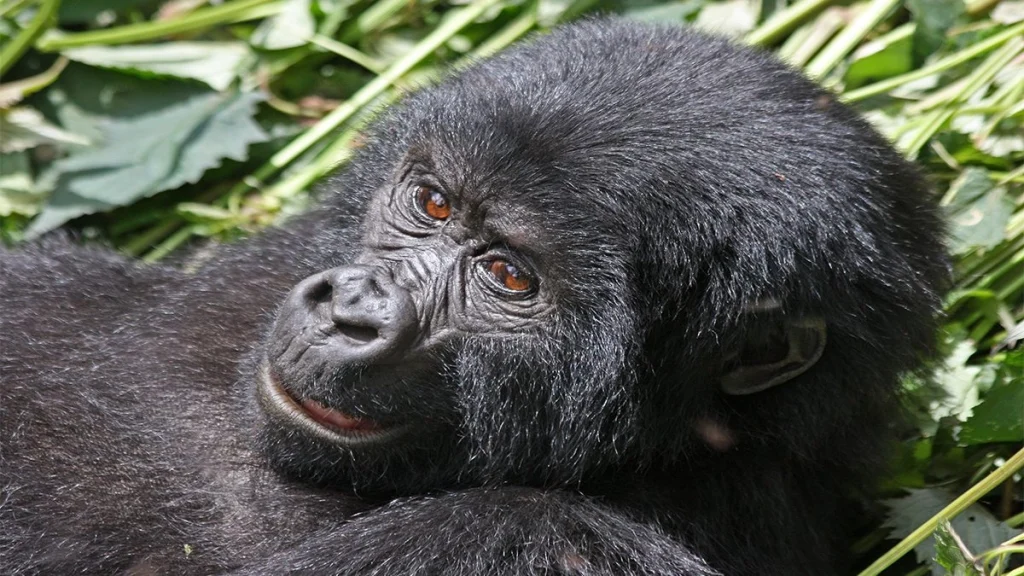
5-Day Short Uganda Gorilla Trekking Safari (by road). There is a particular kind of silence that falls over a Bwindi rainforest trail the moment your guide raises a fist and whispers, “they’re just ahead.” Somewhere in the tangle of vines and ancient hardwoods, a family of mountain gorillas is going about its morning, utterly unbothered by the fact that you have just crossed oceans and continents to sit quietly a few metres away. That single hour, spent eye to eye with one of the rarest great apes on Earth, is the entire reason the 5-Day Short Uganda Gorilla Trekking Safari by Road has become one of the most searched-for, most booked itineraries on Kenlink Tours’ Uganda safaris desk.
This guide walks you through the complete five-day, road-based itinerary from Kampala or Entebbe to Bwindi Impenetrable National Park and back — what each day looks like, what it costs, what to pack, when to go, and how to make sure your one shot at seeing mountain gorillas in the wild goes perfectly. Whether you found this page while comparing tour operators or you are simply gorilla-curious and want to understand what a “short” road safari actually involves, everything you need is below.
Why Choose a Short Gorilla Trekking Safari by Road
Uganda offers two realistic ways to reach Bwindi Impenetrable National Park: flying into one of the small airstrips near the park on a light aircraft, or driving there overland from Kampala or Entebbe. A road safari takes longer in transit — roughly two full driving days each way — but it rewards you with something a 45-minute flight cannot: the Uganda you actually came to see. You pass through rolling tea plantations, cross the equator, wind through the misty hills of Kigezi, and very often make a stop inside Lake Mburo National Park along the way, turning your “transfer days” into a safari in their own right. For travellers who want maximum gorilla-trekking value without the added cost of internal flights, the 5-day short road itinerary is consistently the best-selling option on our Uganda safari packages. It also removes a layer of logistical risk — small charter flights into Bwindi’s airstrips are occasionally delayed or cancelled by weather, whereas a road transfer in a well-maintained 4×4 runs on a schedule you can actually rely on.
Overview of the 5-Day Itinerary at a Glance
In five days, this safari takes you from Entebbe or Kampala, through Lake Mburo National Park, deep into the forests of southwestern Uganda for one full day of gorilla trekking in Bwindi Impenetrable National Park, and back again, with time built in for a cultural encounter with the Batwa community. It is deliberately compact: one trekking permit, one unforgettable hour with the gorillas, and no wasted days. If you would rather add extra wildlife viewing or a second primate species to the same trip, our 5-Day Gorilla and Wildlife Safari and 5-Day Gorilla and Chimpanzee Tour are built on a similar road-based structure with different stops along the way.
Day 1: Entebbe or Kampala to Lake Mburo National Park
Your safari begins with an early pickup from Entebbe International Airport or your Kampala hotel. The drive southwest takes you through Uganda’s fertile central region, past banana plantations and small trading towns, before arriving at Lake Mburo National Park by early afternoon. Lake Mburo is Uganda’s smallest savannah park, but it punches well above its weight: zebra, eland, impala, buffalo and, if you are lucky, leopard are all present, and it is one of the few parks in the country where you can walk or cycle among the wildlife. An afternoon game drive or boat cruise on the lake itself is a relaxed, scenic way to shake off jet lag before the more demanding days ahead. You overnight at a lodge in or near the park.
Day 2: Lake Mburo to Bwindi Impenetrable National Park
After an early breakfast, you continue southwest toward Bwindi, a drive of around six to seven hours through some of Uganda’s most dramatic scenery — the terraced hillsides of Kabale district, often nicknamed the “Switzerland of Africa,” and the winding descent into the Bwindi forest itself. Along the way you will typically cross the equator, with most itineraries including a short photo stop at the equator line. By late afternoon you arrive at your lodge on the edge of Bwindi Impenetrable National Park, where your guide will brief you on the following day’s gorilla trek: what time to be ready, what to bring, and what to expect. This is also a good moment to review our detailed article on Gorilla Trekking Rules and Regulations in Uganda so there are no surprises in the morning.
Day 3: Gorilla Trekking in Bwindi Impenetrable Forest
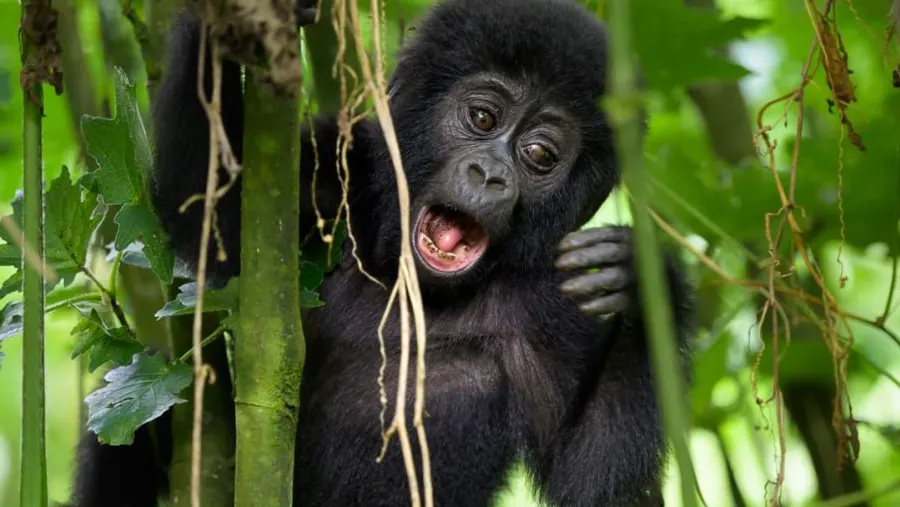
This is the day the entire safari is built around. You will be up before sunrise for a briefing at the park headquarters, where park rangers organise trekkers into small groups, each assigned to track one of Bwindi’s habituated gorilla families. From there, the trek itself can last anywhere from thirty minutes to seven or eight hours of hiking through dense, humid, often steep forest, depending on where that particular family happens to be that morning. Once your guide locates the family, you are permitted exactly one hour in their presence, observing them feed, groom, play and move through the undergrowth at a distance of roughly seven metres. It is, without exaggeration, one of the most emotionally powerful wildlife encounters left on the planet. Afterwards, you return to your lodge for a well-earned rest, or use the afternoon for an optional nature walk or birding session around the forest edge. Many guests describe this single day as the reason they read every word of our guide to the types of gorillas and what to expect from mountain gorilla behaviour long before they ever booked their flight.
Bwindi vs Mgahinga: Choosing Your Trekking Sector
Bwindi Impenetrable National Park is where the vast majority of Uganda’s gorilla treks happen, and it is the default sector for this 5-day itinerary because it is home to the largest number of habituated gorilla families and the widest choice of nearby lodges. Uganda’s other option, Mgahinga Gorilla National Park on the border with Rwanda and DR Congo, has historically had only a single habituated family and is better known for golden monkey tracking and Virunga volcano hikes. If you want a second opinion on how the two compare, our own Mgahinga Gorilla National Park guide sits alongside useful third-party overviews such as Pick and Transfer Safaris’ Bwindi Impenetrable Forest National Park page and their Mgahinga Gorilla National Park destination guide. For a first-time, five-day itinerary, Bwindi remains the more reliable and better-value choice, which is why it anchors this route.
Day 4: Batwa Cultural Encounter and Return Drive Toward Lake Mburo
With your gorilla permit used, Day 4 shifts pace. Most guests spend the morning visiting the Batwa community, Uganda’s original forest-dwelling people, who were resettled outside Bwindi when it was gazetted as a national park to protect the gorillas. A guided Batwa cultural walk includes traditional dance, storytelling, demonstrations of forest survival skills, and an honest, moving conversation about the trade-offs of conservation. By midday, you begin the drive back out of the Kigezi highlands, retracing your route toward Lake Mburo, where you overnight again — either at the same lodge as Day 1 or a different property along the route, giving you a second chance at game viewing if you missed anything on the way in.
Day 5: Lake Mburo to Kampala or Entebbe, Departure
Your final day is largely a travel day, with an early breakfast and departure back toward Kampala or Entebbe. Depending on your flight time, your guide can build in a stop at a coffee plantation, craft market or roadside viewpoint along the way. You will typically arrive back in Entebbe by mid-to-late afternoon, in good time for an evening international departure, or transfer to your next Kenlink Tours itinerary if you are extending your trip. If five days felt like just enough of a taste, our 7-Day Gorilla and Wildlife Safari and 8-Day Gorilla, Chimpanzee and Wildlife Safari build on exactly this route with extra parks added on.
What’s Included and What’s Excluded
A typical 5-Day Short Uganda Gorilla Trekking Safari by Road with Kenlink Tours includes private road transport in a 4×4 safari vehicle with an English-speaking driver-guide, park entrance fees, one gorilla trekking permit, accommodation on a full-board or half-board basis depending on the package selected, bottled drinking water while on safari, and all activities listed in the itinerary such as the Batwa cultural walk and Lake Mburo game drive. Excluded items generally cover international flights, visa fees, travel insurance, tips and gratuities, alcoholic drinks, and any optional activities not listed above, such as a Lake Mburo boat cruise or horseback safari. It is also worth double-checking whether your quoted price covers the second Lake Mburo overnight on the return leg or only the outbound stop, since some cheaper packages on the market quietly drop that second night to undercut on price, replacing it with a longer, more exhausting single-day drive straight through to Kampala. Because inclusions can vary between operators and even between packages on the same site, always confirm the exact breakdown for your dates directly through our Contact Us page before booking.
Gorilla Permit Costs and How to Book Yours
The single biggest line item on this safari is the gorilla trekking permit itself, issued by Uganda’s national wildlife authority. As of 2026, a standard permit costs USD 800 per person for foreign non-residents, a lower rate for foreign residents, and a significantly discounted rate for East African citizens. Permits are strictly limited — only a fixed number of trekkers are allowed to visit each habituated gorilla family per day — which means booking well in advance, especially for travel during the July–September and December–February peak seasons, is essential. Kenlink Tours secures permits on your behalf as part of the booking process, so you never have to deal with Uganda Wildlife Authority paperwork yourself; simply reach out through our Contact Us page with your preferred travel dates and we will confirm availability before you pay a deposit.
Best Time of Year for This Safari
Gorilla trekking in Uganda is possible year-round, since the gorillas do not migrate and permits are issued in every season. That said, the two dry seasons — roughly June to September and December to February — offer firmer, less slippery forest trails and are generally considered the easier and more popular months to trek. The wetter months bring lush, dramatic scenery and noticeably fewer crowds at the park headquarters, along with occasionally discounted permit rates in low season. Our detailed breakdown in What Is the Best Time to See Gorillas in Uganda and Rwanda? covers month-by-month conditions if you want to plan around specific weather or budget considerations.
Understanding Uganda’s Gorilla Trekking Rules
Trekking mountain gorillas is tightly regulated to protect both visitors and one of the world’s most endangered great ape populations. Trekkers must be at least fifteen years old, maintain a minimum distance of roughly seven metres from the gorillas at all times, avoid trekking while visibly sick (gorillas are highly susceptible to human respiratory illnesses), keep voices low, and never use flash photography. Groups are capped at eight visitors per gorilla family per day, and your one hour with the gorillas is strictly enforced by the accompanying park ranger. Our full explainer, Gorilla Trekking Rules and Regulations in Uganda, is worth reading in full before you travel, since a small number of these rules — particularly the illness policy — can affect whether you are allowed to trek on the day.
Physical Fitness and What to Expect on the Trek
You do not need to be an athlete to trek gorillas, but you should be realistic about the terrain. Bwindi means “impenetrable” for a reason: trails can be steep, muddy, and unmarked, winding through dense vegetation at altitudes between roughly 1,200 and 2,600 metres. Trek duration depends entirely on where the assigned gorilla family is that morning and can range from a gentle thirty-minute stroll to a demanding six-to-eight-hour hike. Porters are available to hire at the trailhead for a modest fee, and we strongly recommend taking one — they carry your daypack, offer a steadying hand on difficult sections, and their fee goes directly to supporting local community livelihoods around the park. A reasonable level of everyday fitness, comfortable hiking pace, and a sense of adventure are really all that is required.
What to Pack for a 5-Day Gorilla Trekking Safari
Pack light but smart. Essentials include sturdy waterproof hiking boots with good ankle support, gardening-style gloves for gripping vegetation on steep sections, a lightweight rain jacket regardless of season, long trousers and long-sleeved shirts tucked in at the wrist and ankle (this protects against nettles, ants and thorny undergrowth), a wide-brimmed hat, insect repellent, sunscreen, a reusable water bottle, and a small daypack. A telephoto camera lens is worth the extra weight if you have one, though most modern phone cameras handle the encounter surprisingly well. Neutral-coloured clothing — khaki, olive, brown — is preferred over bright colours, which can startle wildlife. Bring cash in small denominations for tipping guides and porters, since ATMs are scarce once you leave Kampala.
Accommodation Options Along the Route
Kenlink Tours works with a range of properties to suit different budgets, from comfortable budget lodges to mid-range and luxury options, at both Lake Mburo and Bwindi. Budget travellers typically stay in simple en-suite cottages with hot water and generator-powered electricity, mid-range travellers enjoy larger rooms with private verandas and forest or lake views, and luxury travellers can choose from a small number of high-end lodges perched directly on the edge of the forest with panoramic Bwindi views. Whichever tier you choose, accommodation is built into your itinerary and confirmed before you travel — get in touch through our Contact Us page to compare options for your specific budget and travel dates. Most Bwindi lodges are deliberately small, often under twenty rooms, which keeps the experience intimate but also means popular properties can sell out months ahead during the July–September and December–February peak windows, so early booking matters just as much for accommodation as it does for the gorilla permit itself.
Money, Tipping and Connectivity on the Road
Uganda runs largely on cash outside of Kampala’s main hotels and supermarkets, so it is worth carrying US dollars (printed after 2013, in clean, unfolded condition) alongside Ugandan shillings withdrawn from an ATM in Kampala or Entebbe before you head southwest — cash points become sparse once you leave the capital. Tipping is customary and genuinely appreciated: a general guide is USD 10–20 per day for your driver-guide, USD 15–20 per gorilla trekking guide or ranger, and USD 10–15 for a porter, though this is always at your discretion. Mobile network coverage is reasonably good along the main routes and around most lodges, though it can drop out entirely inside the forest itself, which is honestly part of the appeal — few places left in the world genuinely force you to put the phone away for an hour.
Road Conditions and Why Traveling by Road Is Worth It
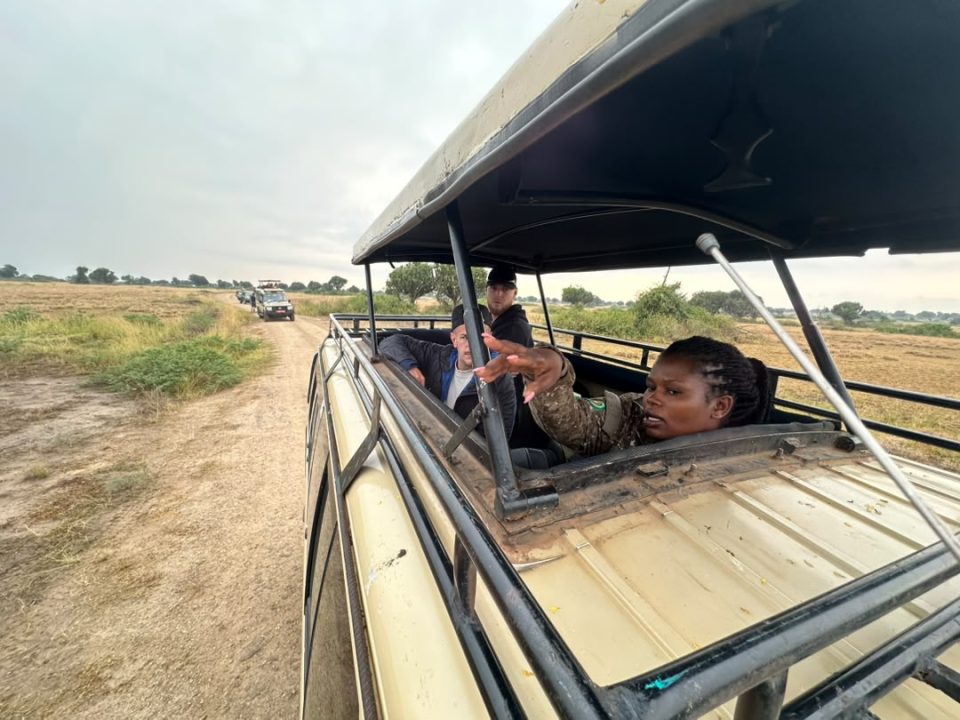
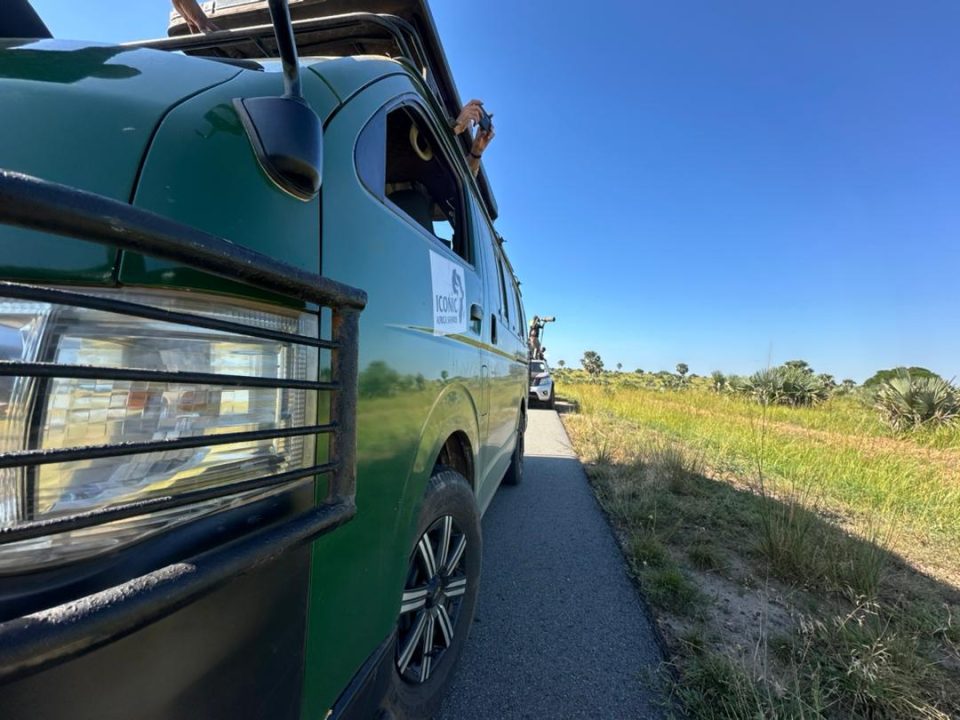
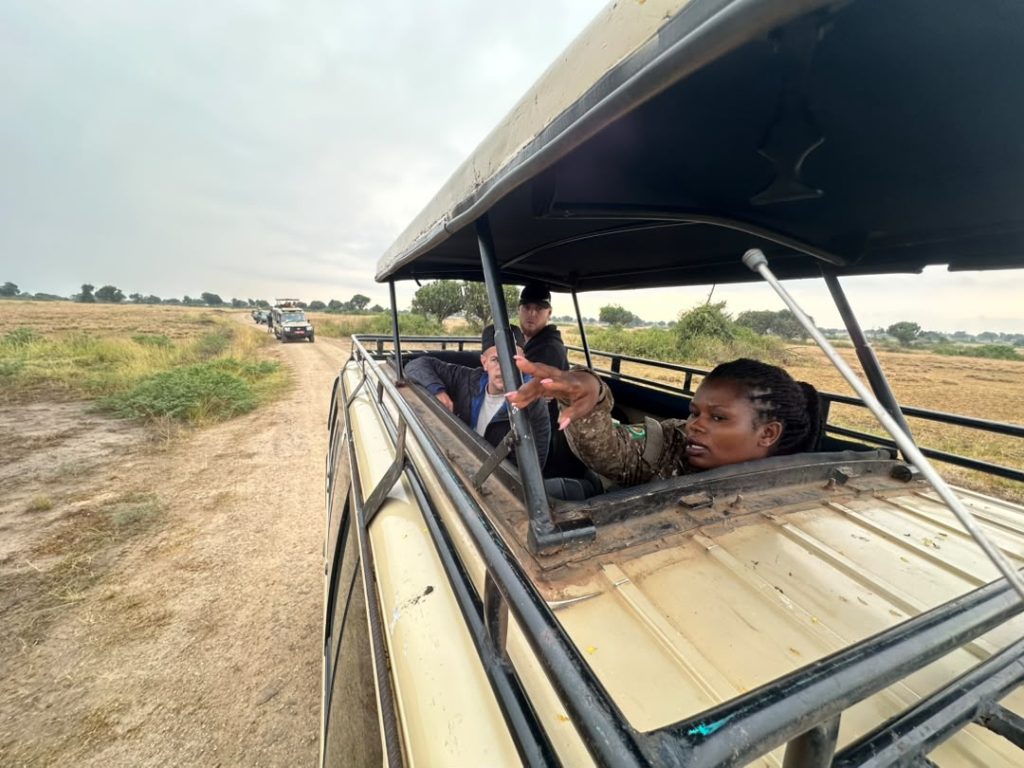
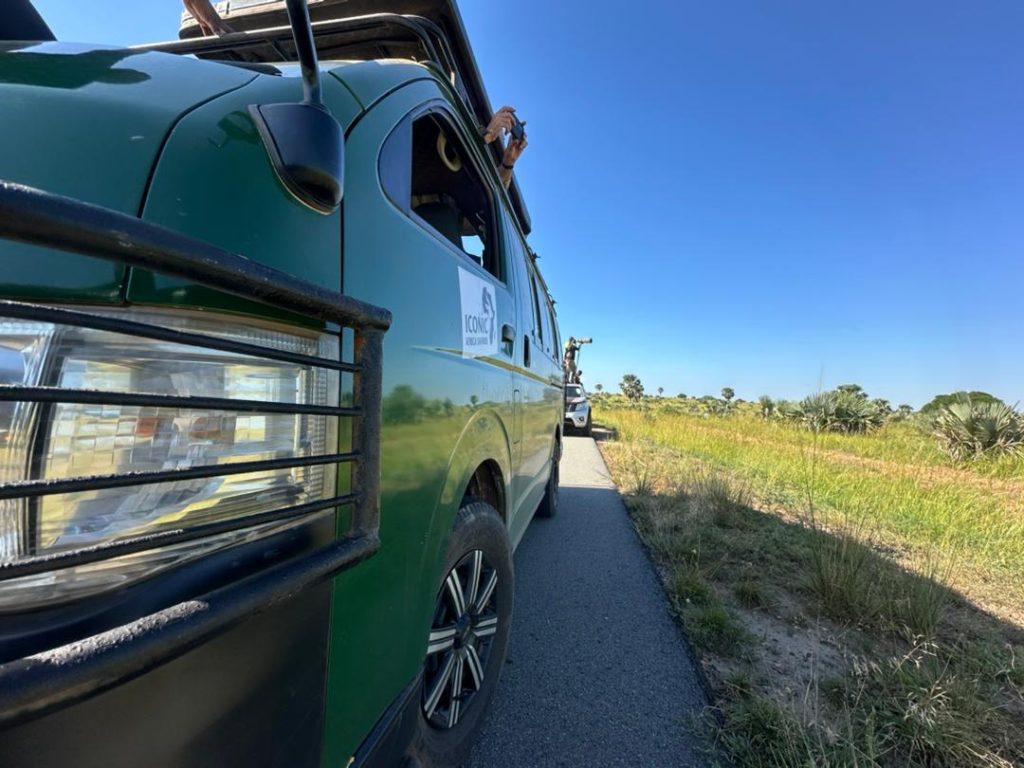
The road from Kampala to Bwindi has improved dramatically over the past decade, with tarmac now covering the vast majority of the route and only the final stretch into the park running on well-maintained murram roads. Travel is done in a comfortable 4×4 safari vehicle, which is essential for the final approach and for any detour into Lake Mburo. Yes, it takes longer than flying — expect roughly eight to nine hours of driving spread across Day 1 and Day 2 combined — but you gain a genuine cross-section of rural Uganda: markets, tea estates, terraced hillsides and the kind of roadside encounters that no airstrip transfer can offer. If your own vehicle and driving preferences matter to you, our Car Hire page outlines the 4×4 options available for self-drive or chauffeur-driven travel on this same route.
Alternative Ways to Reach Bwindi (For Comparison)
If time is tighter than budget, a domestic flight from Entebbe to one of the airstrips near Bwindi (Kihihi or Kisoro) can cut your total travel time to under two hours each way, though at a significantly higher cost than the road option. Some travellers also combine a Uganda gorilla trek with a stop in Rwanda, crossing overland via the Cyanika or Katuna border posts. If you are coming from Kigali rather than Kampala, our partners at Pick and Transfer Safaris’ 5-Day Uganda Gorilla and Chimps Safari from Rwanda outline a comparable itinerary starting from the Rwandan side of the border, while their 3-Day Uganda Gorilla Safari shows what a more compact, Uganda-only trek looks like if you have less time to spare. Travellers who prefer to be behind the wheel themselves can also compare notes with Self Drive Safaris Uganda, a dedicated self-drive operator covering the same Kampala-to-Bwindi road route.
Health, Vaccinations and Travel Safety
Uganda requires proof of yellow fever vaccination for entry, and a course of antimalarial medication is strongly recommended given the risk of malaria across most of the country, including the Bwindi region. Routine vaccinations (tetanus, hepatitis A and B, typhoid) are also commonly advised by travel clinics, though requirements can change, so always confirm with a licensed travel health provider or your embassy before departure. Our detailed guide, What Vaccinations Do I Need to Go to Uganda?, breaks this down further. Travel insurance that specifically covers trekking and evacuation is strongly recommended for any gorilla trekking itinerary, given the remote terrain involved.
Combining Gorilla Trekking With Other Activities
Because this itinerary already routes you through Lake Mburo, many travellers choose to add a boat cruise, guided walking safari, or horseback ride there, all of which can be arranged locally with advance notice. Travellers with a few extra days can also extend into Queen Elizabeth National Park for a Kazinga Channel boat cruise and big game viewing, as featured in our Queen Elizabeth National Park destination guide (see also Pick and Transfer Safaris’ overview of the same park for a second perspective), or add chimpanzee tracking in Kibale Forest by upgrading to our 5-Day Gorilla and Chimpanzee Tour. If you are still deciding between itineraries, our article on Choosing the Best Uganda Safari is a useful starting point.
How This Itinerary Compares to Other Uganda Gorilla Packages
It is always worth comparing a handful of operators before committing to any safari, gorilla trekking included. Looking across the wider market, you will find similarly structured road-based itineraries such as Pick and Transfer Safaris’ 5-Day Uganda Gorilla and Chimpanzee Safari, their longer 10-Day Uganda Primates and Wildlife package, and their general Gorilla Safaris and Wildlife Safaris collections, or their Extended Safaris range for multi-week trips. What you will typically find across the market is that pricing clusters tightly around the fixed cost of the gorilla permit itself, with the real differentiators being vehicle quality, guide experience, lodge selection and how well an operator handles the inevitable small logistics of a remote, multi-day road trip — all areas where our team pays close attention on every departure.
How Much Does the 5-Day Gorilla Safari Cost
Total cost depends heavily on your accommodation tier, group size and season, but as a rough guide, budget travellers should expect a package cost in the range of USD 1,400–1,900 per person (sharing), mid-range travellers around USD 2,000–2,700 per person, and luxury travellers upward of USD 3,000 per person, with the USD 800 gorilla permit forming a fixed, non-negotiable core of that figure regardless of tier. Travelling in a small group rather than solo significantly reduces the per-person cost of vehicle hire and fuel. For an accurate, date-specific quote broken down by accommodation level, reach out directly through Contact Us — our team will build a costed itinerary around your exact travel dates and budget.
Why Book This Safari With Kenlink Tours
Kenlink Tours has built its Uganda and Rwanda safari desk specifically around gorilla trekking logistics — permit booking, route planning, and lodge partnerships along the Kampala-to-Bwindi corridor. It is a similar specialisation to what you will find at other established regional operators such as Pick and Transfer Safaris, whose destinations overview and contact page are useful if you want a second quote to compare against ours before booking. You can read more about our approach and story on our About Us page, and see our wider footprint across the region on About Uganda. Beyond individual bookings, we also run Group Tours and Scheduled Departure Safaris for solo travellers who want to join a small group rather than book a private vehicle, which can meaningfully lower the per-person cost of this itinerary. If you would like to compare a broader regional trip, our Uganda Rwanda Gorilla Safaris overview shows how this route can be extended across both countries.
Frequently Asked Questions
Is five days enough time for a Uganda gorilla trekking safari? Yes. Five days is enough to comfortably cover the road transfer both ways, one full trekking day, and a cultural or wildlife activity, without feeling rushed.
Can I trek gorillas twice in five days? Not on the standard itinerary, which includes one permit, but a second trek can be added for an extra permit fee if you want to visit a different gorilla family or simply repeat the experience.
Is it safe to travel to Uganda for gorilla trekking? Yes. Uganda’s southwestern region, including Bwindi and Lake Mburo, is a well-established, heavily visited tourism corridor with an excellent safety record for travellers.
What happens if I don’t see the gorillas? This is extremely rare given experienced trackers monitor family locations daily, but Uganda Wildlife Authority does offer a partial refund policy in the very unlikely event that a habituated family cannot be located.
Can children join a gorilla trek? Uganda’s minimum age for gorilla trekking is fifteen years old, a rule enforced without exception at the park headquarters.
Do I need a visa for Uganda? Most nationalities require a visa, which can be applied for online in advance through Uganda’s official e-visa portal; approval typically takes a few working days, so apply well before your departure date.
Should I book directly with a tour operator or through a marketplace? Booking directly, whether with Kenlink Tours or another established operator, generally gives you more control over permit selection, itinerary tweaks and direct communication with your guide than booking through a third-party marketplace with limited flexibility.
Book your 5-Day Short Uganda Gorilla Trekking Safari (by road)
If you want the full, unrushed Uganda gorilla trekking experience — scenic overland travel, a genuine encounter with rural Uganda, a night among Lake Mburo’s zebra and impala, and one profound hour with a wild gorilla family — without committing to a two-week itinerary, the 5-Day Short Uganda Gorilla Trekking Safari by Road is very hard to beat. It is efficient without feeling rushed, and it leaves you with the kind of memory that a shorter, flight-based itinerary simply cannot match. Ready to lock in your dates and secure your gorilla permit? Reach out through our Contact Us page today, or browse the rest of our Uganda safari packages to see how this itinerary compares with the alternatives.