- EXPERT'S HELP
- +256789210067
- +256200955001
- info@kenlinktours.com


Mini Gorilla Tour in Uganda
August 14, 2026
Gorilla Trek and Chimp Trek Package
August 14, 2026
Short Uganda Wildlife Safari. Most of the short safari guides you’ll find for Uganda are built around a single fixed constraint: a gorilla permit that has to be booked months in advance, tied to a specific date and sector. But not every traveler is planning a gorilla trip, and a short wildlife safari — one built around classic game drives, boat cruises, and open savannah rather than forest trekking — is a genuinely different kind of trip with none of that same rigidity. This guide is built for that traveler: someone who wants to see lions, elephants, hippos, and Uganda’s other iconic wildlife in a compact two to four-day window, without the permit-driven planning that gorilla trekking requires. If gorillas are part of your plan too, our guide to a 3-day gorilla trek in Uganda and our mini gorilla tour guide cover that side of things in detail — this post focuses specifically on the savannah wildlife experience on its own.
Why a Wildlife Safari Is Simpler to Plan Short Than a Gorilla Trek
Gorilla trekking permits are capped, sector-specific, and often sold out months ahead during peak season. Wildlife safari park entrance fees, by contrast, aren’t rationed the same way — there’s no daily cap on how many vehicles can enter Queen Elizabeth or Murchison Falls National Park for a game drive, which means a short wildlife safari can often be booked with far less lead time and far more flexibility on dates. That single difference makes a short wildlife safari a genuinely easier trip to plan on short notice, and it’s worth knowing this distinction clearly before assuming both trip types require the same months-ahead booking discipline.
It also changes how you can react to a sudden gap in your schedule. A canceled meeting, an unexpected long weekend, or a work trip that leaves a few free days at the end doesn’t work well against a permit-gated trip, but it works perfectly well against a wildlife safari, since availability at the parks themselves almost never becomes the bottleneck the way gorilla permits can. For travelers who value spontaneity as much as the wildlife itself, that flexibility is arguably as much a feature of a short wildlife safari as anything you’ll actually see in the park.
Choosing the Right Park for a Short Trip
Uganda has ten national parks, but only a handful are realistic for a genuinely short trip once you factor in driving distance from Kampala or Entebbe. Our overview of Uganda’s ten national parks covers the full picture, but for a 2 to 4-day window, three stand out as the most practical: Lake Mburo, the closest savannah park to Entebbe and Kampala at around 3.5 to 4 hours’ drive; Queen Elizabeth National Park, roughly 5 to 6 hours away but home to the widest range of wildlife and habitats; and Murchison Falls National Park, about 4 to 5 hours north, known for its dramatic waterfall and strong big-game density. Kidepo Valley, Uganda’s most remote park, is spectacular but sits too far north for a short trip to be realistic — it’s a destination that deserves its own dedicated week rather than a compressed add-on.
Lake Mburo: The Best Choice for a Genuinely Quick Trip
If your window is only two days, Lake Mburo is the standout choice simply because of proximity. It’s Uganda’s smallest savannah park and doesn’t have the sheer density of predators found further afield, but it offers zebra, impala, eland, buffalo, and hippo, along with the rare chance to do a walking safari and a horseback safari inside the park — activities not permitted in most of Uganda’s other parks due to predator risk. A 2-day Lake Mburo trip is realistic even for travelers with a genuinely tight schedule, since the drive alone is under half a day each way.
Queen Elizabeth National Park: The Widest Variety in the Shortest Realistic Trip
Queen Elizabeth National Park packs an unusual range of habitats and wildlife into a single park — savannah plains, crater lakes, the Kazinga Channel, and the Ishasha sector’s famous tree-climbing lions. A 3-day itinerary here is enough for two game drives and a boat cruise along the Kazinga Channel, widely regarded as one of the best wildlife-viewing boat trips in East Africa for its concentration of hippos, buffalo, and birdlife along the banks. Our comparison of game drives in Murchison Falls versus Queen Elizabeth is worth reading if you’re deciding between the two, and our broader piece on what to expect on a game drive in Africa is a good primer if this is your first time doing one.
Murchison Falls National Park: Uganda’s Most Visited Park for a Reason
Murchison Falls, where the Nile forces itself through a gorge just seven meters wide before plunging over the falls, is consistently ranked as Uganda’s most visited national park, and it’s also the country’s largest national park by area — our full breakdown of the park’s actual size puts that scale in context. A 3-day itinerary typically combines a game drive on the northern bank, home to lions, giraffes, and large elephant herds, with a boat cruise to the base of the falls itself — one of the signature experiences of any Uganda wildlife trip. Many itineraries also add a short stop at the nearby Ziwa Rhino Sanctuary en route, since it’s currently the only place in Uganda to see rhinos on foot, filling in the one Big Five species that neither Murchison Falls nor Queen Elizabeth can otherwise offer.
What “Big Five” Actually Means in a Uganda Context
Travelers coming from a Kenya or Tanzania safari background sometimes assume Uganda offers the same guaranteed Big Five checklist. It doesn’t, quite — rhinos were poached to local extinction in the wild decades ago and now exist only at Ziwa’s protected sanctuary, not in the open national parks. Lions, elephants, buffalo, and leopards are all findable across Murchison Falls and Queen Elizabeth, though leopards in particular are elusive and not guaranteed on a short visit. Our detailed answer to where to see Big Five animals in Uganda is worth reading before you set expectations, and our broader roundup of the top wild animals to see on a Uganda wildlife safari covers what’s realistically achievable in a short trip specifically.
Sample 3-Day Murchison Falls Itinerary
Day one: depart Entebbe or Kampala in the morning, arrive at your lodge by mid-afternoon, with an optional stop at Ziwa Rhino Sanctuary en route. Day two: an early morning game drive on the northern bank followed by an afternoon boat cruise to the base of the falls, or the reverse order depending on your lodge’s schedule. Day three: an optional sunrise game drive followed by the return drive to Kampala or Entebbe, arriving by early evening.
Sample 3-Day Queen Elizabeth Itinerary
Day one: depart in the morning, arriving at your lodge near the Kazinga Channel by mid-afternoon, often via the scenic route through the Kigezi highlands or directly from Kampala. Day two: a morning game drive in the Kasenyi plains followed by an afternoon Kazinga Channel boat cruise. Day three: an optional early drive into the Ishasha sector for a chance at the tree-climbing lions before heading back, or a more relaxed return if Ishasha isn’t included in your route.
Choosing a Short Wildlife Safari Over a Longer Combined Trip
It’s worth being upfront that a short wildlife safari genuinely does trade breadth for brevity. A single park visited over two or three days won’t match the range of a 10 or 20-day circuit covering multiple parks — our longer 20-day wildlife and nature experience and 10-day Uganda wildlife safari itineraries exist for travelers who have that time. But for a traveler with a genuinely limited window, one well-chosen park done properly beats a rushed attempt to see three parks badly, and our guide to choosing the best Uganda safari for your specific priorities is a useful starting point if you’re still deciding between breadth and depth.
What a Short Wildlife Safari Costs
Because there’s no gorilla permit involved, a short wildlife safari is consistently less expensive than an equivalent-length gorilla trip. Costs are driven mainly by park entrance fees (considerably lower than a gorilla permit), accommodation tier, and vehicle hire, with a private 4×4 and driver-guide typically the largest single line item after lodging. Budget travelers can bring costs down further by choosing mid-range lodges over luxury tented camps and by traveling with a small group to share vehicle costs, without sacrificing the actual wildlife-viewing quality of the trip.
Accommodation tiers vary widely across all three parks, from simple guesthouses and budget campsites to high-end tented camps with private plunge pools overlooking the savannah. For a short trip, it’s rarely worth stretching the budget toward the most luxurious option, since you’ll spend relatively little time at the lodge itself between game drives — a comfortable, well-located mid-range property is generally the better value choice, freeing up budget instead for a private vehicle or an additional activity like a boat cruise.
Combining a Short Wildlife Safari With Gorilla Trekking
Many travelers eventually combine both — a short wildlife leg for the savannah experience, paired with a gorilla trek for the forest side of Uganda’s wildlife. If that’s the direction you’re leaning, our guide to a quick gorilla safari in Uganda is the natural next read, and our note on gorilla trekking permit prices will help you budget for adding that leg onto an otherwise wildlife-only itinerary. Queen Elizabeth National Park in particular sits reasonably close to Bwindi, making it a natural pairing if you want both experiences without excessive backtracking.
Boat Cruises: The Signature Activity of a Short Wildlife Trip
If there’s one activity that defines a short Uganda wildlife safari more than any other, it’s the boat cruise — whether along the Kazinga Channel in Queen Elizabeth or to the base of Murchison Falls on the Nile. Both put you closer to hippos, crocodiles, and waterside birdlife than a vehicle-based game drive ever can, and both require far less physical effort than a gorilla trek, making them an easy, relaxed centerpiece for a short trip. Travelers wanting a fully private version of this experience, away from a shared tour boat, can also arrange a private boat cruise in Uganda for a more flexible schedule and pace.
Traveling With Kids on a Short Wildlife Safari
Unlike gorilla trekking, which has a strict minimum age of 15, a wildlife safari built around game drives and boat cruises has no such restriction, making it a considerably easier fit for families with younger children. Our guide to family safaris in Uganda with kids and our roundup of the top kid-friendly safari parks in Uganda both point toward Lake Mburo and Queen Elizabeth as particularly good choices for a short family trip, since both offer relatively gentle game drive routes and flexible timing around young children’s schedules.
What to Pack for a Short Wildlife Safari
Packing for a wildlife safari is noticeably simpler than packing for a gorilla trek. Neutral-colored clothing (khaki, olive, and similar tones rather than bright colors or all-black, which can attract tsetse flies in some areas), a wide-brimmed hat, sunscreen, and binoculars for spotting distant wildlife are the essentials. Waterproof hiking boots aren’t necessary the way they are for Bwindi’s forest trails, since you’ll be doing most of your wildlife viewing from a vehicle or boat rather than on foot, though comfortable closed shoes are still worth packing for the occasional short nature walk.
Best Time of Year for a Short Wildlife Safari
Wildlife viewing in Uganda’s savannah parks is good year-round, but the dry seasons — roughly December to February and June to September — tend to concentrate animals more predictably around remaining water sources, making sightings somewhat easier on a short, time-constrained trip. The wetter months bring lush green scenery and fewer other visitors, which some photographers and travelers genuinely prefer despite the slightly less predictable game viewing. Unlike gorilla permit availability, there’s no hard capacity constraint pushing you toward one season over another — the choice comes down mostly to weather and personal preference.
Road conditions are the other practical factor worth weighing by season. Murram roads inside the parks drain reasonably well but can still turn slick after sustained rain, occasionally slowing a game drive route or requiring a short detour. This rarely cancels an activity outright, but it’s worth building a small amount of schedule flexibility into a wet-season short trip rather than assuming every planned drive will run exactly on time.
Getting There: Roads and Vehicle Choice
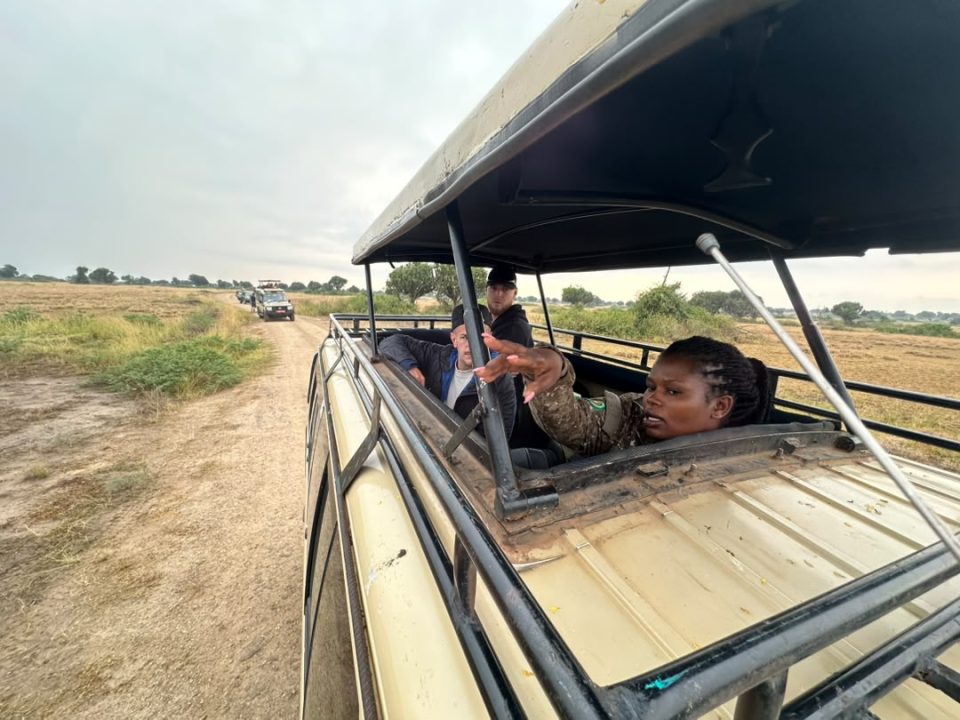
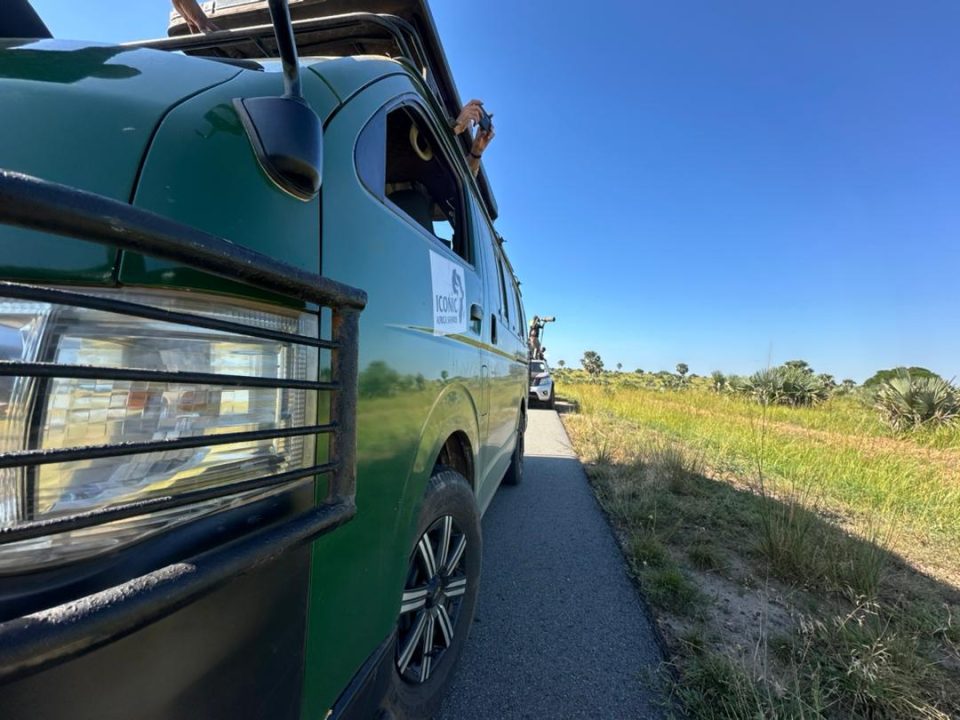
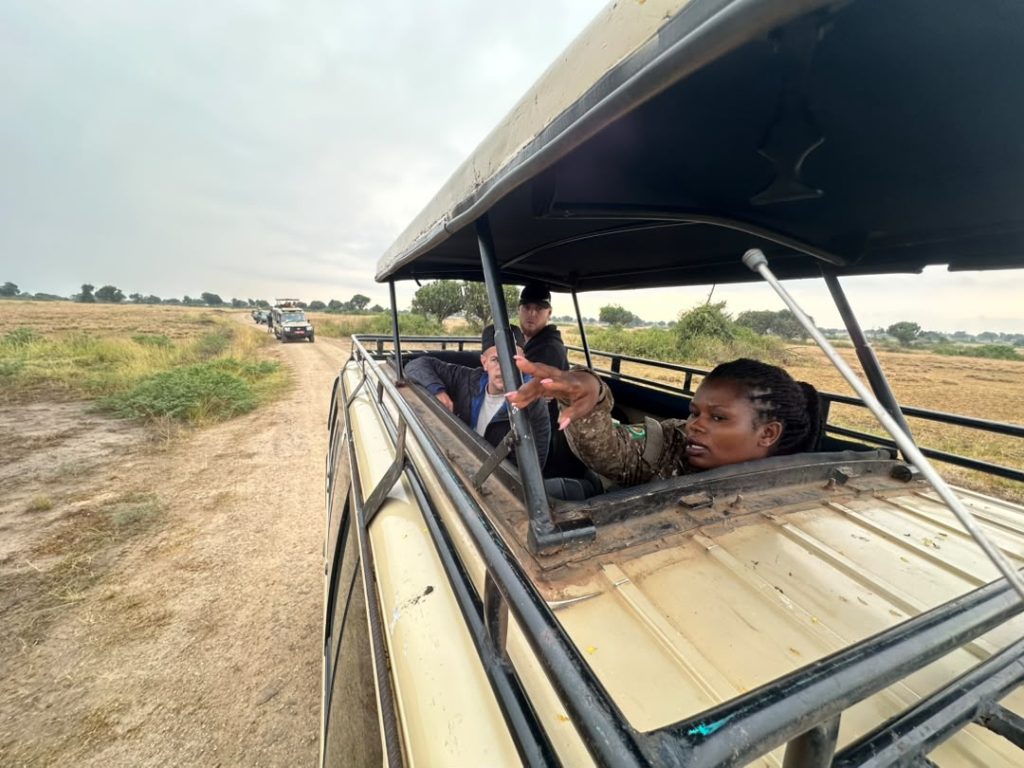
All three of the parks covered here are reachable by ordinary tarmac road for most of the journey, with the final stretch into the park itself typically on murram (compacted dirt) roads that are well-maintained in dry season but can turn slow and occasionally muddy after heavy rain. A high-clearance 4×4 is the standard vehicle for a Uganda wildlife safari, not because a sedan is impossible on the main routes, but because game drives themselves happen on unpaved park tracks where clearance and traction genuinely matter. Self-driving is possible for confident, experienced travelers, but most short-trip visitors opt for a guided vehicle, both for the local knowledge of where wildlife tends to congregate and for the simple convenience of not navigating unfamiliar roads on a tight schedule.
Night Game Drives and Other Add-On Activities
Beyond the standard daytime game drive, several parks offer add-on activities worth considering if your short trip has room for one extra experience. Murchison Falls and Queen Elizabeth both offer night game drives in select areas, giving a chance to spot nocturnal species like leopards, hyenas, and civets that are far harder to find during the day. Nature walks, guided by an armed ranger for safety, are another option in select zones and offer a slower, more detailed look at smaller wildlife, birds, and plant life that a vehicle-based drive tends to pass by. Our guide to the best places to do nature walks in Uganda covers where these are available if you want to add one to your itinerary without extending your overall trip length.
Frequently Asked Questions
Do I need to book months in advance for a short wildlife safari? No — unlike gorilla permits, park entrance fees for game drives aren’t capped daily, so a wildlife safari can generally be arranged with far less lead time.
Which park is best for a genuinely quick 2-day trip? Lake Mburo, thanks to its proximity to Entebbe and Kampala at roughly 3.5 to 4 hours’ drive each way.
Can I see all of the Big Five on a short Uganda wildlife safari? Not quite — rhinos are only found at Ziwa Rhino Sanctuary rather than in the open parks, so a short trip covering Murchison Falls or Queen Elizabeth plus a Ziwa stop is the most complete realistic option.
Is a wildlife safari cheaper than a gorilla trek? Yes, generally significantly so, since there’s no permit fee involved — costs are driven mainly by accommodation and vehicle hire instead.
Can I combine a short wildlife safari with gorilla trekking on the same trip? Yes, and many travelers do, particularly pairing Queen Elizabeth National Park with a Bwindi gorilla trek given their relative proximity to each other.
Photography Considerations on a Short Trip
A compressed schedule means fewer game drives, which in turn means less time waiting for the perfect light or a distant animal to move into view. If photography is a priority, it’s worth front-loading your itinerary with early-morning drives, when animals are more active and the light is softer, rather than treating a mid-morning or afternoon slot as equivalent. A boat cruise is also worth prioritizing for photographers on a short trip, since the slow, steady approach along a channel bank tends to produce closer, more predictable wildlife encounters than a vehicle bouncing along a park track. Packing a zoom lens with reasonable reach matters more on a short trip than on a longer one, simply because there’s less time to reposition for a better angle if the first vantage point isn’t ideal.
Final Thoughts
A short Uganda wildlife safari is one of the most flexible trips you can build in the region — no permit bottleneck, a realistic 2 to 4-day window, and a genuine choice between the concentrated proximity of Lake Mburo, the habitat variety of Queen Elizabeth, or the scale and drama of Murchison Falls. Whichever park you choose, the core experience — game drives, a boat cruise, and open savannah wildlife — delivers a complete trip on its own, with or without gorillas added on. If you’d like help matching a park to your exact travel window, get in touch with our team at Kenlink Tours and we’ll build the itinerary around what you actually have time for.
For travelers also planning transport and safaris on the Rwanda side of the region, our colleagues at Pick and Transfer Safaris offer a full range of wildlife safari options, including a 3-day safari to Murchison Falls and a 3-day safari to Queen Elizabeth National Park, alongside their own gorilla safari packages for travelers wanting to add trekking, such as a one-day gorilla safari from Kigali or a two-day gorilla tour from Kigali. See their detailed look at Bwindi Impenetrable Forest National Park, learn about their team on their about us page, browse their Kigali city guide, or reach out through their contact page.