- EXPERT'S HELP
- +256789210067
- +256200955001
- info@kenlinktours.com


Uganda Gorilla Trekking Tour from Kigali Rwanda
June 13, 2026
2 Days Gorilla Tour in Uganda Starting from Rwanda
June 13, 2026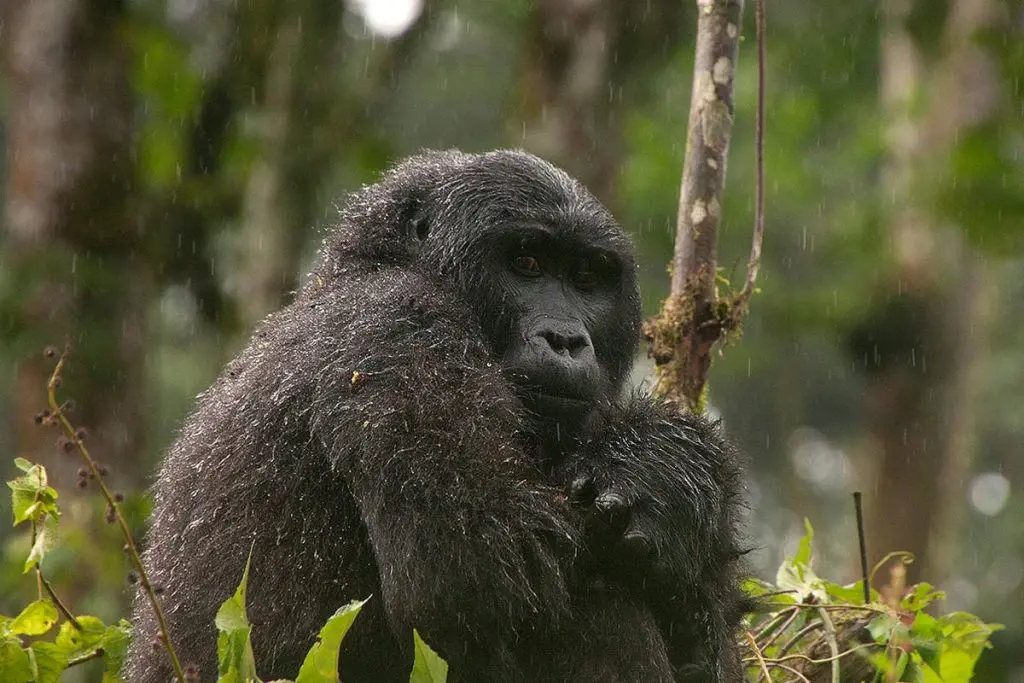
Starting my Gorilla Trekking in Uganda from Kigali. The question I get asked most often by first-time safari travellers to East Africa is this: “I am flying into Kigali — can I still do gorilla trekking in Uganda?” The answer is not just yes. It is a resounding, emphatic, absolutely-you-should yes. Starting your gorilla trekking in Uganda from Kigali, Rwanda is one of the cleverest, most rewarding, and most memorable ways to experience the Pearl of Africa — and at Kenlink Tours, it is one of our most requested and best-loved safari routes.
This guide walks you through every single step of the process, written in the spirit of a traveller planning this journey for the first time. Where do you start? How long is the drive? Which park should you choose? How do you get your permits? What do you actually pack for a gorilla trek? All of that, and more, is right here.
Where It All Begins — Kigali, Rwanda
Your Uganda gorilla trekking adventure does not begin at Entebbe Airport. It does not begin in Kampala. It begins the moment your plane touches down at Kigali International Airport in Rwanda — one of the best-connected, most efficiently run, and genuinely impressive airports in Sub-Saharan Africa.
Kigali is served by RwandAir with direct long-haul routes from London Heathrow, Brussels, Mumbai, Dubai, and multiple African capitals. Qatar Airways, Ethiopian Airlines, Turkish Airlines, Brussels Airlines, and Kenya Airways all fly into Kigali, connecting it to virtually every major city on earth. For travellers coming from Europe especially, Kigali is often more directly reachable than Entebbe — and frequently cheaper too.
The beauty of starting your gorilla trekking in Uganda from Kigali is purely geographical. Bwindi Impenetrable National Park — the world’s greatest gorilla trekking destination — sits in Uganda’s extreme southwest, far closer to Kigali than to Entebbe or Kampala. The drive from Kigali to Bwindi takes four to six hours. The same journey from Entebbe takes eight to ten hours. By landing in Kigali, you are essentially cutting a full day of travel off your gorilla safari — time better spent in the forest.
And then there is the permit cost. A gorilla trekking permit in Uganda is priced at USD 800 per person, issued by the Uganda Wildlife Authority (UWA). The equivalent permit in Rwanda’s Volcanoes National Park costs USD 1,500 per person. Starting your gorilla trek in Uganda from Kigali means you enjoy Kigali’s connectivity advantage while benefiting from Uganda’s significantly more affordable permits.
Step One — Choosing Your Uganda Gorilla Trekking Destination
The first decision to make when planning your gorilla trekking in Uganda from Kigali is which national park you want to visit. Two parks are within practical overland reach of Kigali, and both are extraordinary in different ways.
Bwindi Impenetrable National Park is the undisputed capital of gorilla trekking on earth. A UNESCO World Heritage Site protecting 331 square kilometres of ancient rainforest in Uganda’s southwestern corner, Bwindi is home to more than 459 mountain gorillas — roughly half the entire global population — spread across more than 20 habituated families. The park is divided into four trekking sectors:
Rushaga is the sector most accessible from Kigali via the Cyanika border crossing, sitting in Bwindi’s south with six habituated gorilla families and the exclusive Gorilla Habituation Experience — a four-hour encounter with a semi-habituated family, available for just four people per day at USD 1,500 per permit. If you are starting your gorilla trekking in Uganda from Kigali and want the closest, most accessible sector, Rushaga is your first port of call.
Nkuringo also in the south and reachable via Cyanika, Nkuringo offers dramatic high-ridge trekking with sweeping views of the Virunga volcanoes across the Congo border. The terrain is steep and demanding, but the reward is a deeply atmospheric forest experience with exceptional scenery.
Buhoma in the north is Bwindi’s original and most iconic sector, home to the historic Mubare family — the first gorilla group ever habituated for tourism in Uganda. Accessed from Kigali via the Katuna border and Kabale town in around five to six hours. Well-developed, excellent lodge infrastructure, ideal for first-time gorilla trekkers.
Ruhija is the highest, coolest, and most remote of the four sectors — outstanding for birdwatchers and those seeking solitude. A longer drive from Kigali but deeply rewarding for the adventurous traveller.
Mgahinga Gorilla National Park is Uganda’s other gorilla park and the closest to Kigali — just three to four hours via the Cyanika border crossing. Smaller, quieter, and wonderfully intimate, Mgahinga sits in the volcanic Virunga foothills and is home to the Nyakagezi gorilla family. It also offers golden monkey tracking — a brilliant additional primate experience available nowhere else in Uganda. For short itineraries of two to three days, Mgahinga is an excellent starting point for gorilla trekking in Uganda from Kigali.
When you contact Kenlink Tours to plan your trek, our specialists will help you decide between these options based on your travel dates, fitness level, group size, and how many days you have available.
Step Two — Securing Your Gorilla Trekking Permits
Here is something every first-time gorilla trekker learns quickly: the permit is everything. Without a confirmed gorilla permit, there is no gorilla trekking. Full stop. Permits are non-transferable, date-specific, and strictly limited to eight trekkers per habituated gorilla family per day. On a given day in Bwindi, with over 20 habituated families, the total number of daily permits is still finite — and demand is high.
Gorilla permits in Uganda are issued by the Uganda Wildlife Authority and must be booked in advance. At Kenlink Tours, we strongly recommend the following lead times:
- June to September (peak season): Book permits four to six months in advance
- December to February (peak season): Book permits three to four months in advance
- March to May and October to November (green season): Book permits two to three months in advance
The earlier you book, the more choice you have — not just in terms of available dates, but in terms of which sector and gorilla family you are assigned to. Last-minute permit seekers are often left with limited options or pushed into less convenient time slots.
When you book your Uganda gorilla trek from Kigali with Kenlink Tours, we handle all permit procurement directly with the UWA. We confirm your permits, your sector, and your gorilla family assignment in writing before you travel, so you arrive with complete certainty and zero anxiety about your booking.
Step Three — The Drive from Kigali to Uganda’s Gorilla Country
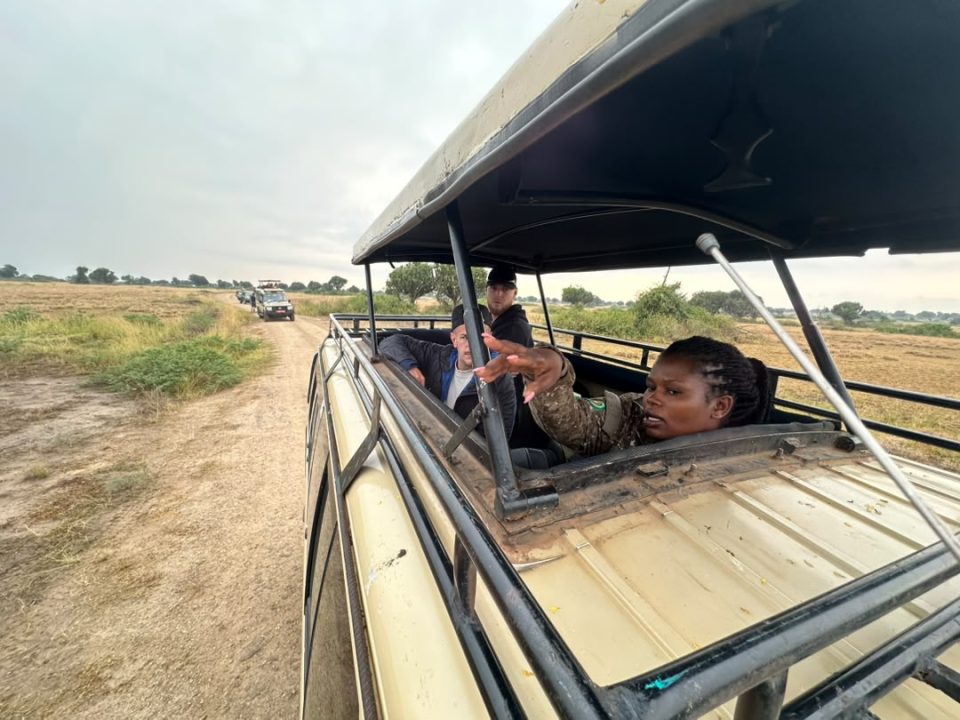
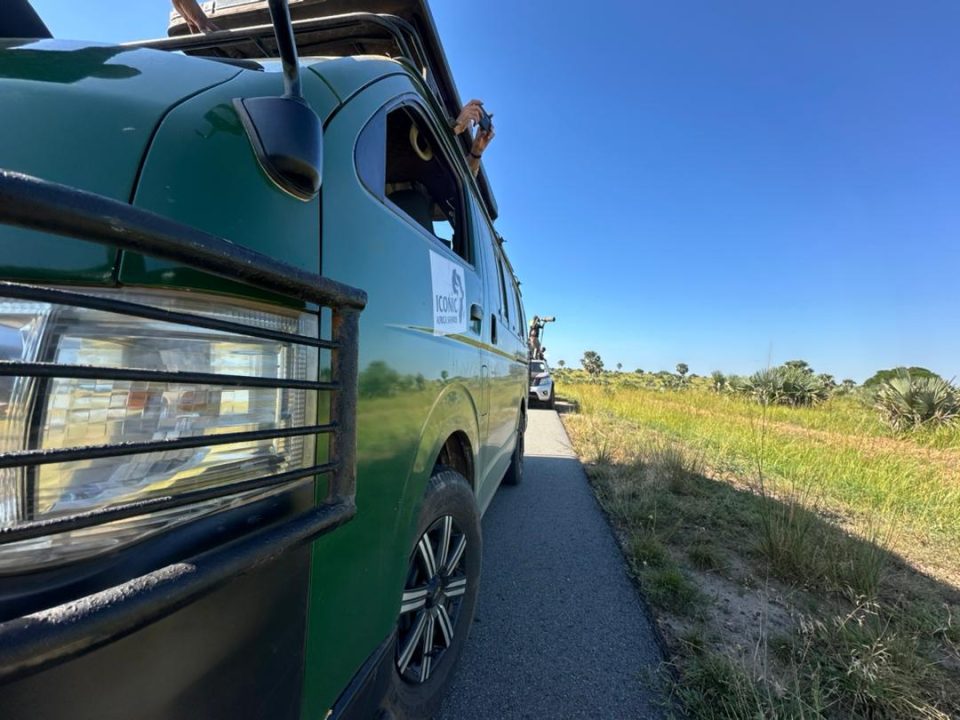
On the morning of your departure from Kigali, your Kenlink Tours driver-guide will meet you at your hotel or at Kigali International Airport and load your luggage into a well-maintained, purpose-built 4×4 safari vehicle. Then begins one of the most scenic overland journeys in East Africa.
The road south and west from Kigali rolls through Rwanda’s legendary thousand hills — terraced with tea, banana, and sorghum plantations, dotted with red-earth villages and roadside markets. The landscape is relentlessly beautiful, green and undulating, with the Virunga volcanoes rising on the horizon to the northwest.
The two border crossings used for gorilla trekking from Kigali into Uganda are:
Cyanika Border Post — The mountain crossing best suited for travellers heading to Bwindi’s southern sectors (Rushaga and Nkuringo) and Mgahinga Gorilla National Park. Scenic, efficient, and surrounded by striking highland scenery. After crossing, the road winds through Kisoro town and up into the forested hills toward the park.
Katuna/Gatuna Border Post — The main highway crossing between Rwanda and Uganda, used for routes to Bwindi’s Buhoma sector and further destinations across Uganda. Well-staffed and straightforward, this crossing sits on the busier Kigali–Kabale road.
At both crossings, your Kenlink driver-guide manages all vehicle documentation and border procedures. You simply present your passport, complete immigration formalities, and step from Rwanda into Uganda — often in 20 to 40 minutes. The road on the Uganda side continues through the scenic highlands of Kabale and Kisoro districts before delivering you to the forest edge and your lodge.
Step Four — Arriving at Your Lodge and the Pre-Trek Briefing
Your lodge for the gorilla trekking nights will be chosen by Kenlink Tours based on your sector, budget, and preferences. The range of accommodation options near Bwindi and Mgahinga spans from warm, friendly community guesthouses and mid-range lodges with en-suite rooms and forest views, to some of the most extraordinary luxury eco-lodges in Africa — wooden pavilions perched on forested ridges, with canopy views stretching to the Congo.
On your arrival evening, your Kenlink guide will brief you on what to expect the following morning — wake-up time, drive to the park headquarters, what the rangers will tell you, how the trek itself unfolds, and what to do (and what not to do) when you find the gorillas. You will go to bed that night with a quiet excitement that makes sleep more of a suggestion than a certainty.
Step Five — The Gorilla Trekking Day Itself
This is the day. Everything — the flights, the road, the border, the lodge — has been leading here.
You wake early, eat a good breakfast, and drive to the Uganda Wildlife Authority sector headquarters. The briefing begins at 8:00 AM sharp. Rangers explain the rules: stay seven metres from the gorillas at all times, no flash photography, speak quietly, do not eat or drink in the gorillas’ presence, cover your face if you need to sneeze or cough. You are assigned to your gorilla family group and your ranger team.
Then you step into the forest.
The trek can last anywhere from 45 minutes to six hours, depending entirely on where the gorilla family has moved since the trackers located them at first light. The forest is dense, steep in places, fragrant with the smell of earth and vegetation, alive with birdsong and the rustle of unseen creatures. Your rangers move confidently ahead, machetes clearing the path when necessary.
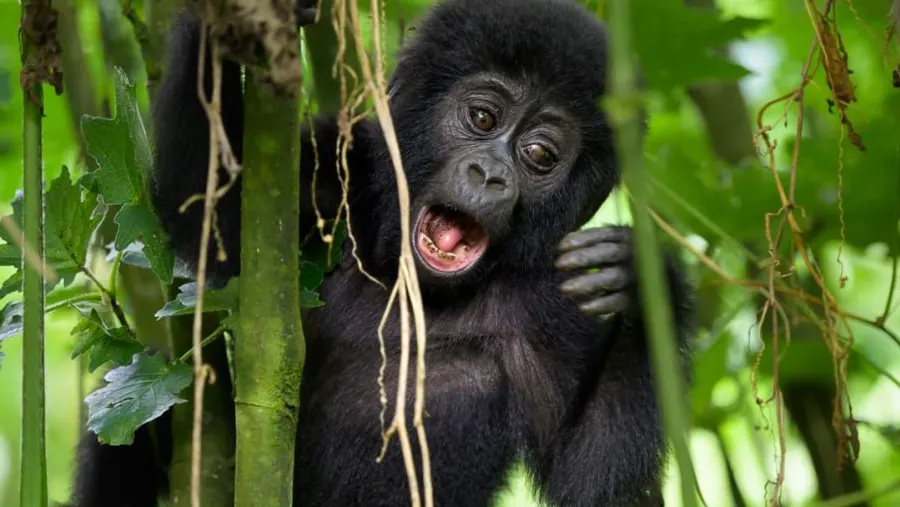
And then — a sound. A branch breaking. A deep, resonant exhale. Your ranger signals you to stop. You push through a curtain of leaves and there, three metres away, sitting with the unhurried dignity of a being that knows it has nothing to fear, is a mountain gorilla.
The one-hour observation time is unlike any wildlife experience on earth. Gorilla infants tumble and play at the silverback’s feet. Females groom one another in shafts of green light. The silverback turns his great head and regards you with dark, ancient eyes — intelligent, calm, utterly present. Most people cry. Most people say it is the single greatest wildlife moment of their lives.
According to the Uganda Tourism Board, a mountain gorilla shares approximately 98% of its DNA with humans. In that hour in the forest, you feel every percentage point of it.
Step Six — Extending Your Uganda Safari After Gorilla Trekking
Once you have trekked your gorillas, the temptation — and our strong recommendation — is to stay in Uganda and explore further. The country is extraordinary in its wildlife diversity, and starting your gorilla trek in Uganda from Kigali gives you the perfect launchpad for a wider East Africa safari.
Queen Elizabeth National Park is two to three hours north of Bwindi and offers tree-climbing lions in the Ishasha sector, Big Five game drives across the Kasenyi Plains, and the famous Kazinga Channel boat cruise — where hippos, crocodiles, and over 600 bird species crowd the water’s edge. Read more about Queen Elizabeth National Park on our website.
Kibale Forest National Park is Uganda’s premier chimpanzee trekking destination, home to over 1,500 chimpanzees and twelve primate species. A gorillas-and-chimps combination is Uganda’s most beloved safari circuit, and Kenlink Tours builds this into itineraries of six days and above.
Lake Bunyonyi — often called Africa’s most beautiful lake — is just an hour from Bwindi’s Buhoma sector and makes a perfect recovery day after the physical demands of gorilla trekking. The lake is studded with 29 islands, its surface impossibly calm and mirror-like, and the surrounding hills are a patchwork of terraced farmland in every shade of green.
Practical Essentials for Starting Your Gorilla Trek in Uganda from Kigali
Visas. Apply for the East Africa Tourist Visa (USD 100) before you travel via the Uganda e-Visa portal. This single permit covers Uganda, Kenya, and Rwanda — perfect for the cross-border route. Your passport must have at least six months validity beyond your travel dates.
What to wear and carry. Waterproof hiking boots with ankle support are non-negotiable. Wear long-sleeved shirts and full-length trousers — the forest has stinging nettles, thorns, and insects. Bring a lightweight rain jacket, gardening gloves for holding vegetation, a hat, quality insect repellent, and a camera with a fully charged battery and spare memory card. Walking sticks are available at sector headquarters.
Fitness level. You do not need to be an athlete, but a reasonable level of fitness is helpful. Treks can be steep and the forest floor is uneven. If you have any concerns about mobility, let Kenlink Tours know in advance — sedan chairs are available in some sectors for an additional fee.
Health precautions. If you develop cold or flu symptoms on your trekking day, UWA regulations may prevent you from trekking to protect the gorillas from human respiratory illness. Carry comprehensive travel insurance that includes medical evacuation cover. Malaria prophylaxis is recommended for Uganda travel — consult your doctor or a travel medicine clinic before departure.
Currency. Uganda uses the Ugandan Shilling (UGX). US Dollars are accepted at all parks and lodges. Rwanda uses the Rwandan Franc (RWF). Carry some cash in USD for tips, souvenirs, and incidental purchases.
Begin Your Journey — Contact Kenlink Tours Today
Starting your gorilla trekking in Uganda from Kigali is one of the best safari decisions you will ever make. It is geographically smart, financially savvy, scenically magnificent, and emotionally unforgettable. The gorillas of Bwindi and Mgahinga are among the rarest and most extraordinary animals on earth, and the privilege of spending time in their presence is something that will stay with you for the rest of your life.
At Kenlink Tours, we are specialists in exactly this journey. We know the road from Kigali to Bwindi like the back of our hand. We have deep relationships with the Uganda Wildlife Authority. We know which lodges are worth staying in and which gorilla sectors will suit your group best. And we are passionate — genuinely, deeply passionate — about delivering gorilla trekking experiences that exceed every expectation.
Contact us today to check permit availability for your dates, get a detailed itinerary, and take the first step on the road from Kigali to one of the greatest wildlife encounters on earth.