- EXPERT'S HELP
- +256789210067
- +256200955001
- info@kenlinktours.com


Are there Uganda Safaris Starting from Kigali?
September 15, 2026
Rwanda Tour Companies that arrange Uganda Safaris
September 15, 2026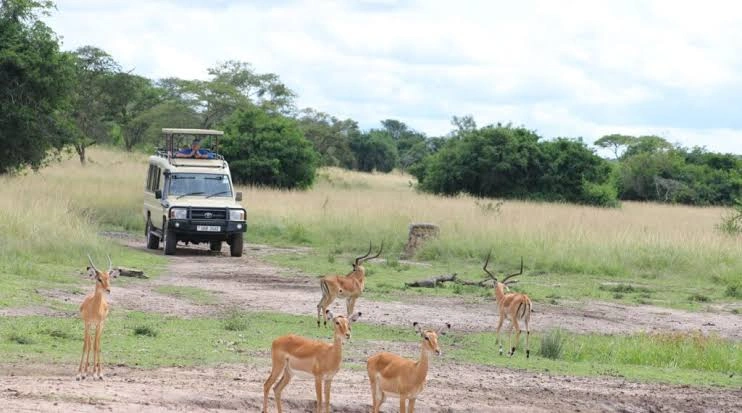
Uganda Safaris Through Kigali Airport. For a growing number of safari travelers, Kigali International Airport (KGL) — not Entebbe — is the first piece of tarmac they touch down on for a Uganda safari. Thanks to Rwanda’s compact geography and its proximity to Uganda’s southwestern parks, arriving through Kigali and driving overland has become one of the most efficient ways to reach Bwindi’s mountain gorillas, Queen Elizabeth National Park’s tree-climbing lions, and beyond. This guide walks through exactly what that journey looks like: which airlines fly into Kigali, what happens at immigration, how airport transfers work, how soon after landing you can be on the road to Uganda, and which safari itineraries are specifically built around a Kigali Airport arrival.
Why Kigali International Airport Has Become a Uganda Safari Gateway
Kigali International Airport sits in the Kanombe neighborhood, roughly 10 kilometers — about a 20-minute drive in normal traffic — from the city center, making it one of the more conveniently located capital-city airports in East Africa. Its real advantage for Uganda-bound travelers, though, is geography: Kigali sits closer by road to Bwindi Impenetrable Forest and Mgahinga Gorilla National Park than Entebbe does, which has made it the preferred arrival point for a large share of gorilla trekking travelers. Add a growing route network and a smooth, modern arrivals process, and it’s easy to see why so many Uganda safaris are now designed around a Kigali Airport start rather than treating the city as a mere stopover.
Airlines and Routes Flying Into Kigali International Airport
Kigali is served by Rwanda’s national carrier RwandAir, which operates an expanding network connecting the city to hubs across Africa, Europe, and the Middle East, alongside a roster of major international airlines that route travelers through their own hub cities — carriers such as Qatar Airways, Kenya Airways, Ethiopian Airlines, Brussels Airlines, Turkish Airlines, and KLM have all operated into Kigali in recent years, giving travelers from North America, Europe, and Asia workable one- or two-stop connections. Because schedules and specific routes shift over time, it’s worth checking current flight options directly with the airline or a travel agent close to your booking date rather than relying on older route maps. Once you’ve confirmed your flight, our guide on landing in Kigali or Entebbe for a gorilla safari can help you decide whether a Kigali arrival genuinely suits your planned itinerary better than flying into Uganda directly.
What Happens at Immigration: A Step-by-Step Walkthrough
After disembarking, travelers head straight to immigration, where Rwanda’s efficient e-visa and visa-on-arrival systems generally keep queues moving quickly compared to many other regional airports. If you’re using the East Africa Tourist Visa or a Rwanda-specific visa, have your approval letter, passport, and yellow fever vaccination certificate ready, since these are the documents most commonly requested at the immigration desk. Biometric capture — fingerprints and a photo — is standard procedure for most nationalities. After clearing immigration, baggage claim and customs are typically straightforward, with a green-channel option for travelers with nothing to declare. Door-to-door, most travelers clear the airport within 30 to 60 minutes of landing outside of unusually busy periods, after which your driver-guide will typically be waiting in the arrivals hall with a name board.
Visa Requirements Before You Land in Kigali
Most travelers heading onward to Uganda from Kigali Airport should apply in advance for the East Africa Tourist Visa, which covers Rwanda, Uganda, and Kenya under a single 90-day, multiple-entry application — ideal since you’ll be crossing an international land border partway through your trip. The visa costs around 100 USD, requires a passport valid for at least six months, a passport photo, a yellow fever certificate, and proof of return travel, and must be applied for through whichever of the three countries you’ll enter first — in this case, Rwanda, since you’re landing in Kigali. It cannot be extended or renewed once you’re inside the bloc, so make sure your approved dates match your actual itinerary before you travel. Apply at least two to three weeks ahead, and travel with both a digital and a printed copy of your approval letter, since it will be checked again at the land border into Uganda.
Airport Transfers: Getting from Kigali Airport to Your Hotel
Most Uganda safaris that begin at Kigali Airport include a pre-arranged private transfer straight from arrivals to your first night’s hotel, which removes any guesswork after a long flight. Kigali’s roads are well-maintained and the drive into the city center or nearby hotel districts rarely takes more than 20 to 30 minutes outside peak traffic hours. Travelers arriving late at night or on an early-morning connection often appreciate having this transfer locked in ahead of time rather than negotiating a taxi on arrival. If your itinerary has you departing for the Uganda border the same day, your operator can arrange a direct transfer from the airport straight toward Cyanika or Katuna instead, cutting out the overnight stop entirely for travelers on a tight schedule.
How Soon Can You Head to Uganda After Landing?
Whether you can start your Uganda safari the same day you land depends mostly on your arrival time and which border you’re using. Travelers landing in the morning have historically been able to clear immigration, transfer across the city, and be on the road to the Cyanika border within a couple of hours, reaching Bwindi by late afternoon — though this pace leaves little room for flight delays and isn’t recommended as a default plan. Most well-designed itineraries instead build in one night in Kigali after landing, both as a buffer against delays and as a chance to rest before the multi-hour drive to Uganda’s parks begins. Our starting a trip from Rwanda to Uganda guide breaks down realistic timing for both same-day and next-day departures in more detail.
A Typical First Day: From Touchdown to Your First Night
Understanding the rhythm of a typical arrival day helps set expectations before you even board your flight. After landing, clearing immigration, and collecting baggage — usually 30 to 60 minutes all in — you’ll meet your driver-guide in the arrivals hall and transfer to your hotel, a drive of 20 to 30 minutes depending on traffic and your hotel’s location. Many travelers use the rest of the afternoon to shower, rest, and adjust after a long-haul flight, while others with more energy head straight into a short city excursion. Dinner is typically at your hotel or a short walk away, and an early night is worth prioritizing regardless of how you spend the afternoon, since most Uganda-bound itineraries have an early departure the next morning to make the most of daylight on the drive to the border. Your operator will usually confirm pickup time for the following day before you even leave the airport, so you can plan the rest of your evening around a known departure.
One Night in Kigali: Making the Most of Your Layover
If your itinerary includes an overnight in Kigali before heading to Uganda, it’s worth treating it as more than a place to sleep off jet lag. The city’s museums, markets, and restaurant scene are genuinely worth a few hours, and a short guided visit is an easy way to shake off a long flight before the multi-hour drive ahead. Our 1-day Kigali city tour is designed to fit into exactly this kind of gap, covering highlights like the Kigali Genocide Memorial and local markets in a half-day format that still leaves time to rest. Pick and Transfer Safaris also maintains a useful Kigali city destination guide if you’d like a second set of suggestions for how to spend a layover day.
The Road from Kigali to Uganda’s Parks
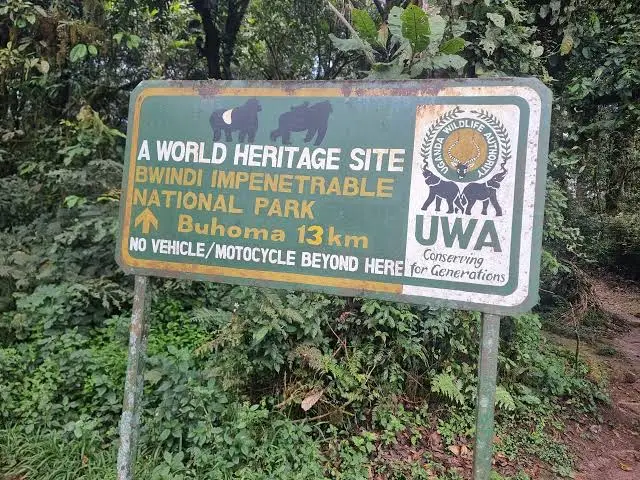
Once you leave Kigali, the route depends entirely on which Uganda park is first on your list. Bwindi Impenetrable Forest and Mgahinga Gorilla National Park are reached via the Cyanika border near Kisoro, roughly a 4 to 5 hour drive from the city — one of the shortest international border-to-park routes anywhere in East African safari travel. Queen Elizabeth National Park’s southern sector is a further 2 to 3 hours past Bwindi, and Kibale Forest another 2 hours beyond that. Travelers heading toward Kampala, central Uganda, or Murchison Falls in the north instead use the Katuna border, roughly 6 to 8 hours of driving covering about 377 kilometers. Our page on the distance from Kampala to Murchison Falls covers the final leg of that longer northern route in detail.
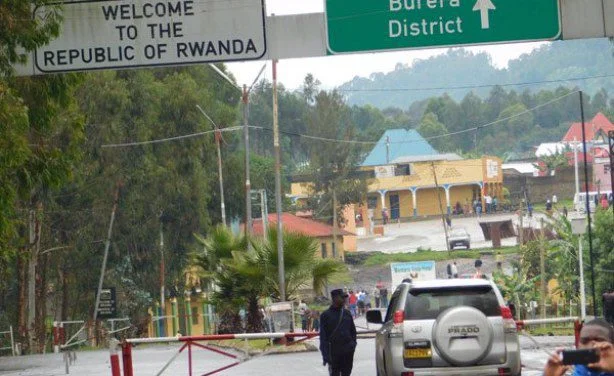
Crossing the Border: Katuna and Cyanika Explained
Both border posts used on this route handle daily tour traffic and are generally efficient for travelers on an organized safari, with your driver-guide managing vehicle documentation while you complete immigration formalities on foot across a short stretch of no-man’s-land. Expect your passport, visa approval, and yellow fever certificate to be checked again here, even though you already presented them at Kigali Airport — border officials work independently of the airport immigration desk, so keep these documents easily accessible rather than buried in checked luggage. Processing typically takes 30 minutes to just over an hour depending on how busy the post is. For a first-hand account of a same-day airport-to-border itinerary, Pick and Transfer Safaris’ one-day Uganda gorilla safari starting from Kigali documents this exact crossing in practice.
Gorilla Trekking Safaris Departing from Kigali Airport
Gorilla trekking is the single biggest reason travelers choose a Kigali Airport arrival over Entebbe, and several itineraries are built specifically to start the moment you clear immigration. Our 2-day Uganda gorilla safari starting from Kigali picks travelers up directly from the airport and has them trekking gorillas in Bwindi the following morning, while our 3-day Bwindi gorilla safari starting from Kigali adds a more relaxed pace with a full buffer night before the trek. On the regional side, Pick and Transfer Safaris offers comparable airport-departure itineraries including their 2-day Uganda gorilla tour starting from Kigali and 3-day Uganda gorilla safari from Rwanda, both worth reviewing for comparison, alongside their dedicated Bwindi Impenetrable Forest National Park destination guide if you’d like more background on the park itself before you book a permit date.
Gorilla permits are issued by the Uganda Wildlife Authority in limited numbers per gorilla family per day, entirely separate from your flight or transfer arrangements, and should be secured before you finalize your flight dates into Kigali rather than after. Once a permit date is confirmed, everything else — flights, airport transfer, and the drive to Bwindi — gets built around that fixed day, which is why experienced operators always ask about trekking dates before discussing flight options.
Wildlife and Multi-Park Safaris Starting at the Airport
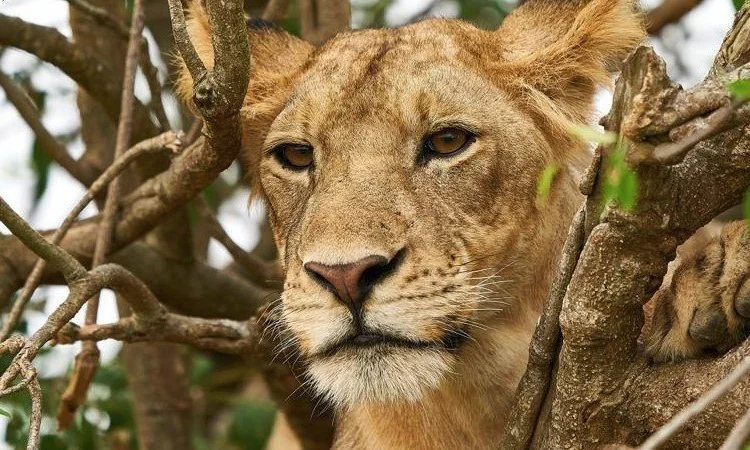
Beyond gorilla trekking, longer safaris starting from Kigali Airport can weave in Uganda’s savannah parks and second primate species without a separate flight. Our 5-day gorilla trekking safari from Kigali to Uganda combines Bwindi with a wildlife extension, and our 9-day Uganda-Rwanda gorilla and big-five safari strings together gorillas, chimpanzees, and multiple savannah parks into one continuous loop that returns to the same airport at the end. Travelers wanting a taste of Queen Elizabeth National Park’s tree-climbing lions alongside gorilla trekking should also look at our 3-day wildlife encounter to Queen Elizabeth National Park, which pairs naturally onto an airport-start gorilla itinerary. For a regional comparison, Pick and Transfer Safaris’ 4-day wildlife and primate safari covers similar ground from the Rwandan side of the border, and their Queen Elizabeth National Park destination guide is a useful reference for that leg specifically.
Combining a Kigali Airport Arrival with Murchison Falls
Travelers with Murchison Falls National Park on their list can still start from Kigali Airport, though the longer Katuna route through Kampala means budgeting extra travel days compared with the southwestern gorilla circuit. We’ve covered this specific journey in full in our companion guide on planning a trip to Murchison Falls National Park from the Rwandan side, including route options and suggested pacing. For travelers who want to combine the far north with the southwestern parks in one loop, our 7-day tour covering Murchison, Kibale, Queen Elizabeth, and Bwindi is one of the most complete single itineraries built around a Kigali Airport start and finish. Pick and Transfer Safaris’ Murchison Falls National Park destination page is a useful additional reference if you’d like a second perspective on that leg.
How Much Does a Uganda Safari from Kigali Airport Cost?
Cost depends heavily on your gorilla or chimp permit needs, accommodation tier, and whether you book a group departure or a private transfer, but a few patterns hold across most itineraries. Gorilla permits represent a large, fixed per-person cost regardless of how many days your trip runs, so a short two-day airport-to-Bwindi trip carries a higher cost-per-day than a longer itinerary that spreads the same fixed costs across more days. Private airport transfers and custom-paced vehicles cost more than joining a scheduled group departure, and lodge choice — from simple tented camps to high-end properties near the park boundary — is usually the single biggest lever travelers have over their total budget. For a useful benchmark on pricing for comparable routes, Pick and Transfer Safaris publishes similar Kigali-departure packages worth cross-checking against any quote you receive. Always ask for an itemized breakdown separating permits, park fees, transport, and accommodation, since that’s the only way to compare quotes from different operators fairly.
Weather and What to Pack for the Journey
Kigali sits at altitude with a mild, spring-like climate year-round, which can catch travelers off guard if they’ve packed purely for an equatorial safari. Mornings and evenings are noticeably cool, so a light jacket for your arrival evening and the early departure the next day is worth having in your carry-on rather than buried in checked luggage. As you move toward Bwindi, temperatures stay similarly moderate given the forest’s own elevation, while continuing on toward Queen Elizabeth National Park or Murchison Falls brings warmer, more classically tropical conditions. Rain is possible in Bwindi’s forest environment in any season, so a waterproof layer and a dry bag or rain cover for camera gear are sensible additions regardless of when you travel. Sturdy, broken-in hiking boots matter more than almost anything else you pack, given how steep and often muddy gorilla trekking terrain can be even in the officially dry months.
Choosing a Tour Operator for an Airport-Based Uganda Safari
Because this itinerary crosses an international border partway through, the operator you choose matters more than it would for a single-country trip. Look for a company with an established presence and vehicles on both the Rwandan and Ugandan sides of the border, since this avoids the added cost and inconvenience of switching guides and vehicles mid-trip. Confirm upfront exactly who is responsible for booking your gorilla or chimp permits and by what date, since these sell out months ahead in peak season and a missed deadline can unravel an entire itinerary built around a Kigali Airport arrival. It’s also worth asking how many airport-to-safari departures an operator runs in a typical month — frequency on this specific route is a reasonable proxy for how smoothly they’ll handle your transfer, border crossing, and permit logistics together.
Sample 3-Day Itinerary Starting at Kigali Airport
A practical structure that many first-time gorilla trekkers follow looks like this:
- Day 1 — Arrival: Land at Kigali International Airport, clear immigration, and transfer to your hotel for a rest afternoon and early night, with an optional short city visit if your energy allows.
- Day 2 — Border crossing and Bwindi: Depart early for the Cyanika border, cross into Uganda, and continue to Bwindi Impenetrable Forest, arriving in the afternoon in time for a pre-trek briefing.
- Day 3 — Gorilla trekking and return: Trek gorillas in the morning, then begin the drive back toward the border and Kigali, or continue onward to Queen Elizabeth National Park if your itinerary extends further.
This structure compresses easily into a fast two-day version for travelers on a tight schedule, or expands into a week or more by adding Queen Elizabeth National Park, Kibale Forest, or a return loop through Rwanda’s own parks before your departure flight. Every version starts and ends at the same airport, which is part of why this route has become so popular for travelers who don’t want the complexity of flying in and out of two different countries.
Practical Airport Tips: SIM Cards, Cash, and Connectivity
Kigali International Airport has currency exchange counters and ATMs available in the arrivals area, along with local SIM card vendors if you’d rather have a Rwandan number for the first leg of your trip before switching to a Ugandan SIM after the border. It’s worth changing a small amount of cash into Rwandan francs on arrival for tips and incidentals, even if your safari’s major costs are prepaid, since small vendors and rural stops rarely accept cards. Free airport Wi-Fi is generally available in the terminal, though it’s sensible to have your accommodation and transfer confirmations saved offline in case connectivity is patchy right when you land. If you have a long layover before your transfer departs, the terminal has a small selection of cafés and shops to wait comfortably.
Luggage, Packing, and What to Carry On
Because your Uganda safari from Kigali Airport involves both a land border crossing and, for most itineraries, at least one multi-hour drive on the day you land, pack your immigration documents, yellow fever certificate, and any gorilla or chimp permit confirmations in your carry-on rather than checked luggage. A soft-sided duffel bag packs more efficiently into safari vehicles than a hard-shell suitcase and is easier to handle during the border crossing on foot. If your itinerary includes an internal flight within Rwanda or Uganda at any point, check baggage weight limits in advance, since light-aircraft allowances are considerably stricter than international carry-on rules. Keep a change of clothes and basic toiletries in your carry-on as a buffer against any checked-luggage delays, particularly on itineraries with tight onward connections.
Choosing Where to Stay Near Kigali Airport or in the City
Travelers with an early departure toward the Uganda border the next morning sometimes prefer a hotel closer to the airport itself, cutting down on transfer time before an early start. Others prefer staying in central Kigali, trading a slightly longer airport transfer for easier access to restaurants, markets, and the city’s museums during a layover night. Either choice works well logistically, since Kigali’s road network keeps both options within a manageable drive of the airport, and your tour operator can recommend properties in either location based on your planned departure time the following morning. This is generally arranged as part of a full itinerary rather than booked separately, so mention your preference when discussing your Uganda safari plans through our contact page.
Car Hire and Self-Drive from Kigali Airport
Some experienced overland travelers prefer to collect a rental vehicle directly from Kigali Airport rather than book a guided package, though a cross-border Uganda safari adds complications — vehicle paperwork, cross-border insurance, and unfamiliar road rules — that guided travelers don’t need to think about. For those weighing this option, our car hire page outlines vehicle types and what’s typically included, and it’s worth confirming cross-border insurance and temporary import permits with your rental provider well before your flight lands, since these requirements differ meaningfully from a Rwanda-only or Uganda-only rental.
Booking Timeline: Coordinating Flights, Permits, and Transfers
Because gorilla and chimp trekking permits are issued in limited numbers per park per day, they should be the first thing you lock in once you have rough travel dates, before finalizing your flight into Kigali. Once permit dates are confirmed, work backward to book flights that land with enough buffer before your first trekking day, factoring in the overland drive time to whichever park you’re starting with. Popular months — July through September and December through January — see both flights into Kigali and gorilla permits sell out several months ahead, so travelers with fixed dates should start this process as early as possible. Our group tours page lists current scheduled departures for travelers who’d rather join a fixed-date trip than coordinate flights and permits independently.
Group Tours vs Private Airport-to-Safari Transfers
Group tours starting from Kigali Airport bundle your arrival transfer, accommodation, and park activities into a fixed-departure schedule shared with other travelers, which keeps costs down but means working around a set itinerary. Private transfers and custom safaris cost more but give you full control over your arrival time, pacing, and which parks are included, which matters most for travelers on irregular flight schedules or those wanting flexibility to adjust plans after landing. Both formats are available for the same core routes out of Kigali Airport, and your choice mostly comes down to budget and how much flexibility you want built into the trip from the moment you land.
Extending Your Trip: Rwanda Before or After Uganda
Since you’re already routing through Kigali, many travelers extend their trip to include Rwanda’s own parks before or after the Uganda leg, rather than treating the airport purely as a gateway elsewhere. Our Rwanda safaris page covers options like Volcanoes National Park gorilla trekking and Akagera’s savannah wildlife, both of which sit close enough to Kigali to fit neatly before or after your Uganda itinerary without a second flight. For travelers who want to compare a Rwanda-based add-on, Pick and Transfer Safaris’ Akagera National Park safari from Kigali is a useful reference for that side of a combined trip. To learn more about the country your safari begins in, our about Uganda page and about us page both provide useful background before you travel. Because Rwanda’s own parks sit relatively close together around Kigali, a common pattern is to front-load a few Rwanda days immediately after landing — before your energy dips from the longer Uganda drives — and save the Uganda leg for the middle or end of the trip, returning to Kigali Airport for your departure flight regardless of which order you choose.
What to Expect If Your Flight Is Delayed or Changes
Long-haul connections into Kigali occasionally run late, and it’s worth knowing how that affects the rest of your itinerary before it happens. A same-day transfer straight to the Uganda border has the least buffer built in, so a significant delay can genuinely put a tight schedule at risk — one more reason most well-planned itineraries default to an overnight in Kigali rather than a same-day dash. Reputable operators track your flight status and adjust pickup times automatically rather than expecting you to call ahead, so confirm this is part of your booking before you travel. If a delay does push your itinerary back a day, gorilla and chimp permits are generally non-transferable to a different date without prior arrangement, which is another reason to build at least one buffer day into any itinerary where flight timing and a fixed trekking date both matter.
The New Bugesera International Airport: What Travelers Should Know
Rwanda has been developing a new airport at Bugesera, south of Kigali, intended to eventually replace or supplement Kigali International Airport with significantly greater capacity. Completion timelines for the project have shifted more than once, and as of this writing, Kigali International Airport in Kanombe remains the operating gateway for international arrivals, so travelers booking a Uganda safari through Kigali should plan around the current airport rather than the one still under construction. Once Bugesera does open to commercial traffic, the overland route into Uganda will likely shift slightly to account for its location south of the city, and we’ll update our guidance accordingly — but for now, all of the logistics in this guide apply to the existing Kigali International Airport. If your travel dates fall close to a widely reported opening date for Bugesera, it’s worth confirming directly with your airline which airport your specific flight will actually use, since a phased transition between the two is a realistic possibility during any handover period.
Health and Safety Preparations Before You Fly
Both Rwanda and Uganda require proof of yellow fever vaccination for entry, so keep your certificate with your passport rather than in checked luggage, since it can be requested at the airport, the land border, or occasionally at internal checkpoints. Malaria risk exists across Uganda’s lower-altitude parks, so speak with a travel clinic about prophylaxis well before your flight. Comprehensive travel insurance covering medical evacuation is strongly recommended given how remote parts of the trekking terrain can be, and most reputable operators will ask to see proof of cover before your first trek. Pack any prescription medication in your carry-on with enough supply to cover potential flight delays, and consider a basic first-aid kit for the more remote stretches of the itinerary beyond Kigali. It’s also worth registering your trip with your embassy or checking their current travel guidance before departure, and saving your operator’s emergency contact number in a form that works without data or Wi-Fi, since coverage can be patchy in parts of the trekking terrain even though it’s generally reliable along the main road corridors.
Frequently Asked Questions
Can I do a Uganda safari through Kigali Airport? Yes — Kigali International Airport is a well-established gateway for Uganda safaris, particularly gorilla trekking in Bwindi, with tour operators on both sides of the border running regular airport-to-park departures.
How far is Kigali Airport from the Uganda border? The Cyanika border near Bwindi is roughly 4 to 5 hours from the airport by road, while the Katuna border toward Kampala and Murchison Falls is around 6 to 8 hours.
Do I need a visa before I land in Kigali? Most travelers should arrange either a Rwanda visa or the East Africa Tourist Visa in advance, since it covers Rwanda, Uganda, and Kenya under one application and needs to be applied for before departure in most cases.
Can I go straight from Kigali Airport to the Uganda border on the same day? It’s possible with an early morning arrival, but most itineraries build in one night in Kigali first as a buffer against flight delays and to rest before the multi-hour drive.
Is Kigali International Airport being replaced by a new airport? A new airport at Bugesera is under construction and intended to eventually take over international traffic, but Kigali International Airport in Kanombe remains the operating gateway for now.
Do I need to book an airport transfer in advance, or can I arrange one on arrival? Booking in advance is strongly recommended, since a pre-arranged driver removes any uncertainty after a long flight and is typically bundled into your overall safari package at no separate hassle.
Can I combine a Kigali Airport safari with time in Rwanda itself? Yes, many travelers add gorilla trekking in Volcanoes National Park or a game drive in Akagera before or after their Uganda leg, since both sit close enough to the airport to fit without a second flight.
Uganda Safaris Through Kigali Airport
Kigali International Airport has quietly become one of the smartest entry points for a Uganda safari, particularly for travelers prioritizing gorilla trekking in Bwindi, thanks to a shorter drive to the border, an efficient immigration process, and a genuinely pleasant capital city to rest in before the journey continues. Whether you’re planning a fast two-day gorilla trek or a multi-week loop through Uganda’s savannah and forest parks, the logistics from touchdown to trailhead are well-established and run by operators who handle this exact route every week. The single biggest factor in a smooth trip is sequencing — locking in gorilla or chimp permits first, then flights, then transfers — rather than booking a flight and hoping the rest falls into place afterward. Reach out through our contact page to start planning a Uganda safari built around your Kigali Airport arrival, with permits, transfers, and accommodation coordinated from the moment your flight lands.