- EXPERT'S HELP
- +256789210067
- +256200955001
- info@kenlinktours.com


From Kigali to Murchison Falls Tour in Uganda
September 15, 2026
Uganda Safaris Through Kigali Airport
September 15, 2026
Are there Uganda Safaris Starting from Kigali? If you’re landing in Rwanda and wondering whether you can still experience Uganda’s gorillas, chimpanzees, and savannah wildlife without flying separately into Entebbe, the short answer is yes. Uganda safaris starting from Kigali are not just possible — they’re one of the most common and convenient ways travelers experience both countries on a single trip. Kigali International Airport has become a genuine gateway to Uganda’s national parks, with a well-established overland route, straightforward border crossings, and tour operators on both sides who run this exact journey every week of the year. This guide answers the question in full: which parks and safaris are reachable from Kigali, how the border crossing and visas work, how much it costs, how long you need, and how to choose the right itinerary for your trip.
Yes — Kigali Is a Major Gateway for Uganda Safaris
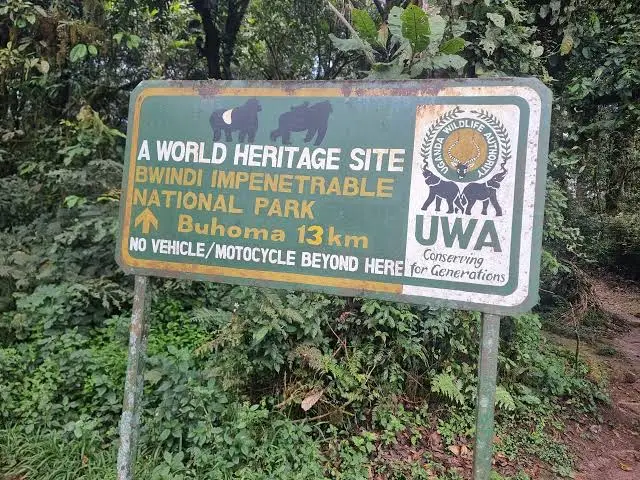
Kigali sits close enough to Uganda’s southwestern parks that it has effectively become a second starting point for Uganda safaris, alongside Entebbe. Bwindi Impenetrable Forest, home to roughly half the world’s remaining mountain gorillas, is only a 4 to 5 hour drive from Kigali via the Cyanika border — often faster than reaching Bwindi from Entebbe on the Ugandan side. This geography means a huge share of gorilla trekking travelers now fly into Kigali specifically because it shortens their road time into the park. From there, the rest of Uganda — Queen Elizabeth National Park, Kibale Forest, and even Murchison Falls further north — is all reachable by the same overland network, which is why so many Uganda safaris are now built with Kigali as the starting point rather than an afterthought.
Why Travelers Choose to Start Their Uganda Safari from Kigali
Beyond the shorter drive to Bwindi, several practical reasons push travelers toward a Kigali-based itinerary. Kigali International Airport has more direct long-haul connections from Europe and the Middle East than Entebbe on some routes, and RwandAir’s growing network makes it an easy first stop. Many travelers also combine gorilla trekking in Rwanda’s Volcanoes National Park with a Uganda extension, since both countries’ gorilla permits and parks sit within a few hours of the same border posts. Starting in Kigali also means beginning your trip in one of Africa’s cleanest, most walkable capitals, with good hotels and restaurants to recover from a long-haul flight before the safari itself begins. For a deeper look at how this decision plays out in practice, our comparison of landing in Kigali or Entebbe for a gorilla safari breaks down the trade-offs route by route.
Kigali International Airport vs Entebbe: Which Should You Fly Into?
Choosing between Kigali and Entebbe usually comes down to which Ugandan parks are on your list. If Bwindi or Mgahinga gorilla trekking is your priority, Kigali is frequently the faster option because of its proximity to the southwestern border posts. If your itinerary leans toward Murchison Falls, Queen Elizabeth National Park’s Kasese side, or Kibale Forest, Entebbe may involve less total driving depending on your route. Many travelers solve this by flying into one city and out of the other, avoiding backtracking altogether — flying into Kigali, safariing through southwestern Uganda, and exiting from Entebbe (or the reverse) is a well-worn pattern among our clients. Our starting a trip from Rwanda to Uganda guide walks through exactly how to sequence this kind of open-jaw itinerary.
The Road Route: Kigali to Uganda’s Parks
From Kigali, the drive to Bwindi via the Cyanika border near Kisoro takes roughly 4 to 5 hours, making it one of the shortest international border-to-park routes in East African safari travel. Continuing north to Queen Elizabeth National Park adds another 2 to 3 hours from Bwindi, and from there Kibale Forest and Fort Portal are a further 2 hours. Reaching Kampala from Kigali via the Katuna border instead takes around 6 to 8 hours covering roughly 377 kilometers, which is the route most travelers use if Murchison Falls or Uganda’s central and northern parks are the primary destination. Whichever direction you’re headed, the roads are well-maintained tarmac for the majority of the journey, with the final stretches into most parks switching to graded murram track. For the specific leg north toward Murchison Falls, see our breakdown of the distance from Kampala to Murchison Falls.
Border Crossing Options: Katuna, Cyanika, and Beyond
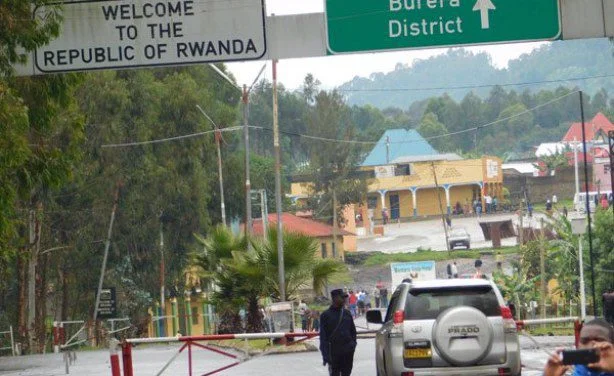
Two border posts handle almost all Kigali-to-Uganda safari traffic. Cyanika, near Kisoro, is the natural choice for anyone headed toward Bwindi, Mgahinga, or Queen Elizabeth National Park’s southern sector, since it drops you within a short drive of the park boundaries. Katuna (also called Gatuna), further east near Kabale, is the standard route toward Kampala, central Uganda, and onward to Murchison Falls in the north. Both posts are used daily by tour vehicles and are generally efficient, with your driver-guide handling vehicle paperwork while you complete immigration formalities on foot across a short stretch of no-man’s-land. Processing usually takes 30 minutes to just over an hour. For a first-hand sense of how a same-day Kigali-to-Uganda crossing typically runs, Pick and Transfer Safaris’ one-day Uganda gorilla safari starting from Kigali documents this exact crossing in detail.
Visa Requirements for a Uganda Safari from Kigali
Most travelers crossing from Rwanda into Uganda will need either a standard Uganda tourist e-visa or the East Africa Tourist Visa, which covers Uganda, Kenya, and Rwanda under one application, is valid for 90 days, and allows multiple entries among the three countries — ideal if your trip weaves back and forth across the border. The East Africa Tourist Visa costs around 100 USD and requires a passport valid for at least six months, a passport photo, a yellow fever vaccination certificate, and proof of onward or return travel. It must be applied for through whichever of the three countries you enter first and cannot be extended or renewed once you’re inside the bloc, so apply with your actual dates already confirmed. Apply at least two to three weeks ahead of travel, and always carry a printed copy of your approval alongside the digital one.
What a Typical Day Looks Like on a Kigali-Based Uganda Safari
Days on a Uganda safari from Kigali tend to follow a predictable rhythm once you’re past the border crossing. Trekking days — whether gorillas or chimpanzees — start early, often with a 6am wake-up and a briefing at the park headquarters by 7:30 or 8am, since trackers are already in the forest locating the group before guests arrive. Trekking itself can take anywhere from one to six hours round trip depending on where the animals are that day, followed by a return to the lodge for a late lunch and a rest in the afternoon heat. Game-drive days in Queen Elizabeth or Murchison Falls run differently, with an early departure to catch dawn light and animal activity, a mid-morning return, and a second shorter drive or boat cruise in the late afternoon. Travel days between parks are simply long drives broken up by scenic stops, roadside curio stalls, and the occasional wildlife sighting even before you reach the next park gate. Knowing this rhythm in advance helps travelers pack the right energy levels and expectations into each day of the trip.
Gorilla Trekking Safaris Starting from Kigali (Bwindi & Mgahinga)
Gorilla trekking is by far the most common reason travelers look for Uganda safaris starting from Kigali, and it’s well served by short, efficient itineraries. A 2-day trip is enough to cross the border, trek gorillas in Bwindi the following morning, and return to Kigali the same evening or the next day; our 2-day Uganda gorilla safari starting from Kigali is built exactly around this pace. Travelers with slightly more time often prefer our 3-day Bwindi gorilla safari starting from Kigali, which removes the same-day rush and allows a more relaxed trek morning. On the regional side, Pick and Transfer Safaris runs comparable short options including their 2-day Uganda gorilla tour starting from Kigali and 3-day Uganda gorilla safari from Rwanda, both worth reviewing for a second perspective on pacing and pricing. Uganda gorilla permits are a fixed cost set by the Uganda Wildlife Authority, separate from your accommodation and transport, and they should always be confirmed and paid for well in advance since only a limited number of permits are issued per gorilla family per day. Trekking itself is capped at a small group size per gorilla family with a strict one-hour viewing limit once the group is located, rules designed to minimize stress on the animals and disease transmission risk between humans and gorillas, whose genetic closeness to us makes them susceptible to human illnesses.
Chimpanzee Trekking Safaris from Kigali (Kibale, Budongo)
Beyond gorillas, Kigali is also a viable starting point for chimpanzee trekking safaris in Uganda, since Kibale Forest National Park — considered the primate capital of East Africa — sits only a few hours past Queen Elizabeth National Park on the standard southwestern circuit. Travelers often combine a gorilla trek in Bwindi with a chimp trek in Kibale on the same trip, moving between the two parks over two to three driving days. Further north, Budongo Forest near Murchison Falls offers a second chimp-trekking option for travelers extending their itinerary that far. On the regional comparison side, Pick and Transfer Safaris’ 5-day Uganda gorilla and chimps safari starting from Rwanda illustrates how these two primate experiences are typically paired into one Kigali-based trip.
Wildlife Safaris from Kigali: Queen Elizabeth National Park
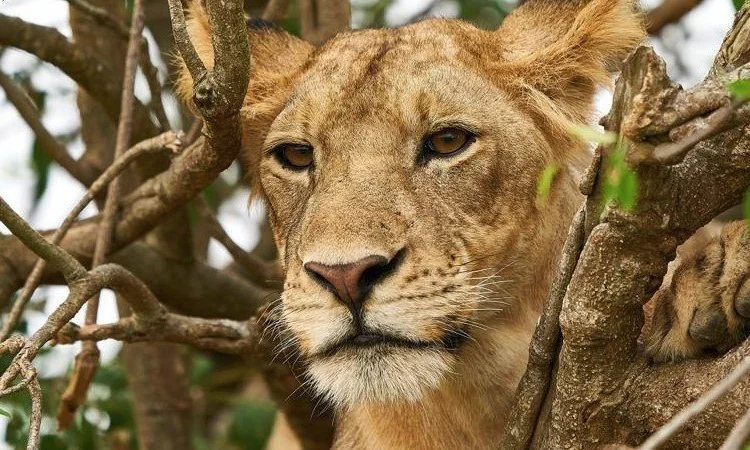
For travelers who want big-game savannah scenery alongside primates, Queen Elizabeth National Park is one of the easiest wildlife destinations to reach from Kigali, sitting a comfortable drive north of Bwindi. The park is known for tree-climbing lions in the Ishasha sector, large buffalo herds, and a boat cruise along the Kazinga Channel that rivals Murchison Falls’ Nile cruise for sheer density of hippos and birdlife. Our 3-day wildlife encounter to Queen Elizabeth National Park is a popular standalone option, and it slots naturally into a longer gorilla-and-wildlife combination starting from Kigali. Pick and Transfer Safaris offers a comparable itinerary and maintains a dedicated Queen Elizabeth National Park destination guide if you’d like additional background before booking.
Murchison Falls Safaris Starting from Kigali
Murchison Falls National Park, Uganda’s largest reserve and home to the point where the entire Nile River is forced through a seven-meter gorge, is a longer but still entirely feasible add-on from Kigali, typically requiring the Katuna border route through Kampala. We’ve covered this specific journey in full in our companion guide to a Kigali to Murchison Falls tour, including route options, visa rules, and suggested day-by-day itineraries. Travelers who want to add Murchison Falls onto a southwestern circuit that already includes gorillas and Queen Elizabeth National Park should look at our combined 7-day tour covering Murchison, Kibale, Queen Elizabeth, and Bwindi, which is one of the most complete single itineraries we run from Kigali. For a regional point of comparison, Pick and Transfer Safaris’ 3-day safari to Murchison Falls and their Murchison Falls National Park destination page are useful additional references.
Combined Rwanda-Uganda Itineraries
Many travelers don’t want to choose between Rwanda and Uganda at all, and a Kigali start makes combining both countries genuinely efficient rather than a compromise. Popular combinations include gorilla trekking on both sides of the border for two different populations of mountain gorillas, or pairing Rwanda’s Akagera National Park with Uganda’s Queen Elizabeth for a two-country big-game itinerary. Our 5-day Uganda-Rwanda double gorilla safari and 10-day Uganda-Rwanda combining safari are both built around this cross-border logic, while our 4-day Rwanda-Uganda golden monkey and gorilla trekking itinerary adds Rwanda’s golden monkeys into the same trip. On the regional side, if you’d like to compare a Rwanda-based wildlife day out, Pick and Transfer Safaris’ Akagera National Park safari from Kigali is a solid reference point for that half of a combined trip. The logic behind combining both countries is straightforward once you look at a map: Rwanda’s parks sit close together around Kigali, while Uganda’s are spread across a much larger area, so a combined itinerary typically front-loads the Rwanda side (Volcanoes, Akagera, or Nyungwe) in the first few days before crossing into Uganda for the remainder of the trip, minimizing how many times you cross the border and keeping total driving time manageable even on longer combined itineraries.
Short 1-3 Day Safaris from Kigali
If your schedule is tight, several genuinely worthwhile Uganda safaris can be completed from Kigali in three days or less. A single-day gorilla trek is possible for travelers with very limited time, crossing the border, trekking, and returning the same day, though it makes for a long day on the road. A more comfortable 2 to 3 day window allows a gorilla trek with an overnight either side of the border, removing the same-day rush entirely. These short options are ideal for business travelers extending a Kigali trip, or as an add-on to a longer Rwanda-based holiday. Our 2-day Rwanda to Uganda gorilla trekking safari is our most frequently booked option in this category, and it can be arranged with as little as a week’s notice subject to gorilla permit availability.
Extended 7+ Day Safaris from Kigali
Travelers with more time on their hands can turn a Kigali start into a full multi-park Uganda expedition. Our 9-day Uganda-Rwanda gorilla and big-five safari and 15-day Rwanda-Uganda primate and big-five safari adventure both string together gorilla trekking, chimpanzee trekking, and multiple savannah parks into one continuous journey, minimizing repeated border crossings by looping through Uganda before returning to Kigali at the end. For travelers who’d rather keep the pace gentler over a similar length of time, our 10-day fantastic tour in Rwanda-Uganda safari in East Africa spreads the same highlights over a more relaxed schedule with fewer early starts.
How Much Do Uganda Safaris from Kigali Cost?
Cost depends heavily on which parks you visit, how many gorilla or chimp permits you need, and your accommodation tier, but a few structural factors are consistent. Gorilla trekking permits alone represent a significant fixed cost per person regardless of trip length, so shorter gorilla-focused itineraries are not proportionally cheaper than longer combined trips once permits are factored in. Private transport and mid-range to luxury lodges push the price up considerably compared to group departures and budget tented camps. For a useful benchmark, Pick and Transfer Safaris publishes comparable packages across similar durations, which is a helpful cross-check when evaluating quotes from any operator. Ask any operator, including us, for an itemized quote separating permits, park fees, accommodation, and transport rather than a single bundled number, since that’s the only way to compare offers fairly.
As a rough guide to how cost scales with trip length: a 2 to 3 day gorilla-only trip from Kigali carries the highest cost-per-day ratio because the fixed permit cost is spread across so few days, while a 7 to 10 day multi-park itinerary spreads fixed costs like permits and cross-border transport over more days and often works out more economical per day of travel. Solo travelers generally pay a single-supplement premium on accommodation compared to couples or small groups sharing rooms, and private 4×4 vehicles cost meaningfully more per day than joining a scheduled group departure. Currency exchange is also worth planning for: gorilla and chimp permits, along with most park fees, are typically quoted and settled in US dollars, while day-to-day expenses like meals, drinks, and tips are easier to cover in local currency once you’ve crossed into Uganda.
Health and Safety Preparations
A Uganda safari from Kigali is a well-established, generally safe route, but a handful of preparations make it smoother. Malaria risk exists across most of Uganda’s lower-altitude parks, so speak with a travel clinic well before departure about prophylaxis, and pack a reliable insect repellent for dusk and dawn activities. Both Rwanda and Uganda require proof of yellow fever vaccination for entry, so keep your certificate with your other travel documents rather than packed away in checked luggage. Comprehensive travel insurance that includes medical evacuation cover is strongly recommended given how remote parts of the trekking terrain and northern parks can be, and most reputable operators will ask to see proof before your trek. Tap water should be avoided in favor of bottled or filtered water, which is provided at all lodges and camps on this route. Road conditions on the main Kigali–Cyanika–Bwindi and Kigali–Katuna–Kampala corridors are generally good, though rural stretches can be narrow and slower-moving, which is one more reason experienced local drivers make a real difference over self-driving unless you’re already confident with East African road conditions.
Photography and Wildlife Viewing Tips
Gorilla and chimpanzee trekking present unique photography challenges compared to open savannah game drives, since forest light is low and animals move through dense vegetation. A fast lens with a wide maximum aperture performs far better here than a long zoom, and many experienced trekking photographers shoot handheld at higher ISOs to compensate for the shade. On savannah game drives in Queen Elizabeth or Murchison Falls, early morning and late afternoon light produces the richest color and the most active wildlife, while midday heat tends to push animals into shade and stillness. Always follow your guide’s positioning instructions around gorillas and chimps — both for safety and because guides know how to approach without disturbing the group, which usually produces better photo opportunities than trying to get closer yourself. A dry bag or rain cover for camera equipment is worth packing regardless of season, since forest showers are common even outside the official rainy months.
Best Time of Year to Start a Uganda Safari from Kigali
Uganda’s two dry seasons, December to February and June to September, are the easiest windows for both gorilla trekking (drier, less slippery forest trails) and savannah game drives (thinner vegetation, animals near water sources). These months are also peak season, so gorilla permits and lodge availability should be booked several months ahead, particularly for July, August, and the Christmas-New Year period. The wetter months bring lush scenery, lower rates, and excellent birding, and gorilla trekking remains possible year-round since permits are simply harder to source, not unavailable, outside the dry season. Whichever season you choose, cross-check your Uganda dates against Rwanda’s own dry seasons if you’re combining gorilla treks in both countries, since the two overlap closely but aren’t identical.
What to Pack for a Uganda Safari from Kigali
Pack layered clothing for temperature swings between Kigali’s mild highland climate and Uganda’s warmer lowland parks, sturdy waterproof hiking boots for gorilla and chimp trekking trails, and gardening-style gloves if you plan to grab vegetation on steep forest sections. A rain jacket earns its place regardless of season, particularly in gorilla and chimp habitats where forest showers are common even in the dry months. Bring your passport, visa approval letter, yellow fever certificate, and gorilla or chimp permit confirmations in a single accessible folder, since all of these get checked at various points between the border and the trekking start point. Binoculars are worth the extra weight for both primate trekking and any savannah game drives on your itinerary.
Sample Itinerary: 5-Day Gorilla and Wildlife Safari from Kigali
A well-paced structure that covers primates and savannah wildlife in one trip looks like this:
- Day 1: Depart Kigali, cross the Cyanika border, and drive to Bwindi Impenetrable Forest, arriving in time for a briefing ahead of the next day’s trek.
- Day 2: Gorilla trekking in Bwindi, followed by an afternoon transfer toward Queen Elizabeth National Park.
- Day 3: Morning game drive in Queen Elizabeth National Park followed by an afternoon Kazinga Channel boat cruise.
- Day 4: Continue to Kibale Forest for an afternoon at leisure ahead of the following morning’s chimpanzee trek.
- Day 5: Chimpanzee trekking in Kibale Forest, then return drive to Kigali via the same border crossing.
This structure can be compressed to 4 days by cutting one park or extended toward a week or more by adding Murchison Falls or a Rwanda-side extension. Our 5-day gorilla trekking safari from Kigali to Uganda is built on this exact template and can be customized once we know your travel dates.
Weather, Altitude, and Terrain: What to Expect
Rwanda and southwestern Uganda share a similar highland climate, which is part of why the border crossing feels seamless in practice. Kigali and Bwindi both sit at altitude, with cooler mornings and evenings than travelers often expect from an equatorial safari, so a warm layer for early trekking starts is genuinely useful even in the dry season. As you move north toward Queen Elizabeth National Park, Kibale, and eventually Murchison Falls, elevation drops and temperatures climb, shifting from misty highland forest to classic hot, dry savannah. Trekking terrain in Bwindi and Mgahinga is genuinely steep and can be muddy regardless of season, since the forest holds moisture even during the officially dry months, which is why trekking poles (often provided free or for a small fee at the park) are worth using even for fit travelers. Savannah terrain in the northern parks is flatter and entirely vehicle-based, so the physical demands of a Uganda safari from Kigali are front-loaded into the first few trekking days rather than spread evenly across the trip.
Booking Timeline: When to Reserve Your Uganda Safari from Kigali
Gorilla and chimpanzee permits are the single biggest constraint on booking timeline, since Uganda issues a fixed number per park per day and popular months sell out three to six months ahead, sometimes earlier around the July–September and December–January peaks. If your Uganda safari from Kigali includes gorilla trekking, treat permit booking as the first thing you lock in, before finalizing flights or lodge reservations, since your entire itinerary has to build around the date the park actually has permits available. Lodge availability in Bwindi and Kibale follows a similar pattern, with the most sought-after properties booking out well ahead of the dry seasons. Shorter, non-trekking wildlife itineraries built purely around Queen Elizabeth or Murchison Falls have more flexibility and can often be arranged with a few weeks’ notice, though earlier booking still typically secures better lodge choices and pricing.
Choosing a Tour Operator for a Kigali-Based Uganda Safari
Because a Kigali-based Uganda safari crosses an international border, the operator you choose matters more than it would for a single-country trip. Look for a company with an established presence and vehicles on both sides of the border, since this avoids the cost and hassle of switching vehicles and guides mid-trip. Confirm upfront who handles gorilla and chimp permit bookings, since these sell out months ahead in peak season and mistakes here can derail an entire itinerary. Read recent trip reports where available — our travel news page carries recent traveler updates from this exact route — and don’t hesitate to ask an operator directly how many Kigali-starting trips they run in a typical month, since frequency is a reasonable proxy for how smoothly they handle the border logistics.
Group Tours vs Private Custom Safaris
Group tours starting from Kigali offer lower per-person costs by sharing vehicle and guide expenses across several travelers, and they suit travelers happy to follow a fixed schedule and meet other visitors along the way. Private custom safaris cost more but allow full control over pacing, departure dates, and which parks are included, which matters most for travelers on a tight overall timeline or those wanting to prioritize photography stops and flexible trekking mornings. Our group tours page lists current scheduled departures for travelers who prefer the group format, while private itineraries can be arranged for any dates through our contact page.
Car Hire and Self-Drive Options from Kigali
Some experienced overland travelers prefer to self-drive a Uganda safari starting from Kigali rather than book a guided package, though this requires comfort with cross-border vehicle paperwork, unfamiliar road conditions, and Uganda’s park-specific driving rules. For travelers weighing this option, our car hire page outlines vehicle types and what’s typically included, and it’s worth discussing cross-border insurance and temporary import permits with your rental provider well before departure, since these requirements differ from renting a vehicle purely within Rwanda or purely within Uganda.
Combining with a Kigali City Tour
Since your Uganda safari from Kigali begins and ends in the same city, it’s worth setting aside a day to see Kigali itself rather than treating it purely as a transit point. Highlights include the Kigali Genocide Memorial, Kimironko Market, and the city’s growing café and arts scene. Our 1-day Kigali city tour is designed to fit neatly before your border crossing or after your return, and Pick and Transfer Safaris covers the same city in their own destination guide if you’d like a second set of sightseeing suggestions.
Sustainable Tourism Considerations
Both gorilla and chimpanzee trekking in Uganda operate under strict permit systems designed to limit human contact and protect fragile populations, and choosing operators who follow these rules closely — respecting group size limits, distance guidelines, and trekking time caps — matters more here than on almost any other safari activity. A meaningful share of permit revenue supports park protection and neighboring communities, so booking through licensed operators rather than informal arrangements at the border directly supports this system. Community-run craft cooperatives and cultural visits near Bwindi and Kibale offer a way to put additional tourism income directly into local hands, and these can be added to any Kigali-starting itinerary on request.
Frequently Asked Questions
Are there Uganda safaris starting from Kigali? Yes. Kigali is a well-established gateway for Uganda safaris, particularly gorilla trekking in Bwindi, and is used by both Rwanda-based and Uganda-based tour operators running regular departures.
How far is Bwindi from Kigali? Roughly 4 to 5 hours by road via the Cyanika border, making it one of the shortest border-to-park drives available for gorilla trekking in the region.
Do I need a separate visa for Uganda if I already have a Rwanda visa? Generally yes, unless you hold the East Africa Tourist Visa, which covers Uganda, Kenya, and Rwanda under a single 90-day, multiple-entry application.
Can I do a Uganda safari from Kigali in a single day? A single-day gorilla trek from Kigali is possible but involves a long day of travel; 2 to 3 days is more comfortable for most travelers.
Which Uganda parks are easiest to reach from Kigali? Bwindi Impenetrable Forest and Queen Elizabeth National Park are the most convenient, with Kibale Forest and Murchison Falls both reachable as extensions further into Uganda.
Is it better to book a group tour or a private safari from Kigali? Group tours are more budget-friendly and suit travelers happy with a fixed schedule, while private safaris cost more but allow full control over dates, pace, and which parks are included.
Can I fly into Kigali and out of Entebbe instead of returning the same way? Yes, this open-jaw routing is common and often more efficient than backtracking, particularly for itineraries that continue north toward Murchison Falls before looping back.
Are there Uganda Safaris Starting from Kigali?
So, are there Uganda safaris starting from Kigali? Without question — and for gorilla trekking in particular, starting from Kigali is often the more efficient choice than routing through Entebbe. Whether you have two days for a quick gorilla trek or two weeks for a full Rwanda-Uganda circuit, the route, visas, and logistics are all well-established and run by operators on both sides of the border every week. The only real planning risk is leaving gorilla or chimp permits until too late, so once you have rough travel dates in mind, the single most useful next step is confirming permit availability before locking in flights or lodges around them. Reach out through our contact page or browse our about us page to see how we can build a Uganda safari from Kigali around your exact dates and interests, with permits, transport, and accommodation coordinated on both sides of the border from the very first day of your trip.