- EXPERT'S HELP
- +256789210067
- +256200955001
- info@kenlinktours.com


Uganda Chimpanzee and Gorilla Safaris and Tours
April 29, 2026
How Much Does Gorilla Trekking from Rwanda to Uganda Cost?
May 1, 2026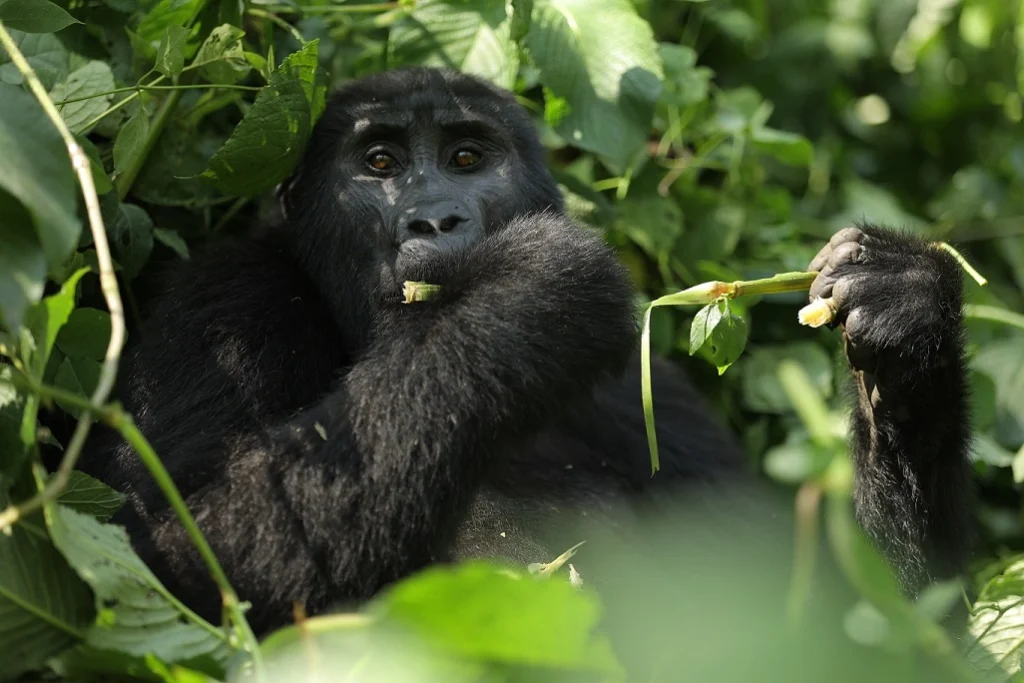
Budget Gorilla Trekking Safari from Rwanda to Uganda Explained. East Africa is home to roughly two-thirds of the world’s remaining mountain gorillas, and two countries share that extraordinary privilege — Rwanda and Uganda. For wildlife lovers working with a careful budget, combining both destinations into a single safari is not only smart travel planning, it is genuinely one of the most rewarding experiences available anywhere on the planet. You get two different gorilla habitats, two distinct cultural landscapes, and a dramatically richer adventure — all while spreading the cost of international flights across a longer, more value-packed trip.
The idea of a “budget” gorilla trekking safari sometimes raises eyebrows. Mountain gorillas are not cheap to visit, and that is by deliberate conservation design. But budget, in this context, does not mean cutting corners on safety or ethics — it means being strategic about permits, accommodation, transport, and timing so that every dollar you spend delivers maximum value. At Kenlink Tours, we specialize in crafting affordable East Africa safari packages that get you face-to-face with mountain gorillas without unnecessary financial strain.
Understanding the Two Key Gorilla Trekking Destinations
Volcanoes National Park, Rwanda sits in the Virunga Massif in Rwanda’s northwestern highlands. It is the most famous gorilla trekking destination in the world, made iconic by the late primatologist Dian Fossey, whose research base, the Karisoke Research Center, still operates in this landscape. The park is compact, access from Kigali is straightforward (roughly 2.5 hours by road), and the gorilla families here are highly habituated, offering often breathtaking, close encounters. Rwanda’s gorilla permit costs USD 1,500 per person per trek, which is the most expensive permit in the region.
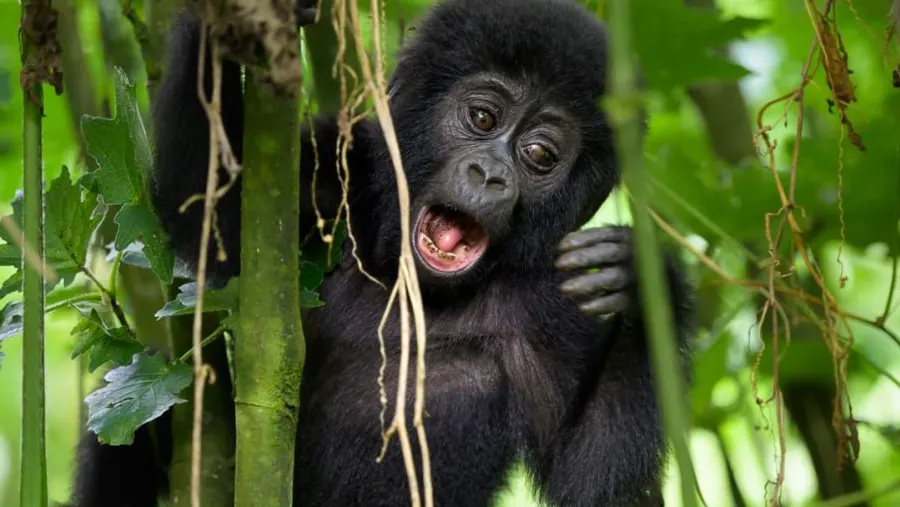
Bwindi Impenetrable National Park, Uganda is the other half of this magnificent equation. A UNESCO World Heritage Site blanketed in ancient Afromontane forest, Bwindi is home to nearly half of the world’s mountain gorilla population. The park is divided into four trekking sectors — Buhoma, Ruhija, Rushaga, and Nkuringo — each offering a different depth of forest experience. Uganda’s gorilla permit is priced at USD 800 per person, significantly lower than Rwanda’s, which makes Uganda the budget-friendlier gorilla destination of the two and the ideal anchor for an affordable combo safari.
How Much Does a Rwanda to Uganda Gorilla Safari Cost?
Let’s break down the key costs honestly, because transparency is something every responsible safari operator owes their clients.
The gorilla permits form the foundation of your budget. A trek in Rwanda costs USD 1,500, while Uganda’s permit is USD 800. If you are doing one trek in each country on a combo trip, you are looking at USD 2,200 in permits alone for two people. Some budget-focused travellers choose to do both their treks in Uganda, reducing permit costs to USD 1,400 for two people while still enjoying the incomparable Bwindi forest.
Accommodation varies enormously in both countries. Budget and mid-range lodges near Bwindi — particularly in the Buhoma and Rushaga sectors — can range from USD 50 to USD 150 per person per night, while Volcanoes National Park has a slightly higher price floor. There are genuinely comfortable, well-run guesthouses and eco-lodges close to both parks that do not require you to spend USD 600 a night at a luxury tented camp.
Transport between Rwanda and Uganda is where smart planning makes a real difference. The overland route from Kigali to Bwindi via the Cyanika border crossing takes approximately 5–6 hours and is a popular, cost-effective option. Private transfers, shared shuttles, and self-drive hires are all available. Explore our East Africa transport options to find the right fit for your itinerary.
Flights are typically the largest single expense. Most travellers fly into Kigali (RWI), complete their Rwanda experience, cross overland into Uganda, and fly home from Entebbe (EBB) — or vice versa. One-way international tickets and open-jaw routing help keep costs down versus paying for two round-trip flights.
A realistic 7-day budget combo safari — covering gorilla treks in both countries, mid-range accommodation, overland transport, and park fees — typically starts from around USD 2,800 to USD 3,500 per person when booked through an efficient local operator. Compare this to a luxury version of the same itinerary that can exceed USD 8,000 per person, and the savings become immediately clear.
The Best Time to Trek Gorillas on a Budget
Gorilla trekking is available year-round in both Rwanda and Uganda, but timing your visit strategically affects both cost and comfort. The dry seasons — June to September and December to February — are the most popular trekking periods. Trails are drier, forest paths are more manageable, and gorilla sightings tend to be slightly more accessible since the animals move less during dry weather. However, permits sell out faster during peak season, and accommodation prices are at their highest.
The green seasons — March to May and October to November — bring rainfall that keeps most casual tourists away. For the budget traveller, this is a hidden opportunity. Accommodation rates drop noticeably, last-minute permits can occasionally be sourced, and the forests of Bwindi turn into a luminescent, misty wonderland that many experienced trekkers describe as even more atmospherically beautiful than the dry season. The rain usually falls in concentrated afternoon bursts rather than all-day downpours, meaning morning treks are often perfectly clear. Check the Uganda Wildlife Authority’s trekking guidelines for current permit availability across seasons.
A Sample 7-Day Itinerary: Rwanda and Uganda on a Budget
Here is a practical framework for how a combined safari might flow, bookable through Kenlink Tours:
Day 1 — Arrive Kigali, Rwanda. Transfer to budget-friendly guesthouse in the city centre. Evening orientation and briefing.
Day 2 — Kigali to Musanze (Ruhengeri). Morning visit to the Kigali Genocide Memorial for cultural and historical grounding. Afternoon drive to Musanze, gateway to Volcanoes National Park. Overnight at a budget lodge.
Day 3 — Gorilla Trekking in Volcanoes National Park. Early morning briefing at the park headquarters, then trek to one of 12 habituated gorilla families. This is a once-in-a-lifetime morning that no photograph fully prepares you for. Afternoon rest.
Day 4 — Musanze to Bwindi via Cyanika Border. Overland transfer through the Cyanika border post into Uganda, arriving in the Buhoma or Rushaga sector of Bwindi Impenetrable National Park. Overnight at a community lodge.
Day 5 — Gorilla Trekking in Bwindi. Second gorilla trek, this time deep in the impenetrable ancient forest. Each gorilla family and each trekking sector delivers a different character of experience. The Rushaga sector is particularly budget-friendly for accommodation.
Day 6 — Bwindi Forest Walk or Community Experience. Explore Bwindi’s extraordinary biodiversity on a guided forest walk, or spend time with a local Batwa community — indigenous forest people whose story is deeply intertwined with Bwindi’s conservation history. Visit the Batwa Trail for context.
Day 7 — Transfer to Entebbe for Departure. Scenic drive through Queen Elizabeth National Park corridor or directly to Entebbe International Airport. End of an extraordinary safari.
Practical Tips to Maximize Your Budget
A few habits make a meaningful difference when managing costs on a gorilla safari. Book permits early — Rwanda’s permits especially sell months in advance, and being caught without a permit after you’ve paid for flights is an expensive lesson. Travel in a small group — private vehicle costs are spread more efficiently when shared, and many lodges offer group discounts for three or more guests. Eat local — both Uganda and Rwanda have outstanding local cuisines. Matoke (steamed plantain), Ugandan rolex (egg and vegetables in a chapati), and Rwandan isombe (cassava leaves in peanut sauce) are delicious, filling, and a fraction of the cost of imported restaurant menus. Pack light and right — sturdy waterproof hiking boots, light rain gear, long trousers, and garden gloves for holding vegetation are all you need. There is no need to purchase expensive specialist gear.
Why Book Your Budget Gorilla Safari with Kenlink Tours?
At Kenlink Tours, we are a locally rooted East Africa safari company with deep expertise in Rwanda and Uganda. We source permits directly, work with vetted community lodges and eco-camps, and design itineraries that respect both your budget and the ecosystems you are visiting. Our guides are experienced, licensed, and genuinely passionate about the wildlife and communities they introduce to guests every day.
We also believe that budget travel and responsible travel are not in conflict — they can and should be the same thing. A portion of every gorilla permit fee goes directly to the International Gorilla Conservation Programme and the respective national park authorities, funding anti-poaching patrols, community development, and veterinary care for the gorillas themselves. When you trek, you contribute.
Mountain gorillas are a critically endangered species. Fewer than 1,100 individuals remain. Every ethical, well-managed tourist visit to Bwindi or Volcanoes National Park is an act of conservation. Your budget safari is not a compromise — it is a commitment.
Ready to start planning? Browse our Rwanda and Uganda gorilla safari packages and speak to our team today. Your gorillas are waiting.