- EXPERT'S HELP
- +256789210067
- +256200955001
- info@kenlinktours.com


Short Gorilla Trekking Tours in Uganda
April 29, 2026
Budget Gorilla Trekking Safari from Rwanda to Uganda Explained
May 1, 2026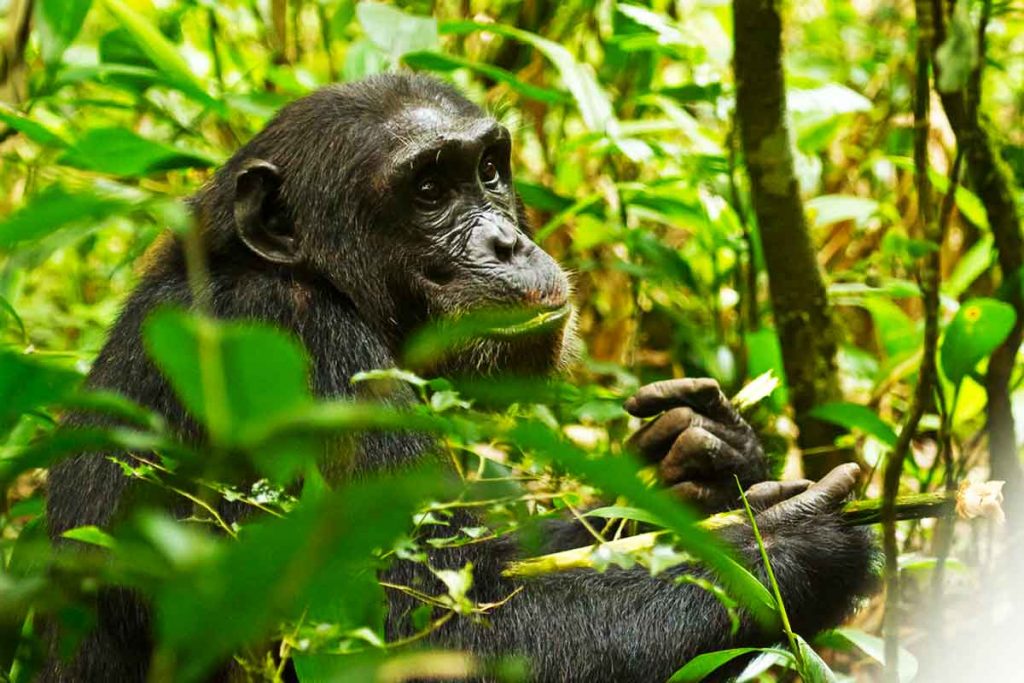
There are a handful of wildlife experiences in the world that genuinely change the way you think about other species. Tracking mountain gorillas in Bwindi Impenetrable National Park is one. Tracking chimpanzees in Kibale Forest is another. Uganda is the only country on Earth where both are available within a single itinerary — a fact that positions it uniquely among East Africa’s safari destinations. Kenya and Tanzania have the Big Five in vast open ecosystems; Uganda has the great apes in ancient, cathedral forest, and it has both of them.
Kenlink Tours specialises in Uganda primate safaris — designing chimpanzee and gorilla itineraries at every budget level, from a focused 3-day gorilla trek to a comprehensive 8-day circuit that combines both great ape encounters with savanna wildlife. This guide explains what each experience involves, where and how to access it, what the honest differences are between the two, and which itinerary best suits your available time. Whether you are planning a first visit or returning to Uganda after a previous trip, the combination of gorillas and chimpanzees in one journey is among the most extraordinary things available in African travel.
Uganda’s Primate Numbers at a Glance
Uganda is home to approximately half the world’s remaining mountain gorillas (around 460 individuals in Bwindi alone) and one of the largest chimpanzee populations in East Africa — over 5,000 chimpanzees across multiple forest reserves, with more than 1,500 in Kibale Forest alone. The country also hosts 12 other primate species including golden monkeys, colobus, mangabeys, and L’Hoest’s monkeys, making it the most primate-diverse destination in Africa.
Mountain Gorilla Trekking in Bwindi Impenetrable National Park
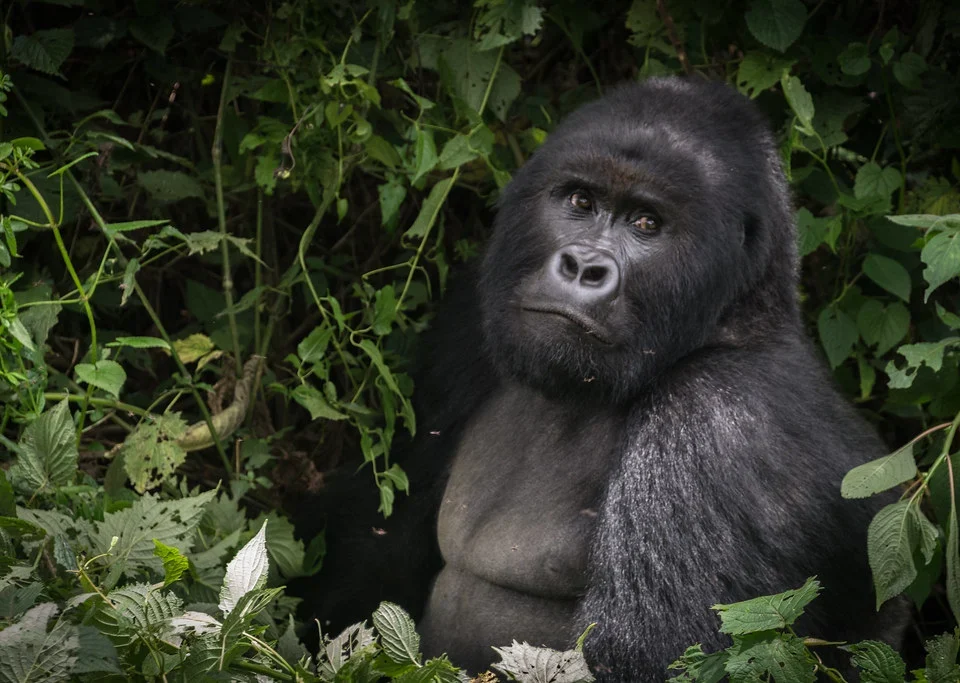
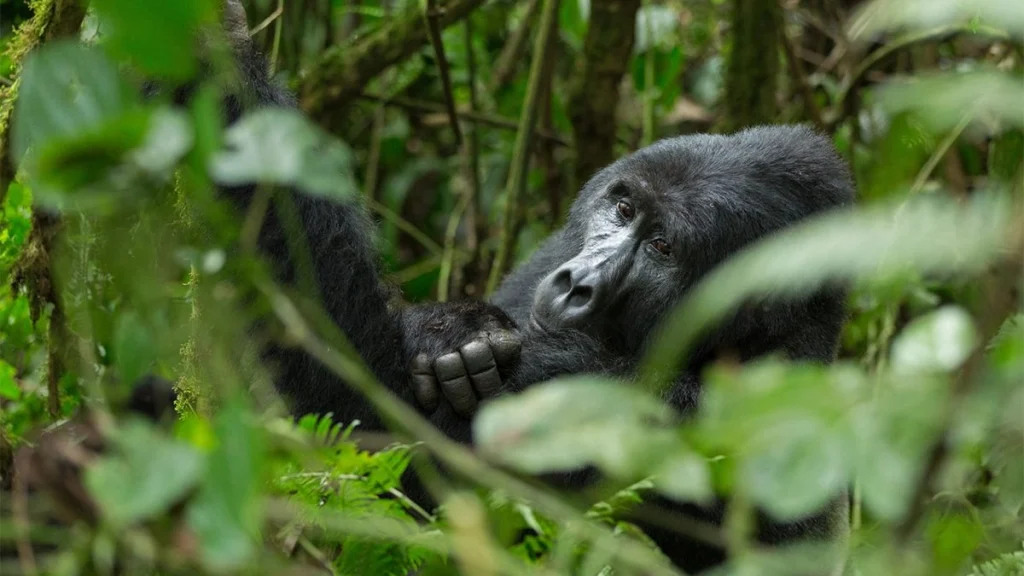
Gorilla trekking in Uganda takes place exclusively in two national parks: Bwindi Impenetrable National Park and Mgahinga Gorilla National Park, both in the southwestern corner of the country near the borders with Rwanda and the Democratic Republic of Congo. Bwindi is by far the larger and more active trekking destination, with four distinct sectors — Buhoma, Rushaga, Ruhija, and Nkuringo — and more than a dozen habituated gorilla families available for permits. Mgahinga shares a single habituated family across its Rwanda border, with permits sometimes limited.
Mountain gorillas are critically endangered. The total wild population stands at just over 1,000 individuals — divided between Bwindi and the Virunga volcanic chain shared by Uganda, Rwanda, and the DRC. That rarity makes every trek not merely a wildlife excursion but a genuine encounter with one of the most at-risk species on the planet. The conservation fees collected through permit sales fund the ranger teams, anti-poaching operations, and community programmes that have helped the mountain gorilla population grow from around 600 individuals in the 1980s to its current level — one of the few genuinely positive large mammal conservation stories in Africa.
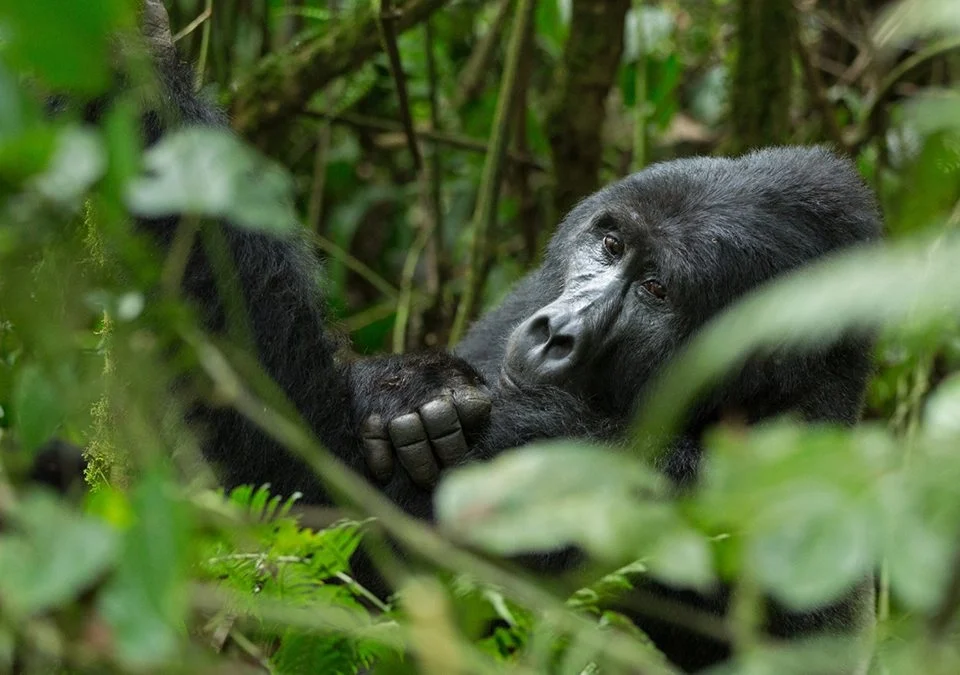
The trekking structure is designed to protect the gorillas while delivering a profound experience to visitors. Groups of a maximum of eight people are assigned a specific habituated family each morning, accompanied by at least two Uganda Wildlife Authority rangers. Trackers set out before dawn to locate the family from its overnight sleeping site. Once the family is found, the group spends exactly one hour observing and photographing at a minimum distance of seven metres — though gorillas themselves do not observe that boundary and will frequently pass closer. The hour passes differently for every trekker: some spend it in stunned silence; others describe it later as the most emotionally affecting experience of their lives.
The trek duration to reach the family varies from 30 minutes to a full six hours depending on where the gorillas moved overnight. Bwindi’s terrain is genuinely challenging — dense undergrowth, steep ridges, sudden bamboo zones — and the physical effort of the approach makes the moment of finding the family viscerally rewarding. Upon return, trekkers receive a certificate of completion and their permit details serve as an official record of the encounter.
Uganda’s gorilla permit costs USD 800 per person — significantly less than Rwanda’s USD 1,500 for the same one-hour encounter. Kenlink Tours secures permits on your behalf before confirming any other element of the itinerary, which is the correct approach: the permit date anchors everything else. For peak season travel between June and September or December and February, permits should be booked at least four to six months in advance. Contact Kenlink Tours to check current availability for your preferred dates.
Chimpanzee Tracking in Kibale Forest National Park
Kibale Forest National Park in western Uganda — centred on the town of Fort Portal — is considered the premier chimpanzee trekking destination in East Africa and is often called the Primate Capital of the World. The forest shelters more than 1,500 chimpanzees, making it home to one of the highest densities of these animals anywhere in Africa. Thirteen primate species live within Kibale’s boundaries, meaning that even outside a dedicated chimpanzee tracking session, a morning in the forest is likely to produce sightings of red-tailed monkeys, L’Hoest’s monkeys, grey-cheeked mangabeys, black-and-white colobus, olive baboons, and occasionally the rare Uganda red colobus.
Chimpanzee tracking follows a similar overall structure to gorilla trekking but produces a fundamentally different experience. Chimpanzees are fast, vocal, unpredictable, and socially complex in ways that play out visibly over the observation hour. Where gorilla encounters tend to be quiet and meditative — the family going about its feeding and resting routines at a measured pace — a chimpanzee community in Kibale is loud, active, and occasionally chaotic. Community members move rapidly through the canopy, screech and hoot at one another, charge through clearings, and engage in the kind of social drama — grooming alliances, dominance displays, play among juveniles — that makes it immediately clear why researchers have spent decades studying these animals. The observation hour with chimpanzees rarely feels slow.
Chimpanzee Habituation Experience
Kibale also offers a more immersive programme called the Chimpanzee Habituation Experience, which differs significantly from standard tracking. In a habituation experience, you join the research team that is actively training a wild chimpanzee community to accept human presence — spending a full day in the forest from dawn to dusk following the community as it moves, feeds, nests, and socialises. There is no fixed endpoint. The day lasts as long as the chimpanzees are active, and the depth of exposure to chimpanzee behaviour is incomparable to the standard one-hour session. This is one of the most extraordinary full-day wildlife experiences available in Uganda.
Standard chimpanzee tracking permits in Kibale cost USD 200 per person for the morning session (6:00 AM start) or USD 150 for the afternoon session (2:00 PM start). The Chimpanzee Habituation Experience costs USD 250 per person for the full day. These fees are issued by the Uganda Wildlife Authority and are fixed regardless of operator. Kibale also has one of the best road access situations of any Uganda wildlife park — Fort Portal is approximately four hours from Kampala on a good sealed road, making Kibale a realistic and efficient stop on any itinerary that combines the west Uganda circuit with Bwindi.
“Gorillas make you feel profound and small. Chimpanzees make you feel strangely recognised. Both encounters are extraordinary — but they work on you in completely different ways.”
— Kenlink Tours Guide, Kibale Forest
Gorillas vs Chimpanzees: The Honest Difference
Travellers who have experienced both consistently describe the gorilla trek as the more emotionally overwhelming of the two — the sheer size of the animals, the ancient quality of the forest, and the strange intimacy of eye contact with a silverback create something that is difficult to put into words. But those same travellers often describe the chimpanzee tracking as the more intellectually engaging: chimpanzees are so socially complex, so visibly strategic in their interactions, and so energetically present in the hour that the observation feels active rather than contemplative.
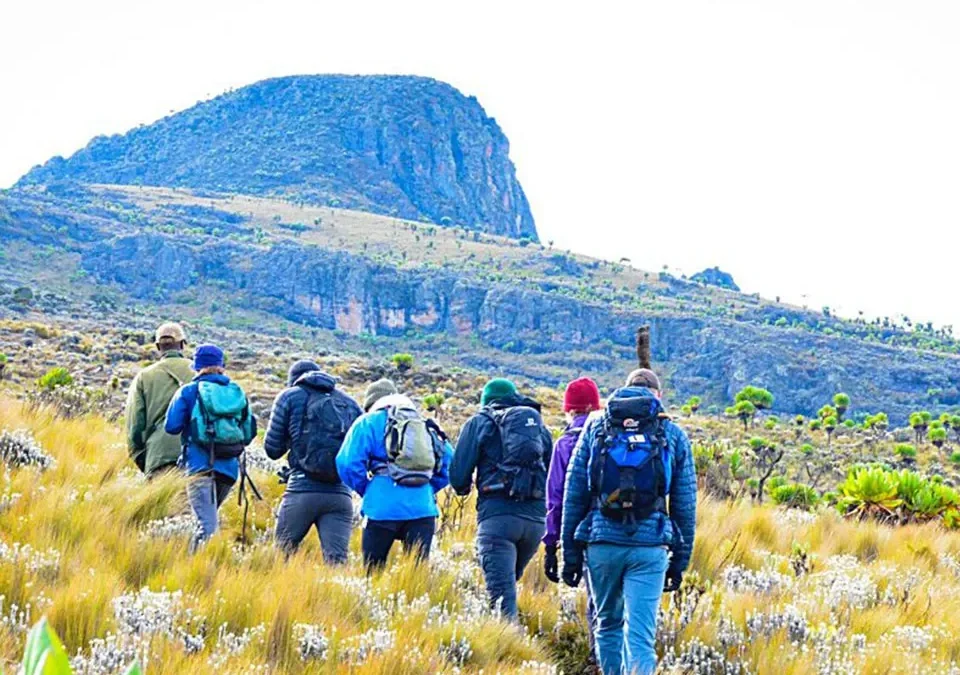
There is also a practical difference in difficulty. Gorilla trekking in Bwindi involves genuinely challenging terrain — steep, densely vegetated slopes at altitude, where the trek can last several hours. Chimpanzee tracking in Kibale takes place on more forgiving forest paths at lower elevation. The physical demand is significantly lower, which makes Kibale a good starting point for travellers who are uncertain about their fitness for the gorilla trek. Doing Kibale on day one and Bwindi on day three or four of a combined itinerary is a natural progression.
Neither experience is superior to the other. They complement each other in a way that makes the combined safari considerably greater than the sum of its parts. Travellers who have done one and then return to Uganda specifically to do the other are a consistent pattern among Kenlink Tours’ repeat clients. The recommendation is always the same: if you have five days or more and are visiting Uganda for the first time, do both.
Uganda’s Other Remarkable Primates
Uganda’s primate wealth extends well beyond gorillas and chimpanzees. The country hosts 20 primate species in total — more than any other East African country — and several of them offer dedicated tracking or encounter experiences that can be meaningfully built into a gorilla and chimpanzee safari.
Golden monkeys are found exclusively in the bamboo zone of the Virunga volcanoes. In Uganda, they inhabit Mgahinga Gorilla National Park in the southwestern corner of the country. Golden monkey trekking follows the same permit structure as gorilla trekking — a small group, a ranger guide, a one-hour observation — but the animals are strikingly different: bright golden-orange and black, acrobatic in the dense bamboo, and far smaller than either great ape. A golden monkey permit in Uganda costs USD 60 per person and can be combined with a gorilla permit in the same day in Mgahinga if both activities are available and permit stock allows. For travellers visiting via the Rushaga or Nkuringo sectors of Bwindi, Mgahinga is a short drive away and makes a natural addition to any southern Bwindi itinerary.
Black-and-white colobus monkeys are found across Kibale, Bwindi, Budongo Forest, and many other Uganda forest patches. They are large, dramatic-looking animals with flowing white capes and are frequently encountered without any specific tracking effort — groups are often visible from lodge terraces or on forest edge drives. Kibale’s primate walk, offered as an alternative to the dedicated chimpanzee tracking session, covers a fixed forest trail specifically designed to encounter colobus, mangabeys, and other non-chimpanzee primates in a two-hour guided walk.
Olive baboons, vervet monkeys, and red-tailed monkeys are all commonly seen across multiple parks and do not require dedicated permits. They appear on game drives in Queen Elizabeth, along Kibale forest roads, and near lodge perimeters throughout western Uganda. For travellers combining a primate safari with wildlife game drives, these species add texture and frequency of animal sightings to the itinerary between the major permit-based experiences.
Recommended Itineraries: Short, Medium, and Long
Kenlink Tours designs chimpanzee and gorilla safari itineraries across the full spectrum of available time. The following outlines are the most requested formats, each of which can be customised to budget level and starting point (Entebbe, Kampala, or Kigali).
3 Days — Gorilla Trekking Only: The 3-day best of Uganda gorilla safari is the shortest complete gorilla trekking itinerary. Day one is the drive to Bwindi (8-9 hours from Entebbe, passing the equator in Kayabwe). Day two is the gorilla trek. Day three is the return. This is the right format for travellers whose sole objective is the gorilla encounter and who are prepared for a long driving day on either side of the trek. Departures from Kigali reduce the drive to 4-5 hours and make the 3-day format considerably more relaxed.
5 Days — Gorillas and Chimpanzees: The 5-day gorilla and chimpanzee tour is Kenlink Tours’ most popular primate safari package, and for good reason. Within five days it delivers both great ape experiences cleanly and without rushing. The standard route moves from Kampala to Kibale Forest on day one for chimpanzee tracking on day two, drives south through the Queen Elizabeth corridor on day three (optional game drive or Kazinga Channel boat cruise), reaches Bwindi for the gorilla trek on day four, and returns to Kampala on day five. This itinerary is the benchmark for a first-time Uganda primate safari.
7 Days — Primates, Wildlife, and the Full Western Circuit: The 7-day gorilla, chimpanzee and wildlife safari adds meaningful time at Queen Elizabeth National Park between the two primate experiences. This allows a full game drive on the Kasenyi plains for lions and elephants, the Kazinga Channel boat cruise for hippos and elephants at close range, and the Ishasha sector for tree-climbing lions — all between the Kibale and Bwindi legs. Seven days is the sweet spot for travellers who want primates as the centrepiece of the trip but also want a satisfying wildlife dimension alongside.
8 Days — The Premier Uganda Primate and Wildlife Safari: The 8-day Uganda gorilla, chimpanzee and wildlife safari is the most comprehensive single-country primate experience Kenlink Tours offers. Eight days allows two nights at Kibale (enabling both standard tracking and a morning forest walk), two nights at Queen Elizabeth with game drives on both the Kasenyi circuit and the Ishasha tree-climbing lion sector, and two nights at Bwindi with the option of a second gorilla trek on the final Bwindi morning. This itinerary leaves Uganda feeling like it has been properly experienced rather than sampled.
Permit Costs Summary
Gorilla Trekking Permit (Bwindi/Mgahinga): USD 800 per person
Chimpanzee Tracking Permit (Kibale AM): USD 300 per person
Chimpanzee Tracking Permit (Kibale PM): USD 300 per person
Chimpanzee Habituation Experience (full day): USD 350 per person
Golden Monkey Trekking (Mgahinga): USD 100 per person
Best Time of Year for Uganda Primate Safaris
Gorilla trekking and chimpanzee tracking are available in Uganda every month of the year. Neither the gorillas in Bwindi nor the chimpanzees in Kibale migrate or disappear seasonally — they are resident, habituated, and accessible 365 days a year. The season affects trail conditions, forest character, and permit availability more than it affects the encounter itself.
Uganda’s two dry seasons — June through September and December through February — are the most popular periods for primate safaris. Trails are firmer and less muddy, forest paths through Kibale are more comfortable to walk, and the overall logistics of the trip are somewhat easier. Gorilla permit availability is tightest during these periods, particularly for the Buhoma and Rushaga sectors in Bwindi. Booking four to six months ahead is strongly advised for dry season travel.
The wet seasons — March through May and October through November — offer a genuinely different and arguably more beautiful forest experience. Bwindi in the green season is extraordinary: saturated colour, mist hanging in the valley canopy, waterfalls running at full volume, and vegetation so thick and vivid it is almost overwhelming. Chimpanzees in wet-season Kibale feed heavily on abundant fruit and are often found in large community groups. Gorillas move more slowly and rest in open clearings more frequently, resulting in some of the most photographically spectacular encounters of any season. Wet season also means lower lodge rates and far easier permit access. For travellers whose schedule is flexible, March to May is an underrated period for Uganda primates.
What to Wear and Bring
The most important single item for both gorilla trekking and chimpanzee tracking is proper footwear. For gorilla trekking in Bwindi, waterproof ankle-support hiking boots with good grip are essential — the terrain is steep, wet, and technically demanding in places. For chimpanzee tracking in Kibale, the forest paths are less extreme but still require closed-toe shoes with grip; trail running shoes are acceptable but proper boots remain the recommended choice.
For both activities wear long-sleeved shirts and full-length trousers. In Bwindi the stinging nettles that line the lower forest trails are a significant hazard for exposed skin; in Kibale the concern is more about insects and general forest scratching. Gardening gloves are strongly recommended for the gorilla trek for gripping vegetation on steep ascents. A light waterproof jacket should be in your daypack for both activities regardless of season. Bring one to two litres of water and energy snacks — the trek can last several hours and you will burn more energy than you expect on the steep terrain.
Photography: bring a camera with a zoom lens. Flash photography is not permitted in either Bwindi or Kibale. The forest light is low and filtered, so a lens that performs well in low light conditions (f/2.8 or better) will produce significantly better results than a kit zoom. For chimpanzees especially, a fast shutter speed matters — these animals move quickly and unpredictably. Phones produce reasonable photographs of stationary gorillas at close range but struggle with the speed and canopy distance of chimpanzees.
Why Choose Kenlink Tours for Your Primate Safari
Kenlink Tours is a Uganda-based safari company licensed by the Uganda Tourism Board and a registered member of TUGATA — the Uganda Tour Operators Association. All gorilla and chimpanzee permits are sourced directly through the Uganda Wildlife Authority. Working with a licensed, locally based operator matters on a primate safari because permits, park access, and lodge logistics are all time-sensitive: if anything goes wrong, your operator’s ability to respond in real time is the only buffer between an inconvenience and a ruined trip.
Kenlink Tours designs itineraries for every budget level. Budget travellers are accommodated in well-run guesthouses near the park gates with clean rooms, warm meals, and the proximity to the forest that morning trek departures require. Mid-range travellers have access to lodges with en-suite rooms, generator-backed electricity, and often some of the most memorable forest views in Uganda. Those seeking a premium experience can access the small number of luxury forest lodges at Bwindi and Kibale — properties with private terraces above the canopy, fine dining menus, and guided nature walks between the main trekking activities.
The 5-day Uganda gorilla and chimpanzee safari, the 5-day gorilla and wildlife safari, and the 5-day Uganda primate safari experience are all regularly available packages that can be booked directly or customised around specific dates, starting points, and preferences. For anything that does not fit a standard package — departures from Kigali, combined Kenya-Uganda itineraries, or longer programmes including northern Uganda — contact the Kenlink Tours team to build a custom itinerary from scratch.
Uganda’s gorillas and chimpanzees are available year-round. The permits are finite, the experiences are irreplaceable, and the planning time required is months — not weeks — for peak season travel. The best moment to start planning is now.