- EXPERT'S HELP
- +256789210067
- +256200955001
- info@kenlinktours.com


Gorilla Trekking Safari in Uganda with nice lodges
September 21, 2026
Kibale Forest vs Kalinzu Forest
September 21, 2026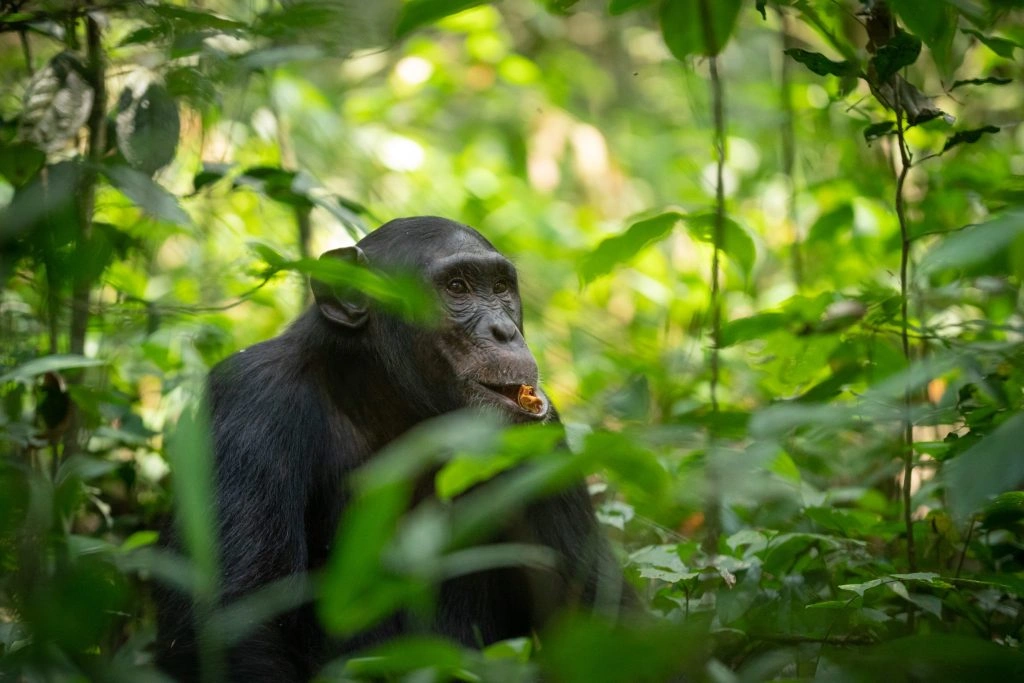
Kalinzu or Kibale Which is better for Chimps Tracking. If you have ever watched a chimpanzee crack a nut, groom a friend or scream across a forest canopy, you already know why tracking them is one of the most thrilling wildlife encounters in Africa. Uganda is the best country in East Africa for it, and most travellers narrow their choice to two forests: Kibale National Park in the west, famous as the primate capital of the world, and Kalinzu Forest Reserve, a quieter, cheaper forest tucked beside Queen Elizabeth National Park. Both put you within touching distance of our closest living relatives, yet they feel very different on the ground.
So which one is better? The real answer depends on your budget, your route, the time you have and what kind of experience you want. This guide compares the two forests head to head, covering permit costs, sighting odds, group sizes, scenery, lodges, travel times and the best time to go, so you can pick the right one for your safari. If you would like an expert to shape the trip around your dates, the team at Kenlink Tours plans Uganda primate tracking safaris and can advise on both forests.
The Quick Answer: Kalinzu or Kibale for Chimp Tracking?
For most travellers whose top priority is the best possible chimpanzee encounter, Kibale is the better choice. It has the largest chimpanzee population in Uganda, well-habituated communities managed by the Uganda Wildlife Authority, very high sighting odds and a full range of lodges. It also has the most complete primate experience, with a dozen other species living alongside the chimps.
For travellers who are already heading to Queen Elizabeth National Park and Bwindi, or who want a cheaper permit, Kalinzu is the smarter fit. It costs far less, sits directly on the road between Mbarara and Queen Elizabeth, and adds a chimpanzee morning to a southern itinerary without the extra day or two of driving that Kibale requires.
The short version is simple. Choose Kibale for reliability, depth and variety. Choose Kalinzu for savings and convenience on a route through south-western Uganda. Many guests go one step further and do both, because they are close enough to combine on a longer trip. The comparison table below sums up the main differences, and the sections that follow explain each one.
| Feature | Kibale National Park | Kalinzu Forest Reserve |
|---|---|---|
| Managed by | Uganda Wildlife Authority | National Forestry Authority |
| Region | Western Uganda, near Fort Portal | South-western Uganda, near Bushenyi and Queen Elizabeth |
| Chimpanzee population | Over 1,500 | Around 300, with a smaller habituated group |
| Trekking permit (foreign non-resident) | About USD 250 | Much lower; confirm the current published rate |
| Habituation experience | Full-day, about USD 300 | Available at a lower price |
| Sighting odds | Very high | Good, slightly less predictable |
| Other primates | About a dozen species | Several species |
| Lodges | Wide range, luxury to budget | Limited; most guests stay near Queen Elizabeth |
| Best for | Serious primate lovers, photographers, first-timers who want certainty | Budget travellers and gorilla and Queen Elizabeth itineraries |
Kibale National Park: The Primate Capital of the World
Kibale National Park covers around 795 square kilometres of tropical rainforest, woodland and swamp in the foothills of the Rwenzori mountains. It holds the highest density and diversity of primates anywhere in Africa, with thirteen species living in the forest and an estimated 1,500 chimpanzees, making it Uganda’s stronghold for the animal. Its main tourism base is the Kanyanchu visitor centre, a short drive from Fort Portal and the pretty crater lakes that surround the town.
What sets Kibale apart is decades of habituation and research. Several chimpanzee communities have been followed by researchers and rangers for years, and the animals are calm around humans, which makes for relaxed, close and photogenic encounters. The forest itself is a delight: tall mahogany and fig trees, dappled light, chattering monkeys, hornbills overhead and butterflies along the trail. It feels like a proper, ancient forest, and after the trek it is easy to see why so many guests call it the best day of their safari.
Kibale is also part of a wider western Uganda circuit that includes Queen Elizabeth National Park, the Rwenzori foothills, the crater lakes and the Bigodi Wetland Sanctuary. That makes it a natural anchor for a well-rounded itinerary, and you can see how this area fits together in this guide to exploring western Uganda. For a ready-made option, the three-day chimp tracking safari to Kibale National Park keeps things simple.
Kalinzu Forest Reserve: The Affordable Alternative Near Queen Elizabeth
Kalinzu Forest Reserve lies in Bushenyi District along the highway from Mbarara towards Queen Elizabeth National Park, about 375 kilometres from Kampala. Unlike Kibale, it is not a national park but a central forest reserve managed by the National Forestry Authority. It sits on the edge of the Rift Valley escarpment, and it is known for good birding, butterflies and a peaceful, uncrowded atmosphere.
Chimpanzee tracking here was developed more recently. Around 300 chimpanzees are thought to live in the reserve, and a portion of them are habituated for visitors. Because the forest is smaller and the tourism infrastructure simpler, the experience is lower key: fewer people, a modest visitor reception area and a friendly local guiding team. It is cheaper, quieter and easy to slot into a road journey, which is why many operators recommend it as an add-on rather than a stand-alone destination.
Because Kalinzu sits on a natural route between Kampala, Queen Elizabeth and Bwindi, it saves time for travellers who want to fit in a chimp encounter between other stops. For an overview of how the two forests compare on a single trip, see this article on chimp trekking in Kalinzu Forest Reserve and Kibale National Park.
Chimpanzee Numbers and Habituation: Why Kibale Has the Edge
Habituation is the process of gradually accustoming wild chimpanzees to the presence of people, and it takes years of patient work. The better the habituation, the closer and calmer the encounter, and the easier it is for trackers to find the group each morning.
Kibale’s communities have been followed for a long time, and the population is large, so trackers usually locate the group quickly and the animals often ignore visitors entirely. Kalinzu’s habituated group is smaller, and while chimps there are used to humans, the forest is a working reserve and the animals can range more widely. Neither forest is a zoo, and no operator can promise a particular outcome, but Kibale’s record is the stronger of the two.
Understanding this helps explain why chimpanzees are not tracked everywhere. In many parks, including Bwindi, the chimps are not habituated at all, which is explained in this piece on why chimpanzees in Bwindi are not habituated. That is why the dedicated tracking forests matter so much for travellers hoping to see chimps.
Chimpanzee Permit Cost: Kibale vs Kalinzu in 2026
Permit price is where the two forests differ most visibly, and for many travellers it settles the question. In Kibale, a standard chimpanzee tracking permit for a foreign non-resident is published at about USD 250 per person, and the full-day habituation experience is around USD 300. Foreign residents and East African citizens pay lower rates. Kibale permits can sell out in peak months, so booking three to six months ahead is wise.
Kalinzu is significantly cheaper. Published figures vary between operators and seasons, but the standard tracking permit sits at a small fraction of Kibale’s, typically somewhere between roughly USD 50 and USD 130, with a habituation experience priced modestly above that. Because the National Forestry Authority reviews its tariffs from time to time, ask your operator to confirm the current rate in writing before you commit.
On a couple’s trip, the difference can be several hundred dollars, and on a family trip it can pay for an extra night in a good lodge. Remember, though, that the permit is only one part of the cost. Transport, accommodation and time on the road add up, and Kibale’s extra driving can erase some of the savings if it is not already on your route. A good operator will price the whole itinerary, not just the permit, so you can compare like with like. You can start that conversation through the Kenlink Tours contact page.
Sighting Odds and Quality of the Encounter
Everyone wants to know how likely they are to see chimpanzees. In Kibale, sighting odds are consistently very high, and most guides describe success rates in the region of ninety percent or better. Trackers leave before dawn to find the group, so by the time you arrive the chimps are often close by. Encounters tend to be dynamic: males displaying, youngsters swinging through the branches, mothers grooming and the whole forest erupting into hoots and pant-hoots.
Kalinzu also offers good chances, and many visitors enjoy excellent sightings there. However, the habituated community is smaller, the forest is less intensively monitored and success figures quoted by different sources vary widely, so it is fair to say the experience is a little less predictable. On a good day it is every bit as magical, and if the chimps happen to be feeding in a fruiting tree, you can spend an hour in quiet awe.
The quality of viewing also depends on the terrain and light. In both forests, you will often be looking up through a thick canopy, so bring binoculars and be ready to photograph in low light. Do not expect a cinematic sighting on demand; treat it as a walk with wild animals, where patience is rewarded. If you want the highest odds of a long, close encounter, choose Kibale, and if you want a fine encounter at a good price, Kalinzu is a strong second option.
The Tracking Experience: Start Times, Group Size and Terrain
Chimp tracking follows the same pattern in both forests. You arrive at the visitor centre for a briefing, are assigned to a small group, and set off with a ranger and trackers to find the chimps. In Kibale, tracking is offered in the morning and afternoon, and groups are limited to a small number of visitors, usually six people per chimp community. Kalinzu also runs morning and afternoon sessions, and it too keeps group sizes small to reduce the impact on the animals.
Once the chimps are located, you may stay with them for up to one hour. A minimum distance of around seven to ten metres is expected, flash photography is banned, and you must not eat or drink near the animals. Visitors must be at least fifteen years old, and anyone who is unwell must stay behind, since chimpanzees can catch our respiratory illnesses.
The walk itself is usually easier than gorilla trekking. Kibale’s trails are mostly gentle and shaded, although they can be muddy after rain, and the search can last anywhere from thirty minutes to a few hours. Kalinzu’s trails are also moderate, with some short climbs. The afternoon session is a good option if you arrive by road in the morning, and it leaves the early hours free for a leisurely breakfast. To see how chimp tracking fits into a wider plan, browse this three-day chimpanzee tracking safari.
Chimpanzee Habituation Experience: Spend a Whole Day With the Chimps
If a one-hour visit feels too short, ask about the habituation experience. In Kibale, this programme lets small groups accompany researchers and trackers from early morning until late afternoon, following a community that is still becoming accustomed to human presence. You stay with the chimps far longer, witness nest-building at dusk and see behaviours that a short visit will never show. It is one of the most immersive wildlife experiences in East Africa, and it costs more because of the time and effort involved.
Kalinzu also offers a habituation option at a lower price. It suits travellers who love the idea of a full day but want to spend less than Kibale’s rate. For photographers, birders and anyone who wants to slow down and really watch, habituation is worth the upgrade, because it turns a brief encounter into a story. Expect a long day of walking, so wear comfortable boots and carry plenty of water and snacks.
Other Wildlife: Monkeys, Birds and Butterflies
Kibale’s reputation as the primate capital of the world is well earned. In addition to chimpanzees, you may see red colobus, black-and-white colobus, L’Hoest’s monkeys, grey-cheeked mangabeys, blue monkeys, red-tailed monkeys, olive baboons and nocturnal galagos, among others. Forest elephants pass through occasionally, and the bird list runs to hundreds of species. The nearby Bigodi Wetland Sanctuary is a rewarding half-day add-on for birdwatchers and monkey lovers, and the crater lakes around Fort Portal are ideal for a gentle afternoon.
Kalinzu is smaller but still rich in life. Six or more primate species live there, along with several hundred bird species and a spectacular butterfly list. Its forest is less busy, which makes it a lovely place for a slow, quiet walk. Birders in particular will enjoy its Albertine Rift specialities, and butterfly enthusiasts can spend hours on the trails.
In short, Kibale offers more variety of primates, while Kalinzu offers peace and a good birding day. If wildlife diversity is your priority, Kibale wins. If you want a laid-back forest walk with a bonus chimp encounter, Kalinzu is ideal. Keen birders may want to combine both with the seven-day birdwatching safari in Uganda.
Location and Getting There: Which Forest Fits Your Route?
Geography often decides the winner. Kibale lies near Fort Portal in the north-west of the tourism circuit, roughly five to six hours from Kampala by road. Kalinzu lies on the Mbarara-Kasese highway, about 375 kilometres from Kampala, and around forty minutes from the Mweya area of Queen Elizabeth National Park. It is also roughly three to four hours from the southern sectors of Bwindi.
If your safari runs Kampala, Fort Portal, Queen Elizabeth and then Bwindi, Kibale is a natural first stop and Kalinzu is simply not on your path. If it runs Kampala, Mbarara, Queen Elizabeth and Bwindi, Kalinzu is a convenient stop and Kibale would add a lengthy detour. Draw your route on a map before you decide, because the wrong choice can cost half a day of driving.
Good ground transport makes either choice easier. A private 4×4 with a driver-guide is the most comfortable option, and you can find out more about Kenlink Tours car hire if you prefer your own vehicle. Local transfer specialists such as Pick and Transfer Safaris can also assist with airport pick-ups and road legs. If you are arriving in Rwanda first, this article on whether you can begin your tour from Kigali Airport and end in Entebbe Airport explains how one-way routes work, and the tour from Kigali covering Bwindi, Queen Elizabeth, Kibale and Bunyonyi shows a complete example.
Where to Stay Near Kibale National Park
Kibale offers a wide choice of accommodation, from simple guesthouses to luxury lodges. Primate Lodge Kibale sits close to the Kanyanchu visitor centre and lets you wake up to forest sounds, while Kibale Forest Camp and Chimpanzee Forest Guest House offer comfortable, mid-range stays with a welcoming atmosphere. Around Fort Portal, Kyaninga Lodge overlooks a crater lake and the Rwenzori mountains, and Ndali Lodge sits on a scenic crater rim with panoramic views, ideal for guests who want a special night at the end of a long day.
Choosing accommodation close to Kanyanchu means an early start is easy, and lodges in the crater lake district are worth it for the views and the peace. Whichever you choose, ask whether meals, laundry and packed lunches are included, and whether the lodge can arrange a Bigodi wetland walk. Rates change with the season, so use these names as a starting point and confirm details with your operator.
Where to Stay Near Kalinzu Forest Reserve
Kalinzu has very few formal lodges within the reserve itself, and basic camping is available for the adventurous. Most guests therefore sleep in Queen Elizabeth National Park or the nearby town of Ishaka and drive to the forest in the morning. Mweya Safari Lodge is the best-known property in the park, with a magnificent setting above the Kazinga Channel, while Katara Lodge, Engiri Game Lodge and Jacana Safari Lodge offer comfortable alternatives in the wider Queen Elizabeth area. Simple hotels near Ishaka suit budget travellers, and Bushenyi has a range of practical guesthouses.
The upside is variety: a night on the Kazinga Channel, a boat safari and a morning chimp trek make a rich combination. The downside is that you cannot walk from your room into the forest, so plan an early start. Check the three-day wildlife encounter in Queen Elizabeth National Park for an example that fits neatly with a Kalinzu morning.
Best Time for Chimpanzee Tracking in Kibale and Kalinzu
Chimpanzees can be tracked all year round in both forests, so the best time depends on comfort and budget. The two dry seasons, June to September and December to February, are the most popular. Trails are drier, walking is easier and photography light is clearer, but permits and lodges book out sooner. The rainy seasons, March to May and October to November, bring muddy paths and a higher chance of getting wet, though the forest looks lush and fruit trees can attract chimps into predictable feeding areas.
Interestingly, the wetter months can be good for chimps because ripe fruit brings them together in the same trees, and lower demand means quieter trails. If you can tolerate rain, shoulder-season travel can give you a quieter forest and better prices. If your dates are fixed to school holidays or a wedding, book early and keep a backup date. Pair your trek with a weather-proof plan: a light waterproof jacket, quick-drying clothing and a flexible attitude.
Which Is Better for You? A Traveller-by-Traveller Guide
Rather than declaring a single winner, it helps to match each forest to the traveller.
First-time visitors who want certainty. Choose Kibale. The sighting odds are the highest, the guides are experienced and the whole set-up is designed for visitors. You will leave with a strong memory and plenty of photographs.
Budget-conscious travellers. Choose Kalinzu. The lower permit cost, cheaper add-ons and the option to base yourself in a simple hotel near Ishaka or Bushenyi make it very affordable. The savings can fund a second activity elsewhere.
Gorilla-focused itineraries in the south-west. Choose Kalinzu. If you are travelling to Bwindi or Queen Elizabeth anyway, it slots into the route without adding a day. This is also where the five-day chimps and gorilla safari fits naturally.
Photographers and primate enthusiasts. Choose Kibale. More species, more habituated communities and the option of a full-day habituation experience give you more to work with. Bring a fast lens and a tripod or monopod.
Families with older teenagers. Both work, because the minimum age is fifteen. Kibale’s easier trails and range of lodges are a small advantage, while Kalinzu’s shorter transfers help when children tire of long drives.
Birders. Either forest is excellent, but Kibale’s larger list and the Bigodi wetland give it a slight edge, while Kalinzu is wonderfully quiet. Consider the best places to do nature walks in Uganda for extra ideas.
Combining Chimps With Gorillas: Sample Itineraries
Uganda’s greatest strength is that it lets you combine great apes in a single trip. Here are three common ways to do it.
The Kibale route. Kampala to Fort Portal, chimp tracking in Kibale, then south through Queen Elizabeth National Park to Bwindi for gorillas. It takes around five to seven days and gives the most complete primate experience. You can view a real-world version in the five-day gorilla and chimpanzee tour in Uganda, and a longer variant in the ten-day trip to Murchison Falls, Kibale, Queen Elizabeth and Bwindi.
The Kalinzu route. Kampala to Mbarara, Kalinzu chimp tracking in the morning, an afternoon boat cruise in Queen Elizabeth and then on to Bwindi. It is quick, affordable and light on driving, and it suits travellers with four or five days. See how it fits with a longer four-day Uganda primate tour.
The full primate grand tour. With eight to ten days you can do Kibale for chimps, Queen Elizabeth for wildlife and Bwindi for gorillas, and add Mgahinga for golden monkeys. The ten-day Uganda primate, wildlife and cultural tour is designed for exactly that. After your gorilla trek, it is worth reading these tips on what to do after a gorilla tour in Bwindi, and if your route finishes in the far south, consider an overnight at Ikoro Hotel in Kisoro before crossing towards Rwanda.
If gorillas are also on your list, our main guide to gorilla trekking in Uganda explains permits, sectors and lodges in detail, and the chimpanzee and gorilla trekking page shows how the two experiences work side by side.
Can You Do Both Kalinzu and Kibale on the Same Trip?
Yes, and on a longer safari it can be very rewarding. Tracking chimps in Kibale early in your trip and again in Kalinzu later lets you compare the two forests and see different communities. The drive between them is manageable, roughly half a day depending on the route and the stops.
Realistically, though, most travellers will find one chimp trek enough, and two similar activities may crowd out other highlights such as gorillas, lions or birding. If you love primates and have the time, do both. If you are short of time or budget, pick one and spend the saved days on something different. A tailored itinerary can help you decide, and the big five and primate safari in Uganda is a helpful model for balancing the two.
Alternatives to Consider: Kyambura Gorge and Budongo Forest
Kibale and Kalinzu are not the only options. Kyambura Gorge in Queen Elizabeth National Park offers a dramatic sunken forest with a small chimpanzee community, and its permit is cheaper than Kibale’s, though the group is small and sightings vary. Budongo Forest near Murchison Falls is another good choice for travellers heading north, with a permit in the middle of the range and easy pairing with a boat trip to the falls.
Each has its own charm, but for most first-time visitors the primary decision remains Kibale or Kalinzu. If you would like to learn more about how these parks fit together, read the guide to national parks in Uganda and compare them alongside your budget.
Budgeting for Your Chimp Tracking Day
To compare the two forests fairly, look at the total cost of the day and not just the permit. In Kibale, the permit is the biggest line, followed by lodging near Kanyanchu or Fort Portal, meals and a driver-guide. In Kalinzu, the permit is smaller, but you will often pay for a night in Queen Elizabeth National Park or in Ishaka, plus fuel for the drive from wherever you slept. Neither forest is expensive by international standards, and both offer great value for a wild ape encounter.
A few habits keep costs sensible. Travel in a group of three or four people and share a vehicle. Pair your trek with a second activity in the same area, such as the Bigodi wetland walk in Kibale or a Kazinga Channel boat cruise near Kalinzu, so the driving works harder for you. Ask whether the price you are quoted includes park fees, meals, water and transfers. If you want dependable ground support at each leg, independent transport specialists such as Pick and Transfer Safaris can be worth comparing against a fully packaged tour, while a complete operator will manage permits, lodging and transport in one quote.
Photography Tips for Chimp Tracking in Dim Forest Light
Chimpanzees are fast, dark-furred and often high in shaded trees, which makes them a real challenge for photographers. Use a fast lens with a wide aperture and raise your ISO so that your shutter speed stays high enough to freeze movement. A zoom lens in the range of two hundred to four hundred millimetres is ideal because you must stay several metres away, and a monopod steadies the camera without slowing you down.
Shoot in burst mode when the chimps are moving, focus on the eyes and be patient. Flash is not allowed, and it would spoil the scene anyway. Protect your gear from humidity and drizzle with a rain cover and a few silica gel packs, and carry spare batteries because cool, damp air drains them quickly. Above all, put the camera down for a few minutes and simply watch. Some of the best moments happen when you are not looking through a viewfinder.
After the Chimps: Heading South to Bwindi and Kisoro
Many travellers follow chimps with gorillas, and the road south from Kalinzu or Queen Elizabeth is a scenic one. You pass through Ishasha, home to the famous tree-climbing lions, before climbing into the hills of Kanungu and Kisoro. Plan for a long driving day, and consider breaking it with a night at a lodge on the way. If you finish in the far south, a night in Kisoro makes the transfer to Mgahinga, Nkuringo or the Rwandan border easy, and Ikoro Hotel in Kisoro is one accommodation to consider while you compare options.
Once your gorilla trek is behind you, there is still plenty to enjoy, and these practical ideas for what to do after a gorilla tour in Bwindi will help you fill the rest of the day. Remember to leave a buffer day in a longer itinerary, because forest hiking is tiring and roads in the south-west are slow. A relaxed schedule gives you a better experience with both apes.
Supporting Conservation Through Chimpanzee Tourism
Chimp tracking works because it gives local communities and land managers a reason to protect forests. Permit revenue supports rangers, research and community projects, and lodges and guides create jobs around the edges of the forests. You can add to that impact by hiring local guides, buying crafts and food from nearby villages, refusing single-use plastic and following the viewing rules closely.
Chimpanzee habitat is under pressure from farming, logging and expanding villages, so every well-managed visit adds value to a standing forest. When you choose an operator, ask how they support conservation and communities, and tell them if you want to visit a project or meet a local guide. Responsible travel is not extra work; it is simply a habit that keeps these forests alive for the next visitor.
What to Pack and Chimp Tracking Rules to Follow
Forest tracking calls for simple, practical gear. Wear sturdy hiking boots, long trousers tucked into socks, a long-sleeved shirt in neutral colours and a hat. Bring a light waterproof jacket, insect repellent, sunscreen, gloves for gripping vines and a small daypack with water and snacks. Binoculars are highly recommended because chimps spend much of their time high in the trees, and a camera with a good zoom will be useful. Leave bright colours and strong perfume at home.
Follow your ranger’s instructions at all times. Keep at least seven metres from the chimps, avoid direct eye contact, do not use flash and do not touch or feed the animals. Wash your hands, and if you feel sick, tell your guide, since chimps are vulnerable to human diseases. Carry small bills for tips and crafts, and make sure your travel insurance covers medical evacuation. For a bigger picture of what to expect and how to prepare, the friendly team at Kenlink Tours can supply a full checklist.
Frequently Asked Questions About Chimp Tracking in Uganda
Is Kibale better than Kalinzu for chimpanzees?
For sighting odds, habituation and variety, yes. Kibale has more chimps, more experience and a fuller lodge network. Kalinzu wins on price and convenience for southern routes, so the better forest depends on your budget and itinerary.
How long do you spend with the chimpanzees?
Up to one hour once the group is found, in both forests. The habituation experience is much longer and can last most of the day.
Do I need to book a permit in advance?
Yes. Kibale permits sell out in peak season, and permits for both forests are easiest to secure through a licensed operator who also arranges lodging and transport. It is best to book several months ahead.
Can I see chimpanzees and gorillas on the same trip?
Absolutely. Uganda is one of the few places in Africa where you can see both great apes within a week. Many travellers add chimp tracking to a gorilla safari, and the two forests differ so much that both feel special. Local ground specialists such as Pick and Transfer Safaris can help with the transfers between them.
Is chimp tracking suitable for older travellers?
Usually, yes. The trails are less demanding than gorilla treks, and rangers will adjust the pace. Let your guide know about any mobility limits, and ask about shorter routes.
What is the best way to combine Kalinzu with a Kigali start?
Fly into Kigali, cross into south-western Uganda and track gorillas first, then travel north towards Queen Elizabeth and Kalinzu. The article on starting in Kigali and finishing in Entebbe covers the practicalities of that kind of one-way trip.
Final Verdict: Kalinzu or Kibale?
If you want the safest bet for a long, close, memorable chimpanzee encounter, go to Kibale. If you want to save money and keep your route tight through Queen Elizabeth and Bwindi, go to Kalinzu. Either way, you will hear the forest come alive with hoots and screams and you will see a wild chimpanzee look back at you with startling humanity.
Ready to plan it? Explore the full range of Uganda safaris from Kenlink Tours, send your dates and budget through the contact page and let the team design a route that gets you to the right forest at the right time. Pair a dependable tour operator with a trusted transfer partner such as Pick and Transfer Safaris, and the only thing left to do is pack your boots.