- EXPERT'S HELP
- +256789210067
- +256200955001
- info@kenlinktours.com


Kalinzu or Kibale Which is better for Chimps Tracking
September 21, 2026
Bwindi Queen Elizabeth NP through Kigali
September 21, 2026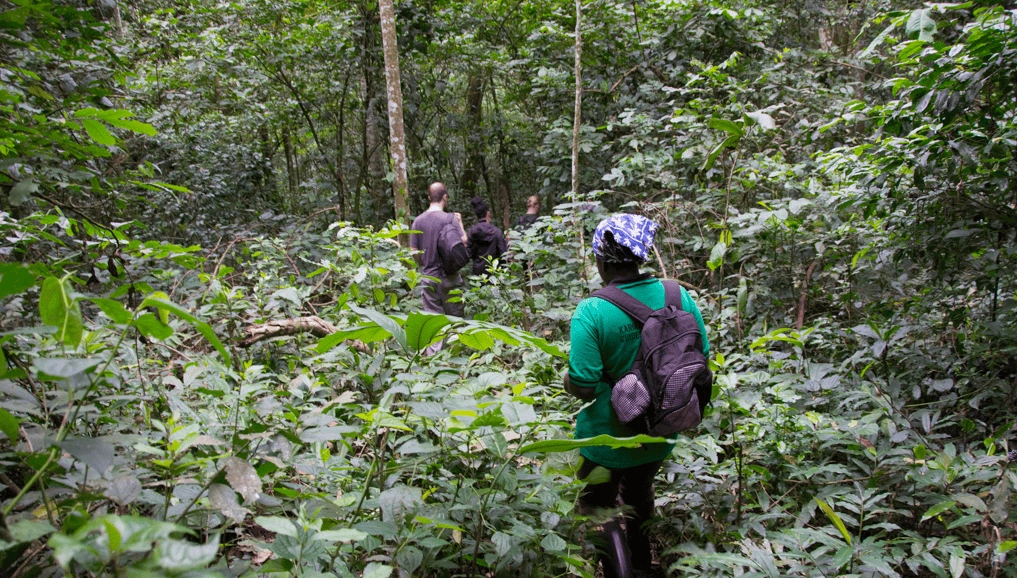
Kibale Forest vs Kalinzu Forest. Western Uganda is crowded with green: crater lakes, tea plantations, savannah plains and, hidden between them, some of the finest rainforest in East Africa. Two forests in particular tempt almost every safari planner. Kibale Forest, protected as a national park near Fort Portal, is celebrated across the continent for its primates. Kalinzu Forest, a central forest reserve beside the road to Queen Elizabeth National Park, is smaller, quieter and gentler on the wallet. Both are wonderful. They are simply different, and the difference matters when you have only a few days to spend.
This guide compares the two forests as places to visit, not only as chimpanzee venues. We look at size and habitat, trees, birds, butterflies, walking trails, communities, access, lodges, costs and seasons, and then match each forest to the kind of traveller who will enjoy it most. If you would like a tailor-made plan while you read, the team at Kenlink Tours can organise Uganda primate tracking safaris that include either forest, or both.
Kibale Forest vs Kalinzu Forest at a Glance
If you want a fast answer, here it is. Kibale is the better forest for depth: more primates, more habitats, more guided activities and a wider choice of lodges. Kalinzu is the better forest for simplicity and value: a peaceful reserve with excellent birding, four well-marked trails, camping and a very easy position on the road between Mbarara and Queen Elizabeth. Neither is a poor choice, and the right one depends mostly on where the rest of your route takes you.
| Feature | Kibale Forest | Kalinzu Forest |
|---|---|---|
| Protection status | National park (Uganda Wildlife Authority) | Central forest reserve (National Forestry Authority) |
| Approximate size | Just under 800 sq km | About 137 sq km |
| Elevation | About 1,100 to 1,600 metres | Mid-altitude, on the Rift Valley escarpment |
| Primate species | 13 | Around 6 |
| Bird species | More than 320 | More than 370 |
| Main base | Kanyanchu, near Fort Portal | Forest reception and Nkombe station, near Bushenyi |
| Atmosphere | Busy, well developed, very complete | Quiet, simple, uncrowded |
| Best for | Primate variety, photography, first-timers | Birders, walkers, budget routes to Queen Elizabeth and Bwindi |
Size, Location and Habitat: Two Very Different Forests
Kibale sits in the north-west of the tourism circuit, in the foothills of the Rwenzori mountains, and covers just under eight hundred square kilometres of rainforest, grassland, woodland and swamp. It was gazetted decades ago and became a national park in 1993, and the range of altitude and vegetation inside it creates a mosaic of habitats. Tall evergreen forest dominates the centre, while wetlands, streams and forest edges add variety that wildlife loves.
Kalinzu is far smaller, at roughly 137 square kilometres, and lies in Bushenyi District in south-western Uganda, on the Mbarara to Kasese highway. It is a central forest reserve, which means it is managed by the National Forestry Authority for both conservation and sustainable use, not purely as a national park. That gives it a slightly different feel: local communities collect medicinal plants under agreed rules, researchers work quietly in the background, and the tourism is deliberately modest.
Size influences the visitor experience in a simple way. A bigger forest holds more species and more variety, but it also draws more visitors. A smaller forest is easier to understand in a single visit and tends to be calmer, although it may not offer as many surprises. For a wider view of how western Uganda’s protected areas fit together, see this overview of national parks in Uganda, and for the route around them read exploring western Uganda.
Trees, Plants and the Feel of the Forest
Both forests are places of towering trees, hanging lianas, buttress roots and the soft green light that makes rainforest walking so special. Kibale is known for its mature moist forest, where giant figs, mahoganies and other hardwoods form a tall, layered canopy and the forest floor is cool and damp even at midday. More than two hundred tree species have been recorded there, and the fruiting patterns of certain species shape where the animals travel through the year.
Kalinzu’s plant list is impressive for its size. More than four hundred tree species have been recorded in the reserve, and its mix of forest types includes areas of regenerating woodland, so you can see how a forest recovers as well as how an old one looks. Local guides enjoy pointing out medicinal plants and explaining how communities have used them for generations, which adds a human layer to the walk that many visitors remember long after the animals.
If you love plants, ask your guide to slow down. In both forests, the small details reward patience: fungi on fallen logs, orchids on high branches, palms with fan-shaped leaves and streams that flow clear over stones. A walk in either forest is as much about atmosphere as sightings, and it pairs beautifully with the wildlife.
Primates Beyond the Chimps: Who Lives in Each Forest?
Kibale earns its title as the primate capital of the world. Thirteen species live within its boundaries, and on a good day it is possible to meet several of them within a few hours. Besides chimpanzees you may find Ugandan red colobus, black-and-white colobus, L’Hoest’s monkeys, grey-cheeked mangabeys, blue monkeys, red-tailed monkeys, olive baboons, and shy nocturnal species such as bushbabies and pottos. Watching a troop of red colobus race through the treetops is often a highlight for guests who came only for the chimps.
Kalinzu is home to fewer species, but the list is still rewarding. Alongside its chimpanzees, visitors commonly see blue monkeys, vervet monkeys, red-tailed monkeys, black-and-white colobus and baboons, and guides know where the groups tend to feed. Because the forest is quiet, monkeys are often more relaxed and easier to watch for a few minutes, and the lack of crowds means you can stand still and listen.
Kibale also supports other mammals, including forest elephants, buffalo, bushpigs, duikers, sitatunga in the wetlands and, more rarely, leopards. Most visitors will not see the big animals, since dense forest hides them well, but the possibility adds to the thrill. Kalinzu’s larger mammals are harder still to spot, so the main event there is the primates and birds.
Chimpanzee Tracking Compared: What Each Forest Offers
Chimpanzee tracking remains the biggest draw for both forests, so here is how they compare in brief. Kibale is home to an estimated fifteen hundred chimpanzees and several habituated communities, and permits are priced at roughly USD 250 for foreign non-residents, with a full-day habituation experience at around USD 300. Sighting odds are very high, and the wider tourism infrastructure makes it easy to organise.
Kalinzu holds around three hundred chimpanzees, and depending on the source somewhere between fifty and seventy of them are habituated across two communities. Tracking sessions run in the morning and afternoon, and group sizes are kept small. Permits cost much less than in Kibale, though published figures differ between sources, so confirm the current rate with your operator. The minimum age is usually given as twelve to fifteen, so check before you book with younger teenagers.
Both forests limit you to about an hour with the chimps once they are found, and both ask visitors to stay several metres away, avoid flash and stay home when ill. Kibale generally gives the more predictable, more intense encounter, while Kalinzu gives a calmer, cheaper one. For a detailed side-by-side of the two chimp experiences, read this guide to chimp trekking in Kalinzu Forest Reserve and Kibale National Park.
Birdwatching in Kibale and Kalinzu
Birders should be excited about both forests. Kibale has more than three hundred and twenty recorded bird species, including several Guinea-Congo forest specialities that are hard to find elsewhere in Uganda. Green-breasted pittas, African pittas, grey parrots, hornbills, turacos and the endemic Kibale ground thrush are the sorts of birds that make an experienced birder’s day. The Bigodi Wetland Sanctuary next door adds swamp specialists such as the great blue turaco and various kingfishers.
Kalinzu is a birding gem in its own right, with a list that exceeds three hundred and seventy species. The great blue turaco, African crested flycatcher and a range of colourful sunbirds are regularly seen, and the mix of forest, streams and edge habitat gives a good variety in a compact area. Early morning is best, and a local bird guide will find species you would otherwise walk straight past.
Which is better for birds? Kibale has the more famous names and a longer list of rarities, but Kalinzu’s smaller size and lower visitor numbers mean the birds are often calmer and easier to observe. Serious birders will want to visit both, and the seven-day birdwatching safari in Uganda is a good model for a birding route across western Uganda.
Butterflies, Insects and the Small Wonders
Look down as well as up. Both forests support large numbers of butterflies, and Kalinzu in particular is often mentioned by guides for its colourful butterfly diversity, with hundreds of species reported around its trails and clearings. Swallowtails, blues and forest nymphs drift along sunny tracks, and on damp ground they cluster to drink minerals in bright, shimmering groups.
Kibale offers a similar spectacle, and add to that its army of forest insects, from giant millipedes to dazzling beetles. Nature guides love to point out the quiet wonders that most people miss, such as driver ants marching in long columns, leaf-cutter trails and camouflaged stick insects. If you travel with children or with someone who loves macro photography, these small details can be as memorable as the big animals.
Nature Walks and Trails: Which Forest Is Better for Walkers?
Here Kalinzu quietly shines. Beyond chimp tracking, the reserve offers a network of marked nature trails: a valley trail of around four hours with views across the canopy, a waterfall trail of four to six hours that reaches the Kilyantama waterfall, a short river trail of about an hour beside the Kajojo river, and an easy palm trail of around two hours on flat ground. A hike to Kishunja Hill adds a panoramic viewpoint. With a guide, these walks feel personal and unhurried, and you are unlikely to meet another group.
Kibale’s walking options are more varied in style. Guided forest walks from Kanyanchu let you look for monkeys and birds, and a night walk lets you search for nocturnal wildlife such as bushbabies and pottos with a torch. Outside the park, the Bigodi Wetland Sanctuary offers a gentle, community-led walk on boardwalks and trails where you can watch monkeys and birds with local guides. Together, they give a fuller set of activities in a single base.
If you enjoy long, quiet walks and want a forest that feels like your own, Kalinzu is hard to beat. If you prefer variety and organised extras, Kibale is better. For more ideas, browse this article on the best places to do nature walks in Uganda.
Communities, Culture and Tea Estates
Forest visits become richer when you meet the people who live beside them. Around Kibale, communities run guided walks, craft cooperatives and homestay experiences, and the Bigodi Wetland Sanctuary is a well-known example of how tourism income supports local schools and projects. Fort Portal, the nearest town, offers markets, restaurants and the cultural heritage of the Tooro Kingdom, and the surrounding countryside is dotted with tea estates that stretch across the hills in neat green rows.
Near Kalinzu, tea is also a highlight. The Kyamuhunga and Igara tea estates offer visits that take in growing, harvesting and processing, often finishing with a tasting. Local guides explain the medicinal plants of the forest, and small community groups sell crafts and food. These activities are low-key but real, and they make a good afternoon after a morning trek. In both areas, spending money locally is the easiest way to make your trip count.
Beyond the Forest: Crater Lakes, Savannah and Mountains
What surrounds each forest is almost as important as the forest itself. Kibale sits close to the crater lakes of Fort Portal, a landscape of deep blue lakes in old volcanic bowls, and you can learn more in this guide to the crater lakes in Fort Portal, Uganda. The Rwenzori mountains loom to the west, and Queen Elizabeth National Park is within a half-day’s drive.
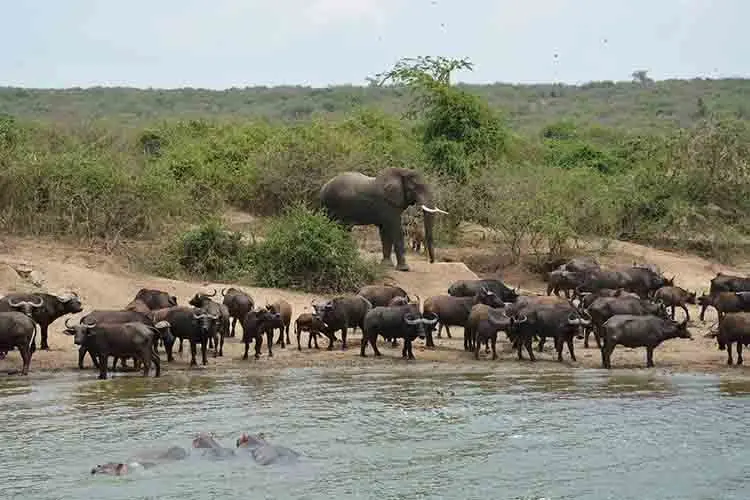
Kalinzu is a much shorter hop from Queen Elizabeth National Park, where you can enjoy game drives, the Kazinga Channel boat cruise and the tree-climbing lions of Ishasha. The park also has its own volcanic scenery, explained in this piece on the crater lakes in Queen Elizabeth National Park. If you are dreaming of savannah wildlife alongside your forest walk, Kalinzu makes the combination seamless, and the three-day wildlife encounter in Queen Elizabeth National Park shows how it can work.
A Day in Each Forest: What a Typical Visit Looks Like
A day in Kibale. You wake early, eat breakfast at your lodge and arrive at Kanyanchu for the briefing before the morning session. After a walk that can last anywhere from thirty minutes to several hours, you spend up to an hour with the chimpanzees, then return for lunch and a rest. In the afternoon you might explore the Bigodi Wetland Sanctuary with a community guide, taste tea in Fort Portal or watch the sun set over a crater lake. Evenings are relaxed, with dinner on a terrace and the sound of the forest carrying through the dark.
A day in Kalinzu. The rhythm is slower. You reach the reserve after a short morning drive from your lodge or guesthouse, join a small group for the chimp session or set off on one of the marked trails with a guide. Because the reserve is quiet, you may walk for a long time without seeing anyone else, stopping for birds, butterflies and the sound of a stream. By afternoon you can be in Queen Elizabeth National Park for a boat cruise on the Kazinga Channel, or visiting a tea estate on the way. The day feels like a country outing as much as a wildlife expedition.
Both days are rewarding, and neither is hard. The difference is one of pace: Kibale is a polished, well-organised experience with plenty to do, and Kalinzu is a simple, personal experience that rewards curiosity. Think about which pace suits you and your group before you decide.
Conservation and Management: How Each Forest Is Protected
Kibale is managed by the Uganda Wildlife Authority as a national park, which means access is controlled, activities are regulated and revenue is used for ranger patrols, research and community programmes. Long-term research, including studies at the Makerere University Biological Field Station, has produced valuable knowledge about chimpanzees, monkeys and forest ecology, and that knowledge feeds back into how the park is managed.
Kalinzu, as a central forest reserve, is managed by the National Forestry Authority, which oversees hundreds of forest reserves across Uganda. The reserve balances conservation with limited, agreed use, including the collection of medicinal plants and scientific research, and tourism is one way to show local people that a standing forest is worth more than a cleared one. Both forests face pressure from farming and firewood collection along their edges, so every responsible visit and every purchase from a local business helps.
Understanding this helps you choose more thoughtfully. Paying for a permit in either forest is a direct contribution to the protection of habitat that many species depend on, and the stronger the tourism, the stronger the case for keeping the trees. If you would like to visit a conservation or community project during your trip, tell your operator early so it can be built into the schedule.
Fitness, Age and Accessibility in Both Forests
Forest walking is more accessible than many travellers expect. In Kibale, trails around the main tracking area are generally moderate, with a few slippery slopes after rain, and the length of the walk depends on where the chimps are that day. In Kalinzu, the palm trail is flat and easy, while the valley and waterfall trails are longer and steeper, so you can choose a route that suits your energy. Rangers and guides set a pace that suits the slowest member of the group, and you can rest whenever you need to.
Minimum ages for chimp tracking are usually between twelve and fifteen depending on the forest and the source, so confirm with your operator when you travel with teenagers. Younger children can still enjoy nature walks, community visits, tea tours and crater lake picnics. Older travellers can trek comfortably at a slow pace, and it helps to mention any knee, balance or heart concerns when you book. Trekking poles are useful on wet trails, and a good pair of boots matters more than fitness.
Travelling as a woman or on your own is also easy in both areas, and some operators arrange female guides for those who prefer them. To see how that works in practice, take a look at this Uganda safari with a lady guide option.
Getting There: Travel Times and Routes
Distance shapes almost every decision, so it is worth looking at the map. Kibale is reached through Fort Portal and usually takes five to six hours by road from Kampala. Kalinzu lies about 375 kilometres from Kampala on the highway through Mbarara, which usually means a journey of six to seven hours, but it is less than an hour from the Mweya area of Queen Elizabeth National Park and around three to four hours from the southern sectors of Bwindi.
Your itinerary will decide the winner. A northern loop through Fort Portal, Kibale and Queen Elizabeth naturally includes Kibale. A southern route from Kampala through Mbarara to Queen Elizabeth and Bwindi naturally includes Kalinzu. Forcing the wrong forest into the wrong route can cost half a day, so sketch the route first and add the forest afterwards.
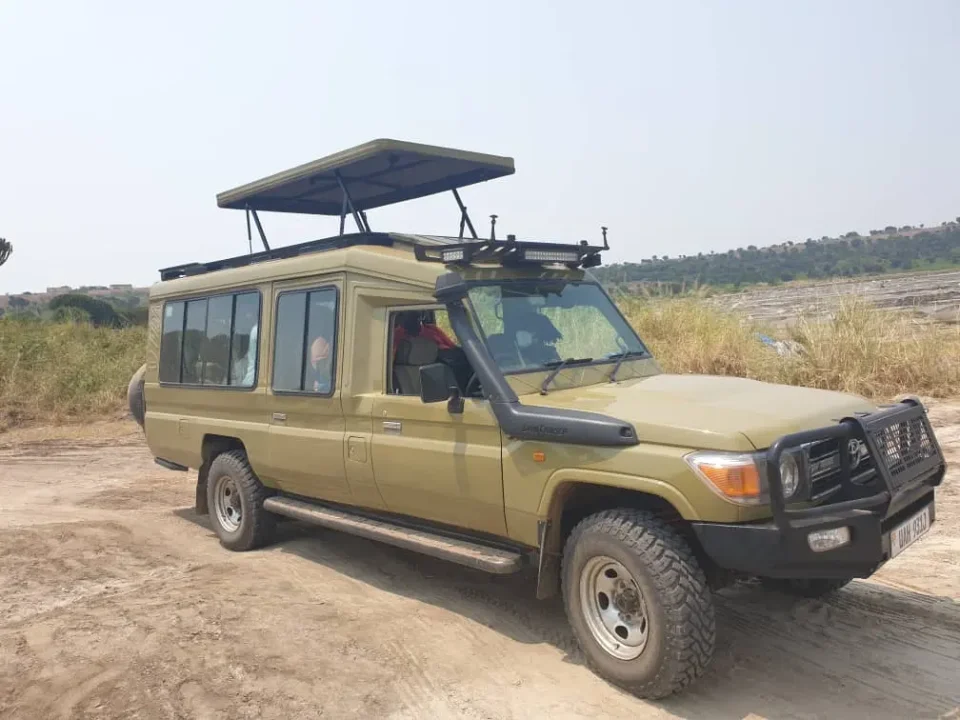
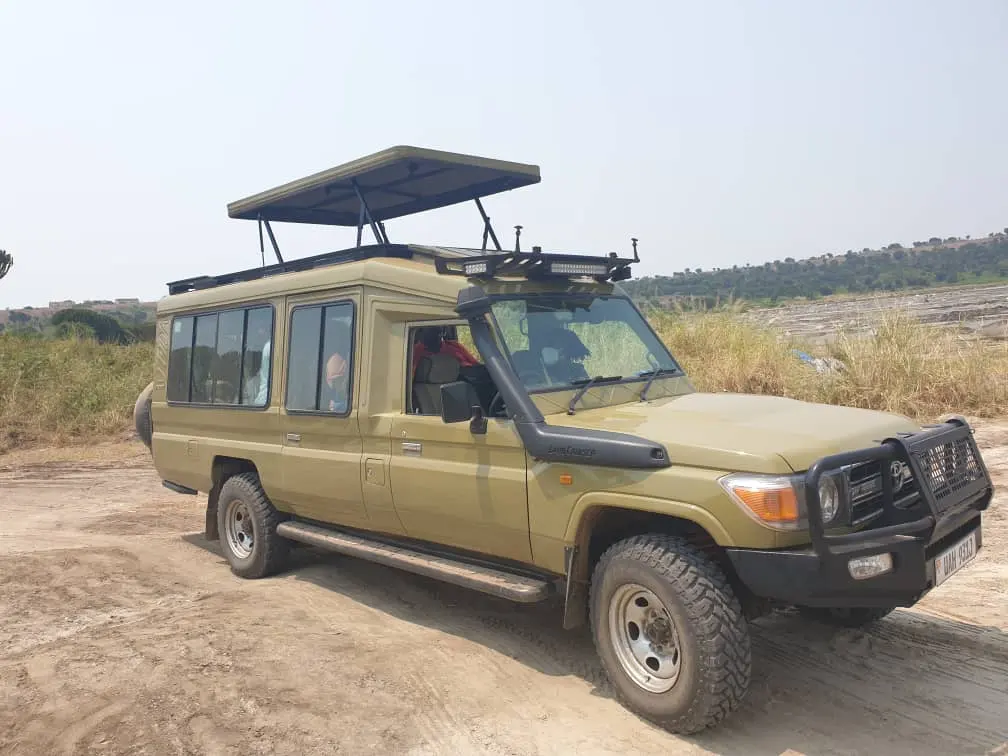
For the road itself, a private 4×4 with an experienced driver-guide is the most comfortable and flexible way to travel, and you can see the options on the Kenlink Tours car hire page. If you would like extra help with airport meetings and long road transfers, specialists such as Pick and Transfer Safaris offer ground transport, and it is worth comparing that with a fully packaged safari. For travellers arriving in Rwanda, this article on whether you can begin your tour from Kigali Airport and end in Entebbe Airport explains how one-way routes work, and the tour from Kigali covering Bwindi, Queen Elizabeth, Kibale and Bunyonyi shows a complete circuit.
Where to Stay Near Kibale Forest
Kibale has the deeper accommodation market of the two. Primate Lodge Kibale sits close to the Kanyanchu visitor centre and offers forest-edge cottages and tents. Kibale Forest Camp and Chimpanzee Forest Guest House provide friendly mid-range stays, and budget travellers will find simple guesthouses and hostels around Fort Portal town. For something special, Kyaninga Lodge and Ndali Lodge perch beside crater lakes with striking views of the Rwenzori range on clear days.
Choosing a lodge close to the forest makes the morning easy, while a crater-lake lodge turns the evening into a treat. Either way, ask whether meals and laundry are included and whether the lodge can arrange a Bigodi walk or a night walk. Rates vary with the season, so confirm details with your operator before you book.
Where to Stay Near Kalinzu Forest
Kalinzu’s accommodation is more limited. There is a camping site in the heart of the forest at the Nkombe station for adventurous guests, and small guesthouses and hotels in Ishaka and Bushenyi handle the budget end. Most travellers sleep in the Queen Elizabeth area, where Mweya Safari Lodge, Katara Lodge, Engiri Game Lodge and Jacana Safari Lodge offer comfortable rooms, and then drive to Kalinzu for a morning trek or walk.
This arrangement has an upside and a downside. You get the variety of a savannah park and a forest on a single trip, but you cannot step from your room into the trees. A little early-morning planning solves that, and it is a small price for the money you save compared with a luxury forest lodge. Whatever the property, ask your operator to confirm distances so you understand the morning drive. If your route continues south towards the Rwandan border, you might break the journey in Kisoro, where Ikoro Hotel in Kisoro is one place to look at.
Costs Compared: Where Your Money Goes Further
Costs are one of the clearest differences between the two forests. Kibale’s permits are higher, its lodges include some of the most polished in western Uganda, and its extras, such as a habituation experience or a night walk, add to the bill. That price buys a very complete experience, but it does require a slightly larger budget.
Kalinzu is much kinder to a tight budget. Permits and guided walks cost less, camping is available, and simple hotels are affordable. The savings can pay for another night elsewhere, an extra trek or a better vehicle. Remember, though, that transport is part of the picture. Kalinzu is cheap when it is on your route, and Kibale is good value when your route already runs through Fort Portal. Price the road legs carefully, whether you use a vehicle from your tour operator or a separate transfer provider such as Pick and Transfer Safaris.
Ask any operator for a total price that includes permits, lodging, meals, transport and guiding, not just the entrance fee. You can review packaged options through the Uganda safari bookings page, or send your budget to the team through the Kenlink Tours contact page.
Best Time to Visit Kibale and Kalinzu
Both forests can be visited throughout the year, and the seasons are the same for each. The dry months, June to September and December to February, offer firmer trails and easier walking, and they are the busiest and most expensive. The wetter months, March to May and October to November, bring muddy paths and afternoon storms, but the forests are at their greenest, crowds are smaller and lodge prices can fall.
Birders often prefer the wetter months, when migrants are present and breeding activity is high, while photographers may prefer the dry season for brighter light. Kalinzu’s trails, especially the waterfall and valley routes, are best in dry weather, because they can be slippery after heavy rain. Whatever the season, pack a waterproof jacket and quick-drying clothes, and remain flexible.
Which Forest Is Right for You? A Traveller Guide
Choose Kibale if you want the widest range of primates, the most predictable chimp encounter, a broad choice of lodges and a location that pairs with crater lakes and the Rwenzori foothills. It is the stronger choice for first-time safari guests, photographers and anyone who wants everything in one place.
Choose Kalinzu if you love long, quiet walks, want to save money, are travelling between Mbarara, Queen Elizabeth and Bwindi, or prefer a small, peaceful reserve to a busy park. It is the stronger choice for birders who dislike crowds, budget travellers and gorilla-bound itineraries that need a chimp stop without extra driving.
Choose both if you have ten days or more and a passion for forests. The two are different enough that seeing them in a single trip feels like a comparison rather than a repeat. Solo travellers may also enjoy how easy it is to join small groups at either forest, and the best Uganda tours for solo travelers guide suggests routes that work well for one person.
Sample Itineraries That Include Kibale, Kalinzu or Both
Kibale-focused, three to five days. Kampala to Fort Portal, forest trek and Bigodi walk, crater lake afternoon, then Queen Elizabeth on the way south. The three-day chimp tracking safari to Kibale National Park and the five-day Uganda primate safari experience are good starting points.
Kalinzu-focused, four to six days. Kampala to Mbarara, morning in Kalinzu with a forest walk or chimp trek, an afternoon boat trip in Queen Elizabeth, then on to Bwindi for gorillas. The five-day chimps and gorilla safari follows this kind of pattern. After your gorilla trek, these essential tips on what to do after a gorilla tour in Bwindi will help you use the rest of the day.
Grand western loop, ten days or more. Kampala to Murchison Falls, then Kibale, Queen Elizabeth, Kalinzu and Bwindi. The ten-day trip to Murchison Falls, Kibale, Queen Elizabeth and Bwindi is a strong template, and the longer twenty-day wildlife and nature experience in Uganda gives space for every forest on the list. If your trail ends near the Rwandan border, an overnight at Ikoro Hotel in Kisoro is one convenient option to consider.
Can You Visit Both Forests in One Trip?
Yes, and it is a good idea on a longer safari. The drive between Kibale and Kalinzu takes roughly half a day, usually through Queen Elizabeth National Park, so you can combine the transfer with a game drive or boat cruise. Doing both lets you compare a large national park with a small forest reserve, and it doubles your chances for birds and monkeys.
On a short trip, though, choose one and spend the extra time elsewhere. A rushed second forest is less rewarding than a relaxed first one. If you are unsure, ask for a plan with a flexible day so you can decide once you are in the field. The big five and primate safari in Uganda shows how a single itinerary can balance forest, savannah and primates without feeling rushed.
What to Pack and How to Visit Responsibly
Wear sturdy waterproof boots, long trousers, a long-sleeved shirt in neutral colours and a hat. Bring a light rain jacket, insect repellent, sunscreen, gloves, binoculars, a water bottle and a small daypack. A camera with a good zoom is valuable in shaded forest, and a hiking stick is useful on slippery trails. Leave strong perfumes and bright clothes at home.
To protect the forests and their wildlife, stay on marked trails, carry out all litter, keep a safe distance from the animals and stay away from the trek if you feel unwell, since primates catch human illnesses easily. Hire local guides, buy crafts and food from nearby villages and avoid single-use plastic. Your fees support rangers and communities, so every respectful visit helps keep these forests standing. If you want a licensed, locally rooted operator to arrange it all, see the guide to licensed tour companies in Uganda.
Common Mistakes When Choosing Between the Two Forests
Planners often make the same few errors, and avoiding them saves time and money. The first is choosing a forest by name alone, without checking the route. A forest that looks perfect on paper can add half a day of driving if it sits on the wrong side of your itinerary. The second is comparing permit prices without comparing total costs, since a cheaper permit can be cancelled out by extra transport and an additional night on the road.
The third mistake is packing too much into too little time. A morning trek followed by a five-hour drive leaves little energy for enjoying either. The fourth is forgetting to book early: permits, guides and the best lodges are limited in peak months, and last-minute requests are harder to satisfy. Finally, some visitors expect a guaranteed sighting on a fixed schedule, when forests reward patience and flexibility. Build in a spare day, ask for the current rules and prices in writing, and choose the forest that fits the rest of your journey.
Frequently Asked Questions About Kibale and Kalinzu
Is Kibale bigger than Kalinzu?
Yes. Kibale covers just under eight hundred square kilometres, while Kalinzu covers roughly one hundred and thirty-seven, so Kibale is several times larger and holds more species and habitats.
Which forest has the most primates?
Kibale, with thirteen primate species and the largest chimpanzee population in Uganda. Kalinzu has around six species and a smaller chimpanzee population.
Which forest is cheaper to visit?
Kalinzu. Permits, guided walks and accommodation are generally less expensive, and camping is available in the forest. Confirm current rates with your operator, as tariffs can change.
Is Kalinzu a national park?
No. It is a central forest reserve managed by the National Forestry Authority, while Kibale is a national park managed by the Uganda Wildlife Authority.
Can I see gorillas and forest primates on one safari?
Yes. Many itineraries combine chimpanzee tracking in Kibale or Kalinzu with gorilla trekking in Bwindi, and our guide to gorilla trekking in Uganda explains how to add it. Local transfer teams such as Pick and Transfer Safaris can support the long road between the two.
Can I start my trip in Kigali and finish in Uganda?
Yes. Many travellers fly into Kigali, cross into south-western Uganda for gorillas and then work north through Queen Elizabeth towards Kalinzu or Kibale before flying out of Entebbe. The practical details are explained in this guide to starting in Kigali and finishing in Entebbe, and it is worth reading before you book flights.
What can I do in Bwindi after my forest walks?
If your route ends with gorillas, leave a relaxed afternoon after the trek for a community walk, tea tasting or a simple rest. This list of what to do after a gorilla tour in Bwindi is a helpful place to start.
Final Verdict: Kibale Forest or Kalinzu Forest?
If you want the richest, most complete forest experience in Uganda, choose Kibale. If you want a peaceful, affordable forest that fits neatly on the road to Queen Elizabeth and Bwindi, choose Kalinzu. The stronger answer is often both, when time allows, because each forest shows a different side of Uganda’s wild heart.
Ready to plan? Browse the full range of Uganda safaris from Kenlink Tours, and if you want to trace how the pieces fit, look at the largest protected area in the country in what is the biggest national park in Uganda. Send your dates and interests through the contact page, add a dependable partner such as Pick and Transfer Safaris for ground logistics if you like, and pack your boots. The forests are waiting.