- EXPERT'S HELP
- +256789210067
- +256200955001
- info@kenlinktours.com


Kidepo Valley National Park Wildlife Safaris
April 28, 2026
Gorilla and Chimpanzee Habituation Tours in Uganda
April 28, 2026Visit Jinja Sipi Falls Kidepo and Murchison Falls in one trip. Uganda is one of the most geographically and ecologically diverse countries in Africa, and its eastern and northern regions contain some of the continent’s most extraordinary and least-visited landscapes. A single well-designed circuit — beginning in Jinja on the Nile, climbing to Sipi Falls on the slopes of Mount Elgon, pushing deep into the Karamoja wilderness of Kidepo Valley National Park, and closing with the thunderous power of Murchison Falls — delivers not one Uganda experience but four entirely distinct ones, strung together into a journey that covers the full emotional and geographical range of the Pearl of Africa.
This is a trip that begins with adrenaline on the world’s longest river and ends with one of the most powerful waterfalls on earth. In between, it passes through the coffee-scented highlands of eastern Uganda, the sun-bleached savannah of Africa’s most remote wildlife park, and the wide-open plains of Uganda’s largest national park. At Kenlink Tours, we organise this full northern and eastern Uganda circuit as one of our signature multi-destination itineraries — for travellers who want more than a single park safari and are ready to experience the full depth of what Uganda has to offer. Our complete range of Uganda safari packages includes several variations of this circuit at different durations and budget levels.
Why This Circuit Makes Perfect Geographic Sense
Before diving into each destination, it is worth understanding why these four locations work so well together as a single journey. The route is a logical clockwise arc through Uganda’s east and north — from Jinja (80 kilometres east of Kampala), northeast to Sipi Falls (277 kilometres from Kampala on the slopes of Mount Elgon), then north to Kidepo Valley National Park (700 kilometres from Kampala in the extreme northeast), and finally west and south to Murchison Falls National Park (305 kilometres northwest of Kampala) before returning to Kampala or Entebbe.
This circuit avoids the frustration of constant backtracking that plagues poorly planned Uganda itineraries. You move progressively — east, then northeast, then north, then west — covering new terrain at every stage. The landscape shifts dramatically with each leg of the journey: the lush green Nile corridor gives way to rolling highlands and coffee plantations, then to the semi-arid Karamoja savannah, then to the broad sweep of northern Uganda’s acacia woodland and riverine forest along the Nile. Each transition feels like arriving in a completely different country. For travellers combining this circuit with gorilla trekking in the southwest, our Big Five and Primate Safari guide shows how the two halves of Uganda’s safari geography can be linked into a single comprehensive itinerary.
The minimum recommended duration for this circuit is ten days. Twelve to fourteen days allows you to give each destination the time it genuinely deserves, with less rushing between locations and more hours in the field doing what you came for.
Jinja — Starting the Circuit at the Source of the Nile
Every great journey needs the right beginning, and Jinja provides exactly that. Positioned on the banks of the Victoria Nile at the point where the world’s longest river exits Lake Victoria and begins its 6,650-kilometre journey to the Mediterranean, Jinja is Uganda’s Adventure Capital — a vibrant, energetic city whose character is shaped entirely by its relationship with the Nile. Starting your Uganda circuit here is not just logistically convenient (it is a straightforward two-hour drive east from Kampala or Entebbe); it is tonally perfect, dropping you immediately into a high-energy encounter with one of the world’s great rivers before the safari proper begins.
The first and non-negotiable activity in Jinja is a visit to the Source of the Nile itself. A short boat ride from the western riverbank brings you to the exact rocky point where John Hanning Speke — the British explorer who identified Lake Victoria as the Nile’s source in 1856 — stood and looked downstream at the river that would eventually define a continent’s geography. The Speke Monument marks the spot, and the surrounding park of palm trees and tropical vegetation gives the site a quiet, reflective atmosphere that contrasts beautifully with the noise and energy of the city behind you. A boat cruise to the source pairs naturally with a late afternoon sunset cruise on the Nile — with the wide river turning gold, African fish eagles calling from the banks, and the distant roar of the rapids providing a constant backdrop.
White-Water Rafting and Adventure Activities in Jinja
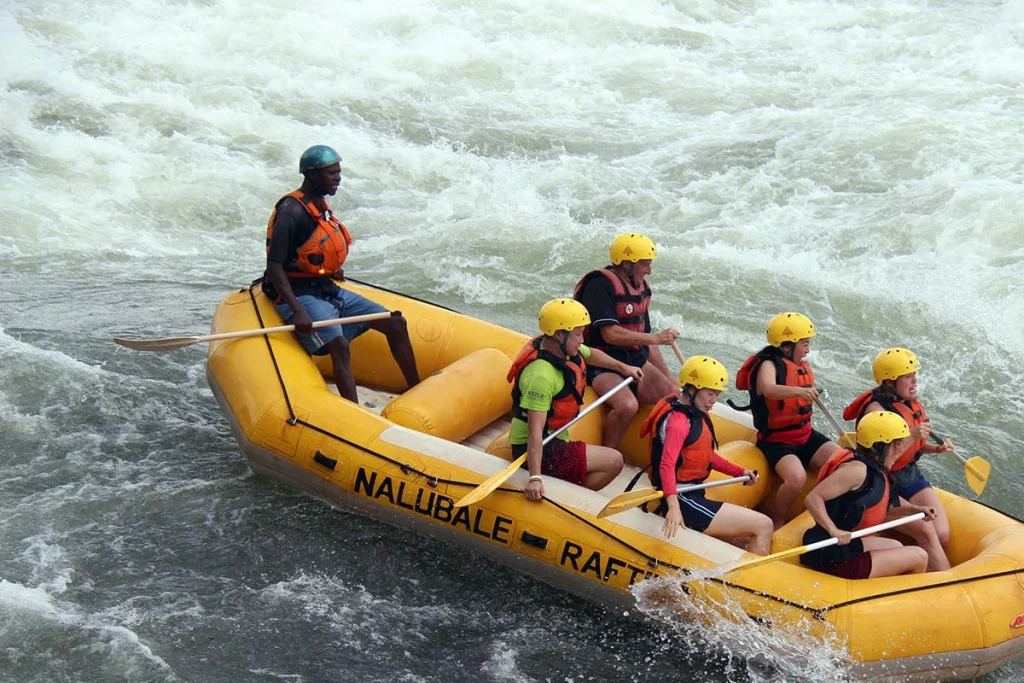
For travellers with energy to burn before the more contemplative wildlife phases of the circuit begin, Jinja’s white-water rafting on the Nile is one of the most consistently extraordinary experiences Uganda has to offer. The upper Nile at Jinja contains Grade 4 and Grade 5 rapids — including the legendary Overtime, Hair of the Dog, and Itanda Falls — that are rated among the best in the world. A full-day rafting trip covers these rapids in sequence, with lunch served riverside under shade trees, cliff jumps into clear pools between rapids, and a complete experience of the Nile’s power that most visitors describe with a single word: epic.
For those who prefer their adrenaline in shorter, sharper doses, bungee jumping from the 44-metre platform above the Nile is Jinja’s second great adventure activity — one that delivers a heart-stopping view of the river and an encounter with the Nile water at the bottom of the arc that most first-timers find unexpectedly moving. Quad biking through the riverside villages, horseback riding along the Nile banks with Nile Horseback Safaris, and kayaking on calmer sections of the river complete the activity menu for those spending two nights in Jinja. Our detailed Tourist Activities in Jinja guide covers every activity available in the city with full practical details on pricing, timing, and what to expect. A single night in Jinja is enough for the Source of the Nile visit and a sunset cruise. Two nights allows you to add rafting or bungee jumping before departing northeast towards Sipi Falls.
En Route to Sipi Falls — The Drive Through Eastern Uganda
The drive from Jinja to Sipi Falls is one of Uganda’s most rewarding road journeys and should be treated as an experience in its own right rather than a transit to endure. Heading northeast from Jinja, the road passes through the sugarcane and rice plantations of the Lugazi corridor before climbing into the rolling hills of Mbale district — the gateway to Mount Elgon and the Elgon highlands. The landscape transforms noticeably as you gain altitude: the flat, lake-level terrain of Jinja gives way to terraced hillsides, banana and coffee groves, and the increasingly dramatic backdrop of Mount Elgon’s volcanic massif.
The total distance from Jinja to Sipi Falls is approximately 200 kilometres, and the drive takes around four hours without stops. It can comfortably be done as a morning journey, arriving at Sipi in time for a late lunch and an afternoon nature walk to the falls. For travellers who want to break the journey, the market town of Mbale — Uganda’s fourth-largest city, set at the foot of Mount Elgon — is a pleasant stopping point for a coffee and a stretch, with views of the mountain opening up as you approach from the south. The final 40 kilometres from Mbale to Sipi on the Kapchorwa road climb steadily through increasingly spectacular highland scenery, with sweeping panoramas of the Elgon slopes, the distant Karamoja plains, and — on clear mornings — the summit ridgeline of one of Africa’s largest extinct volcanoes.
Sipi Falls — Uganda’s Highland Waterfall Gem
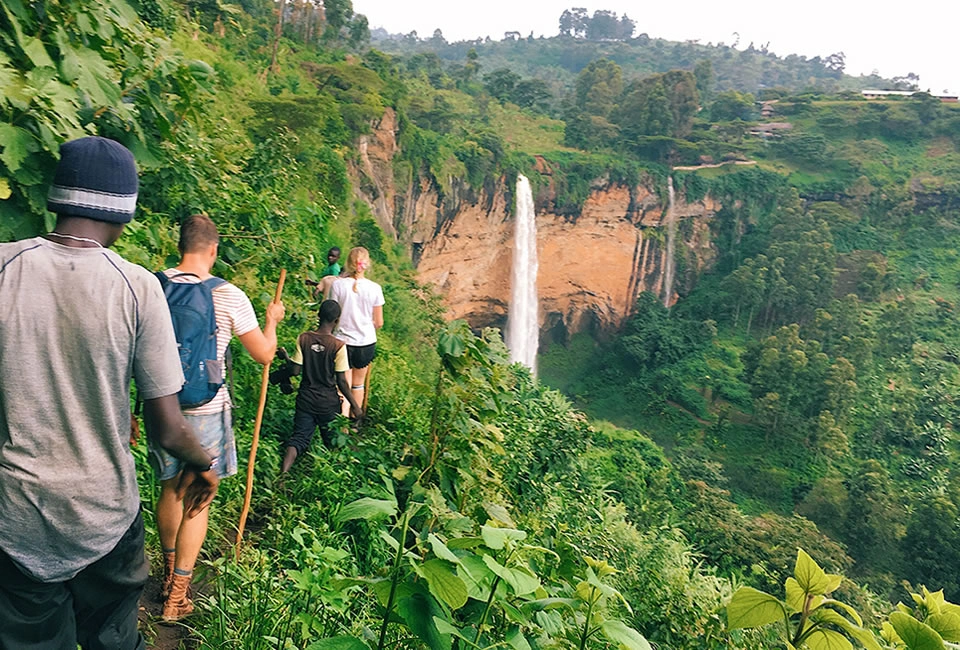
Sipi Falls is one of Uganda’s most beautiful and most underrated destinations — a series of three distinct waterfalls cascading down the southwestern escarpment of Mount Elgon in the Kapchorwa district of eastern Uganda, surrounded by coffee plantations, highland forest, and panoramic views that stretch on clear days all the way to the distant plains of Karamoja. The falls sit at an altitude of around 1,800 metres, which gives the area a pleasantly cool climate, clean mountain air, and a quality of light — particularly in the early morning and late afternoon — that photographers find exceptional.
The main Sipi waterfall, the largest of the three, drops approximately 100 metres in a single dramatic plunge over a vertical rock face, generating a permanent mist at its base and a thunderous sound that carries through the entire valley below. The two smaller falls — each with their own character and viewpoint — can be reached via a seven-kilometre hiking trail that links all three cascades in a single circular route of approximately three hours at a comfortable pace. Along the trail, the path winds through coffee farms where local farmers cultivate the Arabica beans that have made Sipi famous, small communities of Sabiny highlanders whose terraced gardens cling to the steep slopes, and viewpoints that open suddenly to reveal the vast, flat expanse of the Karamoja plains stretching north towards the horizon.
Sipi Falls Activities — Hiking, Abseiling and Coffee Tours
The guided hike to all three falls is the core Sipi experience and should not be rushed. A knowledgeable local guide — arranged through the lodges or through Kenlink Tours as part of your circuit itinerary — not only navigates the trail but provides essential context about the Sabiny people, the coffee cultivation practices of the area, and the ecology of the Mount Elgon escarpment. Birding along the trail is rewarding, with a range of highland species including the African crowned eagle, Hartlaub’s turaco, and several sunbird species visible in the forest margins near the falls.
For those wanting an additional adrenaline element, abseiling from the top of the main Chebonet Falls — descending the cliff face with the waterfall roaring just metres away — is one of Sipi’s most memorable optional activities. The experience is managed by specialist operators with full safety equipment and is accessible to participants with no prior climbing experience. The coffee tour, available from several lodges and local guides, takes visitors through the full lifecycle of Arabica coffee production on the Elgon slopes — from picking the ripe red cherries, through the washing, drying, hulling, and roasting process, to brewing and drinking a fresh cup of coffee grown on the very mountain you are standing on. It is a beautifully complete experience and one that gives genuine insight into the agricultural life of the Kapchorwa highlands. Our Uganda safari itineraries include overnight stays at Sipi River Lodge or Lacam Lodge, both with outstanding views of the falls, as standard accommodation options on this circuit.
From Sipi Falls to Kidepo — The Drive Through Karamoja
The journey from Sipi Falls to Kidepo Valley National Park is the most dramatic road transition of the entire circuit — a drive of approximately 330 kilometres that takes six to seven hours and passes through some of Uganda’s least-visited and most visually striking territory. Leaving the green, fertile highlands of Kapchorwa, the road descends onto the Karamoja plains through the small district town of Moroto — the largest settlement in the Karamoja subregion and a useful stop for fuel and lunch — before continuing north through increasingly arid, boulder-studded savannah towards the park.
The drive through Karamoja is itself an experience. The landscape is semi-arid and vast, with flat-topped hills rising from the plains, distant mountain ranges defining the horizon, and the occasional Karamojong herder moving cattle through the scrubland with long-horned Ankole cattle — a scene that feels utterly timeless and entirely removed from the Uganda of banana plantations and green hillsides you have been travelling through since Jinja. Pian Upe Wildlife Reserve, Uganda’s second-largest protected area, borders the road for a significant stretch and offers the possibility of roadside wildlife sightings including ostriches, cheetahs, and various antelope species for those travelling slowly and keeping their eyes on the surrounding bush.
Kidepo Valley National Park — Uganda’s Greatest Wildlife Secret
Kidepo Valley National Park needs no extended introduction to anyone who has read about Uganda’s wildlife — but the experience of arriving always exceeds expectations. Located at the junction of Uganda, South Sudan, and Kenya in the remote Karamoja region, Kidepo is Uganda’s most isolated national park and, by the considered opinion of most seasoned East Africa safari travellers, its most spectacular. CNN International has rated it among Africa’s top national parks. Lonely Planet has described it as one of the continent’s finest wilderness experiences. And yet it receives only a fraction of the visitor numbers that flow through Uganda’s southern parks every year — which is, of course, its greatest asset.
The park covers 1,442 square kilometres of open savannah, rocky outcrops, and ancient riverbeds framed by the Morungole mountain range. It harbours over 77 mammal species and between 475 and 500 bird species, with 28 of those mammals endemic to the Karamoja region and found in no other Ugandan national park. Kidepo is the only park in Uganda where you can see a cheetah in the wild. It is the only park where ostriches stride across the open grassland. It harbours cheetahs, caracals, bat-eared foxes, aardwolves, greater and lesser kudus, and striped hyenas — species absent from every other Ugandan park. Game drives in the Narus Valley — the park’s wildlife heartland and the location of its only permanent water source — deliver an intimacy and density of wildlife encounters that rival any safari destination in East Africa. Read our full Kidepo Valley National Park Wildlife Safaris guide for a detailed breakdown of every species, every game drive route, and every activity the park offers.
What to Do in Kidepo — Game Drives, Walking Safaris and Culture
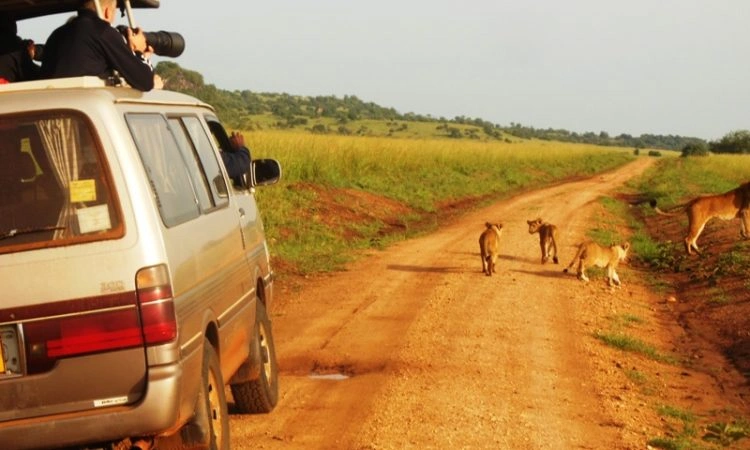
The core activities in Kidepo are morning and evening game drives in the Narus Valley, conducted in 4×4 safari vehicles with an armed Uganda Wildlife Authority ranger guide. Morning drives departing at 6:00 am are the most productive for predator sightings — lions are regularly observed on the rocks near Apoka Tourism Centre, and cheetahs can sometimes be spotted scanning for prey from elevated termite mounds on the open grassland. Elephant herds, Rothschild’s giraffes, plains zebras, and Jackson’s hartebeests provide the plains game backdrop. Full-day game drives extending into the Kidepo Valley’s northern section allow you to reach the Kanangorok Hot Springs — geothermal springs in a remote, strikingly beautiful landscape near the South Sudan border.
Walking safaris from Apoka Rest Camp offer a completely different quality of experience — the park at ground level, in silence, with the sounds and smells of the bush unmediated by a vehicle engine. A hike to the IK people on the slopes of Mount Morungole — one of Uganda’s smallest and most isolated ethnic groups — combines a demanding but rewarding highland walk with one of the most extraordinary cultural encounters available anywhere in the country. The Karamojong cultural village tour, arranged through the park management, gives additional depth to the Kidepo experience by contextualising the wildlife within the human history of the landscape. Two full days in Kidepo — with morning and evening game drives on both days, a walking safari, and one cultural activity — represents the minimum for a meaningful experience of the park. Our Kidepo tour packages include accommodation options from Apoka Safari Lodge (luxury) to Nga’Moru Wilderness Camp (mid-range) and Apoka Rest Camp (budget).
From Kidepo to Murchison Falls — The Northern Corridor
The drive from Kidepo Valley National Park to Murchison Falls National Park is a long one — approximately 400 kilometres taking seven to eight hours — but it passes through some of northern Uganda’s most historically significant and geographically varied territory. Leaving Kidepo via the western gate, the route heads south and west through Kitgum and Gulu — the latter being the largest city in northern Uganda and a vibrant, rapidly growing hub with good lunch options and an interesting recent history as a city that rebuilt itself after the end of the LRA conflict. Gulu is the natural midpoint for this journey, and overnight stays in Gulu allow you to break the transit into two comfortable half-days rather than a single exhausting full day of driving.
Between Gulu and Murchison Falls, the road passes through the conservation area buffer zone before entering the park itself, where the vegetation begins to shift from northern woodland into the mixed savannah, Borassus palm groves, and riverine forest that define Murchison’s distinctive landscape. The Karuma Falls — a dramatic stretch of rapids on the Victoria Nile along the park’s eastern boundary — are visible from the road bridge and worth a brief stop to appreciate the river’s power before you reach the main park. Travellers choosing to fly between Kidepo and Murchison Falls — an excellent option for those with limited time or who want to avoid the long road — can arrange domestic charter flights between Apoka Airstrip and Chobe Airstrip in Murchison through Kenlink Tours as part of their overall circuit itinerary. Our Uganda safari bookings page covers both road and fly-in options for every leg of this circuit.
Murchison Falls National Park — Uganda’s Largest and Most Powerful Park
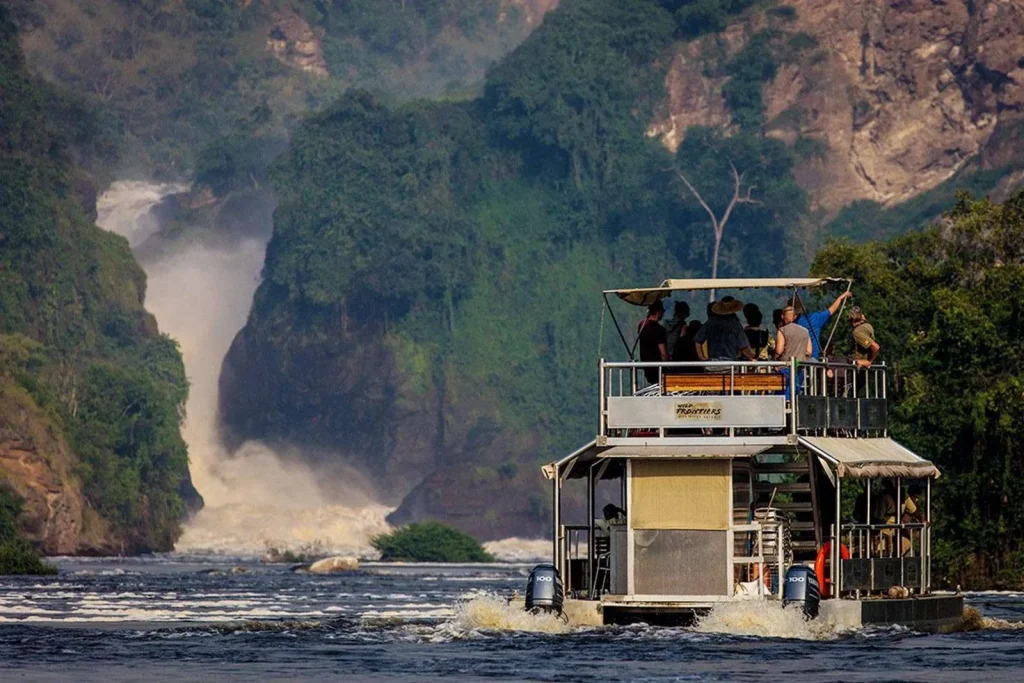
Murchison Falls National Park is Uganda’s oldest and largest national park, covering 3,840 square kilometres of savannah, woodland, and riverine forest in the northwest of the country. It is bisected by the Victoria Nile, which drains southward from Karuma Falls in a broad, slow-moving sweep across the park floor before being forced — with extraordinary violence — through an eight-metre gorge in the remnant valley wall at Murchison Falls, plunging 45 metres into the churning pool below in what is often described as the world’s most powerful waterfall. The roar of the falls is audible from a significant distance, and the permanent rainbow that hangs in the mist above the Devil’s Cauldron is one of Uganda’s most iconic natural images.
The park’s wildlife roster is exceptional. Over 76 mammal species have been recorded, including lions, leopards, elephants, Rothschild’s giraffes, buffaloes, Uganda kobs — whose population has recovered to an impressive 35,000 individuals — hippos, Nile crocodiles, warthogs, patas monkeys, olive baboons, and spotted hyenas. Murchison is one of the few parks in Uganda where you have a reasonable chance of seeing all four of the accessible Big Five in a single safari — elephant, buffalo, lion, and leopard — and its flat, open northern savannah makes game viewing both predictable and consistently productive. Over 556 bird species have been recorded, including the shoebill stork along the Albert Delta. The park was first gazetted as a wildlife reserve in 1926, making it Uganda’s oldest protected area, and its association with legendary visitors — including Winston Churchill, Ernest Hemingway, and Theodore Roosevelt — adds a layer of historical romance to every visit.
Game Drives in Murchison Falls — North Bank Safari Circuit
The main game driving area in Murchison Falls is on the north bank of the Victoria Nile, accessible by ferry crossing from the Paraa headquarters. The northern savannah is characterised by open grassland, Borassus palm groves, and scattered acacia woodland — ideal habitat for the park’s large populations of giraffes, elephants, and lions. Morning game drives departing at 6:00 am are the most productive, catching lions active before the heat of the day and the large herds of Uganda kobs and buffaloes grazing across the open plains in the early light. The Buligi Peninsula — a projecting tongue of land between two arms of the Nile — is one of the park’s richest game viewing areas, with excellent density of plains game and frequent predator sightings.
Evening game drives running from around 4:00 pm to sunset are equally worthwhile, with wildlife gathering at water sources in the late afternoon and the golden light of the Nile landscape producing outstanding conditions for photography. The combination of morning game drive and afternoon boat cruise — the two signature activities of Murchison Falls — is the recommended programme for any visitor with at least two nights in the park. Our Uganda safari packages include this combination as the default Murchison itinerary, with accommodation options ranging from Paraa Safari Lodge and Pakuba Safari Lodge within the park to Red Chilli Rest Camp for budget-conscious travellers.
The Murchison Falls Boat Cruise — One of Uganda’s Finest Experiences
The Nile boat cruise from Paraa Jetty to the base of Murchison Falls is one of the most consistently praised wildlife experiences in Uganda and a genuine highlight of the entire four-destination circuit. The journey covers approximately 17 kilometres upstream along the Victoria Nile, taking two to three hours in each direction, and delivers some of the most intimate wildlife encounters available anywhere in East Africa. The southern bank of the river is one of the most reliable places in Uganda to see the shoebill stork — one of Africa’s most sought-after birds — in the papyrus channels along the water’s edge.
Throughout the cruise, the Nile’s banks are lined with wildlife: enormous Nile crocodiles basking on every flat rock and sandbank, hippos surfacing in the main channel and grazing on the grassy margins, elephants wading into the shallows to drink, and colobus monkeys visible in the riverine forest above. Rothschild’s giraffes appear at the water’s edge with surprising regularity, and the aerial activity — African fish eagles calling, saddle-billed storks patrolling the shallows, red-throated bee-eaters nesting in the riverbank cliffs in large, colourful colonies — is constant and spectacular throughout. At the end of the cruise, the boat docks at Baker’s Point, from which a 45-minute hike along a well-marked trail rises through increasingly dramatic scenery to the lip of the falls themselves. The final approach to the top of Murchison Falls — where the entire Victoria Nile is compressed into an eight-metre gorge and launches itself over the edge in a wall of roaring white water — is one of the most viscerally powerful natural experiences Uganda has to offer. Being sprayed by the mist, feeling the vibration through the rock underfoot, and watching the Nile rebuild itself in the pool below as a broad, calm river is an unforgettable conclusion to the boat cruise. Find more details about Murchison Falls activities on the Uganda Wildlife Authority’s official Murchison Falls page.
Ziwa Rhino Sanctuary — The Perfect Circuit Finale
Before leaving the northern circuit and returning to Kampala or Entebbe, most travellers include a morning stop at Ziwa Rhino Sanctuary — located approximately halfway between Murchison Falls and Kampala along the main highway — for an activity that perfectly complements the wildlife experiences of Kidepo and Murchison: on-foot white rhino tracking.
The white rhinoceros became extinct in Uganda in the early 1980s, and Ziwa Rhino Sanctuary — a 7,000-hectare private conservation ranch — was established specifically to restore the species in preparation for eventual reintroduction to Uganda’s national parks. The sanctuary currently holds the only wild white rhinos in Uganda, and guided on-foot tracking sessions allow visitors to approach the rhinos at very close range — often within ten to fifteen metres — under the supervision of experienced armed rangers. For travellers on the full Jinja–Sipi–Kidepo–Murchison circuit, the Ziwa rhino experience rounds off a journey that has included cheetahs in Kidepo, lions and elephants in both Kidepo and Murchison, gorillas if the circuit extends southward, and now one of Africa’s most iconic megafauna on foot. The sanctuary is also an excellent site for the shoebill stork, with dedicated shoebill hikes into the papyrus wetlands available alongside the rhino tracking. Our Uganda gorilla safari holidays page covers how Ziwa fits into longer Uganda circuits that extend from the north into the western gorilla parks.
Suggested Itinerary — Ten Days on the Full Circuit
For travellers wondering what a complete Jinja–Sipi–Kidepo–Murchison itinerary actually looks like in practice, here is the framework that Kenlink Tours uses as the foundation for this circuit. Day one is a road transfer from Entebbe or Kampala to Jinja, with an en-route stop at Sezibwa Falls and a walk in Mabira Forest, arriving in Jinja in the afternoon for a sunset cruise on the Nile. Day two is fully dedicated to Jinja — white-water rafting, the Source of the Nile boat tour, or bungee jumping, depending on individual preference. Day three is a morning departure from Jinja to Sipi Falls, arriving for a late afternoon nature walk to the smaller falls.
Day four is the full Sipi Falls hiking day — all three waterfalls on the guided circuit trail, abseiling at Chebonet, and an afternoon coffee tour. Day five is the long overland drive from Sipi to Kidepo via Moroto, arriving at Apoka in time for a brief evening game drive. Day six and seven are full Kidepo days — morning and evening game drives in the Narus Valley, a walking safari, the Kanangorok Hot Springs full-day excursion, and either an IK cultural hike on Morungole or a Karamojong village visit depending on fitness and interest. Day eight is the transfer from Kidepo to Gulu for an overnight stop. Day nine is the drive from Gulu to Murchison Falls National Park, with an afternoon game drive on arrival and an evening at the lodge. Day ten gives you a morning game drive, the afternoon Nile boat cruise to the base of Murchison Falls, and the hike to the top — the most dramatic possible conclusion to the circuit before returning to Kampala or Entebbe the following morning, with a Ziwa Rhino Sanctuary stop en route.
Practical Tips for Planning This Circuit
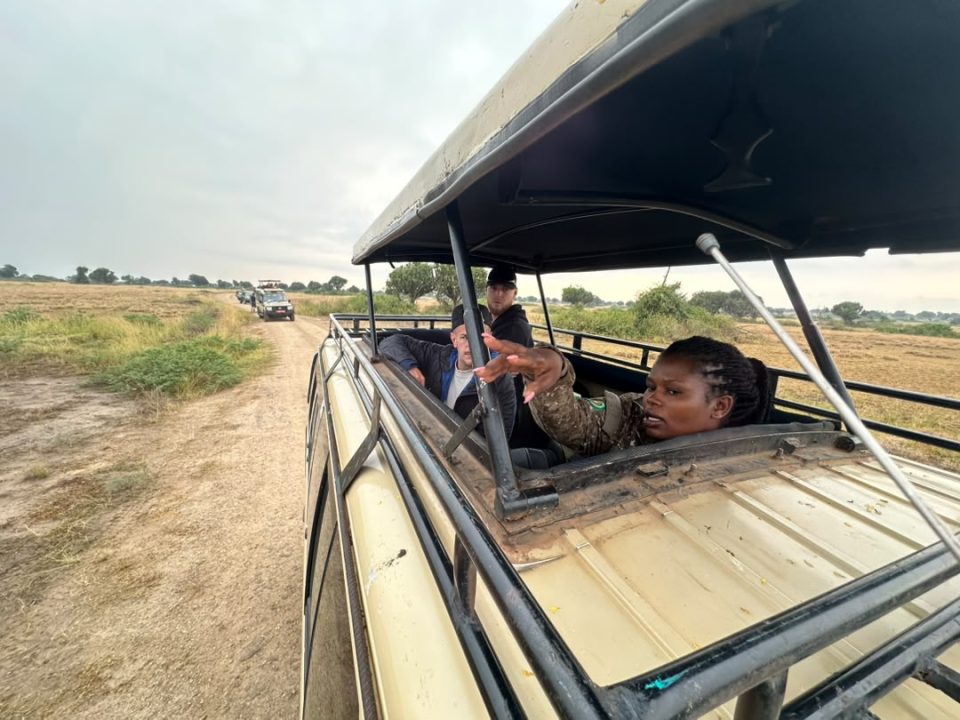
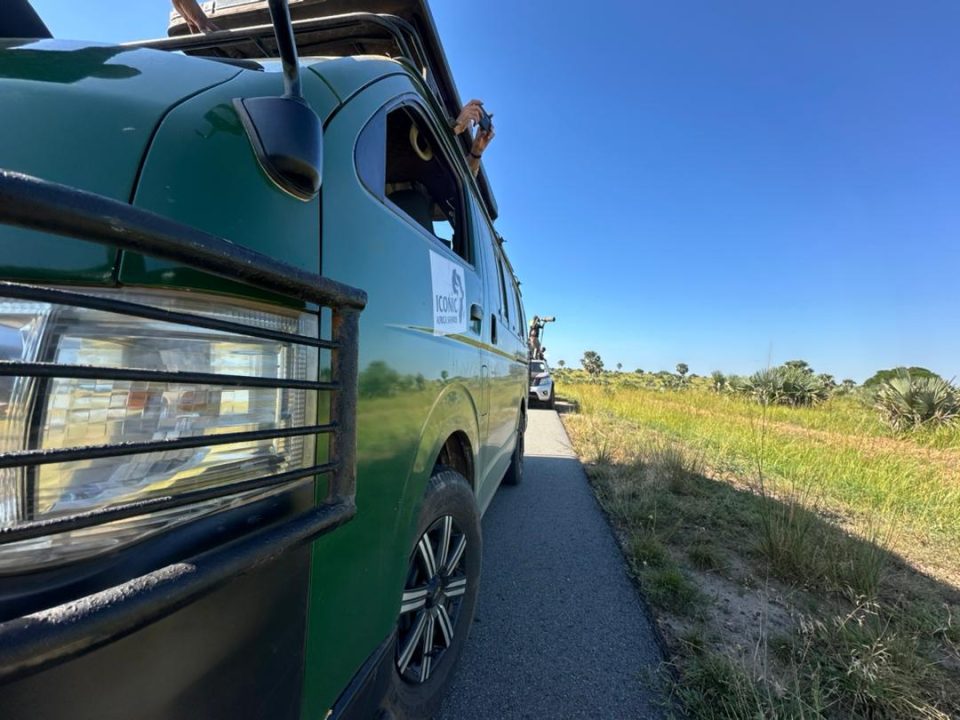
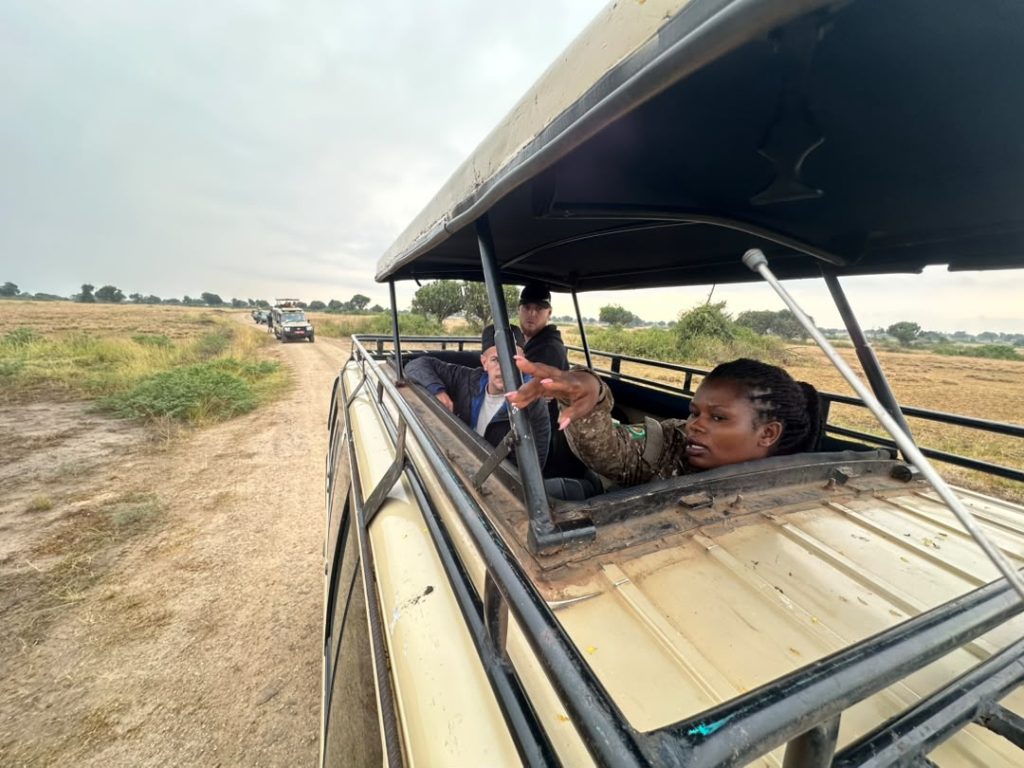
A few practical details will make this four-destination circuit significantly smoother. A capable 4×4 is essential for the entire journey — particularly for the Kidepo roads, which can be rough in both wet and dry conditions, and for the highland approach to Sipi from Kapchorwa. Kenlink Tours provides well-maintained 4×4 Land Cruisers or safari vans with pop-up roofs for game viewing as standard on all circuit packages. All accommodation across the four destinations is booked and managed by our team as part of the overall package, with options at every budget level from campsite to luxury lodge.
The best time to do this full circuit is during Uganda’s dry seasons — December through February or June through September — when game viewing at Kidepo and Murchison is at its peak, the Sipi Falls hike is comfortable, and the roads between destinations are at their most reliable. During the wet seasons of March through May and October through November, Sipi Falls is dramatically fuller and more photogenic, Murchison’s landscape is lush and green, and birding across all four destinations improves significantly — but road conditions in Kidepo require extra planning and the domestic flight option becomes more advisable for the Kidepo leg. Our About Uganda page has a comprehensive seasonal breakdown covering how each month of the year affects each region of Uganda. For travellers wanting to extend this circuit into a wider Uganda experience — adding gorilla trekking in Bwindi, chimpanzee tracking in Kibale, or Queen Elizabeth National Park — our team builds complete Uganda circuits combining north, east, and southwest into single seamlessly managed itineraries. Visit our Uganda safari bookings page to begin planning your full circuit today.
Plan your Jinja, Sipi Falls, Kidepo and Murchison Falls safari with Kenlink Tours →