- EXPERT'S HELP
- +256789210067
- +256200955001
- info@kenlinktours.com


Gorilla and Chimpanzee Habituation Tours in Uganda
April 28, 2026
Short Gorilla Trekking Tours in Uganda
April 29, 2026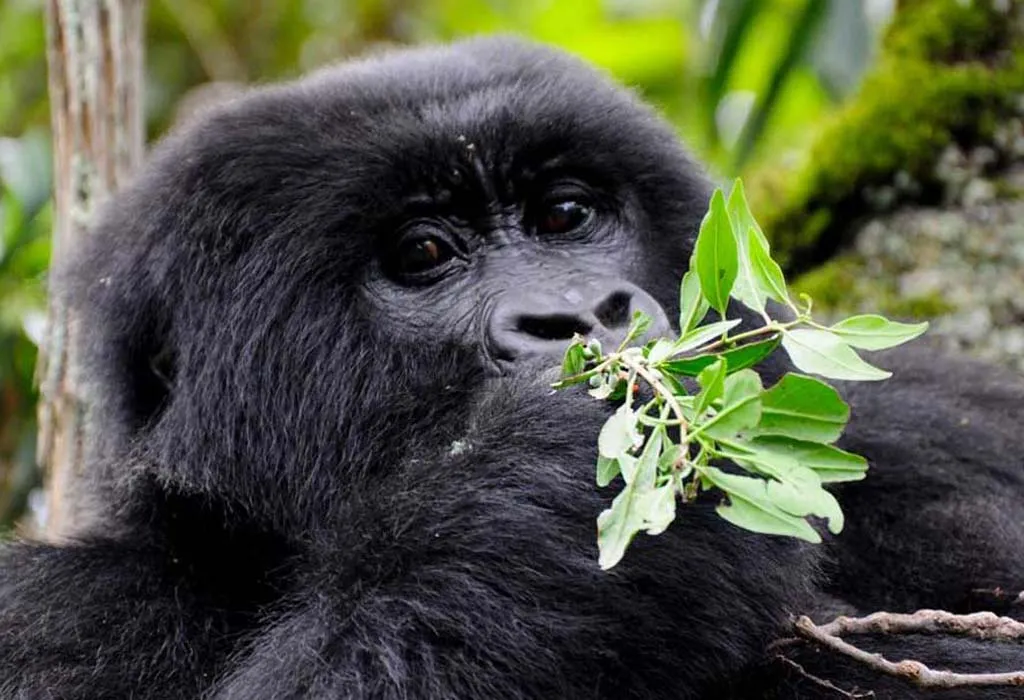
2 Days Short Gorilla Safari in Uganda. Not every traveller has two weeks. Some have a long weekend. Some are transiting through Uganda on their way between East African destinations and want to make the most of 48 hours in one of the most extraordinary wildlife experiences available anywhere in the world. A 2-day short gorilla safari in Uganda is not a compromise — it is a focused, efficient itinerary that delivers the one experience most travellers come to Uganda for: standing face to face with a family of wild mountain gorillas in the mist-covered forest of Bwindi Impenetrable National Park. This guide covers exactly how that itinerary works, what it includes, how to prepare, and why two days is more than enough to have an experience you will remember for the rest of your life.
What Is a 2-Day Gorilla Safari?
A 2-day gorilla safari is the shortest complete gorilla trekking itinerary available in Uganda. It is built around a single gorilla trekking permit — one day in the forest with one habituated gorilla family — and an overnight stay at a lodge near the park boundary. Day one is the transfer to Bwindi. Day two is the trek itself, followed by the journey back. Within that compact structure, the experience is identical to what you would have on a longer safari: the same forest, the same gorillas, the same one-hour observation time with the family, and the same permit. The only difference is how much of Uganda you see around it.
For travellers based in Kigali, Rwanda, the 2-day itinerary is particularly practical. The drive from Kigali to Bwindi is approximately four to five hours through the Rwanda-Uganda border at Cyanika or Katuna — shorter than the eight to ten hour drive from Kampala or Entebbe. Kenlink Tours offers a 2-day Rwanda to Uganda gorilla trekking safari specifically designed for travellers starting from Kigali who want to experience Uganda’s gorillas and return to Rwanda within a tight schedule. This is a very popular option among business travellers, conference attendees in Kigali, and tourists already on a Rwanda itinerary who want to add the Uganda gorilla experience.
The Day-by-Day Itinerary
Day One: Transfer to Bwindi Impenetrable National Park
The first day of a 2-day gorilla safari is dedicated entirely to reaching Bwindi. If you are departing from Kampala or Entebbe International Airport, the drive to Bwindi takes between eight and ten hours depending on which sector you are visiting and current road conditions. The route passes through Mbarara — Uganda’s second city — and winds through the fertile southwestern highlands, with views of rolling tea estates, crater lakes, and equatorial forest that are themselves a preview of what is to come. Most operators schedule a comfort stop and lunch in Mbarara. You arrive at your lodge near the park in the late afternoon, check in, and receive a pre-trek briefing from your guide covering what to expect the following morning: where to report, what to bring, and how the tracking process works.
If you are departing from Kigali, the drive is considerably shorter — four to five hours — and the route crosses into Uganda at the Cyanika or Katuna border posts. This means a Kigali-based traveller can depart after breakfast, cross the border in the mid-morning, and arrive at Bwindi in the early afternoon with time to explore the lodge surroundings and rest before the next day’s trek.
Day Two: Gorilla Trekking and Return
The gorilla trek begins early. Trekkers assemble at the park headquarters — the location varies by sector: Buhoma, Rushaga, Ruhija, or Nkuringo — at 8:00 AM for final registration, permit verification, and a briefing by the Uganda Wildlife Authority rangers. Groups are a maximum of eight people per gorilla family, and each group is assigned a specific habituated family for the day. Professional trackers set out before dawn to locate the family from where it slept the previous night; by the time trekkers enter the forest, the trackers already know roughly which direction to head.
The trek through Bwindi’s forest can last anywhere from thirty minutes to six hours, depending on where the gorilla family has moved overnight. The forest is genuinely impenetrable in places — dense undergrowth, steep ridges, tangled root systems, and sudden thick bamboo zones that require pushing through by hand. This is not a manicured tourist path. It is real rainforest, ancient and primeval, and the physical effort of navigating it is part of what makes the moment of finding the gorillas so viscerally powerful.
Moment with Gorillas
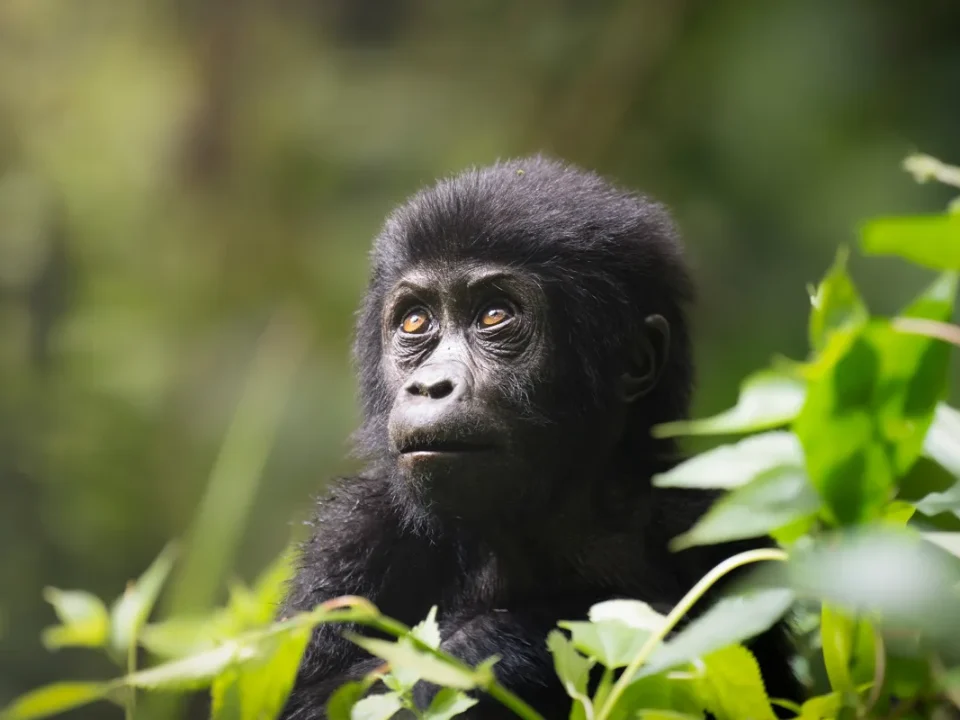
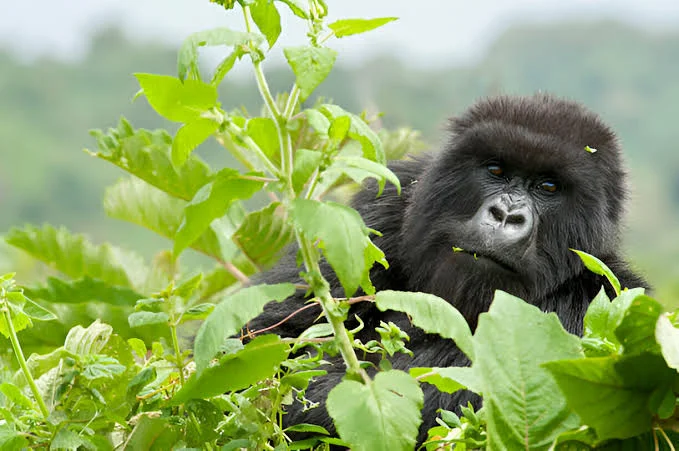
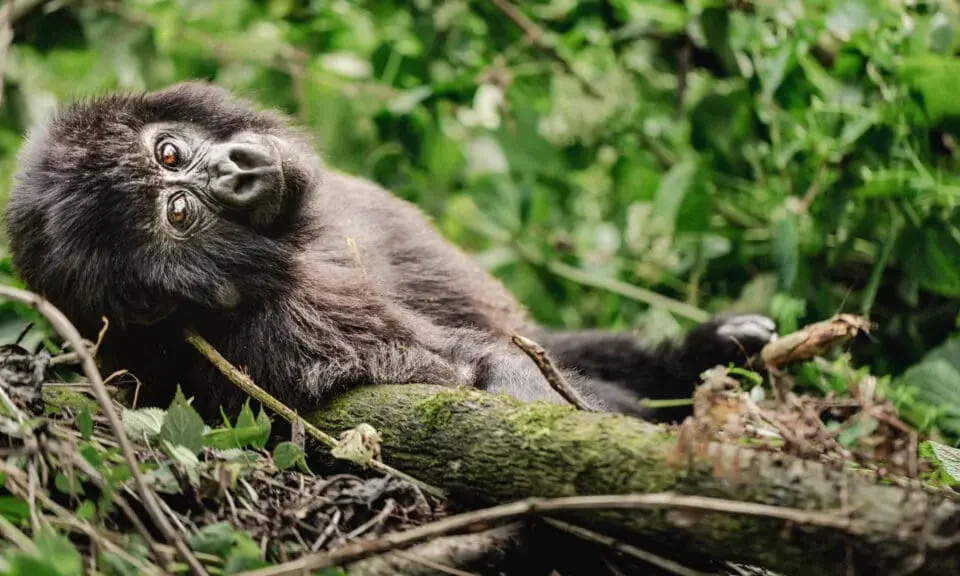
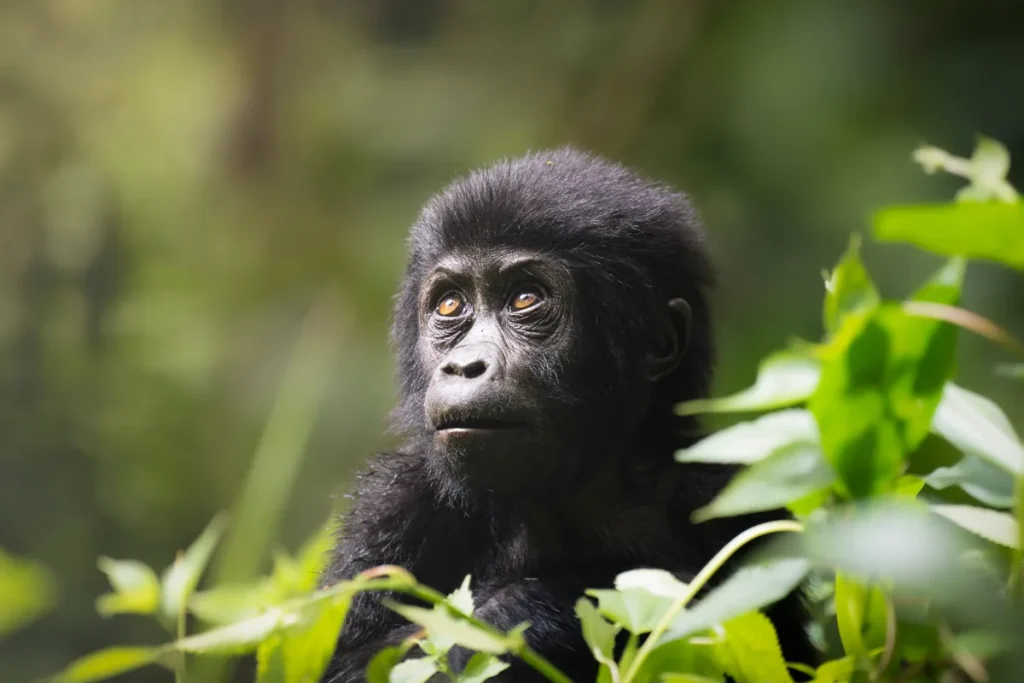
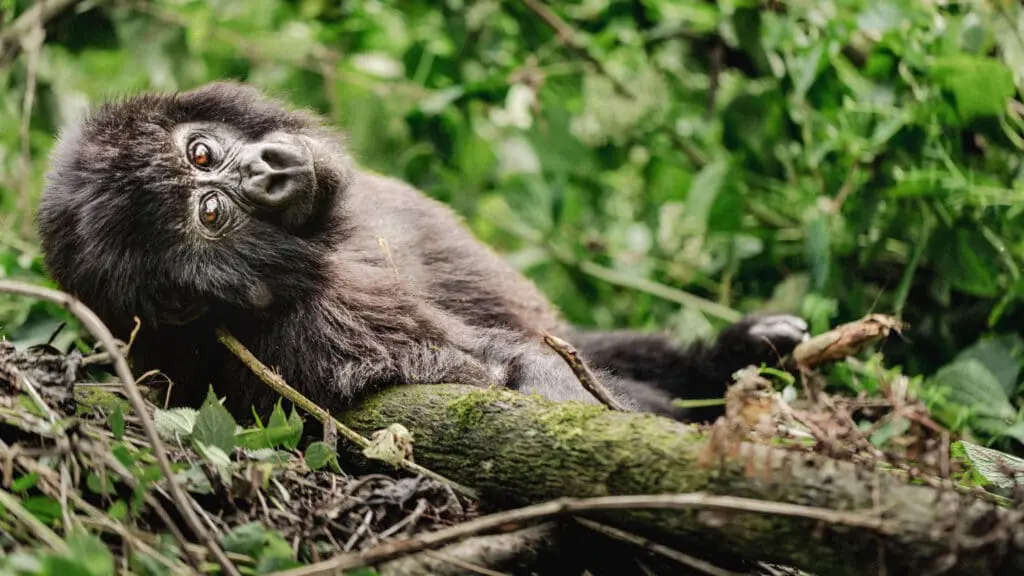
When you reach the family, you have exactly one hour with them. The Uganda Wildlife Authority enforces this limit to minimise stress to the animals and reduce the risk of disease transmission. You maintain a distance of at least seven metres from the gorillas — though the gorillas themselves do not always maintain that distance and will occasionally pass close enough that you can hear them breathe. The silverback, the dominant adult male, will often be the most visible: sitting in the open, watching his family, occasionally beating his chest to assert his authority. Juveniles play, climb, and tumble through the vegetation. Mothers nurse infants and groom adults. Within minutes of finding the family, most trekkers forget they are standing in dense forest and simply watch, transfixed.
After the one-hour observation, you trek back to the trailhead, receive your gorilla trekking certificate, and return to the lodge for a late lunch. The afternoon begins the return journey toward Kampala, Entebbe, or Kigali depending on your starting point. This is a long driving day on the return, and most operators schedule dinner and overnight at Mbarara or another town on the route to break the journey if required.
Bwindi Impenetrable National Park: What You Need to Know
Bwindi Impenetrable National Park is a UNESCO World Heritage Site covering 331 square kilometres of ancient montane and lowland rainforest in southwestern Uganda, along the border with the Democratic Republic of Congo. It is one of the most biologically diverse forests in Africa — home to more than 120 mammal species, over 350 bird species, and roughly half of the world’s remaining mountain gorillas. The park is divided into four main trekking sectors: Buhoma in the north, Ruhija in the east, and Rushaga and Nkuringo in the south. Each sector has its own trailhead, lodges, and habituated gorilla families available for trekking permits.
Mountain gorillas are critically endangered. The IUCN Red List estimates the total wild population at approximately 1,063 individuals across the Virunga massif and Bwindi. This makes each encounter with a gorilla family not just a wildlife experience but a genuinely rare privilege — you are spending an hour with animals that number roughly one thousand in the entire world. The conservation fees from gorilla permits fund the ranger corps that protects these animals, the anti-poaching patrols, and the community programmes that give local people a direct economic stake in the survival of the gorillas.
For a 2-day safari, the Buhoma sector is the most convenient starting point for travellers coming from Kampala, as it is the nearest main gate to the Kampala-Mbarara route. The Rushaga sector is typically the preferred option for travellers coming from Kigali, as it sits in the southern part of the park closer to the Rwanda border. Kenlink Tours will advise on which sector best matches your starting point and the available permit dates when you make your booking.
Gorilla Trekking Permits: Cost and Booking
A Uganda gorilla trekking permit costs USD 800 per person, issued by the Uganda Wildlife Authority. This fee is fixed regardless of the operator you book through, and it covers the one-hour gorilla observation and the ranger accompaniment throughout the trek. The permit fee is the single largest cost in any gorilla safari itinerary, which is why choosing the right operator for the surrounding logistics — transport, accommodation, guide quality — matters significantly to the overall value of the experience.
Permits must be booked in advance. During Uganda’s peak safari seasons — June through September and December through February — popular trekking sectors such as Buhoma can sell out several months ahead. For a 2-day safari where the permit date anchors the entire itinerary, advance booking is essential. Kenlink Tours handles permit procurement on your behalf, securing the permit before finalising any other element of the trip. This is the right sequence: permit first, logistics around it. Contact Kenlink Tours to check current permit availability for your preferred travel dates.
What to Pack for a 2-Day Gorilla Safari
Bwindi is a rainforest at altitude — expect cool mornings, warm afternoons, and unpredictable rain at any time of year. The right kit makes an enormous difference to how you experience the trek. The most important single item is footwear: waterproof, ankle-supporting hiking boots with good grip. The forest floor is wet, steep, and uneven. Trainers or sandals are not appropriate and will leave you slipping on every slope. After footwear, the next priorities are long-sleeved shirts and long trousers — essential for protection against stinging nettles, which are abundant in the lower forest, and against insects. Gardening or work gloves serve a similar purpose and are strongly recommended for gripping vegetation on steep sections.
Drinking Water should be part of this!
Bring a light daypack containing one to two litres of water, energy snacks, a rain jacket, sunscreen, and insect repellent. A camera with a telephoto or zoom lens gives you the best chance of photographing gorillas at distance in low forest light. Flash photography is not permitted. The park and your lodge can provide a walking stick, which is highly recommended particularly for the descent.
For the overnight stay, a single change of clothes and a light layer for the cool evenings at altitude is sufficient. Most lodges near Bwindi are well-equipped and provide hot water, meals, and everything you need for an overnight stay. You do not need to bring bedding, towels, or cooking equipment.
Is Two Days Enough? Honestly, Yes.
The most common question travellers ask about a 2-day gorilla safari is whether it is worth the effort for such a short time. The honest answer is: absolutely. The gorilla trek itself — the hour in the forest with the family — is the centrepiece of the entire Uganda gorilla experience, and that hour is identical whether you are on a 2-day itinerary or a 14-day one. You do not get more time with the gorillas because you have more days around the trek. The one-hour limit is fixed for all visitors. What a longer itinerary gives you is the surrounding Uganda wildlife experience — Queen Elizabeth National Park, Kibale Forest chimpanzees, Murchison Falls — but those are additions, not prerequisites.
If your schedule allows, there is no question that a longer safari delivers more. A 3-day Uganda gorilla safari gives you an extra day to explore Bwindi’s forest trails, visit a Batwa community, or simply rest and absorb the landscape. A 5-day gorilla and chimpanzee safari adds Kibale Forest for chimp tracking — the natural extension of a primate-focused itinerary. And for travellers who want the complete Uganda experience, the 8-day Uganda gorilla, chimpanzee and wildlife safari combines all of Uganda’s signature wildlife experiences in one comprehensive itinerary.
But for the traveller whose window is genuinely two days, the 2-day itinerary is not a lesser version of those trips. It is a complete experience focused entirely on one of the most profound wildlife encounters on Earth. Travellers who have done it consistently say the same thing: the gorillas were everything they hoped for and more, and the two-day format meant they never had a moment that felt wasted.
Best Time for a 2-Day Gorilla Safari
Gorilla trekking in Uganda is possible every month of the year — the gorillas do not migrate, and habituated families are available for permits 365 days a year. The season that affects the 2-day safari most is the condition of the forest trails. Uganda’s dry seasons — June through September and December through February — offer firmer paths, reduced mud on the steep sections, and generally more pleasant trekking conditions. These are also the periods when demand for permits is highest, so advance booking is especially important.
Uganda’s wet seasons — March through May and October through November — bring heavier rainfall to Bwindi, turning some trails into muddy channels and making the descents on steep ridges physically demanding. However, the wet season forest is extraordinarily beautiful: thick, vivid green vegetation, morning mist hanging over the canopy, and gorillas that move more slowly and rest more frequently in wet conditions — meaning the observation hour can be remarkably calm and intimate. Wet season also means lower accommodation rates and far easier permit availability. For a 2-day safari where you cannot afford to have your permit delayed or cancelled, the dry season remains the safer choice for a first visit.
Kenlink Tours operates year-round and can advise on current trail conditions, lodge availability, and permit status for any specific dates you are considering. Learn more about Uganda’s seasons and national parks to plan the timing that works best for your schedule and budget.
Extend Your Safari
If you have more time, consider a 5-day gorilla and wildlife safari combining Bwindi with Queen Elizabeth National Park, a 2-day Bwindi gorilla fly-in safari for those wanting to avoid the long road transfer, or combine Uganda with Rwanda on a 10-day best of Uganda and Rwanda itinerary. Kenlink Tours designs custom itineraries across all budgets and available time.
Why Book with Kenlink Tours
Kenlink Tours is a licensed Uganda safari operator, accredited by the Uganda Tourism Board and a member of TUGATA — the Uganda Tour Operators Association. The company specialises in primate safaris, gorilla trekking, and wildlife circuits across Uganda, Rwanda, and the broader East Africa region. With a tagline of “we speak adventure, English is our second language,” Kenlink Tours brings both deep local knowledge and a genuine passion for the experiences they design.
For a 2-day gorilla safari, the elements that matter most are permit reliability, transport quality, and accommodation comfort — all three of which Kenlink Tours handles in-house. Their guides are resident professionals who know Bwindi’s sectors, the current gorilla family locations, and the lodge options at every price point. Whether you are looking for a budget guesthouse near the park or a mid-range lodge with a forest view, Kenlink Tours can match you to the right accommodation for your budget and travel style.
To book your 2-day gorilla safari or to ask about permit availability, current pricing, and customisation options, get in touch with the Kenlink Tours team directly. The gorillas are waiting.